The Day Mrs. Thatcher Kissed a Sailor
The Times has an amazing story about how Mrs. Thatcher kissed a sailor, who was a bomb disposal expert in the Falklkands War. Most of the story is here in this article about Michael Fellows from Sussex Life, but it doesn’t tell how they dived under the Cabinet Office Table to see the map of the Falklands on the other side.
I suspect the story will be reprinted in other papers later.
The Falklands Legacy
I have the view that the Falklands War had a much greater effect on the thirty years since Argentina invaded, than we generally think.
I travelled in Europe both before and after the war and it brought a great change to the way Europe thought about the Russian menace. Not about the threat of nuclear war, but a lot of our forces atb the time were lined up with the Germans, the French, the Americans and others to fight the Russian tanks, when they were ordered to attack. But after the Falklands War, it was now apparent that a well-trained volunteer army, could always outfight a conscript one, who wanted to be elsewhere and I think this gave Europe a much stronger backbone against a Soviet invasion.
It wasn’t the sole reason obviously, but it helped to break-up the Soviet Union and release their stranglehold on the satellites. Remember most Soviet commanders at the time had very deep knowledge of the very brutal Second World War they had fought and from what I have read and heard, wouldn’t have really wanted to do it again. After all, when there was the coup later againt Boris Yeltzin, the Army stayed loyal.
I also wonder what would have happened, if we hadn’t regained the Islands by force.
I suspect that Guatemala would have done what they have wanted to do for years and absorbed Belize.
And would we have gone to regain Kuwait from Saddam in the First Gulf War? The Americans might have gone, because they needed the oil.
The Falklands War sent a powerful message in terms of democracy. But it was a tragic, that a bunch of geriatric dictators, decided to invade, in a vain effort to cling to power.
Sarah Palin ‘believed Queen was in charge of British forces in Iraq’
Another article from the Daily Telegraph.
I think if the Queen had been in charge, we wouldn’t have had a war in Iraq.
Sarah Palin always strikes me that if she had had a word fight with any of the great wordsmiths, she’d have been metaphorically hung, drawn and quartered.
Some Horse
An old horse-coper in Suffolk, once told me that if you think you’ve got a good horse, you should ask if it could charge guns and tanks.
Brough Scott in today’s Telegraph, tells the story of Warrior, his grandfather, General Jack Seely‘s horse. Warrior led one of the last cavalry charges in the First World War at Moreuil Wood, was painted by Sir Alfred Munnings and took part in the victory parade in 1918. For an encore he won a race at the Isle of Wight point-to-point in 1921. In the end he lived until he was 33 and was only put down in 1941, because of a shortage of feed.
With all the hype going on about War Horse, let us not forget that others played their part. But perhaps not as bravely as Warrior.
A Memorial to those who Fought and Died in the International Brigade
The International Brigade who fought against the fascists in the Spanish Civil War contained about 32,000 from 53 nations.
As I walked along the river to Craven Cottage, I came across this memorial to those from Hammersmith and Fulham who died in the brigade.
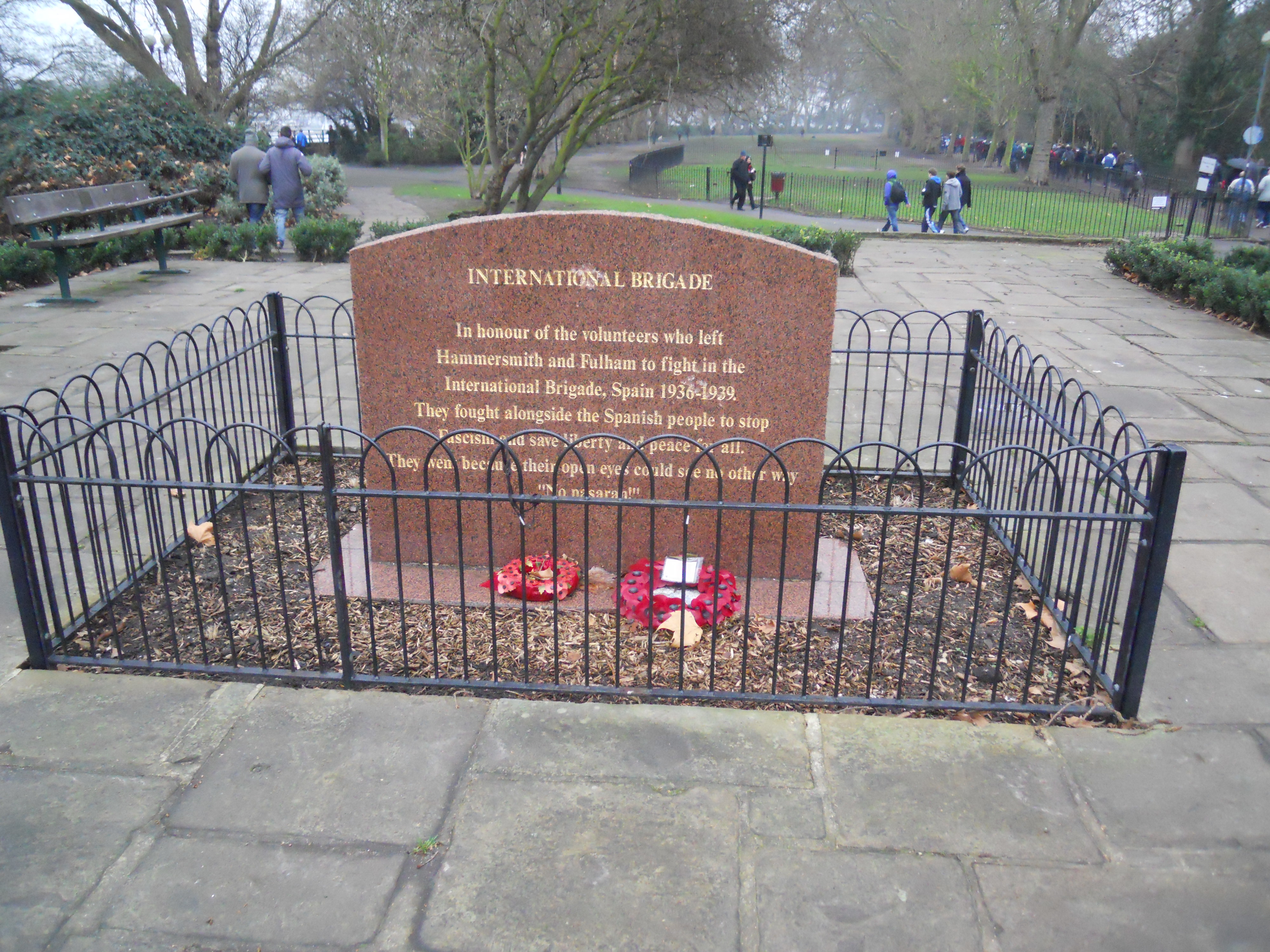
International Brigade Memorial in Bishop's Park
Considering that a few thousand people from the United Kingdom were in the brigade, it is surprising I’d not seen a memorial before.
US Troops Turn to a Tricycle
The third leader of The Times today is unusual in that it tells the story of how the Pentagon has commissioned two command performances of The Great Game, by North London’s Tricycle Theatre. Here’s an extract.
The idea of staging The Tricycle Theatre’s production in Washington is so that generals, and soldiers heading to Afghanistan, might come away thinking what General Sir David Richards, Chief of the Defence Staff, thought after seeing the show in London; that “if I’d seen the plays before being deployed to Afghanistan for the first time in 2005 it would have made me a much better commander”.
Let’s hope we see more education of those who go to war, as we always tend to forget the lessons of history. I would also hope that they also read the thoughts of Aircraftsman Shaw.
I’d love to hear Sarah Palin’s thoughts on US forces being educated by Britain’s leading political playhouse.
Lawrence of Afghanistan
The Times today has an article about T. E. Lawrence, who as well as his efforts in Arabia, served in the RAF as Aircraftman Shaw in Afghanistan. We should listen to what he said.
Here is an extract from the article.
With the help of Hollywood, he would become a legend, Lawrence of Arabia, but today he might more aptly be termed Lawrence of Afghanistan: he understood more clearly than any of his contemporaries (and many of our own) the futility of trying to bomb an insurgency into peace; he put into action the tactics of modern guerrilla warfare; and he pioneered the improvised explosive device (IED), the most important weapon of the wars in Iraq and Afghanistan.
In Britain Lawrence is revered as a figure of romance, the camel-mounted scholar-warrior in flowing robes, but his reputation comes tinged with a distinctly British embarrassment. Lawrence was stupendously strange: a diminutive, ruthless, obsessive, sexually repressed oddity, who spent his life striving for attention, and then rejected it.
What is too often forgotten in the mythologising (and debunking) of Lawrence is his enduring legacy as a military strategist of genius and cold-eyed guerrilla leader.
I like one particular statement.
Lawrence believed that “winning hearts and minds” (a term that would have made him snort) could only be achieved by education or cash, and never by coercion. “The printing press is the greatest weapon in the armoury of the modern commander,” he wrote. The Arab rebellion was fought with new British tactics, and bought with new British gold.
The trouble is the Americans used to think that the only good Indian was a dead one and their thinking hasn’t changed much to reflect the modern age.
Every politician and military man, from the highest general to the lowest private, should read Ben MacIntyre’s article and then be tested on it.
My father was a printer and one of the most interesting things I saw in Belarus was this battlefield printing press from the Second World War.
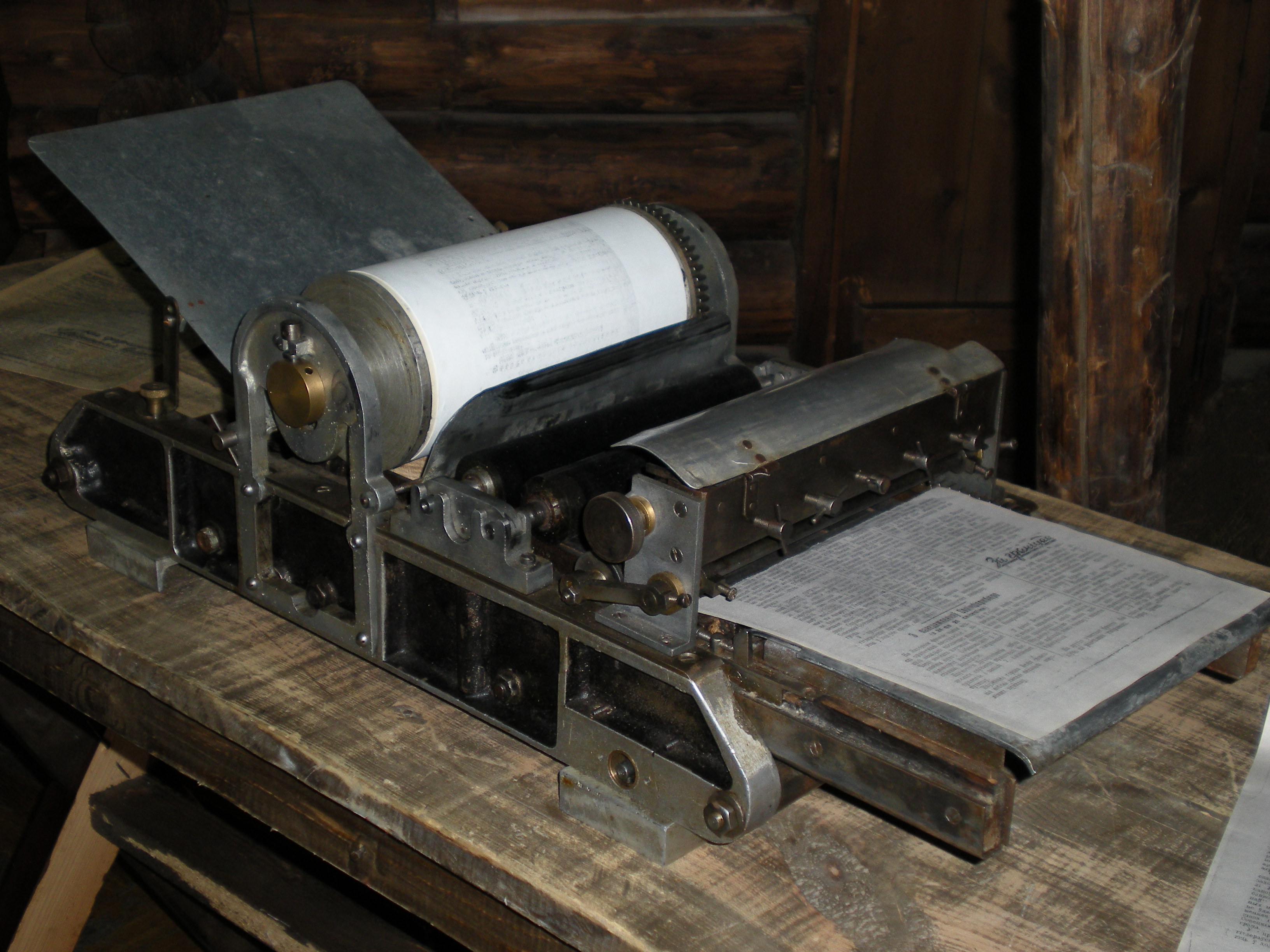
Battlefield Printing Press, Minsk
The Russians and Belarussians obviously know their T. E. Lawrence and it served them well, when they turned the Nazis in 1941.
I share two things with Lawrence;stature and birthday.
James Blunt and His Part in Stopping World War 3
The story isn’t quite as dramatic as that, but it shows the different in attitude between US and UK forces, when it comes to dealing with a little local difficulty over Pristina airfield in Kosovo with the Russians.
In the end the view of General Mike Jackson prevailed over that of his commander, the US general, Wesley Clark. So Blunt and his troops, encircled the Russians and when the Russians food and water ran out, the Russians felt it prudent to co-operate and share the airfield.
But even so, Blunt admitted that he wouldn’t have fought the Russians, as he didn’t want to be the man who started World War 3, even if he had been court-martialed later.
The British Way of Military Death
I have a strong sense of history and want to try to make sure that we learn from the past and don’t make the same mistakes again.
I first noticed when we went to the cemeteries on the River Kwai, that every British grave has a personal message. There were a lot of Dutch graves on the Kwai, but they were plain and identical except for the name. I found the same messages at immaculate cemeteries in the Gambia and on the Somme.
And now we have the respect shown at Wootton Bassett, a town through which all the British victims of Afghanistan pass on their final way home.
There are some things in this country that we do very, very well.
 The Anonymous Widower