I’ve Got a Different Set of Problems
Eighteen months ago, I moved into a house with a very high solar gain. In some ways it’s a bit like living in the Palm House at Kew. Yesterday there was enough sun in Hackney to heat the house up to nearly 30 degrees with the heating off and the windows open.
It is so dry, that I need to have a humidifier going full blast to get the atmosphere bearable. At some times, all I want to do is go back to bed and go to sleep.
I would go out, but the weather is so awful.
James Miller
God Isn’t Listening
Apparently, Texas is in the midst of a drought.
According to The Times today, last April Rick Perry, the governor and Presidential candidate, lead a prayer for rain in the state.
And guess what?
It hasn’t rained.
Either God doesn’t exist or he/she doesn’t like the fact that Rick Perry executes a lot of people in his state.
The Coldest Station on the Underground
Whilst I was being let in to Elephant and Castle station to get north of the river, I was joking with the barrier staff, that it was cold, but it wasn’t as cold as Oakwood station, which is one I knew well as a child. I did say that if you ever were offered a transfer there then don’t accept, as on a cold day like today, it’s always freezing.
With the wind in the east at Oakwood it gets particularly cold, as the wind blows all the way from Siberia. In fact, if you were to fly level due east from the station, the first land you hit is the Urals. It all probably explains how our house there, at 73 Sussex Way, was so cold and regularly had sheets of ice on the windows in the winter.
Apparently, there used to be a plaque in the station about the height and the Urals, but I couldn’t find it, when I visited.
Avoiding the Rain on the Train
One of the reasons, I wanted to use the bus to get home, even if it meant a change, was that it was raining hard. If I could have ended up on any one of several routes, I would have been dropped within a hundred metres of my house. Usually when you change buses, you don’t get that wet too, if you choose the changeover with care.
I have three choices of train from Stratford. I usually take one of.
- The Overground to Dalston Kingsland and walk.
- The Overground to Hackney Central and get a bus.
- Central line to Bank and then a bus.
All though would have meant a ten minute walk in the rain. And I didn’t have an umbrella with me.
So in the end, I took the Overground to Canonbury, then back on the East London line to Dalston Junction and then a bus along the Balls Pond Road. Not the simplest, but definitely the driest. It was very wet as this picture at Canonbury shows.
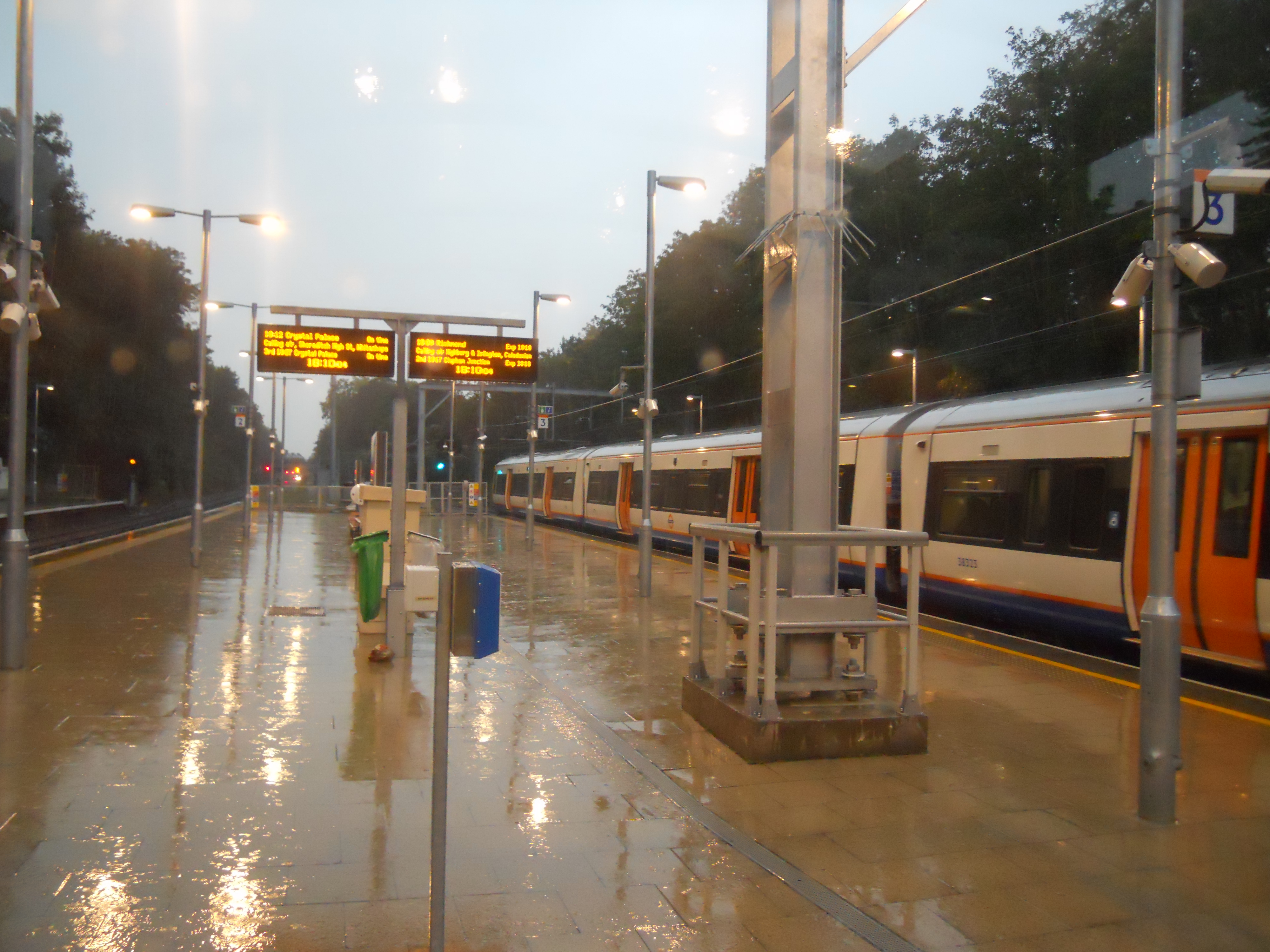
Canonbury in the Rain
To make matters worse, my preferred route via Hackney Central requires a walk over an uncovered bridge and I wasn’t the only person, who on seeing the weather there, declined to get off.
The Overground is one of those modes of transport, that is very good in fine weather, but some stations get you very wet, when it rains heavily.
The amount of passengers using the line is starting to cause problems. I left Stratford in the rush hour and getting to the platforms was difficult because of large numbers of passengers going the other way. I used the lift to avoid them. The platforms also need a Next Train indicator, as is common on many parts of London’s railways, both over and under the ground.
The Untold Story of Hurricane Irene
I do find it strange to hear of a hurricane with the same name as my mother, who was a rather placid woman. In fact, I suspect too much so. On the other hand, I think she was rather calm under pressure!
I have just been reading a piece about how New York will be treating the city’s prisoners during the hurricane.
“We are not evacuating Rikers Island,” Mayor Michael Bloomberg said in a news conference this afternoon. Bloomberg annouced a host of extreme measures being taken by New York City in preparation for the arrival of Hurricane Irene, including a shutdown of the public transit system and the unprecedented mandatory evacuation of some 250,000 people from low-lying areas.
But in response to a reporter’s question, the mayor stated in no uncertain terms (and with more than a hint of annoyance) that one group of New Yorkers on vulnerable ground will be staying put.
New York City is surrounded by small islands and barrier beaches, and a glance at the city’s evacuation map reveals all of them to be in Zone A (already under a mandatory evacuation order) or Zone B–all, that is, save one. Rikers Island, which lies in the waters between Queens and the Bronx, is not highlighted at all, meaning it is not to be evacuated under any circumstances.
According to the New York City Department of Corrections’ own website, more than three-quarters of Rikers Island’s 400 acres are built on landfill–which is generally thought to be more vulnerable to natural disasters. Its ten jails have a capacity of close to 17,000 inmates, and normally house at least 12,000, including juveniles and large numbers of prisoners with mental illness.
We were not able to reach anyone at the NYC DOC for comment–but the New York Times’s City Room blog reported: “According to the city’s Department of Correction, no hypothetical evacuation plan for the roughly 12,000 inmates that the facility may house on a given day even exists. Contingencies do exist for smaller-scale relocations from one facility to another.”
So hard luck guys and gals!
Hopefully, they won’t have to endure the horrors of when Hurricane Katrina hit New Orleans. This report is from the ACLU.
A culture of neglect was evident in the days before Katrina, when the sheriff declared that the prisoners would remain “where they belong,” despite the mayor’s decision to declare the city’s first-ever mandatory evacuation. OPP even accepted prisoners, including juveniles as young as 10, from other facilities to ride out the storm.
As floodwaters rose in the OPP buildings, power was lost, and entire buildings were plunged into darkness. Deputies left their posts wholesale, leaving behind prisoners in locked cells, some standing in sewage-tainted water up to their chests …
Prisoners went days without food, water and ventilation, and deputies admit that they received no emergency training and were entirely unaware of any evacuation plan. Even some prison guards were left locked in at their posts to fend for themselves, unable to provide assistance to prisoners in need.
When is the United States justice system going to raise its standards to the level of the civilised world?
I suspect we’d be hearing more of this if Dominique Strauss-Kahn was still in prison on Rikers Island.
Memories of Wood Green
I walked up to Bruce Castle Museum from Bruce Grove station early this afternoon. It was not a difficult walk and there are some buildings worth looking at on the way.
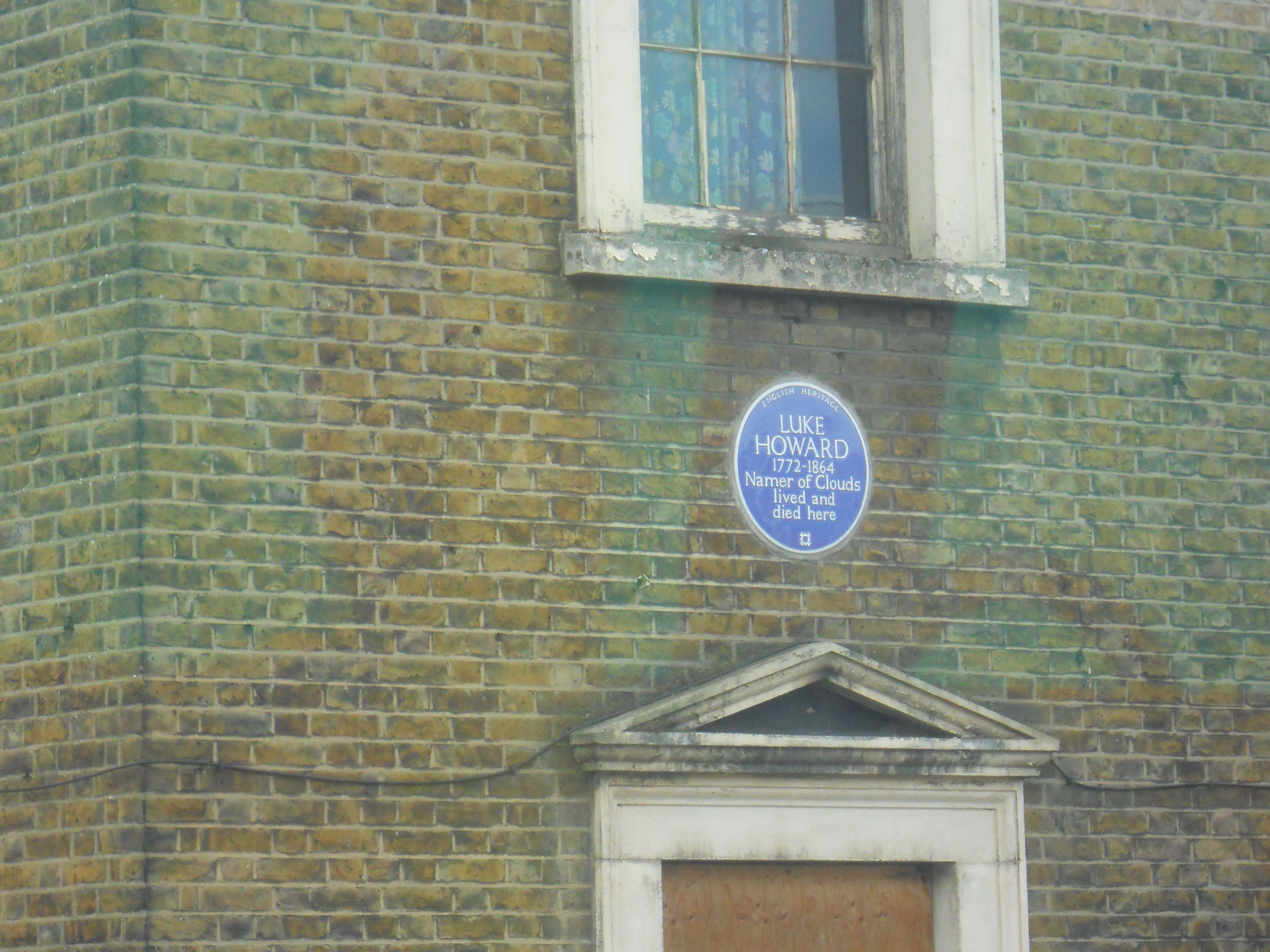
Luke Howard, Namer of Clouds Lived Here
This rather derelict building being refurbished was the home of Luke Howard. He seems to have been an amazing man with a wide degree of scientific interests, who should be remembered for a lot more than his classification of clouds. He must also have been the only pharmacist praised in a poem by Goethe.
But Howard gives us with his clear mindThe gain of lessons new to all mankind;That which no hand can reach, no hand can claspHe first has gained, first held with mental grasp.
I suspect too, that he might have been the Howard after whom the local telephone exchange in Enfield was named. Enfield Rolling Mills, who were my father’s biggest customer and where I worked for a couple of summers, had a phone number of Howard 1255. There is a list of all the old London exchange names here.
I enjoyed the museum, as it brought back some happy memories for me. I will be back.
- C’s godmother and her sister had worked at the Gestetner factory in Tottenham Hale and had a flat which would have been in the middle of the riots, although it looked like no damage was done. They were a lovely pair of sisters, who’d had a hard life, but who always remained cheerful to the end. They both lived into their eighties and still had all their marbles when they died. But I think, if they’d had the sort of healthcare that we get now, they might have had a few more years. Both seemed to keep falling over and breaking thighs and other bones.
- One memory the museum brought back was a tale from my grandmother about the Belgian refugees, who were put up in Alexandra Palace after the First World War.
- I can also remember the Monday evening crowds swarming past my father’s printworks on Station Road to the racecourse. Someone used to setup a Crown and Anchor board to fleece punters before they even got to the races, outside the works on Station Road. If the police turned up he allowed them to duck inside, provided they put a couple of notes in the charity box my father had on the counter.
- I also saw the inside of a pub for the first time at about eight, when my father used to take me for lunch on Saturdays to the Jolly Anglers in Station Road, when we both worked in the works.
- When we were at school, we often drive to Ally Pally to have a drink, as no-one seemed to bother how old you were in the bar there. You would then take your drinks out and sit on the grass to admire one of the best views in London.
- In the museum was a display, which had some stationery from Ward’s Stores at Seven Sisters. In the early 1960s, I used to work in a paper shop, who delivered them to Mr. Ward. Rumours had it, that he was dying of something and was getting a bottle of Scotch a day on the NHS.
Next time I visit, I’ll have a serious look at the archives.
Another Use For A Clothes Dryer
I have needed a clothes dryer since I’ve moved in and now that my washing machine decided to go wonky on Tuesday, I needed one urgently. Especially, as I had a load full of wet towels.
So I walked to the nearest shop and bought one, carrying it home in the rain.

A Tightly Packed Addis Clothes Dryer
As you can see it is tightly wrapped in plastic, something I normally don’t like, as I have difficulty unwrapping it.
But it did make an excellent defence against the rain as I carried it home flat on head.
My only regret was that no-one was there to take a photograph, as I crossed the zebra crossing in the pouring rain.
Sadly the clothes dryer collapsed and broke with just two towels on it. So it had a short life and a happy one.
Taxis In The Rain
it is raining hard tonight. But one of the advantages is that I live near the old 641 trolley bus route and taxi drivers still use it as the cut back to the City and Liverpool Street station, as the road is wide. So despite the rain, a guest who was going to a function in the City tonight had no difficulty getting a black cab.
But it’s raining so hard, that I’ve got a slight leak in my glass roof! At least I brought a bucket with me to London.
Hay Fever in Switzerland
You’d expect the Swiss to be fairly professional about this and this web site is very much so. The trouble is finding it was difficult as typing something like “pollen forecast switzerland” into Google, gets all sorts of crap paid for sites mainly from the United States.
The interesting fact, is the Swiss thinks a lot of their hay fever comes from an imported plant called ambrosia. They are now attempting to eradicate it.
Originally from North America, ambrosia (ragweed) is a weed with two specific properties: an extremely high spread potential and highly allergenic pollen. Pollination begins in mid July and continues until the first autumn frosts.
In the last twenty years ambrosia has spread on a massive scale in Europe. In Switzerland it has now spread over vast swathes of land in the Geneva and Ticino regions. North of the Alps its presence is limited to specific areas, but without appropriate countermeasures there is an imminent risk of it invading the whole country.
To avoid this scenario, from July 2006 ambrosia has been declared by law a plant that must be disinfested / eradicated.
I wish them luck.
Raining Cats, Dogs and Hippotami
Returning from the London Wetland Centre, the rain was some of the worst I’ve seen for some time. I thought I was lucky, as I was on a brand-new Dennis bus on route 30. But the rain was so heavy, that the roof sprung a leak!
At least though my hay fever seems a bit better.
 The Anonymous Widower