Dalston Junction To Marylebone In The Rush Hour
Yesterday, I needed to get to Marylebone to go to Birmingham. Some time ago, I wrote about the reverse journey and it wasn’t easy in the rush hour.
So just out of interest, I decided to go by getting the Overground to Whitechapel and then using the District line to get to Embankment for the Bakerloo line to Marylebone.
I left home at 08:44 and arrived at Dalston Junction at 08:52. I left the station five minutes later, after a bit of trouble with the machine buying my return ticket from Marylebone to Stourbridge Town.
I made Whitechapel at 09:10 and at 09:30, I was at Embankment, after a trip on a not-to-busy train.
I’ve avoided Embankment station for some time, as it has been in a state of chaos due to refurbishment, but now look at it.

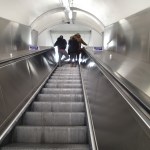

It was clean and bright and a virtually empty Bakerloo line train got me to Marylebone in a couple of minutes under the hour since I left Dalston Junction. This post on TfL’s web site explains what was done. It says this.
The decision to replace the escalators simultaneously rather than phasing the work meant that it took 43 weeks to complete as opposed to at least 75 weeks. While this work was taking place, LU also took the opportunity to refurbish other parts of the station including retiling corridors and platforms, installing new lighting and replacing station Help Points and CCTV systems.
It certainly looks to be a job well planned and executed.
I think this could become my preferred route to Marylebone and Paddington, until Crossrail goes to Paddington.
Unfortunately, there was a bit of a signalling problem on the Chiltern line and staff got confused about the 09:45 Birmingham train’s departure platform. So I caught the 10:15.
To Stourbridge And Back
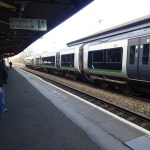
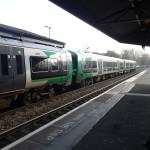
I went to Stourbridge today essentially to see the town and the Parry People Mover, but I took these pictures on my way up by Chiltern from Marylebone and back on Virgin to Euston.
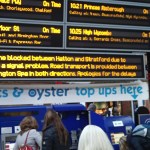
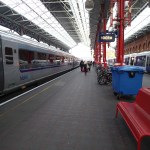
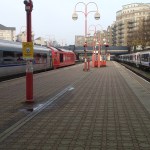
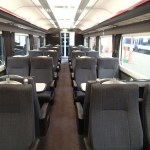
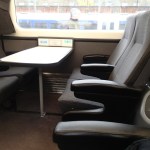
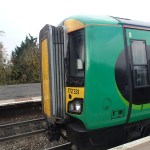
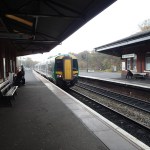
The trips illustrated the best and worst points of the two companies and their trains.
Chiltern has the more comfortable trains, with big windows and free wi-fi, but the journey takes longer.
One small thing that surprised me was the quality of both the Class 172 trains and the stations it passed through, on the way from Birmingham Moor Street to Stourbridge Junction. In some ways though it is a reasonably modern line, as it was only reopened in 1995 as the Jewellery Line Project, which created Birmingham’s cross-city passenger route between Moor Street and Snow Hill. Wikipedia says this about the Birmingham to Worcester via Kiderminster Line, on which Stourbridge Junction is located.
It is a future aspiration of Chiltern Railways and Network Rail to electrify the entire line, including the Chiltern Main Line to London Marylebone.
I’ve always thought that electrification of the Chiltern Line should be done before HS2, so that there is adequate capacity between London and Birmingham, whilst Euston is rebuilt.
Another reason to electrify the Snow Hill Lines sooner rather than later would be so that some of these Class 172 trains could be released for other routes.
Birmingham New Street Has Silver Cladding
The new mirror cladding on Birmingham New Street station, just asked to be photographed.
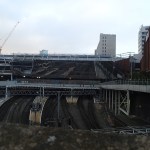
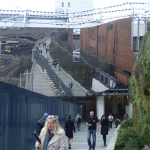
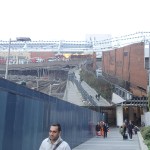
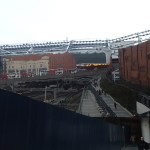
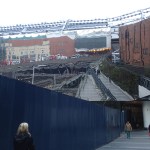
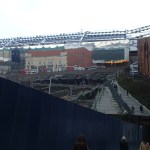
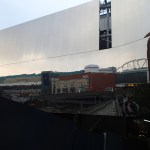
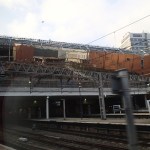
These attempts are only pretty crude, but when it’s finished, professional photographers will be drawn to the station, to get that ultimate picture.
Stourbridge And The Parry People Mover
I went to Stourbridge to see the Parry People Mover that is used on the branch line between Stourbridge Junction and Stourbridge Town.
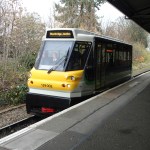
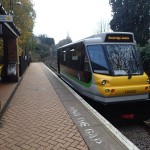
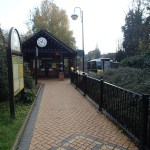
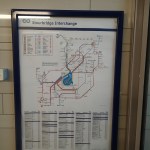
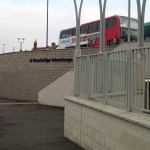

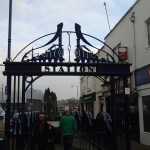

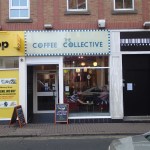

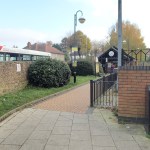
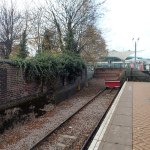

But as the pictures show, I also found a well-thought-out solution to the problem of how do you create an integrated transport hub in a town.
It was one of the first bus interchanges I’ve found outside London, where if you’d been dropped to get to X, you could have found the way without asking anybody.
One thing the pictures don’t show, is that on both trips the number of people on the train was more than you generally see on the Class 153 between Ipswich and Felixstowe.
I would also recommend the Coffee Collective. It is a short walk from the bus station and is obvious, when you exit the subway.
But having ridden in the Parry People Mover or Class 139, what do I think of it?
The first thing I would say, is that if you look at the pictures, you’ll see it is a genuine step-free entrance and exit. A lady pushed a baby in a buggy into the people mover, when I travelled, and it was as easy as any train I’ve ever seen.
You could say, wouldn’t it be cheaper to use a quality bus at Stourbridge to link Stourbridge Junction with the bus station in the town. Obviously, London Midland hasn’t done this. But, when they did this in the past, they brought back the Class 153, so perhaps this connecting train is a great traffic generator for services to Birmingham.
Other than that, it just did what you would expect a train would do and transported the around twenty passengers to the other station without fuss. The vehicle had a feel somewhat like the Docklands Light Railway, although it was a lot smaller.
As it is powered by a flywheel driven by a small internal combustion engine, this type of vehicles could have a range issue, but it won’t be as severe as that of a battery-powered one. In this section on the future of the Class 139 in Wikipedia, this is said.
This will entail an articulated unit, with a pair of PPM60 variants at either end of a fixed passenger unit—the whole unit will be capable of accommodating up to 220 passengers and travelling at up to 60 miles per hour (100 km/h) on railways or 50 miles per hour (80 km/h) on tramways.
If a double vehicle could move even 100 passengers over a distance of fifteen miles, then the branch line I know best; Ipswich to Felixstowe, could be run by such a people mover. It probably isn’t much slower than the Class 153, so it shouldn’t give too many problems with scheduling amongst the freight trains.
Two vehicles would probably be needed for the line, but it would seem likely that the frequency of passenger trains could be increased.
A special version of the vehicle could be designed for tourist branch lines such as the one at St. Ives, with space for bicycles.
How much extra traffic would shiny new trains, running more often, generate?
Having seen this first use of a simple energy-efficient people mover, I think that in a few years time, vehicles based on similar principles will become commonplace. Just as London’s new Routemaster, has shown that buses should be hybrid with flat floors and lots of entrances/exits, we will see a series of rail vehicles, where flywheels or batteries are used to create efficient hybrid drive systems and stylish modern vehicles sized to the traffic.
Eventually, I think we’ll see this type of train on a branch like Romford to Upminster, which is only about six kilometres long and has a speed limit of only 30 mph. If they are the only traffic on such a branch, this would remove the need for electrification. You probably wouldn’t take it down, but you’d switch it off. On the other hand this would make it easier to nick!
But because this type of vehicle doesn’t need electrification or other expensive infrastructure, it also opens up the possibility of adding new services and even lines. Go back to Felixstowe. The town used to have a station at Felixstowe Beach, which is close to the port and still served by the Felixstowe branch. It might at some point be thought to be a good idea to restart this service. It would be so much easier to do this with a vehicle like a Class 139 or a successor.
There are also quite a few heritage and freight-only branch lines connected to the main UK rail network. Could vehicles like this be used to run commercial services to connect passengers to the network? It would all depend on the branch line, but some companies are looking at possibilities.
Once one scheme is successfully up and running, I feel others will quickly follow.
Serial Cooking – Ham And Leek Gratin With Emmental Mash
Ham And Leek Gratin With Emmental Mash is another of Lindsey Bareham’s recipes from The Times



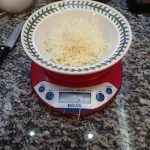











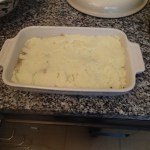



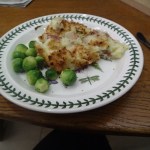
Again I chose it becauses there could be a break before putting it in the oven. I also made a half quantity for myself. Lindsey’s sizes were double mine for three.
I had one portion cold and it was delicious.
Latimer Road – A Gem Of A Station
The platforms at Latimer Road station had to be rebuilt for the new S Stock trains.
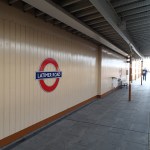
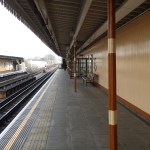
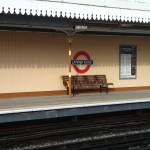
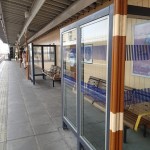
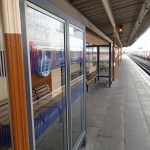
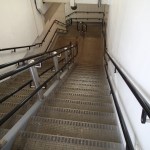
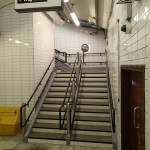
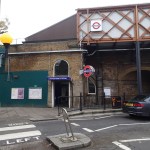
It would be wonderful if all stations had the look and feel of this one. Wikipedia gives a full history of the refurbishment, which contains this gem.
When the wall for the westbound platform was removed, contractors discovered an old bricked-up entrance to the station public house, currently known as The Garden. They also found underneath the platform a very old and possibly Mahogany staircase leading up to the pub entrance. Apart from all the years of dust and grime they also found, amongst other things, a bath, old gun parts and even a vat of acid.
How many other stations have secrets like that?
Zopa’s Courageous Decision
I have believed for a long time, that certain databases should be made public, so that they can be properly analysed.
Suppose for example that a suitably anonymised database of all road deaths, was to be made available.
I will not speculate as to what it might show.
But you can rest assured, that some parties would not like some of the obvious conclusions that were thrown up.
How about to a detailed database of all those in prison?
Because of the power of data analysis, I was very surprised to read that Zopa has decided to make their loan data available for analysis.
It is a very courageous decision, that I hope gets other companies and organisations to do the same thing.
Serial Cooking – A Good Cauliflower Cheese
This is another Lindsey Bareham recipe, that I cooked serially like the Sausage and Bean Casserole a few days ago.

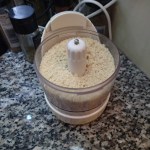










It is easy to do and I suspect that the completed dish could be prepared earlier and left in the fridge for most of the day.
Custom House Is Looking Like A Station
The combined Crossrail/DLR station at Custom House grows every week.
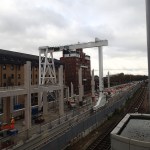
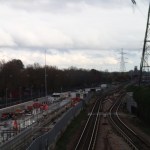

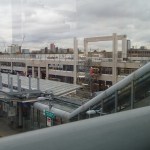

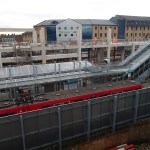
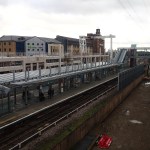
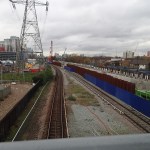
It’s now beginning to look like a station and you can see how it will connect to the Docklands Light Railway.
I have a feeling, that when Crossrail opens, this station will get a high rating.
As it is built in a factory, the engineers have told me, that the quality of the concrete is excellent.
A Radical Idea For The Bakerloo Line Extension
I have spent forty years involved in project management, writing software for project managers and generally listening to some of the thoughts and experiences of some of the best engineers from all over the world.
One common thread, which is best illustrated by how the size of lift possible increased in the North Sea in the 1970s, is that as time has progressed machines have got bigger and more capable, and the techniques of using them has improved immeasurably.
The Crossrail tunnel boring machines (TBM) make those used on the Jubilee Line extension or the Channel Tunnel look like toys. But not only are the TBMs bigger and faster, they have all the precision and control to go through the eye of the smallest needle.
If we look at the proposals for the Bakerloo Line Extension, there have been several differing ideas. Some envisage going under Camberwell and in others the trains terminate on the Hayes line.
Transport for London (TfL), obviously know the traffic patterns, but do we really want to take the chance of say connecting the Hayes line to the Bakerloo and then finding that it’s not the best solution?
What we should do is augment the services in the area, by providing a good alternative transport mode, that links to some of the traditional rail lines to give even more flexibility. We certainly shouldn’t repeat the grave mistake that was made at Brixton in the 1960s by not connecting the Victoria line to the surface rail lines.
This is Transport for London’s indicative map of the extension.
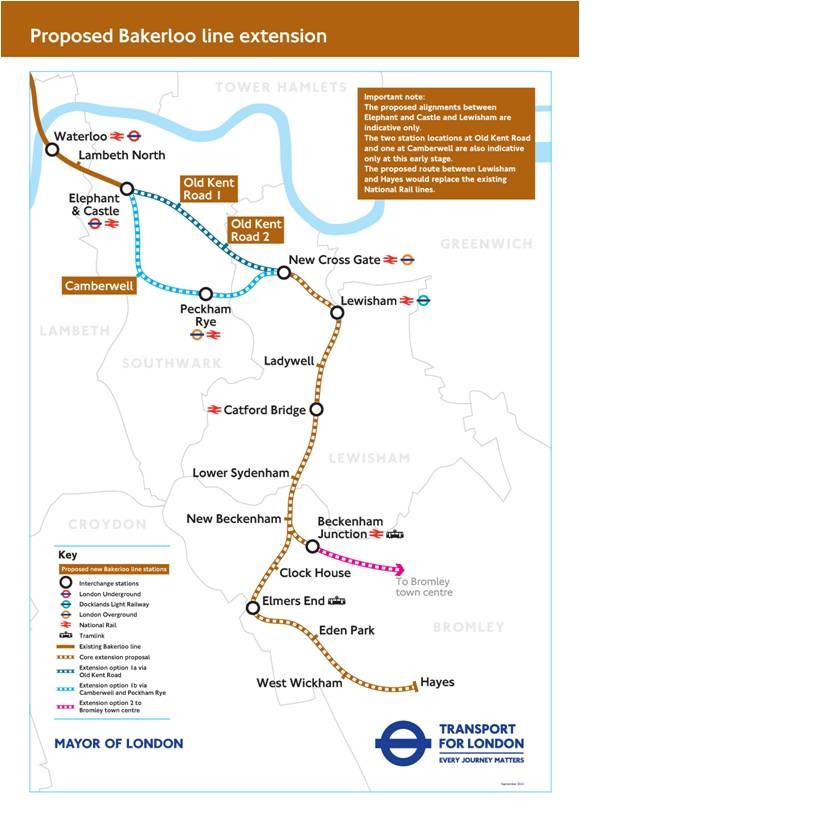
Bakerloo Line Extension Map
I have reason to believe that the Northern Line Extension may be being built as an extension to the Kennington Loop.
So could we design the Bakerloo Line Extension as a loop starting and finishing at Elephant and Castle calling at important stations?
A possible route could be.
- Elephant and Castle – Interchange with Northern Line and National Rail including Thameslink
- Old Kent Road 1 – Proposed on Map
- Old Kent Road 2 – Proposed on Map
- New Cross Gate – Interchange with London Overground and National Rail
- Lewisham – Interchange with Docklands Light Railway and National Rail including Hayes Line
- Catford Bridge – Interchange with Catford station and National Rail including Hayes Line and Thameslink
- Peckham Rye – Interchange with London Overground and National Rail
- Camberwell – Interchange with National Rail including Thameslink
- Elephant and Castle
The advantages of this simple design are.
- The tunnel would be excavated in one pass by a single TBM.
- The line could be deep under any existing infrastructure.
- Most stations would be simple one-platform affairs, with perhaps only large lifts and emergency stairs, to give unrivalled step-free access for all from the street to the train. Surely lifts exist, that are large and fast enough to dispense with escalators.
- For safety, passenger convenience and flows, and other reasons, the stations could have two entrances, at opposite ends of the platform.
- The simple station entrances would be much easier to position on the surface, as they wouldn’t need to be much bigger than the area demanded by the lifts.
- A single loop would only need half the number of platform edge doors.
- At stations like New Cross Gate, Lewisham, Catford and Peckham Rye the lifts would surface within the confines of the existing surface stations.
- The route has interchanges with the Brighton Main Line, East London Line, Hayes Link, Thameslink and other services, so this would give lots of travel possibilities.
- Trains do not need a terminal platform, as they just keep going on back to Elephant and Castle.
- The loop would be operationally very simple, with no points to go wrong. TfL have aspirations to run twenty-seven trains per hour on the Bakerloo and a simple reversing loop , which would mean the driver didn’t have to change ends, must certainly help this. It would probably be a lot more difficult to get this capacity at the northern end of the line,where Harrow and Wealdstone doesn’t have the required capacity and the only possibility for a reversing loop would be north of Stonebridge Park.
- Elephant and Castle would need little or no modification. Although it would be nice to have lifts to the Bakerloo Line.
- Somewhere over two billion pounds has been quoted for the extension. A single loop with simple stations must be more affordable.
The main disadvantage is that the loop is only one-way.
But making even part of the loop two-way would create all the operational difficulties of scheduling the trains. It would probably be better, less costly and easier to make the trains go round the loop faster and more frequently.
But if a passenger went round the loop the wrong way and changed direction at Elephant and Castle that would probably only take a dozen minutes or so.
Alternatively, I’m sure some New Routemasters would step up to the plate and provide service in the other direction between the stations.
 The Anonymous Widower