East Midlands Railway To Leeds
This news story from the Department of Transport is entitled Yorkshire And The Humber To Benefit From £19.8 billion Transport Investment.
This is said about Leeds and Sheffield services.
The line between Sheffield and Leeds will be electrified and upgraded, giving passengers a choice of 3 to 4 fast trains an hour, instead of 1, with journey times of 40 minutes. A new mainline station for Rotherham will also be added to the route, which could give the town its first direct service to London since the 1980s, boosting capacity by 300%.
These are my thoughts.
A New Mainline Station For Rotherham
This page on Rotherham Business News, says this about the location of the Rotherham mainline station.
South Yorkshire Mayoral Combined Authority (SYMCA) and Rotherham Council have been developing a scheme to return mainline train services to the borough for the first time since the 1980s. A site at Parkgate is the frontrunner for a regeneration project described by experts as “a relatively straightforward scheme for delivery within three to four years.”
Various posts and comments on the Internet back the councils preference for a new station at Rotherham Parkgate.
- It would be at Rotherham Parkgate shopping centre.
- It connects to the tram-trains, which run half-hourly to Cathedral in Sheffield city centre via Rotherham Central.
- There appears to be plenty of space.
This OpenRailwayMap shows the tracks at the current Rotherham Parkgate tram stop.
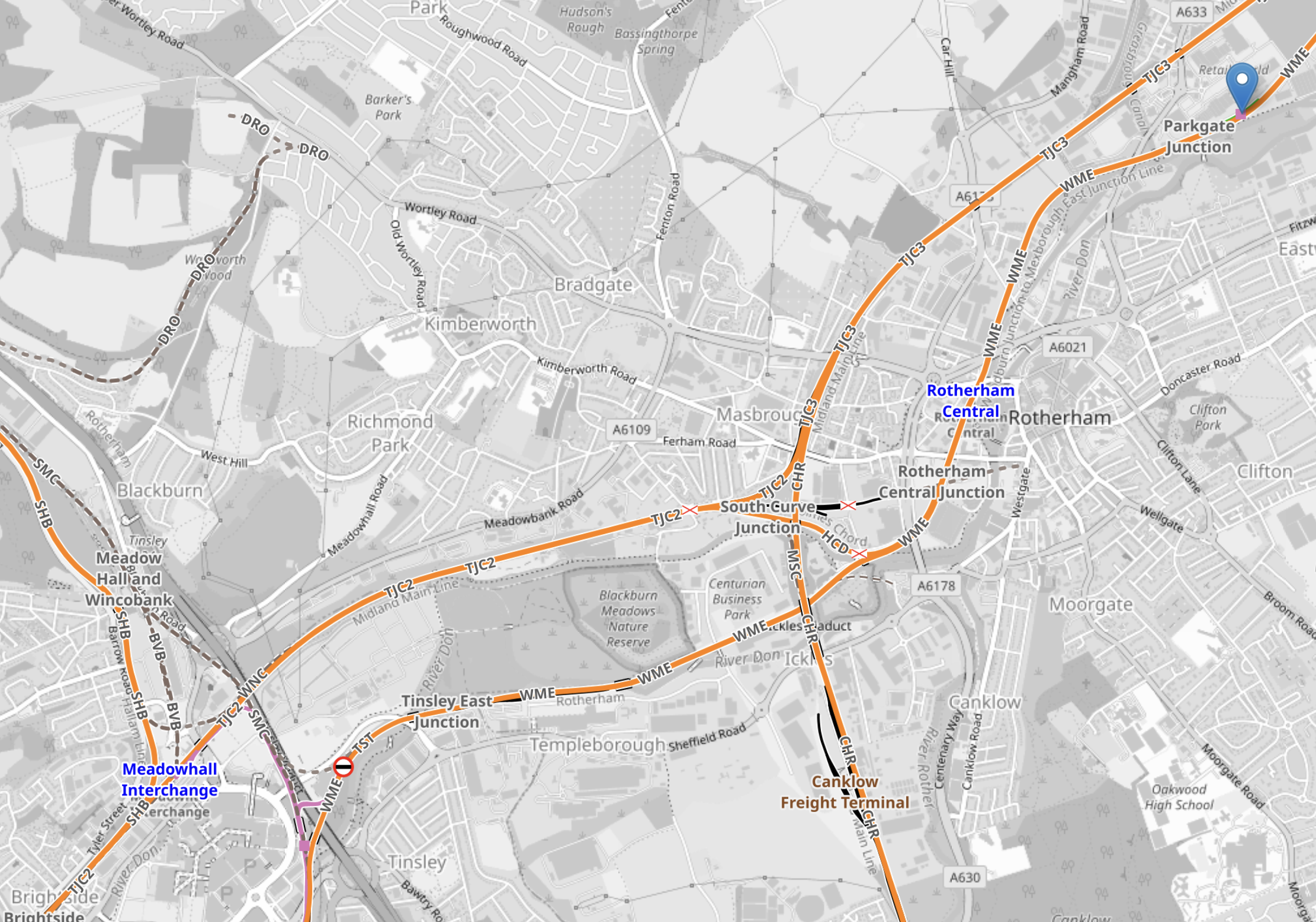
Note.
- The orange lines are the main railway tracks.
- Rotherham Parkgate is indicated by the blue arrow in the North-East corner of the map.
- Trains would run between Sheffield and Rotherham Parkgate via Meadowhall Interchange and Rotherham Central.
- Trains and tram-trains would share tracks through Rotherham Central.
After passing Rotherham Parkgate trains would go to Swinton, and then on to Doncaster or Leeds.
Sheffield And Leeds Via Rotherham Parkgate
Currently, there is an hourly service between Leeds and Sheffield, that goes through the Rotherham Parkgate site.
- It calls at Outwood, Wakefield Westgate, Sandal & Agbrigg, Fitzwilliam, Moorthorpe, Thurnscoe, Goldthorpe, Bolton-upon-Dearne, Swinton, Rotherham Central, Meadowhall.
- The service takes one hour and thirteen minutes, but there are eleven stops.
- As the distance is 38.9 miles, that works out at an average speed of 32 mph.
I suspect this schedule was written for Pacers.
The Department of Transport is aiming for a forty minute journey, which is an average speed of 58.4 mph.
Consider.
- If you look at the maximum speeds of the route from Rotherham Parkgate to Wakefield Westgate, it is 21.8 miles of 100 mph track.
- About twenty miles to the South of Wakefield Westgate is electrified.
- Leeds and Wakefield Westgate is 10.1 miles of 75-85 mph track.
- LNER’s expresses leave Wakefield Westgate, eleven minutes after leaving Leeds.
- I can find a TransPennine Express that takes thirteen minutes to go between Sheffield and Rotherham Parkgate late at night on the way to the depot.
The eleven and thirteen minutes mean that leaves 16 minutes for Rotherham Parkgate to Wakefield Westgate, if Sheffield and Leeds are to be timed at forty minutes, which would be an average speed of 82 mph between Rotherham Parkgate and Wakefield Westgate.
I feel that for a forty minute journey between Leeds and Sheffield, the following conditions would need to be met.
- Very few stops. Perhaps only Meadowhall, Rotherham Parkgate and Wakefield Westgate.
- 100 mph running where possible.
- 100 mph trains
- Electric trains would help, as acceleration is faster. Battery-electric trains would probably be sufficient.
- Some track improvements might help.
But forty minutes would certainly be possible.
At present there are five trains per hour (tph) between Leeds and Sheffield.
- Northern – 2 tph – via Wakefield Kirkgate, Barnsley and Meadowhall – 58 minutes
- Northern – 1 tph – via Outwood, Wakefield Westgate, Sandal & Agbrigg, Fitzwilliam, Moorthorpe, Thurnscoe, Goldthorpe, Bolton-upon-Dearne, Swinton, Rotherham Central and Meadowhall – One hour and 13 minutes
- Northern – 1 tph – via Woodlesford, Castleford, Normanton, Wakefield Kirkgate, Darton, Barnsley, Wombwell, Elsecar, Chapeltown and Meadowhall – One hour and 19 minutes.
- CrossCountry – 1 tph – via Wakefield Westgate – 44 minutes
Note.
- Only the second service will go through Rotherham Parkgate.
- The CrossCountry service takes the more direct route avoiding Rotherham Parkgate.
- All trains go via Meadowhall, although the CrossCountry service doesn’t stop.
- If the CrossCountry service was run by electric trains, it might be able to shave a few minutes as part of the route is electrified.
The CrossCountry service indicates to me, that 40 minutes between Leeds and Sheffield will be possible, but a stop at Meadowhall could be dropped to save time.
Extending East Midlands Railway’s Sheffield Service To Leeds
Consider
- Sheffield station has two tph to London all day.
- The CrossCountry service looks like it could be timed to run between Leeds and Sheffield in forty minutes.
- An East Midlands Railway Class 810 train could probably be timed at 40 minutes between Leeds and Sheffield via Meadowhall, Rotherham Parkgate and Wakefield Westgate.
- The current Northern services could continue to provide connectivity for stations between Leeds and Sheffield.
Extending one tph of East Midlands Railway’s trains to Leeds would probably be sufficient to give two fast trains per hour between Leeds and Sheffield.
- The East Midlands Railway and CrossCountry services could provide a fast service between Leeds and Sheffield in forty minutes.
- If they were electric or battery-electric trains, I suspect that they could call at Meadowhall, Rotherham Parkgate and Wakefield Westgate.
- They could be backed up by the two tph through Barnsley, which could probably be speeded up to around fifty minutes by electrification or using battery-electric trains.
The East Midlands Railway service between London and Leeds would be under three hours.
- Rotherham would get an hourly train to London.
- ,London and Leeds in under three hours, would be slower than Leeds and King’s Cross.
- But the electrification of the Midland Main Line would speed it up a bit.
A fast Leeds and Derby service might compensate for the loss of the Eastern leg of High Speed Two.
Sheffield And Doncaster Via Rotherham Parkgate
At present there are three tph between Sheffield and Doncaster.
- Northern – 1 tph – via Meadowhall, Rotherham Central, Swinton, Mexborough and Conisbrough – 42 minutes
- Northern – 1 tph – via Meadowhall – 28 minutes
- TransPennine Express – 1 tph – via Meadowhall – 27 minutes
Note.
- The first Northern train continues calling at all stations to Adwick.
- The second Northern train continues calling at all stations to Scarborough.
- Both Northern services go through Rotherham Parkgate.
- The TransPennine Express service takes the more direct route avoiding Rotherham Parkgate.
- All trains go via Meadowhall.
These services would give good connectivity for a London train, with a change at Rotherham Parkgate.
Improving Tracks Between Doncaster, Leeds and Sheffield
Consider.
- About 65 % of the main routes between Doncaster, Leeds and Sheffield have a maximum operating speed of 100 mph.
- Doncaster and Leeds is electrified.
- Only 35 miles is without electrification.
- The Midland Main Line is in the process of being electrified to Sheffield.
- There are plans to extend the Sheffield tram-trains to Doncaster Sheffield Airport, that I wrote about in Sheffield Region Transport Plan 2019 – Doncaster Sheffield Airport.
There is also heavyweight electrification infrastructure through Rotherham Central for the Sheffield tram-trains.


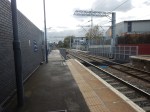
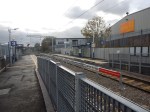
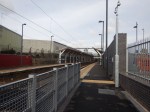

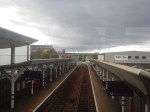


As it is only used by the tram-trains it may be only 750 VDC. But it can probably handle 25 KVAC.
- Could these routes be improved to allow faster running?
- Would it be cost-effective to electrify between Sheffield and the East Coast Main Line and the Doncaster and Leeds Line?
- Alternatively battery-electric trains could be run on the routes between Doncaster, Leeds and Sheffield, charging at all three main stations.
Any form of electric train should be faster, as acceleration and deceleration is faster in any electric train, be it powered by electrification, batteries, hydrogen or a hybrid diesel-battery-electric powertrain.
Conclusion
Flotation Energy, Vårgrønn Seal Exclusivity Agreements For 1.9 GW Scottish Floaters
The title of this post, is the same as that of this article on offshoreWIND.biz.
This is the sub-heading.
Vårgrønn, a joint venture between Plenitude (Eni) and HitecVision, and Flotation Energy have signed exclusivity agreements for two floating offshore wind developments under Crown Estate Scotland’s Innovation and Targeted Oil and Gas (INTOG) leasing round.
These two paragraphs give more details.
Once completed, the floating offshore wind farms, with up to a total of 1.9 GW capacity, will provide renewable electricity to oil and gas platforms, aiming to reduce carbon emissions from the assets they supply.
In addition, Green Volt and Cenos projects will also provide electricity to the UK grid.
Note.
I can’t see a loser with these wind farms.
- The wind farms provide zero-carbon electricity to oil and gas platforms.
- These platforms cut their emissions, by not using fossil fuels to generate the electricity they need for their operation.
- Some platforms use gas to generate the electricity, so this gas can be delivered to the shore for the UK gas network.
- Any spare electricity will be available for using in the UK electricity grid.
- Crown Estate Scotland will be paid for the lease for the wind farm.
There will be no carbon emissions from the platforms, but there will be extra onshore emissions from any gas that is currently used to power the platforms, if it is burnt onshore in power stations and industrial processes, or used for heating.
But increasingly gas in the UK will be used in applications, where the carbon emissions can be captured for use or storage.
It will be very interesting to see how as offshore operations are decarbonised our total carbon emissions change.
 The Anonymous Widower