It Was Hot So I Drunk A Lot Today
It’s still 35 degrees as I write this and judging by the empties I’ve been drinking heavily all day.
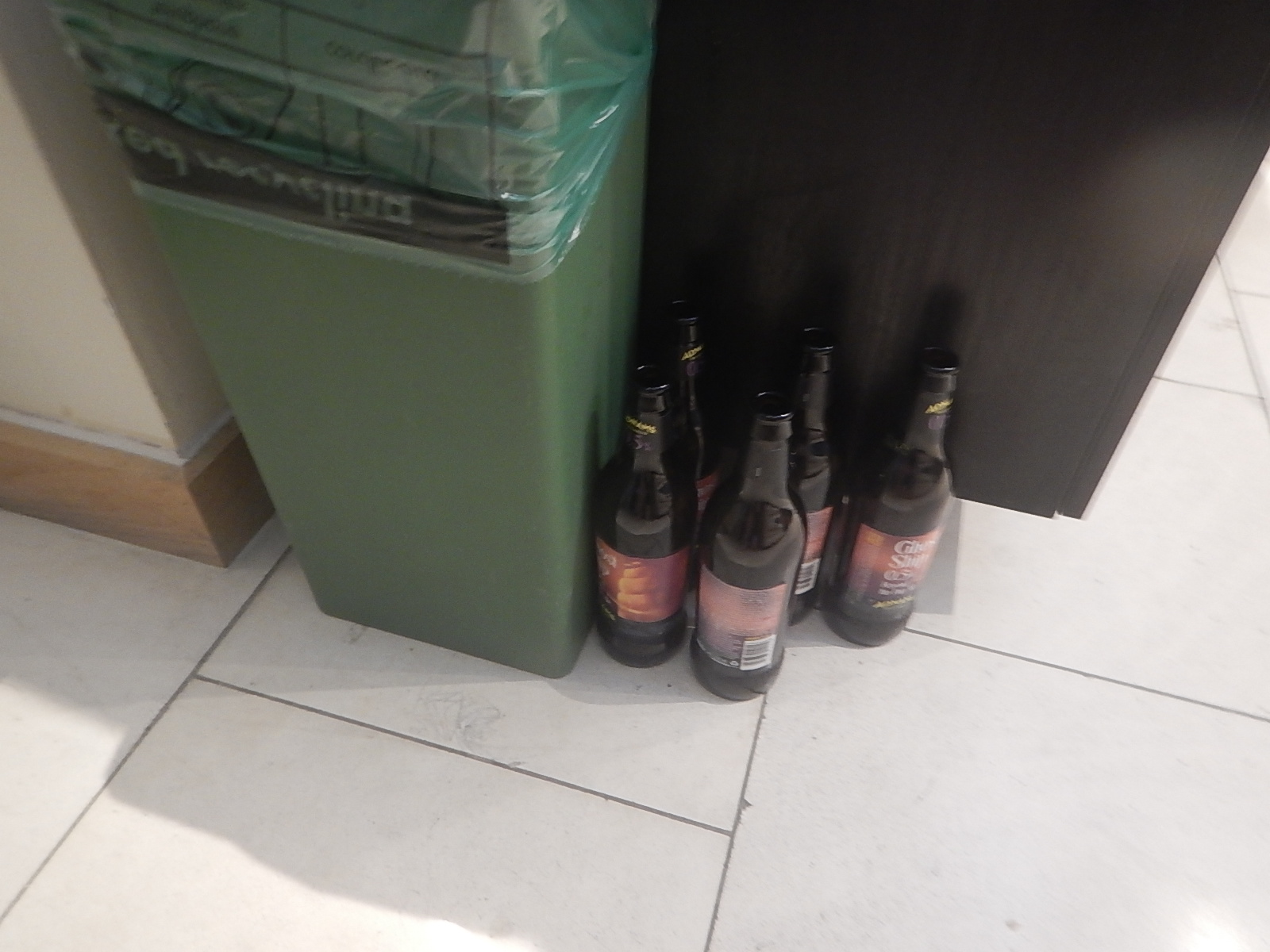
I’ve actually had six bottles of Adnams 0.5% Alcohol Ghost Ship, as I started at 09:00 this morning and I’ve also drunk two cans of Diet Coke and three mugs of tea. So I must have drunk close to four litres today, none of which was alcoholic.
But when I was eighteen and serving in The Merryhills pub in Oakwood, I can remember drinking thirteen bottles of Guinness and walking home.
At the time, I didn’t know I was coeliac, so why did the beer not effect my gut?
As my father, who was undoubtedly an undiagnosed coeliac, also drank bottles of Guinness, were the bottles gluten-free, as I believe Guinness 0.0 is today.
It certainly looks like my grandfather, who was a professional alcoholic could have got started on beer to just keep himself hydrated. He then moved on to spirits and that contributed to his early death around forty.
US Floating Wind Platform Developer Issues RFI To Fabricators Worldwide
The title of this post, is the same as that of this article on offshoreWIND.biz.
This is the sub-heading.
Aikido Technologies, which recently secured a spot at a Norwegian offshore demo site, has released an RFI for its 15 MW ‘AO60’ floating wind platform to offshore wind fabricators.
These are the first four paragraphs which add more details.
The California-based floating wind foundation developer said on social media that it had issued the RFI to more than ten “top-tier offshore wind fabricators from around the world”.
The RFI has been released in three separate packages, each tailored to a specific type of facility: one for standard offshore steel shops, one for tubular/jacket yards, and one for monopile/tower facilities.
“This is how we can build 1, 50 or 100 of these units with existing fabrication capabilities, with components that can be easily transported around the world for final assembly at a local port. No need for custom yards, custom vessels or custom ports”, Aikido Technologies said.
In May 2025, the company was allocated a slot for its AO60 platform at the Marine Energy Test Centre (METCentre) in Norway, where Aikido will deploy what it says is a first-of-its-kind 15 MW demonstration project.
As someone, who wrote project management computer systems for thirty years, I like Aikido’s plans and feel they would be well suited to the UK, where we have quite a few local ports, that would appear suitable for final assembly of the A060 platforms.
In Yarmouth Harbour To Be ‘Completed’ In £60m Project, I describe the expansion of the Port of Great Yarmouth.
These two paragraphs describe the work to be done.
Peel Ports said it would invest between £50m and £60m in Great Yarmouth’s Outer Harbour by developing the southern terminal, creating a roll-on roll-off (RORO) lift ramp and a large storage area.
Port director Richard Goffin said the construction work, which is set to begin in 2026, would “complete” the port as laid out in a business case in the early 2000s.
This image from Peel Ports Group shows how the Port of Great Yarmouth will look after the the proposed development.
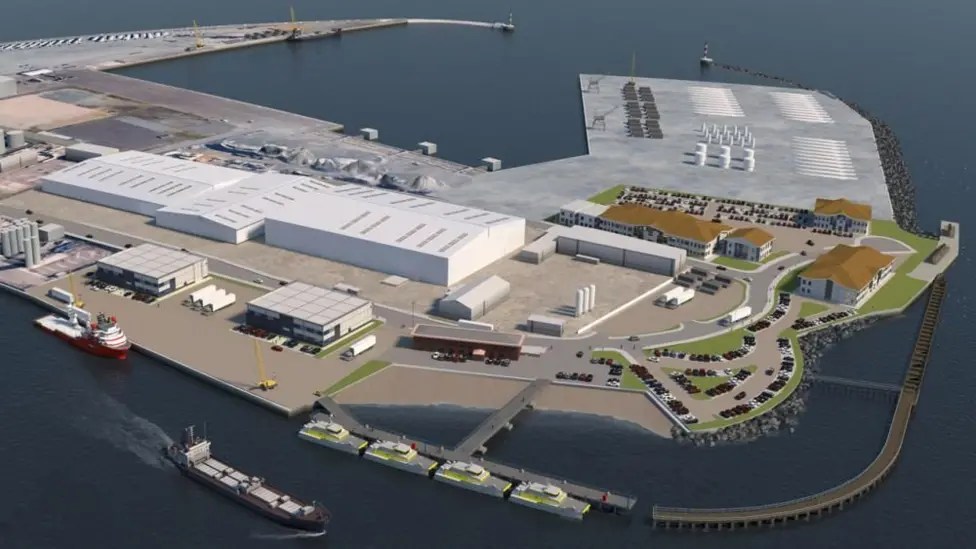
As the Port of Great Yarmouth has a depth of ten metres it could be an ideal base for the assembly and maintenance of floating wind turbines.
Renewable Power By 2030 In The UK
I am doing this to see what the total output will be by the net election.
Offshore Wind Power
I shall start with offshore wind power.
- Operational in July 2025 – 16,035 MW
- 2025 – Dogger Bank A – 1,235 MW
- 2026 – Sofia – 1,400 MW
- 2026 – Dogger Bank B – 1,235 MW
- 2026 – East Anglia 1 North – 800 MW
- 2026 – East Anglia 3 – 1,372 MW
- 2027 – Dogger Bank C – 1,218 MW
- 2027 – Hornsea 3 – 2,852 MW
- 2027 – Inch Cape – 1,080 MW
- 2027 – Llŷr 1 – 100 MW
- 2027 – Llŷr 2 – 100 MW
- 2027 – Norfolk Boreas – 1,380 M
- 2027 – Whitecross – 100 MW
- 2028 – Aspen – 1008 MW
- 2028 – Morecambe – 480 MW
- 2028 – Ossian – 2,610 MW
- 2028 – Stromar – 900 MW
- 2029 – Beech – 1008 MW
- 2029 – East Anglia 2 – 967 MW
- 2029 – Green Volt – 400 MW
- 2029 – Mona – 1,500 MW
- 2029 – Morgan – 1,500 MW
- 2029 – Norfolk Vanguard East – 1,380 MW
- 2029 – Norfolk Vanguard West – 1,380 MW
- 2029 – North Falls – 504 MW
- 2029 – West of Orkney – 2,000 MW
- 2030 – Awel y Môr – 500 MW
- 2030 – Bellrock – 1,200 MW
- 2030 – Berwick Bank – 4,100 MW
- 2030 – Caledonia – 2,000 MW
- 2030 – Cedar – 1008 MW
- 2030 – Five Estuaries – 353 MW
- 2030 – Morven – 2,907 MW
- 2030 – N3 Project – 495 MW
- 2030 – Outer Dowsing – 1,500 MW
- 2030 – Rampion 2 Extension – 1,200 MW
This gives these yearly totals, if I use pessimistic dates.
- 2025 – 1,235 MW
- 2026 – 4,807 MW
- 2027 – 5,350 MW
- 2028 – 4,998 MW
- 2029 – 9,631 MW
- 2030 – 15,263 MW
This adds up to a total of 58,897 MW.
Solar Power
For solar power, I just asked Google AI and received this answer.
The UK government aims to have between 45 and 47 gigawatts (GW) of solar power capacity by 2030. This goal is set out in the Solar Roadmap and aims to reduce energy bills and support the UK’s clean power objectives. The roadmap includes measures like installing solar on new homes and buildings, exploring solar carports, and improving access to rooftop solar for renters.
Let’s assume that we only achieve the lowest value of 45 GW.
But that will still give us at least 100 GW of renewable zero-carbon power.
Energy Storage
For pumped storage hydro, I asked Google AI and received this answer.
The UK’s pumped storage hydro (PSH) capacity is projected to more than double by 2030, with six projects in Scotland, including Coire Glas and Cruachan 2, potentially increasing capacity to around 7.7 GW from the current approximately 3 GW. This would be a significant step towards meeting the National Grid’s required 13 GW of new energy storage by 2030, though achieving this depends on policy support and investment.
It looks like there is about another 5 GW of capacity to find.
Hull Trains Allows Delay Compensation To Be Donated To Charity
The title of this post is the same as that of this article on Rail Advent.
These four paragraphs fill in the details.
Customers of Hull Trains who claim compensation for train delays can now choose to donate their Delay Repay funds to charity.
Hull Trains’ new official charity partner for 2025 is P.A.U.L For Brain Recovery, which supports people across the Humber region affected by acquired brain injury. P.A.U.L For Brain Recovery is based in Hull, and has recently expanded its support to cover communities in north and northeast Lincolnshire, and has ambitions to support people further afield.
The new scheme will allow customers to opt for the delay compensation to be sent directly to the charity. Hull Trains operates trains between Hull and London King’s Cross, stopping at Grantham in Lincolnshire, and serving other stations on the East Coast route, including Doncaster and Beverley.
The founder and CEO of P.A.U.L For Brain Recovery is Paul Spence. In 2012, Paul suffered a brain haemorrhage when he was the victim of an unprovoked attack. After he was discharged from a high dependency unit, he and his family faced a long and challenging road to recovery, and quickly realised that support available in the community was sadly lacking.
I think it’s rather a good idea.
 The Anonymous Widower