Is This The Problem At Bedford With The East West Railway?
The East West Railway certainly has problems at Bedford.
These two posts seem to be creating an impasse on getting the railway built and/or operational.
So I took a quick look at the rail lines in the rail around and trough Bedford, as shown in this OpenRailwayMap.

Note.
- The Midland Main Line runs down the left hand side of the map.
- Bedford station is marked by the blue arrow,
- The East Coast Main Line runs down the right hand side of the map.
- Stations on the East Coast Main Line from North to South are St. Neots, Sandy, Biggleswade and Arlesey.
- The East West Railway is planned to connect to the East Coast Main Line at a new station at Tempsford , which will be South of St. Neots.
- The original connection was to be at Sandy.
- There used to be a railway between Bedford and Sandy.
- This railway between Bedford and Sandy, was the Varsity Line and I write about its current status in Is The Varsity Line Trackbed Between Bedford And Sandy Still There? – No, is the only answer.
- In Did Beeching Recommend Closure Of The Varsity Line?, I find out that he didn’t and it was totally the fault of Labour Politicians; Barbara Castle and Tom Fraser, with perhaps some help from Harold Wilson. Were they jealous that Oxford and Cambridge had a better link than the non-existent one across the North?
Did Beeching Recommend Closure Of The Varsity Line?
I asked Google AI, the question in the title of this post, and received this answer.
No, Dr. Richard Beeching did not recommend the closure of the Varsity Line in his 1963 report The Reshaping of British Railways.
In fact, the report recommended retaining the line with only minor curtailments.However, despite surviving the initial “Beeching cuts,” the line was ultimately closed a few years later following separate reviews by the government.
Key Details of the Line’s Demise
The First Hit (1966): Local freight facilities and minor sections were withdrawn.
Total Passenger Closure (1967): The passenger service between Bedford and Cambridge was officially withdrawn by then-Minister of Transport Tom Fraser.
The Oxford-Bletchley Segment: The passenger services between Oxford and Bletchley avoided complete closure at that time but were eventually heavily scaled back.
The closure of the Bedford to Cambridge section is largely attributed to Transport Minister Barbara Castle’s decision, as she authorized the withdrawal of services due to the route’s heavy operating losses.
Is The Varsity Line Trackbed Between Bedford And Sandy Still There?
I asked Google AI, the question in the title of this post, and received this answer.
The trackbed between Bedford and Sandy largely survives as an open, walkable alignment, but the original tracks themselves were removed decades ago.
Today, much of this section of the old Varsity Line (often referred to as the Bedford-Cambridge route) operates as National Cycle Route 51, though a few specific areas have seen modern development.
The status of the trackbed varies depending on the specific location:
:Bedford to Sandy (General): The rails and sleepers are long gone, but the formation is still clearly visible.
A large section of the trackbed between Bedford and Sandy has been repurposed as a traffic-free path for cyclists and walkers (National Cycle Route 51).
Sandy Station Area: The former Varsity Line platforms at Sandy were cleared after the line closed in 1968.
New housing has been built over parts of the route through the town, altering the original alignment.Because the original alignment was interrupted by modern housing and other developments in certain areas, the upcoming East West Rail project—which aims to re-establish a direct railway between Oxford and Cambridge—will bypass the original trackbed for the central section (Bedford to Cambridge).
The new railway is slated to follow a slightly different route.
Conclusion
Peaks And Dales Line Feasibility Study Identifies £2-£8 Billion Potential
The title of this post, is the same as that of this article on RailUK.
The first two paragraphs add some detail.
The full Feasibility Study for the proposed Peaks and Dales Line – a reinstated rail corridor linking the North West and East Midlands between Manchester and Derby, via Chinley, Buxton, Bakewell, and Matlock – has now been formally submitted to the Department for Transport for review through the Better Value Rail Working Group, comprising the DfT, Network Rail, and the Office of Rail and Road.
The submission marks a significant milestone for the project and confirms that no prohibitive technical, environmental, planning or delivery barriers have been identified at feasibility stage that would prevent the corridor progressing to the next phase of development, a Strategic Outline Business Case (SOBC).
But it is probably best to read the full report.
The full study identifies that reinstating the Peaks and Dales Line could:
- Generate £2-£8 billion in additional Gross Value Added (GVA) by 2040.
- Remove approximately 1.0-4.3 million car ‘trips’ per year from the road network (from visitor travel alone).
- Deliver carbon savings of around 15,000-60,000 tonnes of CO₂e per year.
- Provide a viable sustainable travel option for the 13-26 million people who visit the Peak District annually, around 85% of whom currently arrive by car.
- Improve access for the 3.16 million people across the connected regions who do not own or have access to a car.
- Support sustainable access to approximately 17,870 previously identified potential new homes, all located on brownfield land outside the National Park.
- Enable £447-£804 million in potential voluntary Land Value Capture contributions, reducing reliance on public funding.
These are large claims and yet more reasons to believe that Harold Wilson was one of our worst Prime Ministers, as Beeching’s most heinous crimes, were performed under his watch.
This paragraph sums up the work to be done.
The study also confirms that only around 11.5 miles of reinstated railway would be required to reconnect a corridor of nearly 50 route miles, representing a highly efficient reuse of historic rail infrastructure. Various upgrade options are being considered across the remainder of the route.
I wonder, if it might be best to go for a single-track railway, that could be upgraded to full double-track later.
This image from a Stadler press release shows their prototype RS ZERO.
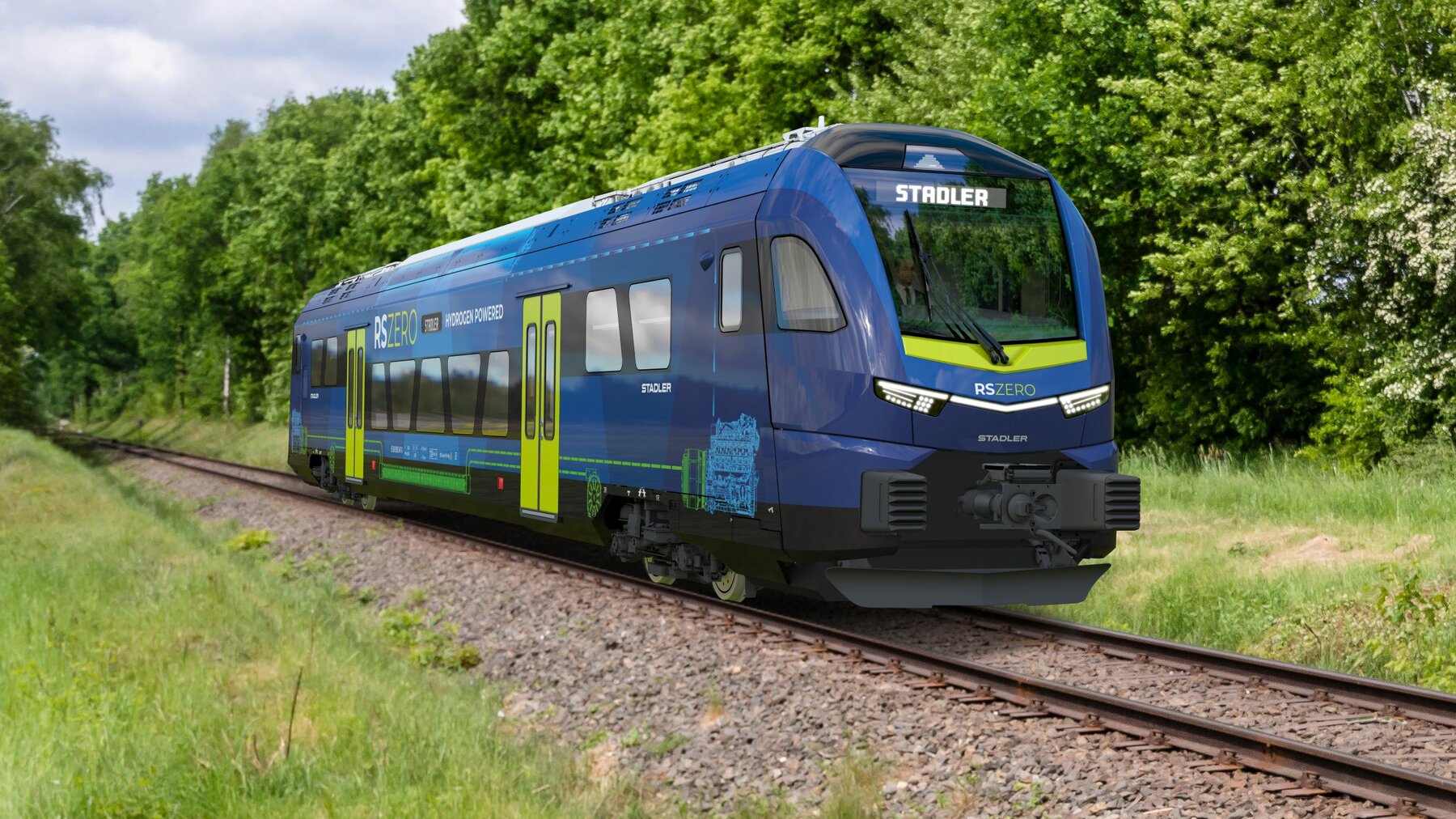
As these trains can run on hydrogen, this could create a zero-carbon railway through the Peaks and Dales.
Using this approach could see the railway running before the next election.
50,000 Journeys Made On Northumberland Line In First Month
The title of this post is the same as that of this press release on the Northumberland County County.
These are the first few paragraphs of the press release.
Passengers have made more than 50,000 journeys on Northumberland Line services in the first month after the opening.
The line reopened to passengers – for the first time in 60 years – in December, thanks to a £298.5m project involving the Department for Transport, Network Rail, Northumberland County Council and Northern.
Services now call at Newcastle, Manors, Seaton Delaval and Ashington, with a journey along the entire 18-mile route taking around 35 minutes and a single ticket costing no more than £3.
Tickets for more than 50,000 journeys have been bought since the opening and Saturdays have been particularly popular.
That includes more than 3,500 journeys made on the opening day (Sunday, 15 December), when the platform in Ashington was packed with people waiting to catch a glimpse of the first service.
That is what I would call a good start.
But after I wrote Dartmoor Line Passes 250,000 Journeys On Its First Anniversary, As Rail Minister Visits To Mark Official Opening Of The Station Building, a year after that line opened, I don’t think 50,000 for the Northumberland line is a high figure.
At 50,000 in the first month with only four stations, they must be on course for well over half a million passengers, when the line is fully open.
Figures like these show that enthusiasts for rail closures like Richard Beeching and Harold Wilson were so very wrong.
We need several reopened and new railway lines like this!
RWE Acquires 4.2-Gigawatt UK Offshore Wind Development Portfolio From Vattenfall
The title of this post, is the same as that of this press release from RWE.
These three bullet points, act as sub-headings.
- Highly attractive portfolio of three projects at a late stage of development, with grid connections and permits secured, as well as advanced procurement of key components
- Delivery of the three Norfolk Offshore Wind Zone projects off the UK’s East Anglia coast will be part of RWE’s Growing Green investment and growth plans
- Agreed purchase price corresponds to an enterprise value of £963 million
These two paragraphs outline the deal.
RWE, one of the world’s leading offshore wind companies, will acquire the UK Norfolk Offshore Wind Zone portfolio from Vattenfall. The portfolio comprises three offshore wind development projects off the east coast of England – Norfolk Vanguard West, Norfolk Vanguard East and Norfolk Boreas.
The three projects, each with a planned capacity of 1.4 gigawatts (GW), are located 50 to 80 kilometres off the coast of Norfolk in East Anglia. This area is one of the world’s largest and most attractive areas for offshore wind. After 13 years of development, the three development projects have already secured seabed rights, grid connections, Development Consent Orders and all other key permits. The Norfolk Vanguard West and Norfolk Vanguard East projects are most advanced, having secured the procurement of most key components. The next milestone in the development of these two projects is to secure a Contract for Difference (CfD) in one of the upcoming auction rounds. RWE will resume the development of the Norfolk Boreas project, which was previously halted. All three Norfolk projects are expected to be commissioned in this decade.
There is also this handy map, which shows the location of the wind farms.
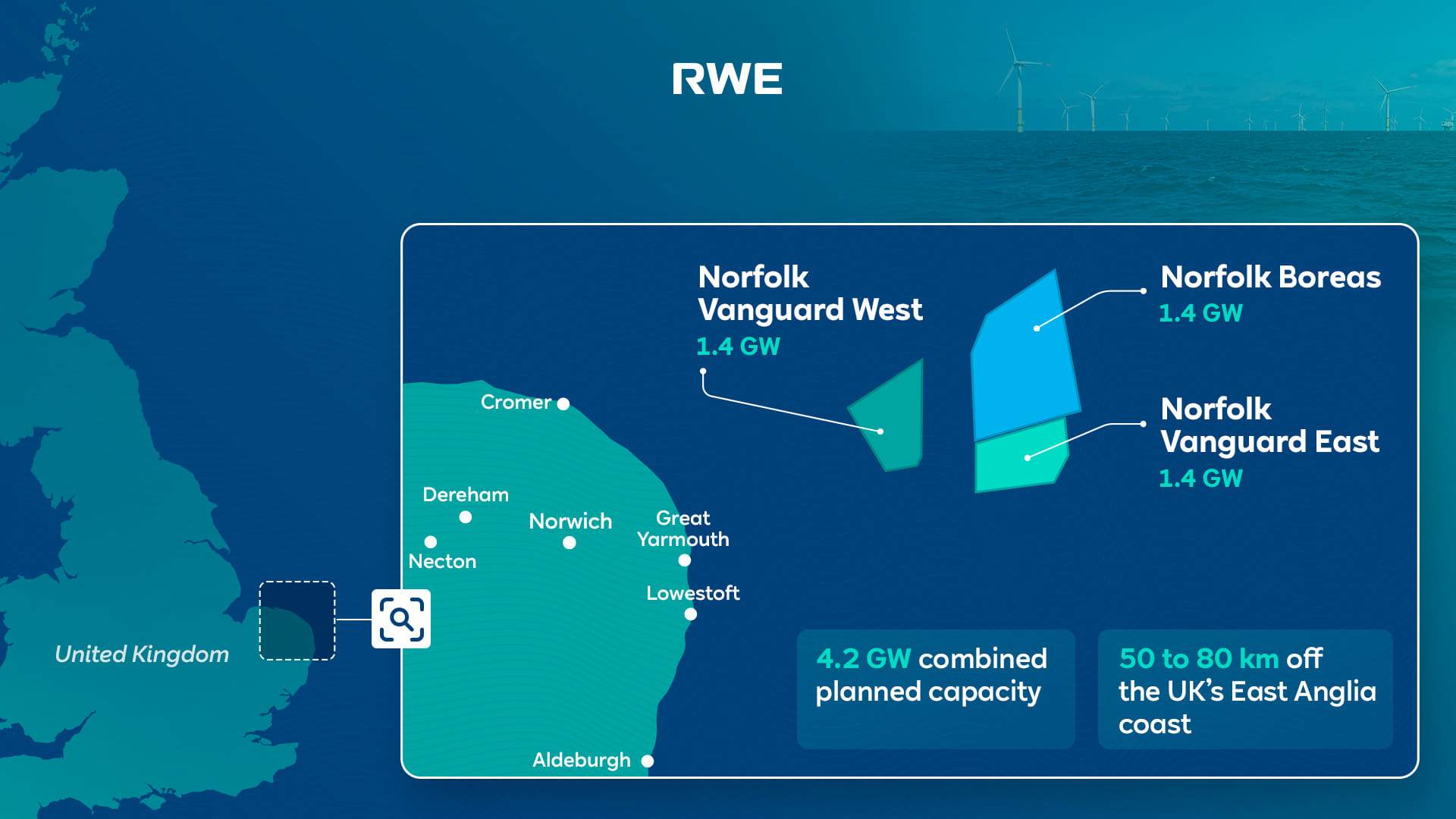
Note that there are a series of assets along the East Anglian coast, that will be useful to RWE’s Norfolk Zone development.
- In Vattenfall Selects Norfolk Offshore Wind Zone O&M Base, I talked about how the Port of Great Yarmouth will be the operational base for the Norfolk Zone wind farms.
- Bacton gas terminal has gas interconnectors to Belgium and the Netherlands lies between Cromer and Great Yarmouth.
- The cable to the Norfolk Zone wind farms is planned to make landfall between Bacton and Great Yarmouth.
- Sizewell is South of Lowestoft and has the 1.25 GW Sizewell B nuclear power station, with the 3.2 GW Sizewell C on its way, for more than adequate backup.
- Dotted around the Norfolk and Suffolk coast are 3.3 GW of earlier generations of wind farms, of which 1.2 GW have connections to RWE.
- The LionLink multipurpose 1.8 GW interconnector will make landfall to the North of Southwold
- There is also the East Anglian Array, which currently looks to be about 3.6 GW, that connects to the shore at Bawdsey to the South of Aldeburgh.
- For recreation, there’s Southwold.
- I can also see more wind farms squeezed in along the coast. For example, according to Wikipedia, the East Anglian Array could be increased in size to 7.2 GW.
It appears that a 15.5 GW hybrid wind/nuclear power station is being created on the North-Eastern coast of East Anglia.
The big problem is that East Anglia doesn’t really have any large use for electricity.
But the other large asset in the area is the sea.
- Undersea interconnectors can be built to other locations, like London or Europe, where there is a much greater need for electricity.
- In addition, the UK Government has backed a consortium, who have the idea of storing energy by using pressurised sea-water in 3D-printed concrete hemispheres under the sea. I wrote about this development in UK Cleantech Consortium Awarded Funding For Energy Storage Technology Integrated With Floating Wind.
A proportion of Russian gas in Europe, will have been replaced by Norfolk wind power and hydrogen, which will be given a high level of reliability from Suffolk nuclear power.
I have some other thoughts.
Would Hydrogen Be Easier To Distribute From Norfolk?
A GW-range electrolyser would be feasible but expensive and it would be a substantial piece of infrastructure.
I also feel, that placed next to Bacton or even offshore, there would not be too many objections from the Norfolk Nimbys.
Hydrogen could be distributed from the site in one of these ways.
- By road transport, as ICI did, when I worked in their hydrogen plant at Runcorn.
- I suspect, a rail link could be arranged, if there was a will.
- By tanker from the Port of Great Yarmouth.
- By existing gas interconnectors to Belgium and the Netherlands.
As a last resort it could be blended into the natural gas pipeline at Bacton.
In Major Boost For Hydrogen As UK Unlocks New Investment And Jobs, I talked about using the gas grid as an offtaker of last resort. Any spare hydrogen would be fed into the gas network, provided safety criteria weren’t breached.
I remember a tale from ICI, who from their refinery got a substantial amount of petrol, which was sold to independent petrol retailers around the North of England.
But sometimes they had a problem, in that the refinery produced a lot more 5-star petrol than 2-star. So sometimes if you bought 2-star, you were getting 5-star.
On occasions, it was rumoured that other legal hydrocarbons were disposed of in the petrol. I was once told that it was discussed that used diluent oil from polypropylene plants could be disposed of in this way. But in the end it wasn’t!
If hydrogen were to be used to distribute all or some of the energy, there would be less need for pylons to march across Norfolk.
Could A Rail Connection Be Built To The Bacton Gas Terminal
This Google Map shows the area between North Walsham and the coast.
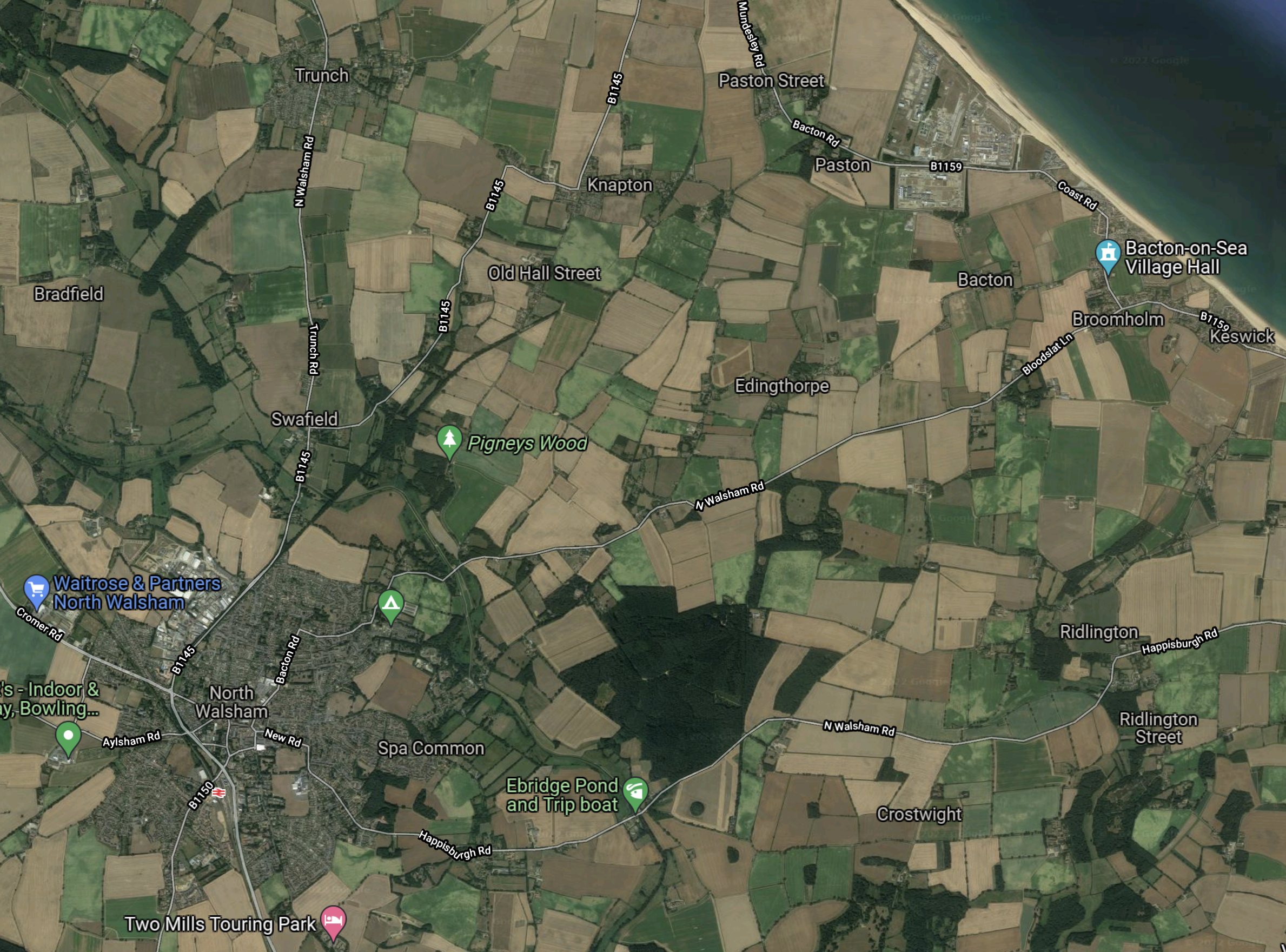
Note.
- North Walsham is in the South-Western corner of the map.
- North Walsham station on the Bittern Line is indicated by the red icon.
- The Bacton gas terminal is the trapezoidal-shaped area on the coast, at the top of the map.
ThisOpenRailwayMap shows the current and former rail lines in the same area as the previous Google Map.

Note.
- North Walsham station is in the South-West corner of the map.
- The yellow track going through North Walsham station is the Bittern Line to Cromer and Sheringham.
- The Bacton gas terminal is on the coast in the North-East corner of the map.
I believe it would be possible to build a small rail terminal in the area with a short pipeline connection to Bacton, so that hydrogen could be distributed by train.
There used to be a branch line from North Walsham station to Cromer Beach station, that closed in 1953.
Until 1964 it was possible to get trains to Mundesley-on-Sea station.
So would it be possible to build a rail spur to the Bacton gas terminal along the old branch line?
In the Wikipedia entry for the Bittern Line this is said.
The line is also used by freight trains which are operated by GB Railfreight. Some trains carry gas condensate from a terminal at North Walsham to Harwich International Port.
The rail spur could have four main uses.
- Taking passengers to and from Mundesley-on-Sea and Bacton.
- Collecting gas condensate from the Bacton gas terminal.
- Collecting hydrogen from the Bacton gas terminal.
- Bringing in heavy equipment for the Bacton gas terminal.
It looks like another case of one of Dr. Beeching’s closures coming back to take a large chunk out of rail efficiency.
Claire Coutinho And Robert Habeck’s Tete-a-Tete
I wrote about their meeting in Downing Street in UK And Germany Boost Offshore Renewables Ties.
- Did Habeck run the RWE/Vattenfall deal past Coutinho to see it was acceptable to the UK Government?
- Did Coutinho lobby for SeAH to get the contract for the monopile foundations for the Norfolk Zone wind farms?
- Did Coutinho have a word for other British suppliers like iTMPower.
Note.
- I think we’d have heard and/or the deal wouldn’t have happened, if there had been any objections to it from the UK Government.
- In SeAH To Deliver Monopiles For Vattenfall’s 2.8 GW Norfolk Vanguard Offshore Wind Project, I detailed how SeAH have got the important first contract they needed.
So it appears so far so good.
Rackheath Station And Eco-Town
According to the Wikipedia entry for the Bittern Line, there are also plans for a new station at Rackheath to serve a new eco-town.
This is said.
A new station is proposed as part of the Rackheath eco-town. The building of the town may also mean a short freight spur being built to transport fuel to fire an on-site power station. The plans for the settlement received approval from the government in 2009.
The eco-town has a Wikipedia entry, which has a large map and a lot of useful information.
But the development does seem to have been ensnared in the planning process by the Norfolk Nimbys.
The Wikipedia entry for the Rackheath eco-town says this about the rail arrangements for the new development.
The current rail service does not allow room for an extra station to be added to the line, due to the length of single track along the line and the current signalling network. The current service at Salhouse is only hourly during peak hours and two-hourly during off-peak hours, as not all trains are able to stop due to these problems. Fitting additional trains to this very tight network would not be possible without disrupting the entire network, as the length of the service would increase, missing the connections to the mainline services. This would mean that a new 15-minute shuttle service between Norwich and Rackheath would have to be created; however, this would interrupt the main service and cause additional platforming problems. Finding extra trains to run this service and finding extra space on the platforms at Norwich railway station to house these extra trains poses additional problems, as during peak hours all platforms are currently used.
In addition, the plans to the site show that both the existing and the new rail station, which is being built 300m away from the existing station, will remain open.
. As the trains cannot stop at both stations, changing between the two services would be difficult and confusing, as this would involve changing stations.
I feel that this eco-town is unlikely to go ahead.
Did RWE Buy Vattenfall’s Norfolk Zone To Create Green Hydrogen For Europe?
Consider.
- Vattenfall’s Norfolk Zone is a 4.2 GW group of wind farms, which have all the requisite permissions and are shovel ready.
- Bacton Gas terminal has gas pipelines to Europe.
- Sizewell’s nuclear power stations will add security of supply.
- Extra wind farms could be added to the Norfolk Zone.
- Europe and especially Germany has a massive need for zero-carbon energy.
The only extra infrastructure needing to be built is the giant electrolyser.
I wouldn’t be surprised if RWE built a large electrolyser to supply Europe with hydrogen.
The East Coast Main Line And The A14
I finally managed to get pictures of the new route of the A14 as it crosses over the East Coast Main Line.
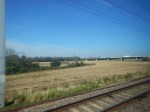
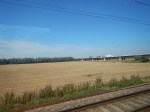
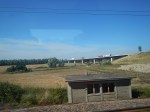
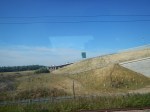
This Google Map shows the crossing from above.
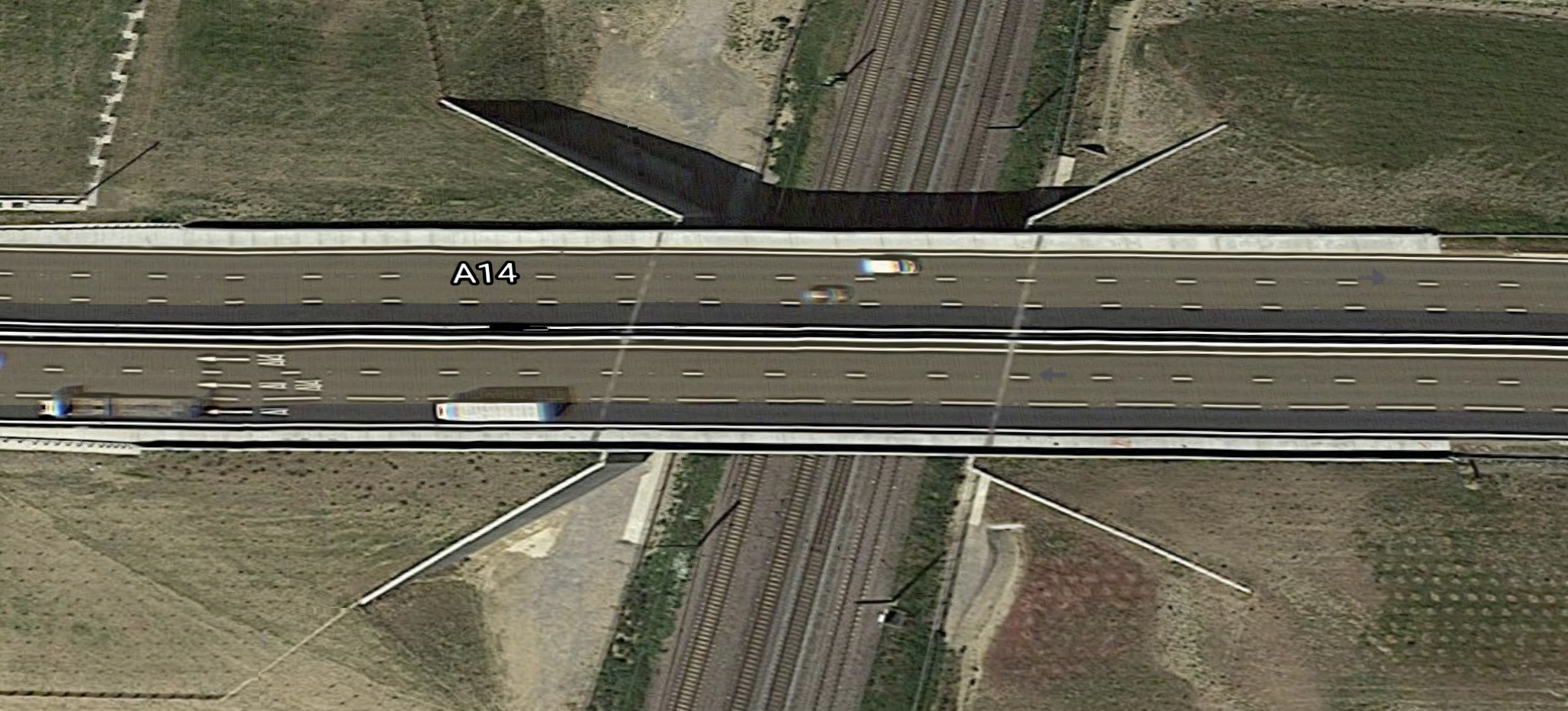
I do wonder, why in the 1990s, when they created the A14, they didn’t do a proper job?
But then history shows that Governments don’t seem to get East-West links in the UK right.
- Road and rail links across the Pennines are inadequate.
- Only recently have Edinburgh and Glasgow been properly connected by rail.
- The electrification of the Great Western Railway between London and Swansea has been an on-off project, that should have been done after electrification of the East Coast Main Line, before the team of engineers had been disbanded.
- Road and rail links to the port of Holyhead were ignored for years and could be improved again.
- The Varsity Line between Oxford and Cambridge was recommended by Beeching to be kept, but Harold Wilson closed it and now we are recreating it.
Is it because none of these routes are of much importance for politicians and civil servants living in London?
Wigan North Western Station Set For Platform Extension Work
The title of this post. is the same as that of this article on Rail Advent.
This is the first three paragraphs.
Wigan North Western is set to undergo a multi-million-pound platform extension to provide passengers between Manchester and Leeds with longer trains.
The work is part of the Great North Rail Project and will see Platform 3 made longer to allow four-carriage trains to call at the station.
Northern can then provide extra capacity for passengers and move trains in and out of its new £46m depot at Ince-in-Makerfield.
This Google Map shows Wigan North Western station.
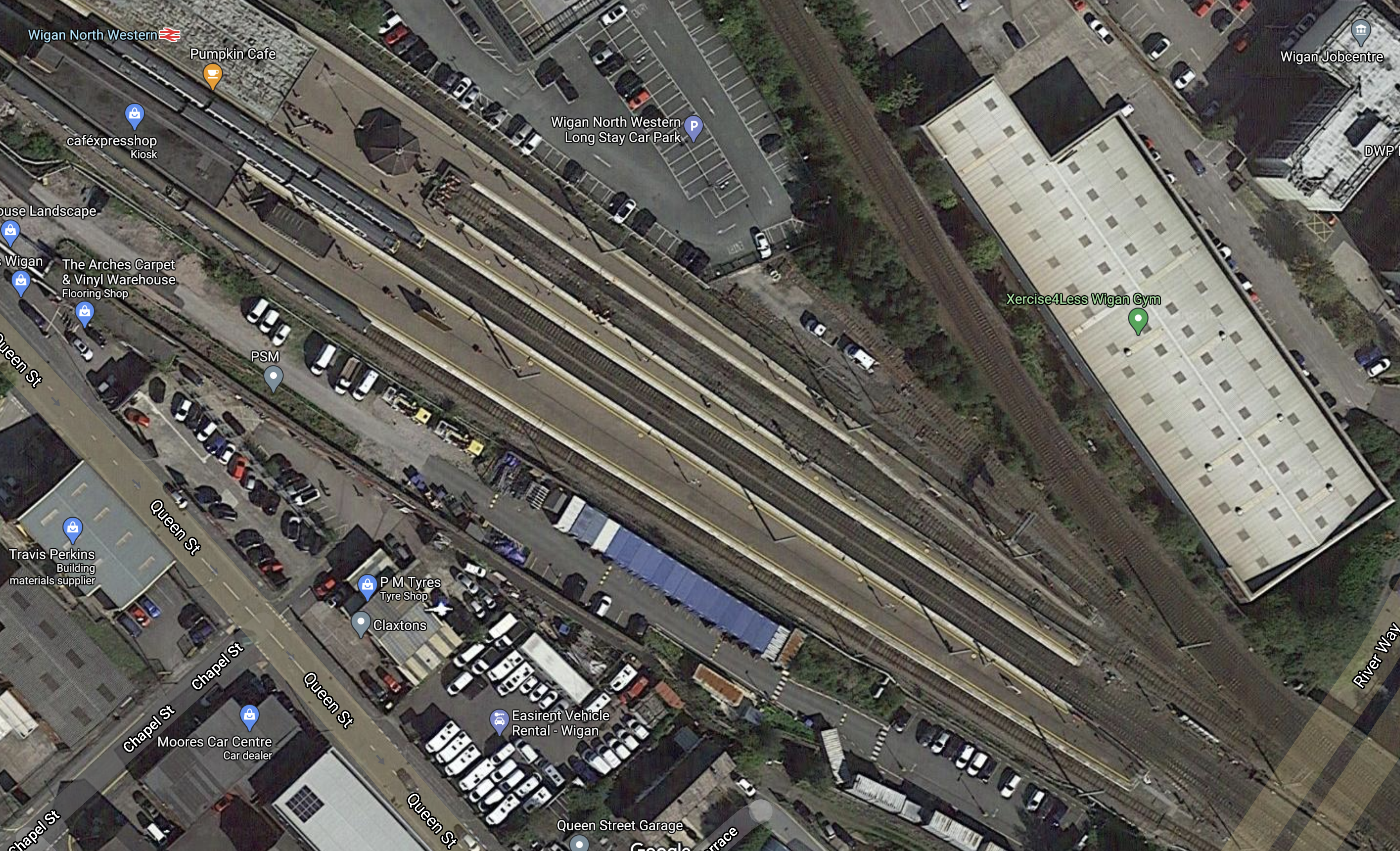
Note.
- The six platforms are numbered 1-6 from North-East to South-West.
- Platforms 1, 2 and 3 are used for trains that start at the station and go to the Alderley Edge, Leeds, Manchester Piccadilly, Manchester Victoria and Stalybridge.
- Platform 1 is quite long and regularly handles two trains at the same time.
- Platforms 2 and 3 could probably be longer.
- Platforms 1, 2 and 3 appear to have their own private access track direct to Wigan Springs Branch TMD to the South, where multiple units can be serviced and washed.
- The access track sneaks down the East side of the West Coast Main Line, so that trains don’t block the track, when transferring to and from the depot.
- The double-track going North between the station and the large building leads to Wigan Wallgate station.
This picture shows the Platforms 1, 2 and 3 at the station.
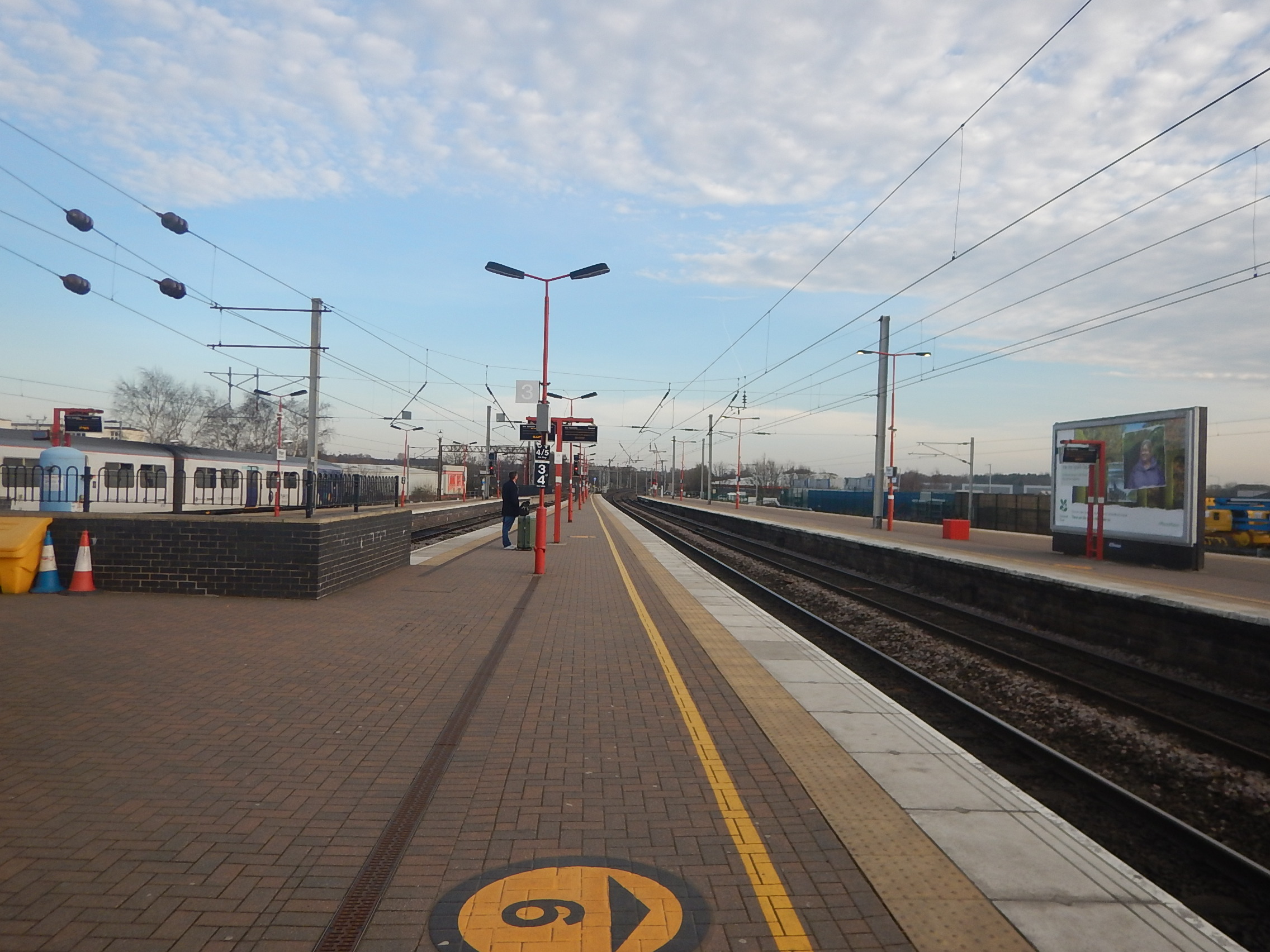
If you look at the train movements early in the morning, trains come out of the depot and start their first diagram from one of the three platforms on the left.
Lengthening Platform 3 will make this easier and more efficient.
Wigan North Western Station, West Coast Main Line And High Speed Two
Wigan North Western station is currently served by the following Avanti West Coast services on the West Coast Main Line.
- London Euston and Glasgow Central – Hourly
- London Euston and Glasgow Central or Edinburgh via Birmingham New Street – Hourly
- London Euston and Blackpool – Four trains per day
TransPennine Express also run four trains per day between Liverpool Lime Street and Glasgow Central.
The station is also planned to get two hourly High Speed Two services, which should be delivered in Phase 2a of the project.
- London Euston and Lancaster via Old Oak Common, Crewe, Warrington Bank Quay and Preston.
- Birmingham Curzon Street and Edinburgh or Glasgow via Preston, Lancaster, Carlisle and some other stations, depending on the Scottish destination.
It certainly looks like Wigan North Western station is being updated to have a comprehensive network of local electric services to give a large number of stations, good access to current West Coast Main Line and future High Speed Two services.
High Speed Two Through Lancashire Stations
The direct London and Scotland services are proposed to be as follows.
- They will run at a frequency of two trains per hour (tph)
- They will be formed of two classic-compatible 200 metre long trains.
- They will split and join at Carlisle, to give both Edinburgh and Glasgow a two tph service from London.
- One tph will stop at Old Oak Common, Preston and Carlisle in England.
- The second train will also stop at Birmingham Interchange in England.
Adding the services together, it would appear that the following services will run through Lancashire.
- One tph – London Euston and Lancaster – One 200 metre train
- Two tph – London Euston and Scotland – Two 200 metre trains.
- One tph – Birmingham and Scotland – One 200 metre train
This totals up to four tph.
I will now look, at the High Speed Two traffic through the various stations.
Warrington Bank Quay
I know Warrington Bank Quay is in Cheshire, these days, but High Speed Two trains will pass through.
Current plans include a by-pass round Warrington will be built for Phase 2b.
- Before by-pass four tph will pass through Warrington Bank Quay, with one stopping.
- After by-pass only one stopping train will pass.
If the High Speed Two service replaces the current Avanti West Coast service to Scotland, any problems at the station should be easy to solve.
Preston
Preston would appear to have three tph from High Speed Two passing through, with all stopping.
Phase 2b will add another tph.
Lancaster
Lancaster would appear to have two tph from High Speed Two passing through, with none stopping.
In addition, one service from Euston will terminate.
Phase 2b will add another tph, that passes thrugh.
Conclusion
It looks to me, that this relatively small project will be worthwhile.
How many other projects of this size need being added to the network urgently? I can think of possibly three within a dozen miles of my house, of which at least one is down to Beeching and/or British Rail’s cost cutting of the 1960s or 1970s.
Bletchley Viaduct – 24th August 2020
The Bletchley Viaduct is falling down, as these pictures show.
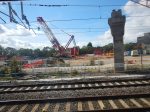
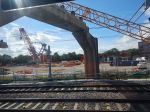
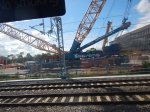
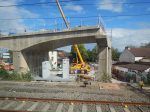
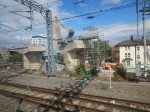
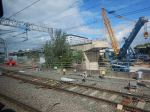
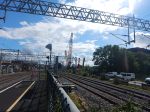
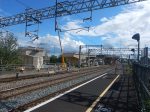
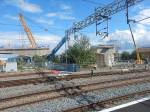
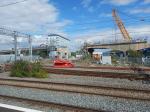
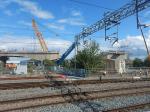
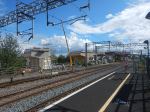
Considering, that Lord Beeching said that the Varsity Line between Oxford and Cambridge shouldn’t be closed, I wonder how much money has been wasted over the years, by questionable engineering and Government decisions on this viaduct.
Route Selected For Cambridge Metro Link Between New A1307 Travel Hub And Biomedical Campus
The title of this post is the same as that of this article on the Haverhill Echo.
This Google Map shows the Fourwentways intersection between the A1307 and A11 roads, where the travel hub will be created.
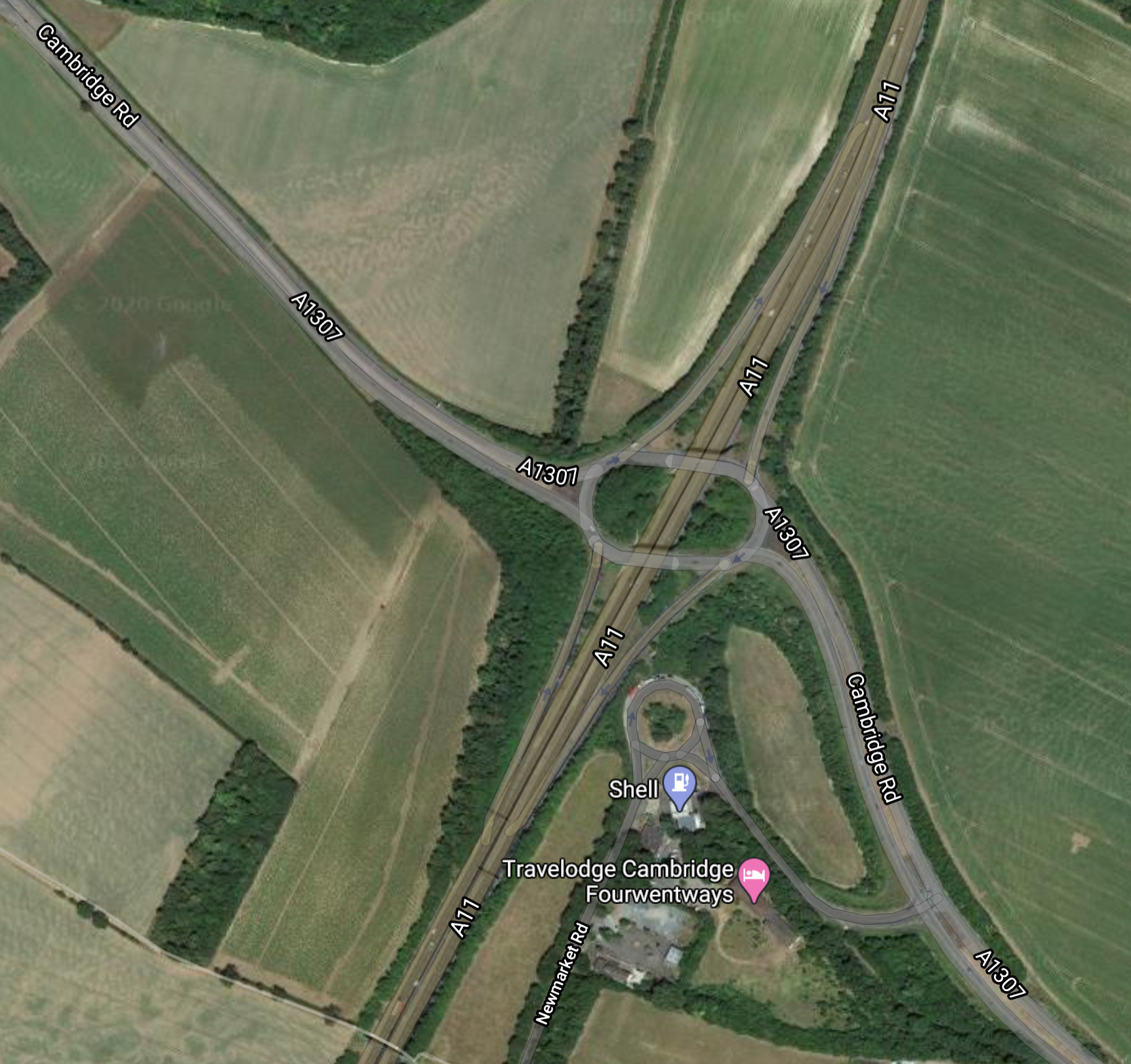
The travel hub will be South-West of the roundabout, which I know well, as it was only a few miles from where I lived.
It will improve the bus connection between Haverhill and the Biomedical Campus and the City of Cambridge.
It would appear that the Stour Valley Railway, is being recreated by extending the Cambridgeshire Busway.
The closure of the Stour Valley Railway in 1967, was one of the most ill-judged of the Beeching closures, that were solidly backed by the government of Harold Wilson, who believed that everyone should have their own car and that railways wouldn’t be needed. They also believed that all goods should go by truck. Is that what you get, when your Transport Secretary is an ex-lorry driver and a former boss of the lorry-drivers trade union?
We now have a Government backing these two projects.
- The rebuilding of the Varsity Line between Oxford and Cambridge, which Beeching recommended for retention, but Wilson still closed.
- The extension of the Cambridgeshire Busway to Haverhill.
As with so many projects around the country, all these totally unjustified cuts are being reversed.
But these railways should never been closed in the first place.

