Along The Reopened Gospel Oak To Barking Line
The Gospel Oak to Barking Line reopened after its major upgrade on Monday.
The stations generally need need work in several areas
- Gantries – Some overhead gantries have not been erected.
- Lifts – Some stations need lifts.
- Platform Extensions – Some stations need platform extensions to be completed
- Ticket Gates – Ticket gates might need to be installed at some stations.
- Wires – Wires need to be installed.
These are some pictures I have taken along the line.
Barking

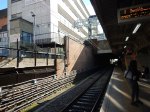
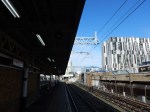


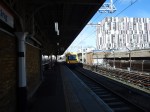

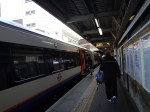
Barking station is more or less complete.
Might need – Lifts, Platform Extensions
Note the unique step-free double cross-platform interchange to Gospel Oak and c2c services.
Woodgrange Park


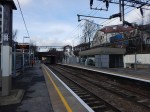


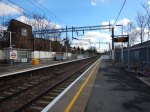

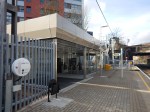
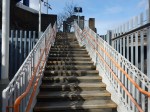
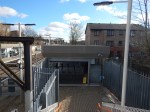

Woodgrange Park station is more or less complete.
In progress – Platform Extensions
Needs – Lifts
Note the excellent refuges enclosing the new ticket gates.
Wanstead Park


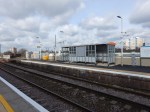

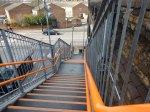


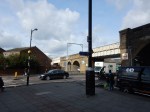

Wanstead Park station needs a fair bit of work.
In progress – Platform Extensions
Still to do – Gantries, Wires
Needs – Lifts
Leytonstone High Road


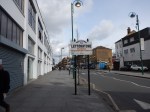

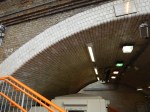


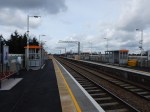


Leytonstone High Road station needs a fair bit of work.
In progress – Platform Extensions
Still to do – Gantries, Wires
Needs – Lifts
The station’s brickwork has been sympathetically restored.
Leyton Midland Road


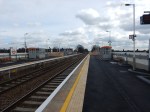


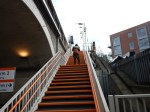



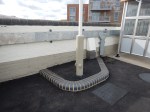
Leyton Midland Road station needs a fair bit of work.
In progress – Platform Extensions
Still to do – Gantries, Wires
Needs – Lifts
I’ve used the station many times and the builders had done a very good job in improving the station with imaginative use of brickwork.
Walthamstow Queens Road


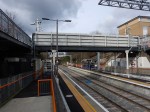

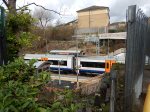


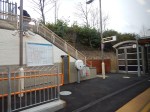
Walthamstow Queens Road station is more or less complete.
In progress – Platform Extensions
Still to do – Gantries, Wires
Migh need – Lifts
Needs – Ticket Gates
I think adding lifts is going to be difficult, but aren’t strictly necessary due to the long ramps.
Blackhorse Road


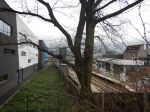
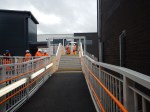

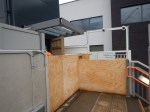
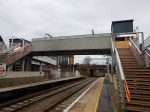

Blackhorse Road station is more or less complete .
In progress – Lifts, Platform Extensions
Still to do – Gantries, Wires
South Tottenham


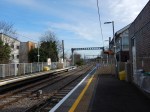


South Tottenham station is more or less complete.
In progress – Platform Extensions
Still to do – Wires
Harringay Green Lanes


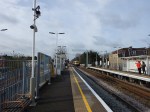


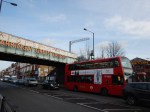
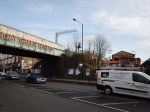
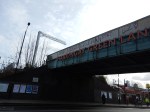

At Harringay Green Lanes station needs a fair bit of work.
In progress – Platform Extensions
Still to do – Gantries, Wires
Needs – Lifts, Ticket Gates
Crouch Hill


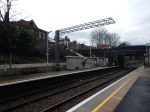
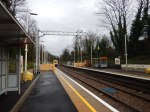

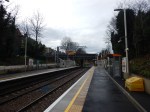
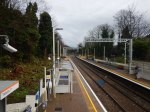
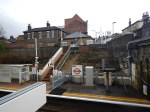
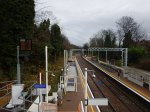

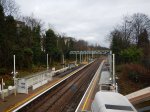
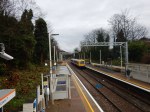
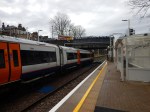
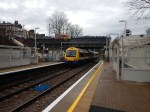
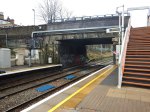

Crouch Hill station needs a fair bit of work.
In progress – Platform Extensions
Still to do – Gantries, Wires
Needs – Lifts, Ticket Gates
There might also be a serious problem with not enough clearance under the station bridge.
Upper Holloway

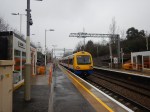



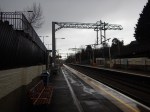
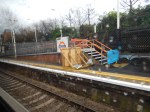
Upper Holloay station needs a fair bit of work.
In progress – Platform Extensions
Still to do – Wires
Needs – Lifts, Ticket Gates
Gospel Oak


Gospel Oak station is more or less complete.
Might need – Platform Extension
I was glad to see the coffee hut hat been reinstated.
Passengers Comments
Speaking to other passengers, all seemed pleased that the line was back in service and a couple remarked how neat and tidy it all was.
No-one seemed to be bothered work was still ongoing.
I even got praise for the Class 172 trains, which will be replaced by new Class 710 trains in 2018. One guy said there’s no need, although when I told him, they will be bigger, he liked that.
A Wildlife Problem That Network Rail Don’t Have
Network Rail might get trouble with newts and bats, when they try to build a station, but at least they don’t get this problem that happened in India.
How do you make elephant-proof level crossings?
West Anglia Route Improvement – The High Meads Loop
This map from carto.metro.free.fr shows the lines at Stratford.
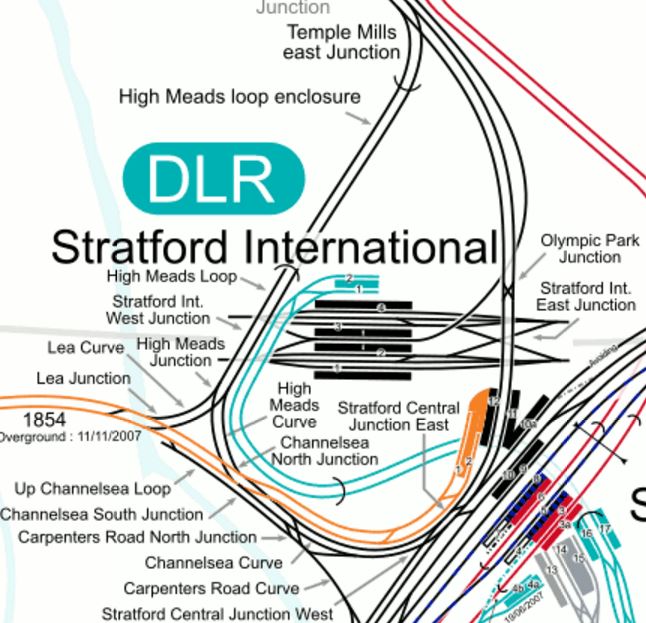
Note Temple Mills East Junction at the Northern (top) end of the map.
If you go North from here, you are on the Temple Mills Branch of the West Anglia Main Line and you will pass through Lea Bridge station and Coppermill Junction before you reach Tottenham Hale station.
Go South from that Junction and you pass the crossover of Olympic Park Junction, cross over the Eastern End of Stratford International station and then arrive in Platforms 11 and 12 at Stratford station.
Platform 11 is used for the current two trains per hour (tph) that go up and down the West Anglia Main Line, but Platform 12 is currently just giving out messages saying “I’m Free!”
Platforms like these can generally handle four tph, as they do at stations like Highbury and Islington or Dalston Junction. But is a capacity of eight tph enough if some Stansted and Cambridge services are added to the mix at Stratford?
But there may be other possibilities!
On the map in this post, look at the lines to the North-West of Platform 11 and 12 at Stratford station and how they curve round the Eastfield Shopping Centre and Stratford International station.
The main route is called the High Meads Loop and this picture taken from a Docklands Light Railway train to Stratford Internation station, shows the twin-track loop.
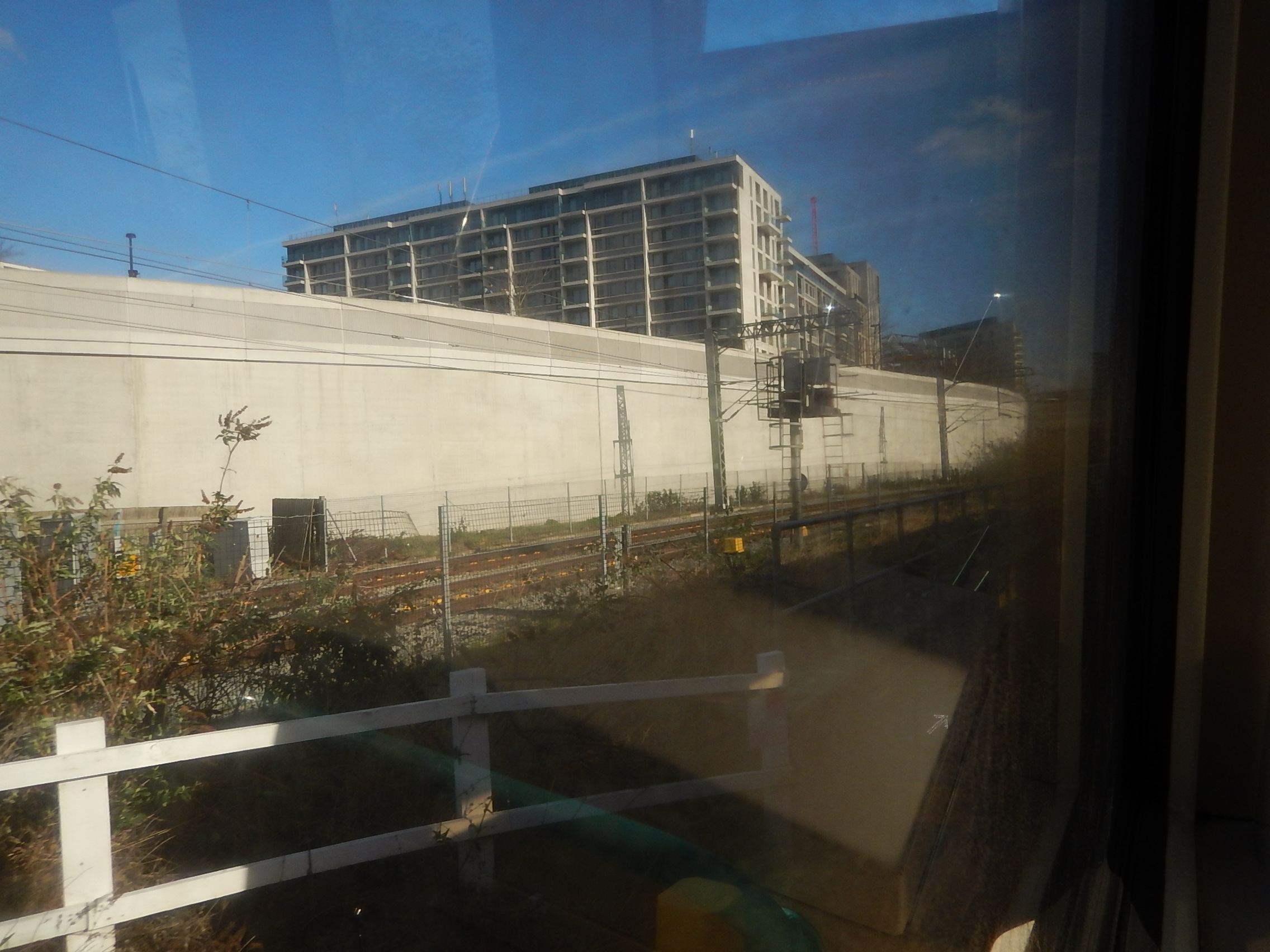
Southbound trains from Tottenham Hale could do the following.
- Call at Platform 1 in Lea Bridge station.
- Call in Plastform 11 at Stratford station.
- Go round the High Meads Loop and past the Stratford International DLR station.
- Rejoin the Temple Mills Branch on the Down Line at Temple Mills East Junction.
- Call at Platform 2 in Lea Bridge station.
The train has been turned round using the High Meads Loop, after a stop at Platform 11 in Stratford station.
So do trains currently take this route?
On this page in RailForums, this was said in a post made in 2006.
Another option is the use of Channelsea Junction and the High Meads loop to turn trains at Stratford. I’ve managed to go from Stansted Airport to Stratford and back again without changing ends using that particular route before now.
I would assume from the words, the poster of the information is a driver. So they should know!
Channelsea Junction is clearly shown on the map in this post.
I have a few questions, that should be answered.
Is The Route Bi-Directional?
I suspect it is and trains would call in the unused Platform 12 at Stratford station. As I said in Platforms 11 and 12 At Stratford,
Trains stopping in Platform 12, will have a very simple step-free access to the London Overground services in Platforms 1 and 2.
My personal view, would be that services using the loop called in Platform 12, as that would give me easy access from the North London Line from where I live.
But going round this way through Platform 12 at Stratford would mean that trains would have to cross on the flat at Temple Mills East Junction.
How Long Are Platforms 11 and 12 at Stratford?
They certainly accept an eight-car train as they do now, but would they accept a twelve-car one?
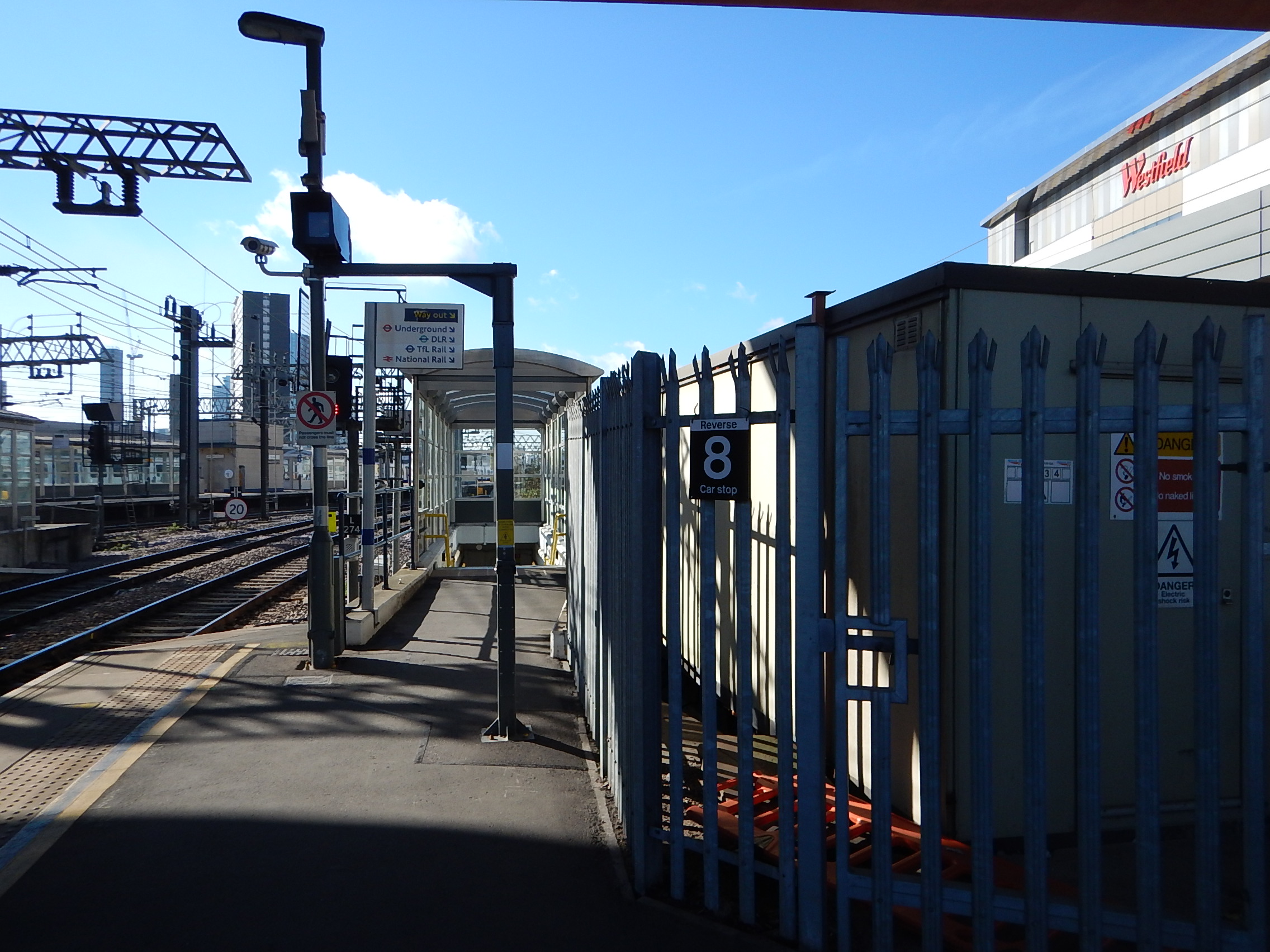
The Picture Says 8
If they can’t and it would be needed to accept Greater Anglia’s new Stadler Flirts for the Stansted Express, there would appear to be space to lengthen the platforms, at the Temple Mills End.
It has to be asked if Platforms 11 and 12 have enough capacity.


I would appear that they have been built reasonably wide to accept high passenger numbers.
What Services Could Use This Loop?
I suspect any service arriving at Stratford from the West Anglia Main Line, that needed to be turned back, could use this route.
- Angel Road using the new STAR service.
- Bishops Stortford
- Broxbourne
- Cambridge
- Chingford using the Hall Farm Curve.
- Hertford East
- Stansted Airport
That is a very comprehensive list.
How Many Trains Per Hour Could Use The Loop?
The capacity of the loop could be at least as high as the similar Wirral Loop in Liverpool, which handles 12 tph or just one train every five minutes.
Modern signalling with a measure of Automatic Train Control could probably raise this figure substantially.
In addition, Platform 11 could probably handle four tph as it does now.
Could A Station Be Built On The High Meads Loop To Serve Stratford International?
If it could, it would ease one of London’s truly dreadful transport issues. How do you get to Stratford International station without walking a long way or going through Eastfield?
Can Services Using Platforms 11 and 12 At Stratford Access The North London Line?
As there is a triangular junction connecting the North London Line, the High Meads Loop and Platforms 11 and 12 at Stratford, a lot of services are possible, if they are needed.
But for the time being a good step-free interchange between Angel Road, Chingford and other services from the West Anglia Main Line to the North London Line services at Stratford is all that could be needed.
If High Meads Loop services called in Platform 12 at Stratford, that would be an ideal solution.
A short walk would connect North London Line services to Stanstead Airport services and local trains up and down the West Anglia Main Line.
Note the sign in this pictuire.

It directs passengers to Platform 12 for Stansted Airport services.
How Many Trains Per Hour Could Use The Loop?
The capacity of the loop could be at least as high as the similar Wirral Loop in Liverpool, which handles 12 tph or just one train every five minutes.
Modern trains and signalling with a measure of Automatic Train Control could probably rise this figure substantially.
So perhaps there could be twelve to fifteen tph through platform 12.
In addition, Platform 11 could probably handle four tph as a traditional terminal platform.
Do Any Other Services Use The Temple Mills Branch?
I’m not saying they don’t, but I’ve never a freight train go through Platform 11 or 12 at |Stratford or Tottenham Hale or Lea Bridge station.
But I have seen an engineering train at Coppermill Junction and empty stock needs to get in and out of Temple Mills Depot.
Conclusion
Trains arriving at Stratford station on the Temple Mills Branch of the West Anglia Main Line can call at Stratford station and go straight back from whence they came using the High Meads Loop.
One positive effect would be that however many trains went round the High Meads Loop, all could call at the following stations.
- Platform 1 at Lea Bridge station
- Platform 11 or 12 at Stratford station
- A platform at Stratford International station, if it were to be built.
- Platform 2 at Lea Bridge station
Look at the service that Lea Bridge station gets to and from Stratford.
West Anglia Route Improvement – Angel Road Station – 27th February 2017
Angel Road station is not the easiest to get to, with about two trains per day. This one of the reasons, that STAR is being built to increase the number of trains to Angel Road station to four trains per hour (tph).
This morning, I took the 0:36 from Lea Bridge station, which arrived at Angel Road at 08:48.
After taking a few pictures, I crossed the line on the footbriodge and took the 08:52 South to Tottenham Hale station.
These are the pictures I took.



This Google Map shows the station.
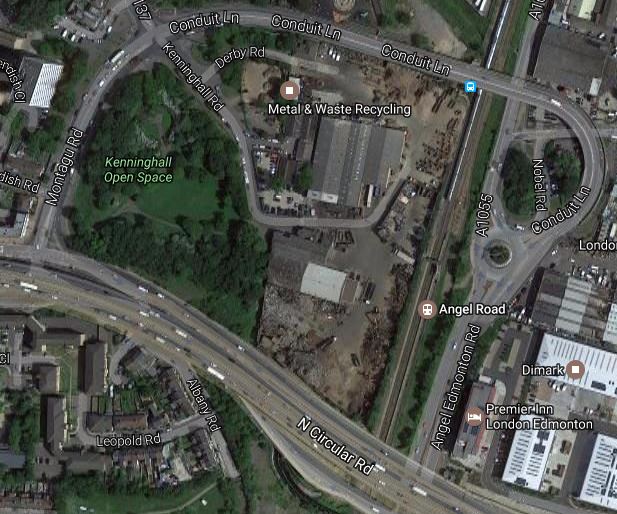
Angel Road is not an attractive station.
- The recycling plant to the West of the station doesn’t help.
- But it does have plenty of space.
- There is space behind Platform 1 to put a bay platform to act as the Northern terminus for the STAR service.
- The station could be within walking distance of the Edmonton Premier Inn, the Tesco Superstore and IKEA.
- But as the current entrance to the station is on Conduit Lane, you wouldn’t start from there.
Under Future in the Wikipedia entry for the station, this is said.
The London Borough of Enfield announced in January 2014 that the station being an integral part of the proposed Meridian Water development would be turned into a ‘thriving’ new hub and renamed as Meridian Water. The £3.5 billion project is being supported with funds from the Greater London Authority and Enfield Council, and will create up to 10,000 homes, meaning improvements to the railway station will be carried out to cope with the increase in patronage.
Hopefully, the station will be transformed, very much for the better.
Crossrail 2
Crossrail 2 will call at Angel Road station.
In the March 2017 Edition of Modern Railways, it was said that the designers of Crossrail 2 were looking at the possibility of a turnback platform at Tottenham Hale station.
But would this turnback platform be easier to build at Angel Road station?
Certainly, the space and the scrapyard at the current Angel Road station have interesting development possibilities.
Meridian Water Station
After reading Colin’s comment to the original post, I have created a new post about Meridian Water station.
Where Is Moorside?
Moorside is the name given to NuGen‘s new nuclear power complex in Cumbria.
I was drawn to write this post, by this article in Construction News, which is entitled Network Rail and Moorside nuclear power plant developer Nugen are putting together a business case for rail investment in Cumbria that could be worth as much as £400m.
four hundred million pounds could buy a lot of rail infrastructure.
But where exactly is Moorside?
This map was taken from the Our Site page on the NuGen web site, showsthe Moorside site outlined in red.
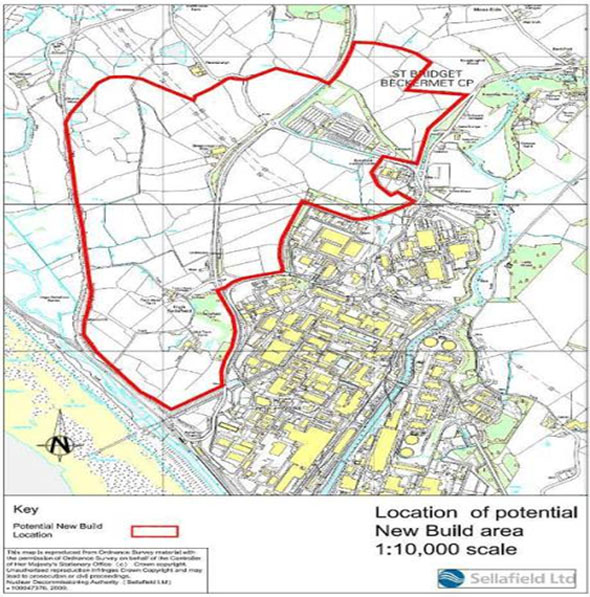
Note the development with the yellow-shaded areas to the South-East of the red-lined area. This is Sellafield.
And this is a Google Map of the coast around the nuclear reprocessing complex.
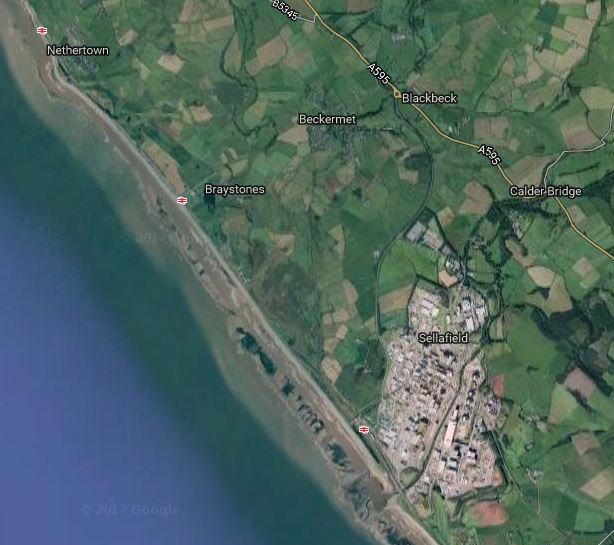
Note the railway stations along the coast. Sellafield station is by the nuclear complex, with Braystones and Nethertown to the North.
All three stations are on the Cumbrian Coast Line, which in addition to the passenger service, is used to transport freight, including nuclear waste to and from Sellafield.
Overlaying the NuGen map on the Coogle Map shows that Moorside will be to the North-West of Sellafield.
The Cumbrian Coast Line and the related Furness Line curve around Cumbria from Carlisle to Carnforth via Workington, Whitehaven, Sellafield and Barrow-in-Furness.
- The line is mainly double track, but with sections of single-track.
- The line is not electrified.
- Most of the trains are elderly diesels.
- The train service is vaguely hourly, but patchy in places.
The nuclear power complex is a ten billion pound project and will require large amounts of heavy equipment and construction materials to be transported the site. Also on a daily basis, large numbers of engineers and construction workers wilol need to get to one of the largest construction sites in the North of England.
Is Network Rail’s £400 million proposed vdevelopment, a reconstruction of the Cumbrian Coast and Furness Lines to the following standard.
- Double track.
- Electrification
- 100 mph line speed where possible.
- Build a new station at Moorside and any other places, where they are needed.
- Step-free stations
- At least two trains per hour in both directions.
- Full wi-fi and 4G on all trains and in stations.
Upgraded to a high standard, it might do more than help construction at Moorside and Sellafield and those that work in the two complexes.
- It might increase quality tourism.
- It could be a diversion route for the West Coast Main Line.
- It might make a London service to Barrow-in-Firness via HS2 a possibility.
Network Rail’s project could do a lot more than service the twin nuclear sites.
I explored the Cumbrian Coast Line in April 2015.
Bedwyn Station
I had to go to a meeting in Marlborough, so I took a train to Bedyn station for the first time in my life.
I took these pictures.
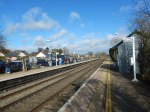
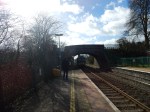
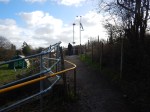
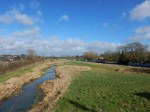
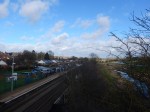
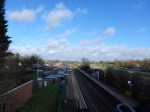
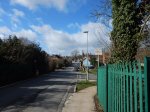
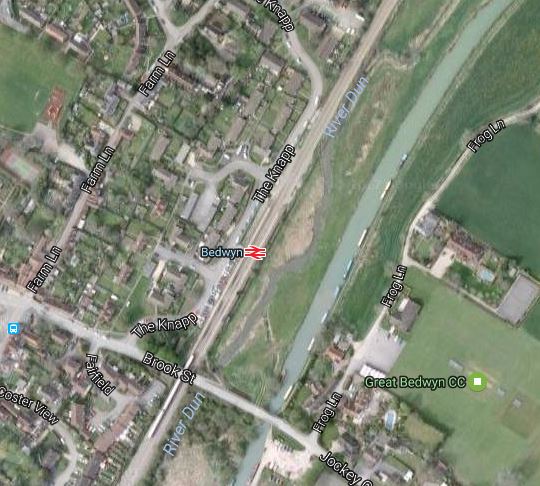
This Google Map shows the layout of the station.
I have commuted from a couple of stations like this in Suffolk over the years and Bedwyn doesn’t impress me.
It is not a question of what the station has, but what it hasn’t.
- No local catchment area as Great Bedwyn only has a population of 1353 according to the 2011 Census.
- No car parking.
- No good road access.
- No step-free access.
- No welcoming facilities.
- No pub within walking distance.
- No mobile phone signal.
- No possibility of electrifying past Bedwyn, because of the need to demolish the bridge at the station.
I am surprised that GWR have kept it going so long!
Near where I lived in Suffolk was a station called Dullingham, which is just as welcoming as Bedwyn, but at least it had enough car parking for someone, who wanted to pop up to London and not drive.
There are only a few reasons, why GWR keep this station going.
- Historically, as they’ve always done it this way.
- Bedwyn is the best station to turn trains and has a convenient reversing siding.
- The guy, who decides the route lives in Bedwyn.
But I think they use Bedwyn to turn trains for one of the best reasons; to cut costs.
If you look at train timings from London, they are as follows.
Newbury – 52 minutes
Hungerford – 63 minutes
Bedwyn – 73 minutes
As they want to run an hourly service, turning the train at Bedwyn might mean that they can use a train less than doing it at say Pewsey, as timings work out well.
I think that as they need time to turn a train and give the driver a rest, that a journey time of 73 minutes means that a round trip to Bedwyn takes three hours with an allowance for a small delay.
After all it can’t be unprofitable as this article in the Marlborough News is entitled Back on track: Bedwyn to keep direct London trains after 2018.
This is said.
Great Western Railway announced today (February 24) that investment has been agreed with the Department for Transport that will, from 2018, bring brand new hybrid trains capable of switching between diesel and electric power to replace the diesel turbo fleet now serving Bedwyn travellers.
I think that the only reason they wouldn’t turn the trains at Bedwyn, is that there was a better alternative down the line., like perhaps at Westbury.
Incidentally, as the new trains could be faster, it might be that the turnback point could be further out
But both these scenarios would mean that Bedwyn will still get at least the same service it does now.
A Station For Marlborough
I wrote a post called A Station For Marlborough, a couple of weeks ago and this might be a possibility for a new terminus.
- It is a town of nearly 10,000 people.
- A lot of people in the town commute to Reading or London.
- The town has identified a place for a new station, which is on the old railway alignment from Bedwyn.
- If the train terminated at Marlborough, the timetable from Bedwyn could be the same.
- The train would need to be self-powered, as is Great Wstern Railway’s bi-mode trains.
It might even be better value-for-money to create the rail link to Marlborough, than rebuild Bedwyn station for electrification and with a car park and step-free access.
West Anglia Route Improvement – Cheshunt Station – 26th February 2017
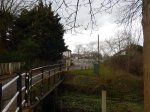
I took these pictures at Cheshunt station.
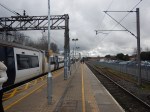


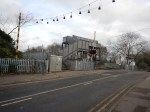
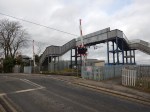
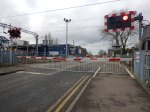


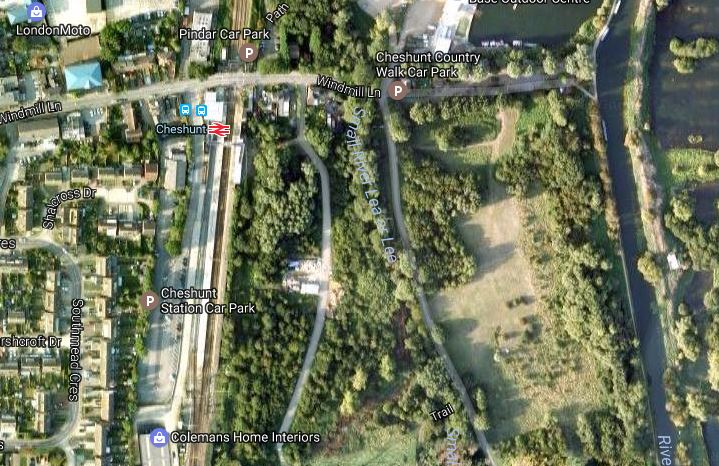
This Google Map shows the layout of the station.
Cheshunt Station
The station is very much a gateway to the Lea Valley Country Park and it could be difficult to find a by-pass for the level crossing.
I think putting two extra tracks through the station could be difficult.
- ,The space is a bit narrow.
- The level crossing will probably have to stay.
- A lot of express trains stop, so that passengers can change to the London Overground.
Perhaps the solution is to do something like the following.
- Extend the London Overground service to Broxbourne station, where there is space for extra platforms.
- Stop fast services calling at Cheshunt station.
- Move the two slow tracks Westward a bit, to create space for the two new lines on the Eastern side.
I also think, that extending the Overground to Broxbourne would make Broxbourne station an even better interchange.
West Anglia Route Improvement – Timings Between Tottenham Hale And Broxbourne Stations
How long do various trains take between Tottenham Hale and Broxbourne stations?
The Line
The distance between the two stations is 11.2 miles or 18 kilometres and there are the following stations.
The stations marked with an asterisk (*) have level crossings.
The line has an operating speed of 100 mph in places, but a lot of places are much slower.
Slow Services
The slowest service takes twenty minutes stopping at all stations except for Northumberland Park and Angel Road stations.
Fast Services
The fastest service takes thirteen minutes with just a stop at Cheshunt, which gives an average speed of about 52 mph.
Fast Services Using A Dedicated Line
If a dedicated line between Tottenham Hale and Broxbourne were to be built where trains perhaps only stopped at Broxbourne, averaging 80 mph would mean a time of 8.4 minutes.
So there is potential if the dedicated fast line were to be built as a 100 mph line and trains ran non-stop to make savings of several minutes.
Slow Services Stopping At All Stations With Modern Trains
Crossrail is replacing elderly Class 315 trains with new Class 345 trains and it might be worth looking at these times for between Goodmayes and Brentwood stations, where there are four stops.
- Class 315 train – 21 minutes
- Class 345 train – 15 minutes
Greater Anglia are swapping elderly Class 317 trains with new Aventras, which are designed for quick stops, as are Crossrail’s Class 345 trains.
So I suspect that if a minute is saved for each stop, that would mean with the same stopping pattern, a time of 15 minutes could be possible.
I just wonder, if with a few tweaks, that trains can could match the current fastest time of thirteen minutes stopping at everywhere except for Northumberland Park and Angel Road stations.
Consider.
- All stations will be made step-free, so once passengers learn the ropes, loading and unloading delays will be minimised.
- Platforms will be aligned to the trains for fast loading and unloading.
- STAR will handle Angel Road and Northumberland Park stations.
- Four level crossings will be closed, which must help.
- Both types of trains on the route would have similar performance and they would just run slower for slow services.
- Fast trains will have their own line.
- Help from the signalling and Driver Assistance Systems.
In addition, we mustn’t underestimate the contribution driver skill will make.
An Ideal World
In an ideal world the following could happen.
- Every fast train to London, would be met at Broxbourne station by a paired slow train and passengers would take a train according to their needs, by just walking across the platform.
- The next stop for the fast train would be Liverpool Street or Stratford, after running down the new fast line at a speed approaching 100 mph.
- The slow train would stop everywhere, but arrive at Tottenham Hale in a time, that fast trains achieve today.
Coming out from London, the process would reverse.
No journeys would take longer than now, but some would be several minutes quicker.
All changes would be cross-platform at Broxbourne.
The Design Of The Fast Lines
If the fastest route between A and B, where there is no direct train, is to change at Broxbourne, there would never be a need to change anywhere else, so the only station with platforms on the fast and slow lines is Broxbourne.
Conclusion
I’m probably not exactly right here, but if the Crossrail actual and proposed timings are correct, there is a substantial time saving to be made.
The fast lines can also be very simple without platforms, which means that at stations like Tottenham Hale, Enfield Lock and Waltham Cross, it might be possible to squeeze the lines in.
West Anglia Route Improvement – How Many Slow Services Will Go Through Tottenham Hale Station?
Currently there are the several slow trains on the West Anglia Main Line, running a rather complicated service to give most stations four tph.
The major services are.
- 1 tph between Liverpool Street and Cambridge.
- 2 tph between Liverpool Street or Stratford and Hertford East.
- 2 tph between Liverpool Street or |Stratford and Bishops Stortford.
Obviously in the Peak there is more, but four-five slow trains per hour through Tottenham Hale station to Broxbourne wouldn’t be far away from the overall frequency, if the fast trains are ignored.
Greater Anglia probably have plans to increase the frequencies.
West Anglia Route Improvement – How Many Fast Services Will Go Through Tottenham Hale Station?
Currently, there are the following fast trains.
- 1 tph between Liverpool Street and Cambridge.
- 4 tph between Liverpool Street and Stansted Airport.
There is also 1 tph stopping train from Cambridge, which I found a pain, as like most people, I just wanted to get to and from London quickly.
I wouldn’t be surprised to see this number increased to something like.
- 4 tph between Liverpool Street and Cambridge.
- 4 tph between Liverpool Street and Stansted Airport.
- 2 or 4 tph between Stratford and Stansted Airport.
This is only one train in every five or six minutes.
As Tottenham Hale to Broxbourne is about eleven miles, one of Stadler’s new trains going non-stop on a clear line would probably do the trip in around 8 minutes compared to the current fastest of about 19 minutes.
 The Anonymous Widower