LEON Scraps China Cups Because Of COVID-19
LEON used to offer proper china mugs in their restaurants.
 Not in every one, but in some that I use.
But not any more, as last week. they were using paper cups.
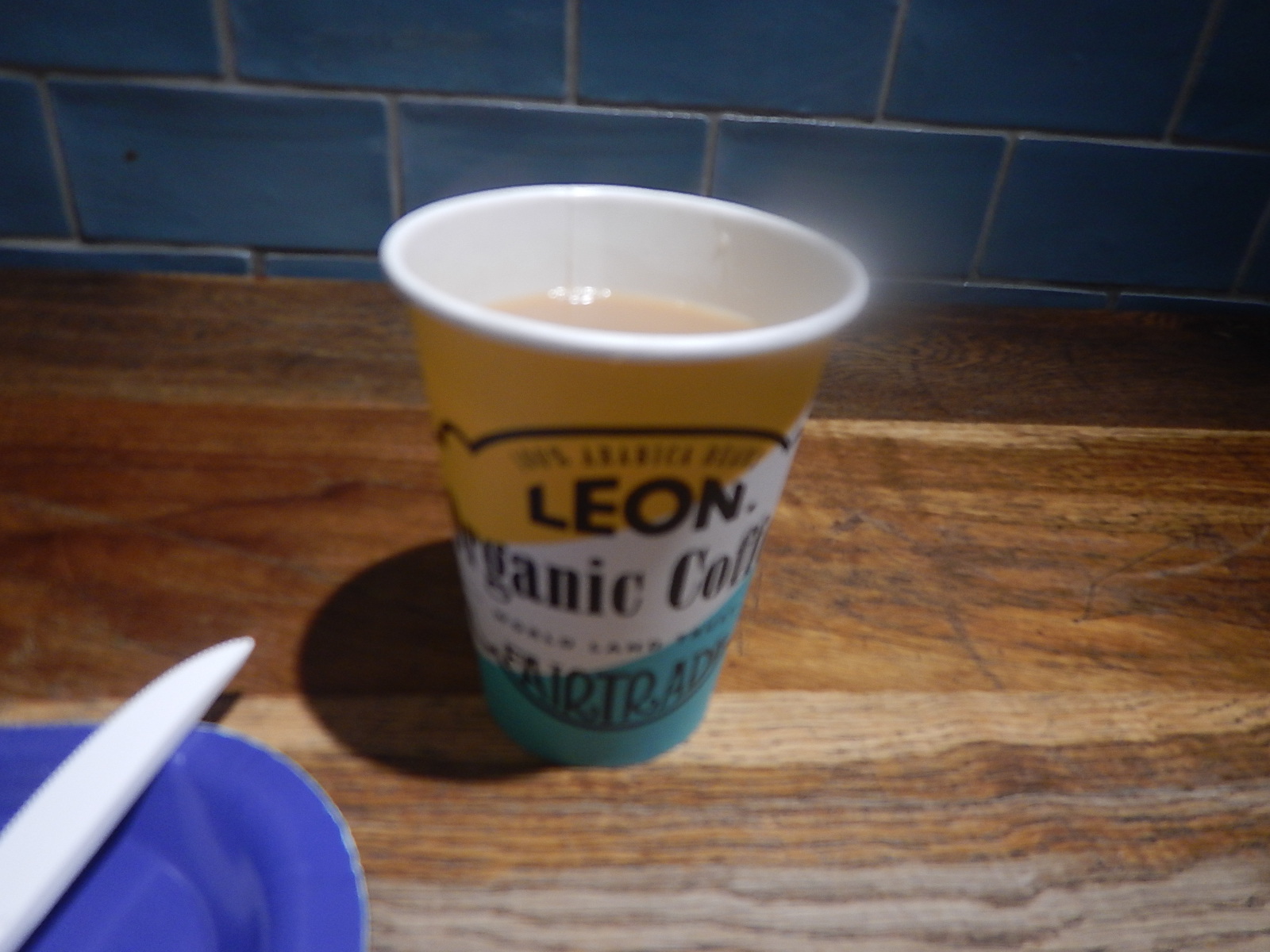
I was assured that as soon as they can the china mugs will return.
A Toned Down Automatic Leon In Leeds Station
Leon have opened a new outlet in Leeds station.


It’s toned-down with an automatic order facility.
Leon Has Smart-Looking Glasses For Gluten-Free Beer
I had lunch in Leon at Ludgate Circus.
It was only a chicken burger and fries, but I did have an Estrella Damm Daura.
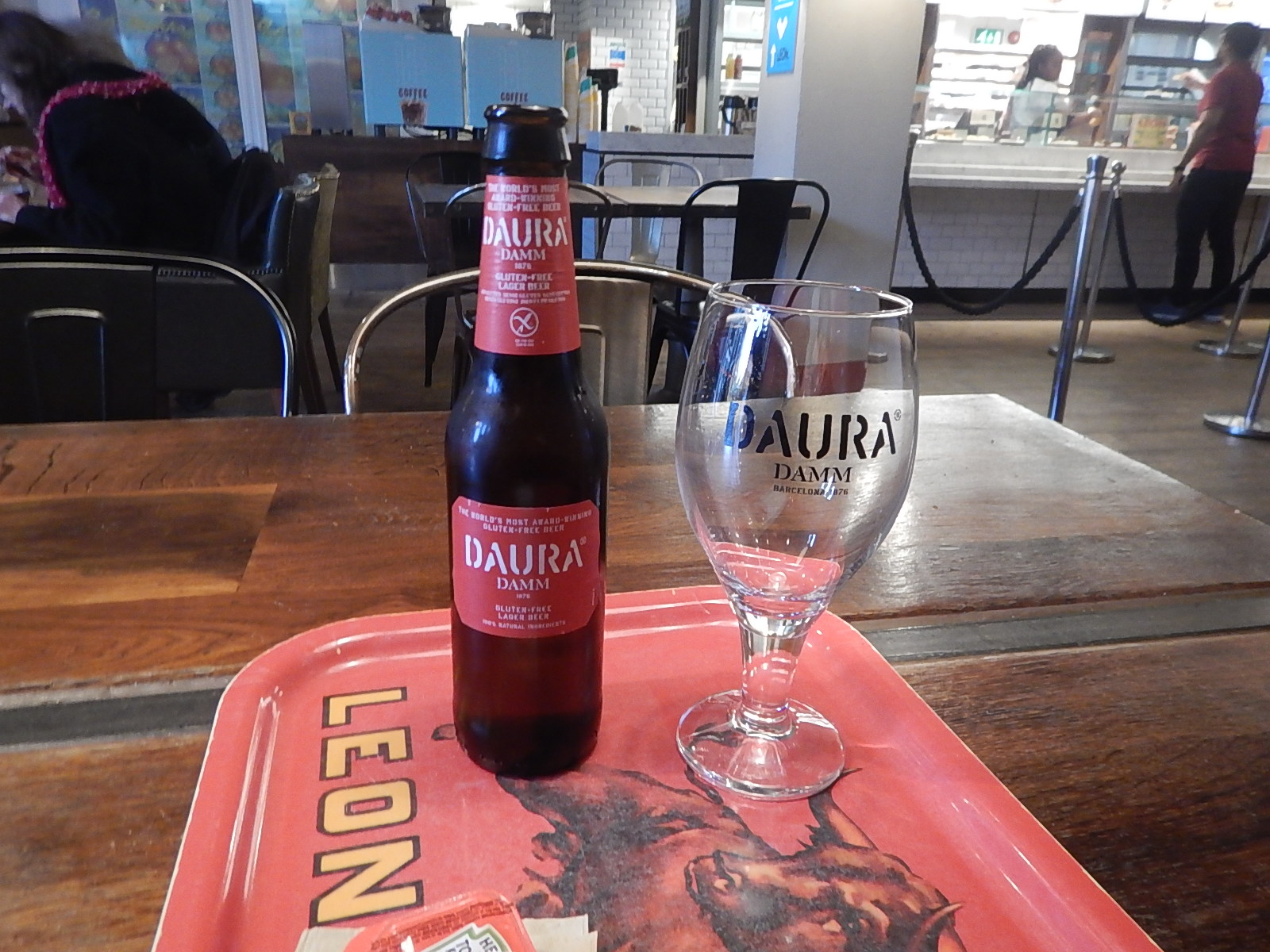
It even came with a smart-looking Glass.
Top Class Service With A Smile
I only went into this busy Leon on Tottenham Court Road for a hot chocolate and a gluten-free cake.
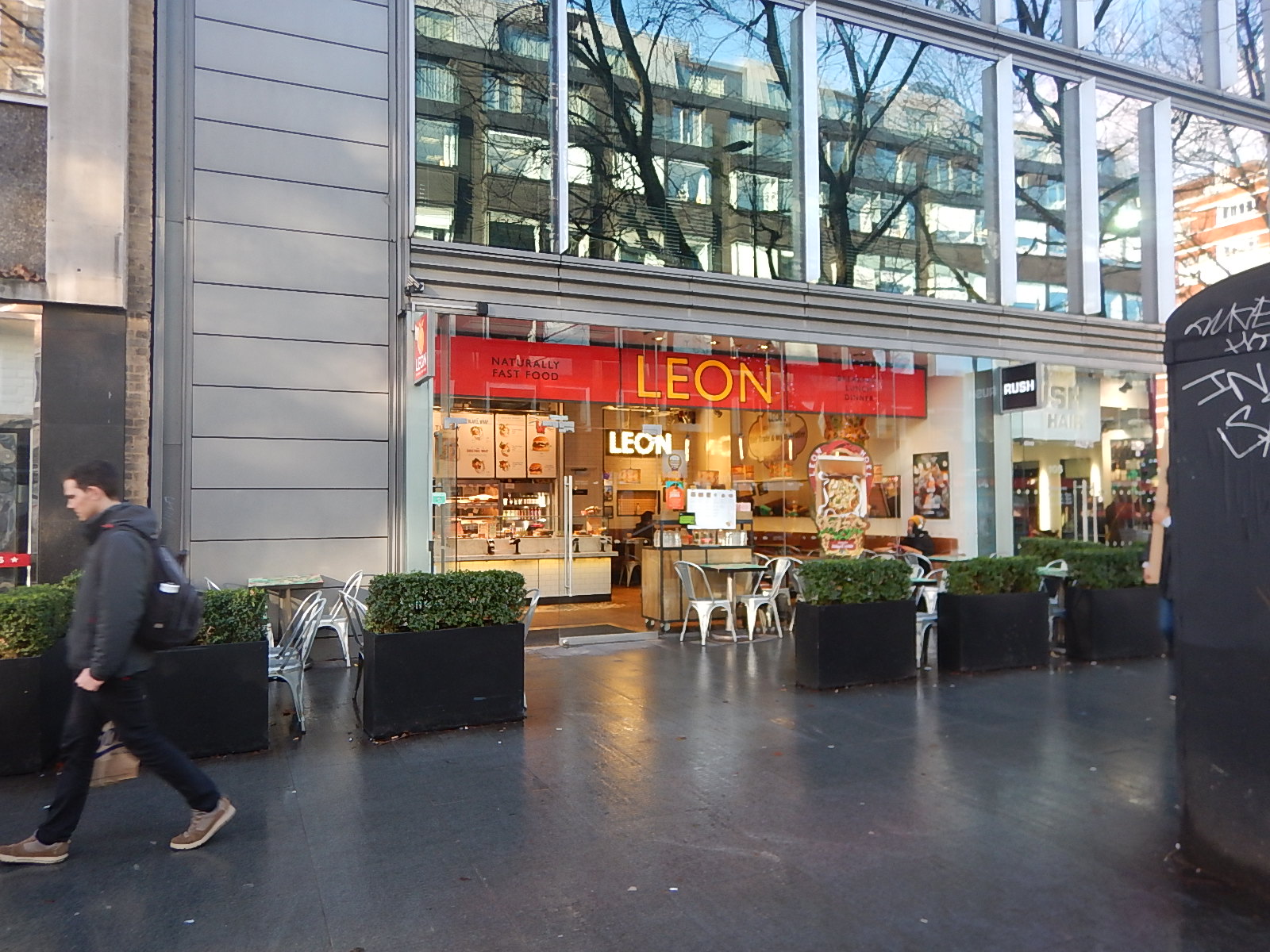
As it takes a minute to make a hot chocolate, the young lady at the counter, suggested I sit down and she’d bring it over.
Which she did with a smile.
Another Carluccio’s Goes
C and myself used the Carluccio’s in Oxford Market many times. But now it has gone!

To add insult to injury, it is now a restaurant called Sweet Chick, which describes itself as Chicken and Waffles.
Doesn’t sound very healthy to me!
A Gluten-Free Restaurant In Fitzrovia
On Wednesday, I wet with a friend to a restaurant clled Pisqu in Rathbone Place, Fitzrovia.
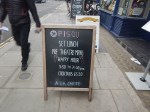
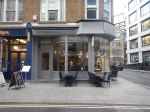
It was very good and I had no problem with finding an excellent gluten-free meal.
I dhall retirn!
Reading For Lunch On TfL Rail
On Sunday, TfL Rail took over the services between Paddington and Reading via Maidenhead.
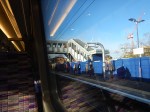
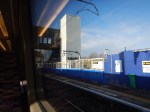
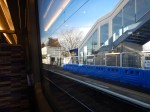
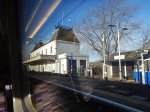
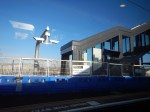

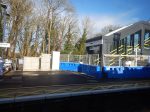
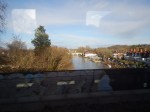
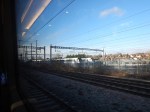
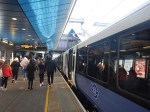





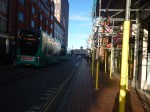


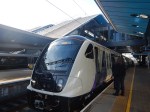



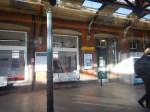
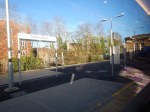
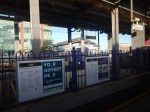
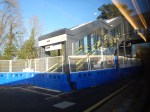
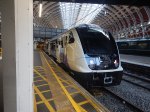
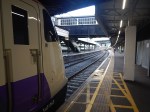
The pictures show that there is still a lot of work to do to get a complete step-free Western Branch of Crossrail.
I walked to Carluccio’s at Reading, which is about a kilometre. It would be closer, if Reading had decent maps like other civilised towns or cities.
These are my comments about the new TfL Rail service.
Competitive Ticketing On TfL Rail
I would expect services on TfL Rail will be competitively priced and some details are given on this page on the TfL web site, which is entitled TfL Rail Will Operate Services To Reading From 15 December.
Freedom Passes
I can use my Freedom Pass all the way to Reading for a cost of precisely nothing.
- There are lots of places along the line, where holders might go to enjoy themselves.
- Freedom Pass holders can take children with them on some rail services in London. Will they be able to do this on TfL Rail?
- Freedom Pass holders like to extract maximum benefit from their passes.
But it won’t be long before canny holders, realise that other places like these are just an extension ticket away.
- Basingstoke – £4.50
- Henley-on-Thames – £2.65
- Marlow – £3.10
- Newbury or Newbury Racecourse – £4.50
- Oxford – £6.65
- Winchester – £11.55
- Windsor – £1.90
- Woking – £9.75
I included Winchester, as that is where my granddaughter lives.
Will Freedom Pass holders take advantage?
- This is not a rip-off offer, but a chasm in the fare regulations.
- There are some good pubs and restaurants by the Thames.
They will take advantage in hoards.
Reverse Commuters
On my trip to Harrogate, I met a guy, who told me, that Reading has difficulty attracting workers for high-tech businesses.
I suspect that the new service might encourage some reverse commuting.
Will some Freedom Pass holders take advantage?
- I know a lot of people still working, who commute within London on a Freedom Pass.
- Not all Freedom Pass holders are pensioners. For instance, I would have been eligible because I lost my Driving Licence, when my eyesight was ruined by a stroke.
As the pictures show, there is a lot of offices going up around the station in Reading.
Access To The Thames
The route between Paddington and Reading gives access to the River Thames at the following places.
- Windsor from Slough
- Marlow from Maidenhead
- Henley from Twyford.
- Reading
- Oxford from Reading
I wouldn’t be surprised to see the route being used extensively by leisure travellers to explore and visit London’s principle river.
Connection To Central London
When Crossrail opens to Central London, this must surely result in a large increase in cummuter, leisure and tourist traffic.
Indian Sub-Continent Families
There are a lot of people with roots in the Indian sub-continent living along the route between Paddington and Reading.
Note that Southall station is one of a small group of English stations with bilingual signage. At Southall the signs are in both English and Punjabi.
I feel, that strong family, cultural and religious ties will mean, that this large group will use the trains of TfL extensively in their daily lives.
Train Frequency
It was a Sunday, and the train had perhaps sixty percent of the seats taken.
I have this feeling that this route could suffer from London Overground Syndrome and that passenger numbers will rise much higher than the most optimistic forecasts, because of the factors I outlined in previous sections.
- Competitive Ticketing On TfL Rail
- Freedom Passes
- Reverse Commuters
- Indian Sub-Continent Families
- Access To The Thames
- Connection To Central London
This leads me to predict that this line will need a full four trains per hour (tph) service as far as Reading before the end of 2021 and not just in the Peak Hours.
Connections To The Branches
On my journey to and from Reading,, I didn’t see any trains on the four branches, that have the following frequencies.
- Greenford – Two tph
- Windsor – Three tph
- Marlow – One tph
- Henley – Two tph
Surely, as the current TfL Rail service has a frequency of two tph to Reading, it should interface better with the Greenford and Henley branches.
It appears to me, that there is scope for a better timetable and increased frequency on some of the branches.
Or is the current timetable geared to making profits in the cafes and coffee stalls at the interchange stations?
My timetable would be as follows.
- Greenford – Four tph
- Windsor – Four tph
- Marlow – Two tph – Timed to be convenient for Reading services.
- Henley – Two tph – Timed to be convenient for Reading services.
If the Crossrail and branch service are both four tph or better and there are reasonable facilities, I suspect that will work reasonably well.
But the higher the frequency the better!
Train Performance
On my trip, the Class 345 train was stretching its legs to the West of West Drayton and I recorded a speed of 90 mph.
Their performance doesn’t seem to be much slower than Great Western Railways 110 mph Class 387 trains.
Ticketing
From what I’ve seen, ticketing on this line needs to be augmented.
What is currently, in place will work for Londoners and those that live close to the line.
But would it work for tourists and especially those for whom English is not their first language, who want to visit Oxford and Windsor?
There would appear to be a need for a ticket which allowed the following.
- Use of TfL Rail between West Drayton and Reading.
- Slough and Windsor
- Maidenhead and Marlow
- Twyford and Henley
- Reading and Oxford
Could it be called a Thames Valley Ranger?
The alternative would be to bring all the routes into London’s contactless payments system.
But would this mean complicated wrangling over ticket revenue between TfL Rail and Great Western Railway?
There certainly needs to be a simple ticketing system at Slough, so that passengers can purchase a return to Windsor.
The only ways at present are.
- Buy a ticket at Paddington to Windsor.
- Leave Slough station and buy a return ticket to Windsor.
Something much better is needed.
Crossrail To Oxford
Because of Network Rail’s l;ate delivery of the electrification West of Reading, the services have ended up as less than optimal.
I think eventually, services to Oxford, will be reorganised something along these lines.
- Crossrail will be extended to Oxford.
- Fast services to and from London would be the responsibility of Great Western Railway. The frequency would be at least two tph.
- CrossCountry fast services would continue as now.
- Stopping services to and from London would be the responsibility of Crossrail
- Stations between Reading and Oxford, with the exception of Didcot Parkway would only be served by Crossrail.
The Crossrail service to Oxford would have the following characteristics.
- Four tph
- The service would terminate in a South-facing bay platform at Oxford station.
- Pssible battery operation between Didcot Parkway and Oxford.
- The service would have a dedicated pair of platforms at Reading.
There would possibly be a ticketing problem, but as there would be separation of fast and stopping services, I feel that a good solution can be created, which would allow changing between the fast and stopping services at Reading. So commuters from somewhere like Cholsey could either go Crossrail all the way to and from London or change to a faster train at Reading.
Conclusion
I am led to the conclusion, that this service will be overwhelming popular.
But the ticketing leaves much to be desired.
Gluten-Free Afternoon Tea In Bettys
Bettys of Harrogate is one of the best-known traditional tea rooms in Yorkshire, if not the whole of the North of England.
As today was the first weekday of LNER’s new Harrogate service, with six trains per day in both directions, I emailed an old friend and we agreed to meet up for an early afternoon tea, which is actually served from eleven in the morning.
These pictures show my tea, which was gluten-free.
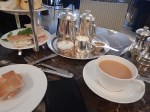




It was certainly some of the best gluten-free sandwiches, cakes and scones, I’ve ever had.
Sadly,, my friend only had time for a coffee, as she was running late, due to a horse problem. But she did show me around Harrogate.









I have been before with C, but I didn’t remember anything except that we had a coffee in Bettys.
The Outward Journey To Harrogate
I took the 09:33 from Kings Cross and we arrived in Harrogate station a minute early at 12:16.
- The journey took two hours and 43 minutes.
- The train reversed direction at Leeds
- The only problem appeared to be that the seat allocation system on the train wasn’t working. Could this be becuae, the service appeared to be timetabled for two five-car trains working as a pair and a nine-car turned up?
- As it was only the second day of the service, I would expect some teething troubles.
These pictures show the Azuma train at Harrogate station.

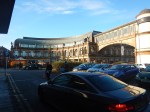
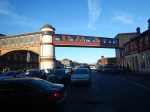

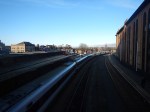

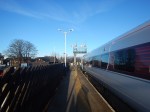
On the train, I met a lady who was going to see her son and his family near Thirsk. She was saying that Harrogate has better bus connections than Thirsk, so it is a more convenient station.
Train Length And Horsforth Station
As you can see from the pictures a nine-car train is a tight fit in Harrogate station.
Two trains call at Horsforth station, where a Google Map appesrs to show a platform only long enough for a five-car train.
The Return Journey From Harrogate
My return train was a five-car Azuma train.
- It left Harrogate at 15:36
- It arrived at Kings Cross at 18:32, which was a couple of minutes late.
- The journey time was two hours and 56 minutes.
I was also in Furst, so I got a delicious snack meal.

These Deli-Boxes certainly work as a snack for me.
As Adnams now do the 0.5% version of their Ghost Ship in cans, I would love to see trains carrying these beers or something similar.
Splitting And Joining At Leeds
My train didn’t split at Leeds on the way up, but according to one of the staff at Leeds, this is part of the final plan.
Consider.
- Nine-car trains are a tight fit at Harrogate.
- Nine-car trains don’t fit into Horsforth.
- Nine-car trains are needed for capacity reasons to and from Leeds.
So two five-car trains, running as a pair to Leeds, would be ideal. One train would serve Harrogate and the other perhaps Bradford or Huddersfield.
As I was tired and in a hurry, when we arrived in Kings Cross, I forgot to check if we were five- or ten-cars.
Ticket Costs
I have just looked up prices for the 14th of January 2020 for going North on the 0933 and South on the 17:36.
- Outbound in Standard costs £15.50
- Return in Standard costs £12.20
- First Class is £35 both ways.
All prices are with a Railcard.
Conclusion
The new Harrogate service is more than just a second destination in the Leeds Area.
- As the lady told me, Harrogate has good connections to a large part of Yorkshire.
- A difficult change, that can be slow is avoided at Leeds station.
- Another lady told me, that her husband used to commute to London from Harrogate three days a week and often missed the connection at Leeds.
- If you needed to go for say a business meeting in Harrogate or take your mother for lunch at Bettys on her birthday, the train service is ideal.
- The Azumas add style to a route that will also appreciate it.
I am certain that LNER have a winner.
Bettys
I would certainly recommend, their gluten-free afternoon tea.
I wonder how many will come up from London to have lunch or a meeting in Bettys and the other cafes and restaurants in Harrogate?
Note that Bettys and several other cafes and restaurants are an easy walk from Harrogate station.
My friend and I said that we’ll meet up again in the Spring. It will be interesting to see how the service is behaving.
A Gluten-Free Lunch From Pret a Manger
This picture shows my lunch today.
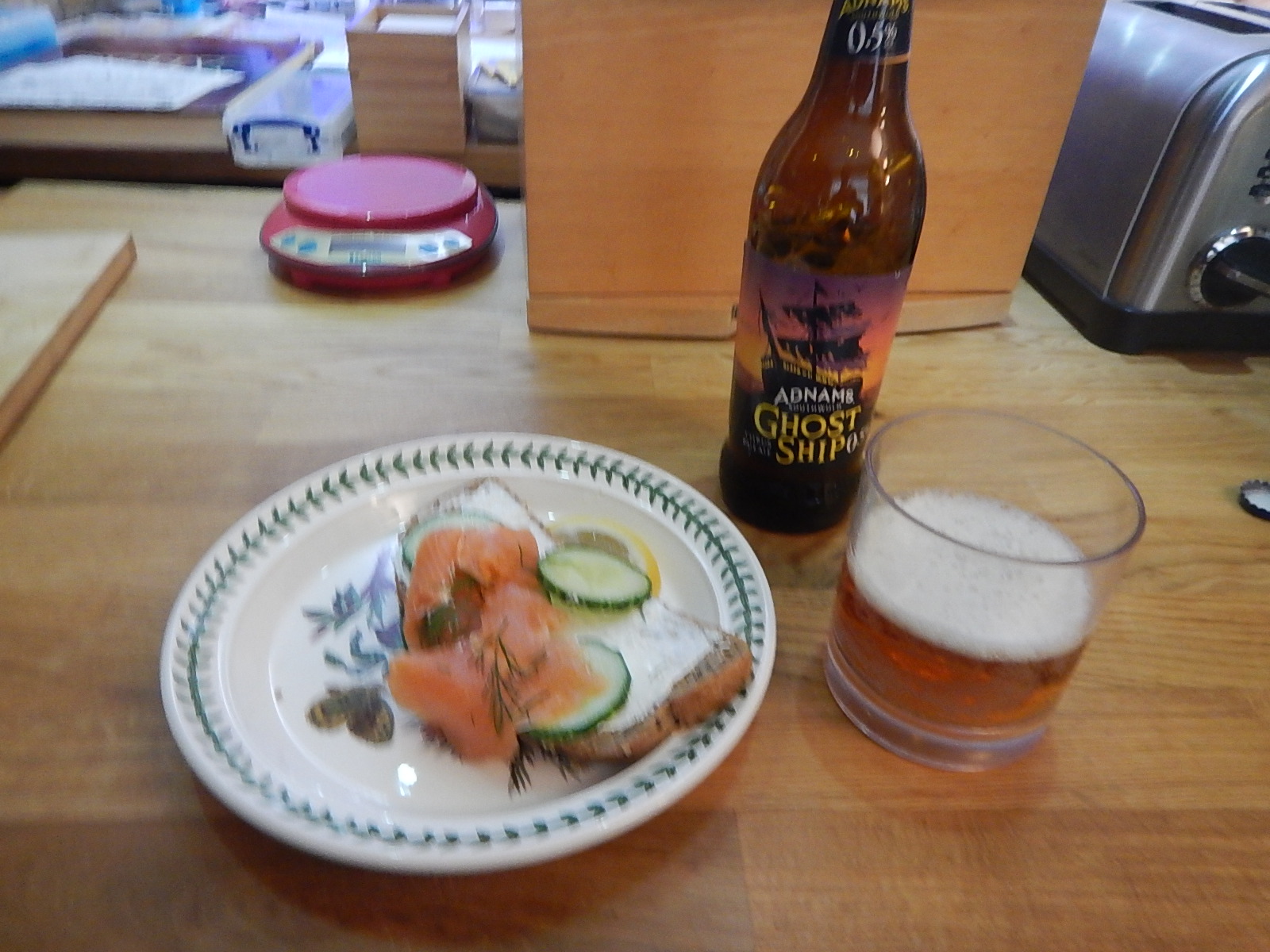
The gluten-free open sandwich came from Pret a Manger and the bottle of Adnams came from Marks and Spencer, a few doors away.
- The outlet opened today and a manager confirmed that they have done gluten-free for some months.
- They also have a tablet-based menu checker.
- It will be very useful for me, if it does well in Dalston.
- The beer may not be gluten-free, but my body says it is for me.
- It was a good delicious lunch for me!
It brought back memories for me of many lunches in the Bull at Burrough Green, where I would regularly have a similar lunch in pre-coeliac days.
 The Anonymous Widower