John Baxendale’s Thermometer
Over the years, I’ve been involved with lots of innovative ideas.
When I worked at ICI Mond Division in Runcorn, one of the guys, that I worked with was John Baxendale, who was a fairly local lad, with unusually for the late 1960s, a very keen interest in surfing. John would often drive up to the North of Scotland in his green Morris Minor Traveller for a few day’s surfing.
Workwise, I remember John most for an electronic thermometer he built, that measured the temperature of a body by its black-body radiation, which is described in this Wikipedia entry.
He developed the thermometer to measure the temperature of remote objects and used to calibrate it on a handy ear, which is a very convenient black-body at 36.9 degrees C.
Life-Saving Baby Incubators Uused In Ukraine Pass The NHS Test
The title of this post, is the same as that of this article from The Times.
This is the sub-heading.
The devices made by Mom Incubators weigh a fraction of existing models, making them highly mobile and perfect to use on maternity wards.
The incubator was developed as a final year student project.
- James Roberts founded Mom Incubators in 2014.
- Backers include Sir James Dyson and Holly Branson.
- The incubators have been used in England, Haiti, India, Kenya, the Philippines, Scotland, Uganda, Ukraine, US and Tanzania.
- This is a really wonderful story, which shows the value of good design and keeping the weight down.
James Roberts intends to repeat the excercise with other medical devices.
Did This Get Lost In The Covids?
In October 2019, I wrote Asthma Carbon Footprint ‘As Big As Eating Meat’ and it made me think, when I just read it.
I would normally follow up a post like this, but I don’t remember doing anything like that.
The Wikipedia entry for the COVID-19 pandemic in England, starts with this paragraph.
The COVID-19 pandemic was first confirmed to have spread to England with two cases among Chinese nationals staying in a hotel in York on 31 January 2020.
It looks to me, that like everybody else in England, I had the Covids on my mind.
Is Respimat A Zero-Carbon Inhaler?
Just to be sure, I asked Google AI, the question in the title of this section and received this reply.
The Respimat soft mist inhaler is considered to have virtually no associated carbon emissions from its operation because it does not contain the high global warming potential (GWP) hydrofluorocarbon (HFC) propellants found in metered-dose inhalers (pMDIs).
While it has a substantially lower carbon footprint than traditional pMDIs, it is not strictly “zero-carbon” when considering its entire life cycle, which includes manufacturing, materials (stainless steel, aluminium, polymers), and end-of-life disposal. These factors contribute a small product carbon footprint (PCF).
According to Google AI, a reusable version is available.
A reusable Respimat device has been introduced, which further reduces the carbon footprint by up to 71% over six months compared to the disposable version because the device itself is kept longer, reducing manufacturing impacts.
Google AI says this about NHS guidance.
Health bodies like the NHS encourage the use of lower-carbon inhalers like the Respimat or dry powder inhalers (DPIs) as part of their net-zero targets, provided they are clinically appropriate for the patient.
But it does seem that Respimat devices are helping to cut global warming.
What Is The Patient Experience Of Respimat?
Google AI gave this answer to my question.
Patient experience with the Respimat inhaler is generally very positive, with high satisfaction for its ease of use, handling, and the “soft mist” it produces, leading to high continuation rates in studies; patients find it easier than many older devices and report good effectiveness, though common side effects like dry mouth, cough, and sore throat can occur.
Key Aspects of Patient Experience
- High Satisfaction: Over 85-90% of patients report being satisfied or very satisfied with the Respimat’s handling and the ease of inhaling the mist.
- Preference Over Other Devices: Many patients prefer Respimat over traditional metered-dose inhalers (pMDIs) or dry powder inhalers (DPIs), finding it easier to use and more effective.
- Soft Mist Technology: Patients appreciate the gentle, slow-moving mist, which helps deliver medication effectively and feels different from a typical puff.
- Good Adherence: High satisfaction often translates to continued use, with physicians reporting high patient adherence and continuation rates after studies end.
- Improved Technique: While initial use might need guidance, pharmacist-led interventions show significant improvements in patients’ inhalation technique over time.
That doesn’t look bad to me!
Could Immunotherapy Drugs Be Delivered By An Inhaler?
We always felt the device could deliver other drugs.
Google AI gave this answer to my question.
Yes, immunotherapy drugs could potentially be delivered by an inhaler, and this approach is a promising area of active research and development, particularly for treating lung cancer and respiratory diseases like asthma.
Rationale and Research
- Targeted Treatment: Inhaled delivery allows for high concentrations of the drug to be delivered directly to the lungs, which is particularly beneficial for treating lung-specific conditions like lung cancer or severe asthma. This localized approach aims to maximize the therapeutic effect where needed.
- Reduced Side Effects: By concentrating the medication in the lungs and minimizing its systemic absorption into the bloodstream, researchers hope to significantly reduce the severe side effects (e.g., systemic toxicity, autoimmune reactions) commonly associated with traditional intravenous or oral administration of some immunotherapies and chemotherapies.
- Patient Convenience: Inhalation is a non-invasive administration route, which is more convenient and comfortable for patients compared to injections or intravenous infusions, potentially allowing for self-administration and improving patient compliance.
The Soft Mist Technology could surely be a help!
Was Osborne Reynolds The Greatest Fluid Dynamicist?
I have to ask Google AI this question, as some of the discussions that led to creation of Respimat, took place in my house at Debach, where Osborne Reynolds had lived.
Google AI gave this answer to my question.
Osborne Reynolds is considered one of the most influential and foundational contributors to the field of fluid dynamics, though naming a single person the “greatest” is subjective. His work fundamentally shaped modern engineering and physics and remains central to the study of fluid flow today.
Key Contributions to Fluid Dynamics
Reynolds’ most significant achievements include:
- The Reynolds Number: He identified a crucial dimensionless parameter (now named the Reynolds number) that determines whether fluid flow is laminar (smooth and orderly) or turbulent (chaotic and eddying). This number is a foundational concept used across all engineering and physical sciences.
- The Theory of Turbulence: In an 1895 paper, he established the standard mathematical framework used in the study of turbulence, introducing what is known as the Reynolds-averaged Navier–Stokes equations.
- Experimental Validation: His elegant, yet simple, dye experiments visually demonstrated the transition between flow regimes, providing clear empirical evidence for his theories.
- Theory of Lubrication: He developed the Reynolds equation in 1886, which still underpins the analysis of hydrodynamic lubrication in modern bearings.
- Heat Transfer and Similitude: His research into heat transfer between solids and fluids led to significant improvements in boiler and condenser designs, and his work on hydraulic similitude enables engineers to use scaled-down models (e.g., in wind tunnels for aircraft design) to predict the performance of full-scale machines.
How Many Good Ideas Did The Covids Delay?
It could be that the roll-out of Respimat for was delayed by the Covids!
But it wouldn’t have been the only idea to have been delayed in that way!
Do Coeliacs Have More Varicose Viens?
I asked Google AI, the question in the title of this post and I received this answer.
Yes, studies suggest that people with celiac disease (CD) may have an increased risk of developing certain vein-related conditions, including a potential predisposition to varicose veins.
My mother had the worst varicose viens I’ve ever seen.
She was operated on in the 1950s, by an Indian lady surgeon, who performed her ward rounds in a sari, who my father told me, she was one of the most beautiful women, that he’d ever seen.
Although, my father was married twice, he didn’t seem to be a ladies’ man, although he had great loyalty from the ladies he employed, in his printing business. He also got on very well with my wife ; C, although they didn’t meet many times.
Artificial Intelligence To The Rescue
This evening, I had a Marks & Spencer Chicken jalfrezi with Basmati Rice for supper.
Marks put a green vegetable in the rice, which I’m not keen on as it gets stuck in the back of my throat.
So tonight, I picked it out with my hand before cooking, and put it in the food waste.
It didn’t make any difference to the cooking, but as I sat down to eat, I noticed that my right hand was going red.
As I’d never picked the dreaded green vegetable out of the rice before, I asked Google AI, if handling spices can make my hand go red and received this reply.
Yes, handling certain spices, particularly chili peppers, can definitely make your hands go red. This reaction is known as “Hunan hand syndrome” or “chili burn” and is caused by the chemical compound capsaicin.
That, certainly happened to me.
It might almost may have been worse for me because.
- My mother taught me to cook in the 1950s and she didn’t use lots of spices in her cooking. So I never learned about the dangers of spices.
- I have a leaking skin, which allows water in and out of my body easily.
- I have an immune system, like a platoon of the SAS on steroids.
So was this, why I was affected?
I then asked Google AI, “What do you do, if you react badly to chilli”, and received this reply.
If you experience a bad reaction to chili (caused by the compound capsaicin), consume dairy products (like milk or yogurt), acidic foods/drinks (lemonade or orange juice), or starches (bread or rice) for relief.
For severe symptoms like difficulty breathing or chest pain, seek immediate medical attention as it could be an allergic reaction.
For Reactions in the Mouth
The primary methods work because capsaicin is oil-soluble, not water-soluble. Water will only spread the burning sensation.
Dairy Products: Milk, yogurt, and sour cream contain a protein called casein, which acts like a detergent to strip away the oily capsaicin molecules from your pain receptors. Whole or full-fat dairy products tend to be more effective than low-fat versions.
Acidic Foods/Drinks: The acidity in items like lemon or lime juice helps to neutralize the alkaline capsaicin molecule.
Sugary Foods: A spoonful of sugar or honey can absorb the capsaicin oil and provides a distraction from the pain.
Starches/Carbohydrates: Eating plain bread, rice, or potatoes can help by creating a physical barrier and absorbing the capsaicin molecules.
Oils/Nut Butters: Capsaicin dissolves in fat. Swishing with a bit of olive oil or eating a spoon of peanut butter can help dissolve and remove the capsaicin.
For Reactions on the Skin
If you experience a burning sensation on your skin after handling chilies:
Wash the area thoroughly with dish soap and water several times, as dish soap is designed to cut grease and oil.
Soak the affected skin in milk or apply yogurt/sour cream.
You can also try a paste made of baking soda and water, or soaking the area in a diluted vinegar solution.
If the pain is severe and persistent, over-the-counter pain relievers or topical corticosteroid creams may offer relief.
When to Seek Medical Attention
While a normal reaction to chili is an intense sensation rather than actual harm, a true allergy can be serious.
Seek emergency medical care immediately if you experience:
Difficulty breathing, wheezing, or shortness of breath
Swelling of the mouth, lips, or tongue
Chest pain or heart palpitations
Uncontrollable nausea or vomiting
Luckily for me, a yogurt worked.
Conclusion
I shall use a suitable tool, like pliers or tweezers, when handling those dreaded green vegetables.
Do People Lose Their Vision In Low Pressure Weather?
My vision was rather poor a couple of hours ago, hence the reason for this post.
I asked Google AI, the question in the title of this post, and received this reply.
While people generally do not permanently lose their vision due to typical low-pressure weather systems, they may experience temporary blurry or altered vision. This is usually associated with the physiological effects of low barometric pressure on the body or the cold, dry conditions that often accompany such weather.
That would fit the problems I encountered.
Does Uncomplicated Pancolonic Diverticular Disease Cause Erectile Dysfunction?
Over my forty years with C, I suffered from intermittent erectile dysfunction, but C generally knew how to cure it.
I do wonder if this was caused by having uncomplicated pancolonic diverticular disease during those generally happy years.
To check, I asked Google AI, the question in the title of this post and received this answer.
Yes, studies suggest that colonic diverticulosis (CD) is an independent risk factor for developing erectile dysfunction (ED). The association is likely related to shared underlying causes, such as chronic low-grade inflammation and vascular issues.
I can accept that!
As for about the first thirty years of our marriage, I was an undiagnosed coeliac, I feel I should ask if undiagnosed coeliac disease causes erectile dysfunction.
I received this answer.
Yes, undiagnosed celiac disease can cause erectile dysfunction (ED) due to the resulting malnutrition, hormonal imbalances, and inflammation. These issues can lead to sexual dysfunction, which may improve once the celiac disease is treated with a strict gluten-free diet.
That would certainly fit with my experience.
I do think, that if the link between undiagnosed coeliac disease is true, then in some cases testing of everybody for coeliac disease may avoid a degree of mental distress.
Can A Broken Humerus Affect Your Hand And Wrist Long Term?
Sixty-four years ago, my left humerus was broken at school and I don’t think the local hospital fixed it too well. I also don’t think I had the best of physiotherapy, after some of my experiences with physios since my stroke, which have been of a generally very high-quality, from both the NHS and private physiotherapists.
The wrist has not been misbehaving itself recently, so I asked Google AI, the question in the title of this post and received this reply.
Yes, a broken humerus can affect your hand and wrist long-term, especially if a nerve like the radial nerve is injured during the fracture or surgery. This can cause temporary issues like wrist drop, which is the inability to extend the wrist and fingers, often improving with therapy. In rare cases, if nerve recovery is incomplete, surgical procedures may be necessary to restore function, though most fractures have an excellent long-term outlook with proper rehabilitation.
Note.
- I certainly didn’t have proper rehabilitation in 1961 at Highlands Hospital in Winchmore Hill.
- I wonder if I have actually suffered from wrist drop in recent years.
- I suspect that now there are better treatments available.
Google seem to have scraped the article from the respectable Cleveland Clinic.
Why Has My Left Humerus Got Worse In The Last Few Months?
I wonder, if it is new BYD buses on route 141.
- I always sit or stand downstairs, as at 78, I don’t want too risk climbing the stairs.
- The buses are more pokey and the seats are narrower than say a Routemaster or other British bus.
- On Routemasters and other British buses, I usually sit on the far-right seat to protect the humerus.
- It is getting increasingly knocked if I sit in the left-hand seat of a right-sided pair, by peoples’ backpacks.
- The seats are narrow on the BYD buses, and if sitting in a left-hand seat of a left-sided pair, my left humerus rubs against the outside wall of the bus. This is worse with a large person in the right seat.
- If I sit in the right-hand seat of a left-sided pair, it’s usually better, but if there’s a large person in the left seat, because of the narrow seats, the arm get knocked.
- On the BYD buses, there are no forward facing seats downstairs on the right side.
- There are some forward facing seats at the right side at the back, but they are difficult for me to climb into.
- The corridor from the front to the back in the bus is narrow and I sometimes bump the left humerus.
- I met a lady with a pram, who finds the corridor narrow for her pram.
- The step-up and down into the bus is higher and puts strain on my knees, unless I get it right.
I do wonder if the BYD buses were designed around smaller oriental people.
I certainly never had these problems, when I was riding on on Routemasters and other British-designed buses.
For the next few works, I will avoid travelling on the BYD buses unless I can sit in the right-hand seat of a pair, by myself.
I can also stand, if the bus isn’t too full. Looking back, I feel, I don’t mind standing on the buses.
I will now be forwarding this post to those that know me well.
Does Ginger Make You Feel Good?
I ask this question, as yesterday, I ran out of the Marks & Spencer’s gluten-free stem ginger snap biscuits.
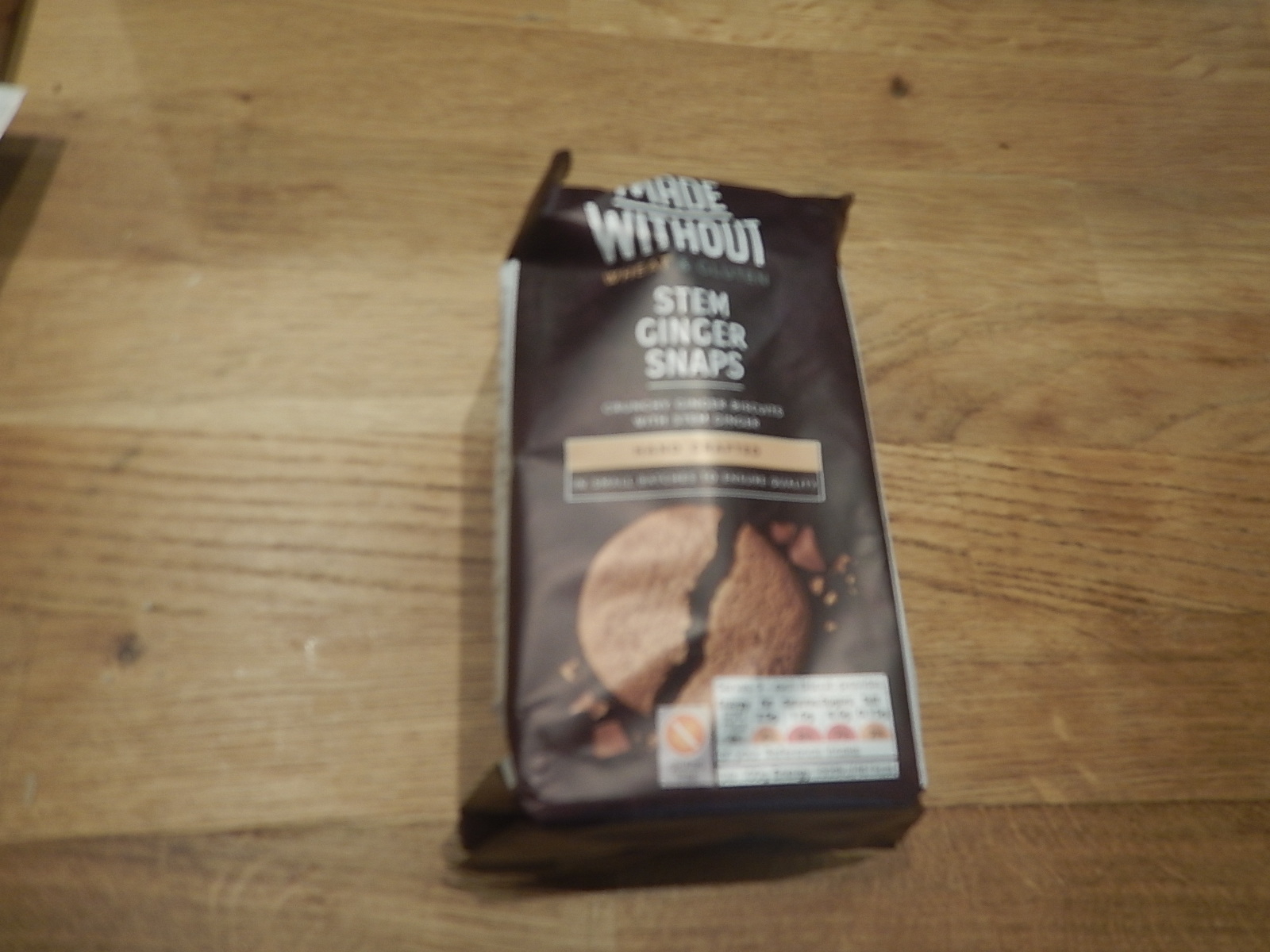
So after buying some this morning, I have just had three biscuits dunked in tea for my lunch.
I sometimes eat as many as four packets a week, so out of curiosity I asked Google AI, the question in the title of this post and received this reply.
Yes, ginger can make you feel good due to its many benefits, including easing nausea and indigestion, reducing inflammation, and improving circulation. It may also help relieve pain, boost energy levels, and promote relaxation, although it’s always best to consult a healthcare professional before taking supplements.
Google seems to be using this web page from Johns Hopkins Medicine, which is entitled Ginger Benefits, as a source.
I have a few extra thoughts about ginger.
Several Of The Posts On This Blog Have Mentioned Ginger
This link displays them all.
Is It OK To Eat Chocolate Rice Cakes With Uncomplicated Pancolonic Dulverticular Disease?
Since I have been diagnosed with uncomplicated pancolonic dulverticular disease, I have eating at least half a packet of Kallo chocolate rice cake thins most days.

Perhaps, the small amount of dark chocolate soothes my gut?
What does Google AI think about the title of this post?
Yes, it is generally considered OK to eat chocolate rice cakes with uncomplicated pancolonic diverticular disease (diverticulosis), especially if you are not experiencing a flare-up.
Diverticular disease guidelines for symptom-free individuals recommend a healthy, balanced, high-fiber diet, and there is no evidence that specific foods like nuts, seeds, or plain rice cakes cause harm or trigger flare-ups.
Whilst they don’t seem to cause harm or flare up, I shall continue to eat them.
I did ask Google AI “Do small amounts of dark chocolate soothe uncomplicated pancolonic dulverticular disease?” and I received this answer.
Small amounts of dark chocolate are not a treatment to “soothe” Uncomplicated Pancolonic Diverticular Disease; however, it can generally be included in the diet as part of a high-fiber approach for managing the condition. There is no evidence that it, or any specific food, causes or soothes the condition.
It doesn’t appear it will do any harm though!

