Auckland Mulls Battery-Electric Train Order
The title of this post is the title of this article on the International Railway Journal.
This is the first paragraph.
Auckland Council is expected to decide next week whether to proceed with an order for 17 battery-electric multiple units, which would replace DMUs on services on suburban services to Pukekohe.
The trains are being offered by CAF and are designed to work the Southern Line between Britomart Transport Centre in Auckland and Pukekohe.
The route is in two sections.
- From Britomart to Papakura is electrified at 25 KVAC.
- From Papakura to Pukekohe is run by a diesel shuttle.
The diesel shuttle runs over a distance of 18.38 km.
The plan would appear to be for the new trains to run as follows.
- To Papakura using the current electrification, charging the battery as they travelled.
- At Papakura they would switch to battery power for the shuttle to Pukekohe.
- On return to Papakura, they would switch back to the electrification and return to Auckland.
This would be a distance of 36.76 km. or just under twenty-three miles.
Conclusion
I think that this proposal is very significant.
CAF have put their money where their mouth is in this proposal, as if the trains couldn’t fulfil the requirements, it would be Spanish omelettes all over the place.
From the picture in the article on the International Railway Journal, it would appear that the offered trains are a version of the Civity train, which is being supplied to Northern as Class 331 trains.
A 23 mile battery range would be handy, as it could probably handle the Windermere Branch from Oxenholme.
Capacity Crunch At Chester – Borderlands Line
The Capacity Crunch At Chester article in the July 2017 Edition of Modern Railways talked about the Borderlands Line.
The article says this about the line and the passenger service.
The line is currently worked by two ATW Class 150/2 Sprinter units, which do their best to maintain the clockface hourly frequency. The Wrexham-Bidston Rail Users Association told the Wales & Borders franchise inquiry performance is far from ideal, highlighting late running frequently leads to trains being turned back at Shotton, meaning they do not reach Bidston to connect with Merseyrail services to Liverpool and leaving lengthy gaps at intermediate stations in England.
The article then talks about electrifying the line, but Network Rail have indicated that this would cost £207million. Apparently, third-rail electriication now needs palisade fencing along the track.
Enter The Class 455 Flex Train
In The Class 319 Flex Units To Be Class 769, I commented on the report, that Porterbrook were also looking at converting Class 455 trains to bi-modes.
Consider.
- These trains could probably work Merseyrail’s tunnels, as they are closely related to the current trains.
- They have quality 2 x 2 interiors.
- They meet all regulations.
- Performance is similar to the current trains.
- They are four-cars.
- Porterbrook will have ninety-one trains to place, when South Western Railway replaces them with Aventras.
The only problem is that the interiors are very red, which might upset half of Merseyside.
But I think it is possible that we could see Class 455 Flex trains working the Borderlands Line.
- From Wrexham to Bidston, they would use their on-board diesel engines.
- At Bidston, they would change from diesel to third-rail electric power.
- From Bidston to Liverpool, they would join the queue of trains from the Wirral and go round the newly-rebuilt Loop Line.
I’m pretty sure, that if Merseyrail have signalled the Loop appropriately, that there would be enough capacity in the Loop to run two trains per hour (tph) between Wrexham and Liverpool.
Based on the following current timings.
- Liverpool Lime Street -to Bidston – 17 minutes
- Bidston to Wrexham – 1 hour
With a few performance tweaks, I suspect that a Class 455 Flex train could do the round trip in well under three hours.
So three trains could easily handle the current hourly service, but would give the following advantages.
- Direct access to Liverpool City Centre.
- Four-cars instead of two.
- A much better interior.
The only problem would be checking that the Class 455 trains would fit the tunnels in the Loop Line. But seeing, that the Class 455 trains, were built as a successor to the Class 508 trains used by Merseyrail, I suspect they fit.
Could Class 319 Flex Trains Be Used?
The reason I looked at Class 455 Flex trains first is that in a article in the June 2017 Edition of Modern Railways, which is entitled ‘319 Flex’ Units To Be Class 769, this is said.
The company reports considerable interest in the concept and expects further orders soon, while it is also considering transferring the concept to other rolling stock, such as Class 455 EMUs.
As Porterbrook will soon receiving around ninety of these trains from South Western Railway, these struck me as possibilities for the Borderlands Line.
If you look at Merseyrail’s current Class 507 and Class 508 trains, Class 455 trains and Class 319 trains, they all appear to have a similar 2.82 metre width and a 3.58 metre height.
So if Class 319 Flex trains could work the tunnels under Liverpool, what would this do to service on the Borderlands Line.
- Their 90 mph as opposed to 75 mph operating speed could bring the round trip under two and a half hours.
- Five trains would be needed for a 2 tph service.
- Wrexham to Liverpool times of under an hour and fifteen minutes should be possible.
- The better performance of the trains would allow extra stops to be made with ease.
- The trains can have First Class seats and fully-accessible toilets.
In Wales Orders Some Golden Oldies, I noted how Arriva Trains Wales are acquiring five Class 319 Flex trains as cover for the refurbishment of Class 150 and Class 158 trains on the Cardiff Valley Lines.
So once all of these diesel trains have been refurbished, will we be seeing the Class 319 Flex trains moved to the Borderlands Line?
TransPennine Electrification And Piccadilly Upgrade Now Also In Doubt
The title of this post is the same as this article in Rail Technology Magazine.
A Digression About The Next Generation Of Trains
After digging through the various pages on Hitachi’s web site, I wrote Do Class 800/801/802 Trains Use Batteries For Regenerative Braking?.
My conclusion was this.
I will be very surprised if Class 800/801/802 trains don’t have batteries.
Will the Class 385 trains for ScotRail have similar traction system?
But having thought about it more, I’m now convinced that by 2030, the average long distance train will have the following characteristics.
- Ability to work from 25 KVAC overhead wires.
- Ability if required to work from 750 VDC third rail.
- Ability to raise and lower pantograph and switch beween modes at line speed.
- Batteries to handle regenerative braking.
- A generator unit to power the train.
- A sophisticated control system to choose the appropriate power source and drive the train according to terrain, passenger load, weather and traffic.
The more I read about Hitachi’s Class 800, Class 801 and Class 802 trains, the more I’m convinced that the features I have listed, is their ultimate goal. I suspect too, that the suburban Class 385 train has the capability of meeting the same objectives.
I would be very surprised if Alstom, Bombardier, CAF, Siemens, Stadler and others are not thinking along the same lines, as this document from Hitachi entitled Development of Class 800/801 High-speed Rolling Stock for UK Intercity Express Programme has been freely available since 2014.
It contains this diagram of the traction system of a Class 800 train.

Note the generator unit and the battery charger.
I’ve ridden the new Class 345 trains for Crossrail, a few times and after a trip yesterday in the gold-standard train;a 1970s British Rail Mark 3 coach, I can honestly say that the ride, noise and vibration in ombardier’s new train, is the best I’ve ridden.
So are Bombardier using a new traction system to achieve this smoothness? I suspect they are.
I also can’t find anything to say how a train will be removed from the tunnel under London, in the event of a complete power failure. No sane engineer would allow a rescue involving diesel or hydrogen in an emergency. However, batteries on the train with the capability of getting passengers to a safe disembarking point would be an obvious solution..
TransPennine Electrification
The major rail route across the Pennines between Leeds and Manchester is the Huddersfield Line.
The following stations are open on the route.
- Leeds *
- Cottingley
- Morley
- Batley
- Dewsbury
- Ravensthorpe
- Mirfield
- Deighton
- Huddersfield
- Slaithwaite
- Marsden
- Greenfield
- Mossley
- Stalybridge *
- Ashton-under-Lyne *
- Manchester Victoria *
The stations marked with asterisks (*) have electrification or will do soon.
Note the following about the route.
- Stalybridge to Leeds is under forty miles by road, so it could be even shorter by rail.
- Huddersfield station is one of a select group of Grade I Listed railway stations..
- Greater Manchester is developing a suburban electric network.
- Greenfield is the last station in Greater Manchester towards Leeds.
- Leeds is developing a suburban electric network.
- Cottingley is the last station in Leeds towards Manchester.
- Currently, trains from Manchester Piccadilly to Leeds can take a diferent route to Stalybridge, that is electrified as far as Guide Bridge station.
- I counted four tunnels, including Standedge tunnel, and over twenty bridges between Stalybridge and Huddersfield.
- Electrification of this section, would probably mean closure for at least a year.
- Between Huddersfield and Leeds the electrification would be a lot easier with about fifteen bridges and Morley tunnel.
My philosophy for this route would be as follows.
- Electrification would not go anywhere near Huddersfield, as the heritage lobby and their lawyers would have a field day.
- Standedge and Morley tunnels are over 2,000 metres long, double track and Standedge is level. If they needed refurbishment in the future, perhaps they could be electrified with an overhead rail, so that bi-modes could have a couple of miles of electricity.
- Electrification might be extended at the Manchester and Leeds ends of the line, so that the two cities could improve their local suburban electric networks.
- An alternative would be that the Leeds and Manchester suburban electric networks were provided with a few Class 769 trains or even some brand new four-car bi-modes.
- Services between Leeds and Manchester would be run by fast bi-modes.
TransPennine Express are already planning to run Class 802 trains between Liverpool and Newcastle via Manchester and Leeds. It looks to me, that whoever plans their train policy, saw this electrification crisis coming.
The money saved on the electrification would be spent on improving track and stations.
Currently the fastest journeys between Manchester and Leeds take just under fifty minutes.
What time could a Class 802 train achieve if the following were done.
- Manchester to Stalybridge is fully electrified.
- Some extra electrification was installed at Leeds.
- The track is improved.
My money would be on thirty-five minutes.
Manchester Piccadilly Upgrade
I hate using the isolated island Platforms 13 and 14 at Manchester Piccadilly station.
They are just too crowded and the steps and escalators down to the platform aren’t well-designed.
The Frequency Of Trains Through Platforms 13/14
The two platforms can be considered equivalent to these busy two-platform stations.
- Canada Water on the East London Line.- 20 trains per hour (tph) from 2020
- St. Pancras on Thameslink – 24 tph from 2018
- West Ham on Essex Thameside – 8 tph
All of these stations handle more trains than Plstforms 13./14 at Manchester Piccadilly.
Provided the signalling can handle it, it should be possible to schedule more trains through these two platforms.
One piece of information I viewed seemed to show that some services terminate in these two platforms. Surely, that is a way to reduce capacity.
Ordsall Chord And Class 769 Train Implications
The Ordsall Chord should change the pattern of trains, when it opens later this year.
The main implication will be that cross-city services can be developed.
The new Class 769 trains will help too, in that current diesel and electric services can be run using one type of train across the city.
A simple example would be Buxton to Blackburn.
These services release platform space in Manchester Piccadilly and other stations, which can be used for new services.
Access To Platforms 13/14
I’ve felt for some time, that if the access to the platform was better designed that a lot of the problems could be reduced.
I sometimes wonder, if when people see that their train is leaving from Platform 13 or 14, that they go there immediately and instead of waiting upstairs in the lounge, they descend to the platform.
When the Ordsall Chord is opened, because of the pattern of services passengers will sometimes change at one of the string of stations on the line.
Perhaps Oxford Road or Deansgate should be designated the preferred interchange station and fixed up with wider platforms, various kiosks and a waiting room to encourage passengers to change away from Piccadilly.
This Google Map shows Oxford Road station.
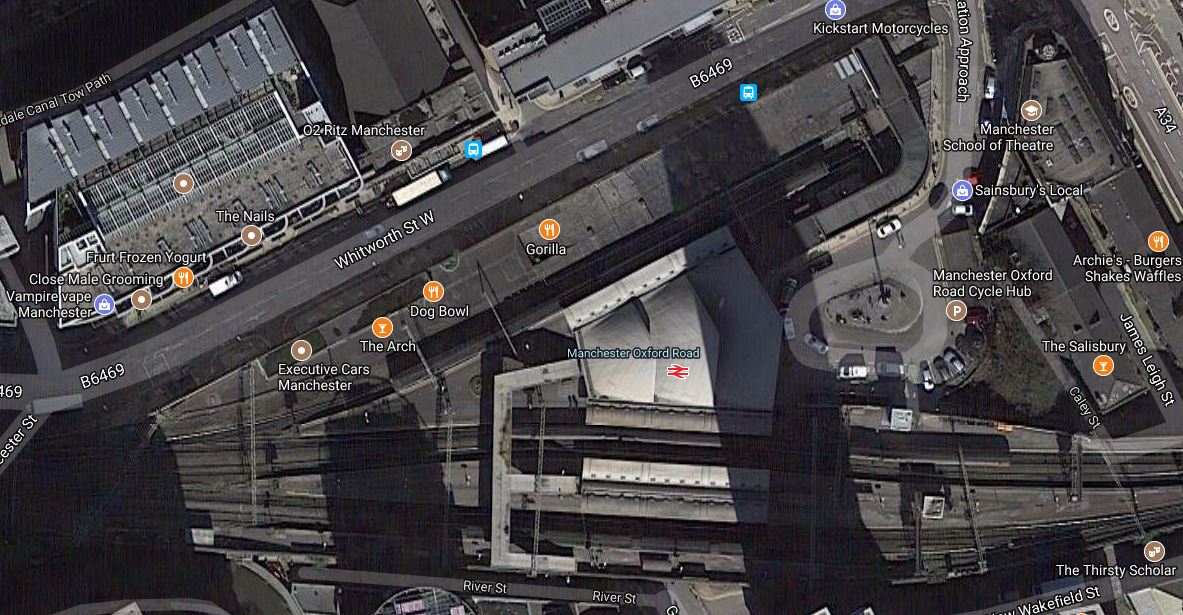
Oxford Road certainly seems to have space for passengers to use it as an exchange, when crossing the city.
But does Oxford Road have a stop on the Metrolink?
This Google Map shows Deansgate station.
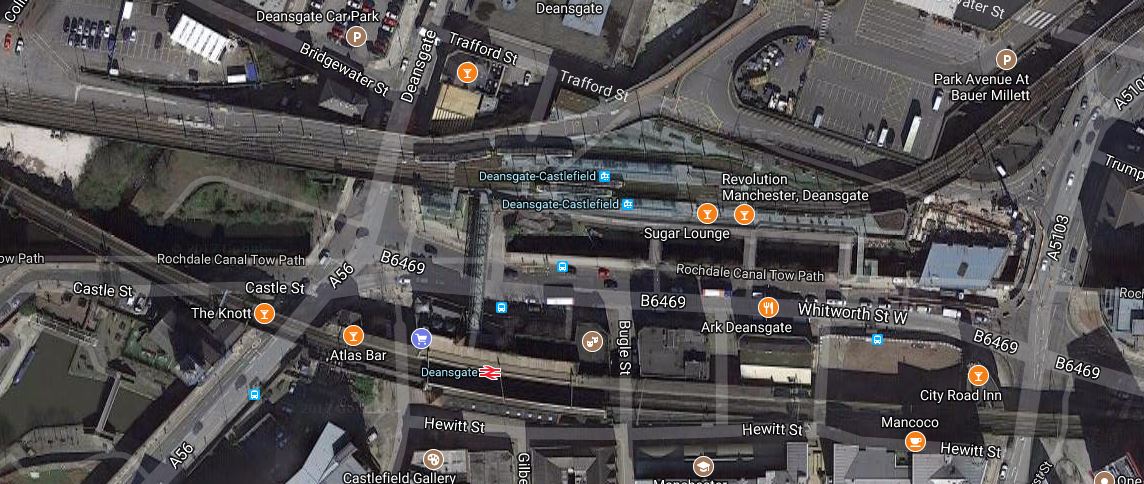
Deansgate doesn’t seem to have the space of Oxford Road. But it does have a good connection to the Metrolink.
The Forgotten Salford Stations
The other stations that could help are the two forgotten Salford stations; Salford Crescent and Salford Central.
This Google Map shows Salford Crescent station.
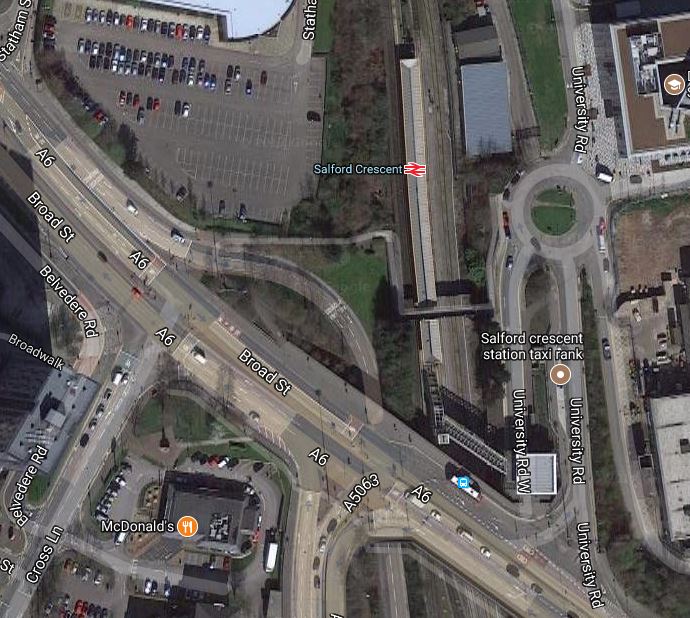
I believe that this station is going to get more platforms. Could it become a sort of triage station, where passengers from the North of Greater Manchester changed for.
- Trains for Manchester Victoria station.
- Trains for Manchester Piccadilly station.
- Metrolink to the city centre.
Surely, space could be found to run trams along Broad Street.
It would also look to be a station, where there is considerable scope to put housing or commercial developments above the station.
This Google Map shows Salford Central station.
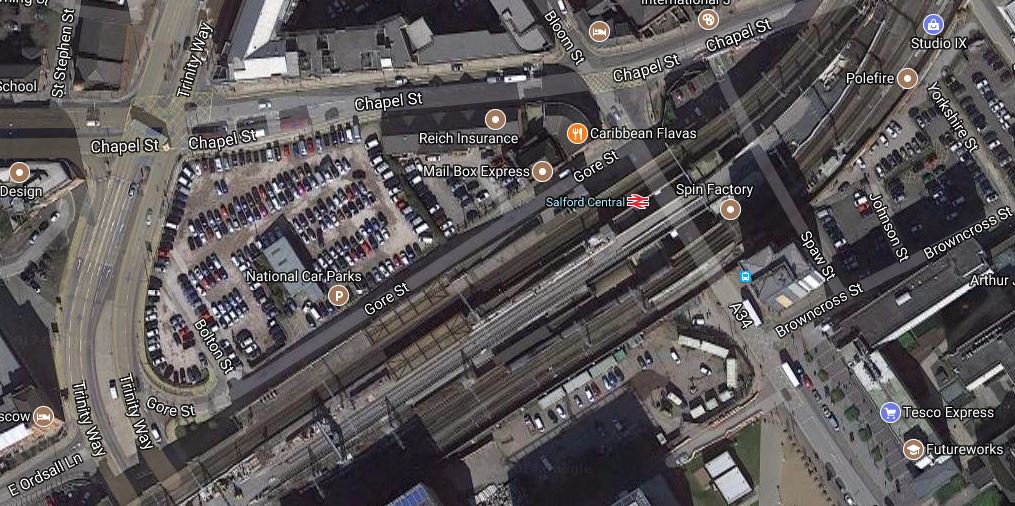
With a bit of thinking Salford Central must have interchange possibilities.
But as with Salford Crescent, this station doesn’t have a Metrolink connection.
The Wikipedia entry for Salford Central has a section called Future Development. This is said.
A Network Rail report suggests building platforms on the line to Liverpool (via Newton-le-Willows), the lines of which run through the station but are not provided with platforms. This scheme has since been adopted by Transport for Greater Manchester and included in their Capital Works Programme for 2015–16 to 2020–21. This will see three additional platforms built, at a cost of £20.5 million and will allow Liverpool, Chester & Manchester Airport-bound trains (using the Ordsall Chord) to call here.
I’ll believe it when I see it.
Conclusion About Manchester Piccadilly Upgrade
I am inevitably drawn to the following conclusions about the upgrade to Manchester Piccadilly.
The Ordsall Chord and the new electric services offered by the bi-mode trains will create a duckers-and-divers network across Manchester City Centre.
The following should be done.
- Access to Platforms 13/14 at Manchester Piccadilly should be greatly improved.
- Deansgate, Oxford Road, Salford Central and Salford Crescent should be improved with extra platforms, same- and cross-platform interchange.
- The Metrolink should be extended to both Salford stations.
- Greater Manchester should adopt a ticketing system based on bank cards to encourage use of the transport network.
Perhaps Mancunians need to be taught to duck-and-dive.
Electrifying Tunnels For Bi-Mode Trains
In TransPennine Electrification And Piccadilly Upgrade Now Also In Doubt, I came across two long tunnels, that would need to be wired, if the Huddersfield Line were to be electrified.
So here’s a list of long railway tunnels that aren’t electrified.
- Totley Tunnel – 5,700 metres
- Standedge Tunnel – 4,883 metres
- Chipping Sodbury Tunnel – 4,064 metres
- Disley Tunnel – 3,535 metres
- Bramhope Tunnel – 3,439 metres
- Cowburn Tunnel – 3,385 metres
- Morley Tunnel – 3,081 metres
- Summit Tunnel – 2,638 metres
- Blea Moor Tunnel – 2,404 metres
Note.
- Standedge and Morley are both on the Huddersfield Line.
- Totley, Disley and Cowburn are all on the Hope Valley Line.
Over the last few years, we have electrified or designed the electrification for several long tunnels including those for Crossrail and the Severn and Box Tunnels.
Consider.
- Crossrail and the Severn Tunnel use a rail attached to the roof of the tunnel.
- Overhead rail is becoming an increasingly common way to electrify a tunnel with 25 KVAC overhead.
- Crossrail developed a specialist machine to install the brackets for the overhead rails.
- Bi-mode trains like the Class 800, Class 755 and Class 769 train, have sophisticated GPS-controlled pantographs, that can go up and down automatically.
- Bi-mode trains will increasingly have energy storage.
- A train travelling at 160 kph (100 mph) will take forty-five seconds to pass through a 2,000 metres tunnel.
- No-one is going to object to the visual intrusion of electrification in a tunnel.
As some of these long tunnels will need refurbishment in the next few years, would it be worthwhile to fit them with at least the mountings for an overhead rail during the refurbishment.
I wouldn’t think it would be unreasonable to have a four-car bi-mode train with energy storage that gave a range of perhaps fifteen miles.
I don’t think it is unreasonable to suspect that both Hitachi and Bombardier have such a train in the Design Office.
Suppose one was shuttling between Manchester Piccadilly and Sheffield along the Hope Valley Line.
- The route is electrified from Piccadilly to Guide Bridge
- The two tunnels; Totley and Cowburn are a total of 5.6 miles long.
- Both tunnels are on a gradient, so electrification might speed up services.
- If Totley were electrified, it would fully charge the train, as it passed through.
I am pretty certain, that if the tunnels were electrified, Manchester to Sheffield would have a fully electric route.
What Service Will Eleven Class 345 Trains Provide On The Shenfield Metro?
This article in the International Railway Journal is entitled Crossrail Trains Enter Passenger Service.
This is the third paragraph.
In the initial phase of operation from Liverpool Street TfL Rail will operate 11 trains, which have been formed as 160m-long seven-car sets to cope with shorter platforms. All 11 of these trains will be in service by September, replacing pairs of class 315 EMUs, which date from the early 1980s. Some of these trains will be retained until the full Elizabeth Line service begins in 2019.
So it would appear that when these eleven trains are all in service, the Shenfield Metro service will be run by new Class 345 trains.
Bury St. Edmunds: A Town With Dreadful Rail Access
If you need to go to Bury St. Edmunds by train from London, it is usually a cross-platform change every hour at Ipswich station.
It is actually, a journey that will get better in the next couple of years, because Greater Anglia are doing the following.
- Introducing new Class 745 trains between Liverpool Street and Ipswich
- Running three express trains per hour (tph) between Liverpool Street and Ipswich
- Reducing Liverpool Street to Ipswich times to sixty minutes.
- Introducing new Class 755 trains between Ipswich and Bury St. Edmunds.
- Running two tph between Ipswich and Bury St. Edmunds.
Journeys will get more frequent and there will be more seats.
A quick calculation on Greater Anglia’s non-electrified routes gives the following.
- They are currently served by a total of thirty-two coaches in excellent trains like Class 170 trains and twenty-nine coaches in scrapyard specials.
- They will be replaced by a total of fourteen three-car and twenty-four four-car bi-mode Class 755 trains consisting of a total of one hundred and thirty-eight coaches.
That is a 4.3 to 1 increase, so you can’t accuse Greater Anglia of not making a generous promise.
Greater Anglia have not disclose much about their plans, but I would suspect that they could include.
- At least two tph on as many routes as possible.
- A much improved service between Bury St. Edmunds and Cambridge.
- More services at Cambridge North station.
- Direct services between Bury St. Edmunds and London.
They’ve certainly got the trains for a major expansion of services and stations like Cambridge, Cambridge North, Colchester, Ipswich and Norwich are excellent transport hubs.
But stations like Bury St. Edmunds let the others down and don’t provide the service passengers expect.
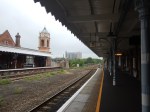
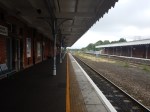
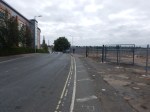


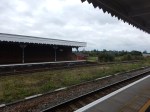
I think to quote any optimistic Estate Agent, it is a building with possibilities.
Consider.
- I suspect that Greater Anglia wish the track and platform layout was more train operator friendly.
- There is a cafe on the Ipswich-bound platform.
- Facilities are limited.
- The only shop is a barbers.
- Car parking is limited.
- The town centre and the bus station is a stiff walk away.
- There is no shuttle bus to the town centre.
- It is a Grade II Listed building.
For a town of 40,000 people it is a disgrace.
Improving Access To Trains
I’ve read in several places that Cambridge and Greater Anglia would like to create a frequent service between Cambridge and Bury St. Edmunds with several new stations, to help in the development of Greater Cambridge.
For example, a simple triangular route could be run between Cambridge, Ely and Bury St. Edmunds.
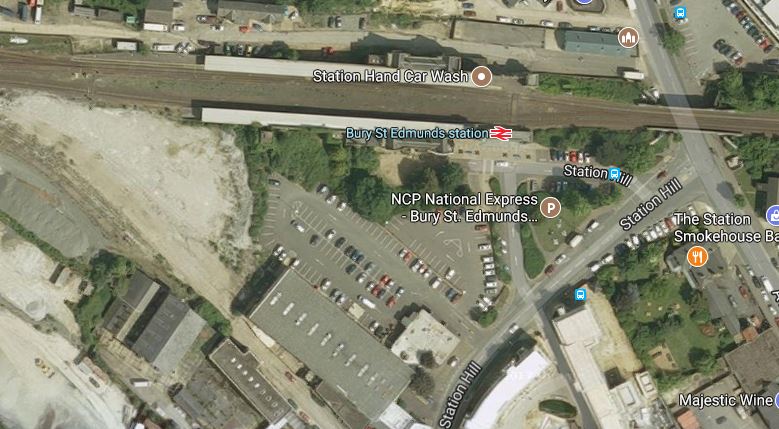
To do this efficiently would probably need a West-facing bay platform at the station.
But as this Google Map shows, that would be difficult.
It might be possible to split one or both platforms, as happens at Cambridge.
When you consider, that the space in the middle of the platforms, is large enough for at least one extra track, I’m sure Network Rail have ideas to create a more usable station without spending an enormous amount.
One thing that surely helps, is that it is unlikely that many trains will be longer than four-cars.
Crossrail 2: City Mayors Criticise Government Backing
This is the headline on an article on the BBC.
This is the first three paragraphs.
Two city mayors have criticised the government’s decision to back Crossrail 2, days after it scrapped rail electrification plans in Wales, the Midlands and the north of England.
Greater Manchester mayor Andy Burnham said there would be “widespread anger” at the decision to back the railway line, which will run through London.
Liverpool City Region’s mayor said there needed to be “balanced spending”.
I can understand the anger, especially in Manchester, where the electrification is running a couple of years late.
The Picc-Vic Tunnel
Manchester was unlucky, in that of the three Northern tunnel projects of the seventies; Liverpool, Manchester and Newcastle, the Picc-Vic tunnel was the one that was cancelled by Harold Wilson. Birmingham and London both got cross-city rail tunnels with the same name; Snow Hill.
Perhaps, Manchester should have renamed Piccadilly Gardens!
Liverpool’s tunnel of the same period has recently been rebuilt and Merseyrail have just ordered a new fleet of Stadler trains to improve and expand their commuter network.
Newcastle’s tunnel helped to create the Tyne and Wear Metro, which is in the process of ordering new trains and expanding.
What would have happened to Manchester, if British Rail’s plans had been allowed to proceed?
All Manchester got was the Metrolink, which compared to tram systems in Birmingham, Blackpool, Croydon, Edinburgh and Nottingham is rather second-rate, despite being the largest.
The Ordsall Chord
Let’s hope that the Ordsall Chord works as it says on the tin. Wikipedia says this about the chord’s operation.
The Ordsall Chord will provide a direct link between Piccadilly and Victoria stations, allowing trains from Manchester Victoria and the east to continue to Piccadilly. Following completion of the chord, four trains per hour will travel between Manchester Airport/Manchester Piccadilly and Manchester Victoria in each direction, and associated reorganisation of train paths and retimetabling will provide eight trains per hour from Manchester Victoria towards the west via Chat Moss, and six trains per hour from Manchester Piccadilly towards either Chat Moss or Bolton and Preston (trains from both Victoria and Piccadilly stations to the west and north west (Chat Moss, Liverpool, Bolton, Preston, etc.) do not actually pass over the Ordsall Chord, both ends of which lead eastwards, but travel over pre-existing track).
But as British Rail said in the 1970s, surely a properly designed tunnel under Manchester with up to three stations in the City Centre would have been better, than the Ordsall Chord.
But what’s done is done and anyway, if the Picc-Vic tunnel had been started in 2016, as was the Ordsall Chord, it probably wouldn’t have been finished until 2026.
Where Are The Trains?
Northern and TransPennine Express are renewing their train fleets, but Manchester’s new electrified lines will need new trains from the end of this year.
The elderly Class 319 trains have stepped up to the plate, like the troopers they have always been. They would have arrived earlier, had the new Class 700 trains arrived on time.
Where Is The Electrification?
The UK and not just the North, has a particular problem and that is, that a lot of our railway lines run through quality countryside, some of which is spectacular.
So imagine trying to electrify the following lines with overhead wires.
- Manchester to Buxton
- Ipswich to Lowestoft
- Ashford to Hastings
- Settle to Carlisle
- Preston to Leeds via Hebden Bridge
The Heritage lobby and their lawyers would tie nNetwork Rail in knots for decades.
On a practical level, from the stories I’ve heard about the electrification of the Gospel Oak to Barking Line near where I live, there are myriad problems with installing electrification in this country.
A lot seems to be down to the fact that British Rail and their predecessors weren’t good at keeping records.
The Class 319 Flex Train
I was once told by an engineer who worked on the InterCity 125, of a mythical pub in Derby, where Rolls-Royce and British Rail engineers met to talk about their problems. Could it be that Derby-based Porterbrook and Northern have tapped this network and came up with the bi-mode Class 769 train, which is a modification to a Class 319 train and must surely be the ultimate manifestation of British Rail’s legendary Mark 3 coach.
But the Class 769 train has been well received, as other orders have been forthcoming.
Surely, the planners could see the demand for this one coming, so where is the four-car suburban bi-mode?
Northern have ordered eight of these bi-mode and it will be interesting to see how they are used.
If nothing else, the Class 769 train has already proved that there is a need for a quality four-car bi-mode train.
Bi-Mode Trains And Bottlenecks
I would assume that the Ordsall Chord has a modern signalling system and that the number of trains that could use the chord could be as high as sixteen trains per hour, which is the current capacity of the Thames Tunnel on the East London Line.
The chord may be able to handle all the trains, which would allow services on both sides of Manchester to be run Crossrail-style as back-to-back services.
As a simple example perhaps Manchester to Buxton and Manchester to Clitheroe could be combined into a Buxton to Clitheroe service run by Class 319 Flex trains, which uses electricity from Hazel Grove to Bolton and diesel engines to climb to the two end stations.
Routes like this will surely release much-needed platform space in Manchester Piccadilly station.
But the two island platforms at Manchester Piccadilly will be a bottleneck.
I can see this happening across the Pennines at other stations.
Bi-mode trains will provide the train capacity, but are the stations up to it?
The Long Term Solution
Class 769 trains are not a long term solution. In my view they are a superb development solution.
If we assume that electrification is ruled out for the near future, this will inevitably lead to more bi-mode trains.
Purists will say no, as they will want electrification and nothing less.
But then we have no experience of a modern bi-mode train.
The first bi-mode to come into service will probably be a Class 800 train built by Hitachi.
In Do Class 800/801/802 Trains Use Batteries For Regenerative Braking?, I answered the question I posed and I now believe that these trains can store energy.
So will the bi-mode of the future not be an electric train with an onboard diesel engine, but a sophisticated design, that can obtain its motive power from multiple sources, thus reducing noise, vibration and carbon footprint?
There are at least two other companies who will join this fight.
- CAF have lots of orders with both Northern and TransPennine Express and they will not want to lose them. So I think it is reasonable to expect something radical from the Spanish company with a proven record in innovation.
- Bombardier have designed the Aventra to have onboard energy storage and I would be very surprised if they haven’t thought about how to squeeze in a small diesel generator.
Will Alstom, Stadler and Siemens sit idly by, whilst other companies carve up the UK market? I doubt it.
The new bi-mode trains will provide the capacity, but other things must be done.
- Stations must be improved to cater for the extra passengers.
- Track and signalling must be improved to allow higher speeds.
- As electrification was done on the cheap in the past, there are some lengths of electrification, that must be done.
- HS2 must go on at full speed.
- Ticketing must be made as easy as London and the South East.
- Planning of a High Speed line across the North should be seriously started.
It will be interesting to see what develops.
Conclusion
I would spend the money on new trains, better stations and improving the passenger experience.
Electrification would come later, when there is a proven need.
But I wouldn’t rule out the train-makers creating a wholly different game.
Grayling On Crossrail 2
This is Chris Grayling’s thoughts on |Crossral 2 for this article in City AM.
I am a supporter of Crossrail 2 but given its price tag we have to ensure that we get this right. The mayor and I have agreed to work together on it over the coming months to develop plans that are as strong as possible, so that the public gets an affordable scheme that is fair to the UK taxpayer.
Following a successful outcome being reached I am keen to launch a fresh public consultation to help gather views to improve the scheme and clarify the position around the safeguarded route.
So perhaps, the line will get built after all.
A Class 345 Train At Shenfield Station
These pictures show a Class 345 train at Shenfield station.


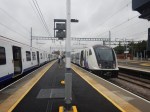
There’s still only one train running.
Note how the step-free access isn’t much better than the Class 315 train on the left.
 The Anonymous Widower