We Should All Think Radically!
In the August 2017 Edition of Modern Railways, Ian Walmsley, who is a writer, that I respect, thinks radically about how to upgrade or replace the High Speed Trains on the Midland Main Line.
He has a lot of experience in the rail industry and his views in this issue, are probably worth the price of the magazine alone.
He feels the InterCity 125s should be replaced as you can only make-do-and-mend for so long and he proposes replacing them with a modern equivalent, which would initially be two diesel locomotives topping and tailing a rake of new coaches, and then if electrification happens, the diesels are replaced with electric units.
Ian’s article comes a few days after this article in Rail Technology Magazine, entitled New bi-mode fleet a requirement for East Midlands as consultation opens, was published.
This is the first paragraph.
The DfT has this week launched its public consultation on the new East Midlands franchise, including specifications for a new bi-mode fleet of intercity trains, whilst at the same time revealing that plans to electrify the Midland Main Line north of Kettering have been abandoned.
There is going to have to be a lot of radical thinking to get a solution for that.
To make the replacement harder, Ian indicates various problems, which I won’t disclose here.
But I do think Ian’s idea is sound and it could be the solution to the problem of running modern 125 mph trains from St. Pancras to Derby, Nottingham and Sheffield.
So How Feasible Is Ian’s Plan?
Maths and physics don’t change. so I suspect that the calculations done by Terry Miller and his team in the 19670s, which led to the iconic InterCity 125 are still valid.
Locomotive Haulage
The power output of each Class 43 power car is 2,250 hp, so to propel an appropriate number of new carriages, you still need a locomotive at each end of the train.
The most modern diesel locomotive in the UK is the Stadler-built Class 68 locomotive, which has a power voutput of 3,800 hp, but a top speed of only 100 mph. The only 125 mph diesel locomotive in the UK is the Class 67 locomotive. To complicate matters, there is also the Stadler-built Class 88 locomotive, which is a 100 mph electro-diesel locomotive, but this locomotive is more a powerful electric locomotive with a sensible-sized last-mile diesel engine.
Ian suggests, that as the Class 68 is a few tonnes lighter than the Class 67, that a 125 mph Class 68/2 locomotive would be possible.
I don’t disagree, but given the quality of railway engineering coming out of companies like Bombardier, CAF and Stadler, that someone will do better.
We should also consider that the UK will need more than a few new freight locomotives in the next few years, as they do seem to be scratching around for motive power, as this picture shows.
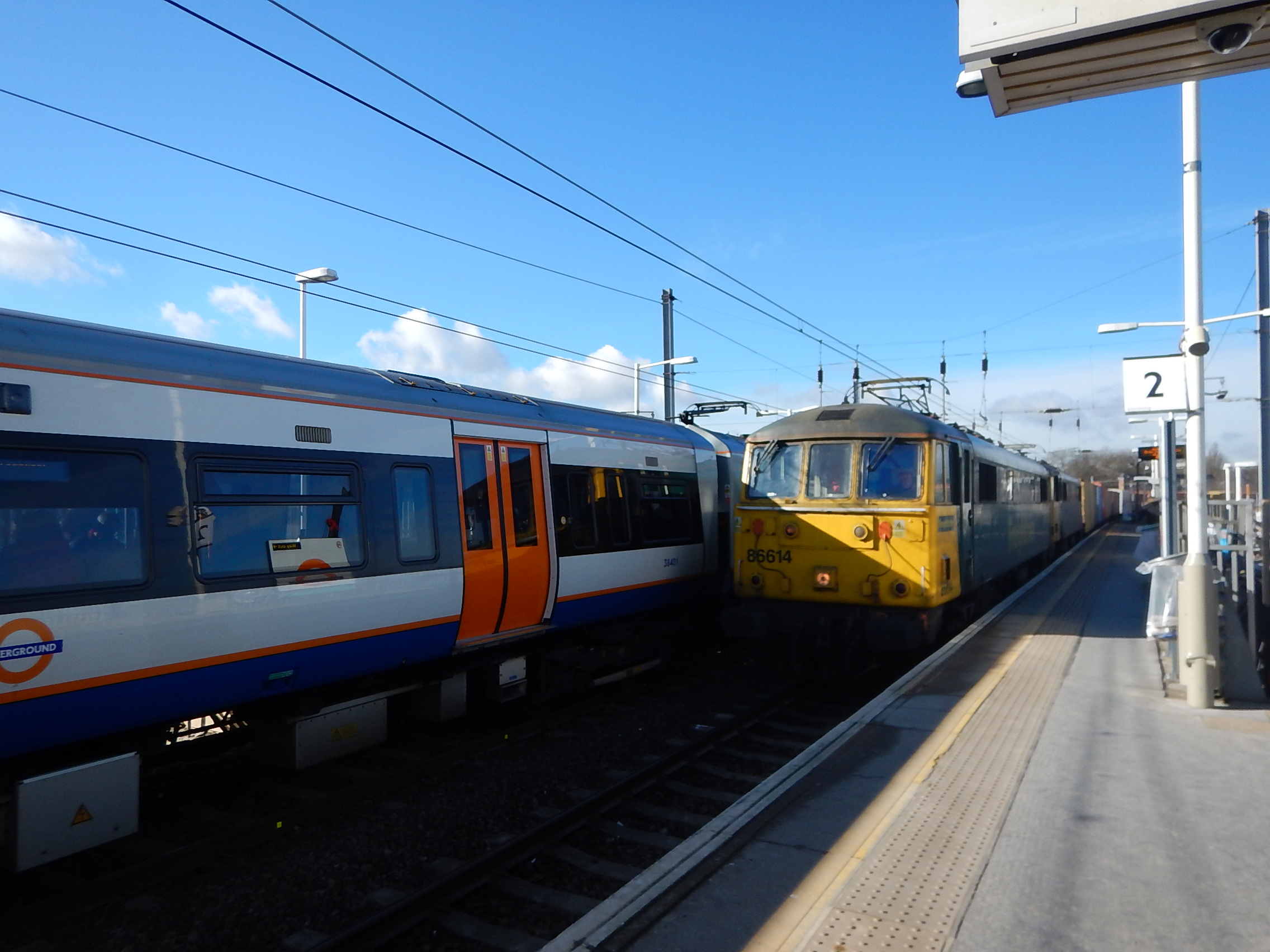
These two Class 86 locomotives date from the mid-1960s. But they do have around 3,600 hp each and a top speed of around 100-110 mph.
I even saw this interesting combination at Shenfield.
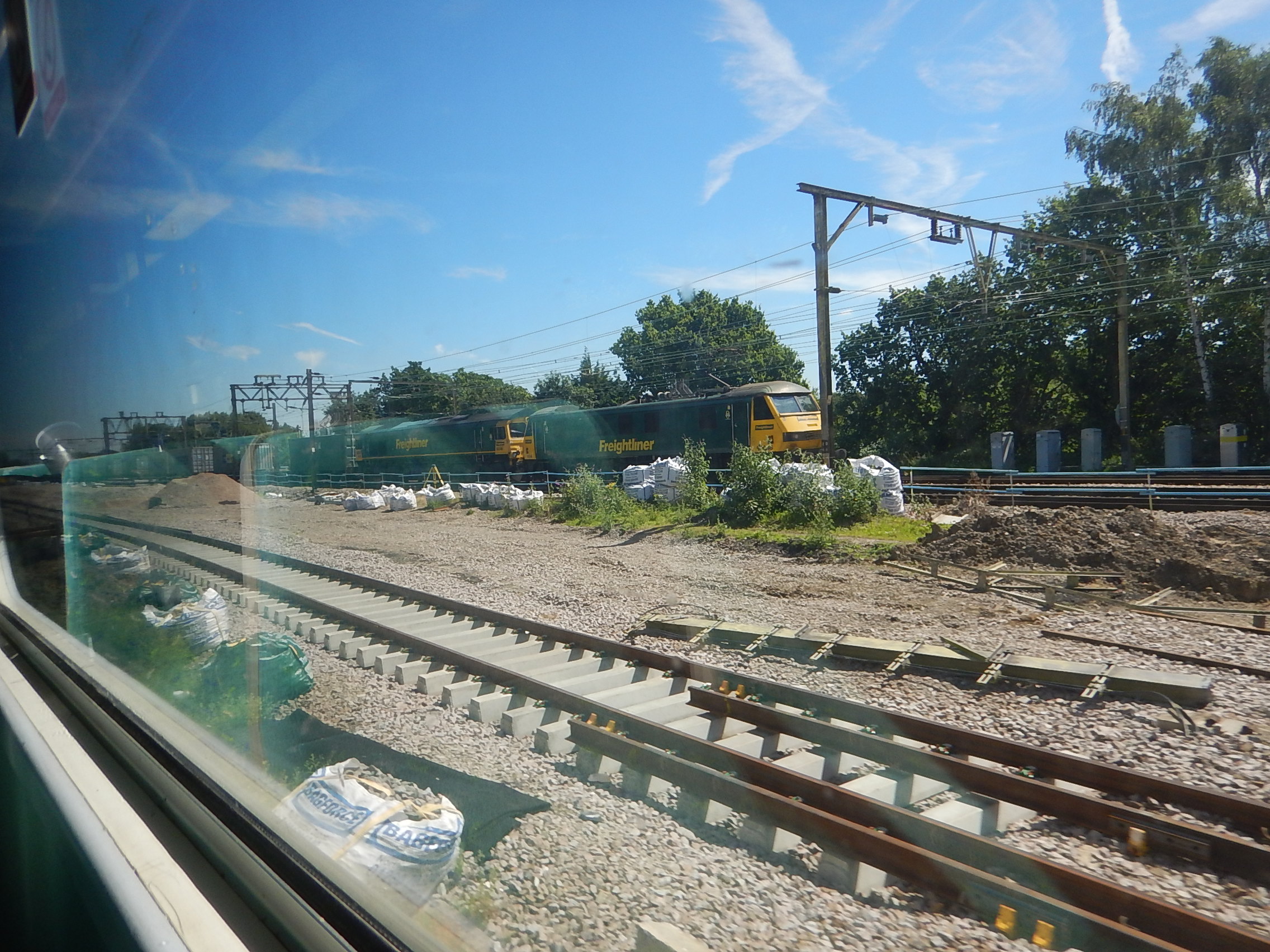
The Class 90 and Class 66 locomotives appear to be double-heading the heavy freight train. The Class 90, of which several will become available soon from Greater Anglia are 5,000 hp units with a top speed of 110 mph, whereas the ubiquitous Class 66 has only 3,300 hp and 75 mph.
With more and more long freight trains appearing on increasingly busy main lines, these freight trains must be becoming unwelcome to the companies running passenger trains and also to those, who live alongside the lines.
So is there another desperate need for a powerful locomotive to pull express freight trains at maximum length and weight around the country?
Some main freight routes like these are electrified with 25 KVAC overhead wires or will be soon.
- East Coast Main Line
- West Coast Main Line
- Greast Eastern Main Line
- Great Western Main Line
- North London Line
- Gospel Oak to Barking Line
But others are not.
- London to Southampton
- Felixstowe to Peterborough and The Midlands
- Peterborough to Doncaster via Lincoln
- Trans-Pennine Routes
And that’s just for starters.
I think it becomes obvious, why Direct Rail Services and Stadler came up with the Class 88 locomotive. The 5,300 hp available under the wires is more than adequate for the heaviest express intermodel freight train and the 1,000 hp under diesel can probably move the train into and out of the docks.
But this amount of diesel power is probably inadequate for hauling a heavy freight train at 100 mph.
A New Electro-Diesel Locomotive
So could we see a new electro-diesel locomotive with the following characteristics?
- The ability of a pair to top-and-tail an express passenger train on both diesel and 25 KVAC overhead electrification.
- The ability to haul the heaviest intermodal freight trains at up to 100 mph on both diesel and 25 KVAC overhead electrification.
- The ability to switch between modes at line speed.
- Regenerative braking underboth elkectricity and diesel.
In a few years time the diesel might be replaced by hydrogen or some other exotic fuel.
Electrification South Of Bedford
It might appear that these locomotives if working the Midland Main Line could switch to electric power South of Bedford or in the near future; Kettering, but the electrification is limited to 100 mph and there is no planned upgrade. This is a familiar story for anybody like me who uses the Great Eastern Main Line, where the inadequate electrification has had to be upgraded over the last couple of years to allow faster services.
The Coaches
The coaches are the least of the problems for Ian’s proposals.
This article on Rail Technology Magazine is entitled First bodyshell completed by CAF for new TPE fleet.
This is the first paragraph.
Pictures of the first bodyshell for new rolling stock to be used by TransPennine Express (TPE) have been unveiled as the operator looks to introduce 13 five-car Mark 5A Coaches – being built by Spanish company CAF – as part of its brand-new fleet.
The Mark 5A coaches, being built by CAF are designed for 125 mph! So all that is needed is to specify the interior!
As the Spanish train manufacturer has just announced the building of a factory at Llanwern in South Wales, that might be an ideal place to build the coaches needed.
Beating The PRM Deadline In 2020
The Mark 5A coaches for TransPennine Express are scheduled for delivery in 2018-2019, so I suspect the coaches for the Midland Main Line could start to be delivered after the TransPennine Express and Caledonian Sleeper orders are complete.
The locomotives might be move problematical, but if they are a derivative of an existing type, then surely this wouldn’t delay fleet introduction.
I suspect that a certain amount of testing can be done in parallel too!
So having some trains in service by the PRM eadline of 2020 could certainly be possible.
Conclusion
Ian Walmsley’s proposal for the next Midland Main Line franchise is possible.
Construction Of The Platform Structures And Tracks For Crossrail At Abbey Wood Was Cimpleted By Network Rail In May 2017
The title of this post, was stated under a picture in the August 2017 Edition of Modern Railways.
The picture had been taken on site from the other side of the fence through the station to this picture I took in July 2017.
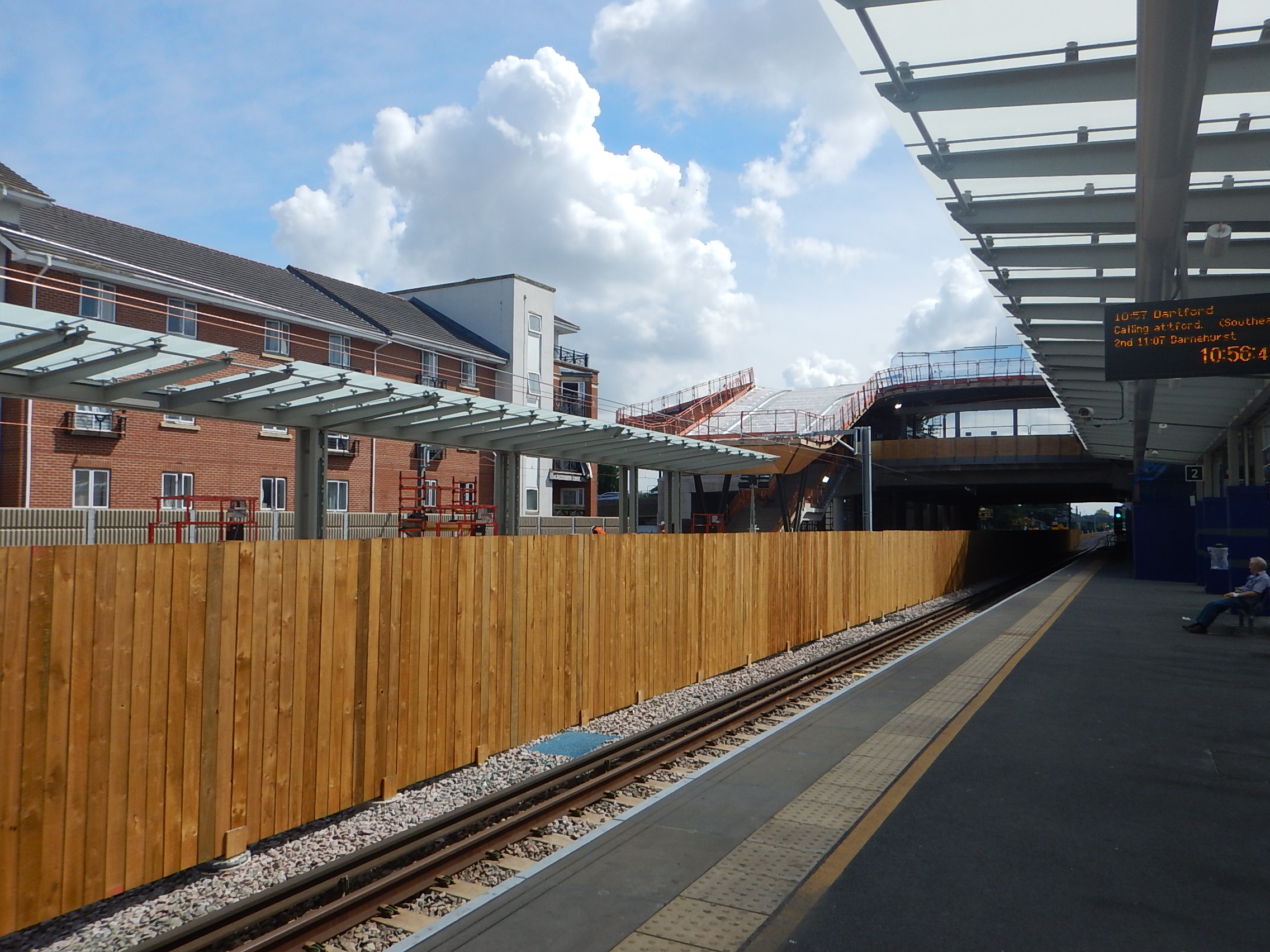
My later picture shows some of the canopies for the Crossrail platforms in position.
If Network Rail’s statement that formed the title of this post is correct, then is the track layout to the East of the station complete?
This picture shows the unelectrified line leading away from the station.
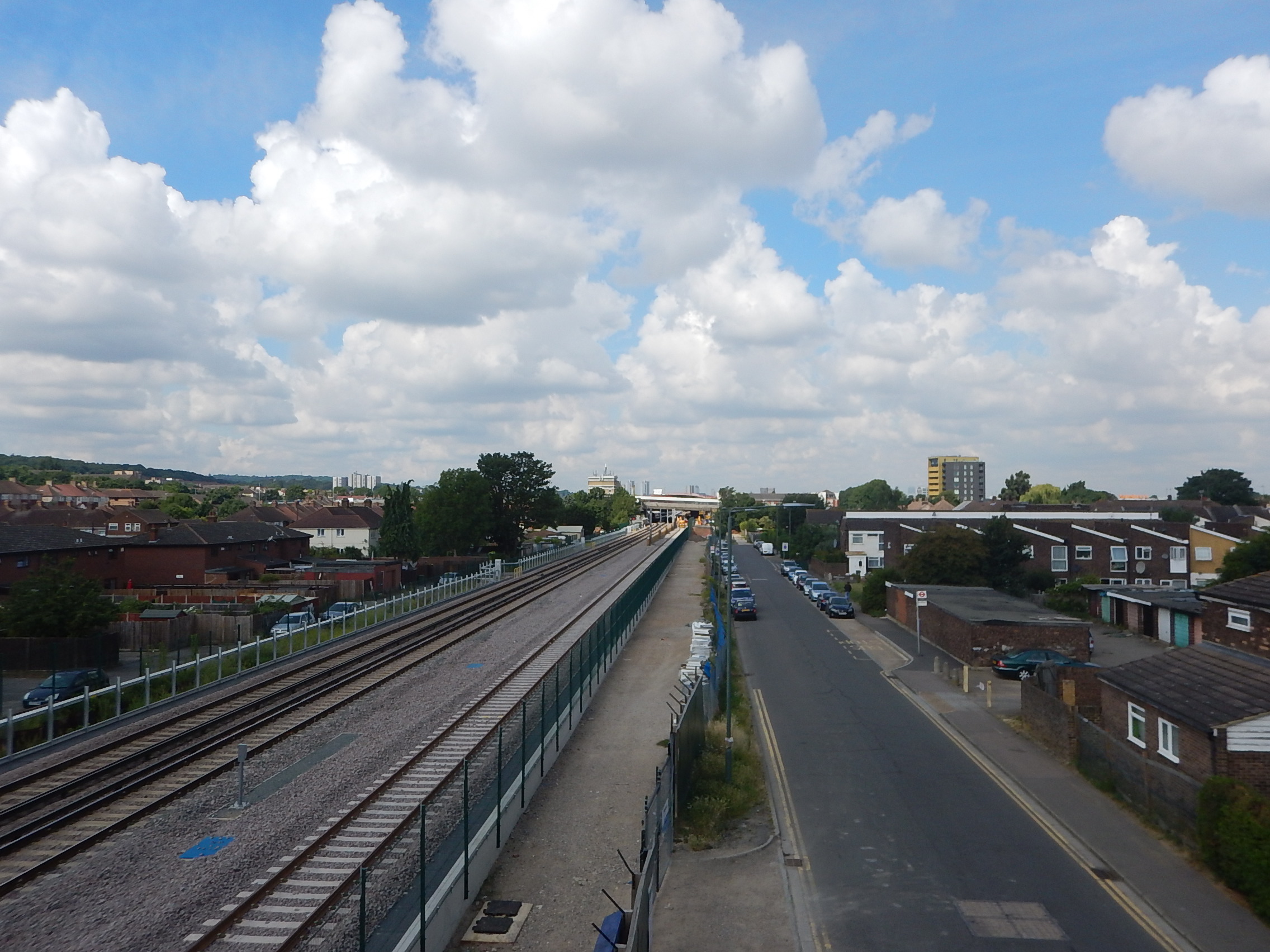
Note the track without any electrification by the fence in the right foreground and the two third-rail electrified North Kent tracks in the left background.
This picture shows the track going towards Belvedere station.

Note the cross-over by the signal.
Can Crossrail Reverse All The Scheduled Trains At Abbey Wood?
Crossrail have now published a more detailed schedule for the services.
The schedule shows that a maximum of twelve trains need to be reversed at each of Abbey Wood, Paddington and Shenfield stations.
In this article on Rail Engineer, which is entitled Signalling Crossrail.
The Class 345 trains are fitted with a system called Auto-Reverse, which I explained in Crossrail Trains Will Have Auto-Reverse.
The driver selects auto-reverse and walks back through the train, as it changes platforms automatically. By the time the driver is in the other cab, the train is in position in the other platform, ready to go back to London.
But the article in Rail Engineer also says this.
Auto reverse (AR) is not provided on Network Rail infrastructure. There will also be the possibility to use AR into and out of the stabling sidings at Abbey Wood so the driver will be at the correct end of the train to finish a shift or, when coming on duty, to start a new run westwards. Service trains will, however, normally reverse in the station. AR may also be used at Custom House and anywhere using crossovers in the central section.
As the normal twelve trains per hour (tph) making up the service, will be using both platforms, cross-overs are provided to the West of Abbey Wood station, as is shown in this picture.
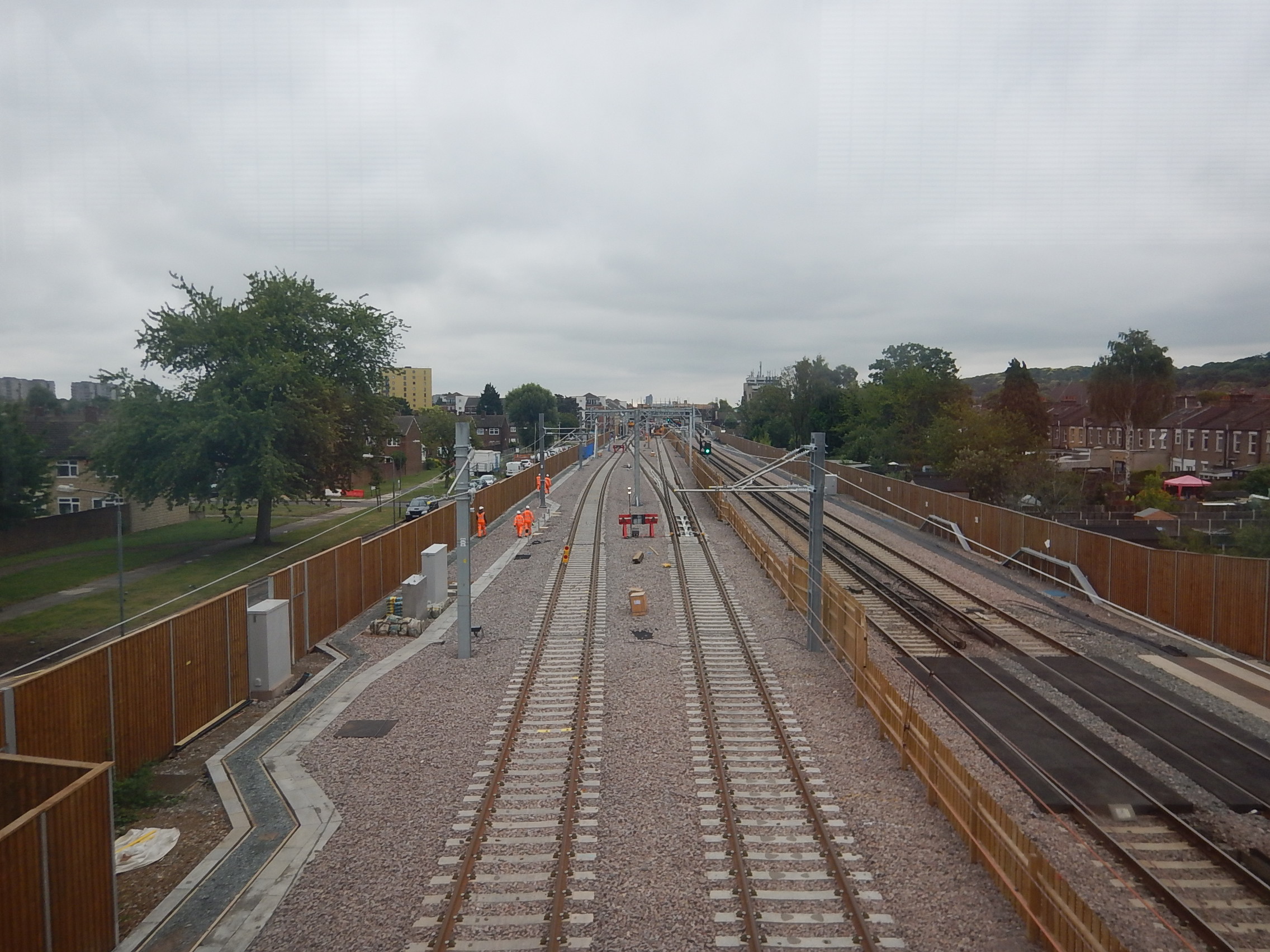
The system used at Abbey Wood will also be used at Shenfield.
Why Has The Reversing Siding Not Been Electrified?
In my view there can only be two explanations, if Modern Railways have got their picture caption right, which categorically said work was finished.
- My reconnaissance was wrong.
- Full electrification is not needed to reverse the trains.
On digging deeper, I took these four pictures at Abbey Wood station.


The pictures show in order.
- The overhead wires for Platform 4 fixed to the station building. Look under the top of the staircase.
- The overhead wires for Platform 3 passing under the station building.
- The overhead wires for Platform 3 passing under the station building.
- The overhead wires for Platform 3 anchored to a solid girder on the other side of the station building.
I couldn’t see the track layout because the wooden fence was in the way, but it would seem logical that the track through Platform 4 will eventually connect to the track through Platform 3.
This would allow the following.
- Trains arriving in Platform 4 to transfer to Platform 3 using the reversing siding.
- Crossrail trains to continue East on the North Kent Line using the single track and the crossovers to the East of the station.
- A failed train could be pushed into the reversing siding, which could probably accommodate two trains.
- Service and maintenance trains to access Crossrail’s Plumstead depot from the East.
But even if there is no connection, two independent platforms can handle the twelve trains per hour, as they will do at Shenfield.
The Rise Of One-Platform Stations
As I was writing DfT Names Five Winners Of Fresh £16m Stations Fund, I came to the conclusion that a lot of well-designed one-platform stations have been built since the turn of the millennium.
New one-platform stations include.
- Alloa – Scotland – Reopened 2008 – Commuter and terminal station
- Alesbury Vale Parkway – Bucks – Opened 2008 – Park-and-Ride, commuter and terminal station.
- Beauly – Scotland – Reopened 2002 – £250,000 – 75% of local commuters switched from road to rail.
- Bow Street – Wales – Reopened 2021 – £8million – Park-and-Ride, commuter and rural station
- Brunstane – Scotland – Opened 2002 – Commuter station
- Chandler’s Ford – Hampshire – Reopened 2003 – Commuter station
- Chatelherault – Scotland – Reopened 2005 – Commuter station.
- Conon Bridge – Scotland – Reopened 2013 – £600,000 – Local station
- Cranbrook – Devon – Opened 2015 – Commuter station
- Ebbw Vale Parkway – Wales – Opened 2008 – Park-and-Ride and commuter station.
- Ebbw Vale Town – Opened 2015 – Commuter and terminal station.
- Eskbank – Scotland – Opened 2015 – Commuter station
- Fishguard and Goodwick – Wales – Reopened 2012 – £325,000 – Local station and bus interchange.
- Galashiels – Scotland – Reopened 2015 – Commuter station and bus interchange.
- Gorebridge – Scotland – Opened 2015 – Commuter station
- James Cook – Teeside – Opened 2014 – £2.2million – Serves the hospital
- Kelvindale – Scotland – Reopened 2005 – Commuter station
- Kenilworth – Warwickshire – Reopened 2018 – £11million – Commuter station
- Llanhilleth – Wales – Reopened 2008 – Commuter station
- Merryton – Scotland – Opened 2005 – Commuter station
- Newbridge – Wales – Reopened 2008 – Commuter station
- Newcourt – Devon – Opened 2015 – £4million – Commuter station.
- Newcraighall – Scotland – Opened 2002 – Park-and-Ride
- Newtongrange – Scotland – Opened 2015 – Commuter station
- Pye Corner – Wales – £3.5million – Commuter station
- Rogerstone – Wales – Opened 2008 – Commuter station
- Soham – Cambridgeshire – Opened 2021 – £21million – Commuter station
Note.
- I am adding to this list, as new one-platform stations are opened.
- That is a total of twenty-four stations including three termini since 2000.
Several of the stations are on three reopened or new lines.
The three routes have sections of single-track.
How many more one-platform stations will we see in the next few years?
- They must be more affordable.
- They don’t need expensive pedestrian bridges.
- They are usually step-free.
- They can be as long as you need
- They are ideal for single-track lines without electrification.
On the other hand there may be signalling and safety issues.
Integrated Design Of Rail Routes, Stations And Trains
If you look at the design of a new or reopened railway line like the Borders Railway, there have been various complaints from residents, commuters, railway purists and tourists.
- Why wasn’t it built as double-track throughout?
- There is no siding to help if a train brakes down.
- Parking is insufficient.
- The capacity of the trains is small.
- The trains are old and tired.
- The trains perform poorly.
A lot of the complaints can be blamed on the need to deliver the railway on a minimum cost.
But, I also believe that if the line had been designed to fit around a small fleet of trains, designed specifically for the route, then more money could have been saved and the railway would offer a better service to everyone.
Imagine a train with these characteristics.
- At least four comfortable carriages.
- Ability to run on electricity, where 25 KVAC overhead electrification is available.
- Ability to run on diesel or batteries, where there is no electrification.
- Change of power mode would be automatic and at line speed.
- Level access to Harrington Humps at all stations for those needing step-free access.
- Integrated CCTV between train and stations, so train crew can check if there are any possible problems or passengers who need assistance as they approach a station.
- Wi-fi and 4G, although the latter might be difficult on the Borders Railway.
- An onboard ticket machine, so late passengers can board without a ticket and the conductor is busy.
The train doesn’t need to be new, but designed for the route and of refurbished to a high standard.
I believe that train designers can come up with a train that would be more efficient to operate at stations, so that time-keeping would be spot on.
A Rail Link To Saint Andrews
I will use this rail link as an example, because of the importance of the historic City and its links to golf.
The length of the route by road between Leuchars station and Saint Andrews is 5.8 miles.
This is not much longer than the 4.4 miles of the Greenford Branch Line in West London, which has a frequency of two trains per hour (tph).
The service is provided by a single Class 165 train. So I suspect, a single train could maintain a two tph shuttle between Leuchars station and Saint Andrews.
The minimum infrastructure to sustain this two tph service would be as follows.
- A single bay platform at Leuchars station.
- A single platform terminus at Saint Andrews.
- Perhaps a single platform station for golfing visitors convenient for the courses.
- All platforms would be able to handle six car trains.
- A single track would connect all the stations.
But surely this is not good enough for Saint Andrews.
- A passing loop could be provided at halfway.
- There must also be the possibility of a triangular junction to link the rail link to the main line.
Doing both, might allow four tph and direct trains from Dundee, Edinburgh and Glasgow to Saint Andrews.
DfT Names Five Winners Of Fresh £16m Stations Fund
The title of this post is the same as an article in Rail Technology Magazine.
It announces the five winners of funding from the Second New Stations Fund.
Stations chosen are as follows.
- Horden Peterlee in County Durham
- Warrington West in Cheshire
- Reading Green Park
- Bow Street in Ceredigion, Wales
- Portway Parkway near Bristol
Note the fund is for England and Wales only!
The stations will be described in the next few sections.
Horden Peterlee
Horden Peterlee station will be on the double-track Durham Coast Line, between Seaham and Hsrtlepool stations.
This Google Map shows the area of the proposed station close to South East View.
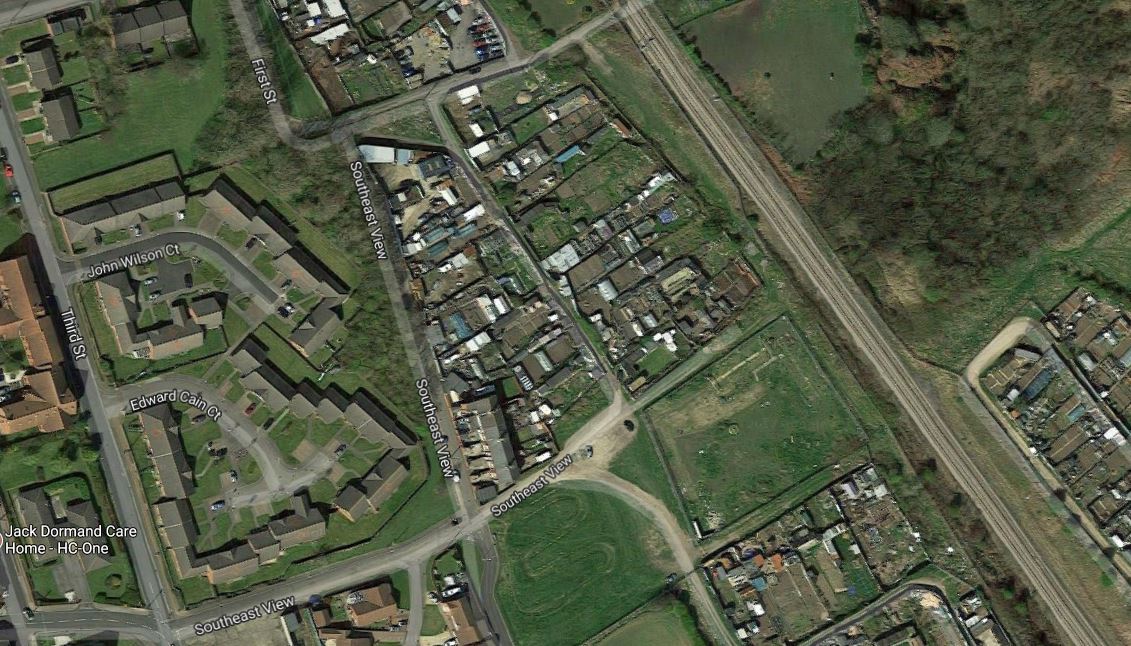
Wikipedia says this about the proposed station.
This station, if built, would have 2 platforms with waiting shelters, benches, lighting, help points and CCTV. The platforms would be linked by a covered footbridge and the station would have a car park with space for up to 100 cars as well as facilities for drop-off, taxis and bus services.
Let’s hope the lie of the land, enables the architects to design a good station.
Wikipedia also says this as the reason for building the station.
It was identified that one of the key benefits of reopening Horden station rather than any of the other closed stations on the line was its close proximity to Peterlee which has grown significantly since 1964 and thus, if constructed, a new station in Horden could allow 61,000 residents to benefit from improved access to employment opportunities across the region.
It sounds to me like this station is needed. I would hope to go when this station opens, as it could be a day to remember in Horden.
Train Services
Looking at Passenger Services in the Wikipedia entry for the Durham Coast Line, it would appear that local services between Middlesbrough and Newcastle are a bit thin, at just hourly. An important local route like this deserves to have at least two trains per hour.
Grand Central and Virgin do run trains through the area to Sunderland, but I don’t think they will stop at Horden Peterlee station.
Certainly, a smart new station deserves to have a train service to natch.
Warrington West
Warrington West station will be on the southern Liverpool to Manchester Line between Sankey and Warrington Central stations.
This Google Map shows the area of the station.
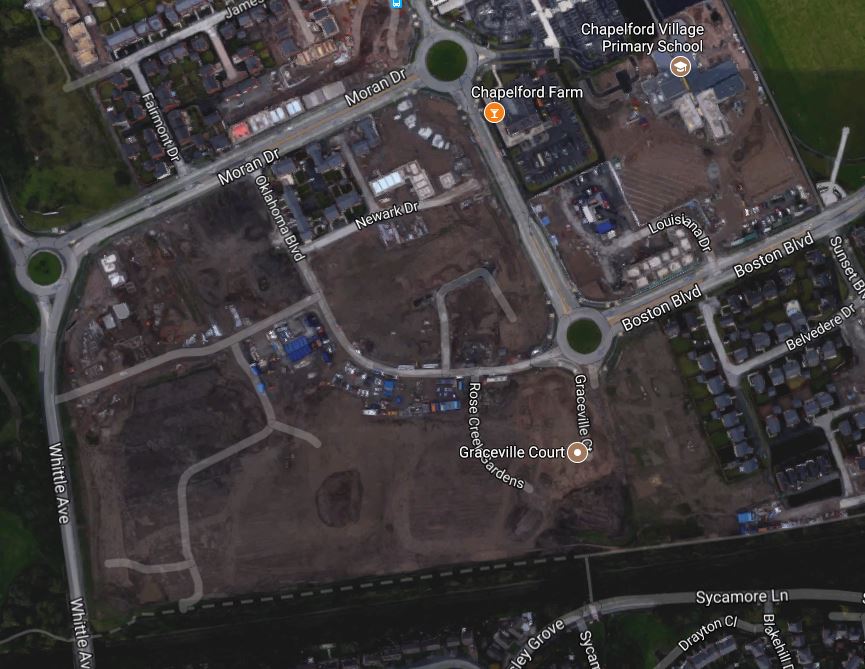
It looks like the development site in the South East corner of the map could be Chapelford urban village, with the railway running East-West across the map.
This article in the Warrington Guardian gives more details of the station.
This is a visualisation of the station.
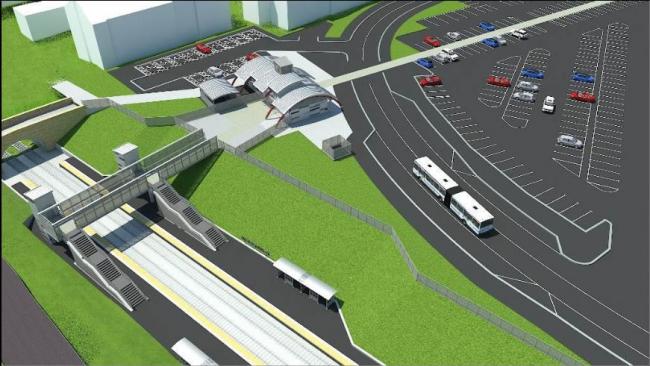
As this station is halfway between Liverpool and Manchester, I have a feeling, this could be a very busy station.
Train Services
Services at Warrington Central station has as many as eight trains per hour passing through.
There is a lot of scope to provide a quality southern service between Liverpool and Manchester calling at Liverpool South Parkway, Widnes and Warrington Central. Warrington West station could be a part of this and I could see it getting between two and four semi fast trains per hour
Reading Green Park
Reading Green Park station will be on the Reading to Basingstoke Line between Reading West and Mortimer stations.
This Google Map shows the area.
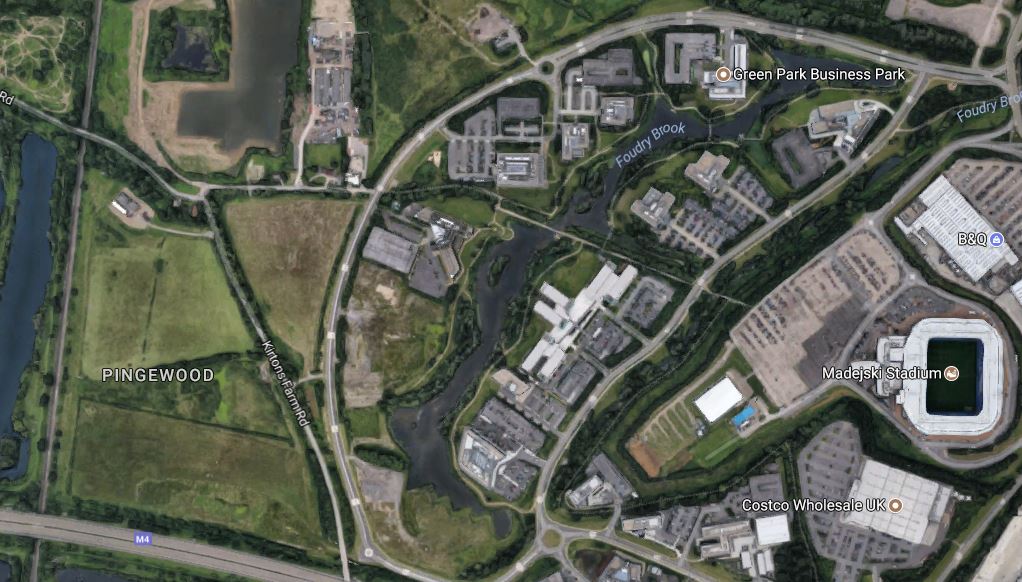
Note the Reading to Basingstoke Line down the Western edge of the map.
Train Services
It is expected that services will be at least two trains per hour at the station.
The Reading to Basingstoke Line has the following characteristics.
- It is electrified with 25 KVAC overhead at the Reading end.
- It is electrified with 750 VDC third rail at the Basingstoke end.
- It has less than fifteen miles of line without electrification,
Consequently, I feel that in a few years, this line will be within the capability of a battery powered train, charging on the short lengths of electrification at either end.
Bow Street
Bow Street station will be on the Cambrian Line between Aberwrystwyth and Borth stations.
This article on the BBC gives more details.
Train Services
The Cambrian Line has approximately pne train per hour between Aberwrystwyth and Shrewsbury.
Portway Parkway
Portway Parkway station will be a one platform station on the Severn Beach Line adoining the Portway Park-and-Ride.
Train Services
Wikipedia describes the Services on the line.
Costs Summary
This article from Railway Gazette International has a detailed summary of the costs of the five stations.
Horden Peterlee, Warrington West and Reading Green Park are medium-sized schemes to support housing and business developents and make it easier to get to employment in nearby towns and cities. But they will cost an average of £15million a station.
Certainly, where I live in Dalston and all across North London, the improved North London Line has had several positive effects.
Bow Street and Portway Parkway are small one-platform schemes, which hopefully will provide better Park-and-Ride facilities. The averae cost is a lot less at £4.5million.
Conclusion
It is well-proven that new stations are a way of increasing train usage and they are generally welcomed by train companies, passengers, residents and businesses.
But as the costs for these stations show, medium-sized full-function stations don’t come cheap.
Surely, though on the right housing or business development, designing a station into the development, as at Warrington West or Reading Green Park, must give a payback to the developer in easier sales and rentals.
The two simpler schemes would seem to be part of a trend, where well-designed one-platform stations are built for Park-and-Ride facilities, hospitals, housing developments and sporting venues.
I discuss these stations in The Rise Of One-Platform Stations.
Bow Street and Portway Parkway stations will add two more one-platform stations.
East Midlands Airport Offers £2.5m Fund To Boost Station Connections
The title of this post is the same as an article on Rail Technology Magazine.
If not desperation, there is an air of We Must Do Better about the title.
So I went to the Rail page on the EastMidlands Airport web site.
This is said.
With a choice of stations, it’s never been easier to travel by train to East Midlands Airport. Connections are available to the north and south of the country from Derby, Nottingham and Long Eaton, with bus services to each station possible through regular Skylink bus services to and from the airport.
It is possible to connect at East Midlands Parkway for journeys to and from destinations outside the East Midlands region. This station is now served by a Parkway Railink – a scheduled 6-seater operating every day from 6am to 7pm hourly.
I certainly haven’t seen many airports with worse rail access than that, so I can understand their £2.5million offer.
Their demands outlined in Rail Technology Magazine aren’t unreasonable, but they are short of direct access.
This Google Map shows East Midlands Airport.
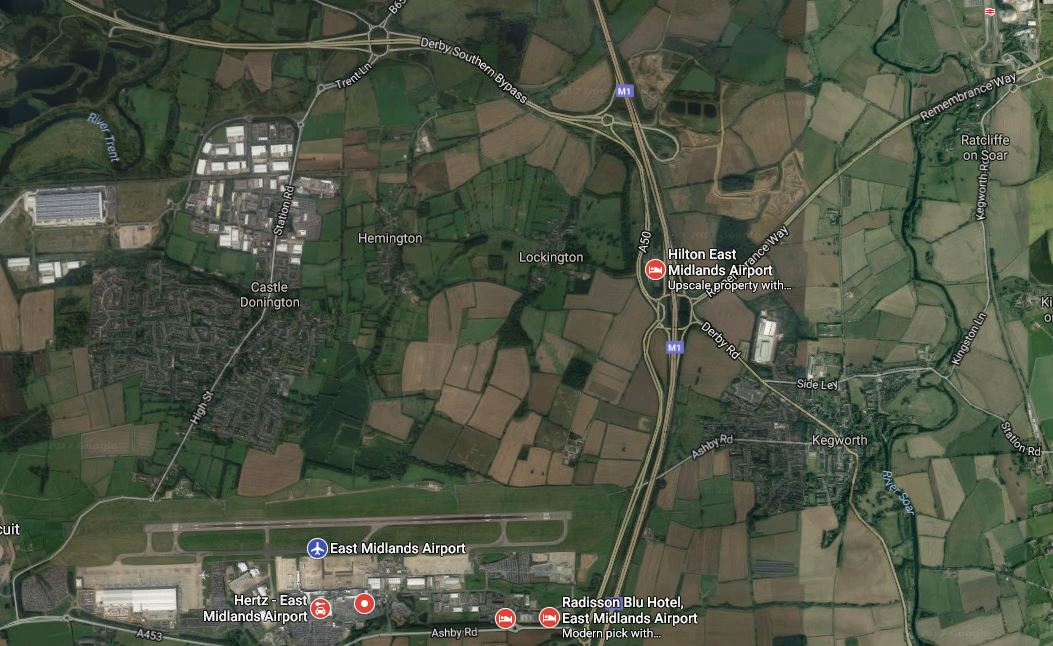
Note East Midlands Parkway station is in the North-East corner of the map.
Note that the runway at the airport is 2,893 metres long.
I think it’s true to say, unless your destination could only be reached from East Midlands Airport, those without cars, wouldn’t go near the place.
Does Northern See Wigan As A Class 769 Train Hub?
The Wikipedia entry for Northern, shows under their entry for eight Class 769 trains, that the routes they will cover include.
- Liverpool to Wigan
- Manchester to Wigan North Western via Bolton.
Wigan is a proud and friendly town and I wrote about it in Wigan On The Up.
The West Coast Main Line through Wigan North Western station is electrified and Northern run half-hourly electric services to Liverpool using Class 319 trains.
But the other station; Wigan Wallgate is not wired and is definitely Pacer territory.
Liverpool to Wigan
As Liverpool Lime Street to Wigan North Western is fully electrified, I would be very surprised if Northern would run a bi-mode Class 769 train on this route, except as a stand-in for a failed Class 319 train.
Routes to places North of Wigan North Western, like Blackpool, Lancaster and Preston will be fully-electrified, so these routes can be served by the Class 319 trains.
Northern could be thinking of running a service between Liverpool Lime Street and Blackburn/Burnley for which a Class 769 train would be ideal.
But I think more likely, is that they are thinking of using Class 769 trains on the Kirkby Branch Line, which currently links Kirkby and Wigan Wallgate stations.
Consider.
- There is talk of running this branch as a shuttle.
- Wigan Wallgate station already has a suitable bay platform for a shuttle.
- The route is double-track except between Kirkby and Rainford stations.
- Kirkby to Wigan Wallgate takes a convenient twenty-four minutes.
- Merseyrail have a long term ambition to built a new Headbolt Lane station, as an interchange between their Northern Line and services to Wigan and Manchester.
- Merseyrail want to serve Skelmersdale.
Could this route be the reason for the reported Battery EMUs For Merseyrail?
- The Class 769 trains are used between Kirkby and Wigan Wallgate stations as a shuttle.
- Two trains would be able to provide a two trains per hour (tph) service, without any new infrastructure.
- Merseyrail ascertain that their new Stadler trains can travel between Kirkby and Wigan Wallgate and back on battery power.
- Merseyrail determine if a fast charging station is needed in the bay platform at Wigan Wallgate for their Stadler trains.
If the Class 769 trains show the passenger traffic is there and the Stadler trains can handle the route on batteries, could we see some or all of the Merseyrail Northern Line services extended to Wigan Wallgate?
Because the Stadler trains will be fast modern trains designed to execute stops quickly, I suspect that even on the single track section of line between Kirkby and Rainford stations, they could run at the frequency of four tph, that is currently run all day between Kirkby and Liverpool Central stations.
- This would mean that the the current four tph to Kirkby would become four tph to Wigan Wallgate.
- The service would be run by brand-new Stadler trains.
- The track at Kirkby would have to be relaid to allow trains to run straight through.
- The signalling would probably need updating.
- Means to charge the trains at Wigan Wallgate might need to be provided.
- A new single-platform station could be built at Headbolt Lane.
- The four stations between Kirkby and Wigan Wallgate would get four tph in both directions.
It would give The Train To Wigan Pier a whole new meaning.
Once they had done their good works in proving the route, the Class 769 trains would be posted elsewhere to do more missionary work.
Manchester to Wigan North Western via Bolton
This is the other route mentioned in Wikipedia.
Consider.
- Bolton to Manchester will be electrified, by the end of the year.
- The route passes through Ince, Hindley, Westhoughton and Lostock.
Class 769 trains travelling this route, would open a second electrified route between Manchester and Preston via Wigan.
Manchester to Southport
Why was this route not mentioned?
- Manchester to Southport is a route run mainly by Pacers to a frequency of two tph.
- Some trains go via Bolton and some via Atherton.
- The route via Bolton will be partly electrified by the end of the year.
- The route via Atherton is not electrified.
I suspect that under current plans of just eight Class 769 trains, there aren’t enough to use them on this busy route.
Ideally, this route should be run with two tph going on each of the routes to Manchester from Wigan Wallgate.
The Future
Northern have ordered both diesel and electric Civity multiple units from CAF.
In Auckland Mulls Battery-Electric Train Order, I looked at how CAF had proposed battery-electric Civity trains for Auckland.
I’m sure CAF wouldn’t mind varying the order.
Cardiff To Gloucester And Cheltenham In A Class 769 Train
As the time gets nearer for the entry of the Class 769 train into service at the end of the year, speculation is mounting about how the trains will be used.
In the August 2017 Edition of Modern Railways, there is an article, which is entitled Class 769s For Wales.
After discussing how the trains will be used to deputise for the current Class 150 trains so that they can be made compliant with the Persons of Reduced Mobility regulations, the article goes on to say this.
None of the electrical equipment will be removed from ‘769s’ destined for Wales. After completion of Great Western Electrification to Cardiff, they could operate electrically from Cardiff to Severn Tunnel Junction, where they would switch to diesel operation for the rest of the route to Gloucester and Cheltenham.
The fastest direct trains take one hour fifteen minutes for the journey, so a round trip could be a few minutes under three hours, so that an hourly service would need three trains.
Battery EMUs For Merseyrail
The title of this post is the same as an article in the August 2017 Edition of Modern Railways.
This is the first paragraph.
Two of the new EMUs Stadler will build for the Merseyrail network will be fitted with batteries.
This is also said.
The initial benefits of the trial will be the energy recycling properties of the batteries, but with a larger battery the option could be to run the units away from the electrified Merseyrail network using battery power.
Other reports suggest that battery power could move the trains in depots.
Another report in the same edition of Modern Railways is entitled Class 769s For Wales.
It discusses the use of Class 769 trains on the Borderlands Line.
This is said.
Would safety regulations permit Class 769s, or other third-rail EMUs retrofitted with diesel engines, to operate the Wrexhm-Bidston Line and continue in the Mersey tunnels to Liverpool? No definite answer was available as Modern Railways went to press. Each bi-mode unit would displace pnly one two-car Class 150/2 unit from the line, but studies have predicted large growth in passenger numbers if the change of trains at Bidston were eliminated.
It is an interesting concept.
- Porterbrook have already talked about converting Class 455 trains into bi-modes.
- These third-rail units don’t have pantographs to snag in the tunnels.
- They have been refurbished to a high standard in recent years.
- The fuel safety problem in the tunnel, is something for which Formula One engineers may have a ready-made solution.
I’m sure if it does happen, Scouse humour will go into overdrive, about London cast-offs and old trains. But Class 455 bi-mode trains would have the last laugh.
Conclusion
It is encouraging to see in these two articles signs of radical but in my view totally sound thinking.
Finance For Crossrail
In the August 2017 Edition of Modern Railways, there is a Crossrail Update, with a section entitled Planning Cash Comes Good.
It starts with this paragraph.
How often do you come across a rail project that receives more funding than it budgeted for? well, an update to the TfL Finance Committee suggests Crossrail could be heading that way. Long, long ago when the Crossrail budget was nailed down it was agreed that £600million should be contributed in the form of planning obligations – the idea bing that property developers who benefit from the improved transport links that will be provided by the Elizabeth Line should contribute to the capital cost.
This is the current progress.
- So far £100million has been collected from Section 106 contributions, with £200million still to come.
- However, the Mayor of London’s Community Infrastructure Levy has contributed £400million to date.
- The forecast is that by the time the line opens receipts will have risen to £700million.
I suspect that other Mayors will be looking at Crossrail’s funding model.
 The Anonymous Widower