Heathrow Plan To Build Third Runway – On Stilts Over M25
This is the title of an article in the Business section of the Sunday Times.
Apparently, three viaducts would be built over the M25, with a wide one for the runway and two narrower ones for the taxi-ways.
Sounds fine by me!
I also feel that the technique of using stilts could be applied to build new housing and commercial properties over roads and railways.
Look at all that space over some city centre stations!
Protecting Pedestrians From Vehicles Driven By Imbeciles
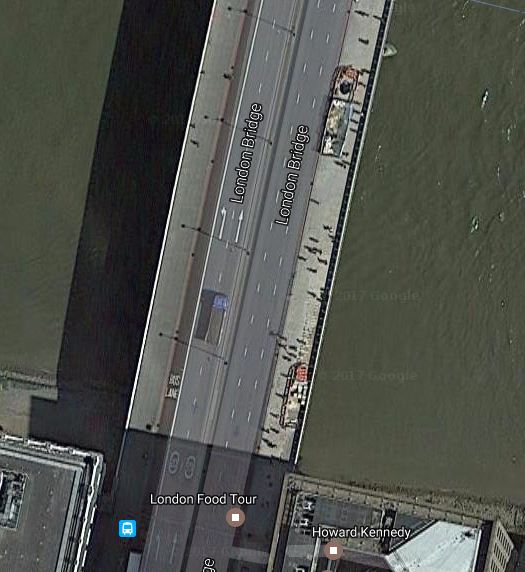
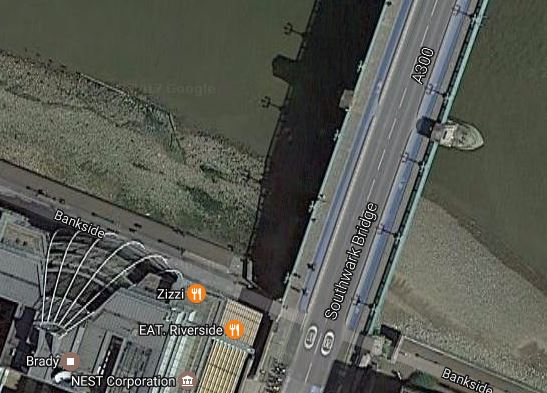
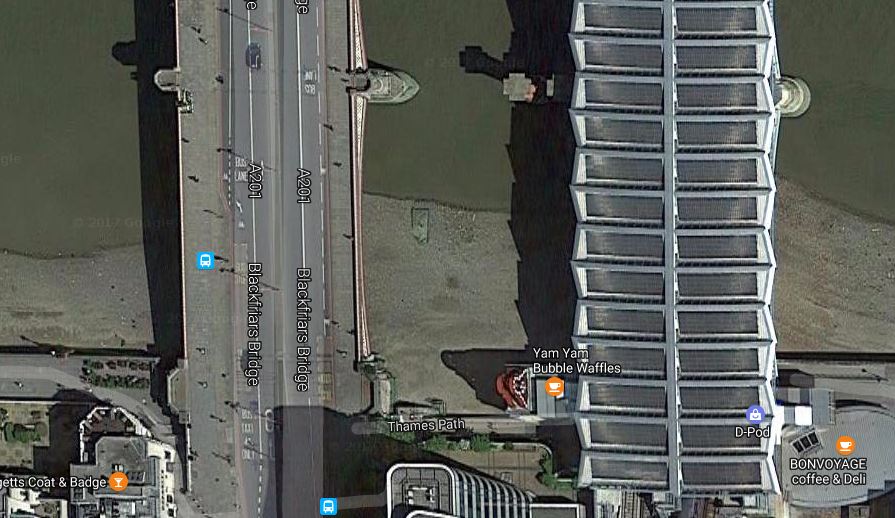
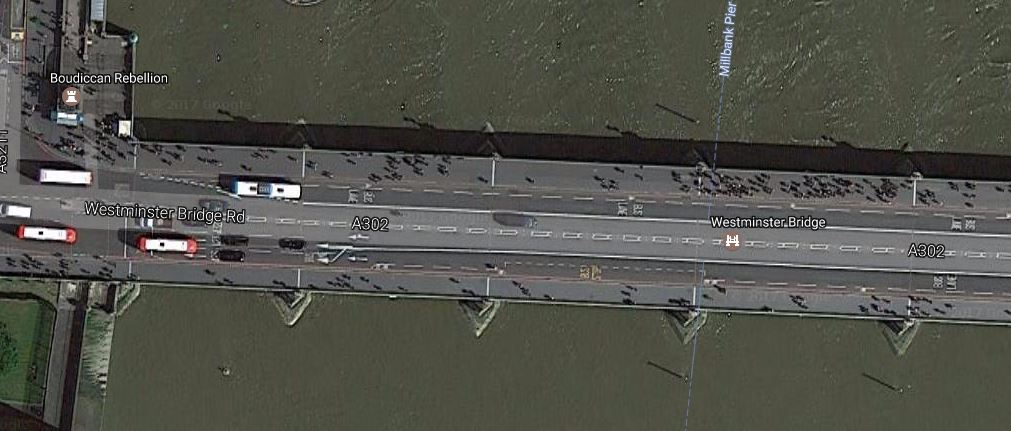
Look at these Google Maps of part of various bridges across the Thames.
London Bridge
Southwark Bridge
Blackfriars Bridge
Waterloo Bridge

Westminster Bridge
Note.
- How the pedestrians can are easily seen in the images.
- All the bridges have wide pavements, which are designed for easy walking.
- All images were probably taken at the same time and are to the same scale.
- Westminster Bridge is much busier than the others.
There is no protection to stop a bin lorry with a driver who has a high risk of collapse, wandering off into the crowd. Given that that has happened in recent years, surely we should develop a protective system, that stopped vehicles getting on the pavement.
You wouldn’t need it on every road, as very few are likely to suffer an attack from imbeciles. But there have been a couple of pedestrians killed by drunks or drivers who should have given up because of health or advanced age.
Many roads too already have massive protection for pedestrians, as rows of vehicles are parked nose to tail alongside. I’ve never heard of an out of control vehicle going through a line of parked vehicles to kill someone. It must have happened surely!
Perhaps on London’s bridges and the wide pavements of streets like Regent Street and the Embankment, bollards or something physical will help.
But we should think creatively!
Something that could be done in London would be to follow on from the action at Bank Junction, where between seven and seven, the junction is for buses and cyclists only.
As there seems to have been little protest about this action, perhaps it could be done elsewhere and for twenty-four hours.
Look at the image of Southwark Bridge and the bridge is showing its reputation as London’s least used bridge.
So why not make the bridge pedestrians and cyclists only?
That could be done tomorrow and it would take some pressure from London Bridge, especially in the rush hour.
Also, at Blackfriars Bridge, it should be that pedestrians could use Blackfriars station, by just touching in and out and not being charged.
Pedestrian-only routes must be much safer.
By Rail Between Derby And Manchester via Sheffield
In his article entitled Connecting The Powerhouses in the June 2017 Edition of Modern Railways, Colin Boocock, says that the one rail route between Derby and Manchester, is to go via Sheffield.
There is one train an hour that takes one hour 38 minutes with a change at Sheffield. The two legs appear to take 33 and 52 minutes respectively with a thirteen minute wait at Sheffield station, which is a well-equipped station.
Change the destination to Manchester Airport and it’s still one train an hour and the journey takes two minutes over two hours.
Incidentally, the fastest trains to Manchester and Manchester Airport via Sheffield seem to be the same trains.
Improving the times on this route will not be easy.
- Stops are minimal at only Chesterfield, Stockport, Manchester Piccadilly and Manchester Airport.
- The service uses the 90 mph Hope Valley Line between Sheffield and Manchester.
- The only electrification is between Stockport and Manchester Airport.
- Electrification from Sheffield to Stockport on the Hope Valley Line will be difficult because of the terrain and the countryside lobby.
- Electrification from Derby to Sheffield will be difficult, as the line goes through a World Heritage Site.
The closure of the electrified Woodhead Line to passenger traffic in 1970, with the benefit of hindsight, now looks to be a crass decision of the highest order. I assume that, the great friend of the railways; Harold Wilson was in charge!
Conclusions
Going between Derby and Manchester by rail is a practical proposition, but it is a route, which would be difficult to improve.
Enthusiasm For The Borders Railway In Carlisle
This article in the Carlisle Express And Star is entitled New Rail Link To Carlisle Could Be ‘Catalyst’ For Job Creation.
It is discussing the report of the Campaign for a Borders Railway, which recommends rebuilding the line.
This is said in the newspaper.
The summary said: “A new rail link to Edinburgh via the Borders could be a catalyst for the development of new employment uses on the former MOD land at Longtown and in the Kingstown area on the northern fringe of Carlisle.
“Park and ride stations in these areas would provide congestion relief and improve access to the city.
I think that as the only major City on the route, apart from Edinburgh, Carlisle must be a major beneficiary of a reinstated Borders Railway.
Carlisle scores high in the Location, Location, Location stakes, as not only is it just off the M5 between England and Glasgow, but Carlisle Citadel station is a major rail interchange. Incidentally, these romantic Victorian names are dropped far too readily.
This map from Wikipedia, shows the railways around the City.
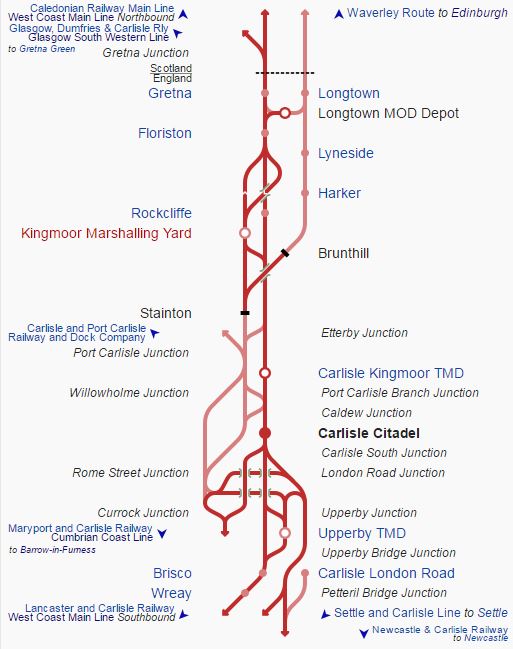
Note Longtown station on the Waverley Route to Edinburgh and the MOD Depot or Defence Munitions Centre Longtown, between the two rail routes, to the North of the map.
This Google Map shows the DMC.
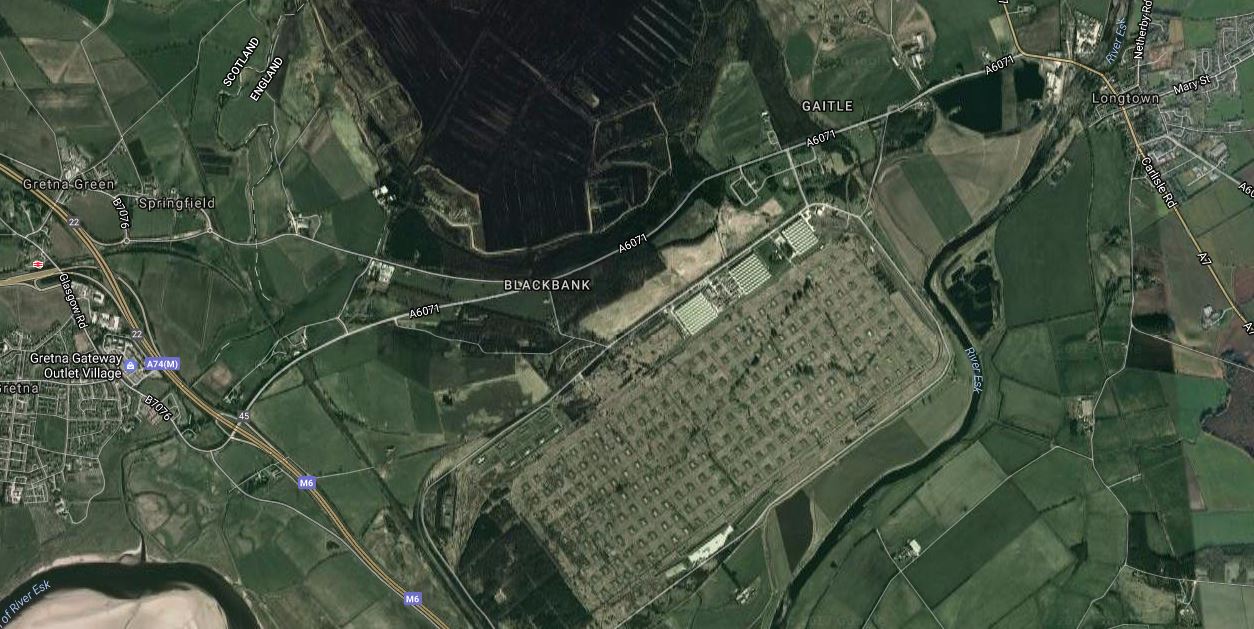
Note the West Coast Main Line with its connection to the Centre and the Glasgow South Western Line branching off to Gretna Green station and all the way to Glasgow.
Longtown is in the North East corner of the map and you can just pick out the track-bed of the Waverley Route, linking the town to Carlisle.
Conclusions
The CBR report, recommends a Park-and-Ride at Longtown and I wonder, if developments there might be the key to rebuilding the Waverley Route on a more economic basis.
A lot would depend on whether the Defence Munitions Centreat Longtown continues to be used, but the following could be built in the area.
- The proposed Park-and-Ride.
- A Strategic Rail Freight Interchange.
- Distribution warehouses.
- Factories that need lots of space and good rail and road access.
A lot would depend on what the locals want and whether Scotland became independent, for which the site must be ideally placed.
If the track-bed of the old Waverley Route is still present and can be used to Carlisle, this route could be developed as a rail route, which might have advantages.
- It has its own route to Carlisle station with a separate bridge over the River Eden.
- The West Coast Main Line bridge over the River Eden appears to be only double-track.
- Would it improves timings to and from Glasgow on the West Coast Main Line?
- Could it be used as a diversion route for freight trains on the West Coast Main Line through Carlisle?
- Extra stations could be opened on the route, that could improve connectivity in the City
- There is probably few paths on the West Coast Main Lines for extra trains from Longtown and/or a reinstated Waverley Route to Edimburgh.
But would the extra cost be justified?
Done properly, as the CBR report says, improving the railways between Carlisle and a new Park-and-Ride at Longtown, would surely improve the Carlisle economy.
If Microsoft Built Cars…
There are loads of jokes that start like this and you can find pages on the Internet like this.
But what if Microsoft built planes?
This article on the BBC shows the result.
The plan is to use the Stratolaunch plsne to launch satellites. More is here on Wikipedia.
The idea is not new, The North American X-15 of the 1950s, was a space plane that was launched from under the wing of a B-52 Stratofortress.
Wikipedia says this about the flights of the X-15
During the X-15 program, 13 flights by eight pilots met the Air Force spaceflight criterion by exceeding the altitude of 50 miles (80 km), thus qualifying these pilots as being astronauts.
Not bad for an conventional rocket-powered aeroplane built over half a century ago!
By Rail Between Derby And Manchester via Stoke
In his article entitled Connecting The Powerhouses in the June 2017 Edition of Modern Railways, Colin Boocock, says that the best rail route between Derby and Manchester, is to go via Stoke.
There is one train an hour that takes one hour 44 minutes with a change at Stoke. The two legs appear to take 51 and 42 minutes respectively with an eleven minute wait at Stoke station, which is a well-equipped Virgin station.
Change the destination to Manchester Airport and there is an extra change of train and a journey which is at least half-an-hour longer.
You can actually do Derby to Manchester Airport in a couple of minutes over two hours, if you go via Sheffield.
But it does seem a bit crazy, as Manchester Airport is actually eight miles closer to Derby if you drive.
Stoke is well connected to Manchester with up to four trains per hour to Manchester Piccadilly, some of which take just forty minutes. Manchester Airport takes just over the hour with a change at Crewe or Manchester Piccadilly.
The Crewe to Derby Line links Derby and Stoke via Uttoxeter.
This description of the route comes from this section in Wikipedia.
The route is double track for all of its length except for a three-mile section between Alsager and Crewe, which was singled by British Rail. Whilst the majority of the route is not electrified, the section between Stoke Junction and Crewe is as this is a part of the West Coast Main Line.
This means that it should be possible to run electric trains between Manchester Airport and Stoke. As there would be no chnge at Crewe using best times on Stoke-Crewe and Crewe-Manchester Airport giives a time of about fifty minutes.
The route between Stoke and Derby is not electrified and the operating speed of the line is given as 70 mph.
Surely, as it connects Derby and Nottingham to Stoke and the electrified West Coast Main Line, it should have a faster operating speed. In an ideal world, Derby to Stoke must be a prime candidate for electrification. Some of London Overground’s redundant 100 mph Class 317 trains could probably do Derby to Stoke in perhaps thirty-five minutes.
So with electrification all the way, a time of about one hour twenty -five minutes between Derby and Stoke would be possible in a train, that once graced the Stansted Express. So it’s even got luggage racks.
But Derby to Stoke won’t be electrified for years, so could the current service get passengers to Stoke?
There is a section called Services in the Wikipedia entry for the Crewe-Stoke Line. This is said.
The line sees a basic hourly service in each direction with trains calling at all stations on the route however Peartree which is served by 2 Derby bound trains and 3 Crewe bound trains per weekday.
The majority of services on the route since December 2008 have been provided by Class 153 “Super Sprinter” Diesel Multiple Units however Class 158 “Express Sprinter” and Class 156 “Super Sprinter” units are occasionally used. Overcrowding remains a major issue on the route, particularly in the morning and evening peak and a weekends. Passengers are occasionally left behind.
That is a truly pitiful service, as the main rail route from Derby to Manchester is run by a single-coach Class 153 train at times.
It’s amazing anybody trusts the line enough to use it.
As with the Derwent Valley Line, which I wrote about in Exploring The Derwent Valley Line, the problem is probably down to a shortage of suitable trains.
The line needs a suitable bi-mode train.
- At least four-cars.
- Airport interior with luggage racks.
- Possibly a First Class compartment.
- Ability to do the forty miles between Stoke and Nottingham on diesel.
A Flex version of a Class 317 train would do nicely and could probably do Nottingham to Manchester Airport in two hours. This would mean.
- Four trains could provide an hourly service.
- Eight trains would provide a two trains per hour service.
Would you believe that London Overground will release the eight Class 317/7 trains with the Airport interior next year, when they are replaced by new Class 710 trains?
Conclusion
The more I do little exercises like this, the more I believe that Porterbrook’s Flex concept is not only high-class engineering, but it is a idea, that has arrived at exactly the right time.
The only problem with converting Class 317 trains, is they are owned by Angel Trains! I’m sure that that is not an insurmountable problem!
Launch Of Crossrail Trains Pushed Back By TfL
The title of this post is the title of this article in Rail Technology Magazine.
The story I heard from staff, was that more miles need to be accumulated on the trains and that squares with what is said in the article.
But I do wonder if Sadiq Khan has pushed the launch back until after the election, so that politicians he doesn’t agree with can use the trains as a photo opportunity.
Ascending The Heights Of Abraham
The Heights of Abraham is a tourist attraction at Matlock Bath, close to the station.


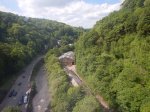






I walked down, as I needed to get a train back to Derby. I did it in sensible trainers and don’t do it in anything less!
I’m sure this attraction would benefit from a better train service from Derby and Nottingham.
Travelling Along Peak Rail
Whilst at Matlock, I took a trip on Peak Rail to Rowsley South station.
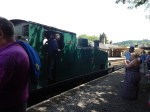


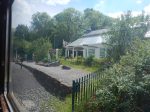

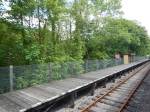
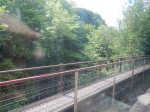


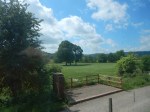
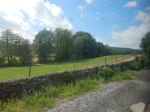
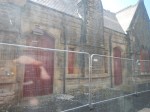

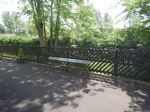
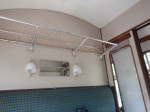

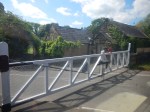
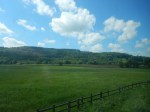




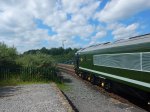
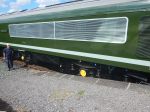
The heritage line has a very professional feeling.
It makes me think that their aim to expand the railway to Bakewell, is feasible on an engineering basis, given enough money.
But it is the politics and other interests.
In Connecting The Powerhouses, I said this.
But there are possible problems.
- The A6 has to be crossed.
- One local landowner didn’t allow consultants access to the line for an inspection.
- Severn Trent Water are digging a large pipe into the track-bed.
It sounds to me that everybody should find a good hostelry and thrash out a comprehensive co-operation agreement on the backs of engineering envelopes, fuelled by some excellent real ale.
The landowner lives between the current end of the line and Bakewell.
After my visit, I still feel optimistic, that the route can be restored.
It was talking to several local people, both on and off the Peak Rail train, who recalled times when they they would use the line for days out in Manchester, Derby and Nottingham. One guy had even used the line to go to Scotland with a change in Manchester.
Exploring The Derwent Valley Line
The Derwent Valley Line links Derby with Matlock and because it forms the Southern part of Peak Main Line discussed in Connecting The Powerhouses and it was a fine day, I had to go and take a look.
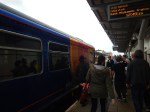

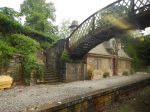
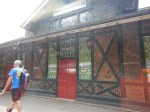
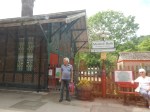
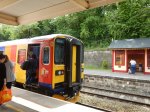

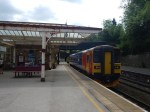


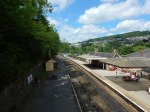

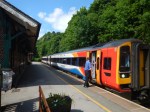
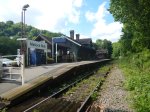
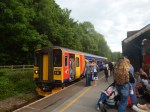
I actually did three trips along sections of the line.
The middle trip was in a totally acceptable two-car Class 158 train, but the other journeys were in jam-packed single-car Class 153 trains.
In the time I was in Derbyshire, I saw three different types of trains working the line and I get the impression, that East Midlands Trains have difficulty putting together a service to both the passengers and their own satisfaction.
Their Regional Routes, which are worked by Sprinters, look to be a collection, that need to be reorganised and probably be worked by more, better and more suitable trains.
Looking at the Derwent Valley Route, which runs trains from Matlock to Newark Castle via Derby and Nottingham, you get the following typical timings.
- Matlock to Derby – 34 minutes
- Derby to Nottingham – 30 minutes
- Nottingham to Newark – 37 minutes
Which makes a total of one hour 41 minutes or a round trip of three and a half hours.
In this schedule these things should be noted.
- There are several mines of running on the Midland Main Line, where my Class 153 attained a respectable 70 mph.
- The train takes a 2 minute break at |Derby and an eight minutes one at Nottingham.
- The other stops are scheduled for a minute or less.
- I saw lots of buggies, children and a couple of wheelchairs, which delayed train boarding.
This all adds up to a round trip of three and a half hours, which is exceeding inconvenient for running an hourly service.
I suspect that any train operator prefers a dedicated number of identical trains to run a service, as East Midlands Trains have on their London services.
But this Derby-Nottingham version of Crossrail has all the structure and organisation of a relegated football teams back four.
Looking at the hour starting at nine o’clock this morning there are just three services between Derby and Nottingham.
- 09:08 – Birmingham New Street to Nottingham
- 09:13 – Matlock to Newark Castle
- 09:40 – Cardiff Central to Nottingham
If this is typical, it is pitiful for a thirty minute journey between two large, important cities. Especially, in the rush-hour.
Suppose the service was doubled between Matlock and Newark Castle.
- This would give four trains per hour between Derby and Nottingham.
- It would give a two trains per hour service to all those stations along the route.
- It would attract many more passengers to that poor Class 153 train.
In my view, there is only one solution to this problem and that is a high-class stopping service between Matlock and Newark Castle.
- Two trains per hour.
- At least two cars in every train.
- Speeding up of the service so trains can do the round trip in three hours.
- Step-free access between train and platform at all stations to speed station stops.
This service would require six trains, which is a problem as East Midlands Trains haven’t got the rolling stock.
It would also mean that a train would have go from Ambergate Junction, where the Derwent Valley Line leaves the Midland Main Line to Matlock and back in under thirty minutes.
As a typical train takes fourteen minutes between Ambergate and Matlock stations, with a bit of judicious sorting of the train-platform interface to speed stops, I’m certain that this would be possible.
So where do East Midlands Trains get six suitable trains of at least two carriages?
- The route could be electrified. Impossible!
- They acquire some cascaded diesel unit like London Overground’s Class 172 trains.
- They acquire six Class 319 Flex trains.
The last one is probably the most realistic, as they are four-car trains with an operating speed of over 90 mph on diesel.
But why would it need the capability to run on 25 KVAC overhead electrification, as there is none near Derby or Nottingham, except on Bombardier’s test track?
So is this one of the reasons, why as I wrote in The Class 319 Flex Units To Be Class 769, Porterbrook are seriously looking at converting Class 455 trains into Flex trains?
After all both Porterbrook and East Midlands Trains are based in Derby.
The Matlock to Newark Castle route would be transformed.
- Two trains per hour.
- Four cars with quality interiors.
- Easier access for all passengers, through wide double doors.
- There could even be modified to give more space for bikes, buggies and wheelchairs.
It would be a real case of Back To The Future, as the Class 455 trains are nearly ten years older than the Class 153 trains.
 The Anonymous Widower