Passing The Completed Acton Dive-Under
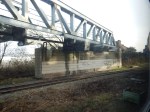
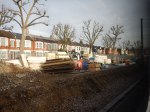
I took these pictures as I passed the Acton Dive-Under going towards Paddington.
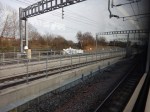
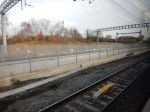
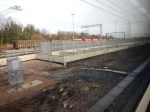
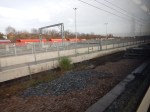
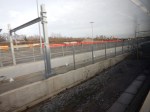
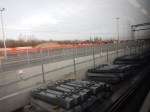
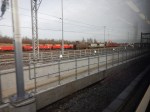
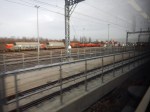
It looks substantially complete.
The dive-under is on the Slow Line into Paddington, soon after Ealing Broadway station.
It was a very clever piece of engineering to create the Acton Dive-Under in the middle of a working railway with trains passing on either side.
I’m certain, there are other places on the UK’s rail network, where a similar technique can be used to sort out places, where two rail lines need to cross each other.
Shuttling Between Greenford And West Ealing Stations
T took these pictures as my Class 165 train shuttled between Greenford station and the new bay platform at West Ealing station on the Greenford Branch Line.
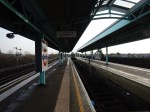

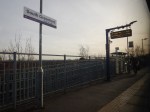
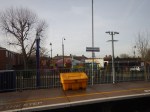
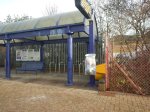
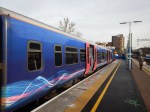
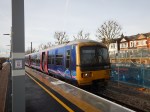

It seemed to work very well, except for the signalling, which was generally on the blink on the Great Western Main Line, this morning.
I don’t think that GWR had been giving out their information well, about what was happening on the branch.
I met two passengers, who hadn’t heard it was a shuttle and one was surprised that she had to change to get to Paddington.
There was no-one to ask either and another passenger and myself gave the best information we knew or couple find.
The Future Of The Branch
It will be interesting to see what happens to the service on this branch.
This page from AlwaysTouchOut includes this.
The Greenford – Paddington half-hourly branch line service would be cut back to West Ealing to avoid conflicts with Crossrail services; however, to compensate for this, the frequency will be doubled to every 15 minutes with connections to Crossrail trains at West Ealing.
As each trip takes about twelve minutes, one train can do two out-and-back trips in an hour which explains the two trains per hour (tph) frequency for the shuttle.
To run four tph would require a second train.
- One train would start at Greenford and the other at West Ealing on the hour, at say XX:00.
- They would arrive at the other end at XX:12, before returning at XX:15.
- They would arrive at their start station at XX:27, before returning at XX:30..
- They would arrive at the other end at XX:42, before returning at XX:45.
- Finally, the trains would return to their start station at XX:57.
The process would go on all day.
There could be problems with such a service.
- Freight trains share use of the line and could sufficient paths be created in the timetable?
- The Class 165 trains are not of a modern design and would need to be updated with wi-fi and poossibly other features.
- Running longer than two-car trains could need platform lengthening at the intermediate stations.
One plan that has been mentioned on the Internet could be to handover the branch to London Overground, who would use two of their four-car Class 710 trains.
Consider.
- They are electric trains, but Bombardier have confirmed to me, that the trains are wired to be fitted with onboard energy storage.
- So they could charge their storage, whilst waiting in the bay platform at West Ealing station and travel back and forth on stored energy.
- The Class 710 electric trains would probably be faster than the current Class 165 diesel trains.
- Four electric tph would be a true Turn-Up-And-Go service and a powerful passenger magnet.
- They are too long for the platforms at Drayton Green, Castle Bar Park and South Greenford station, but selective door opening could be used.
- As the trains will be walk-through, passengers would move to an appropriate place to enter and exit the train.
I suspect too, that as Network Rail and Chiltern Railways have plans to use the Acton-Northolt Line to access a second Chiltern terminal at Old Oak Common station, that some innovative uses of the Greenford Branch Line might be suggested.
If two Class 710 trains did work the branch, it would be a doubled frequency and a four-fold increase in hourly capacity.
The Refurbishment Of Holland Park Tube Station
I stopped off at Holland Park tube station this morning, to take a look at the refurbishment.
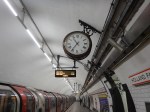
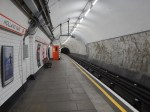
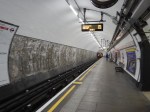
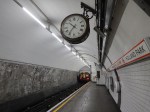
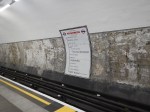
The clocks would also seem to have had a makeover.
But there still seems some work to do!
The Refurbished Tottenham Court Road Tube Station
I took these pictures of the Central Line platforms at Tottenham Court Road tube station.
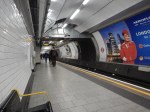
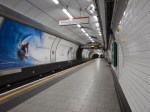
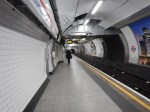
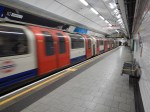
It does seem to me that it’s wider than it used to be.
Is There A Worse Station Than This In London?
I took the last train for some time to North Sheen station, which I had been told was bad, but I couldn’t believe what I found.
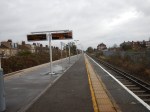
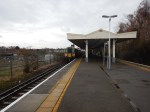
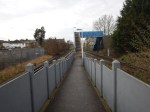
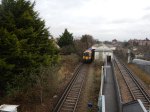
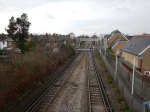
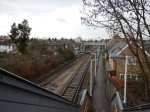
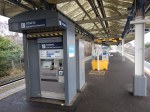
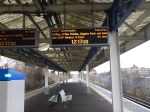
This Google Map shows the station layout.
- It must have one of the longest lists of fundamental faults of any station.
- To get into and out of the station, you need to climb up and down a step footbridge.
- It has the worst step-free access I’ve ever seen.
- There were no staff.
- It has an inconvenient level crossing.
- There was no car parking or even anywhere to drop and pick up a passenger.
In some ways, what makes matters worse is that the station has ten-car platforms which at times must bring large numbers of passengers.
The only good thing about the station, was that a ticket machine was on the platform.
It is a truly dreadful station.
Mortlake Station With A Level Crossing
I walked West from Barnes station and came to Mortlake station.
It also had the inevitable level crossing.
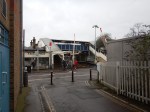
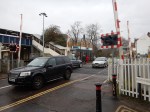
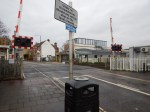
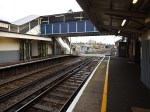
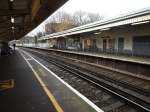
The only positive thing to be said for the level crossing, is that it is at a station.
This means that train schedules can be arranged, so that trains can go through the station a few minutes apart and utilise the same level crossing closure.
A Level Crossing In White Hart Lane, Barnes
perhaps five hundred metres to the West of the level crossings I wrote about in A Pair Of Level Crossings At Vine Road, Barnes, there another one in White Hart Lane, Barnes.
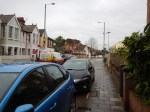
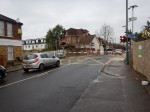
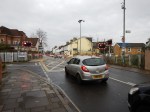
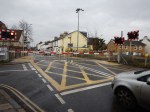
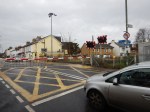
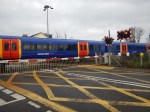
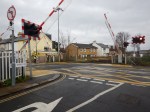
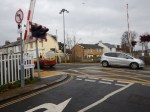
When this line was built in the 1840s, they certainly left a big problem for Network Rail.
This Google Map shows the area around the crossing.
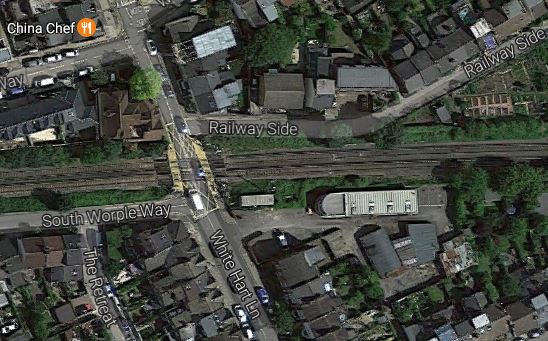
A Level Crossing In White Hart Lane, Barnes
You can find a lot of news items about this crossing on the Internet.
This article in the Local Guardian is entitled Campaigners claim ‘dangerous’ level crossing in Barnes is putting children’s lives at risk.
This is an extract.
Concerned residents have launched a campaign calling for Network Rail to install a footbridge to cope with the “very high footfall of schoolchildren” using the crossing.
They were also expecting help from the local MP; Zak Goldsmith.
Whatever happening to him?
A footbridge could work, but it wouldn’t be easy.
- Kids being walked to school, as I witness every day outside my house, are often accompanied by scooters, bikes, siblings ion buggies etc.
- How many of the local residents would object to a footbridge outside their house?
- Would the footbridge have lifts for those in wheelchairs?
- There is no station, which makes a solution easier.
- How difficult is an alternative driving route?
An affordable solution will be very difficult.
A Pair Of Level Crossings At Vine Road, Barnes
Regular readers of this blog, will know that I don’t like level crossings.
But then, if you’ve lived in East Anglia as much as I have and been inconvenienced, so many times by idiots having accidents or worse at level crossings, you will understand how I feel.
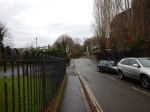
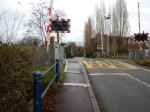
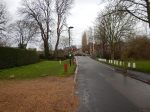
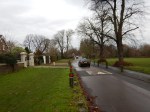
This pair just to the West of Barnes station are two of the most inconvenient for both road and rail, that I’ve seen.
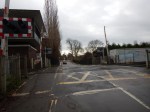
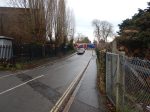
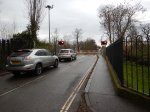

This Google Map shows the area.
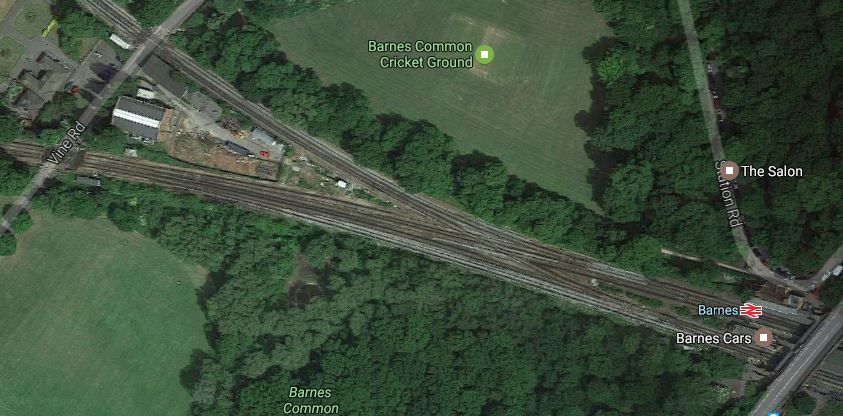
A Pair Of Level Crossings At Vine Road, Barnes
Note the two crossings are on Vine Road at the left of the map, with Barnes station at the right.
It took me perhaps ten minutes fifteen minutes to walk from one side of the two railway lines to the other. In that time, the following happened.
- The gates on the Northern tracks through Barnes Bridge station closed once.
- The gates on the Southern tracks through Mortlate station closed three times.
- At least one closure was a long one for a train in each direction.
- A group of teenagers ran across as the gates closed.
On return, I searched the Internet and found this article on the BBC, which is entitled Video captures pedestrians’ ‘extremely dangerous’ dash across level crossing.
This is a typical extract from the article.
Martin, who did not give his surname, said: “It’s ridiculous. I’ve personally sat there for 45 minutes once and it gets worse in rush hours obviously.
“It might be true that they have engineering works, but that’s not the only factor.”
I am surprised that the Health and Safety Executive haven’t ordered Network Rail to close these crossings, which is the only sensible action.
Tunnels or footbridges could be provided for pedestrians and cyclists and vehicle traffic could use other routes.
But of course that would be politically unacceptable to the residents. And probably reduce house prices!
It’s a difficult one, but the alternative of closing the railway would be equally unacceptable to the pver two million passengers every year, who use Barnes station.
How Will Crossrail 2 Affect Kingston?
This post was suggested to me, by this page on the Kingston Council web site, which is entitled Crossrail 2 to bring major benefits to the Royal Borough of Kingston.
After a couple of trips to the area in the last week or so, I thought I’d better have a look.
So what have I found already.
Waterloo Station Suburban Services Going To Crossrail 2
In An Analysis Of Waterloo Suburban Services Proposed To Move To Crossrail 2, I looked at services into Waterloo , that could be going to Crossrail 2.
These suburban termini and their routes are due to be connected to Crossrail 2.
Wikipedia says this about Crossrail 2 services to the South West, after surfacing from the tunnel South of Wimbledon station.
- 20 tph at Raynes Park

- 8-10 tph at Motspur Park
- Exclusive use of the Chessington Branch Line to Chessington South (4 tph)
- Mixed use of the Raynes Park – Epsom line to Epsom (Sutton and Mole Valley Lines) (4-6 tph)
- 10-12 trains per hour at New Malden
- Exclusive use of the Hampton Court Branch Line to Hampton Court (4 tph) with interchange at Surbiton
- Shared use of the Shepperton Branch Line with 6-8 tph to Teddington and 4 trains per hour to Shepperton
My analysis shows that this pattern of service can be handled in two ways.
- Using a Crossrail 2 tunnel from Wimbledon.
- Using a dedicated high-capacity two-track line with Crossrail/Thameslink-style Automatic Train Operation (ATO), into an updated Waterloo.
So as far as Kingston is concerned, the Royal Borough will get the same improved levels of service, whether Crossrail 2 is built or not, as the only difference will be North of Wimbledon.
Station And Track Improvements On The Branch Lines
This will be the one major set of works that will effect Kingston.
- Installation of lifts and platform improvements to make the proposed Crossrail 2 stations step-free.
- Removal of level crossings on the Crossrail 2 branches.
I don’t know anything specific, but all stations and level crossings on Crossrail 2 routes will certainly be assessed.
New Trains
A big change will be the trains running on all the South-Western suburban lines out of Waterloo.
- All platforms in Waterloo station are being lengthened to take ten-car trains.
- The Hounslow Loop Line was recently updated with ten-car platforms.
- All the latest trains bought by South West Trains are in sets of five-cars, which can run as pairs to create a ten-car train.
I’ve read somewhere that South West Trains are going for a ten-car railway.
\As the new trains for the Essex suburban services of Greater Anglia, are also a mixture of five- and ten-car trains, there must be some magic in the train length.
What will be the capabilities of these trains?
- 100-mph or more cruising speed.
- Impressive acceleration and braking.
- Wide lobbies for fast loading and unloading of passengers.
- Level access between train and platform.
- Wheelchairs, buggies and heavy cases will just roll across.
- The ability to run under limited ATO.
- Lots of driver assistance systems.
- Driver Only Operation (DOO)
The trains will be truly-revolutionary and because their design coud result in upwards of a minute being saved at every stop.
At present trains are conservatively timetabled, as no-one wants late trains, but if a route is served exclusively by these new breeds of high-performance easy-entry trains, designed for a particular route, jouirney times will shorten.
The first trains of this standard to be introduced will be the Class 345 trains for Crossrail, which will start running between Liverpool Street and Shenfield stations in May 2017. The published timetables show a saving of about five minutes on the journey.
I believe this is just a taster of what can be achieved.
If trains of this type were to be run on the suburban branches from Waterloo, this would do the following.
- Introduce four tph on all routes.
- Introduce ten-car trains on all routes.
- Reduce journey times on all routes.
- I believe total out-and-back times from Waterloo will be reduced to under an hour, as this drammatically reduces the number of trains needed to provide 4 tph.
These trains will be introduced if Crossrail 2 is built or not. The recently-purchased Class 707 trains, will probably offer the same performance improvements as Crossrail’s Class 345 trains.
So what will these trains do for Kingston?
- The fastest journeys between Kingston and London Waterloo stations currently take 28 minutes with seven stops.
- So Kingstonians will probably see times of around twenty minutes on this route, using ten-car trains, that stop at the same stations.
- It won’t be just one train an hour, but every train via Wimbledon, will achieve these timings.
Wikipedia says current hourly Off Peak services is as follows.
- 6 to Waterloo, of which:
- 4 run via Wimbledon
- 2 run via Richmond and Twickenham
- 2 to Shepperton
But with new trains, there could be the following increases in services.
- 4 tph instead of 2 tph to Shepperton
- 4 tph instead of 2 tph on the Kingston Loop
This well mean the services at Kingston could be.
- 10 to Waterloo, of which:
- 8 run via Wimbledon
- 4 run via Richmond and Twickenham
- 4 to Shepperton
This will mean Kingston to Waterloo will see a 67% increase in frequency and every train will be new ten-car trains.
Around The Hounslow Loop Line
The Hounslow Loop Line is a suburban railway in South-West London, that runs in a loop off the Waterloo to Reading Line.
Today, to get to know the line, I took a Hounslow train from Waterloo and after passing through Clapham Junction, Putney and Barnes stations, the train took to the Hounslow Loop Line calling at a succession of stations on both sides of the Thames.
We waited a minute or so at Hounslow station, before starting to return via Whitton and Twickenham stations.
When the train got to Richmond station, I changed to the North London Line to come home directly, whilst the train went back into Waterloo, by way of the Waterloo to Reading Line.
These pictures give a flavour of the Hounslow Loop Line.




It is a very tidy suburban line.
- Most platforms have been lengthened to take ten-car trains.
- Whitton station has been rebuilt as I wrote about in How To Spend Five Million Pounds.
- It has a triangular junction with the North London Line around Kew Bridge station.
- In the mid-2000s, the train frequency on the line was doubled from 2 trains per hour (tph) to four.
All of this work has led to a 162% increase in passengers between 2004-5 and 2007-8.
I wonder what is the limit of trains round the Hounslow Loop Line.
This is more proof if it were needed, that suburban lines need at least 4 tph to really bring in the passengers.
Transport for London’s Orbital Railway
In August 2014, I wrote Will The Gospel Oak To Barking Line Be Extended To Hounslow?, which was based on a Modern Railways report on the Mayor’s Transport Infrastructure Plan for 2050. This is said.
There may be a case for further orbital rail capacity, says the document – it shows an indicative, uncosted network to link Hounslow, Old Oak Common, Neasden, West Hampstead, Harringay, Walthamstow, Barking, Abbey Wood, Bexleyheath, Norwood Junction, Sutton and New Malden and back to Hounslow, with another route between Abbey Wood and New Malden via Lewisham, Peckham Rye and Wimbledon.
The proposed orbital railway passes takes a route from Hounslow to Wimbledon via the following stations.
- Whitton
- Twickenham
- Strawberry Hill
- Teddington
- Kingston
- New Malden
- Raynes Park
Nothing concrete has been said since about the railway, but the following is happening or planned.
- The Gospel Oak to Barking Line (GOBlin) is being electrified.
- New four-car Class 710 trains will go to the GOBlin and the Watford DC Line.
- More five-car Class 378 trains will be available to boost services on the North London Line.
All these should happen by the end of 2018.
Will More North London Line Trains Go To Richmond?
Currently the North London Line service from Richmond is 4 tph to and from Stratford.
It takes around an hour, which is ten minutes faster than going via Waterloo and taking the Jubilee Line.
The only possibly faster way would be when Old Oak Common station is opened and a change there would be made to Crossrail.
I estimate, that this could result in a timing of around 45 minutes or perhaps lightly less.
As Old Oak Common station, will also have connections to HS2, the West Coast Main Line ans other important routes, Richmond to Old Oak Common could become a very heavily used route.
4 tph would probably not be enough trains, especially as the current service to the East from Willesden Junction is 8 tph.
So I think it quite likely, that the frequency between Richmond and Old Oak Common stations would be eight tph.
The extra four trains, wouldn’t need to go all the way to Stratford, as there has been talk of alternative routes.
- Terminate at Old Oak Common.
- Terminate at somewhere convenient on the North London Line.
- Terminate at Barking via the Gospel Oak to Barking Line
- Go Along the Dudding Hill Line to Brent Cross Thameslink
The choice would be large.
But could Richmond handle the increased frequency of trains?
If the trains used the same route as now, there is probably a current limit of 4 tph, as the route is shared with the District Line from Gunnersbury station. Especially, as the District Line service will be increased!
So alternative ways of turning the trains is needed.
Trains could take the Houslow Loop Line after South Acton station and go through Hounslow, Whitton and perhaps terminate at Twickenham, where it should be possible to create a suitable bay platform.
But it’s not just events at Twickenham that need more capacity and North London Line services, so could we see services going in a loop via Hounslow, Whitton, Twickenham and Richmond?
This Google Map shows the line between Richmond and North Sheen stations.

Between Richmond and North Sheen Stations
Note.
- Richmond station is to the West.
- North Sheen station to the East.
- The North London Line turns North off the line through the two stations.
In some ways, North Sheen station is a bit of a mess and a real problem.
- It has a level crossing at one end.
- It has no disabled access.
- There is another three level crossings between Mortlake and Barnes stations, which are the next stations on the line towards London.
- The level crossings feature regularly in Google News with respect to accidents, failures and suicides.
It might be best, if North Sheen station was completely rebuilt and the level crossings are consigned to the dustbin of history.
This map from carto.metro.free.fr shows the layout of lines at Richmond station.
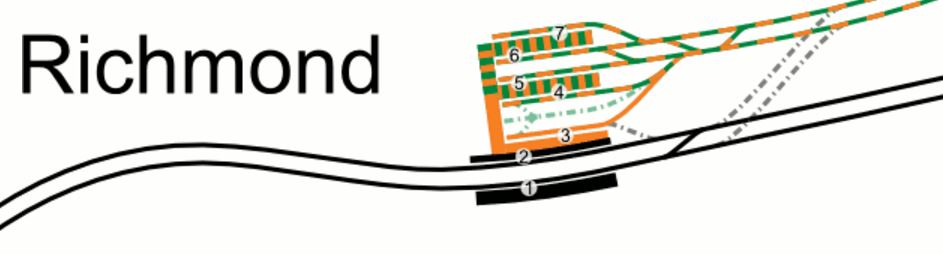
Platforms And Lines At Richmond Station
I don’t think it would be too difficult to complete the loop, so that trains from the North London Line could turn without needing a terminal platform
It has a level crossing at one end.It has no disabled access.There is another three level crossings between Mortlake and Barnes stations, which are the next stations on the line towards London.
Improving Richmond To Waterloo
But the problems of the level crossings are still there!
These posts describe the line between Richmond and Barnes station.
- Is There A Worse Station Than This In London?, describes North Sheen station.
- Mortlake Station With A Level Crossing
- A Level Crossing In White Hart Lane, Barnes
- A Pair Of Level Crossings At Vine Road, Barnes
Currently, 8 tph run on the lines between Richmond and Waterloo via Clapham Junction stations.
In the other direction, the service is as follows.
- 2 tph to Reading
- 2 tph to Windsor and Eton Riverside.
- 2 tph to Waterloo via Hounslow and Brentford
- 2 tph to Waterloo via Kingston and Wimbledon.
Richmond will become an important station connecting lots of places to Old Oak Common.
Will 8 tph between Richmond and Waterloo be sufficient?
Heathrow Airtrack
Heathrow Airtrack was an attempt to create a link from Waterloo to Heathrow Airport.
Wikipedia says this about the proposal.
The scheme, estimated to cost around £673 million, was controversial mainly because of the projected impact on local road traffic due to the high number of level crossings on the route.
Trains would have been 2 tph calling at the following stations.
- Clapham Junction
- Richmond
- Twickenham
- Feltham
- Staines
Could another 2 tph be squeezed in through Richmond?
With difficulty and Automatic Train Operation, it might be a possibility.
But it also looks like the level crossings have already killed one project.
On the other hand, it does appear that if more capacity could be created between Richmond and Waterloo, other services would follow.
 The Anonymous Widower