East West Rail: Bedford Mayor Unveils Eight Alternative Routes
The title of this post, is the same as that of this article on the BBC.
This is the sub-heading.
The Mayor of Bedford has unveiled other potential routes for the East West Rail (EWR) project through the borough.
These four paragraphs outline the current plans and the result of the Mayor’s study.
EWR has already announced its preferred route, linking Oxford and Cambridge via a new track running through Bedford to the north.
Conservative Tom Wootton has defended spending £40,000 to commission consultants to explore alternative routes to the south.
Their report concluded that all options would boost the Bedford economy.
The mayor reflected: “While there is no definitive winner among the proposed routes, the economic potential of the project for Bedford is significant.”
This map from the article shows the current planned route.
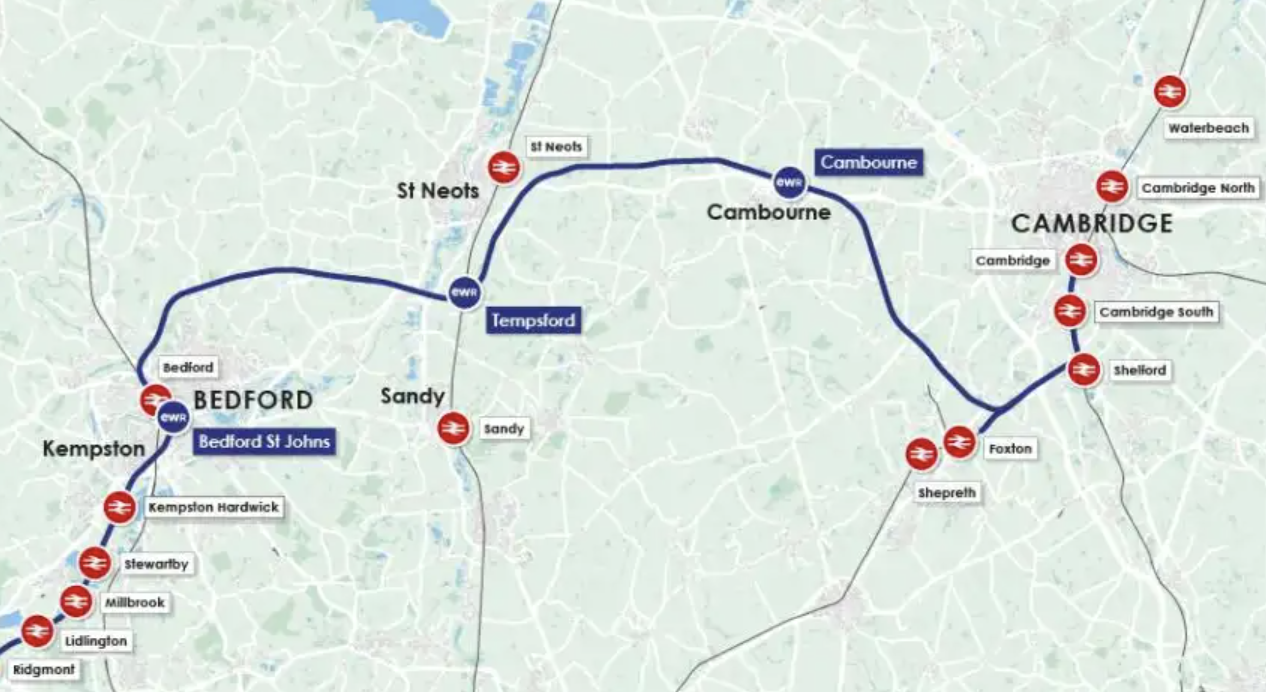
Note.
- Bedford St. Johns station will be rebuilt.
- Trains will go straight through Bedford station.
- Tempsford station will connect the East West Railway to the East Coast Main Line.
- The East West Railway will unlock the building of much-needed housing and commercial developments at Cambourne.
- Trains will go through Cambridge South, Cambridge and Cambridge North stations, and thus serve all important areas of the UK’s Eastern Powerhouse.
As there is no definitive winner among the proposed routes and the economic potential of the project for Bedford is significant, perhaps we should just get on and build the East West Railway’s preferred route.
Heart Raises A Further $107 Million For ES-30 Hybrid-Electric Airliner
The title of this post is the same as that of this article on Future Flight.
Nine companies and funds participated in the funding.
BAe Systems are helping to develop the battery system, as reported in this article on Future Flight.
These two paragraphs describe progress and range respectively.
Heart said that its main engineering goal this year is to complete the development of the ES-30’s powertrain. The company has begun type certification under EASA’s Part 25 rules for commercial aircraft and aims to complete this process in 2028, after achieving a first flight with a prototype in 2026.
The ES-30 will be powered mainly by four battery-driven electric motors, now bolstered by a pair of turbo generators to meet reserve energy requirements “without cannibalizing range.” The new model is expected to offer carriers an all-electric range of 200 kilometers (125 miles), with an extended full-payload range of twice that distance and the potential for longer hybrid-powered flights to 800 kilometers (500 miles) with 25 passengers, taking account of standard airline fuel reserves.
Things seem to be going well for the ES-30.
Improvements To Brimsdown Station
This post on IanVisits is entitled Enfield Council Outlines Possible Rail Station Upgrades.
By reading Enfield Council documents, Ian has found possible station improvements that might happen.
Ian says this about Brimsdown station.
A modest development on the Brimsdown sports ground could contribute towards improvements to access and facilities at the nearby station, supported by some additional housing in clusters around the area.
This Google Map shows the station and the sports ground.
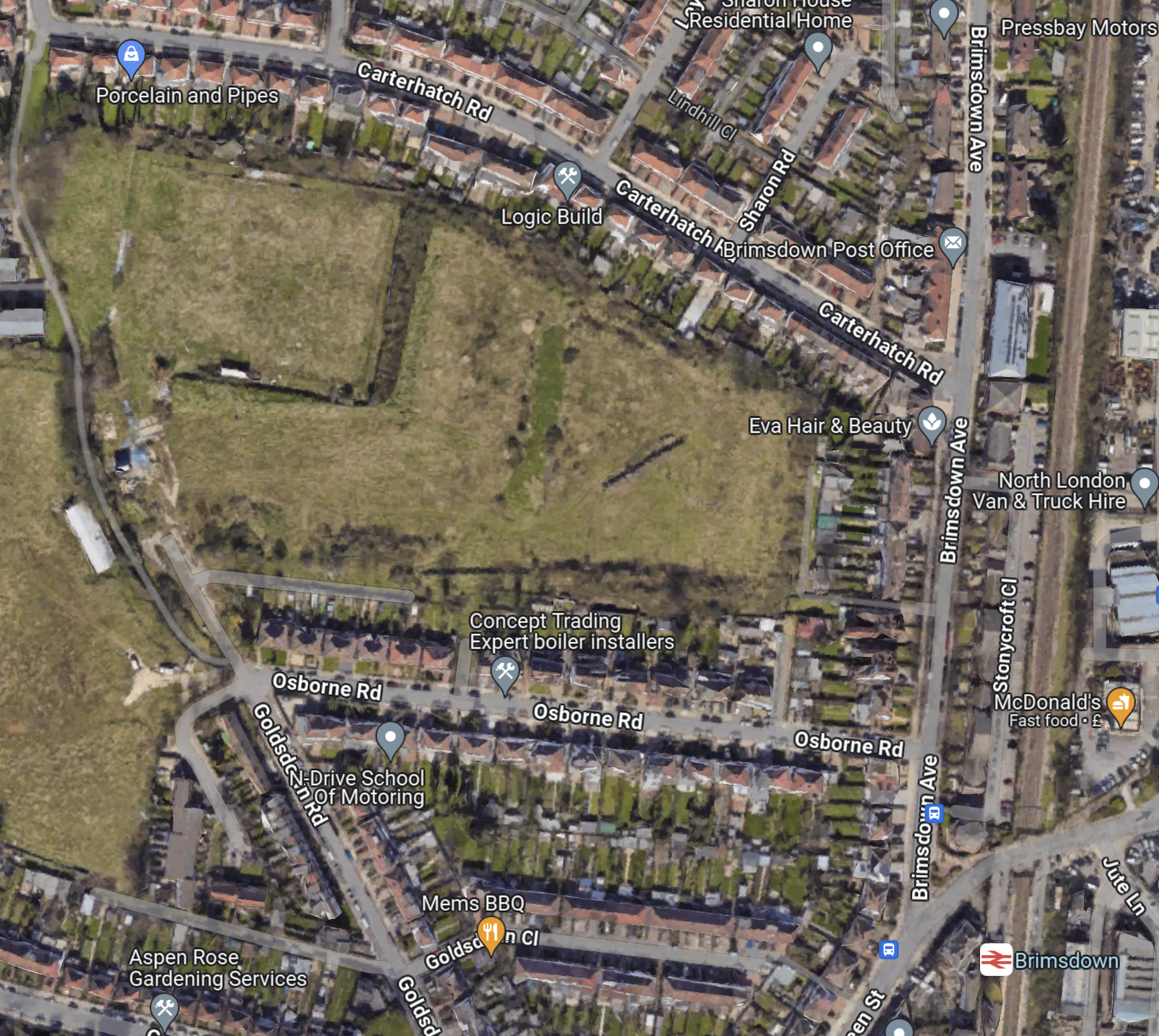
Note.
- The West Anglia Main Line runs North-South at the Eastern edge of the map.
- Brimsdown station is in the South-East corner of the map.
- Brimsdown sports ground is the green space to the North-West of the station.
- From zooming in, it looks like the main sport on the sports ground is fly tipping.
These pictures show the station.
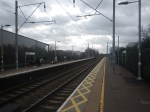
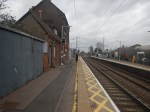
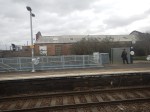
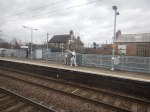
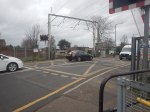
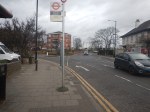
Note.
- I feel today, was probably the first time, I’d caught a train either to or from the station.
- But I must of cycled over the level crossing scores of times going to work at Enfield Rolling Mills.
- After I got my driving licence, I also used to deliver my father’s stationery and other printed goods to the same firm.
Sadly, the firm, where I got my first real taste of industry, that taught me so much is long gone.
Bruce Grove Station Restored To 1872 Glory
The title of this post, is the same as that of this article on the BBC.
This is the sub-heading.
Renovations at Tottenham’s Bruce Grove Station have breathed life into its disused rooms and paid homage to its Victorian history.
These three paragraphs outline the project.
Following structural repairs, the London Overground station now has a new community space and waiting room.
Haringey Council has worked in partnership with others to improve the station and its accessibility.
Work was completed in December 2023 and arrangements for using the community space will be finalised soon.
These are pictures I took this morning.
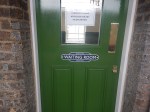

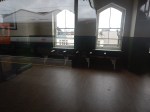
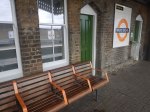
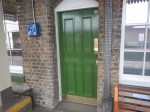
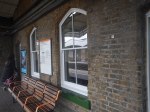
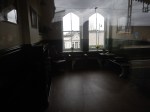
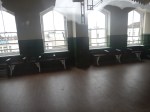
Note.
- The work is to a very high standard.
- Two rooms have been refurbished.
Other stations probably have rooms like these, that could be refurbished.
Battery Traction Trial Ahead As TransPennine Express Fortunes Improve
The title of this post, is the same as that of this article on Railway Gazette International.
This is the sub-heading.
Overcrowding and short-notice cancellations at state-owned TransPennine Express have declined since the December timetable change, prompting Managing Director Chris Jackson to suggest the operator is in a ‘better place’.
It is a must-read article and the section called Battery Power Trial, says this.
Meanwhile, the Class 802 trainset which was damaged in a shunting accident in March 2022 remains out of traffic. Although No 802 207 has now been repaired, it will not be returning to service yet, as it is receiving modifications for use as a battery testbed.
This will see a 6 m long, 2·2 m wide battery module installed in place of one of the existing engines, which will improve fuel efficiency by using two diesel powerpacks rather than three.
The battery module will provide top-up power for peak demand and give regenerative braking capability when operating in diesel mode, which the trains currently do not have. Arrival and departure at stations is also to be trialled in battery mode to assess noise and air-quality improvements. The train is planned to re-enter traffic in December.
‘We’re supplying that unit to support what we think is a sensible industry scheme to look at whether we can do something to move from bi-mode to tri-mode, which could be beneficial for the industry from a green perspective’, Jackson confirms.
That looks to be a good plan, but I can’t help feeling that battery power for the Class 802 trains has been a long time coming.
This press release from Hitachi is entitled Hitachi And Eversholt Rail To Develop GWR Intercity Battery Hybrid Train – Offering Fuel Savings Of More Than 20%, which announced the project was published on the 15th December 2020.
It will be four years from when Hitachi and Eversholt Rail said go, before the prototype is running.
Is this why LNER bought their new trains from CAF?
Designing A Battery-Powered Mountain Goat
When I wrote Up To Ebbw Vale From Newport, this comment was posted.
I’m not surprised that the Class 150 train, had no difficulty in climbing up to Ebbw Vale Town. The max gradient is around 1 in 65. There are plenty of places in Britain where gradients are steeper and indeed part of the type test for all dmus was to climb the 2 mile, 1 in 37.7 Lickey Incline starting a couple of hundred metres before the beginning of the slope.
It certainly got me thinking.
Could a line like Newport and Ebbw Vale be decarbonised, by simply fitting batteries to an appropriately-sized electric train?
- The battery would be charged using the 25 KVAC overhead electrification in Newport station.
- The train would climb the hill to Ebbw Vale Town on battery power.
- Coming down the regenerative braking would charge the battery.
- Once in the platform at Newport station, the battery would be topped up, to the level needed to climb the hill, from the existing electrification.
The question is can the train carry enough juice in a battery?
I will work the example through with a three-car Class 331 train.
- I have chosen a Class 331 train, as CAF have a factory in Newport.
- The train weighs 30.48 tonnes.
- It has 213 seats.
- If I assume that each passenger is 80 Kg including baggage, bikes and buggies, that gives a mass of 17.04 tonnes or a total mass of 47.08 tonnes.
- The difference in altitude between Ebbw Vale Town and Newport is 764 feet.
Using Omni’s Potential Energy Calculator, that gives a value of 29.9 kWh.
This OpenRailwayMap shows the tracks from Newport to Pye Corner.
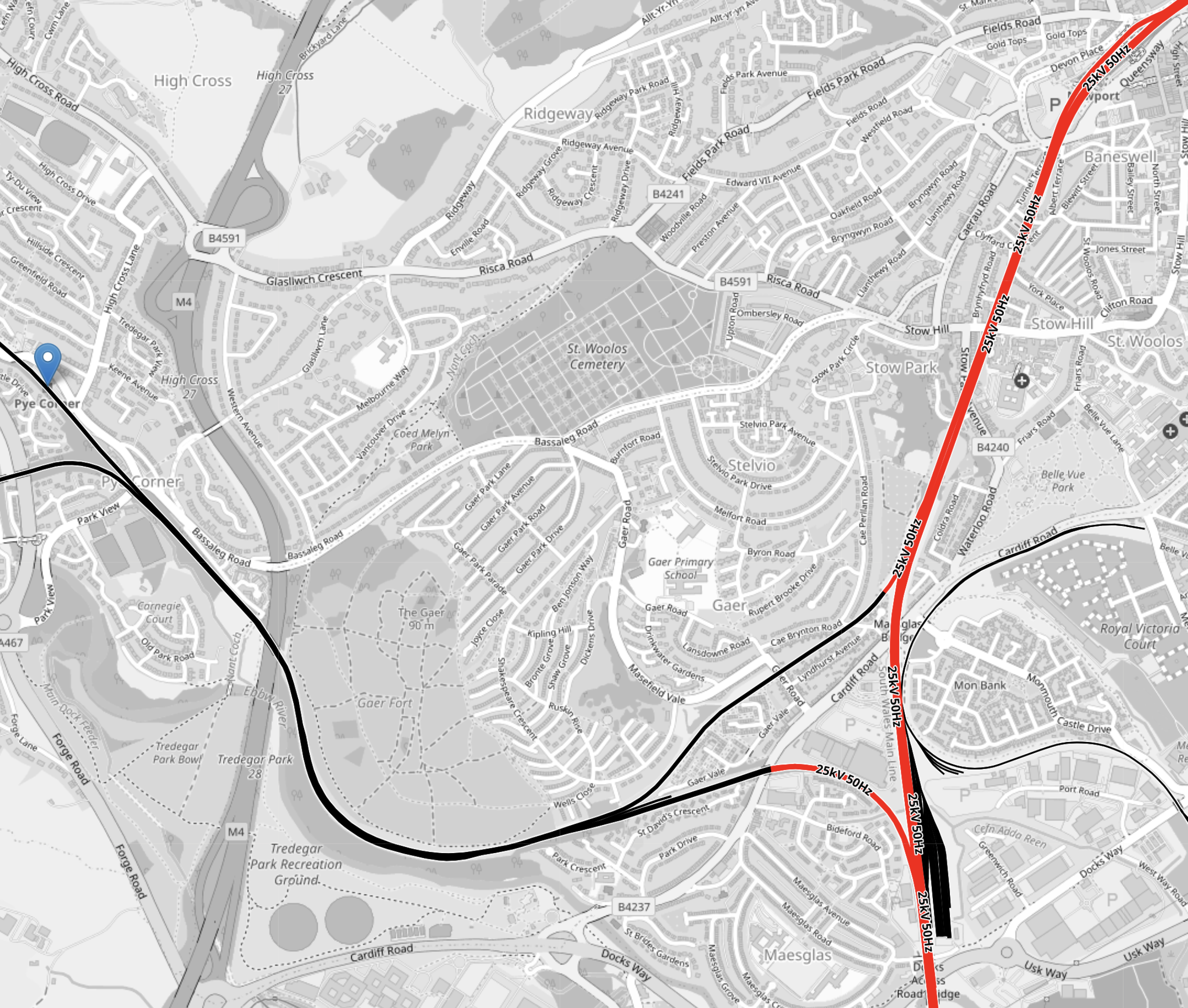
Note.
- Red tracks are electrified and black ones are not.
- Newport station is in the North-East corner of the map, with the South Wales Main Line running through.
- Pye Corner station is marked by the blue arrow and is the first station on the climb to Ebbw Vale.
- The unelectrified Ebbw Vale branch has a triangular junction with the electrified South Wales Main Line.
- The electrification continues for a short way towards Pye Corner and goes all the way to Newport and Cardiff.
- Trains take 24 minutes to turn round in Newport.
- Newport and Ebbw Vale Town is about twenty miles.
It can be safely said that trains will start their climb to Ebbw Vale with a full battery.
What Battery Size Will Be Needed?
I don’t think it will be that large and it will be the smallest battery, that could take a train up the hill.
As part of the climb is double track, the up track could be electrified to enable a smaller battery to be used, which would mean less power would be needed, due to the lower weight.
Conclusion
I believe that it will be possible to fit CAF’s Class 331 trains with a battery large enough to take a train up the hill to Ebbw Vale Town.
Ebbw Vale Town Station – 3rd February 2024
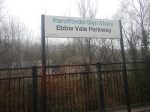
I took these pictures as Ebbw Vale Town station.
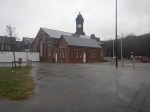
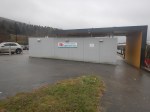
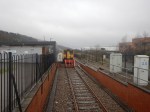



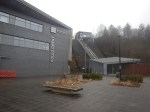
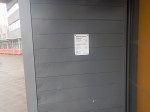


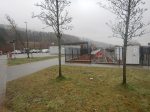
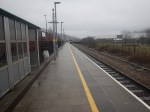

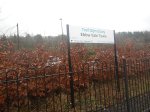
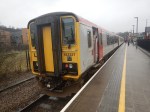
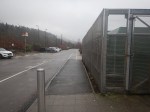
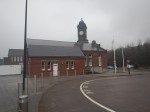
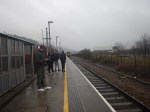

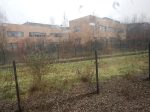
Note.
- There is a cableway to the main town.
- But t wasn’t working as it was Saturday.
- There is a large college.
- There was no information, as to how to get to the town.
- The Cardiff and Newport trains alternate every half hour.
The area certainly needed better information and perhaps a cafe, so that commuters can buy a coffee for their journey!
These are my thoughts.
The Capacity Of Ebbw Vale Town Station
According to this page on the Network Rail web site, the single platform at Ebbw Vale Town station is approximately 150 metres in length to fit up to six train carriages.
As at the current time, services are run by two- or three-car, it would appear that if a train failed in the station, the platform is long enough to accommodate another train to continue the services.
In the Wikipedia entry for Ebbw Vale Town station, it is indicated that a second platform could be built. There is certainly enough space.
Operation Of Ebbw Vale Town Station
I was at Ebbw Vale Town station for nearly two hours and I watched three Newport and two Cardiff trains arrive and leave every half-hour.
- I had arrived on the first train from Newport.
- The Cardiff trains were busy with passengers for the rugby.
- I took the third Newport train, so I could catch my train back to Reading.
- The system seemed to be working well.
Is there another single-platform station on a branch line, that serves two main line stations alternatively every half hour?
Increasing Capacity To Ebbw Vale Town Station
In Designing A Battery-Powered Mountain Goat, I stated that I believe that a small fleet of CAF’S Class 331 trains fitted with batteries could handle the Cardiff and Newport services to Ebbw Vale Town.
The sight and the curiosity of battery-electric trains climbing up the hills will certainly create more traffic on the route.
The simple solution is to lengthen the trains and that is easy at the moment, as the services are run using Class 150 trains with a Class 153 to add extra capacity, where needed.
But could a half-hourly service be run to both Cardiff and Newport?
This would double the capacity and make it more user friendly.
Nothing is said on the Internet about whether this is possible on not, but I believe that with modern digital signalling and battery-electric trains, with better performance than the elderly British Rail-era diesels, that it would be possible to run a half-hourly service to both Cardiff and Newport.
Conclusion
I believe that Network Rail have done a good job in designing this scheme.
West London Orbital: Line Could Be Reused For Passengers
The title of this post is the same as that of this article on the BBC.
This is the sub-heading.
A railway line that stopped serving passengers in 1902 could be brought back into use as a route called the West London Orbital.
These are the first three paragraphs.
The Dudding Hill loop runs from Acton to Cricklewood and currently only takes freight trains.
Transport for London (TfL) published a strategic document in 2021 saying it would be “a catalyst for relieving road congestion in west London”.
It is estimated by TfL more than 11 million people a year would use it.
This is also said.
Sharma Tatler, the deputy leader of Brent Council, called the plan “a no-brainer”.
I agree with that.
These are my thoughts.
Finding The Money
Money will be needed for the following.
- To build and update the stations on the route.
- To acquire the new trains needed.
- To bring the track and signalling up to the required standard.
Note.
- It appears that around a dozen freight trains use the route on a typical day.
- Hopefully, Network Rail can come up with an affordable plan for the track and signalling, as the route is used by freight trains at the present time.
- I would envisage that the trains used would be a version of the current Class 710 trains used on the Overground. These could probably be leased.
I wouldn’t be surprised that the cost of the stations, will be the major part of the building of the line.
Building the stations is probably, the easiest place to bring in private finance. Especially, if stations incorporated housing or other developments.
On a train going to the North a few years ago, I met two infrastructure funders from L & G (in Standard Class), who were going to lend a company 50 billion to develop a large residential housing site. We got talking and I asked them if they would develop a mythical branch line with a good station site at the end. (Think Felixstowe!) I asked if they’d fund housing and possibly the trains. They said yes!
So I suspect that the West London Orbital could also be funded in the same way, as there are a few stations to build and upgrade. Much needed housing could be built on top or nearby.
I would also deck-over Neasden Depot and build housing in town blocks on top.
I believe that the West London Orbital could be funded.
Electrification
The Wikipedia entry for the West London Orbital describes the route like this.
The route would run for approximately 11 miles (17 km) from West Hampstead and Hendon at the northern end to Hounslow at the western end via Brent Cross West, Neasden, Harlesden, Old Oak Common, South Acton and Brentford.
Note.
- There is 25 KVAC overhead electrification at the Northern end of the route between West Hampstead Thameslink and Hendon stations.
- The Dudding Hill Line between the Midland Main Line and Acton Wells Junction is not electrified.
- The North London Line between Acton Wells Junction and Acton Central station is electrified with 25 KVAC overhead wires.
South of Acton Central station, the electrification gets complicated as this OpenRailwayMap shows.
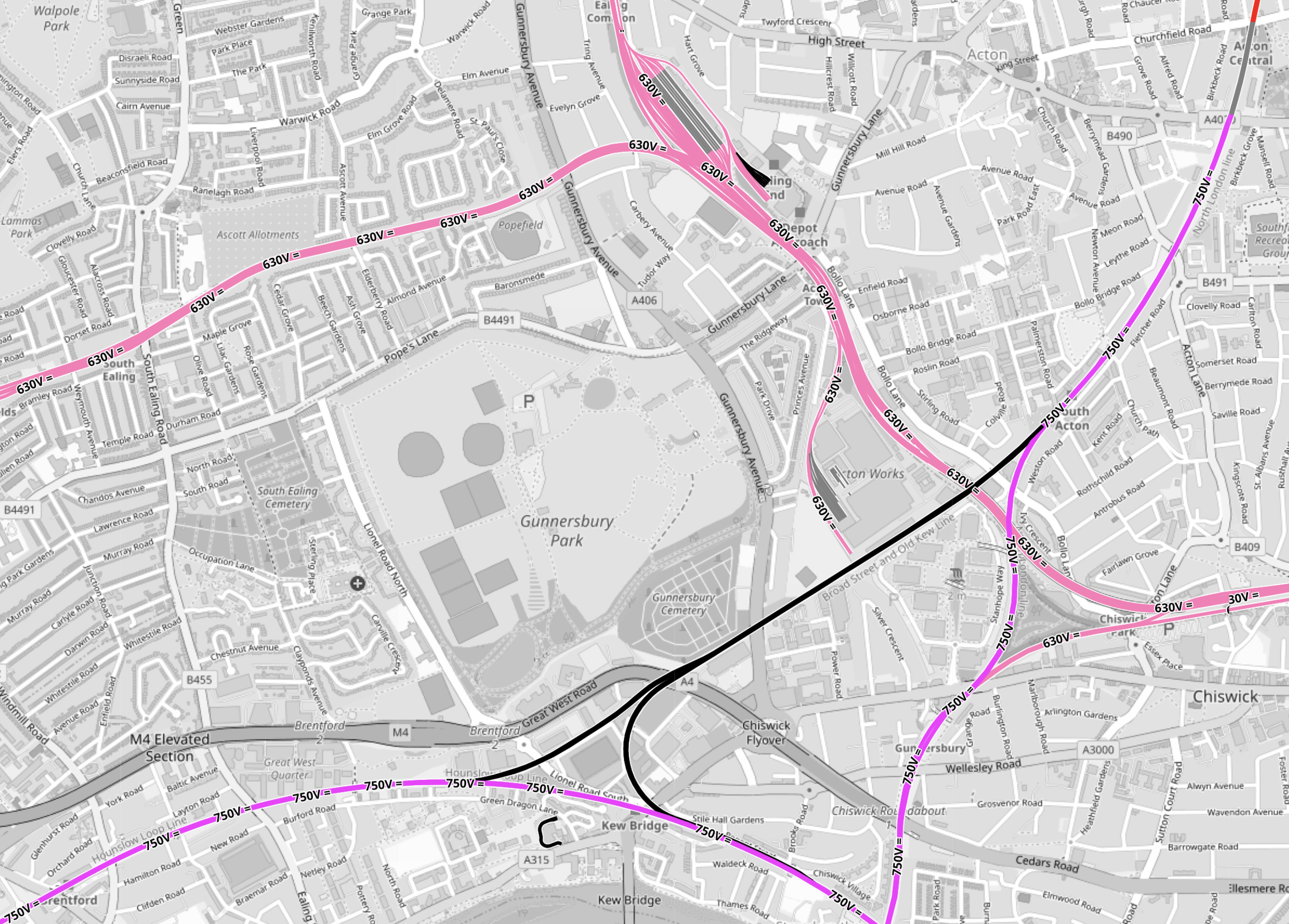
Note.
- Acton Central station is in the North-East corner of the map.
- Brentford station is in the South-West corner of the map.
- The red track is electrified with 25 KVAC overhead and it is used North of Acton Central station.
- Mauve track is electrified with British Rail third rail.
- Ptnk track is electrified with London Underground third rail.
- Black track is not electrified.
- West London Orbital trains between West Hampstead Thameslink and Hounslow will use the direct route between Acton Central and Brentford.
- West London Orbital trains between Hendon and Kew Bridge terminate at the South-Eastern point of the triangular junction.
It seems that trains will be needed that can use both types of electrification and none.
New Trains
Because of the requirement of the trains to be able to use both types of electrification and be self-powered, the trains will either have hydrogen or battery power to augment electric traction.
Hendon and Hounslow is 11.3 miles and this will be longer than any service distances, so I suspect that a battery-electric train could handle the route.
In this article in Global Rail News from 2011, which is entitled Bombardier’s AVENTRA – A new era in train performance, gives some details of the Aventra’s electrical systems. This is said.
AVENTRA can run on both 25kV AC and 750V DC power – the high-efficiency transformers being another area where a heavier component was chosen because, in the long term, it’s cheaper to run. Pairs of cars will run off a common power bus with a converter on one car powering both. The other car can be fitted with power storage devices such as super-capacitors or Lithium-ion batteries if required. The intention is that every car will be powered although trailer cars will be available.
Unlike today’s commuter trains, AVENTRA will also shut down fully at night. It will be ‘woken up’ by remote control before the driver arrives for the first shift
This was published over ten years ago, so I suspect Bombardier (or now Alstom) have refined the concept.
Bombardier have not announced that any of their trains have energy storage, but I have my suspicions, that both the Class 345 and Class 710 Aventra trains use super-capacitors or lithium-ion batteries, as part of their traction system design.
- I was told by a Bombardier driver-trainer that the Class 345 trains have an emergency power supply. When I said “Batteries?”, He gave a knowing smile.
- From the feel of riding on Class 710 trains, as a Control Engineer, I suspect there is a battery or supercapacitor in the drive system to give a smoother ride.
I also feel that the Aventra has been designed, so that it can accept power from a large variety of sources, which charge the battery, that ultimately drives the train.
Up To Ebbw Vale From Newport
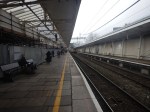
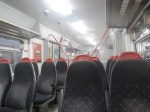
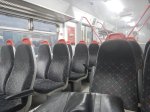
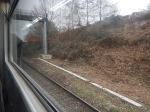
I took these pictures as my train climbed the hill up to Ebbw Vale Town station.
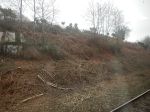
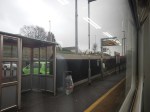
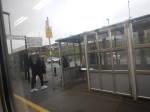
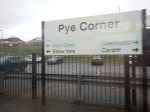
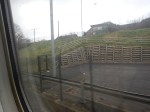
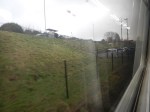
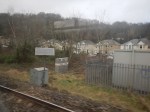
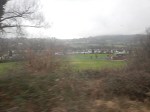
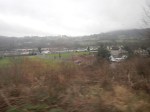
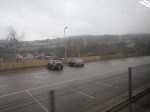
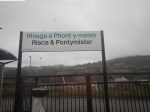
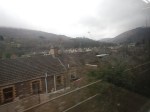
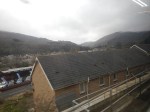
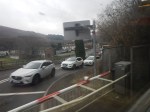
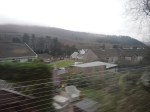
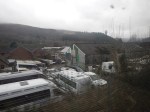
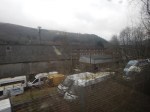
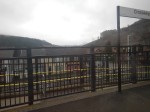
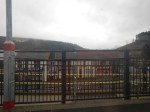
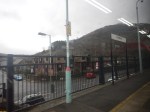
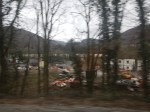
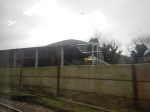
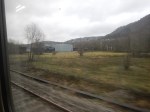
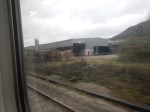
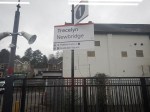
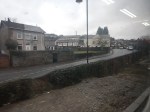
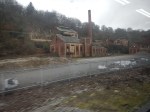
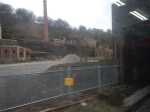



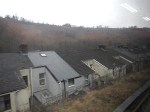
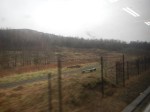
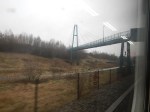
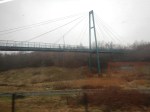
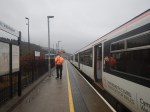
Note.
- The Class 150 train, that I was in had no difficulty in climbing up to Ebbw Vale Town.
- The dtations and track appeared in good condition.
- The weather was getting wetter, which didn’t help the pictures.
It’s a typical South Wales valley packed with houses and factories and with a small river and a few chapels an rugby pitches through in.
My Train To Wales Today Divided At Swansea
According to the Wikipedia entry for Great Western Railway, seven of their hourly services to Swansea now continue to Carmarthen station.
- My train was such a train, although I got off at Newport station.
- The service was formed of two five-car Class 800 trains; 800026 and 800027.
- I would assume that at Swansea, the trains will have split and the rear train will reverse and continue to Carmarthen.
- The lead train would stay in Swansea.
- I have traced the Carmarthen train on Real Time Trains and it clearly shows that the train picked up another train at Swansea as it came back to London.
All the trains involved in the splitting and joining were Class 800 trains.
The splitting and joining at Swansea means the following.
- There is a ten-car train between London and Swansea, which will give maximum capacity to and from the rugby at Cardiff.
- There is a five-car train between Swansea and Carmarthen, which doesn’t need the capacity of a ten-car train.
This is probably a more efficient use of trains and it maximises capacity to and from Cardiff, in both directions.
Is this splitting and joining at Swansea, the first regular use of the technique in service with Class 800 trains?
This YouTube video shows the station displays at Reding, when a Swansea/Carmarthen pair go through.
 The Anonymous Widower