An End-Of-Year Report For The Crossrail Surface Works
To many, Crossrail is all about the tunnels under London, but this report from New Civil Engineer gives the status for the extensive works being done on the surface by Network Rail, which they say are now one third complete.
Reading the report, makes me realise that Crossrail will bring a lot of work on new and refurbished buildings in the next year!
It’s almost as if much of London lives in the midst of a giant building site. But at least it’s a well-run one!
Junction Road And Tufnell Park Stations
When there is speculation about new stations on London’s railways, the possibility of a new Junction Road station on the Gospel Oak to Barking line, linked to Tufnell Park tube station by escalator sometimes crops up.
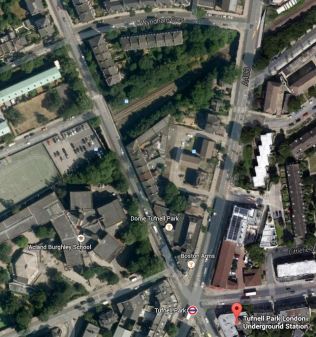
This map shows the area.
Tufnell Park
Tufnell Park tube station is indicated at the bottom and Junction Road leads up from that station to the top right. The Gospel Oak to Barking line runs across the image to the top right corner at a thirty degree angle to the horizontal. The old Junction Road station was where the road and railway cross. Only Station Road survives.
What is interesting is to follow the railway under Dartmouth Park Road towards the top left and you can see some cars parked. This is a school, that has been built over some of the tracks of the railway.
If Junction Road station was to be reinstated, it is not that close to Tufnell Park tube station, so some heroic engineering would probably have to be employed to connect them.
But a better idea for the area must be being considered by Transport for London and property developers! After all, just as the school was created on the west side of Dartmouth Park Road, surely a similar method could be used to build something else over the railway. This map shows the area to a bigger scale.
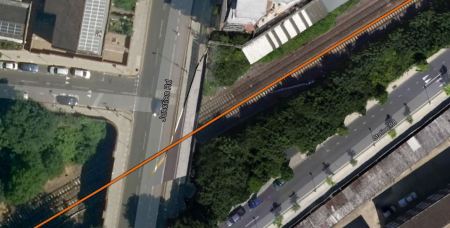
Junction Road Station
If this should lead to a rebuilt Junction Road station, then this will be a bonus for everybody in the area and a good selling point for the developers.
I have since taken a few pictures of the area.
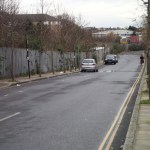
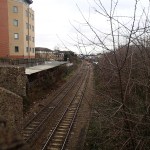

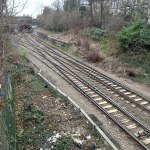
It’s quite a large area and it does seem to my engineering rather than property development brain, that it could be developed to either create housing or perhaps a school. A reinstated Junction Road station is probably not feasible as it is quite a walk to Tufnell Park tube station, which means crossing a busy road.
Note in the picture the actual junction, where the connection to the Midland Main Line, diverts from the Gospel Oak to Barking Line. This would be used if the line is extended to Hounslow.
The question has to be asked that if the line is extended, would the Gospel Oak to Barking Line still terminate at Gospel Oak station?
Two Energy Stories
Two stories appeared on the BBC today.
One was entitled North Sea Oil Industry Close To Collapse and the other was a report on BBC Breakfast about how new appliances and technology are enabling domestic customers to use less electricity and gas. They showed the heating system at Pimlico.
In a compact country like the UK, which generally doesn’t get too much cold weather, where according to this report from the World Bank, eighty-two percent of the population lives in towns or cities. we have some great opportunities to cut our energy use.
- District heating schemes like Pimlico are surely easy to develop.
- Public transport like trains, trams and buses can be developed that are fast and frequent.
- Shared car ownership could be made to work well.
- People are adaptable and will change their habits to save money, so if say, the local High Street gets better and has good public transport links, they’ll use it more.
All of these and other factors will mean we require less energy.
It also means that we’ll do other things like use the trains a lot more.
I also think that the difference in energy costs and provision of public transport, will make that isolated cottage in the country much less attractive.
Manchester Trams To Get Wi-Fi
Modern Railways is reporting that all trams in Manchester are to get wi-fi.
Now that wi-fi is becoming more universal on trains in the UK, with some operators like Chiltern and Virgin offering it free to all passengers, it would seem logical to apply the technology to trams and light rail systems. I believe Edinburgh is going along the wi-fi route with its new trams.
Naively, as trams go slower and tend to operate on the surface in cities, the technical problems of wi-fi on Manchester trams must be less than those on say a Scottish rail line.
Government Calls For More Strategic Rail Freight Interchanges
Modern Railways is reporting that a government report is calling for the development of Strategic Rail Freight Interchanges (SRFIs). It says this.
A new government report calls for development of Strategic Rail Freight Interchanges (SRFIs) to deal with growth in the rail freight sector and encourage a modal shift from road to rail haulage.
So how many large rail freight interchanges exist in the UK?
An article in Wikipedia called Rail Freight in Great Britain, lists a number of inland freight terminals. Most seem to be small with the exception of Daventry.
Living in London, I have seen the saga of the development of a rail freight terminal at Radlett. But nothing seems to be happening at present and despite the site being granted planning permission in July 2014, this is the sort of project that might not survive the next General Election. Another large freight interchange; the East Midlands Gateway at a site North of East Midlands Airport, appears to be very much opposed by the local residents.
We have a choice in this country. We can either take the freight containers to and from the ports, a trainload at a time or we can move them singly or hundreds of trucks. As at some point for the local distribution and collection, a tuck must be involved, there will be a need for SRFIs, where goods are sold or manufactured. Obviously, in a few cases, as with the Mini plant at Cowley, trains will go into the manufacturing sites.
Bear in mind that schemes like the Felixstowe-Nuneaton Freight Capacity Improvement which will take 225,000 lorries off the road, will increase the need for inland freight terminals and hopefully free up the roads.
But if we are going to have long freight trains winding their way across the country and through London like these vans, we must do a few things to improve life for the neighbours of rail lines. After all, the standard freight motive power of a Class 66 diesel locomotive is a smelly and noisy beast.
- As many freight lines as possible must be electrified and some powerful electric locomotives must be sourced. The Great Western Modernisation and Electric Spine will help, but important freight routes like Felixstowe-Nuneaton must also be electrified.
- In London, the Gospel Oak to Barking Line is being electrified and hopefully, the days of diesel locomotives in the capital are numbered.
- There are also places on cross-country routes like Lincoln, where level crossings and long freight trains, are a big source of annoyance. These points of irritations must be replaced by bypasses or bridges.
There is one important benefit of electric freight services, that has nothing to do with the moving of goods. It is the ability to run more and better passenger services using electric trains. In the next few years, due to the upgrading of existing electric services, there are also quite a few good quality electric trains that can be cascaded and/or refurbished.
As an example, if Felixstowe to Nuneaton were to be electrified, then services from Cambridge, Ely, Ipswich and Stansted to Birmingham could be run by a train like a Class 319. In fact, as that electrification would link to both the East Coast and West Coast Main Lines, other services into East Anglia would be possible.
VolkerFitzpatrick Are Having A Christmas Party At South Tottenham
The bridge at South Tottenham station, that carries the Gospel Oak to Barking Line over Tottenham High Road.
The road will be closed over Christmas and it looks it’ll be quite a party.

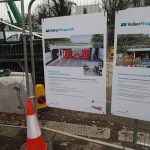
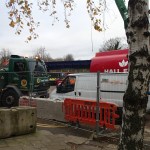
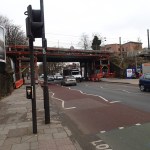

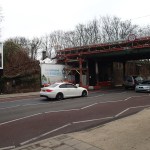

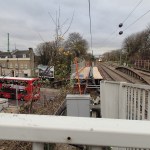
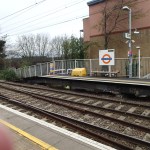
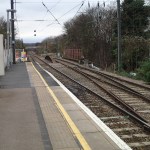
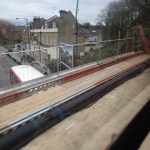
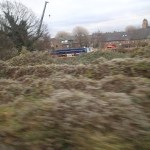
Note the large blue bridge in the pictures. If there is going to be a decent webcam, then this could be better Christmas television than most.
Custom House Station – 18th December 2014
I took these pictures today.

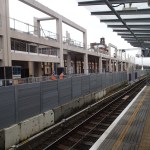
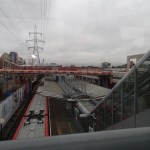
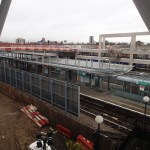
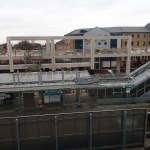
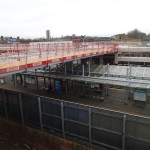
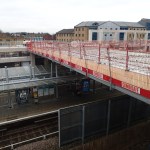
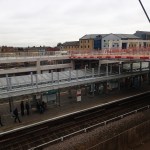

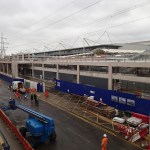
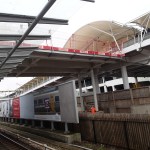
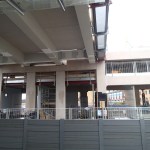
Note that the bridge that will link the station to the Excel Exhibition Centre has now been positioned.
A Pocket Dog
I saw this little puppy on a 56 bus.

A Pocket Dog
Her name was Bella and I think she was a Cavalier cross poodle.
She didn’t seem to mind being on a bus.
But then one of my bassets didn’t mind flying in my aircraft. She just wedged herself between the seats and went to sleep.
Brondesbury Station
Broundesbury station is one of the twenty-six to be given upgraded access.

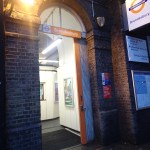
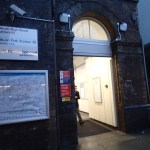
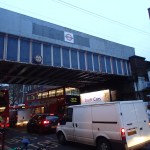
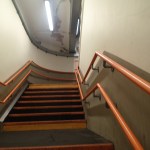
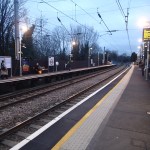
It’s a pretty clean and tidy station, but the staircases are not the best.
However it is certainly better than Silver Street.
White Vans On The Overground
When I was on the platform at West Hampstead station on the North London Line, a train load of cars and vans came through.
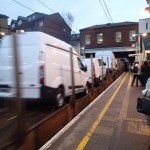
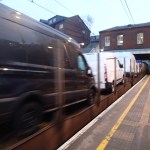
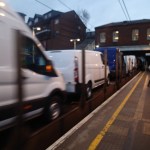
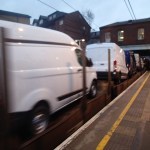
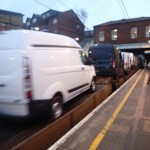
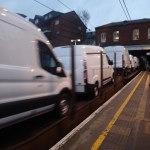
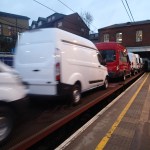
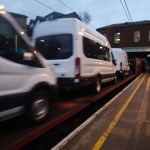
With DB Schenker’s new car import-export depot at Barking, I think we’ll see a lot more trains like this.
 The Anonymous Widower