Before Overground – Theobalds Grove
A Simple Station With Poor Access – Rating 4/10
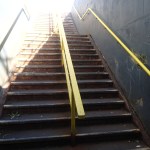
Theobalds Grove is typical of the poorer stations on the Lea Valley Lines. It has long staircases geared to the fit, rudimentary facilities and no redeeming features.

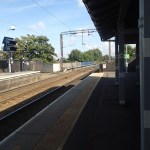
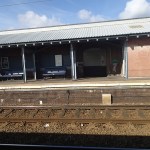
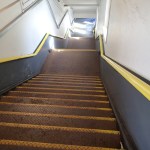
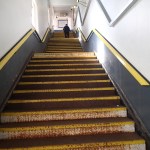
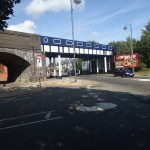
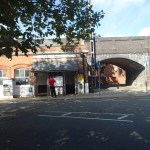
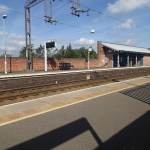
There does at least seem to be some cafes in the shops outside the station. But none had any of the quality you get in those around my local station; Dalston Junction.
Before Overground – Cheshunt
Cheshunt is the terminus of one of the branches of the Lea Valley Lines.
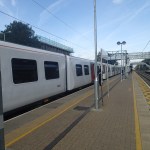
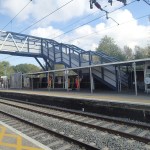
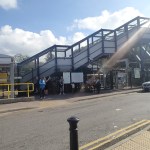
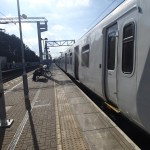
There is no severe access problems at this station, unless you’re changing from a train from the North to one of the local trains for say Hackney Downs. The timetable does seem to allow a generous fifteen minutes to catch the local train.
One thing that needs attention is the bus information and maps. I suppose we can’t really expect a company like Abellio Greater Anglia based in Norwich to know the intricacies of the buses in Hertfordshire. But will the information, after the takeover of the station by London Overground, be to London’s standard or that of Hertfordshire?
Before Overground – Turkey Street
A Convenient Station For The M25 – Rating 5/10
Turkey Street is not the best of stations, but many of its problems are mainly cosmetic. Except of course for the inevitable step-free access problems.


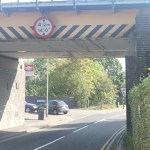



The station though does have the advantage that it is just south of the M25, about 300 metres off the A10.
On this part of the M25, which goes in a wide arc around, where I used to live at Cockfosters, the stations aren’t ideally placed to pick up or drop off a passenger. Turkey Street may be a place to drop a passenger, who’s going to the city, after which you continue around the M25.
London would certainly benefit from a decent Park and Ride station in this area!
Before Overground – Bush Hill Park
A Pleasant Tidy Station In The Suburbs – Rating 7/10
Bush Hill Park is one of the few stations, that is in reasonably good nick.
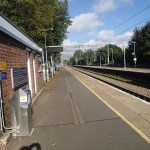
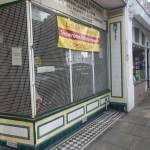
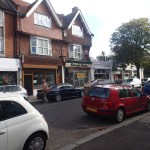

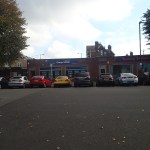
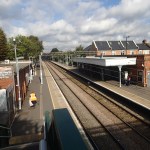

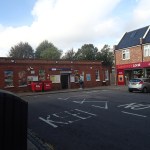
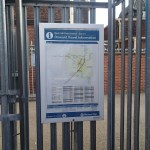
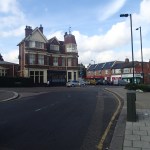
The station isn’t step-free, but if you can arrange that you always get on and off the train so you can walk out directly, you can avoid climbing over the footbridge. Network Rail says this about the station.
There is step-free access to each platform, but not between platforms.
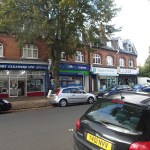
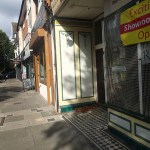
For a station in a residential area, it’s well surrounded by shops, with a good sprinkling of cafes and restaurants. There is even a pub, that could be reasonable.
So it could be one of those stations, where you go to have a meeting for business or pleasure.
Sheffield To Cambridge By Train
As I wanted to have lunch with an old friend in Cambridge I came home the slow way by taking a train from Sheffield and then changing at Ely.
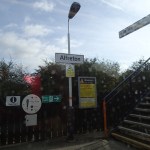
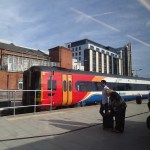
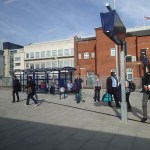

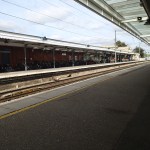
The journey took five minutes over three hours, which included a waits at both Nottingham and Ely of over ten minutes.
I doubt we’ll see any improvements in this service in the next few years, but it really was a slow journey in a two coach Class 158 trains. Perhaps as some of the InterCity 125 are released as the new Class 800 trains are delivered, we might see services like Liverpool to Norwich run by these trains. After all a lot of the route between Liverpool and Norwich in a few years time will allow trains at over a hundred miles per hour.
There has been talk of electrifying the cross-country routes from Ipswich to Peterborough via Ely, specifically for freight. I think it will happen, but until Liverpool to Sheffield and Nottingham to Grantham are also electrified, it could be many years before electric trains cross from one side of England to the other.
Does Sheffield Need A Bus Tram?
Sheffield is an unusual city in the UK, in that it has lots of hills.
On Tuesday night, when I went to Carluccio’s on the Ecclesall Road it meant that I hsd to get a bus, as this was off the tram route, which only has a fixed route through the city.
It was not the easy journey it would have been on the tram, as ordinary buses don’t have enough information on them. So although, I got off in almost the right place, the journey would have been less fraught on a tram.
It looked to me that the Ecclesall Road has a lot of buses, but just as I have locally the route 38, which I nickname the Hackney Tram, would it be better if Sheffield had a fleet of modern buses that had some of the features that tram passengers like, such as information, on-board staff, comfortable seats and disabled access.
This type of operation needs no new infrastructure and you can add and subtract vehicles to the route as required. Buses like London’s new Routemasters may also make lighter work of the hills. I’m not sure of the figures, but I think a good hybrid bus has more acceleration and short-term power than one with a large diesel. Our new Routemasters do have a touch of the Linford Christies.
Sheffield’s Information-Free Buses And Trams
I chose the Leopold Hotel, as it was in the centre by a tram stop, which made it easy to get to and from the match at Hillsborough. It also meant that to get to the hotel from the train, I just went to the tram stop and used my Freedom Pass to go a few stops up the hill.
But when I arrived at the stop, all it had was details on the tram route. But there was no sign of any local map. As I’d spotted the hotel from the tram before it stopped, I just walked a few metres down the hill and round the corner.
I had planned to have an early supper with an old friend, at the new Carluccio’s on Ecclesall Road. He’d said I’d needed to get an eighty-something. So I walked and found this bus stop.
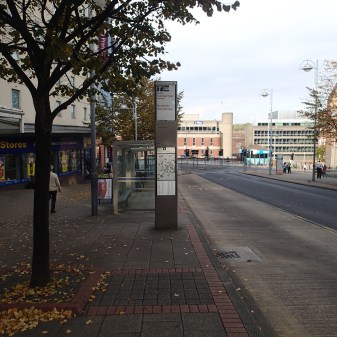
The World’s Most Useless Bus Stop
Note that is says “Buses Do Not Stop Here on the sign. It didn’t have any information that a visitor might like to use to get to the Ecclesall Road. There was no information and nobody around to answer my question.
I eventually walked a couple of hundred metres the other way and found a guy, who told me that any bus from a particular stop went down the Ecclesall Road. The queues incidentally at the stop was manic, mainly because the ticketing system required many to give money to the driver. As usual I had to put my Freedom Pass down and pick up a printed ticket.
And when I did get on a bus, there was no way, I could tell where I was, as it was a silent bus. Luckily, I knew roughly, where I was going and I knew there was a Waitrose on the corner of Ecclesall Road. But I still ended up walking further than I wanted.
At least I could read the name on the bus stops, but how do the visually-impaired manage?
The bus wasn’t that full for the rush hour and that helped me look out. But I still had to fight my way to the front to get out.
If ever a city needed London’s bus spider maps and cash free buses it is Sheffield. How many more passengers would they get, if the buses and trams were organised with the same objectives as London in mind?
But the worst thing about the buses, was coming back from Ecclesall Road was that the buses seemed to have stopped running.
In the end I had to pay £6 for a taxi.
How visitor-friendly is that?
At least when I need to go to Sheffield in the future, I now know that unless I’m going to somewhere near a tram stop, the best course of action will be to stay at home.
A Well-Designed City Centre Hotel
On my trip to Sheffield to see Ipswich at Hillsborough, I had to stay overnight, as there is no return train after the match.
So I booked into the Leopold Hotel, mainly because it was in the city centre and by a tram stop. I booked the room without breakfast for just £85.50 on Late Rooms.
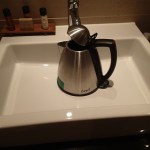


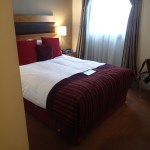
It is one of the best designed hotels, I’ve stayed in ever.
The bath and shower didn’t need a Master’s Degree in plumbing and your glasses to understand, the tea and coffee making in the room was one of the best and the bed was comfortable.
My only niggles, were that the TV wasn’t a Freeview one giving radio as well and they could do better and remove some of the clutter, like magazines and the radio/alarm, from the room.
Wi-fi was free, as it should be.
I would certainly stay in the hotel again, but I doubt I’ll get it at £85.50 again.
On Trip Advisor, people are complaining that it is a ten minute walk to get your car.
They are missing the point.
This hotel is one of those city centre hotels, where you come by train and use public ytransport for your stay. If you want car parking, stay on the M1 in a Premier Inn.
At the present time, that will be more expensive!
Every city needs at least one hotel like the Leopold or the Hope Street in Liverpool.
Before Overground – Cafe Issues
The stations to be incorporated into the Overground from the Lea Valley Lines have a sprinkling of cafes, like this one at Hackney Downs.
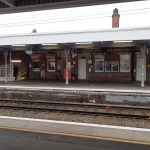


I got a nice cup of tea there, but on chatting with the owner, there are issues that London Overground need to sort out with these little cafes and other shops in the stations.
I also feel that in some of the smaller stations, the only decent small premises are the booking office, which was often closed. As it is Transport for London’s policy to do away with booking offices, perhaps some could be revamped as retail premises.
At Rectory Road, there was only one lonely guy sitting in the booking office. He should be on or watching the platforms, not hidden away!
Before Overground – A Lack Of Colour
To say some of the stations on the Lea Valley Lines are drab and colourless is an understatement.
Colourless it may be, but a station like Stoke Newington has some very interesting brick arches. Instead of just being filled with litter, perhaps some innovative ideas to brighten them up could be applied.
There are gardens in some stations, but they are generally drab and only enlivened by the odd patch of Japanese knotweed.
Perhaps a Highams Park solution can be applied, where local volunteers have created the gardens.
 The Anonymous Widower