Maps And Information In Berlin
This is a subject that I find important and feel that if a town or city wants to be a Grade One tourist destination, then they must have good maps and information.
London has always had a street map at each Underground station and this policy has been extended to most of the proper bus shelters. It’s a policy that Londoners and tourists must like, as more and more maps and information is appearing, with yellow topped liths popping up everywhere.
Warsaw it seems has started to add liths and maps for tourists, with quite a few finger posts too.
But I only one map on the street in Berlin.
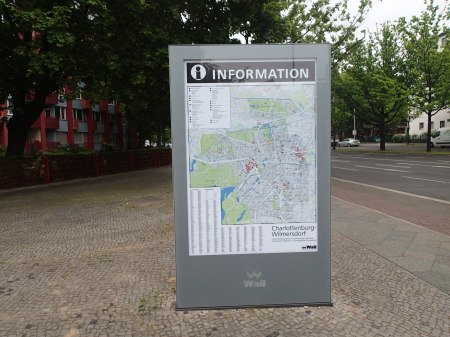
A Solitary Map
There are maps at stations, but they are not up to the detailed level, you get in other cities, including some German ones.
Art On The U-Bahn
The U-Bahn is Berlin’s underground railway and just like some of the older lines on the London Underground, it has some appropriate artwork.
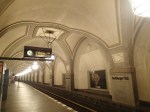
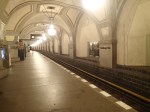
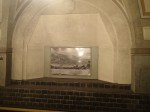
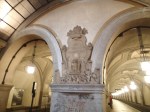
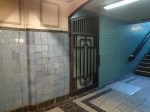

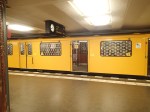
The one thing that I didn’t like was the stick on decoration of some of the trains, which meant you had difficulty seeing out to read the station names.
Exploring The S-Bahn In Berlin
The Berlin S-Bahn is the ideal way to travel around the city centre getting a good view of everything. All these pictures were taken on the S-Bahn.
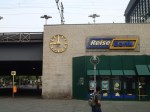
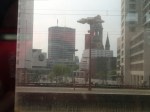

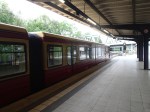

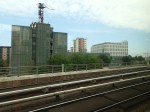
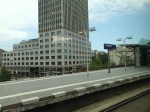
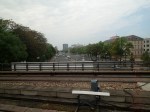
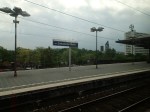

Note that some were taken from the mainline train I took to leave Berlin
Visa And Amex In Germany
When I arrived in Berlin, I needed to buy a ticket and as I’m a Nationwide customer, I have one of their Visa cards that converts local currencies immediately without charges to my statement.
But in many places in Germany the only card you can use in Mastercard. As I travel usually with just Amex and Visa, I would have been scuppered, if I didn’t have quite a few Euros.
Surely, if we are a united Europe economically, then all machines and web sites that accept credit and charge cards, should be m,mandated in EU law to accept all types.
A consequence of the German policy was at Berlin, the machine on the platform to buy tickets for the S-Bahn was blocked with Americans and Australians trying to buy tickets without a Visa card and no euros.
Obviously, because of the way things are going when in perhaps five years, many cities will allow contactless cards as tickets, as London buses now do, this is going to be an area, where the Germans will have to allow cards other than Mastercard.
Double-Headed Into Berlin
One thing that puzzled me about the train, was that our short six coach train, needed two powerful engines to pull it into Berlin at rather a pedestrian pace, as this picture shows.
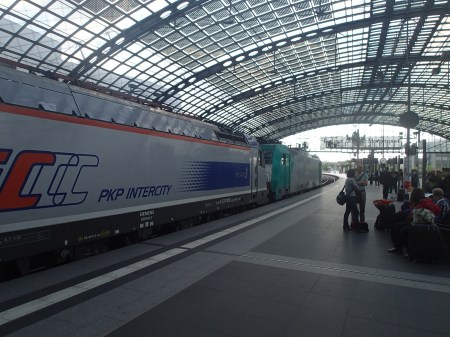
Double-Headed Into Berlin
The locomotives are power Siemens Eurosprinters, which are rated at 6,400 kW each.
Compare this with the Class 90, that regularly take me to and from Ipswich, at a similar pace to that at which I crossed Poland. These haul nine coach trains with just 3730 kW.
I find all this very puzzling!
Arrival In Berlin
Berlin has a Hauptbahnhof , that was opened after C and I visited around 2004. I took these pictures on arrival.
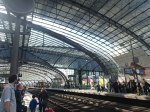
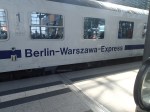
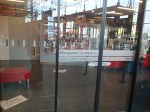
It is very much a station on several levels and finding where you need to go can be tricky for visitors. Especially, those with heavy cases!
As is typical with many stations on the Continent, staff were conspicuous by their absence, although the Tourist Office stays open until 22:00. Other cities could take note.
I had a complicated journey on the S-Bahn to get to my hotel, which meant two changes to get quite a short distance. But I managed it in the end. Berlin certainly needs to develop an easy-to-understand city train map, like say Munich.
Would I Go Back To Warsaw Again?
Most certainly! But I’d certainly stay in a different hotel.
I’d also plan it better, as there is lots to see that I didn’t!
Warsaw To Berlin By Train
I did well to have a good breakfast in Warsaw before I left, as the train journey took six hours and the only complimentary food was one cup of coffee. I did have a good supply of EatNakd bars, which because of the general availability of good gluten-free food, I hadn’t been using as food.
So Warsaw to Berlin could best be described as a two EatNakd bar journey.
I took these pictures en route.
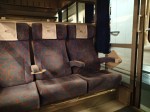
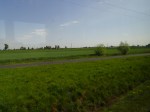
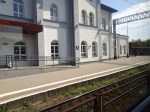
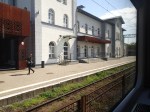
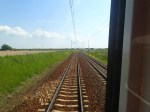
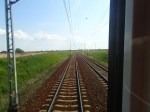

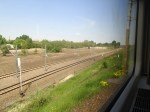
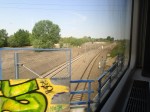
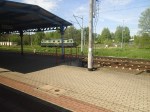
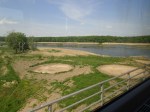
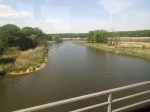
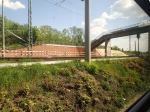
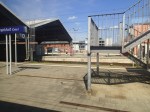
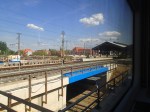
It is meaningful to compare the Berlin to Warsaw route with the line from Kings Cross to Edinburgh. The Polish route is 575 km long and makes the journey in 5 hr 24 mins at an average speed of 106 kph, as against 632 km in 4 hr 22 mins at 144 kph.
But the biggest difference is in capacity. The Polish route has four trains each way of just six coaches each day, whereas East Coast run upwards of twenty much larger trains.
Both lines are electrified and the Polish line appears to be a lot straighter, as it was generally built later than the East Coast Main Line.
Plans are afoot in Poland to improve the speed and service. This will improve the time from Warsaw to Berlin.
The cost of the ticket was €80 in First Class, which is probably probably more than you’d pay on East Coast with a prudent booking in the same class.
My Hotel In Warsaw
My hotel in Warsaw wasn’t the best.
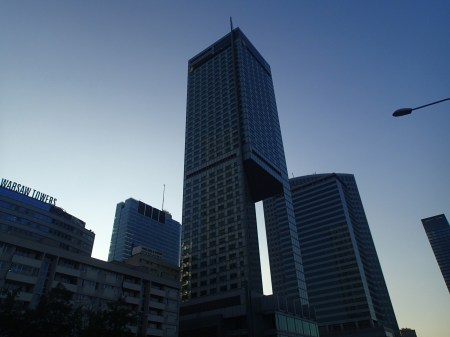
My Hotel In Warsaw
It didn’t have any free wi-fi or a PC that I could use pro-gratis for a start. And I couldn’t find an Internet cafe in Warsaw either.
They also said that as I didn’t book breakfast originally, then I would have to have it in my room and couldn’t buy it as an extra in the restaurant. But the room service menu was as gluten-free as the average down-market bread shop. How customer-friendly is that?
With one or two exceptions, the staff weren’t very helpful and it is certainly a hotel or even a hotel group, I will ever use again.
Would I Go Back To Gdansk?
Most certainly!
But next time, I’d make sure that I stayed in the city centre of Gdansk, as although the Haffner was good, it wasn’t near much I wanted to visit.
I’d also go to visit Gdynia as well, as that is just a train ride away.
But above all, Gdansk is such good value.
It should be on everybody’s bucket list.
 The Anonymous Widower