How to Do a Football Shuttle Bus
The Madejski Stadium isn’t close to Reading town centre or the station, but getting there on Saturday couldn’t have been easier.
At the station there was a signpost that couldn’t have been clearer.
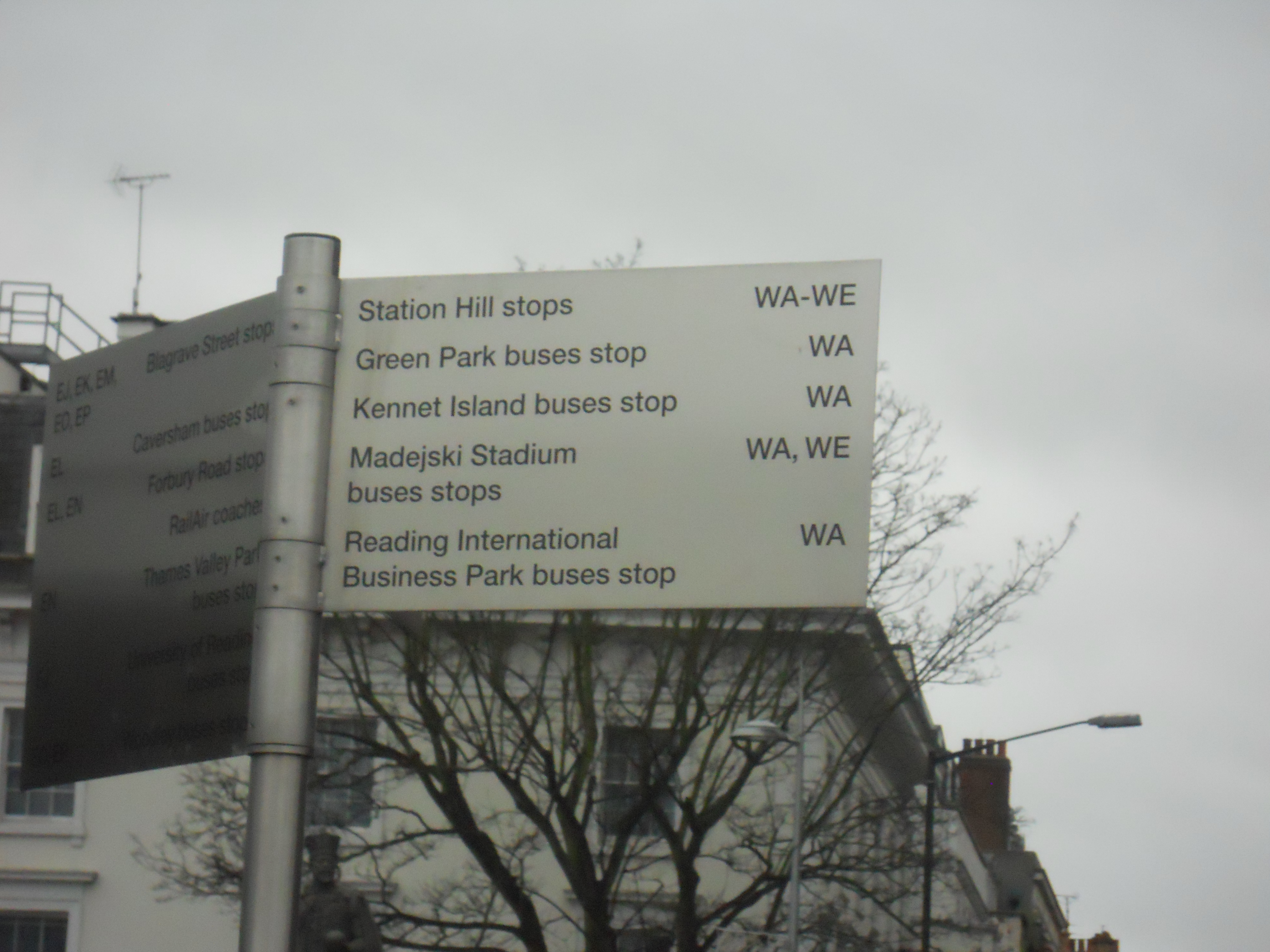
Signpost at Reading Station
The walk wasn’t far too and I think it will be shorter and easier, once they finish the works at the station.
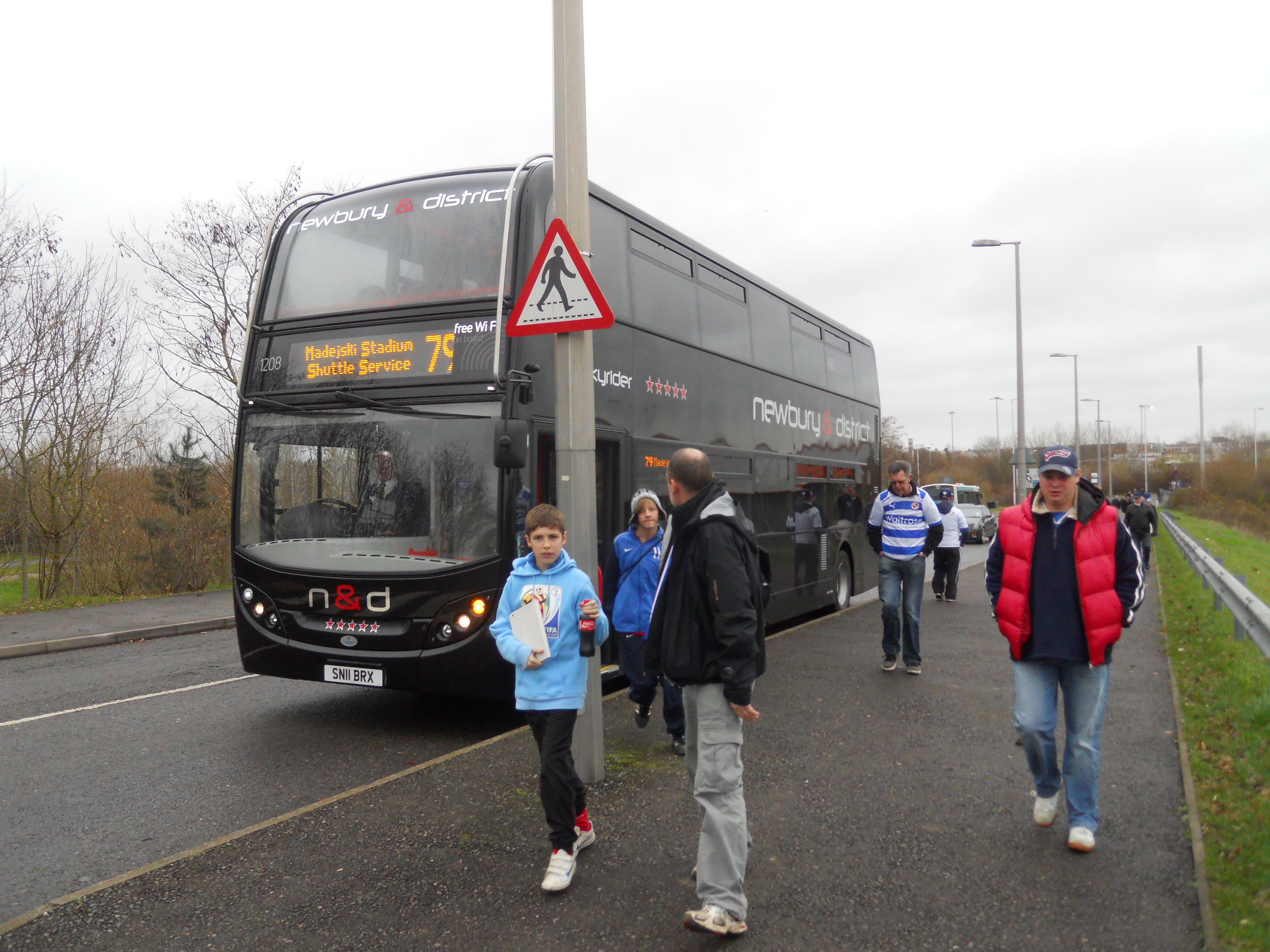
A Smart Football Shuttle Bus
The bus was a rather smart Alexander Dennis Enviro 400 and I think it was a hybrid too. It was also free to those with a bus pass.
Many other clubs could do well to look at how Reading organise the transport for fans.
It was a pity Ipswich went and lost.
London’s Station Above the Thames
Blackfriars station is being rebuilt to give extra capacity to Thameslink and entrances on both banks of the River Thames.
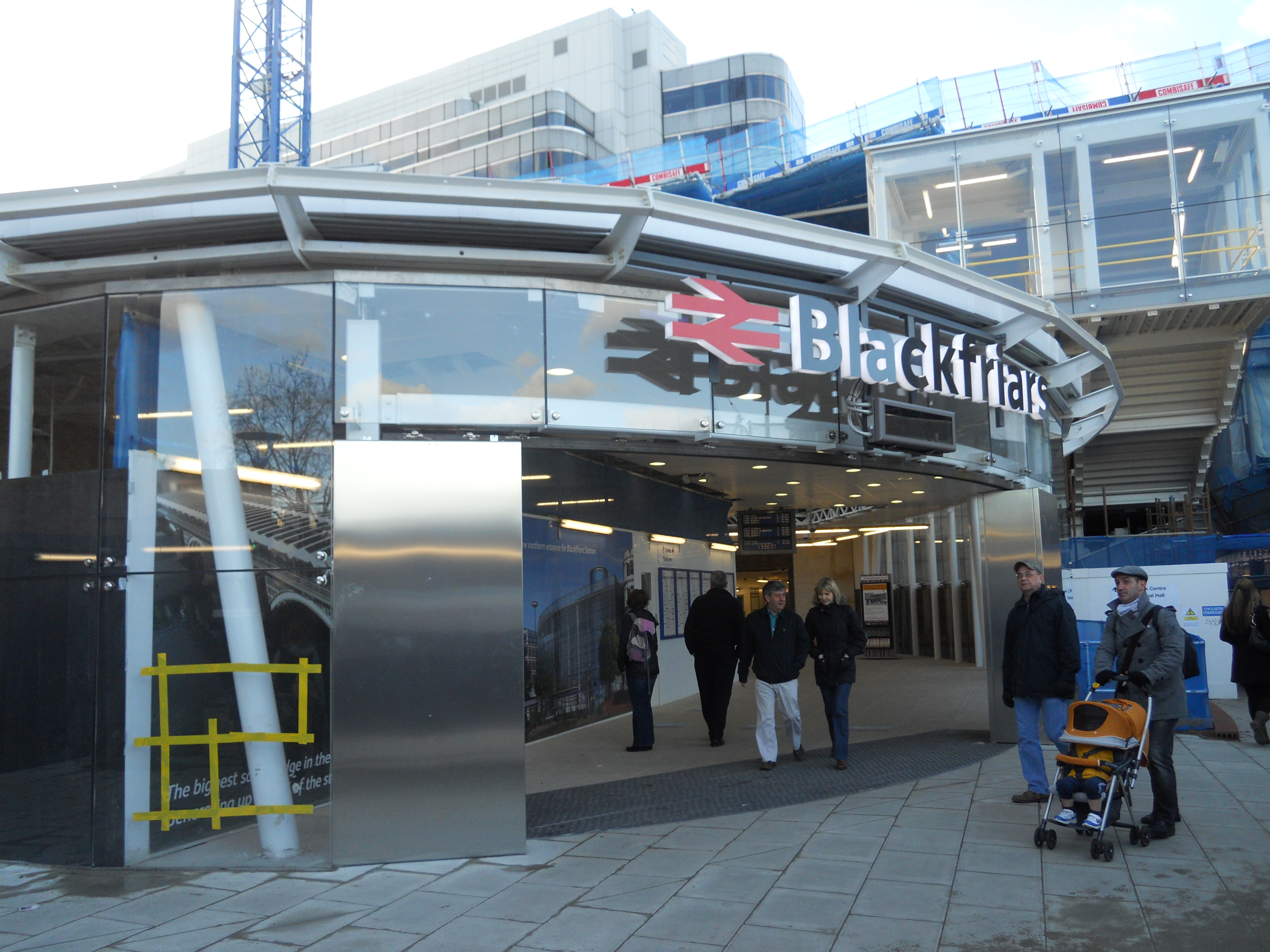
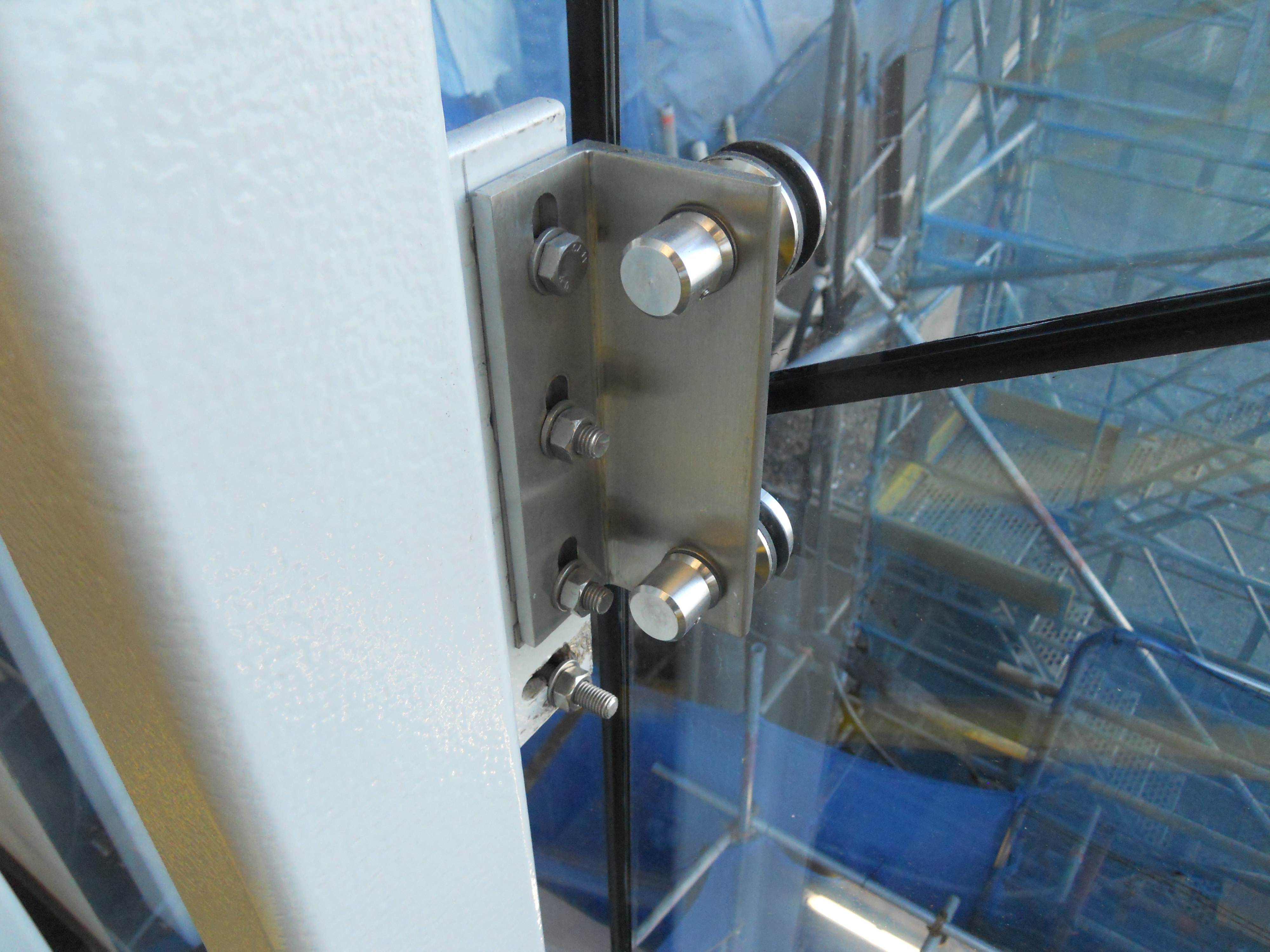
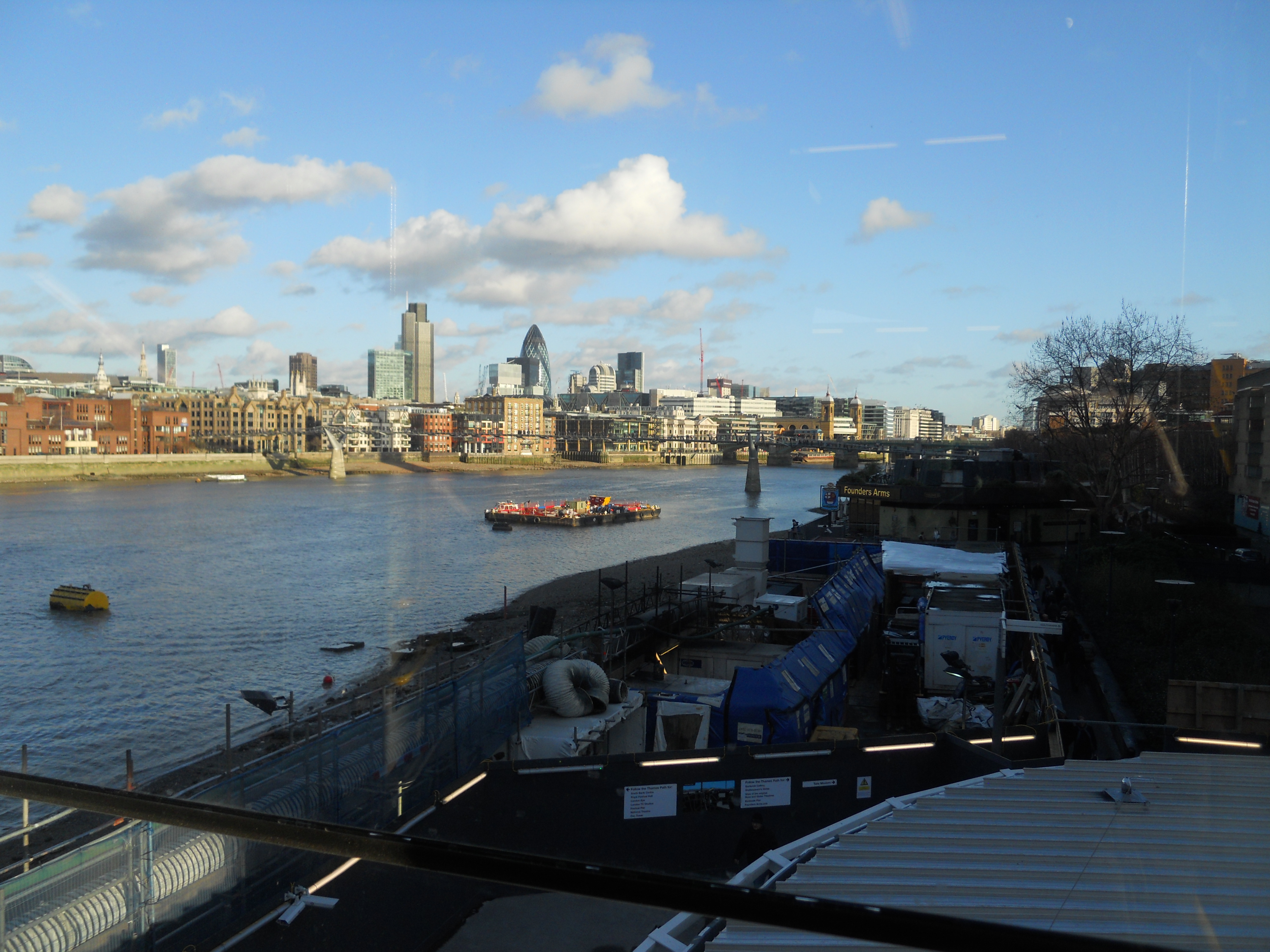
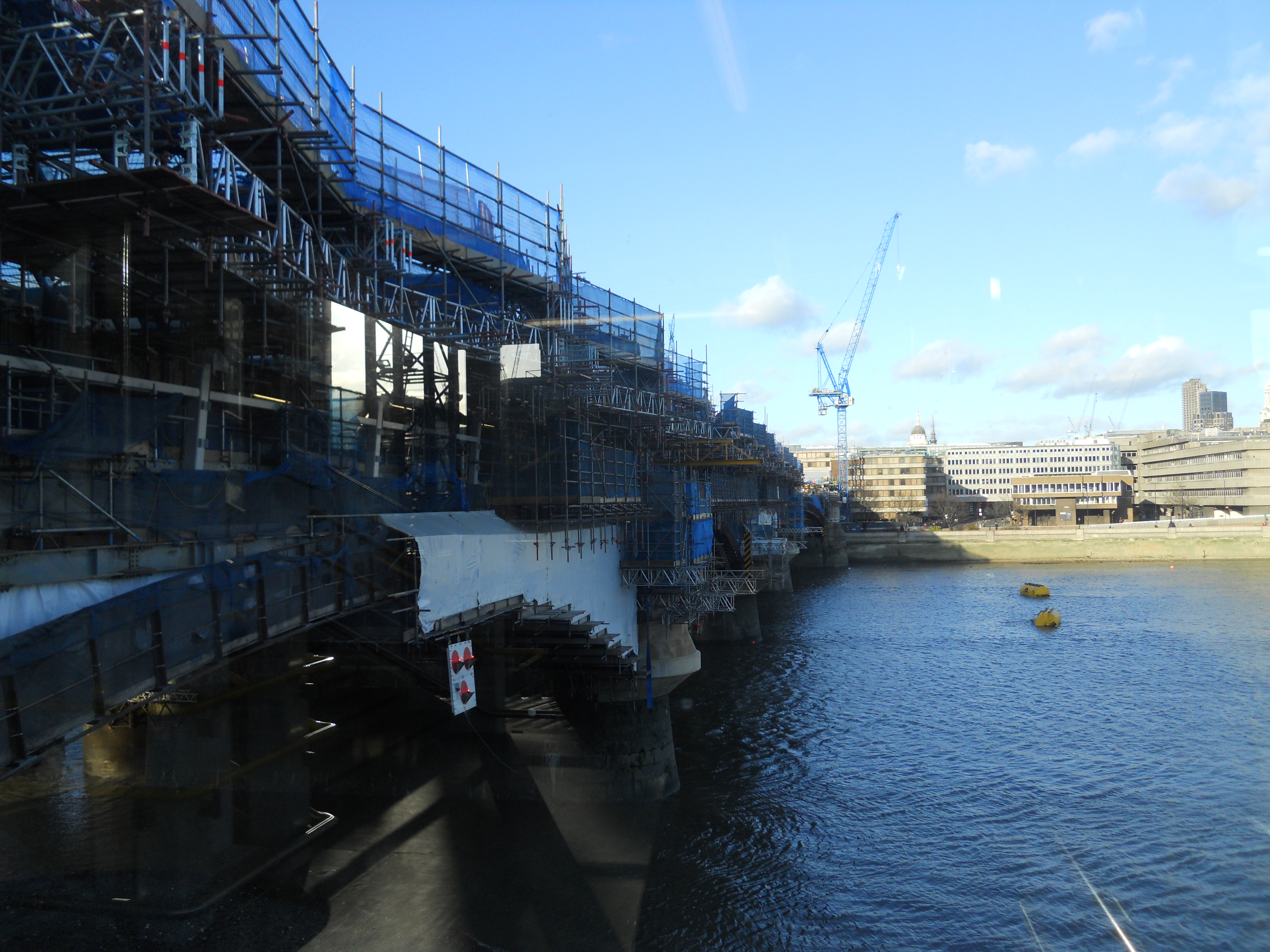
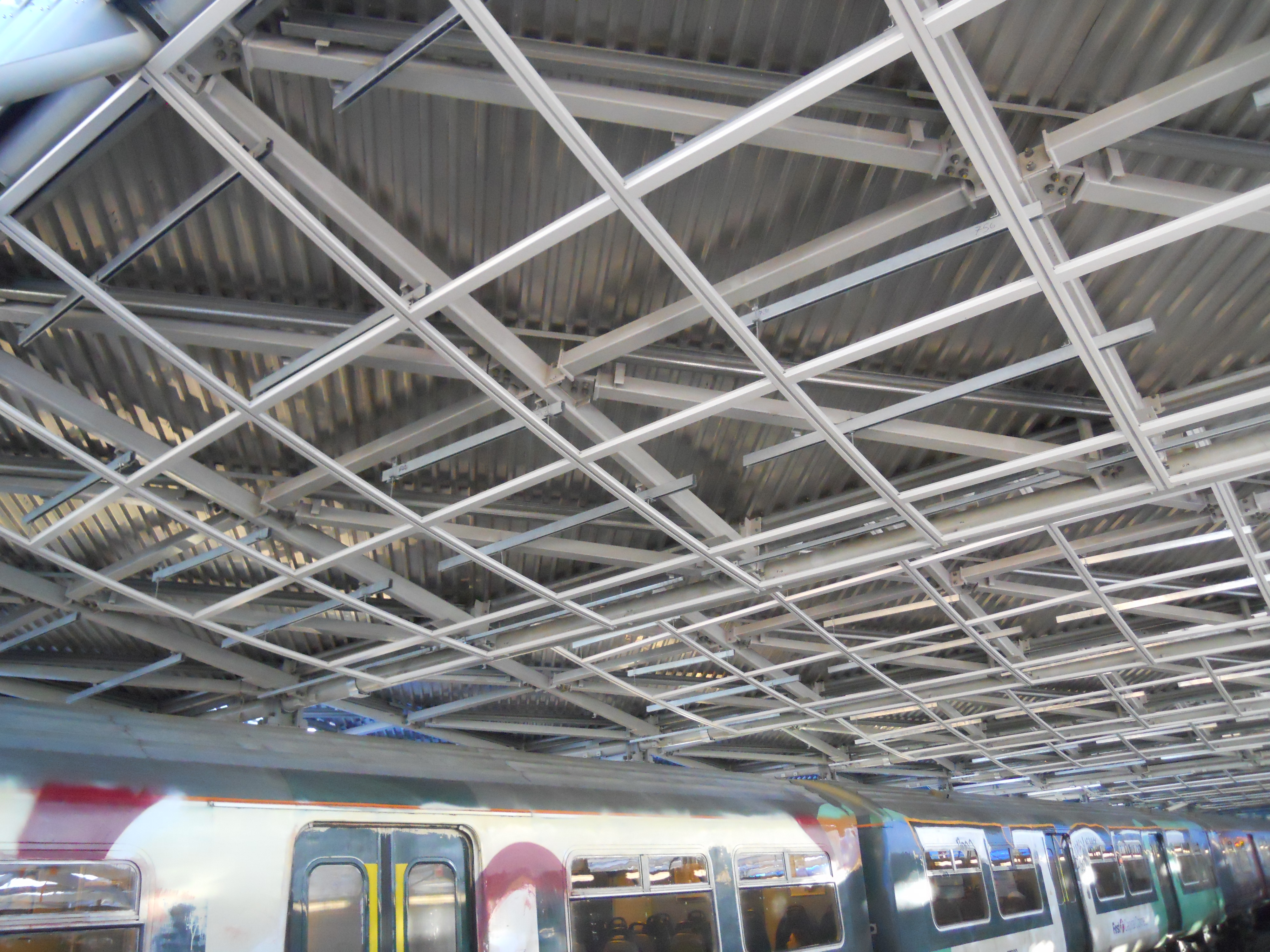
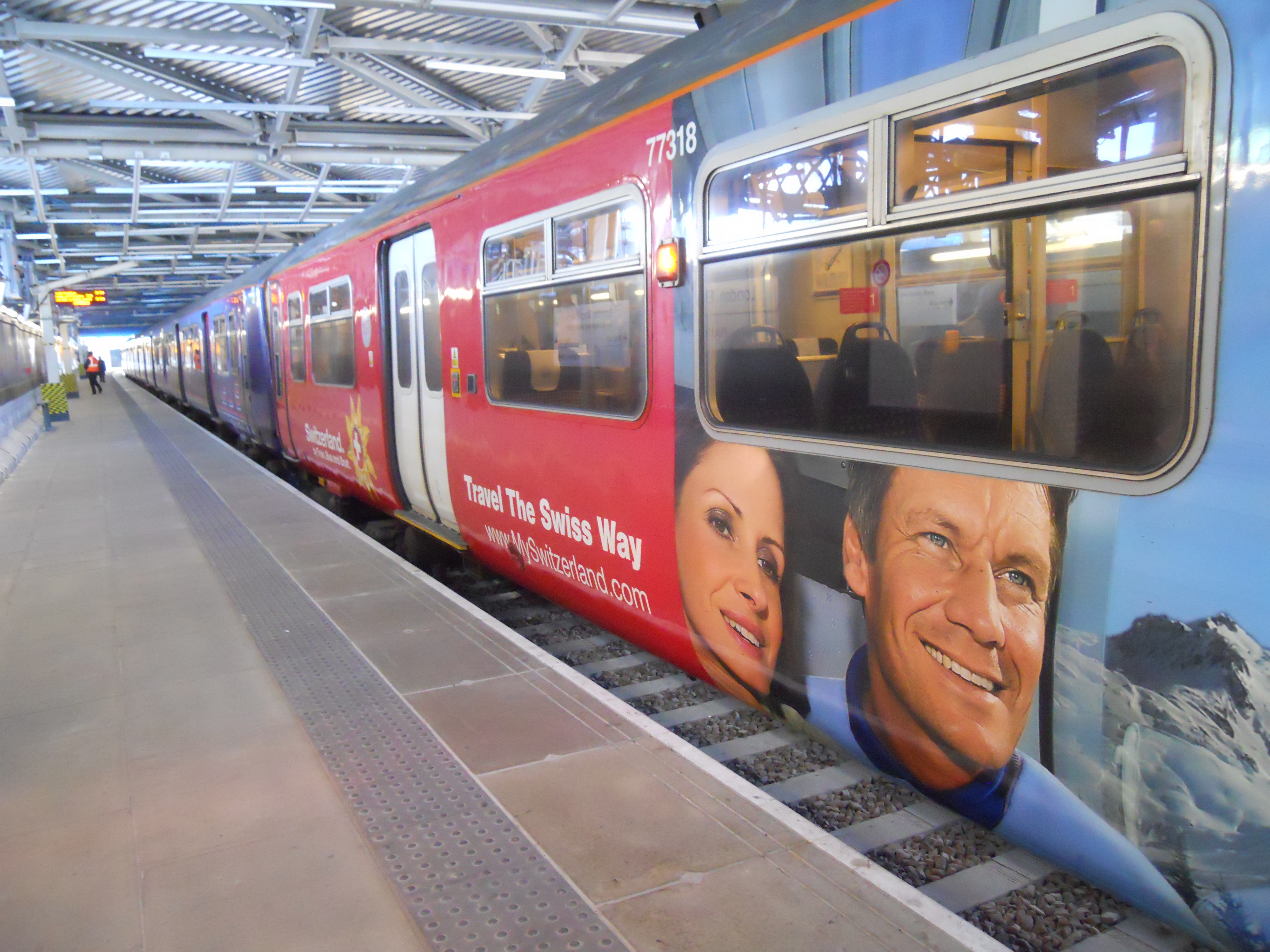
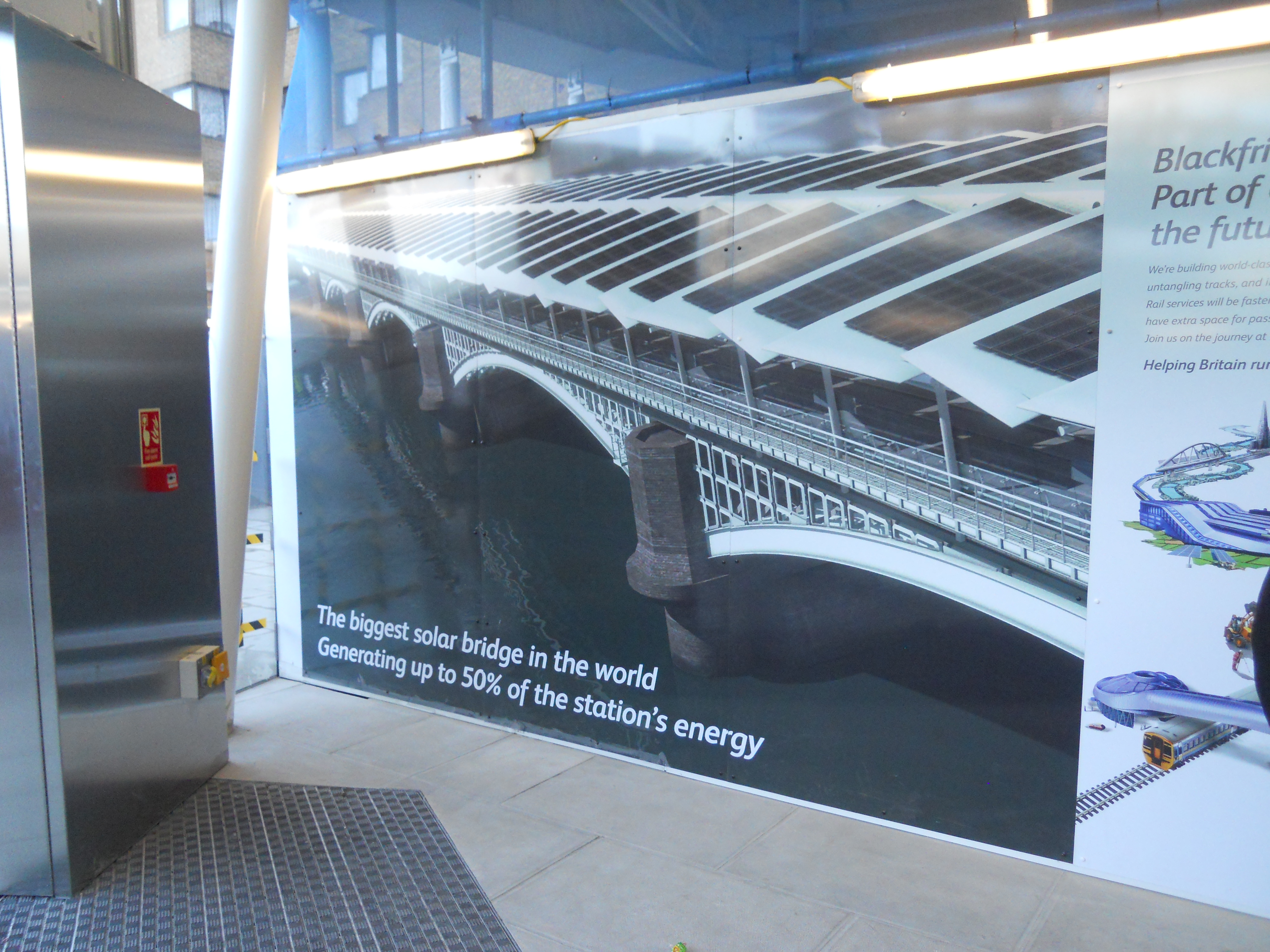
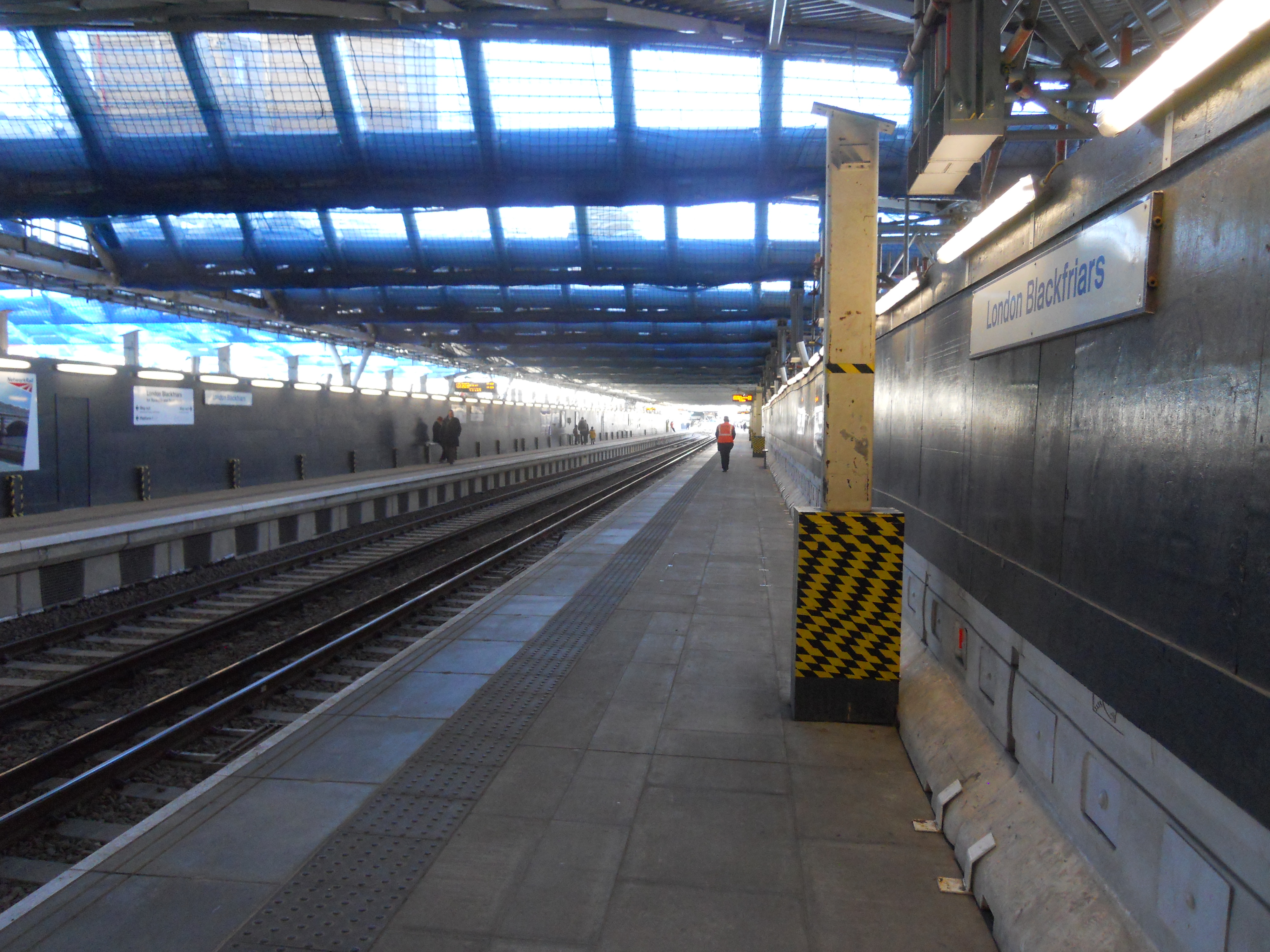
It is going to be an impressive station, when it is completed next year.
What Do You Do With Six Million Tonnes Of Earth?
Crossrail will produce six million tonnes of earth and spoil, from where they are digging the tunnels, shafts and stations in London. Three-quarters of this are being used to create a new wetland habitat for the RSPB at Wallasea Island, north of Southend in Essex. Read all about it here.
Crossrail’s Tunneling Machines
The BBC has been showing a story with video about Crossrail‘s giant tunneling machines which will start work in the near future.
Crossrail has more on the boring of 42 km. of tunnels under London using eight tunnel boring machines here.
They also have more on the Tunneling and Underground Construction Academy, which will be a unique legacy of Crossrail and will continue to provide trained staff for tunnel projects all over the world.
We really are entering the Golden Age of Tunneling.
How To Recycle A Tunnel
Crossrail is Europe’s largest construction project and they are really upping their publicity this year, as the work begins in earnest.
I found this story with a video about the reusing of the Connaught Tunnel on the BBC’s web site. I wrote about this earlier.
It’s a fine piece of engineering and the associated project management.
The Paddington Basin
I ended up at Paddington station and went to have a look at the Paddington Basin on the Regent’s Canal behind.
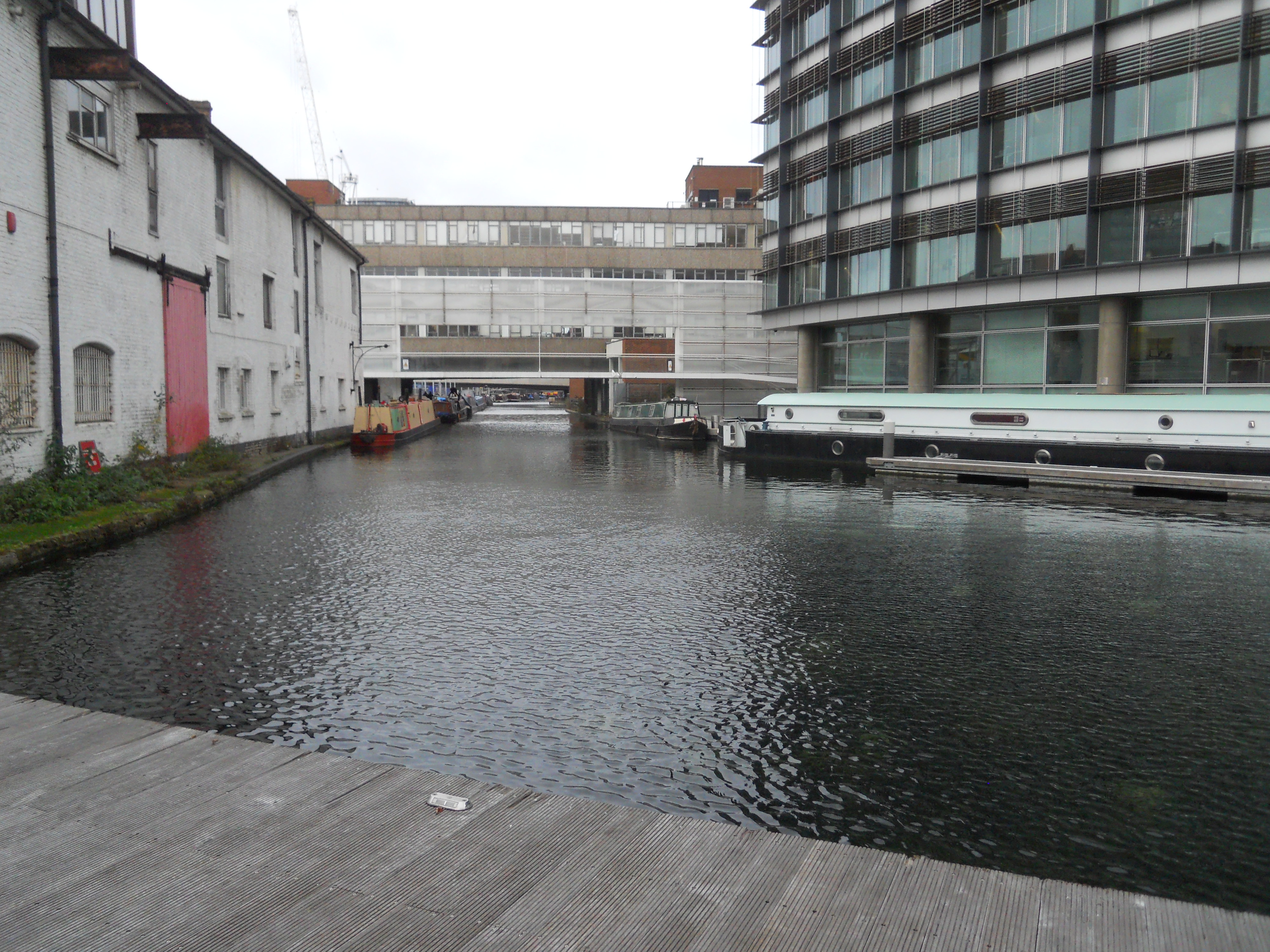
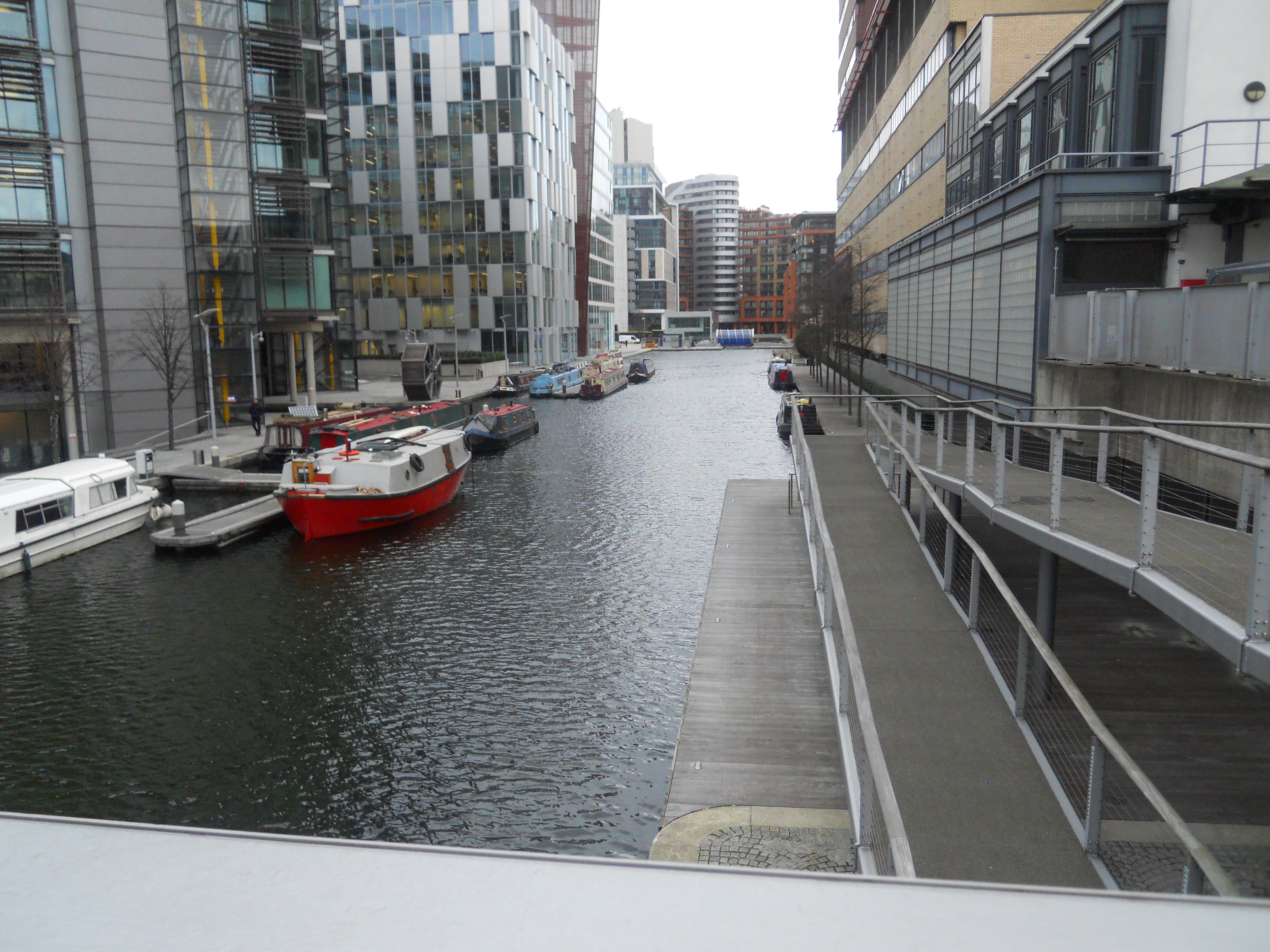
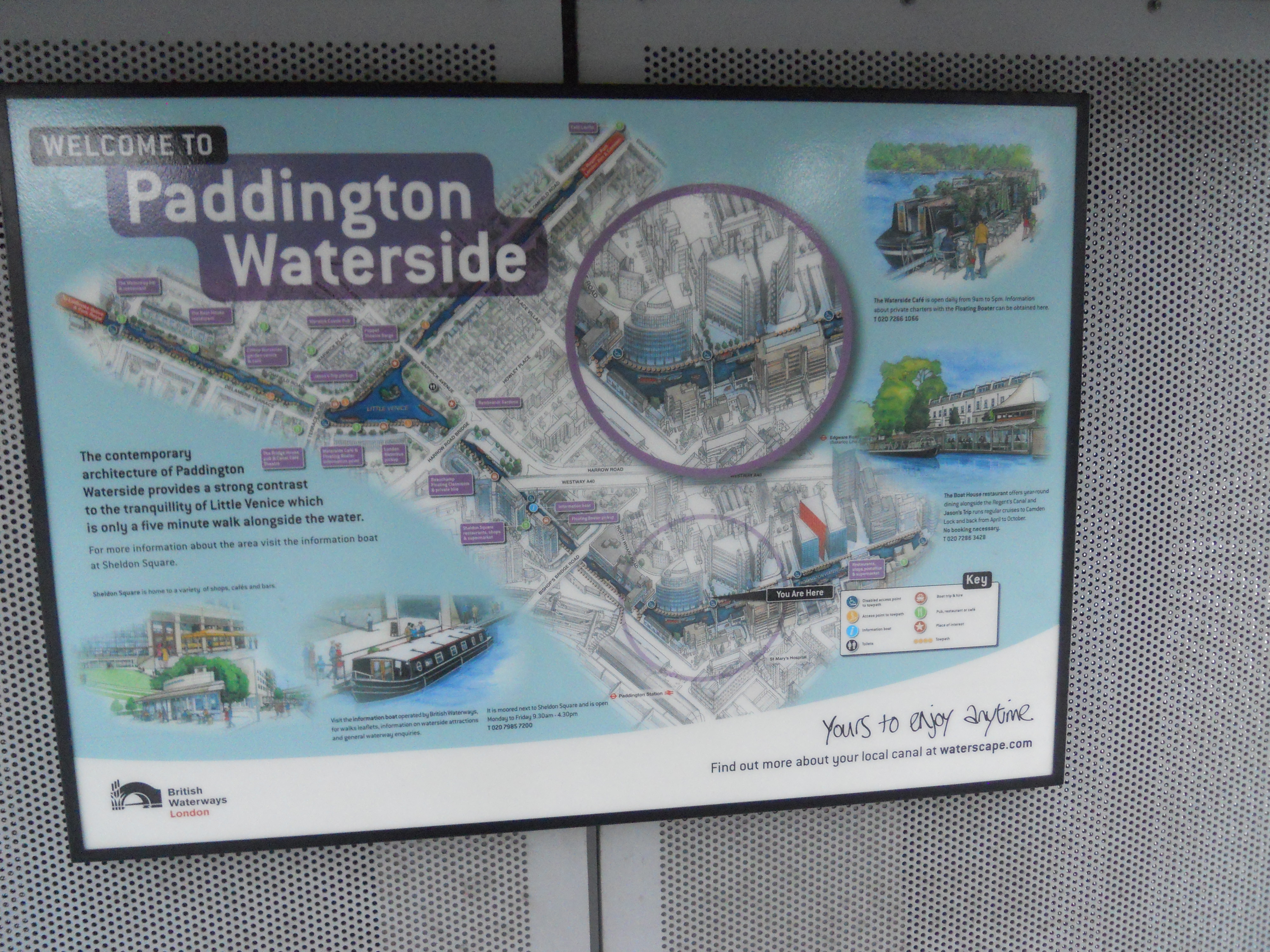
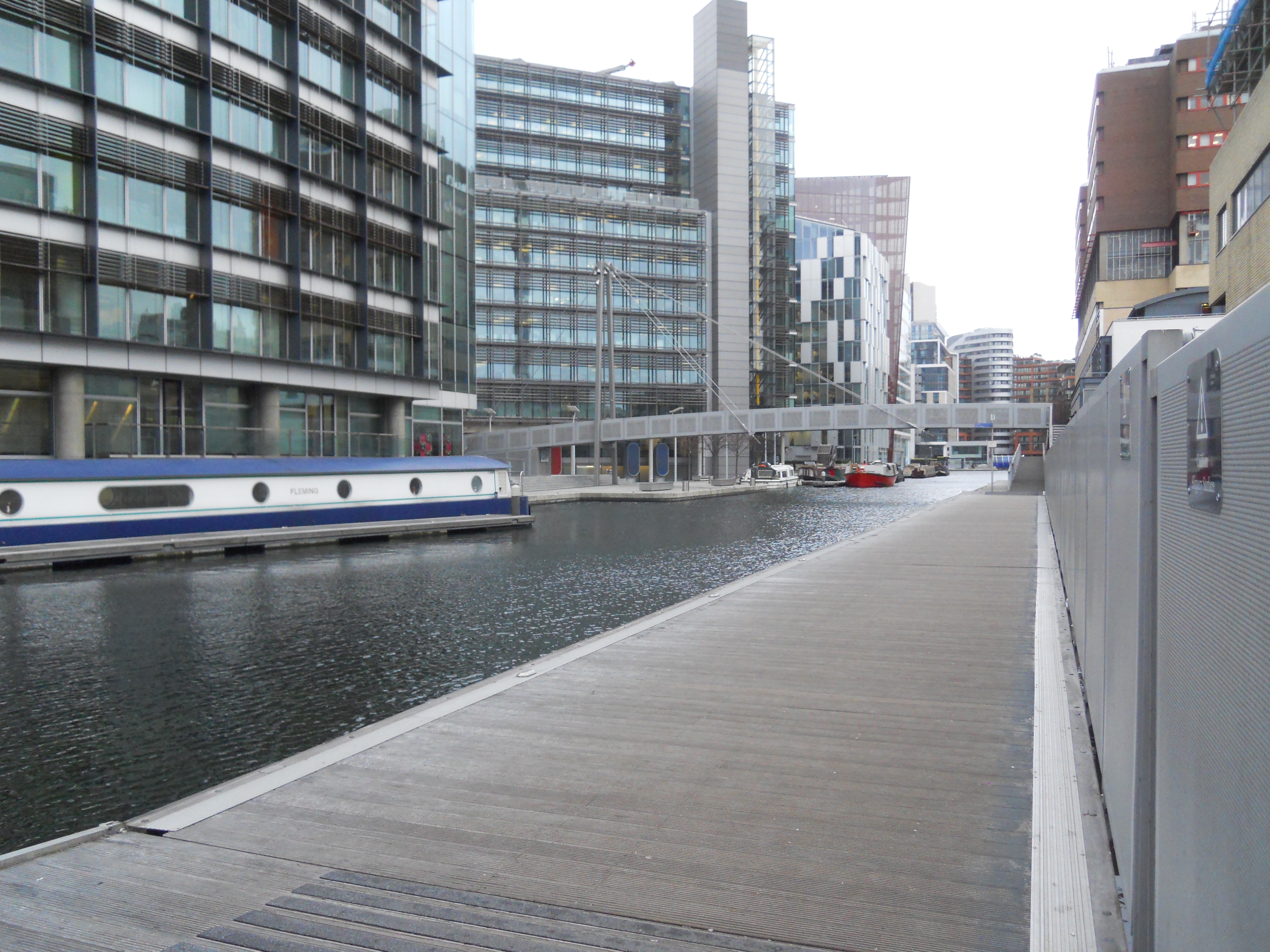
I was told that when the basin was drained to create the new developments, the police had a sweepstake on how many bodies, shopping trolleys etc. they would find. I was told they were rather surprised, but obviously pleased that none of the former were found.
Thoughts Of Angel
I saw this notice at Angel station today.
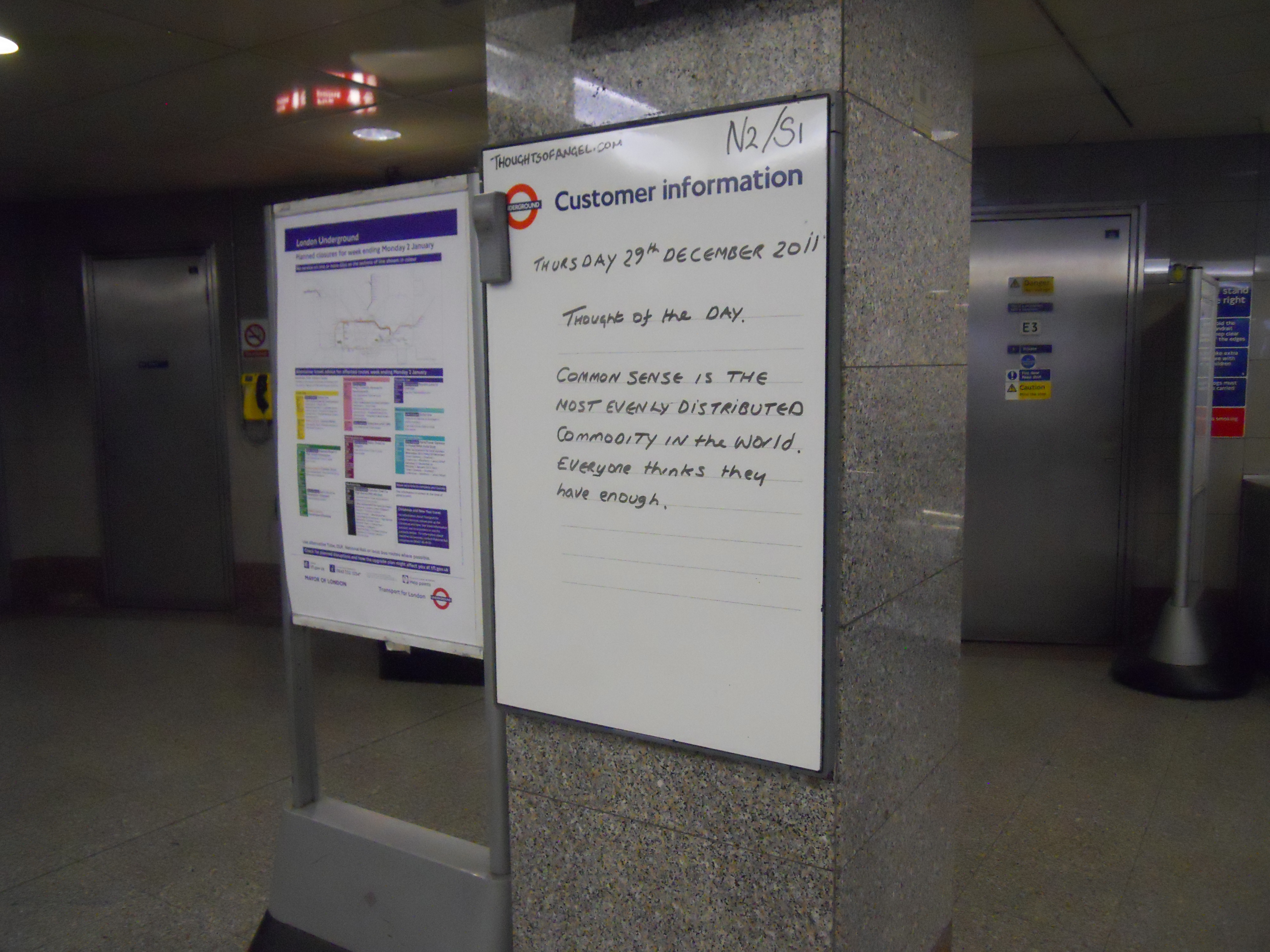
Thoughts Of Angel – 29th December 2011
The URL at the top doesn’t work. But even so it’s an interesting way to get a message across.
If you can’t read it, the message is.
Common sense is the most evenly distributed commodity in the world.
Everybody thinks they have enough.
Today, there was a different one as I passed through.
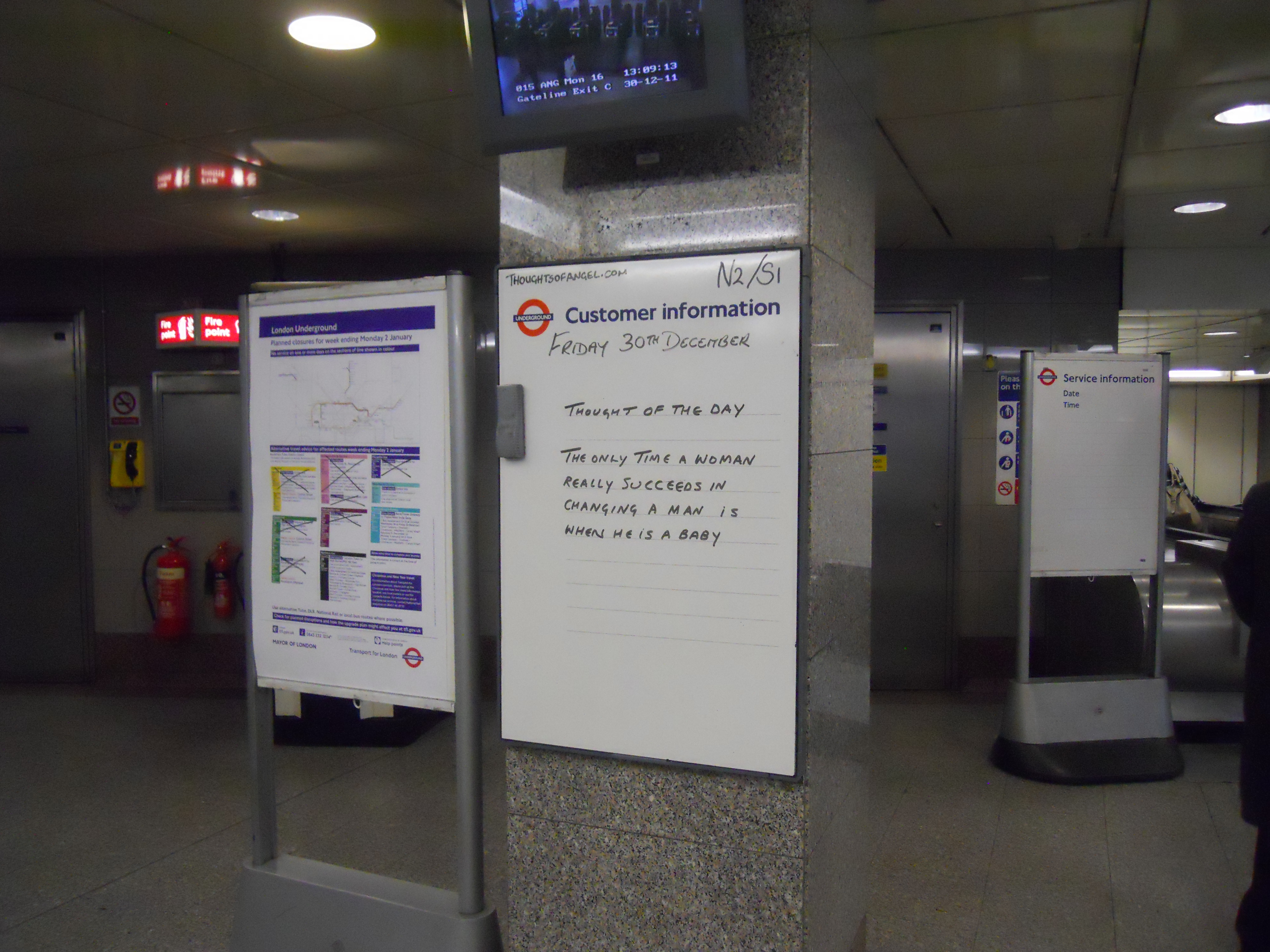
Thoughts of Angel – 30th December 2011
I wonder if they will keep this philosophy up.
The New Farringdon Station
The new longer 12-coach Thameslink trains are now running through the tunnels from St.Pancras to south of the river and Farringdon Station has been upgraded and lengthened to cope.
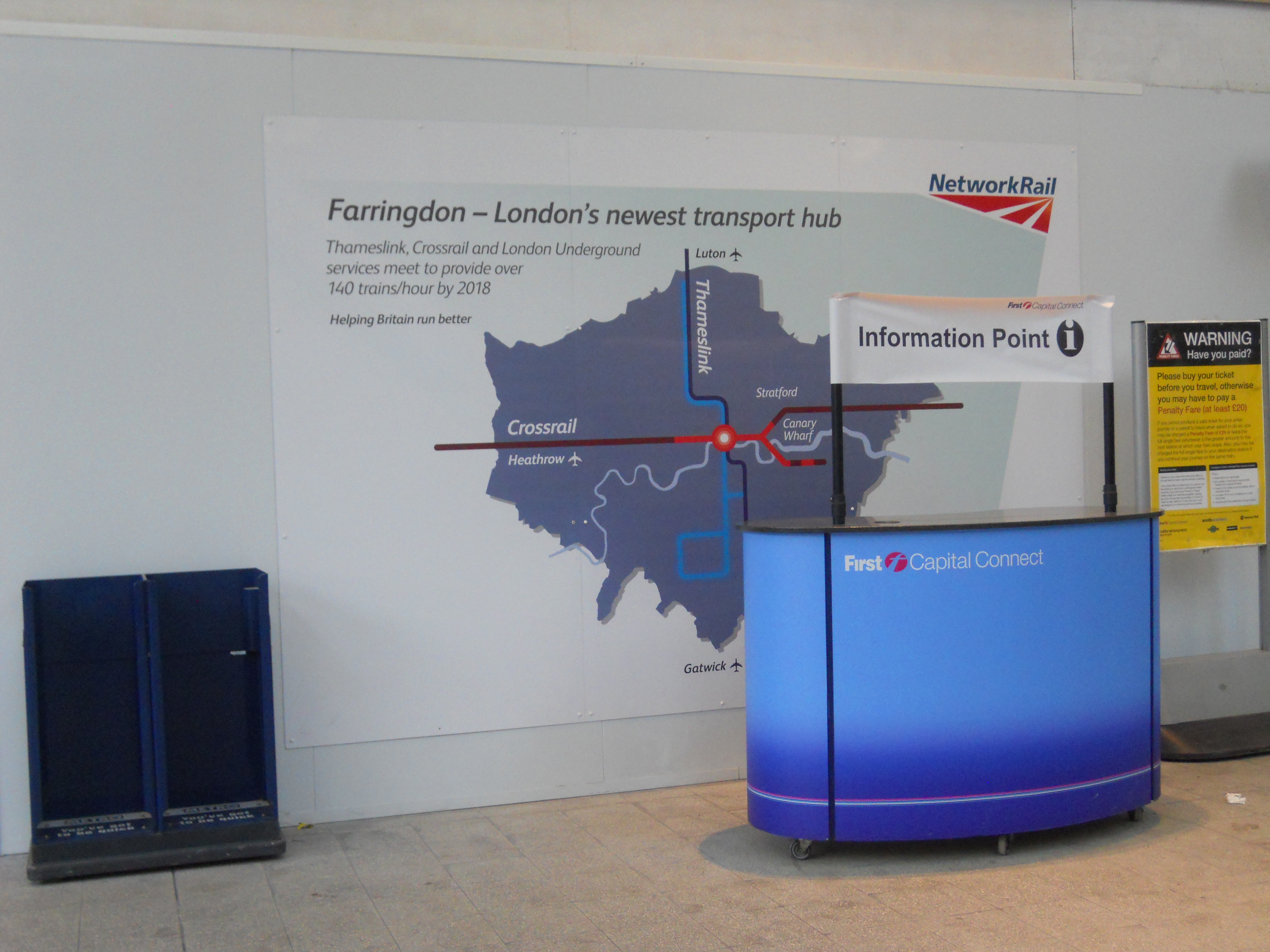
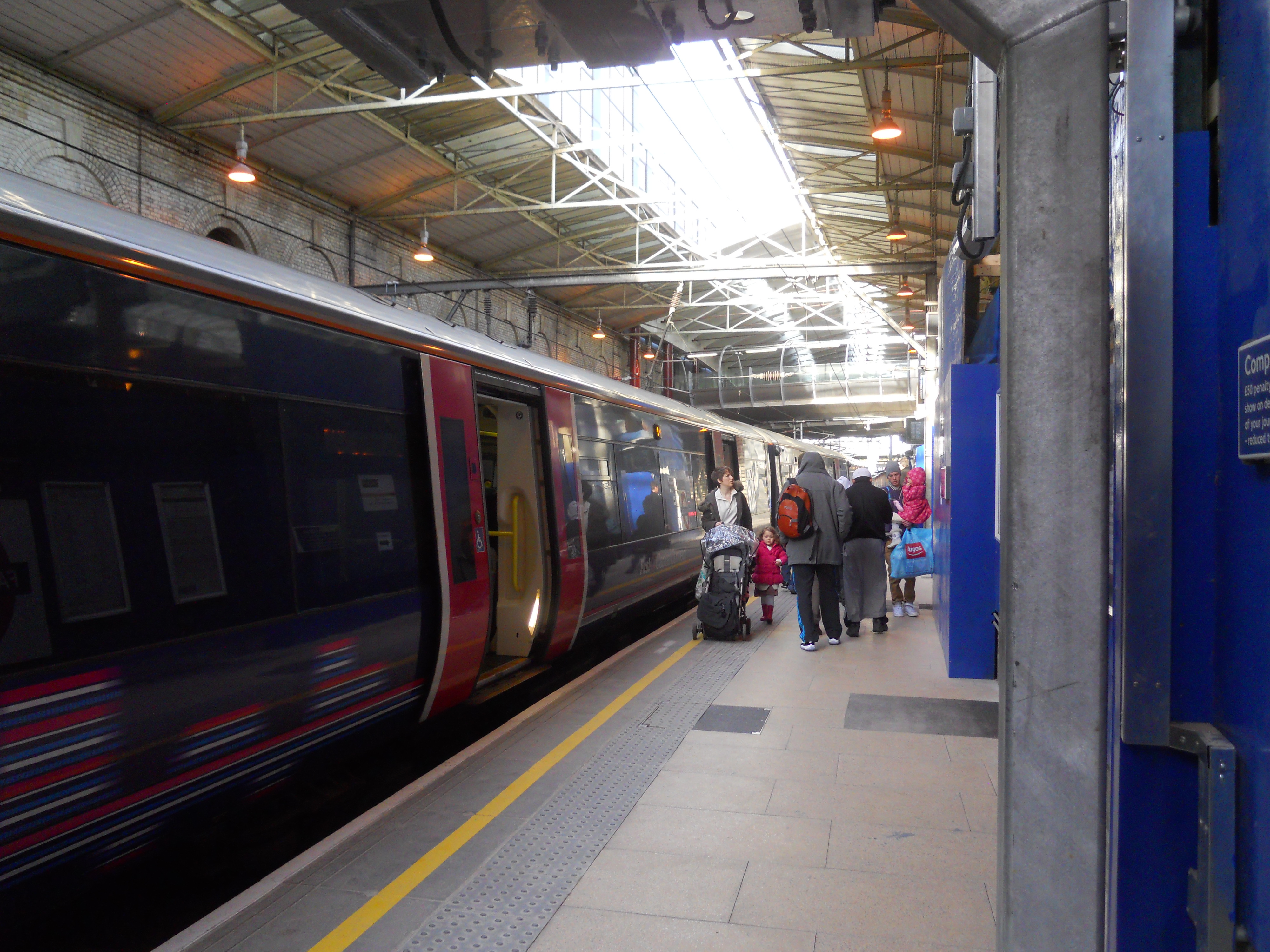
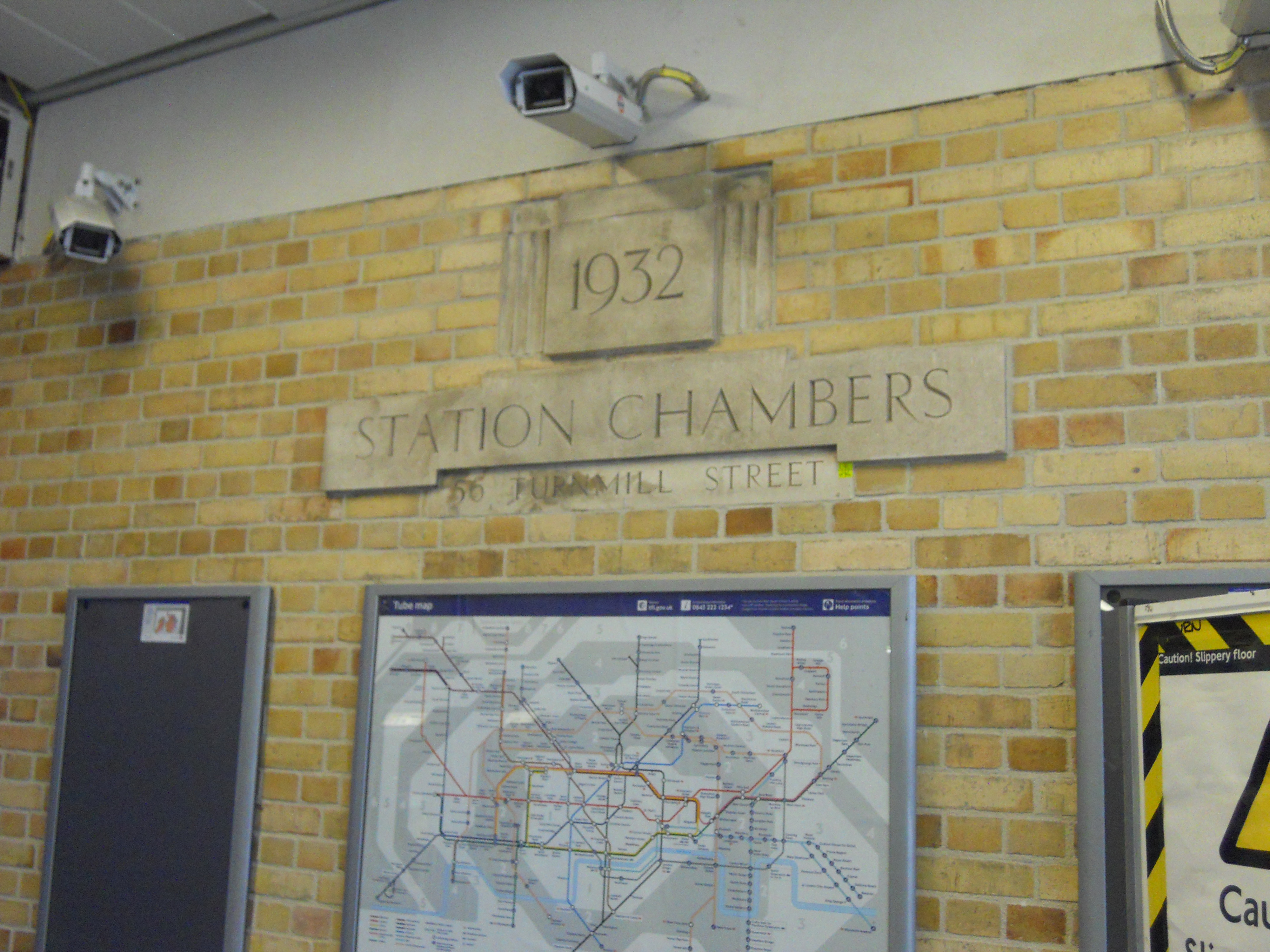
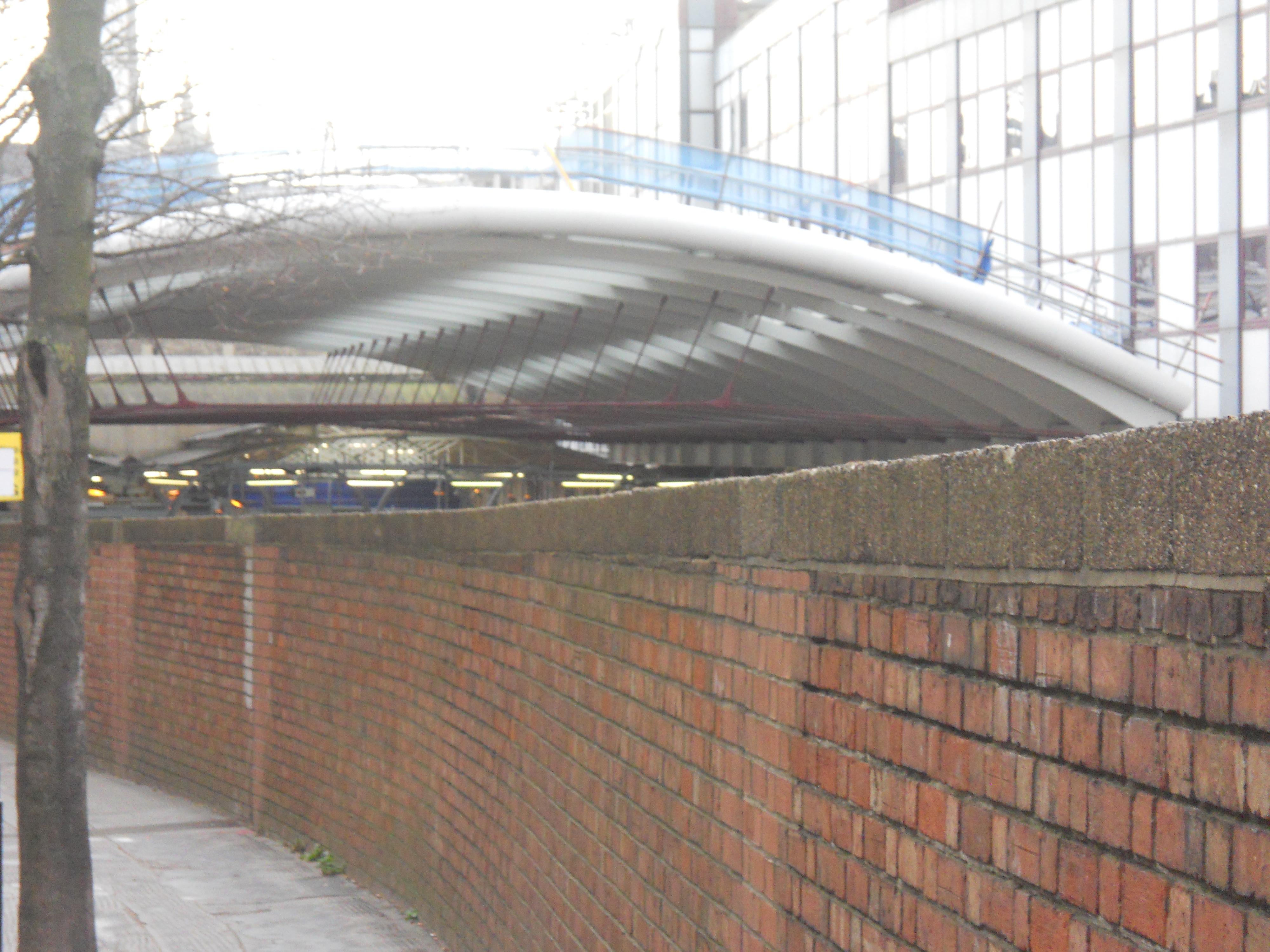

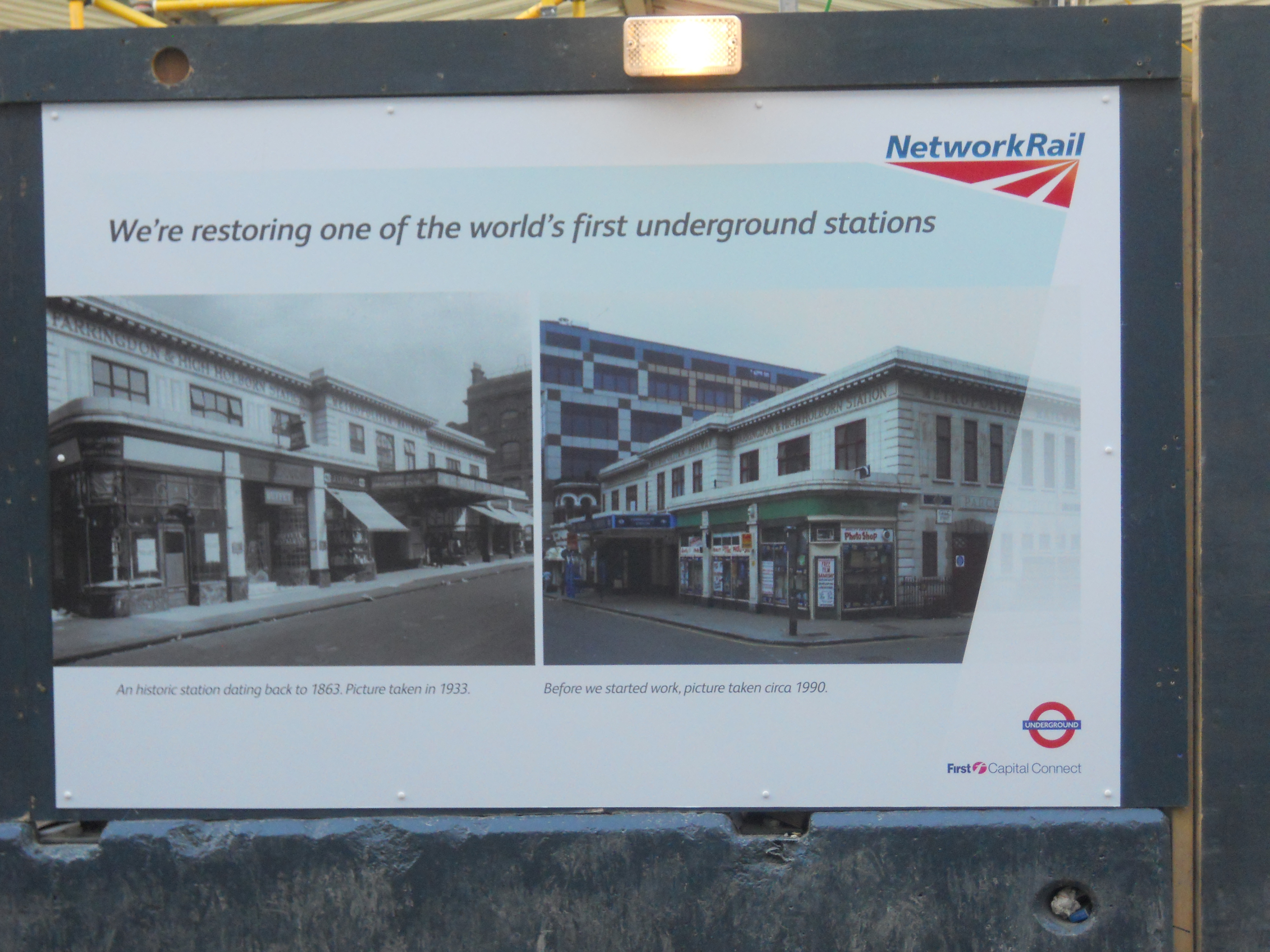
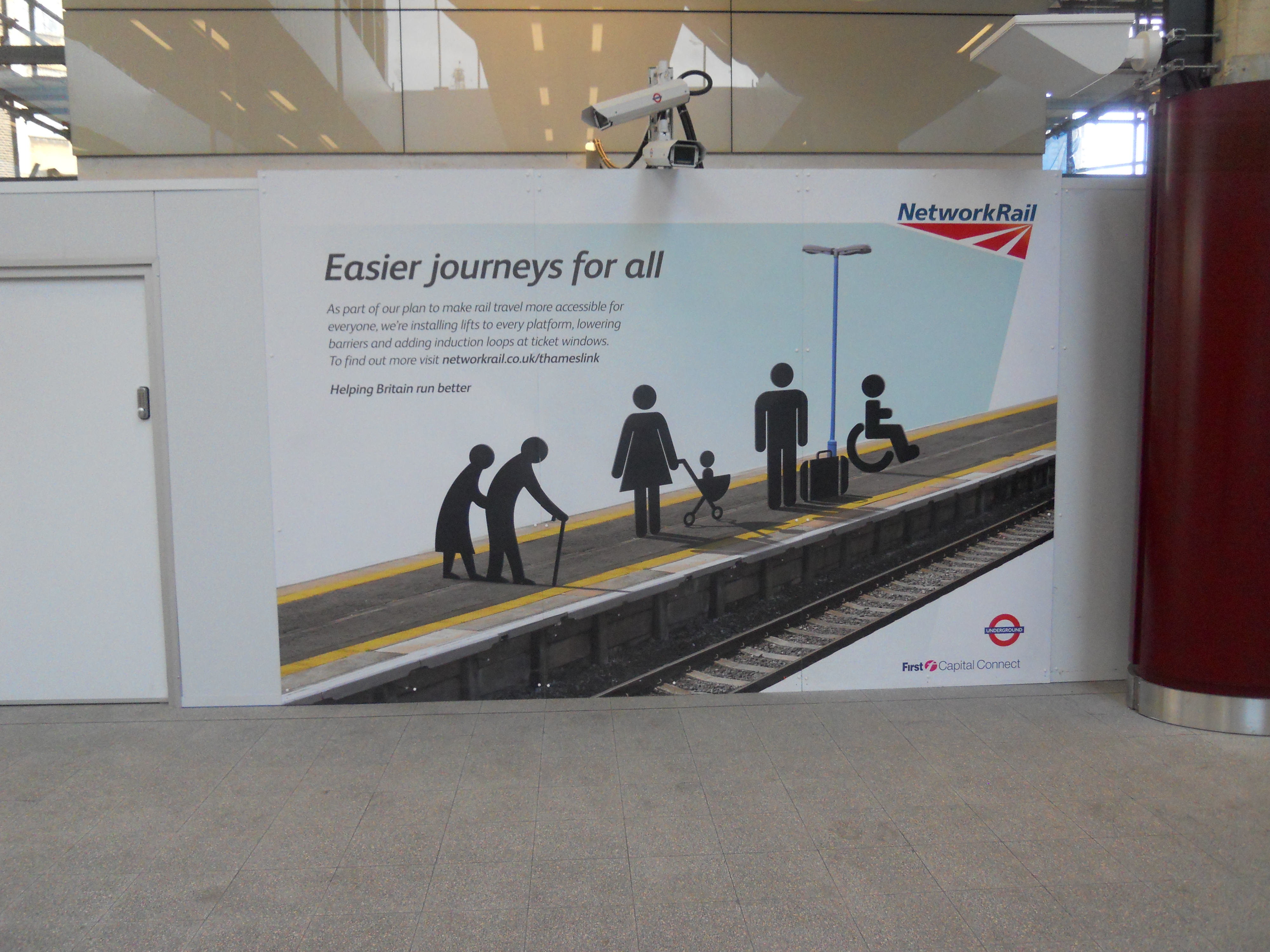
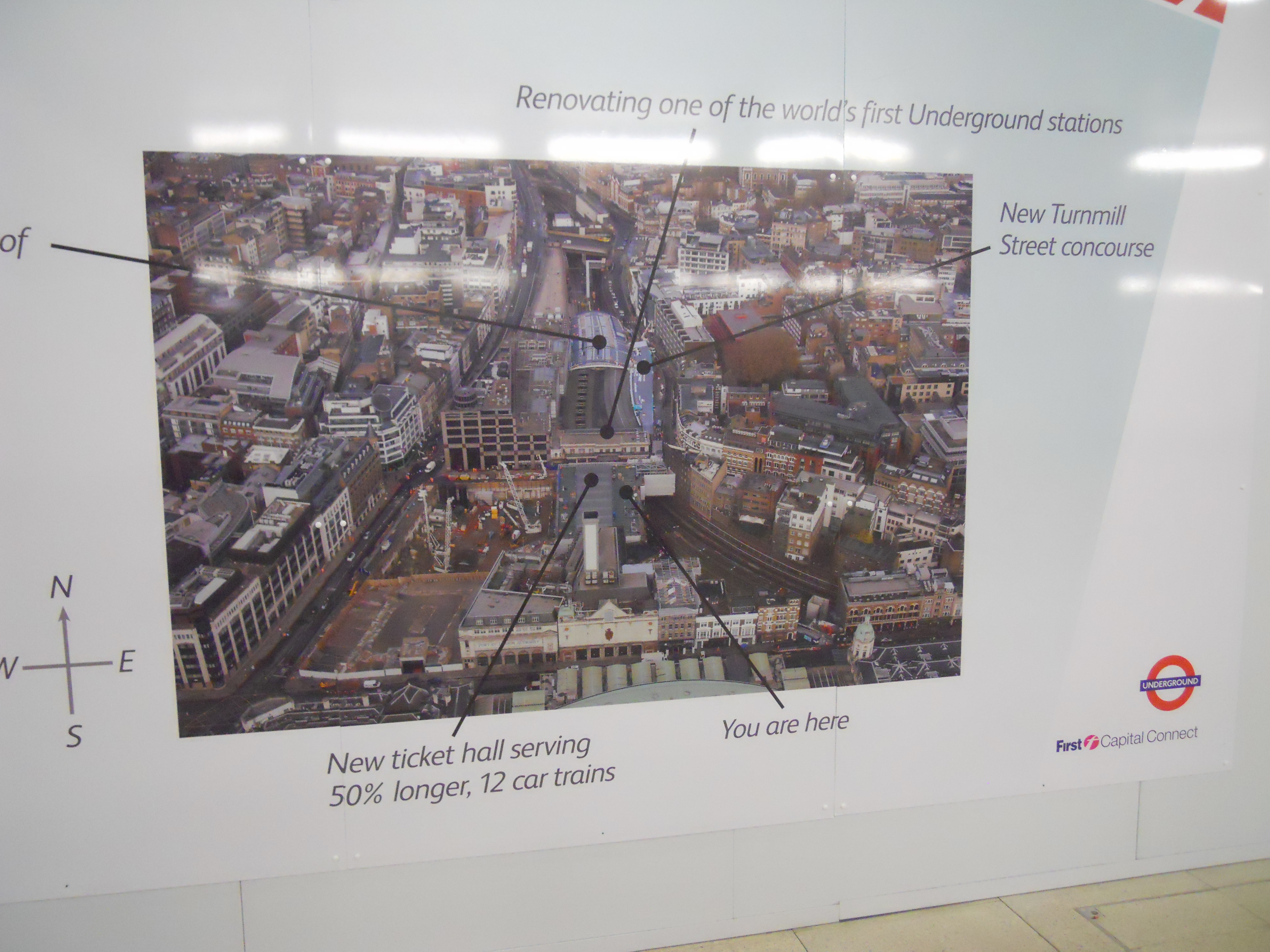
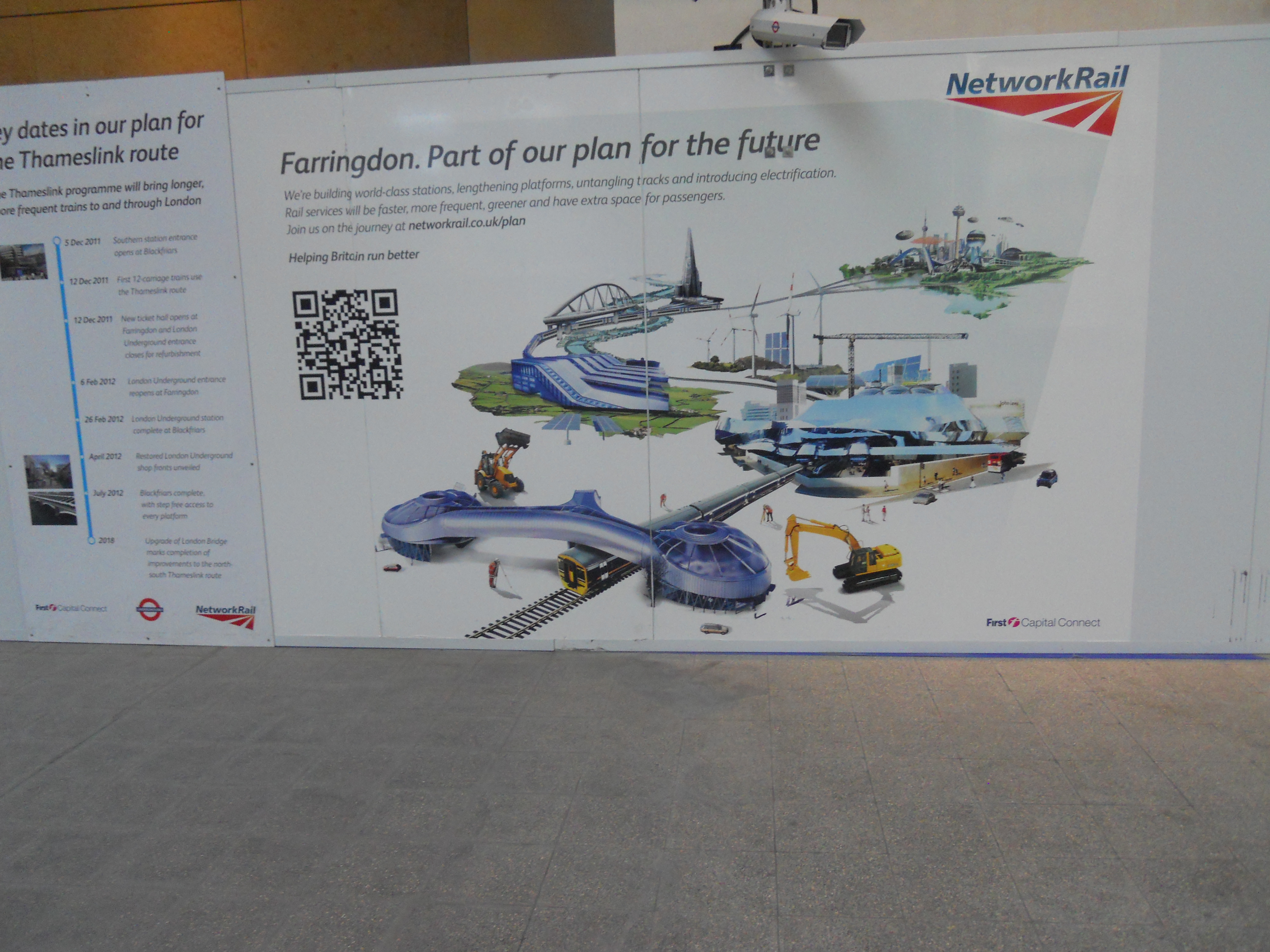
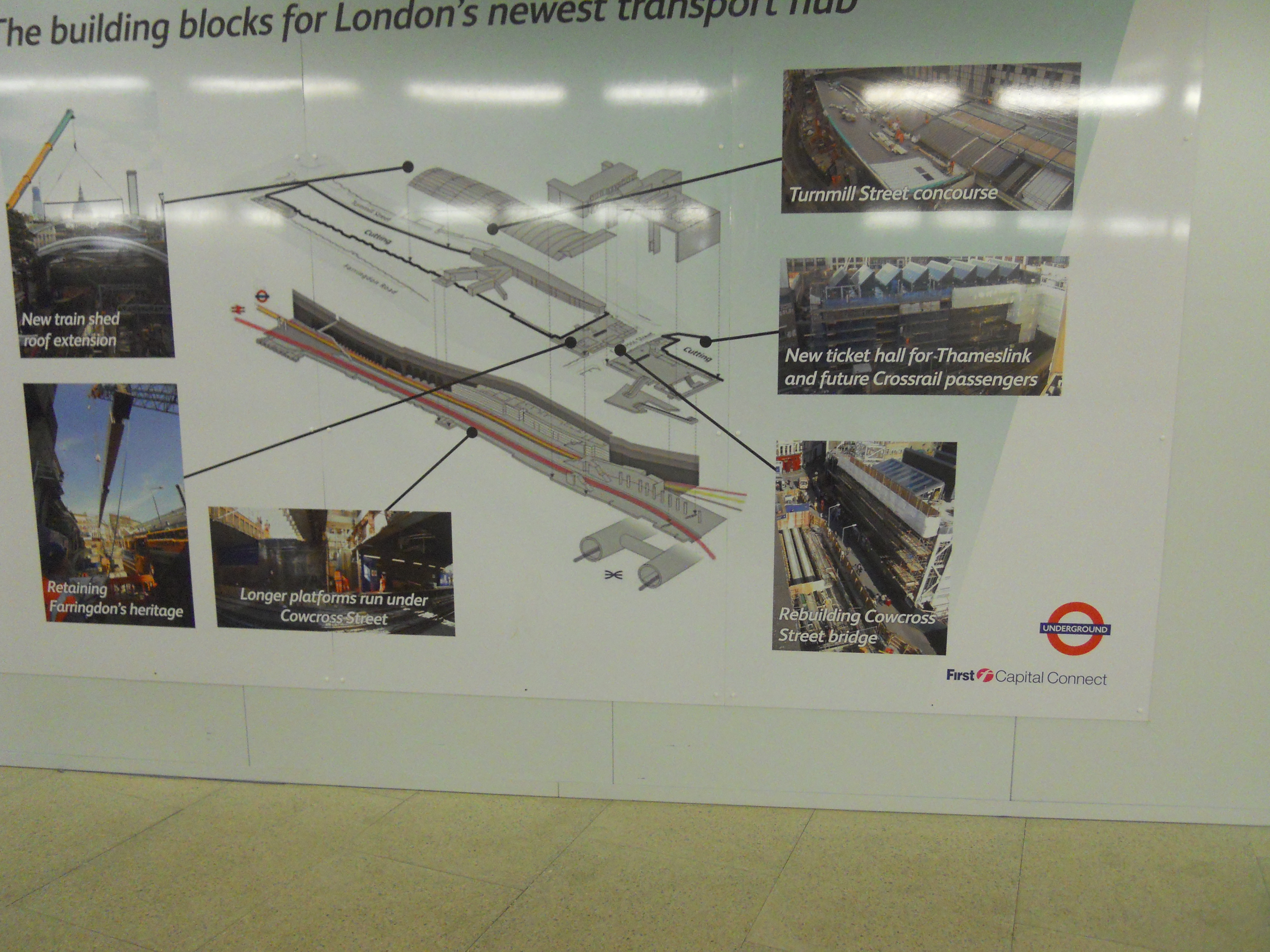

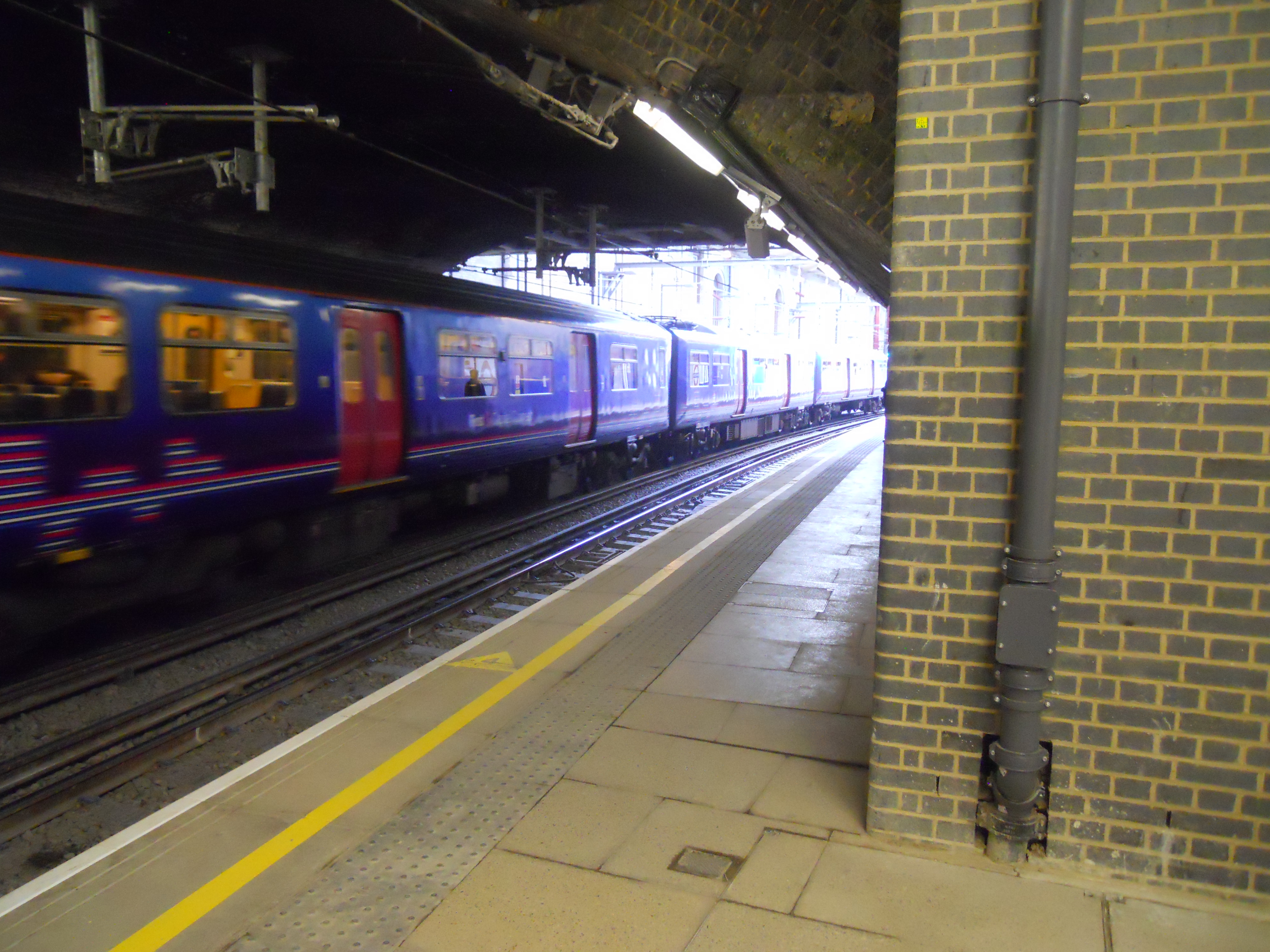
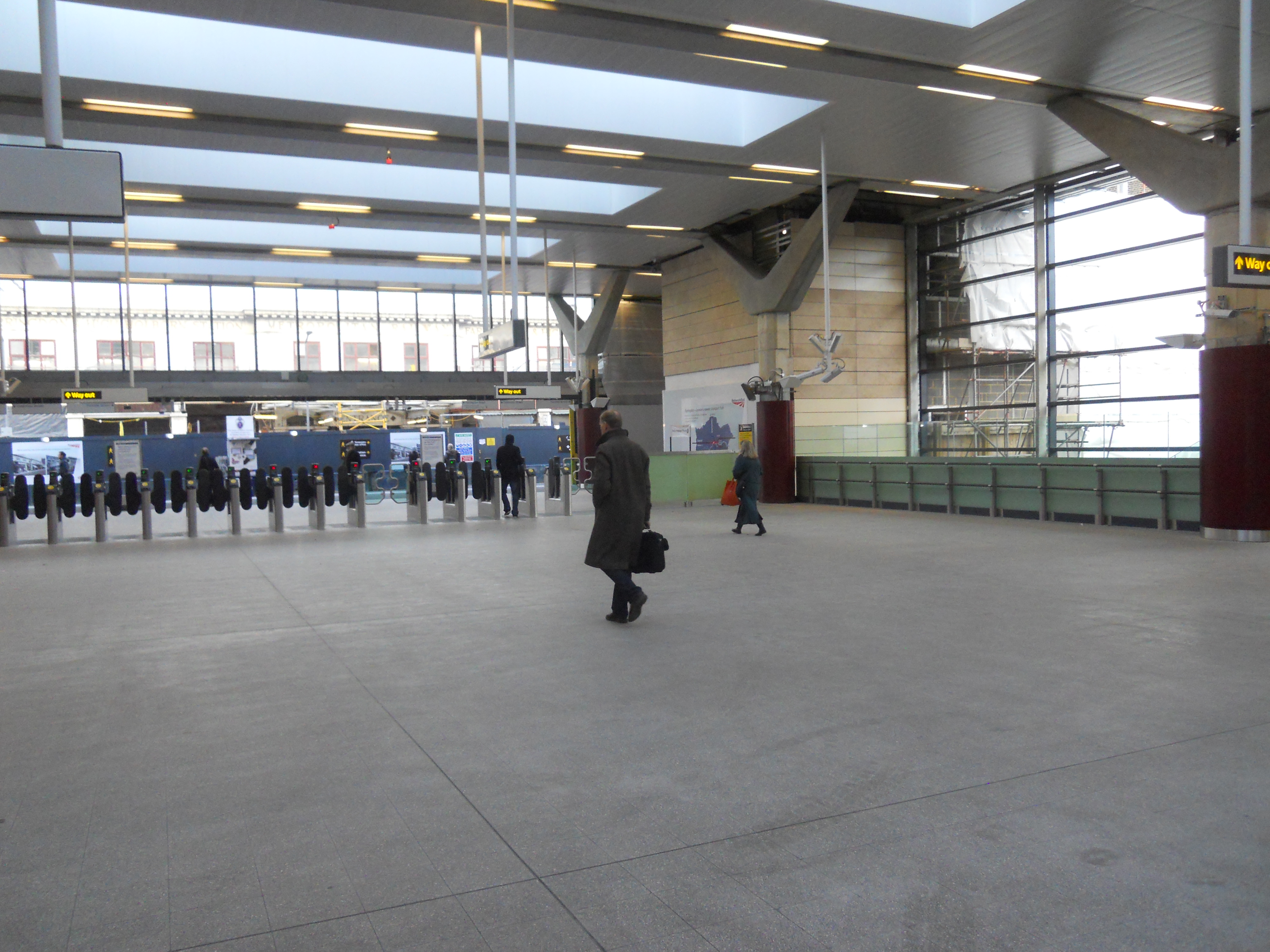
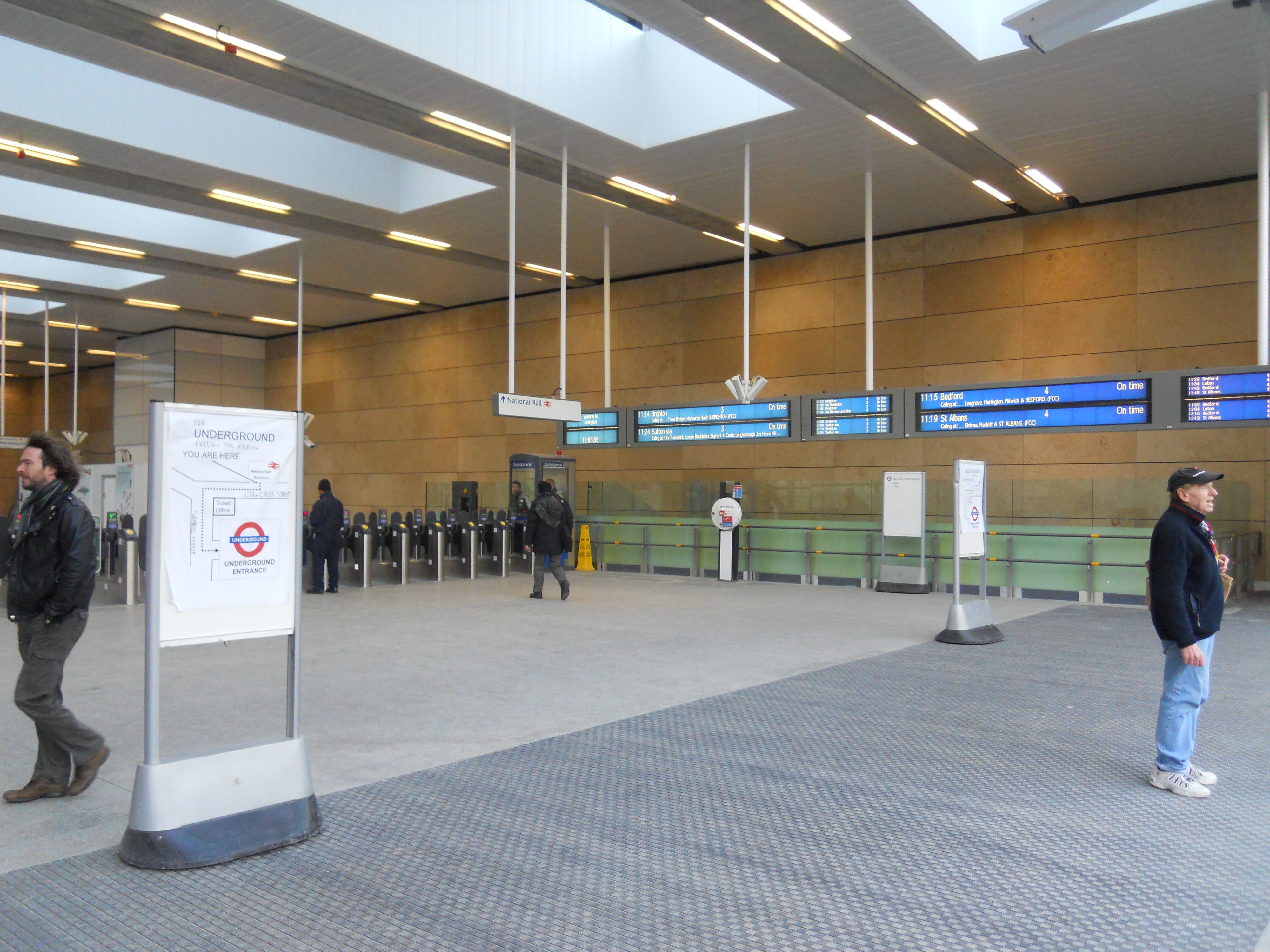
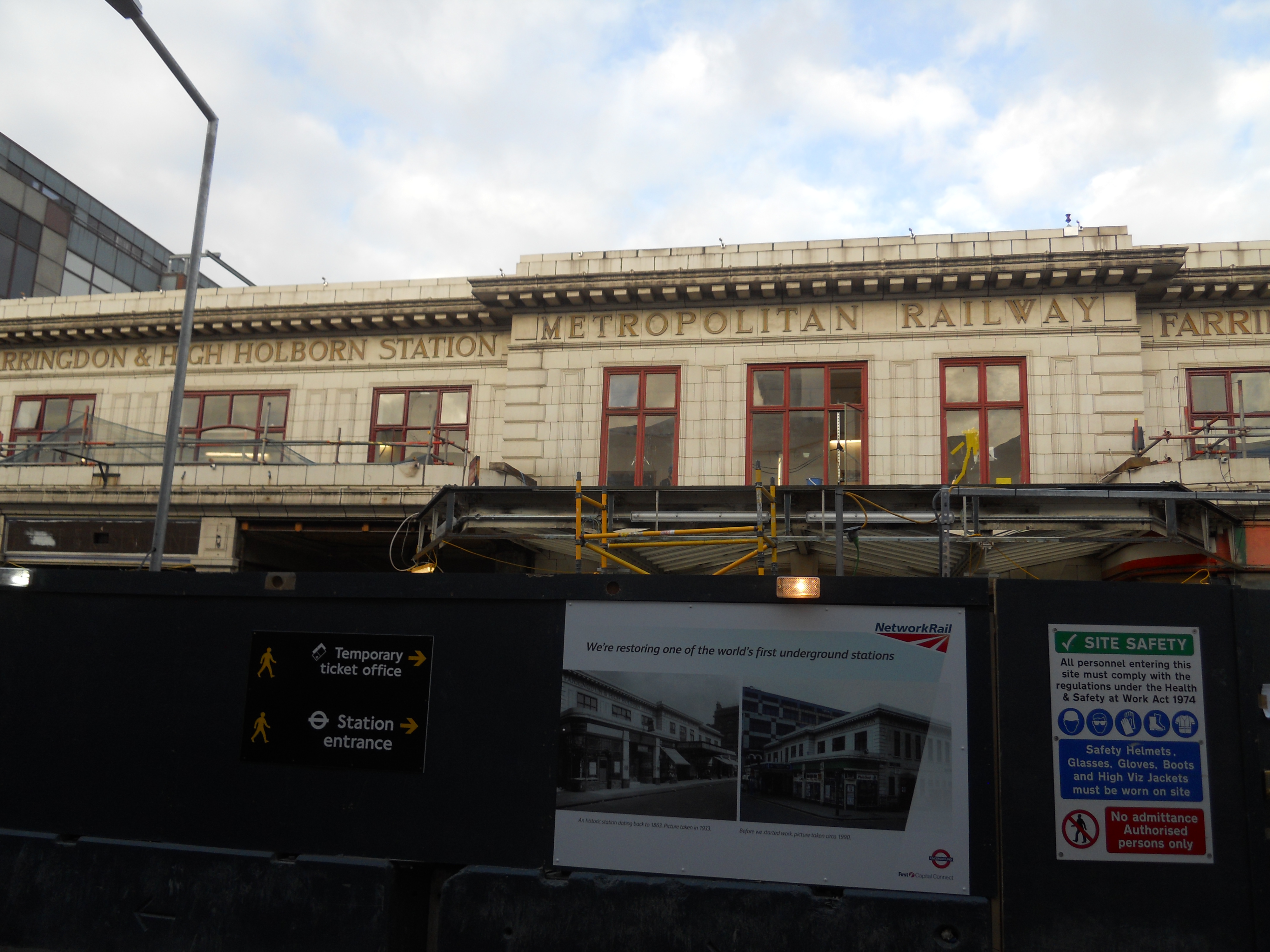
In a few years time, it will be the major interchange between Thameslink and Crossrail and one of the busiest stations in London.
The information on what they are doing is good to.
Note that the station used to be called Farringdon and High Holborn.
The Flying Banana
As I was waiting for my train, an unusual yellow one passed through.
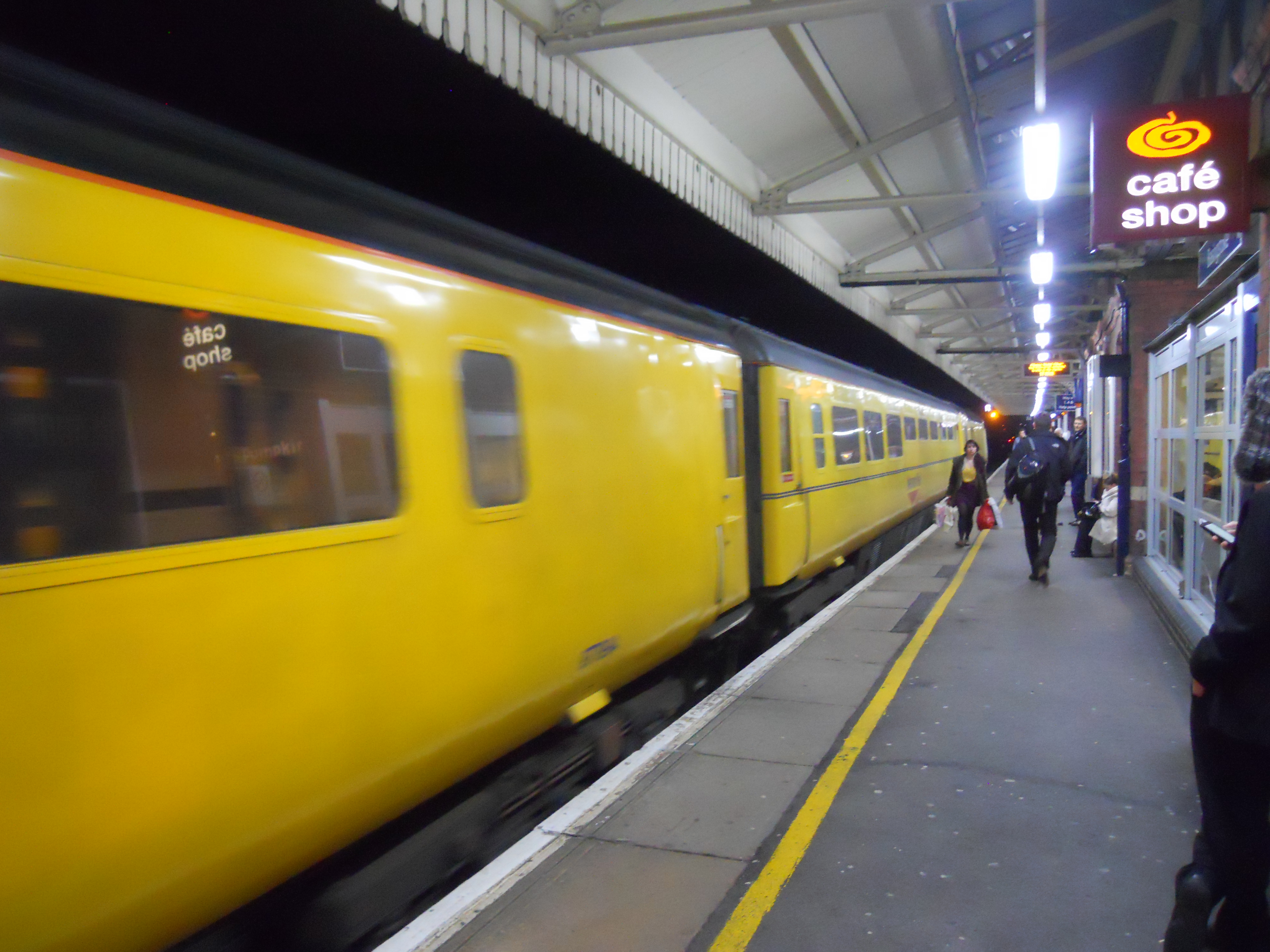
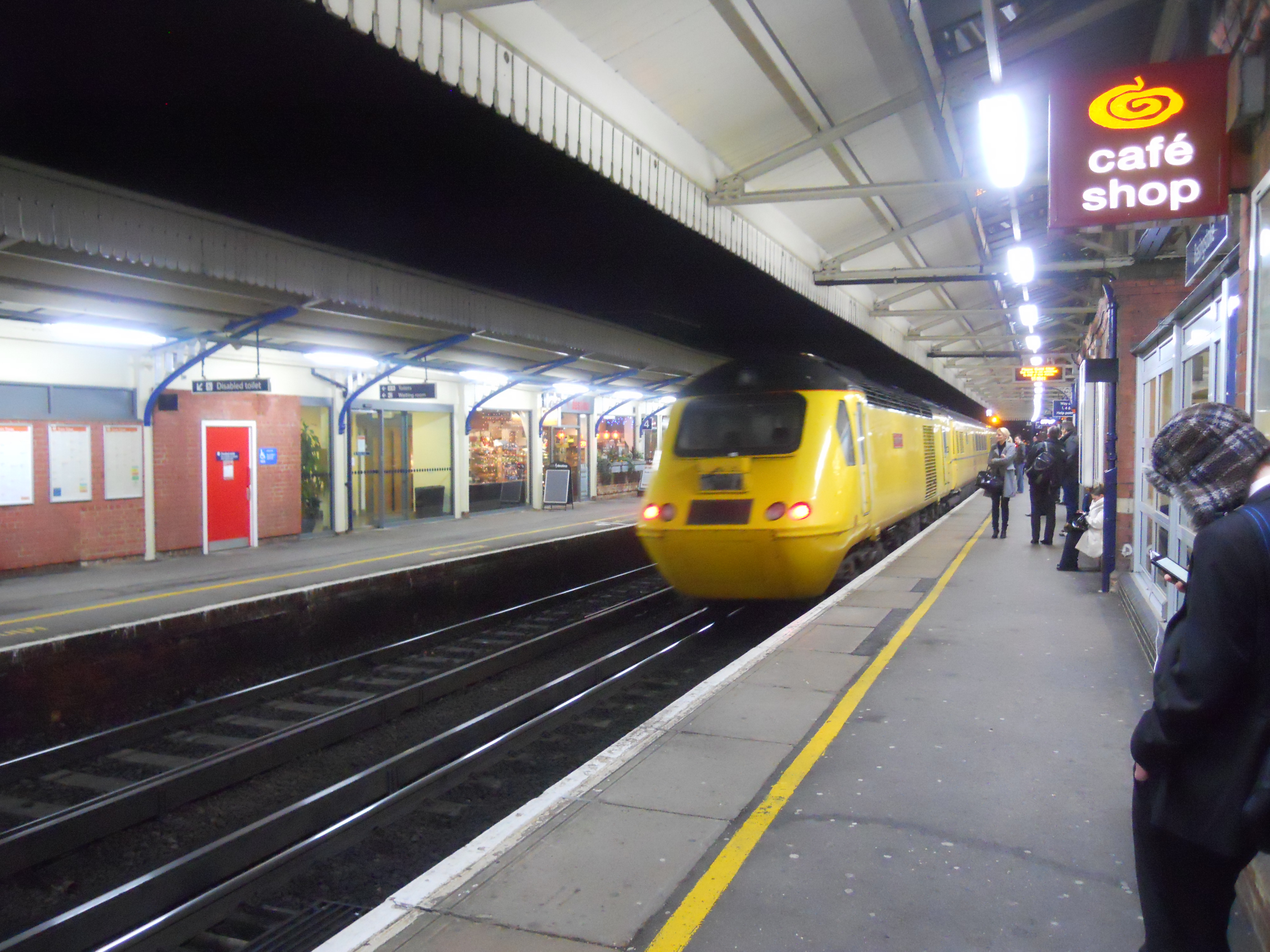
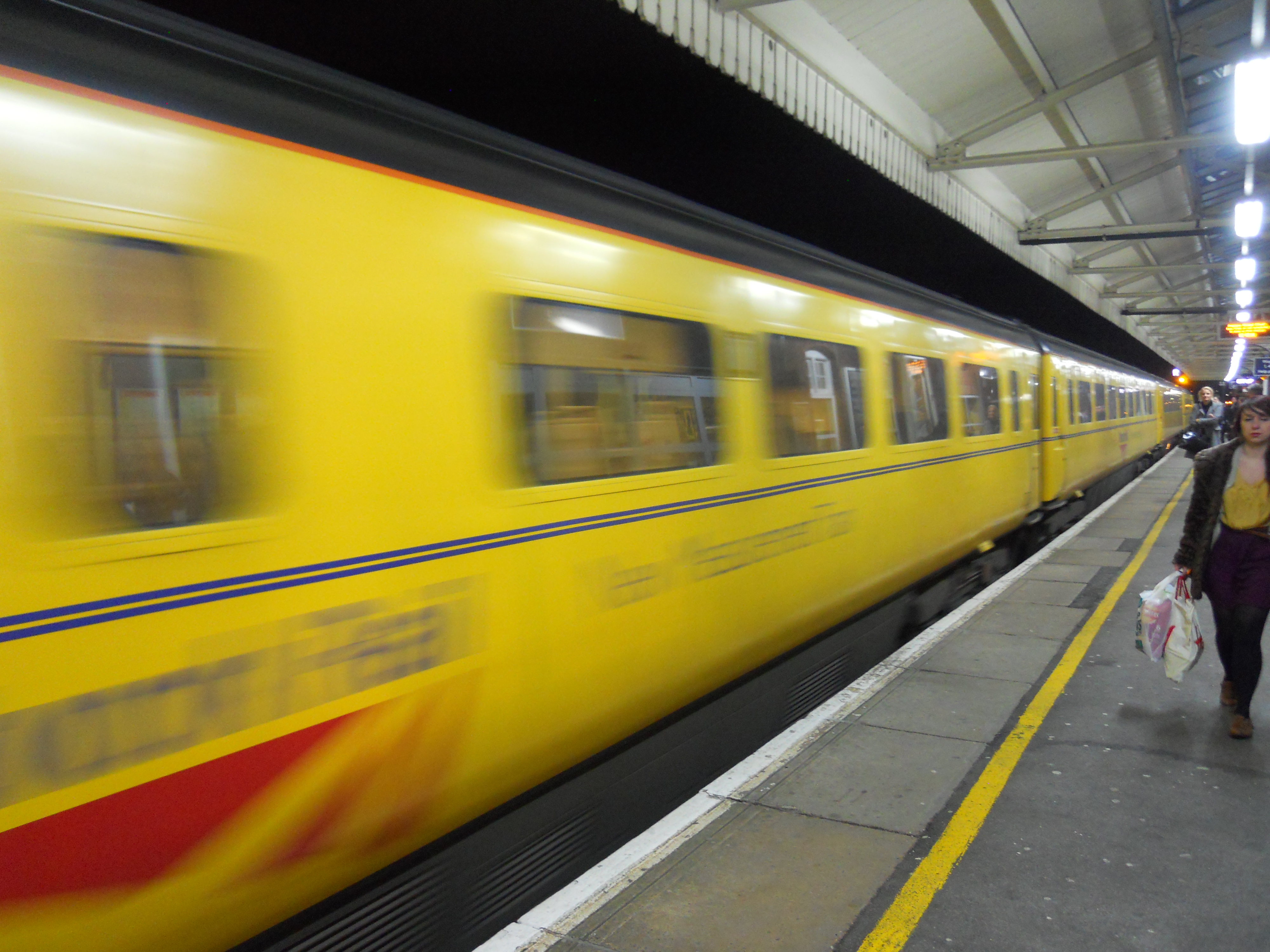
It looks like a High Speed Diesel Train, and it is actually a modified one called the New Measurement Train, which travels all over the network, checking track and electrification systems. Inspection is based on a thirteen week cycle. There is a detailed article on the train here in Construction News. And a video here.
You can see why it got its nickname.
In some ways it is a unique train, not only in the UK, but worldwide.
The Japanese and the French have similar trains for their high speed lines, but these are electrically powered, whereas the New Meaurement Train has two powerful diesel power cars. So as the British train is completely self contained, it can check any line in the UK, whether it is electrified or not. Where I saw it at Basingstoke, it was on a section of track, that uses third rail electrification.
As it is a High Speed Train, it can also be used at 200 kph on the East and West Coast Main Lines, thus testing them at their operational speeds.
Note that as the lines through the Channel Tunnel to London, are effectively built using French electrification standards, the French train is used to monitor those lines every two months. But it has to be diesel hauled through the tunnel.
It all goes to show that the High Speed Diesel Train will be laughing at us for a few decades yet.
Welcome To Basingstoke
I have a cartoon on my wall, which shows rolling English countryside, with in the distance a mushroom cloud from a nuclear explosion rising into the sky. In the foreground, a man is saying to his friend.
“The Russians can’t be all bad. They’ve made Basingstoke a first strike target.”
I have other reasons to dislike the place, as an old accountant of mine suggested, I put some money into a property development there. I lost several millions and could have lost a lot more, but I had better friends in high places. It was an expensive lesson and now I don’t trust financial advisors, especially when they have nothing to lose from recommending a bad investment.
So for only the second time in my life, I went to the place to a funeral of an old friend.
I had plenty of time, so I hoped I’d be able to get a bus to the crematorium. I knew I could take a taxi, but I object to doing that, as they are expensive and often rip-off merchants.
I found the bus station, which is quite an unfriendly walk from the train station and they told me there was no bus to anywhere near the crematorium. What would cash-strapped pensioners have done? Walked.
I should say, that the web page for the crematorium doesn’t have any instructions about how to get there on public transport. How arrogant!
It should be the law that certain places in a town or city like the hospital, crematorium, tourist office, main shops and council offices are easily reached by bus from the station. On my travels around the country, I found a lot of places, where these rules were broken.
I shall not be going to Basingstoke again unless it is to change trains to somewhere more welcoming.
 The Anonymous Widower