Will Osborne Abolish Tax On Savings Interest?
This is said in this article in The Independent.
Tax on income from savings will be abolished for millions of people in the Budget today as George Osborne woos pensioners and “hard-working taxpayers” ahead of the May general election,The Independent has learnt.
So is the paper right?
It would make a lot of sense.
1, It would certainly encourage saving.
2. Encouraging saving may mean that more money will go into peer-to-peer lending, which will help lower interest rates for borrowers and give the banks a bit of a kicking. So a by-product of abolishing tax on savings interest could be better availability of finance for individuals and businesses.
3. I can see those who provide homes for savings like banks, building societies and peer-to-peer lenders getting increasingly innovate in finding ways to create high-interest, instant-access accounts.
4. It could put a lot of financial advisers out of business, as if say you had a lump sum to invest, you could easily work out what would be the best savings account, to keep the money until you need it.
5. But surely, the biggest benefit will be that as savings will now be held in an account, that doesn’t carry any tax, it will simplify tax accounting and returns for banks, building societies and savers alike.
If he does do it, then just imagine how any party who put it back would fare in an election!
On a personal note, if it does happen, I’ll be putting more of my money into Zopa!
Cheshire East And Southend Strike Cheaper Energy Deals With OVO
This report on the BBC tells how Cheshire East Council has done a deal with OVO to get cheaper energy for residents and businesses.
The report also says that Southend are doing something similar.
I think we’ll be seeing lots of deals like this in the future. Some might even be provided by the Big Six energy companies as they try to keep market share.
I do think though, that linking energy to a community could give a lot of advantages.
1. It creates a direct incentive for councils to bring in energy saving and local generation schemes, like the one created by Islington at Bunhill Row.
2. The philosophy might also push developers to create new offices, business premises and housing, that is less energy intensive, due to the higher profile of energy costs in the area.
3. Those not on-line or without a bank account, would gain access to cheaper energy through the council’s payments system. I can just about remember people paying for their energy in small gas and electricity offices.
4. We might even see the time, when you pay a single on-line payment to your local council for Council Tax, Resident’s Parking, gas, electricity, broadband and water.
If the system doesn’t deliver cheaper prices and better service, you can always vote the politicians out of office.
A Cute Waste Truck
This is probably the cutest waste truck you’ll see at the moment.



It is electric-powered and if nothing else is a good advert for the business.
After all, I photographed the vehicle and put it here.
The Bridges Of Berwick-upon-Tweed
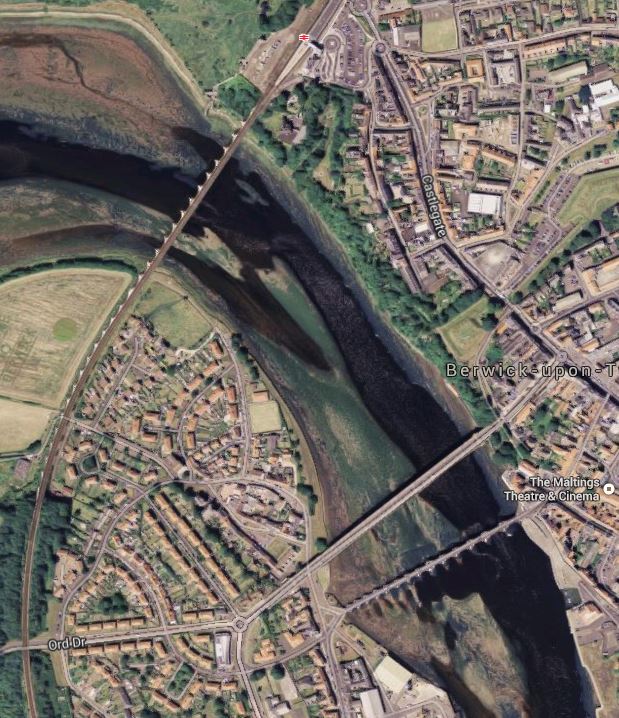
I took these pictures as my train from Edinburgh to Newcastle crossed the border into England on the Royal Border Bridge.




The main bridge in the picture is the Royal Tweed Bridge with Berwick Bridge behind.
This Google Earth image shows the three major bridges in the area and Berwick-upon-Tweed station above the town.
Berwick-On-Tweed
Note how you can make out the arches of the railway viaduct in the image.
A Use For A Small Sheba Knife
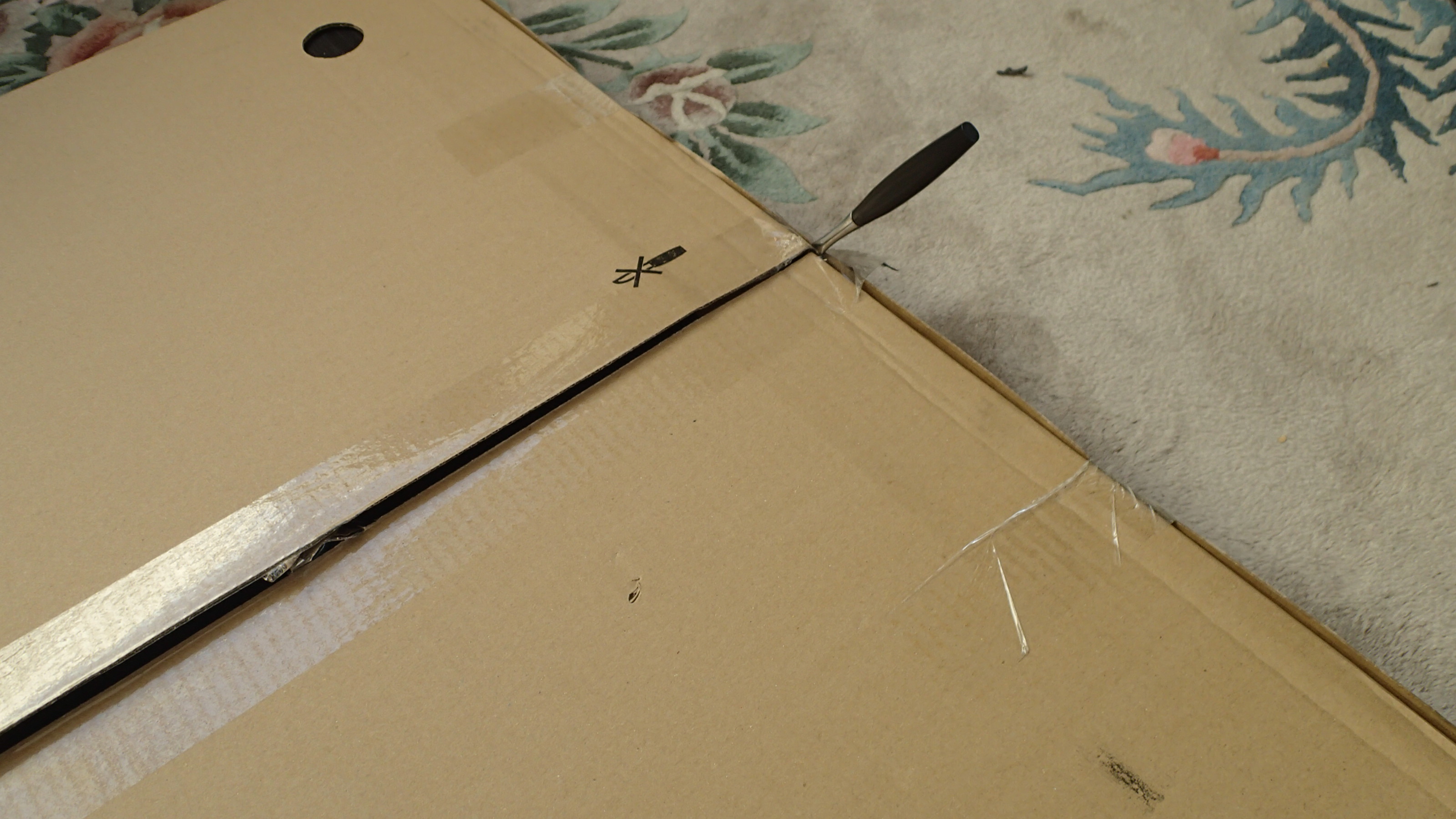
My Sheba cutlery gets used in all sorts of ways.
A Use For A Small Sheba Knife
As the small knives are more designed for spreading butter and jam, rather than cutting, they are ideal for opening packages without damaging the contents.
Sheba is the greatest cutlery design ever. And they were made in Sheffield and my upward of twelve settings have been used for nearly fifty years!
A New Route To Legal Services
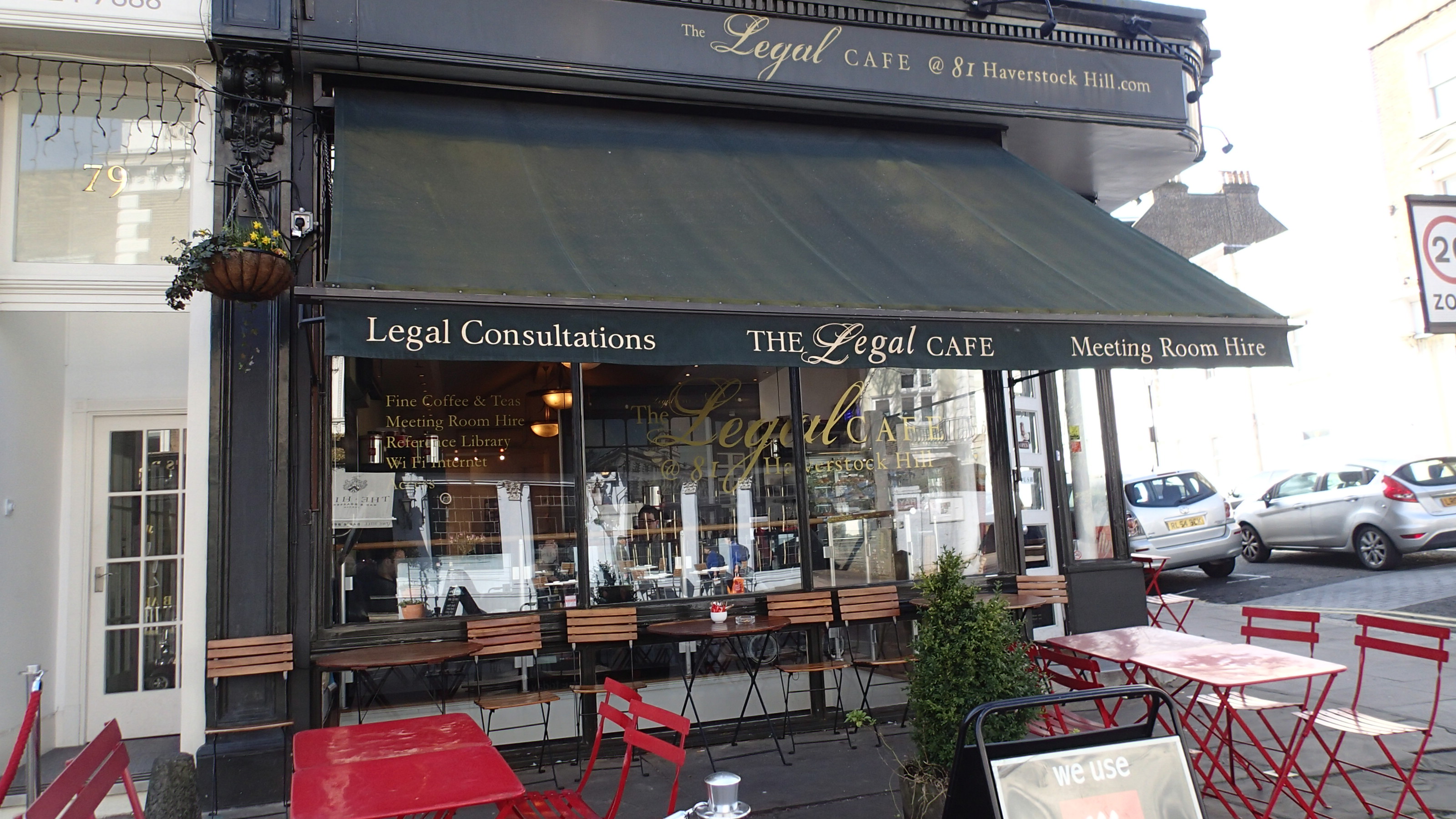
I passed this cafe in Hampstead yesterday on Haverstock Hill.
A New Route To Legal Services
I suppose that The Legal Cafe might make a sensible profit on the coffee and cakes.
Always Have A Flat Piece Of Oak Handy
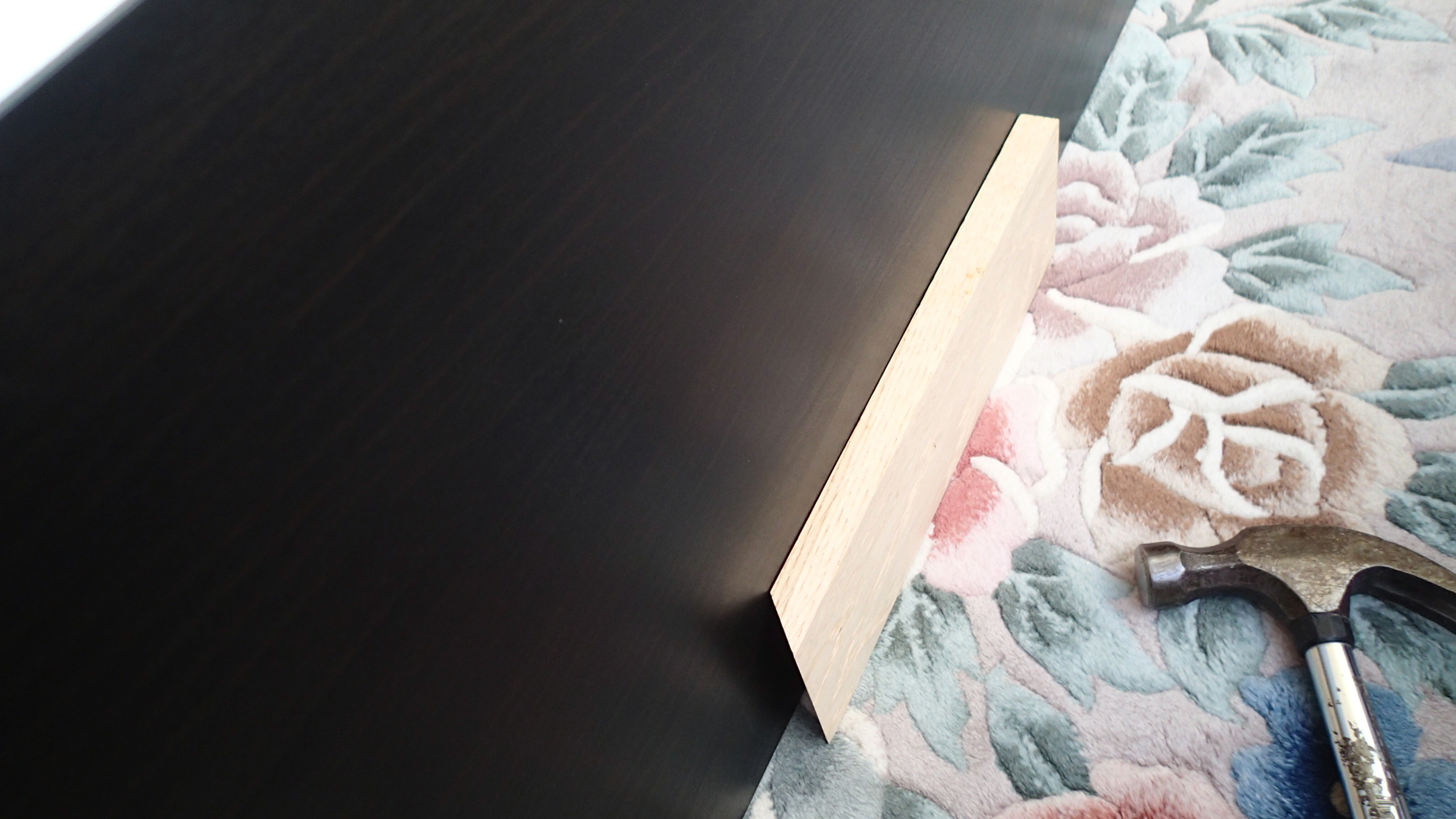
I don’t have access to short lengths of greenheart cutting sticks from his state-of-the-art, made-in-Glasgow Grieg guillotine that my father used to use as padding to stop a hammer damaging softer woods.
Always Have A Flat Piece Of Oak Handy
So I just used a nice piece of oak! I could always go to B & Q and buy a rubber hammer.
Investigating Warrington
Warrington with its two stations at Warrington Bank Quay and Warrington Central was flagged up as possible place for turning back Merseyrail trains on the Northern Line.
So on my way back from Leeds via Liverpool, I decided to visit for the first time.




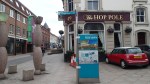


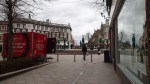



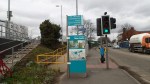







If you trace these images on a map you’ll see that I walked from Central to Bank Quay and back again.
I was very pleasantly surprised.
Instead of the rather second-rate Lancashire town I’d expected, I found a town that had been enlivened by lots of shops and quite a few restaurants including an Ask and a Nando’s.
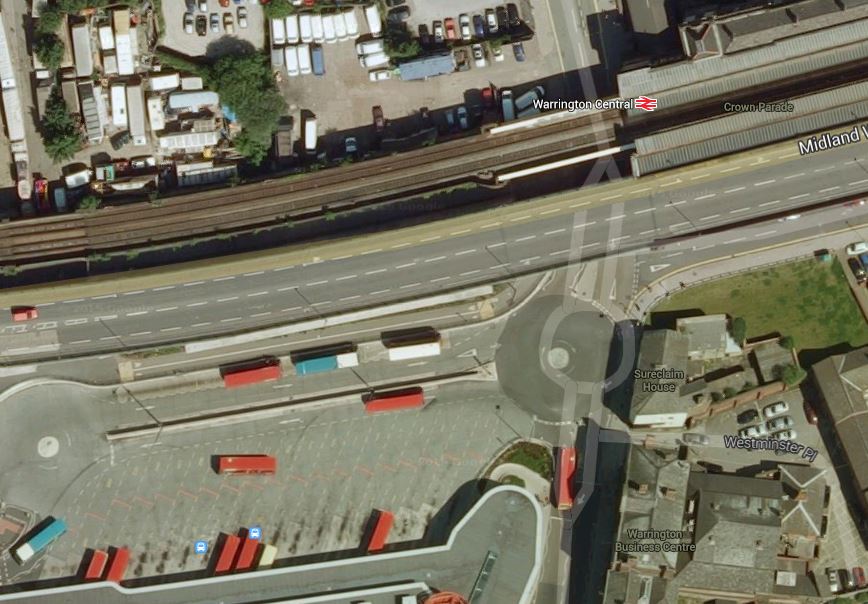
It’s also a good idea to look at the two stations with Google Earth images, to see what possibilities exist for turning trains back to Liverpool.
Warrington Central And Bus Stations
This image shows how the bus station is close to Warrington Central station, but as the station is close to the A57,which crosses the town, I doubt there’s any way a tram-train could access the Liverpool to Manchester Line on the viaduct.
Warrington Bank Quay Station
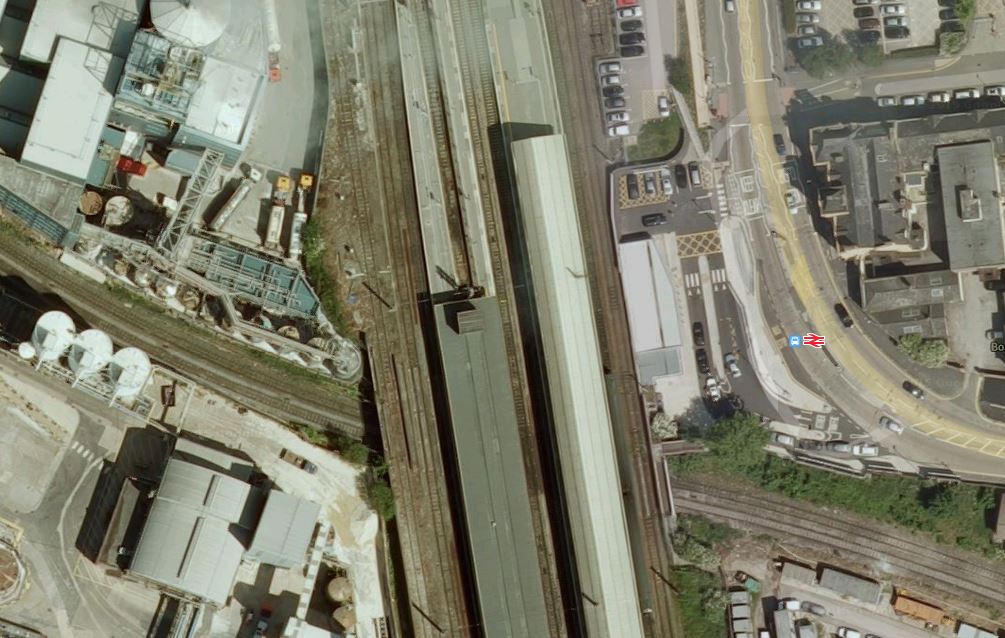
You can clearly see the freight line passing under the West Coast Main Line in this image of Warrington Bank Quay station. A tram stop or low-level station on the freight line could easily be connected into the current high-level station and with lifts it could easily be a step-free interchange.
As I walked through Warrington town centre, I thought that an innovative tramway engineer could probably find a way to turn the tramway northward after Bank Quay station to perhaps finish its journey by Warrington Central station and the bus station. The route would probably be not more complicated than some of those in Manchester that I saw today.
But you could also go for a simple solution. There is probably space at the low-level Bank Quay station for a bay platform, where trains from Liverpool would turn back. That would not solve the problem of transfer passengers between the two rail stations and the bus station. They use a shuttle bus at present, so why not increase the frequency, perhaps power it by batteries and make it more visible!
Warrington got a boost today in that in this report on the Modern Railways web site, it was said that Liverpool to Manchester via Warrington is in the top group of lines that will be electrified.
That will also add to the possibilities of railway and tram-train layout in the Warrington area.
The Saddest Building In London
Others will have their own favourite building vying for this title, but surely Millennium Mills, the derelict flour mill by the Royal Victoria Dock is close to the top of a lot of lists of sad buildings.








For years it has stood there unloved between the dock and the Docklands Light Railway, pleading to be put out of its misery.
One of the problems with the building, is that it is full of asbestos and removal and disposal will cost millions.
But help is at hand according to this article in the Newham Recorder, which details a Government grant to kick-start the development. Here’s an extract.
The former flour factory, which was built in 1905, has been vacant since the early 1980s but will get a new lease of life as a hub for start-up businesses, while homes will be built on the surrounding land..
The £12m, which has come from the government’s Building Foundations for Growth Enterprise Zones capital grant fund, is being used to speed up the redevelopment.
It means work to remove asbestos can get under way much earlier than originally scheduled, speeding up the renovation by five years.
Judging by the picture in the report, it would appear that something positive is at last being done with one of London’s saddest buildings.
An Ideal Place For A New Station
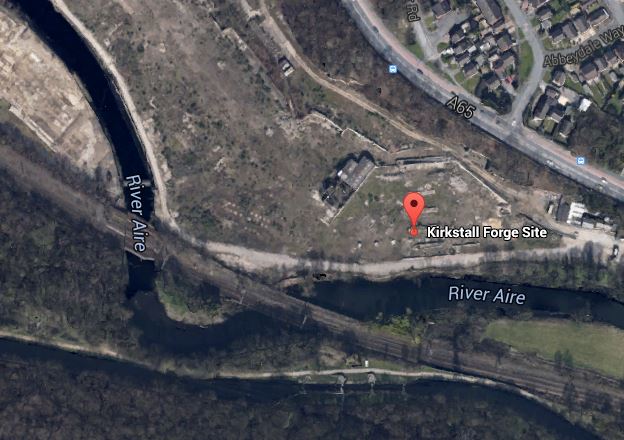
This map shows the development site at Kirkstall Forge in Leeds.
Kirkstall Forge
The site is being developed between the A65 and the River Aire and the Leeds to Bradford rail line in a £400million scheme. This is from the developer’s web site.
Kirkstall Forge will be transformed into a thriving mixed-use community in a wooded riverside setting. Ultimately it will deliver new homes, a high quality office park, shops, restaurants, a gym, crèche and other facilities. The scheme will create in the region of 2,400 new jobs, boosting the local economy by more than £5 million per year.
The DfT will provide a maximum of £10.3m towards the £16.9m needed to deliver railway stations on this site and at Apperley Bridge. The remaining 40% of the cost is made up of a local funding package comprising a private sector contribution of over £5m, supplemented by funding from the West Yorkshire Combined Authority.
Surely, this is the type of development that is good for everyone.
It will be interesting to know the extra return that developers get, by having a rail station in their plans. In London, a station is being provided at Barking Riverside for developments there, but stations in new developments seem to be fairly rare.
 The Anonymous Widower