Geothermal Power And The New Island Of Surtsey
I was on a tour which was called the South Shore Safari. The first real stop was in an area of geothermal power stations, which gave good views of the new island of Surtsey





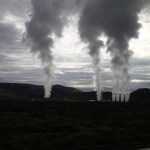
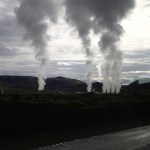
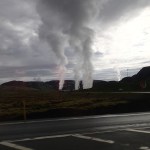
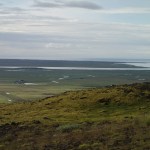
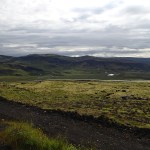
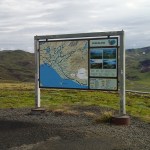
I can remember the formation of the island of Surtsey being shown on the television in 1963. It was a well-reported news story of the time.
Geothermal power is important in Iceland and contributes nearly 600 MW of electricity, which makes up about thirty percent of what they need. The Icelanders have by no means fully developed the maximum amount of power available, but they do generate a lot of hot water to heat Reykjavik and other towns. For comparison, our large nuclear power station, Sizewell B generates 1,200 MW.
I think the geothermal power station we saw is Nesjavellir. Wikipedia says this about the capacity of the power station.
Plans for utilizing the Nesjavellir area for geothermal power and water heating began in 1947, when some boreholes were drilled to evaluate the area’s potential for power generation. Research continued from 1965 to 1986. In 1987, the construction of the plant began, and the cornerstone was laid in May 1990. The station produces approximately 120 MW of electrical power; it also delivers around 1,100 litres (290 US gal) of hot water (82-85°C) per second, servicing the space heating and hot water needs of the Greater Reykjavík Area.
I woiuld have loved to have a tour of the power station.
What surprised me about geothermal power, was that the Phillipines are very large users of the technology, which is described as a geothermal success story in this article in Wikipedia. According to Wikipedia, twenty seven percent of their power comes from geothermal sources.
I suppose the only drawback with geothermal power is that for the generation of large amounts of energy, you are generally in an area prone to volcanic eruptions and earthquakes.
It may seem strange, but even in Cornwall, a company is trying to use geothermal energy to generate electricity. Read about the United Downs project on Wikipedia. Whether it will ever work as planned, will be down to the skill of the engineers and probably the will of politicians.
The World Cup On The Big Screen
London may have been a bit short of big screens on which to watch the World Cup, but there was one in the centre of Reykjavik. I watched the Third Place Final.


It’s funny but I think I’ve only watched football once before on a giant screen and that was part of a Cup Final between races at Newmarket.
Whale Watching
These pictures show a trip whale watching from Reykjavik.
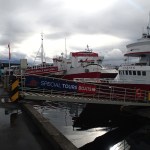
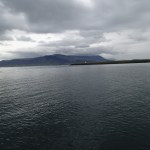








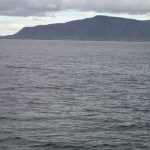





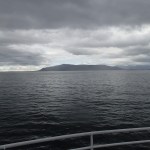
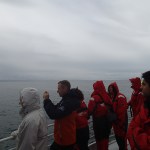

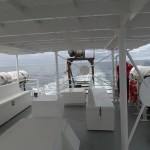
It was a good trip, where we saw several dolphins and minke whales. I will add a few words of warning about these trips. On the day before, they’d seen nothing.
I was also a bit disappointed with my photographs. I should have used the camera on video!
The tip reminded me of how we used to sit on Felixstowe beach watching the porpoises on the horizon.
Would The RSPB Have Approved My Supper?
I had a good supper in a restaurant called Tapas House, by the harbour in Reykjavik.


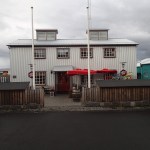
The starter was smoked guillemot, which was followed by fish. There was no problems about it all being gluten-free
Reykjavik
I’ve put all the sundry pictures I took of Reykjavik in this post.
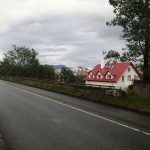
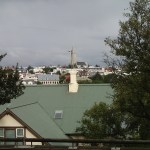


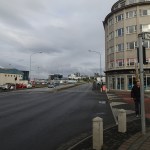

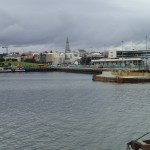

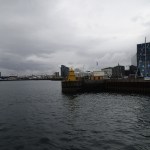


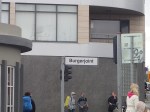

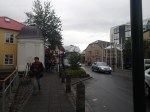










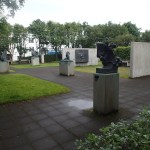
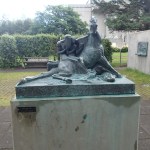
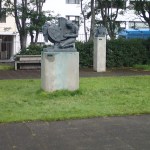








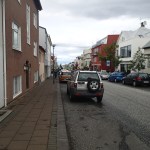




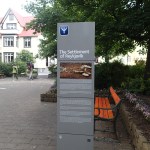

It is a city with more colour than I thought it would have and being by the sea, there is a lot of water.
In fact, don’t go to Iceland, if you’re not keen on water.
It is also a friendly city, as the locals always seem to be helpful and there is a fair amount of information and maps at important places.
I also used the taxis to get back up the hill to the hotel several times and I just used them off the rank and paid the meter. Unlike some cities I could name, they were clean and the drivers were efficient and knowledgeable.
The Blue Lagoon
As I got off the plane in Iceland, I thought that my taxi would take me straight to the hotel. But we went by the most amazing paddling/swimming pool called the Blue Lagoon.
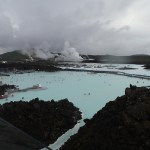
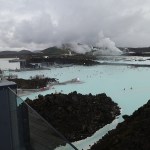
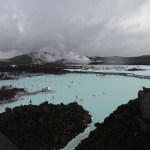
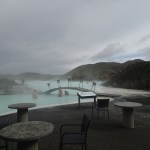
I don’t swim, but waddling around in chest-deep water at blood temperature is a different and very pleasurable experience. The steam in the background of some of the pictures is a geothermal power station.
My itinerary didn’t say I would be going on the way to the hotel and it was more by luck than judgement that my swimming trunks were packed at the top of my case. If I’d known of this detour, I would have arranged a massage.
As the Blue Lagoon is on the road between Keflavik Airport and Reykjavik, make sure your plans include the visit on the journey to and/or from the airport and your hotel.
Those Seagulls Get Everywhere
Some coastal parts of the UK and other parts of Europe have a seagull problem.
But this story from Brighton must be unique, where one of the birds finished second in the 7:10 race according to the photo finish.
What Do The French Do For Commuter Trains?
The French equivalent to the Class 345 for Crossrail, also has a version built by Bombardier called the Z 50000 Francilien.
What probably shows more of this train is this excellent YouTube video.
Looking at the video and comparing the images with say travelling in a familiar Class 378 on the Overground, you notice several differences.
The biggest difference is that the French train is wider and taller in cross-section than the British train. This is due to the much more generous Continental loading gauge, which the designers of the train have used to their advantage.
Another big difference is getting into and out of the trains. On the Class 378 and probably the Class 345, it’s just a simple step across, but on the French train, an extra step emerges from the train and it’s a double step into the train. How would the French train cope with platform edge doors, like those that will be installed on Crossrail? I ask this question as European safety legislation insists on these in all stations in tunnels.
The Trains For Crossrail And Thameslink
London’s two new cross-town railways; Crossrail and Thameslink will both be fully opened around the end of this decade.
So it would seem logical that the two lines might share the same trains.
But it is not as simple as that!
All sorts of factors like delaying of projects, the slightly different natures of the two lines and the decision of Siemens, who won the contract for the Thameslink trains, to withdraw from Crossrail, because of a lack of capacity, mean that we now have two separate train fleets; Class 700 for Thameslink and Class 345 for Crossrail.
Although separate train fleets, it does look that the design philosophy of the two trains is very similar. Take this paragraph from the specification issued by Crossrail for their Class 345 trains.
Wide through gangways between carriages, and ample space in the passenger saloons and around the doors, will reduce passenger congestion while allowing room for those with heavy luggage or pushchairs.
From what I have read here on First Capital Connect’s web site, the Class 700 might be very similar.
So it would seem that four of London’s important new train fleets will be walk-through. In addition to the Class 345 and Class 700, the Overground’s Class 378 and the Underground’s S Stock are build to similar principles, although the latter two trains, probably expect more standing passengers.
One advantage of these trains is that they can be designed to line up with the platform edge, as the Class 378 generally do, which enables a simple step across the gap into or out of the train. At some stations, like Willesden Junction, on the Overground, the alignment is bad and you certainly notice the difference. So I will hope that the two new train classes line up with the platforms! As on Crossrail and Thameslink most stations will only be served by one type of train, I suspect that it could be possible.
In my view, if we are to have a step-free railway, then all station-train interfaces, should be a simple step across.
Another advantage of this type of train, is that you can walk inside the train to less-crowded areas or perhaps to your preferred door for exit at your destination. I do this regularly, when I take the short hop from Highbury and Islington to Dalston Junction stations on the Overground, as I get in at the front and get out at the back, due to the layout of the two stations.
This walk-through capability will be essential for Crossrail, where the trains and platforms will be 200 metres long. One of Crossrail’s engineers told me, that she felt some people might not like the trains because of their length and the long walks in stations. I don’t think regular users will mind so much, as they’ll develop a strategy that works for their journey. But will a tourist dragging a heavy case going from say Heathrow to Bond Street, be so happy after walking a long distance to get out the station.
The various proposals for new deep-level Underground trains seem to have through gangways like this proposal from Siemens.
So is a de facto standard for train design emerging, where trains have through gangways, flat floors and wide doors with no-gap step-across access?
I think it is and it will be to the benefit of all rail users, including the disabled and those pushing buggies or dragging heavy cases.
Looking at the pictures I took of Siemens Underground proposal, it seems the design fits such a standard!
A secondary advantage of this design is that it should tighten up stopping time at stations, thus making it easier for trains to keep to schedules.
Free’d Crispbread And Tiptree Marmelade
I used to eat a lot of Ryvita with a decent marmalade spread on it. So today, I tried some Tiptree Marmalade on some Free’d crispbread.

Free’d Crispbread And Tiptree Marmelade
It was very nice, but it was just a little bit messy! So it should probably be eaten with a serviette handy!
 The Anonymous Widower