Amsterdam Metro Trains
These pictures show the trains on the Amsterdam Metro.
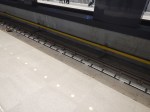
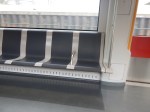


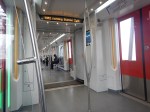


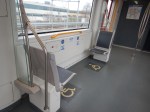
The pictures show the latest trains, which were built by Alstom.
Good Design On The Amsterdam Metro
Sometimes, it’s good design that catches my eye as I roam around.
These pictures are from the Amsterdam Metro.
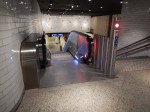



Most of the escalators I saw in The Netherlands had traffic lights and I like that. Stations in the UK don’t seem to have a policy about which side is up or down. Some shops also deliberately make their escalatoprs complicated, so you take a detour round the shop.
I would like to see a law, that all escalators (and ticket gates) had much better lights to show their direction of operation.
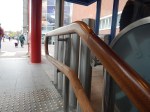
The wooden handrail must be the only one I’ve seen in a new station or building. Transport for London repairs old ones, but doesn’t seem to install new ones.
By Overground To High Speed Two
The North London Line will be my route to High Speed Two when it opens in 2026.
This map from Wikipedia, shows how the lines connect.
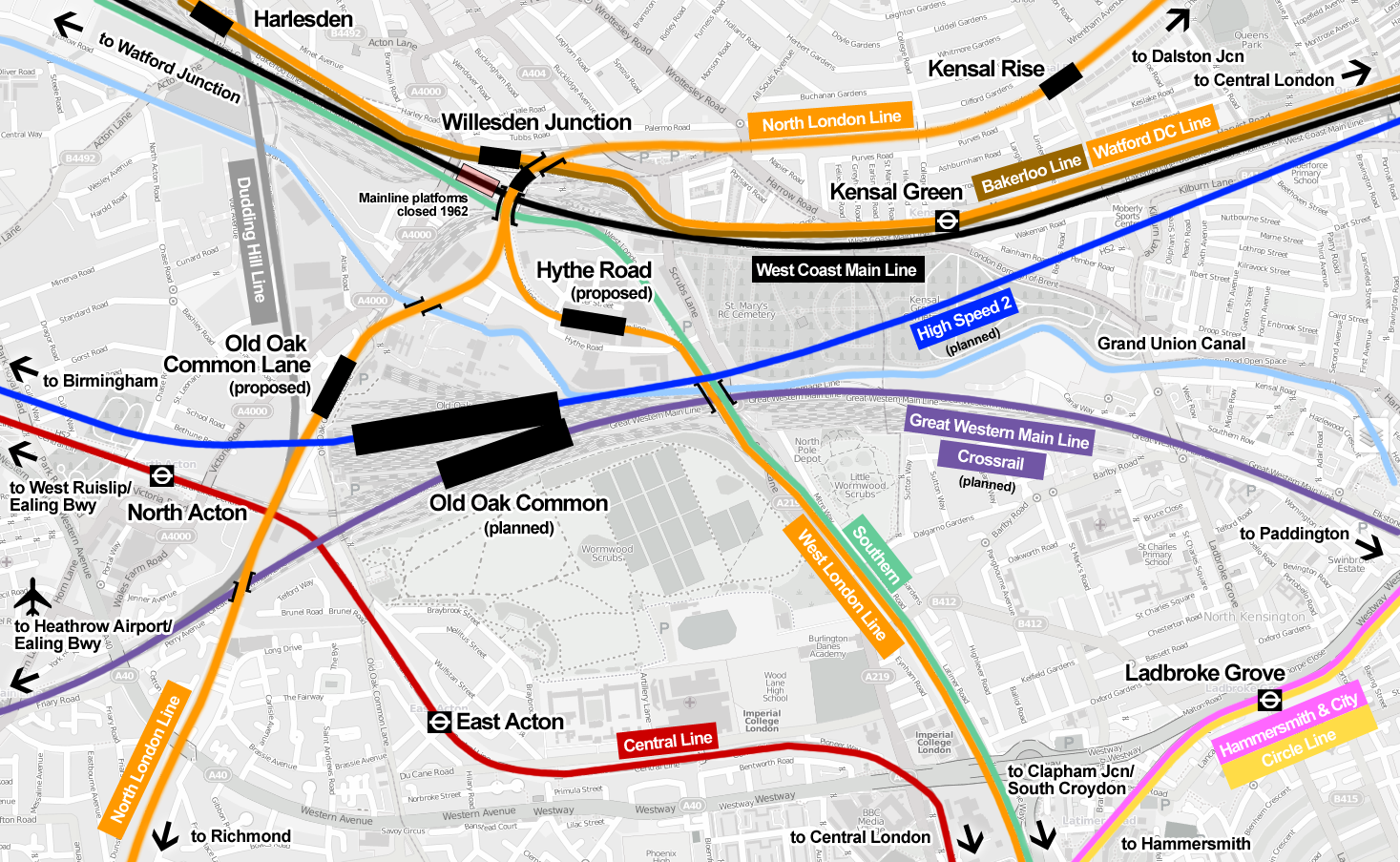
I will actually have two Overground stations, that I will be able to use.
- Old Oak Common Lane station on the North London Line between Stratford and Richmond stations.
- Hythe Road station on the West London Line between Stratford and Clapham Junction stations.
Note.
- Wikipedia says that both stations should open in 2026, which is the same date as High Speed Two.
- Hythe Road station is 700 metres from the High Speed Two station.
- Old Oak Common Lane station is 350 metres from the High Speed Two station.
Currently, both lines have a four trains per hour (tph) service.
- The Class 378 trains are five cars, which can get very busy in the Peak.
- It would need an additional five trains to increase the frequency to five tph on both routes.
- Six new five-car Class 710 trains are on order for North and West London Line services.
- I feel the higher frequency could be in operation by the opening of High Speed Two.
- Most stations between Stratford and Willesden Junction would appear to be able to accept six-car trains, if selective door opening were to be used.
I think by 2026, there will be a more than adequate service between Stratford and High Speed Two.
- There will be at least ten tph to Stratford, with services split equally between Hythe Road and Old Oak Common Lane stations.
- Richmond and Clapham Junction stations will get at least five tph.
- Step-free access is not currently available at Brondesbury Park, Brondesbury, Finchley Road & Frognal, Kentish Town West and Dalston Kingsland stations.
But what other developments will or might happen?
Highbury & Islington Station
Highbury & Islington station is the thirteenth busiest station in the UK and it is in need of a major upgrade to bring the deep level platforms and their access up to the standard of the four London Overground platforms, which all have lifts.
I also think that the track layout at the station could be modified to allow trains on the East London Line to continue further to the West. This was mentioned, when the Oveground was created, but is seldom talked about these days.
Step-Free Access On The North And West London Lines
These two lines which form a Y-shaped railway that splits at Willesden Junction, will provide these services from High Speed Two to major interchange stations.
The only thing that is needed is to complete step free access at all stations on the North and West London Lines.
The Maximum Frequency Across North London
Five tph on both the North and West London Line would give the following turnback frequencies at the four terminals.
- Clapham Junction – 5 tph
- Richmond – 5 tph
- Stratford – 10 tph
This chart from TfL shows planned improvements on the London Overground
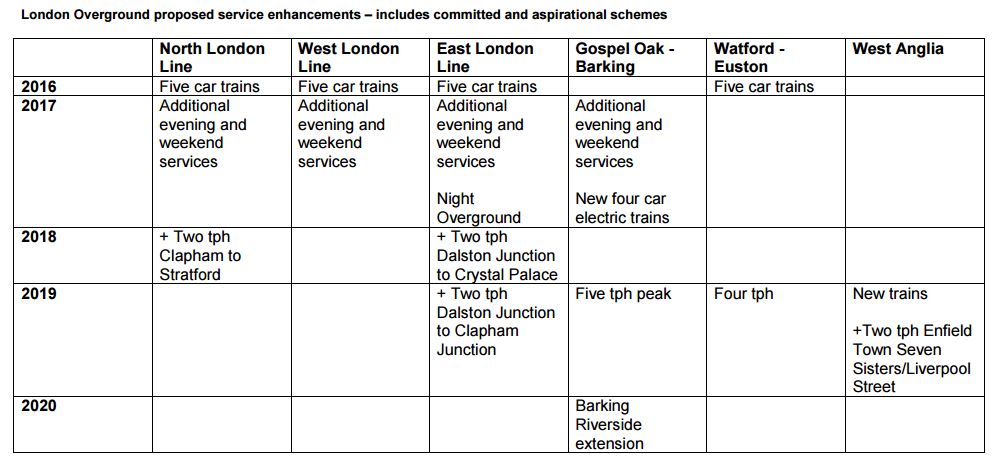
Note that it clearly shows that it is possible to run a six tph service between two single platform stations.
I think it likely that it would be possible to run six tph on both routes, provided that the route and the signalling could handle the increased frequency.
Twelve tph between Stratford and Willesden Junction stations would probably be the maximum frequency.
But would the number of freight trains allow this frequency?
A Reduction In Freight Services
Currently, the North London Line carries a lot of freight trains, going between Barking, Felixstowe and London Gateway in the East to virtually everywhere West of London.
- Noises from the East West Rail Consortium are hinting that services to and to and from Bristol, Liverpool, Manchester, South Wales, Southampton and the West Midlands might use their new route between Oxford and Cambridge.
- Could more freight use ports like Liverpool and Teesport in the North of England, which would reduce the traffic through the ports in the South?
Whatever happens, the current succession of diesel-hauled freight trains across London is not environmentally-friendly and it will raise increasing numbers of protests.
I think it is inevitable that the number of freight services will reduce, thus allowing more paths for passenger trains.
Digital Signalling
To handle the increasing traffic on the North and West London Lines, I can see digital signalling being installed. There could even be a degree of Automic Train Control.
Six-Car Trains
Only a few stations can handle six-car trains without selective door opening and even the rebuilt West Hampstead station still has platforms for five-cars.
Selective door opening would allow six-car trains to use the five-car platforms and passengers have in London have shown they can cope with moving forward to get out at certain stations. Especially, as the walk-through design of the train, makes this a lot easier.
A Round-The-Corner Service
I can remember reading in Modern Railways, that one of the reasons for the East and North London Lines running parallel through Canonbury to Highbury & Islington was to possibly enable extension of the East London Line to perhaps Willesden Junction, where there is a handy bay platform.
This has not happened and I doubt we’ll ever see something like a New Cross to Willesden Junction service, as Crossrail will effectively provide a faster frequent service between Whitechapel and Old Oak Common stations.
West London Orbital Railway
The proposed West London Orbital Railway will have two routes.
- West Hampstead Thameslink and Hounslow
- Brent Cross Thameslink and Kew Bridge
Both routes will have four tph and have a connection to Crossrail, High Speed Two and the North London Line at Old Oak Common station.
The only possible problem would be the eight extra tph through Acton Central station and level crossing and South Acton station.
But it would become an important feeder route to Crossrail, Heathrow Airport and High Speed Two.
Conclusion
The North and West London Line route between Stratford and Willesden has the ability to handle a lot more traffic than it currently does.
Dgital signalling and six-car trains could add over another fifty per cent capacity to the route.
I very much feel that digital signalling will be absolutely necessary.
White Hart Lane Station – March 25th, 2019
I took these pictures of the new White Hart Lane station today.
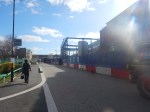
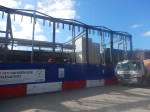
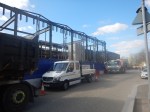
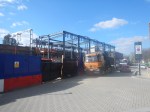
Hopefully, the project will be completed this year.
The New White Hart Lane Stadium Is Open For Business
I took these pictures today of the new White Hart Lane Stadium.


Does it look so impressive inside?
Great Northern Class 717s Finally Enter Passenger Service
The title of this post, is the same as that of this article on Rail Magazine.
I arrived at Finsbury Park station and found one there.
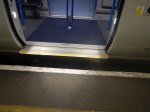

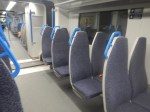

So I took a ride to Moorgate and back to Essex Road station
Newquay Link With Heathrow Takes Off Courtesy Of Taxpayer
The title of this post is the same as that of an article in today’s copy of The Times.
This is the first paragraph.
From next weekend air travellers will be given the equivalent of a £5 bung, courtesy of the taxpayer, to use Newquay airport in Cornwall for four flights a day both ways to Heathrow.
The article describes how the service is run under a Public Aervice Obligation or PSO.
Other air services in the UK run on this basis include.
- Stansted to Derry
- Stansted to Dundee
Similar subsidies are used in the EU and the United States.
This Google Map shows Newquay (indicated by a red marker,and the airport.
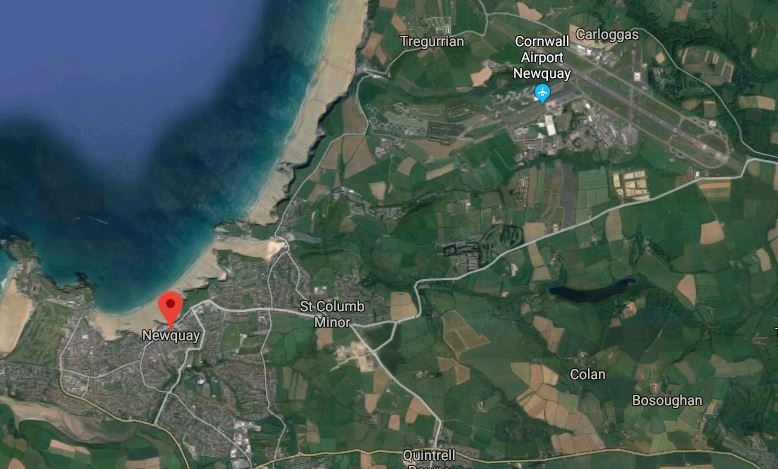
The town and the airport are about 4.3 miles apart.
This Google Map shows the centre of Newquay.
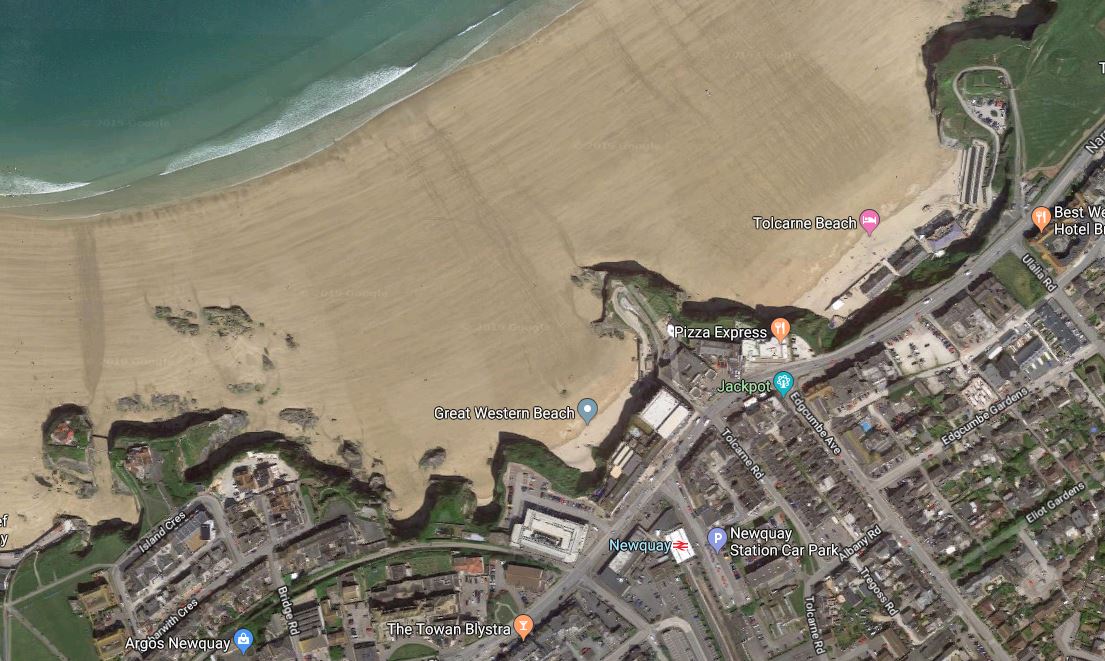
Note Newquay station in the middle of the town close to the beach.
- How rare to see a coastal town with a well-placed station.
- It does seem that in the Summer, there are more than just a rudimentary local service to the town.
- In the Summer, there are also long distance services, to London, Manchester and Scotland.
I also think, that GWR might run one of their shortened HSTs to the town from perhaps Exeter with upmarket service on board.
So I have to ask, the question, if the a subsidy for the air service is really necessary?
Where Has Lillie Bridge Depot Gone?
This is the first paragraph of the Wiikipedia entry for Lillie Bridge Depot,
Lillie Bridge Depot is a historic English traction maintenance depot on the London Underground Piccadilly and District lines, situated in between West Brompton and West Kensington stations in the London Borough of Hammersmith and Fulham. It is accessed from the District line tracks between Earl’s Court and West Kensington or between Earl’s Court and Kensington (Olympia).
This map from carto.metro.free.fr shows the rail lines in the area.
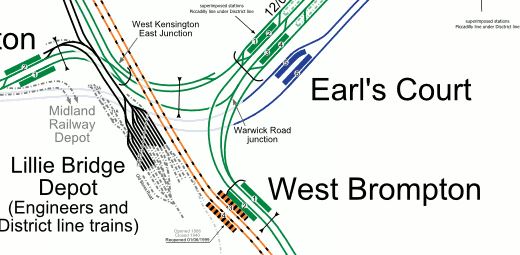
Note that the triangle in the middle of the junction used to be occupied by the Earl’s Court Exhibition Centre, which is now being redeveloped as upmarket housing.
This Google Map shows the area now.
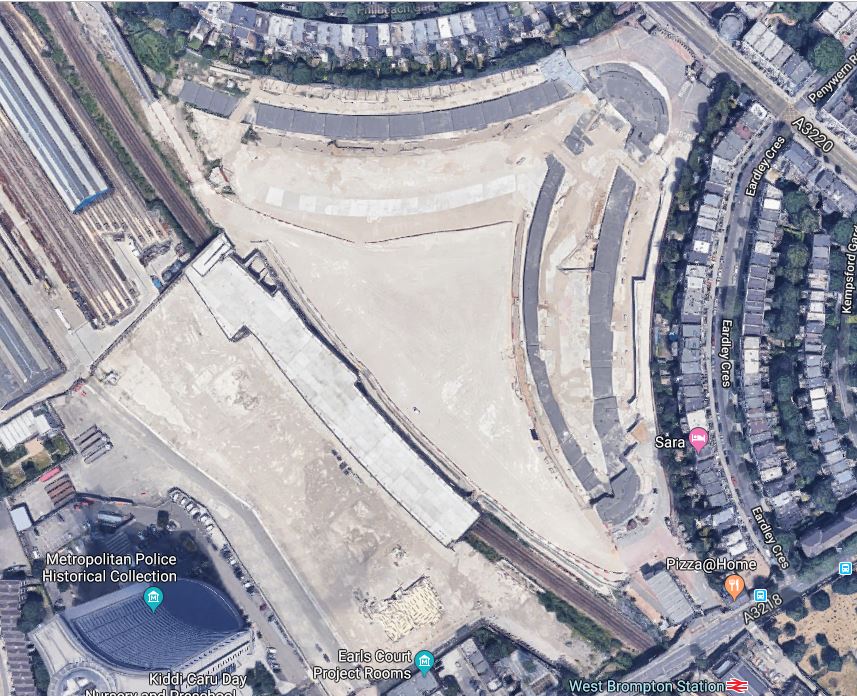
Where is the Lillie Bridge Depot and the other railway lines?
West Brompton station and the West London Line going North-South are just about visible.
But much of the rest of the lines are or will be under the massive development.
Wikipedia says this about the future of Lillie Bridge Depot.
The Depot is scheduled to be decommissioned by 2019 by Transport for London, as part of an Earl’s Court regeneration scheme. Engineering facilities will be moved to Acton Works, and it will be replaced by stabling for twelve S7 Stock trains at a lower level, with redevelopment taking place above it. The scheme has not been universally popular, attracting criticism from the Mayor of London, the current Hammersmith and Fulham Council, local housing associations and residents.
We will be seeing more and more developments like this over railway lines and especially depots, which offer a nice-shaped plot of several acres.
As to who gets to buy or rent the flats and houses, that is up to local and national politicians.
My one worry, is that some politicians insist on so many conditions as to the residents, that development of the site becomes impossible to fund.
The Dalston Kingsland Station Problem
One of my local stations on the North London Line is Dalston Kingsland station.
Unlike Hampstead Heath station and the three neighbouring stations of Canonbury, Dalston Junction and Hackney Central, there are no lifts at Dalston Kingsland station and the stairs are narrower without a central rail.
Looking at the passenger traffic at the stations I have mentioned, gives the following numbers for 2017-18 in millions.
- Canonbury – 3.0
- Dalston Junction – 5.7
- Dalston Kingsland – 5.5
- Hackney Central – 4.3
- Hampstead Heath – 3.3
Dalston Kingsland serves almost as many passengers as does the nearby Dalston Junction, but it is a very inferior station.
- Recently, a high capacity wide gate-line has been installed.
- When trains call at the station, it is difficult to get to the platforms, unless you wait until arriving passengers have come up the stairs.
- There are no lifts.
- More housing is being built around Dalston Kingsland station.
- In December 2018, the train frequency through Dalston Kingsland was raised to eight from six trains per hour (tph).
Is Dalston Kingsland station an accident waiting to happen?
Various plans and other improvements will effect the passenger traffic through Dalston Kingsland station.
More Trains Through Dalston Kingsland Station
In Gospel Oak-Barking Fleet Plan Remains Unclear, I calculated that running the current combined eight tph service between Stratford and Clapham Junction/Richmond needs twenty trains.
- Increasing this service from four tph to five trains per hour to both Western termini, would increase the frequency between Stratford and Willesden Junction to ten tph.
- It would also require twenty-five trains to run the service.
- London Overground has six five-car Class 710 trains on order, that will be used to improve the service on the North and West London Lines.
This would leave a spare train to cover failures and maintenance.
So it would appear that Dalston Kingsland station could get a train every six minutes in both directions.
Passengers would appreciate this, but what about the freight operators, that use the line?
Will a twenty-five percent increase in train capacity result in a similar increase in passengers using the stairs at the station?
The Effect Of London Overground Syndrome
In London Overground Syndrome, I described the syndrome like this.
This benign disease, which is probably a modern version of the Victorian railway mania, was first identified in East London in 2011, when it was found that the newly-refurbished East London Line and North London Line were inadequate due to high passenger satisfaction and much increased usage. It has now spread across other parts of the capital, despite various eradication programs.
The North London Line through Dalston Kingsland station seems to have a particularly strong form.of the syndrome.
In December 2018, the frequency through the station was increased by thirty-three percent, but overcrowding in the Peak seems not to have reduced.
Could it be that because the line offers a more pleasant and easier connection between Stratford, Highbury & Islington, Camden, Hampstead, Willesden, Clapham Junction, Acton and Richmond, that any increase in capacity is welcomed and passengers transfer from a more crowded Underground?
There will be more Ducking and Diving!
Crossrail Effects
I suspect only educated guesses can be made, as to what effects Crossrail will have on Dalston Kingsland station.
Judging by the number of passengers, who get on and off Overground trains at Highbury & Islington station, a lot of passengers use the North London and Victoria Lines for commuting and other journeys.
Crossrail, with its connection to the North London Line at Stratford and eventually at Old Oak Common will take passengers from the North London Line and the various connections between the two lines, will further even out passenger traffic.
If it does, it will be Londoners Ducking-and Diving again!
Avoiding Dalston Kingsland Station
I think that some groups of passengers will avoid Dalston Kingsland station.
- Like me, some travellers have a choice of station.
- Passengers walking between the two Dalston stations, may choose to use the shorter step-free interchange at Canonbury.
- As the frequencies on the Overground increases, passengers may find that a less obvious route is better for them.
- I suspect some savvy passengers take a train from West Croydon at Dalston Junction station and then cross the platform at Highbury & Islington station.
It’s classic animal behaviour to avoid problems and go by a better way.
Northern City Line Effects
The Northerrn City Line between Highbury & Islington and Moorgate stations could have an effect on passenger numbers at Dalston Kingsland station.
In a couple of years, the line will be much improved.
- Services will be running seven days a week.
- Elderly Class 313 traiins will have been replaced by new Class 717 trains.
- There will be a step-free connection to Crossrail at Moorgate station.
- Frequencies will be significantly increased.
Overall, there will be a new high-capacity line running North-South within walking distance or a couple of bus stops of the two Dalston stations.
I have already started to use the line more, by catching a bus to Essex Road station for a train to Moorgate station. It’s quicker in the morning Peak.
HS2 Effects
I remember using the North London Line in the 1970s, between Broad Street and Willesden stations. It was terrible. But now, when High Speed Two opens in 2026, London’s Mucky Duck which has grown into a swan, will speed you to Old Oak Common station for your journey to the North.
Because many of these travellers will have heavy bags with them, all stations on the North London Line must be made step-free.
Highbury & Islington Station Improvements
Highbury & Islington station was rebuilt for the Victoria Line in the 1960s, when costs were much more important than passenger convenience.
The area outside the station is being sorted, but the plans are starting to be developed to create better and step-free access to the deep level platforms.
A much improved Highbury & Islington station would create a lot of easier routes from both Dalston stations.
Essex Road Station Improvements
Essex Road station has lifts, but is not step-free as the lifts go to well below the platforms, to which the final connection is a long set of steps.
The station sits on what must be a valuable site in Islington, which would be ripe for redevelopment.
Redevelopment of this station will happen and it will make things a lot better for me, as it is within my walking range or a short bus ride.
Bus Improvements
When I moved to Dalston in 2010, there was a good bus service to Highbury & Islington station along the Balls Pond Road.
But now, a South London Mayor has cut this, because I suspect we can use the Overground.
But this assumes that Dalston Kingsland station is has quality access. Which of course it doesn’t!
The buses must be improved along the Balls Pond Road.
Six-Car Trains Through Dalston Kingsland Station
I’ve deliberately left this to last, as it is the biggest and most difficult.
There are two routes through Dalston Kingland station.
- Four tph on that use the West London Line to go to Clapham Junction station.
- Four tph on that use the North London Line to go to Richmond station.
One or both of these routes might be possible to be run by six-car trains using selective door opening on the short platforms.
Lengthening the new Class 710 trains will not be a problem, as a few extra coaches would be ordered.
On the other hand lengthening the existing Class 378 trains may be more problematical, as they are out of production. I suppose that two five-car trains could be converted into a six-car and a four-car.
Six-car operation would surely add twenty percent to the passengers going through the station.
The Future Of Dalston Kingsland Station
The extra trains and capacity through Dalston Kingsland station will increase the pressure on the inadequate access at the station.
But some of the other improvements will divert passengers from the station and take the pressure off.
I suspect that Transport for London are hoping this will be sufficient action to keep the station functioning at a comfortable level, until it is rebuilt for Crossrail 2.
But that is a tough ask and could contain a lot of wishful thinking.
Conclusion
Dalston Kingsland station needs lift and wider and safer stairs in the near future.
 The Anonymous Widower