Groningen Station
Groningen station sits at the centre of a rail network reaching to Delfzijl, Eemshaven, Harlingen,, Leer, Leeuwarden, Veendam and Zwolle.
These pictures show the station.
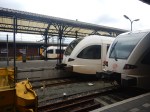
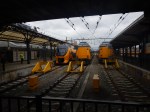


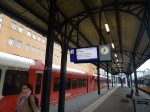

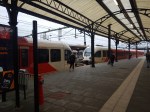
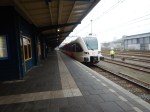
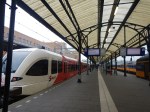
Note.
- The large numbers of Stadler GTW trains, which Arriva call Spurt.
- The decoration in the Booking Hall.
- The multiple bay platforms, some of which are electrified.
It is certainly a station worth a visit.
The Harlingen–Nieuweschans Railway
Groningen station is on the Harlingen–Nieuweschans Railway.
- It stretches from Harlingen. on the Ijsselmeer in the West to Leer in Germany in the East.
- The distance is around eighty miles.
The railway was originally built for trade between the port at Harlingen and Cerntral Europe.
Unfortunately, the Eastern section is cut-off as the freighter; MV Emsmoon, destroyed a bridge. Wikipedia says this about the accident.
On 3 December 2015, Emsmoon collided with the Friesenbrücke [de], which carries the Ihrhove–Nieuweschans railway over the Ems. The cause of the accident was reported to be miscommunication between the bridge operator and pilot on board the ship. The bridge could not be raised as a train was due, but the ship failed to stop and collided with the bridge, blocking both railway and river.[4] The bridge was so severely damaged that it will have to be demolished. Replacement is expected to take five years.
Was für ein Haufen Wichser!
And we think, we have problems with level crossings!
Conclusion
Groningen would make a base from where to tour the area. But it will be even better, when the bridge over the River Ems has been rebuilt!
From Bremen Hauptbahnhof To Buxtehude
This should have been an easy journey with a change at Bremerhaven Hbf.
But it wasn’t and I had a nearly eighty minute wai at Bremerhaven.
If this sort of ptoblem had occured with most railway conpanies, you’d have got accurate updates and information, but even though there were some announcements, even the German passengers were confused.
I temember one incident on Greater Anglia on an extremely windy day, when a tree brought the overhead wires down at Chelmsford. Station staff at Colchester were handing out refund forms and I got refunded my trip back to Liverpool Street.
But where were the Germans?
Nowhere to be seen for a start!
I thought EU regulations laid down a tefund policy, if trains were late.
When I got to Buxtehude, a fellow passenger told me there had been signalling problems.
How do I claim my refund?
Oldenburg Station
Oldenburg station caught my eye as I passed through.
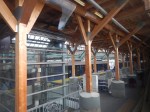
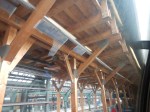
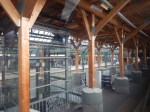
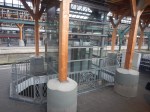
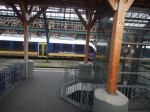
It’s good to see a new well-designed timber roof.
Having read the Wikipedia entry for the station, it appears that Oldenburg could have been an ideal place for a pit-stop.
Bremen
I took a detour from Bremen Hauptbahnhof, when I changed trains to walk to the centre.


If there’s a convenient hotel, it looks like it could be a place for a pit-stop or overnight stay.
By the way, the sausage appeared to be gluten-free, as I certainly had no reaction and German sausages usually are.
An Uncomfortable Seat
The Germans don’t encourage you to sit down in stations and this seat at Bremerhaven Hauptbahnhof is typical. That’s if there are any seats!
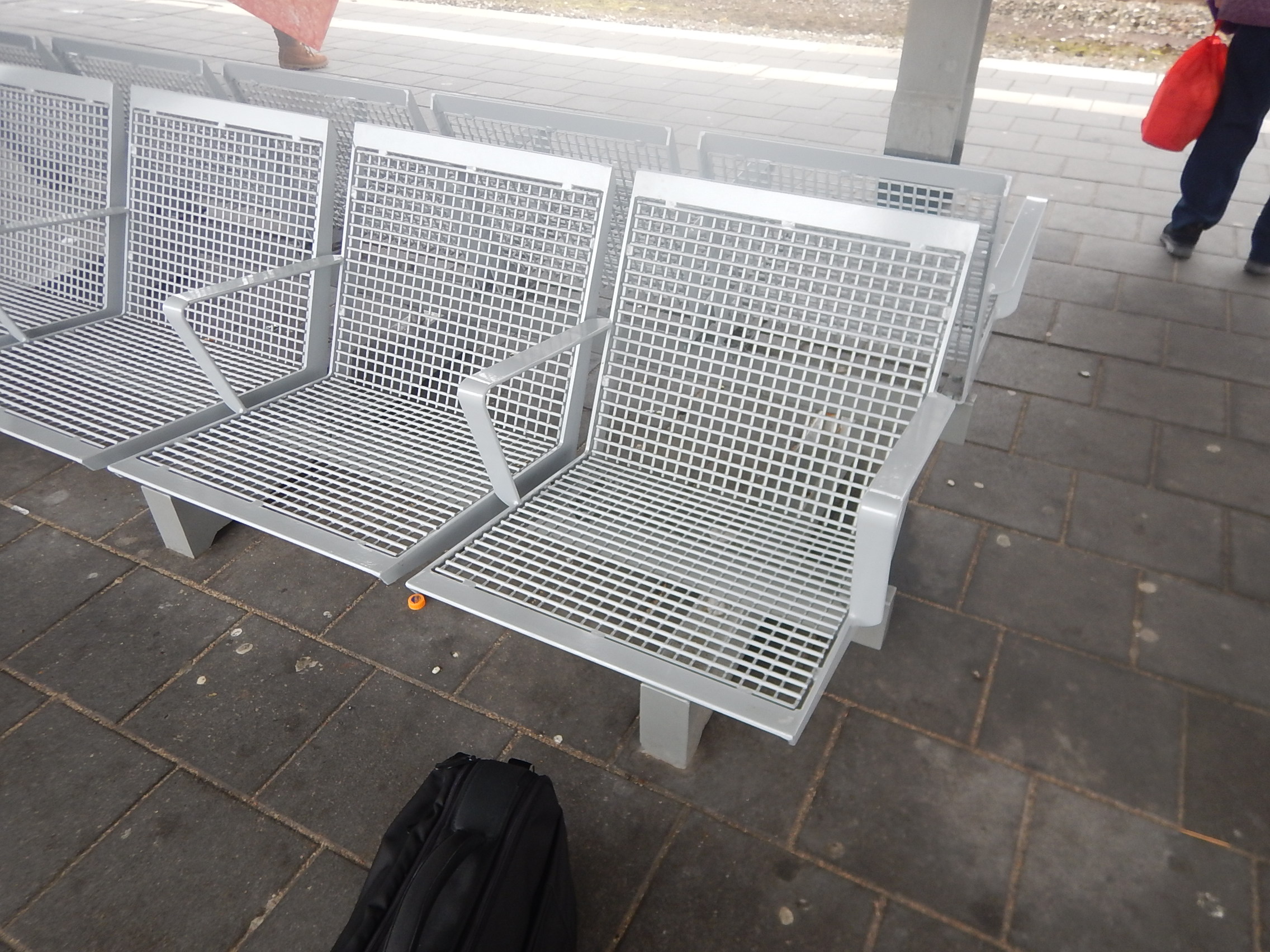
I think I’ll take a blow-up cushion on my next trip to Germany! Or on Thameslink!
The Train Station At The Northern End Of The Netherlands
Eemshaven station is the northernmost station in the Netherlands.

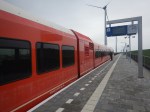
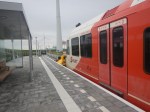

One of the reasons I went, was that the station is only a year old and I wanted to see how the Dutch build new stations.
Note this about the station.
- It is very basic, with few facilities.
- The single platform is very long.
- The station is surrounded by oil and gas installations on one side and the sea on the other.
It appears that for a lot of the day, the station gets two trains per hour.
This Google Map shows the station by the beach.
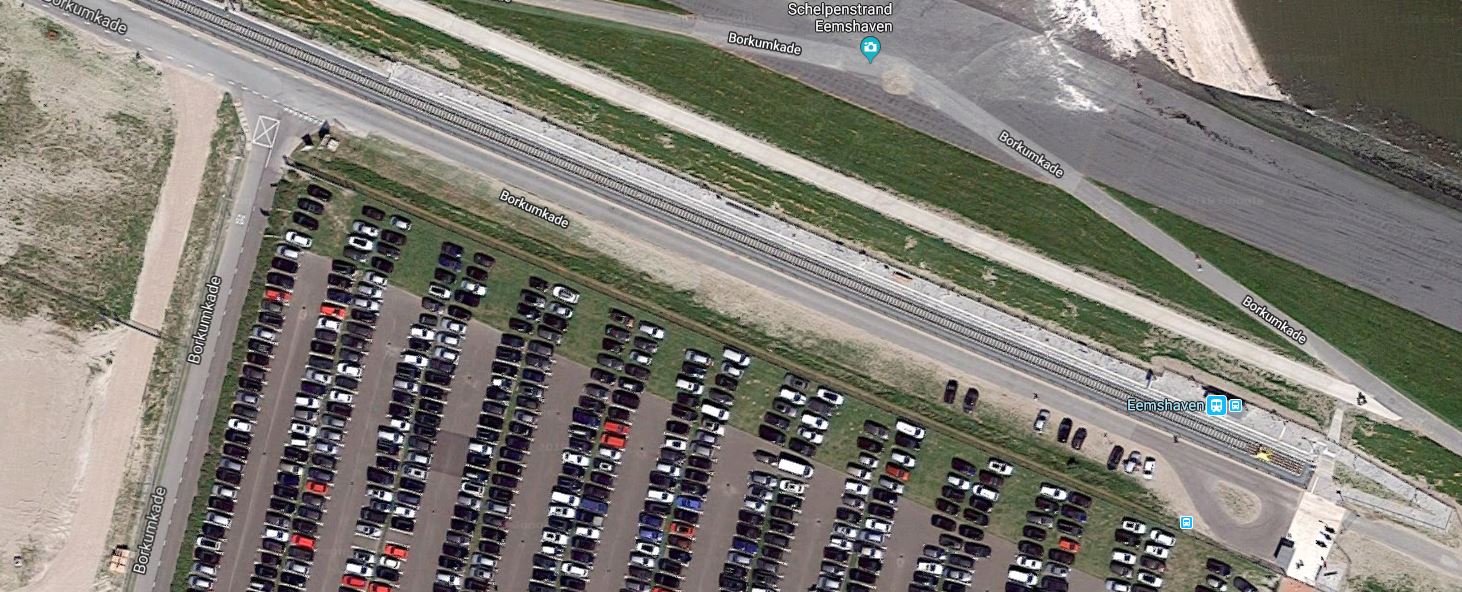
I would assume that most of the cars are those of workers at the oil and gas complex.
I returned on the train, I had arrived on, after a few minutes taking the pictures.
The Stadler GTW Train
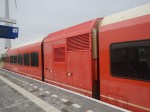
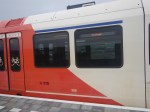
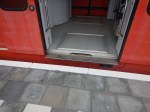
Shown in the pictures is one of the Stadler GTW trains,which work the services in the North of the Netherlands.
- They are electric trains, with their own diesel power pack in the middle.
- This train had three passenger cars, but some only have two.
- Noise from the engine was noticeable and probably about the same in a Class 170 train.
- Ride quality wasn’t bad, considering the unusual configuration. But then the track looked very neat and tidy.
- Arriva call the trains Spurt.
Stadler have not stood still, since they built these trains and Greater Anglia’s new Class 755 trains are built by Stadler to similar principles.
At the turnround at Eemshaven with the driver. He indicated that there had been speculation about battery and hydrogen trains in the North of The Netherlands.
Level Crossing Accidents
An interesting aside is to look at the Wikipedia entry for Spurt.
Three of the trains have been involved in serious level crossing accidents.
The Dutch Plan For Hydrogen
This now a separate post at The Dutch Plan For Hydrogen.
Changing Trains At Zwolle Station
Zwolle is a place that has stuck in my mind since I was about ten and had my first decent atlas. The gazetteer at the end of the atlas had Zwolle was the last entry. In my current larger atlas, it is still in the last ten entries.
I don’t think, I ever looked it up on a map and I certainly had never visited or even driven past. The nearest I ever got, was refuelling an aircraft at Groningen Airport, about twenty miles to the North.
I didn’t have time to explore the town, as the thirty minutes I had to wait was really only long enough for a hot chocolate. But, if my train had been on time, I wouldn’t have even had time for that.
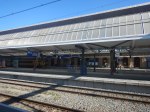
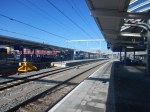
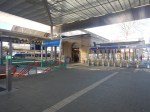
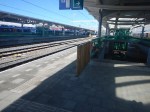
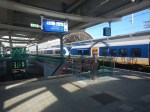
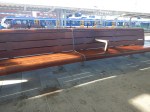
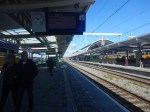
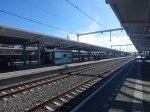
It is just a functional station, mainly built out of concrete and without any soul.
- The wooden seating was less cold, than the usual steel seats you get in Europe.
- The staff were not visible, but there was someone in a tunnel underneath.
- There was no enclosed shelter.
- There was only a little displayed information.
- I should think it could be a bleak station in the wrong sort of weather.
We need to think how we make stations more friendly to passing travellers.
Is This Stadler’s Plan For A Multi-Mode Future?
We have not seen any of Stadler’s bi-mode Flirts in service yet although Greater Anglia’a Class 755 trains have been rumoured to be speeding between London and Norwich in ninety minutes from this May!
Today, I rode on one of Stadler’s diesel GTWs between Groningen and Eemshaven in the Netherlands, which I wrote about in The Train Station At The Northern End Of The Netherlands.
GTWs are a diesel electric train with a power-pack car in the middle of the three car train. The diesel electric Flirts are a later train with a similar layout to the GTW.
So are the diesel GTWs and Flirts just a bi-mode without a pantograph? Or more likely the bi-mode is a diesel electric train with the addition of a pantograph and extra electrical gubbins.
Looking at the visualisations on Wikipedia of the bi-mode Class 755 train and the all-electric Class 745 train, it appears that the next-to-end car has the pantograph.
Are these cars with the pantograph identical on both the bi-mode and the all-electric versions? It would certainly be sensible from a engine erring point of view.
So could it be that all that is needed to convert a diesel electric Flirt into a bi-mode Flirt is to add the pantograph car and swap the power pack car for a bi-mode one? The old power pack car could then be converted into another bi-mode power pack car to convert another train.
But the power pack cars are not as simple as they look. They have four slots for diesel engines. Three-car and four-car Class 755 trains have two and four engines respectively.
I believe that one or more of the slots can be filled with a battery to create Flirts like the tri-mode ones proposed for South Wales.
So could we see some of the Greater Anglia Flirts converted in this way? Surely, Colchester Town to Sudbury could be a service that could benefit from battery power West of Marks Tey?
Today, I had a chat with a GTW driver, who said that the train he’d been driving was diesel-electric and that he had heard that batteries or hydrogen power could be used on the eoute.
The lines around Groningen seem to employ quite a few GTWs and distances are not overly long. So could some be converted to 1500 VDC electric/diesel/battery tri-modes? There is electrification at Groningen station and some of the bay platforms used by GTWs already have wires.
If the conversion is successful, then Stadler could be on a Swiss roll, as there are a lot of GTWs and Flirts out there, many of which are diesel-electric, like the one I rode today.
Would a train operator prefer to upgrade a diesel electric train that works well or buy a new bi-mode from another train manufacturer?
Could also an electric Flirt be converted into a bi-mode, by splitting the train and sticking a power pack car in the middle. Engineering common sense says that the passenger cars must be very similar to those of diesel Flirts to simplify manufacture of the trains.
We already know, that four-car Flirts are only three-car trains with an extra passenger car. Stadler could mix-and-match passenger, pantograph and power pack cars to give operators what they need.
Intelligent computer software would choose which power option to be used and the driver would just monitor, that the train was behaving as needed.
Looking at my route yesterday between Groningen and Eemshaven, it is a route of just under forty kilometres or twenty-five miles. Adrian Shooter is talking of ranges of sixty miles with battery versions of Class 230 trains. So I don’t find it impossible to create a tri-mode GTW or Flirt for this lonely route at the very North of the Netherlands.
Conclusion
Stadler seem to have created a very imitative modular train concept.
As some Flirts can travel at 125 mph, could they be serious bidders to provide the new trains for the Midland Main Line?
Will NightJet Connect To Eurostar?
NightJet is Austrian Railways sleeper service, that they took off the hands of the Germans when they closed it as a waste of money.
Ridership is increasing and they will be bringing in new trains in the next few years.
They also appear to have formed a partnership with Hungarian, Croatian and Polish Railways to take the network further East.
But what about the West? NightJet serves German cities like Cologne and Frankfurt, which are on Eurostar’s wish list.
Frankfurt is boring, but Cologne is the sort of city where you can fill time enjoyably.
So will we see travellers taking a morning Eurostar to Cologne, spend a day in the city and then take an overnight NightJet to Vienna. Vienna is linked by more NightJet services to places that non-European tourists love.
I don’t know the Austrian psyche well. But it does seem to me, that they have taken a loss-making Getman sleeper network and may succeed in turning it jnto something profitable and worthwhile with a little help from their friends. Do Austrians like getting one over the Germans?
A Eurostar connection in the West at Cologne and possibly in Switzerland, where NightJet runs to Zurich, would surely be beneficial. Eurostar have ambitions on Geneva and the connections between the two Swiss cities are good and picturesque!
I feel that we could be seeing the takibg of train tourism to a new level. How cuvilised?
A Bridge Station Over Still Waters
Overamstel station is as the name suggests built on a bridge over the River Amstel.


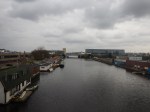


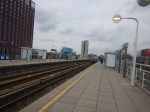
I didn’t have time to exit the station and explore.
Stations On Bridges
What puzzles me, is that there are so few stations built on a bridge or viaduct over water or perhaps a park, with entrances on both sides.
Only Blackfriars station in London comes to mind.
Although, there are rumours, that Charing Cross will be extended over the Thames to fit in longer platforms.
Surely, if you need a station nearby and a footbridge over a river, isn’t a combined station and footbridge a dual-purpose solution. Especially, if you want a station on both sides of the river.
 The Anonymous Widower