New Access To York Station As Part Of Major Brownfield Redevelopment Plans
The title of this post, is the same as that of this article on Rail Technology Magazine.
This the first paragraph.
New plans including a new access point to York station and the expansion of the National Railway Museum headline groundbreaking proposals of creating 6,500 jobs in the city.
The development is a partnership between.
- Homes England
- Network Rail
- York City Council
- National Railway Museum
This page on the York City Council web site, is entitled Major Developments At York Central.
This is the first paragraph.
York Central is the large brownfield site to the west of the city’s railway station. It lies between the A19 and A59 road corridors, and is contained by operational rail lines.
The document goes on to say that redevelopment of parts of the site could include.
- 1,000 to 2,500 homes
- 60,000m2 to 120,000m2 of office, leisure and retail uses
To gauge the size of the site, this Google Map shows the area.
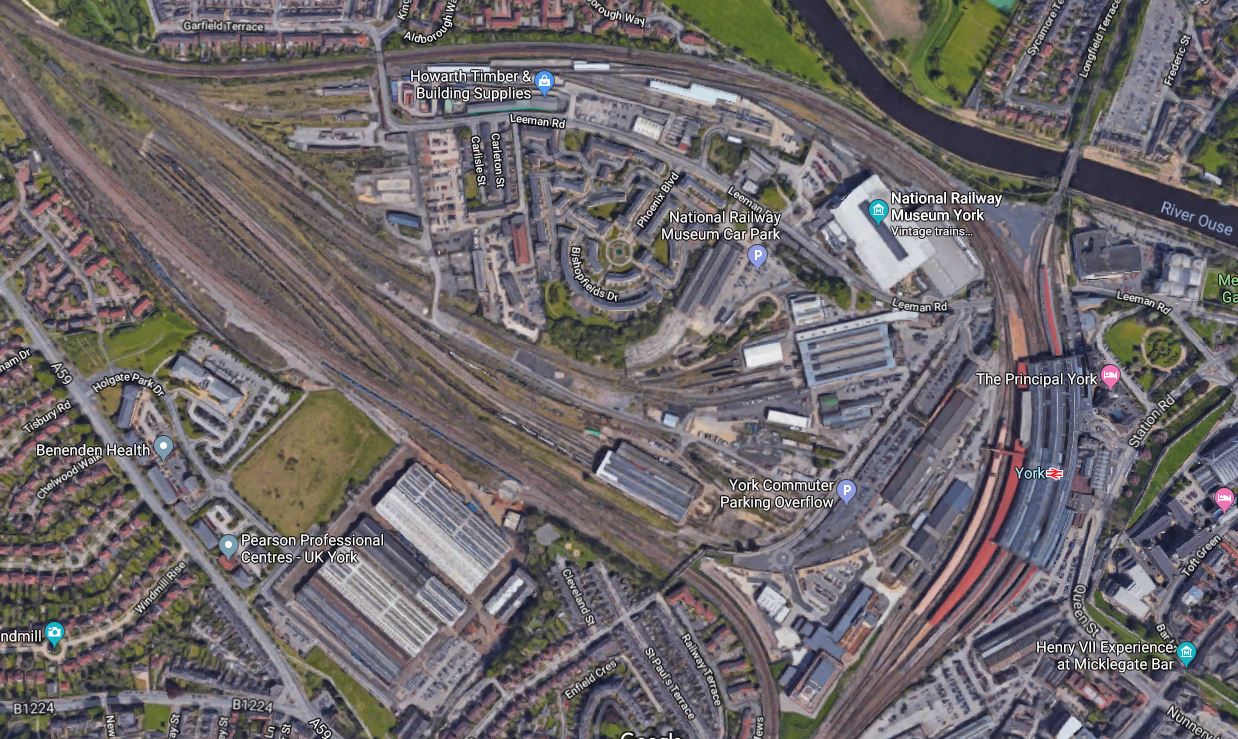
Note the large York station towards the right of the map.
This looks to me to be the sort of development we need to do more of in this country.
More Thoughts On Aberdeen Crossrail
In A Crossrail For Aberdeen, I put down my initial thoughts for Aberdeen Crossrail.
Now that I’ve been to Aberdeen and travelled on most of the Aberdeen Crossrail route between Inverurie and Montrose stations, I can add more thoughts.
I shall express my thoughts in generally a Southerly direction.
Inverurie Station
Currently, this is a two-platform station on a passing loop.
This picture gives a flavour of the station, which is Grade B Listed.
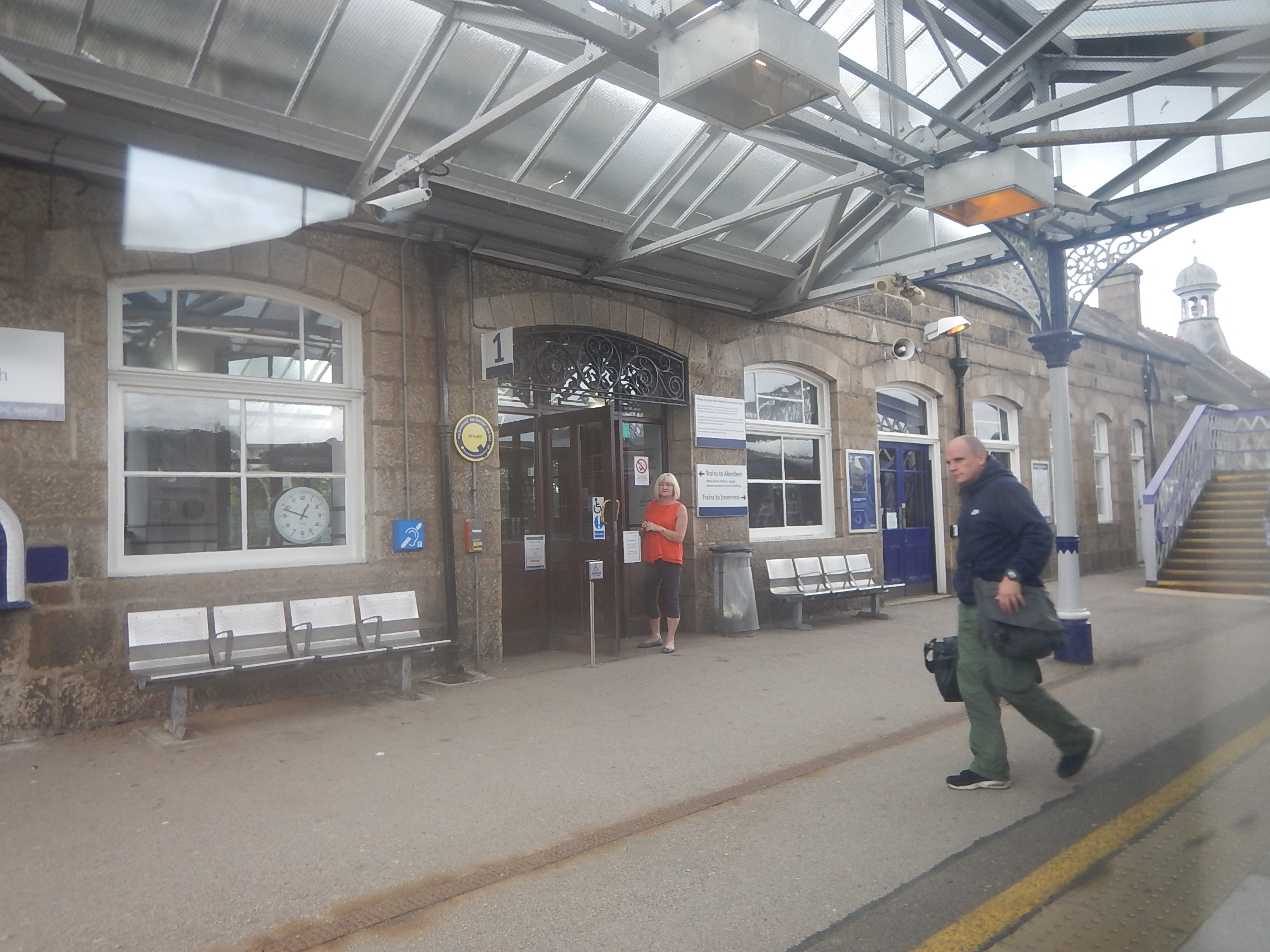
You can just see, the rather elderly iron footbridge across the tracks.
I suspect that platform usage will be as follows.
- Platform 1 – All through trains to and from the West and Inverness.
- Platform 2 – All trains starting or terminating at Inverurie.
If platform 2 is to be in regular use, then there will be pressure to improve the footbridge.
Double Track From Inverurie To Aberdeen
Most of this section seems to be single track, with passing loops at Inverurie and Dyce stations.
The only difficult bit is probably where the track goes under the new Aberdeen Western By-Pass.
This Google Map shows where they cross to the West of Dyce station.
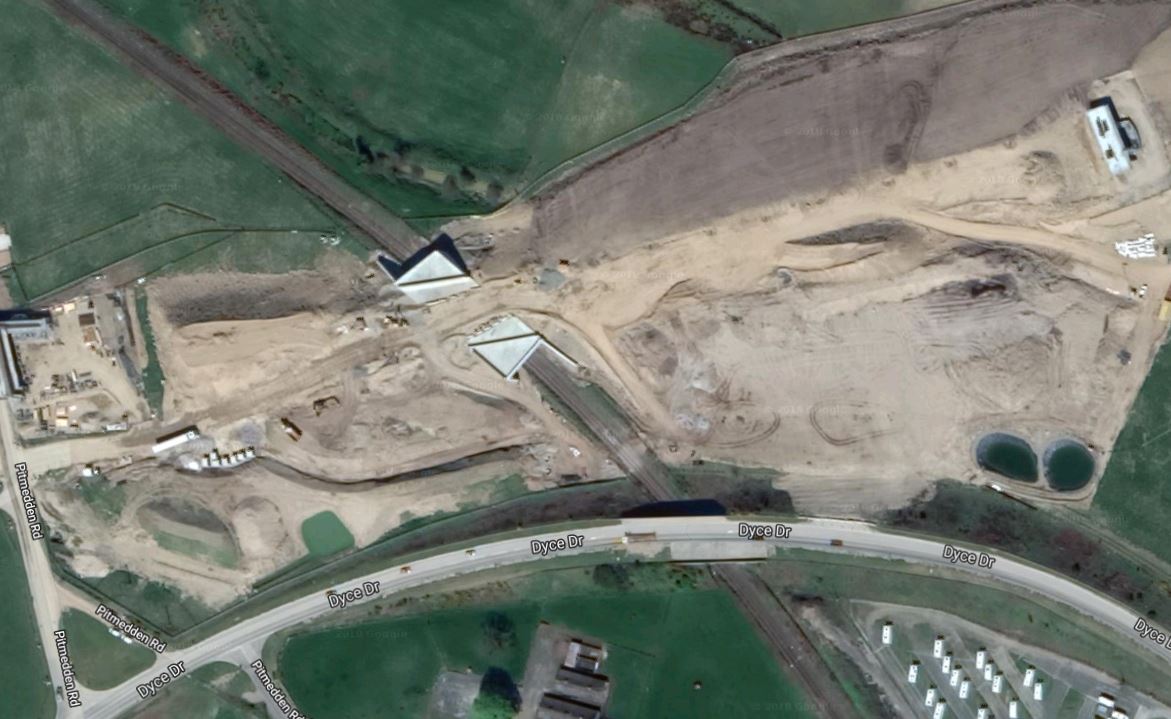
The difficulty is not the engineering, but the insolvency of Carrilion, who were the contractor for the road.
Dyce Station
These pictures show Dyce station, where I changed from train to bus.
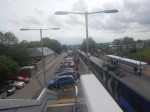
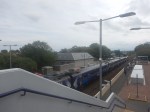
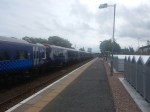
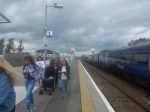
I’m pretty sure that once the track is complete, Dyce station will only need a small amount of work.
Aberdeen Station
Aberdeen station is not only a transport hub with a bus station, but it is also connected directly to the Union Square development.
It is certainly ready for Aberdeen Crossrail.
InterCity 125s
In my travels up and down between, Aberdeen, Montrose, Stonehaven and Dundee, it surprised me, how many journeys were made on an InterCity 125.
I’ve read somewhere, that one of the reasons, ScotRail are bringing in shortened InterCity 125s, is that passengers tend to use these faster trains on journeys like those between Stonehaven and Aberdeen.
Although the shorterned InterCity 125s will be limited to 100 mph, their bags of grunt, will mean good acceleration and surely faster times between Aberdeen and Dundee, Edinburgh, Glasgow and Stirling.
Trains For Aberdeen Crossrail
I timed the InterCity 125s at 100 mph on large sections of the route between Aberdeen and Montrose, as this picture of the SpeedView App on my phone shows.
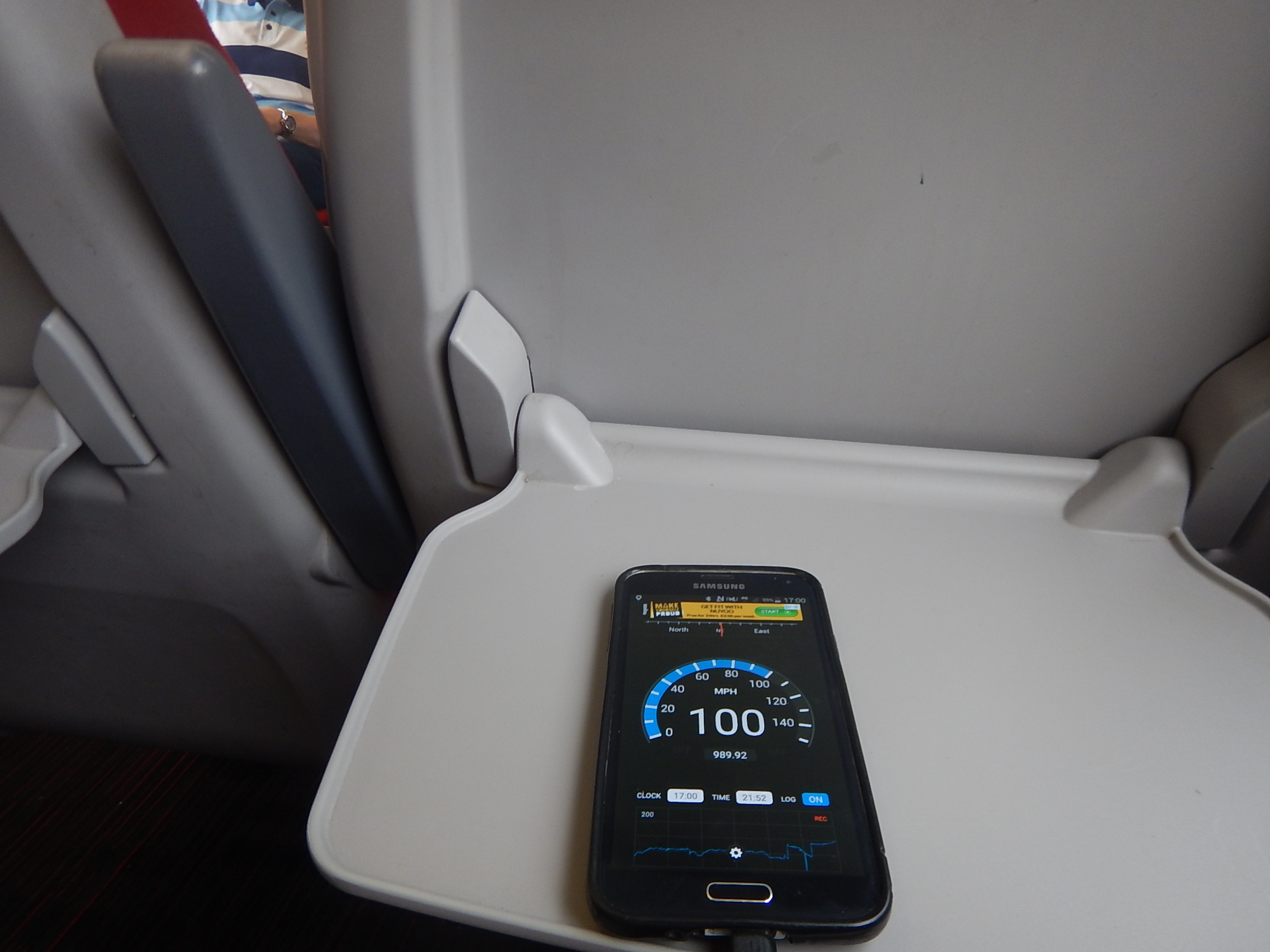
I think this means, that any trains working passenger services on the Edinburgh-Aberdeen and Glasgow-Aberdeen Lines must be capable of continuous operation at 100 mph.
As Wikipedia gives the operating speeds of both lines as being this figure, it does appear that Aberdeen Crossrail will be a fast local service, very much in line with the performance of services from London to Basingstoke, Brighton, Chelmsford and Oxford.
Initially, I suspect that ScotRail will be using Class 170 trains to provide the stopping service on Aberedeen Crossrail. Class 158 trains could also provide the service, but their 90 mph operating speed may not be enough.
ScotRail certainly have enough Class 170 trains, but I suspect that running two-car trains between Montrose and Inverurie stations, which stop everywhere will not have enough capacity. So a pair of trains will need to be used for each service.
In A Crossrail for Aberdeen, I said this under Frequency Issues.
The route of Inverrurie to Montrose has been deliberately chosen.
- Inverurie to Aberdeen takes around 23 minutes.
- Montrose to Aberdeen takes around 35 minutes.
So with slightly faster trains and line speed, than currently used, it should be possible for a train to go from Inverurie to Montrose and back in two hours to include a few minutes to turn the train round.
A two hour round trip means that a train leaving Inverurie at say 06:00 in the morning, will if all goes well, be back in Inverurie to form the 08:00 train.
How convenient is that?
This means that one tph will need two trains, two trph will need four trains and four tph will need eight trains.
These figures would be doubled if four-car trains were to be run on the route.
I feel that four-car trains will be needed on all services on Aberdeen Crossrail, if some of the passenger loading I saw, were to increase. As it surely will do, if they have a more convenient and much better quality service.
Passengers will also see the lots of seats on the shortened InterCity 125s, speeding past and will want some of that.
Two two-car trains working as a four-car train can provide the capacity, but in my view they are not what passengers want, as they can’t circulate in the train to find a preferred seat.
I also think, that at least two tph should run between Montrose and Inverurie stopping at all stations.
This would require four four-car trains.
ScotRail doesn’t at present have any suitable four-car trains.
Will It Be Hydrogen Trains For Aberdeen Crossrail?
Trains will need to be independently powered, as I think it unlikely that the route will be electrified.
I’m sure that CAF, Stadler or another manufacturer, will be happy to supply a small fleet of four-car diesel trains.
But would Abellio want to introduce more diesel trains, when they have enough Class 170 trains to provide a pretty good four-car service
Class 769 trains, which are bi-mode could be used, but they only do around 90 mph on diesel.
I am led to the conclusion, that the only suitable train available to a reasonable time-scale will be Alstom’s proposed conversion of a Class 321 train, running on hydrogen.
- The trains are capable of 100 mph using electric power.
- I would be very surprised if these trains couldn’t do 100 mph on hydrogen power.
- The new interiors fitted under the Renatus project, are a quality upgrade, as I said in A Class 321 Renatus.
- The trains could be available from 2020.
There is plenty of wind in the Aberdeen area to generate the hydrogen.
Conclusion
Aberdeen Crossrail will become a two trains per hour service using four-car trains.
I wouldn’t be surprised if those trains are Alstom’s Class 321 trains, powered by hydrogen.
Montrose Station
These pictures show Montrose station on the Edinburgh-Aberdeen Line.






This Google Map shows how the station lies between the town and the Montrose Basin.
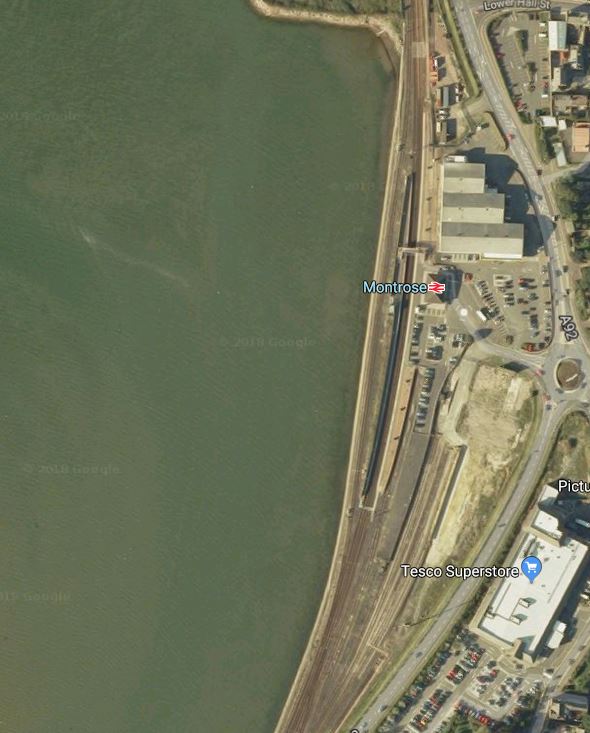
Note the following about Montrose station.
Fish Exports
Seafood used to be exported from a wharf alongside sidings on the West side of the line.
A station guy told me, that these sidings were called the New York Sidings, as that was the major destination.
Services Through Montrose
The line through Montrose is not particularly busy, with a maximum frequency of around four trains per hour (tph) in both directions.
Typical Off Peak passenger service is only two tph.
Step-Free Footbridge
This is not shown on the map and was actually not working, when I visited.
I didn’t need it, but if I was in a wheelchair and needed to board or alight from a train, the station is arranged, so that all trains can stop in the Southbound platform.
I suspect that this arrangement was used before the bridge was built.
Montrose Viaduct
Montrose viaduct to the South of the station is only single-track and this must make operations and increasing services, a little bit difficult.
Signalling
This photograph shows a typical signal close to Montrose.
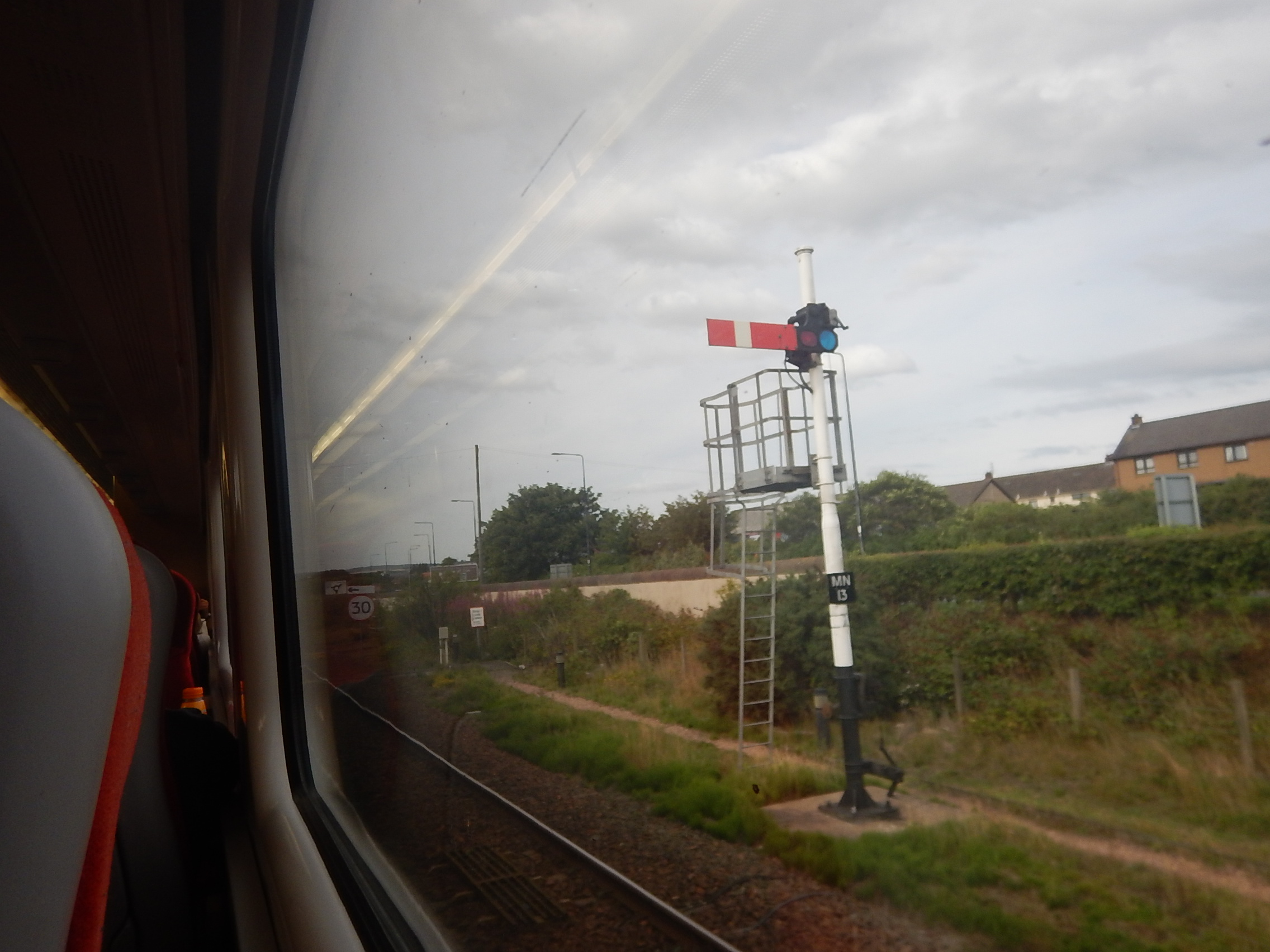
Would modern signalling perhaps based on ERTMS, make it easier to run services through the area?
Aberdeen Crossrail
Aberdeen Crossrail is a proposed service between Inverurie and Montrose stations, stopping at all stations in between. including Dyce for Aberdeen Airport, Aberdeen and Stonehaven.
The frequency of such a service needs to be at least two tph, but I have a strong belief that all of these services end up with a frequency of four tph, as on the following services.
- Cross-City Line in Birmingham
- London Overground
- Merseyrail
- Great Northern from Moorgate station
So could Montrose handle four tph?
Originally, as the pictures show, it appears that there was ca North-facing bay platform at the station.
This could handle four tph, but it would mean some passengers would have to use the footbridge to change trains.
The station guy indicated, that there may be a turnback siding, so trains could reverse.
This arrangement would be able to handle four tph, but it would also mean that many passengers changing between Crossrail and longer distance services, wouldn’t have to change platforms.
Conclusion
Montrose is going to get a much better train service.
House Sparrows In Aberdeen Bus Station
I took this picture of a few house sparrows in Aberdeen bus station.

You rarely see them in London these days.
Did The Queen Ever Ride In This Train?
These pictures show the British Rail BEMU, which was an experimental two-car battery electric multiple unit, that ran on the Deeside Railway between Aberdeen and Ballater stations, in the late 1950s and early 1960s.
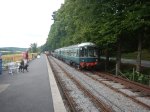
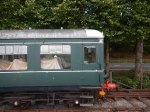
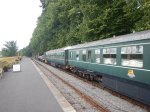
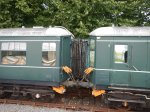
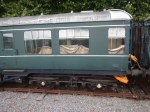
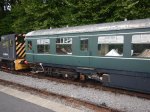


It is now parked at the Royal Deeside Railway awaiting restoration.
As the bodywork is aluminium, it struck me that it wouldn’t be an impossible restoration project.
Someone, I spoke to, said the biggest problem and probably expense were the batteries.
Perhaps, they could use some recycled batteries from electric buses or other vehicles, which some companies are going to use as house storage batteries.
A Memory From A Lady
I travelled to the Royal Deeside Railway on a bus and sat up front on the top deck. Next to me was a lady, who was perhaps in her seventies like me, who remembered using the train several times.
From what she said, it appeared to work reliably for a number of years.
Did Her Majesty Ever Use The Train?
No-one at the Royal Deeside Railway has any proof, that the Queen ever rode in the train.
But they are pretty sure, that the Queen Mother used the train. Apparently, she liked the steady speed as it proceeded through the countryside.
Conclusion
With the current developments in battery transport, I feel that this prototype might well be worth restoring to operation condition.
ScotRail’s Four-Car High Speed Trains
I took these pictures at Aberdeen station.
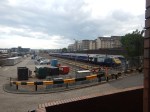
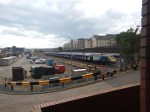
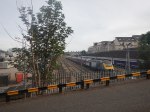
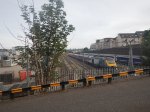
Unfortunately, I couldn’t really get any closer.
Looking at the pictures, it appears that the new sliding doors to the coaches have not been fitted.
It also looked as if windows had been added to the sides of one power car. Why?
Dundee Station
Dundee station has recently been rebuilt and it is now a mixture of old and new.
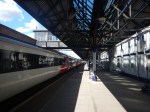
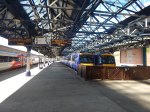
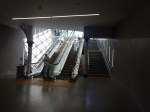
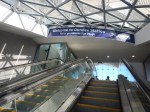

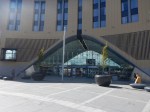
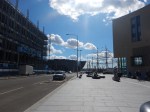
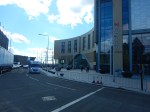
The old part are the platforms, which are below street level, and are now connected to the surface by lifts and escalators.
The surface buildings are new and bring back an old Victorian idea; the station hotel. But this is not a massive five star edifice, but an affordable Sleeperz hotel.
There’s a lot to like about the station.
- The platform layout of two long platforms with two bay platforms in between, must be ideal for operators.
- The lift and escalators to the surface.
- The snack bar between the platforms.
- The convenient hotel.
- The short walks to the attractions, which will soon be joined by a branch of the V & A.
- It was designed by local architects; Nicoll Russell Studios.
And all for a total cost of £23million.
I hope we see more stations like this one.
Alloa Station
Alloa station is ready for new electric services.


Currently, there is only an hourly service, which is just not enough for a town of 20,000 residents.
Note too, that there is a double-track through the station, although it looks like the second track is not electrified.
But it does appear that the gantries have been built so, that the second track could be electrified, so that electric trains could be run through the station to reopened stations to the East.
Class 365 Trains To The Rescue
I had intended to get a ride on a new Class 385 train, but I only caught a glimpse of one going the other way, from a Class 365 train, that I used both ways between Edinburgh and Glasgow.
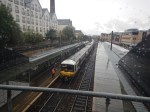
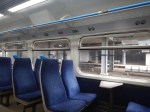
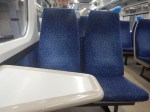
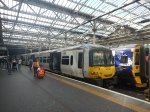
Passengers seemed to be quite happy with the Class 365 trains cascaded from the Cambridge Cruiser.
I really think that Hitachi have got their production of the Class 385 trains, seriously wrong here.
The body shells are made in Japan and then sent to Newton Aycliffe by sea. This must be an easy way to ensure a slow production of trains.
Bombardier make the body shells in the same factory as they design and assemble the trains.
Even if CAF make their body shells in Spain, that is a much shorter and probably more reliable journey.
I must admit if I was the CEO of a train operating company, I wouldn’t buy a Hitachi train.
But then Tony Blair only wanted a new factory, close to his constituency!
Glasgow Queen Street Station – August 10th 2018
I took these pictures as I passed through Glasgow Queen Street station.
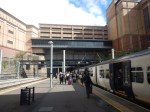
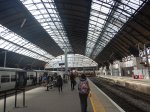
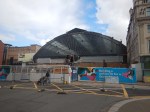
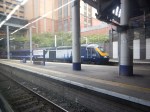
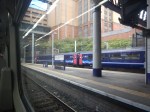
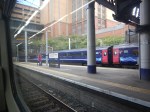
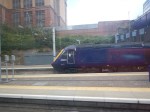
Note the four-car InterCity 125 in the station, testing and training staff for new services to Aberdeen, Dundee, Inverness, Perth and Stirling.
 The Anonymous Widower