Please Do Not Wait In The Green Lanes
These pictures show an experiment in Kings Cross St. Pancras tube station, on the Southbound Victoria Line platform, which aims to make boarding and unloading of trains faster.
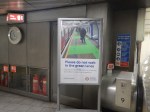
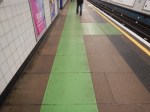
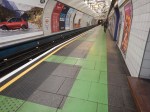
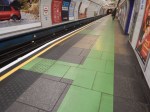
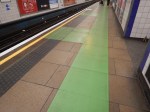
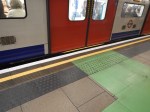
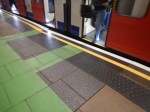
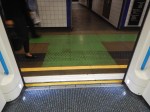
The idea is you don’t wait on the green lines, which are reserved for those getting on and off the trains.
The pictures were taken at ten in the morning, so I’ll go back one day in the Peak, to see how it works at a busy time.
But I do think it could be a good idea and a bit like platform edge doors, without the expense of the doors.
Note how the train stops precisely as indicated by the green lines. But then the stopping position of the train is determined automatically and has been since the Victoria Lie opened in 1967.
Why GA Uses Locomotive-Hauled Trains And Why The Class 755 Trains Are Coming
The first part of the title of this post is the same as that of an article in Rail Magazine, which is well worth a read.
Some interesting points.
- Norwich-Sheringham had 200,000 passengers per year in 1996; it is 600,000 now.
- Competition between Yarmouth and Norwich is the X1 bus with wi-fi and charging sockets and a fifteen minute frequency.
- Level crossing accidents are a problem.
- Locomotive-hauled stock is not a cheap option.
- When Norwich City are at home, extra capacity is needed.
I suspect that Greater Anglia would like to not have to use locomotive haulage.
Class 755 Trains
The article certainly shows why they chose the fleet of Class 755 trains with 24 x four-car and 14 x three-car units.
- A three-car or four-car train can be rostered accordingly.
- The trains are bi-mode, being able to work electrified and non-electrified routes.
- The trains are 100 mph trains and probably have a much shorter station dwell time, which must reduce some journey times.
- The trains will probably have charging sockets, 4G and wi-fi.
- There appear to be enough trains for increased frequencies on all services.
- I suspect that, as the trains will probably carry a high-proportion of leisure passengers, there will be adequate space for buggies, bicycles, large cases and wheel-chairs.
I’ll look at the routes where Class 755 trains will be used.
Some general points apply.
- Several proposed routes like Norwich to Stansted Airport are partially-electrified.
- Most timetables away from the electrified lines are written for a 75 mph Class 150 train.
- Some routes need more capacity and more frequent services.
Norwich To Yarmouth
Currently, this is a one train per hour (tph) service, which takes 33-37 minutes with four or five stops. Two trains are probably needed to run the service, although Greater Anglia do combine it with the Lowestoft services.
Note the following.
- Norwich to Yarmouth is not an easy drive in a car.
- |The X1 buses have a frequency of four tph.
- There are generous turnround times at Norwich and Yarmouth.
- The Wherry Lines are being resignalled, according to this article in Rail Engineer, which is entitled Atkins Awarded £29m Resignalling Contract In Anglia.
I would not be surprised to see the Norwich to Yarmouth service speeded up such that a Class 755 train could do a complete round trip in an hour.
- This would mean the current hourly service would need just one train.
- This would allow a four tph service to be run by just four trains.
- The trains could alternate between the two possible routes to give all stations at least a two tph service to both Norwich and Yarmouth
- Four tph would be a true Turn-Up-And-Go service.
To summarise, the current hourly service would need one train, but a much more customer-friendly four tph would need four trains.
How would a four tph service rejuvenate Yarmouth?
Norwich To Cromer And Sheringham
Currently, this is an hourly service, that takes just under an hour with seven stops. This service needs two trains.
Note the following.
- The Bittern Line is double-track from Norwich to Hoveton and Wroxham station.
- From there it is single-track, with passing opportunities at North Walsham and Cromer stations.
- A new station could be built at Rackheath for an eco-town development of 5,000 houses.
- The line has recently been resignalled.
I am fairly certain that the extra performance of the Class 755 trains, will allow a two tph service between Norwich and Sheringham.
This two tph service would need four trains.
To summarise, the current hourly service would need two trains, but a much more customer-friendly two tph would need four trains.
Norwich To Lowestoft
Currently, this is an hourly service, that takes 35-47 minutes with either one or six stops.
The current service would need two trains.
Note the following.
- The line is double-track.
- As with Norwich to Yarmouth, the current timings are such, that they can be achieved by a 75 mph Class 150 train.
- All the Wherry Lines will be resignalled.
I suspect that two tph may be possible with Class 755 trains, by means of some innovative timetabling.
It might be possible that if a train went fast one way with just one stop and slow the other with six stops, that it could do a round trip to Norwich in an hour.
A two tph service run like this could need just two trains, with the fast trip in probably something under twenty-five minutes.
To summarise, the current hourly service would need two trains, but a much more customer-friendly two tph could also need two trains.
Lowestoft To Yarmouth
There must be lots of good reasons concerning commerce, tourism, leisure and families to connect the two biggest towns in the very East of England by rail. Great Yarmouth is slightly larger with a population of 70,000 to Lowestoft’s 60,000.
Because no connection exists, I’d always thought that to provide one was difficult, as it would perhaps envisage building a large bridge across the water in the area. But I have just read a section entitled Direct Yarmouth Services in the Wikipedia entry for Lowestoft station. This is said.
In January 2015, a Network Rail study proposed the reintroduction of direct services between Lowestoft and Yarmouth by reinstating a spur at Reedham. Services could once again travel between two East Coast towns, with an estimated journey time of 33 minutes, via a reconstructed 34-chain (680 m) north-to-south arm of the former triangular junction at Reedham, which had been removed in c. 1880.The plans also involve relocating Reedham station nearer the junction, an idea which attracted criticism.
Surely if Network Rail has suggested this link in this study on their web site, it must be fairly easy to reinstate, as they don’t want to start any more fiascos.
There are several possible reasons.
- Has the Todmorden Curve shown that these links generate traffic and revenue for Network Rail? Perhaps, they’ve even got the maps out and looked for similar curves to Todmorden.
- Does this link give an extra route between Norwich and Ipswich, that makes it easier for passengers to do certain journeys without changing trains?
- There is a significant number of journeys betwen Lowestoft and Yarmouth by rail and road.
- Does it make it easier for trains to serve Lowestoft and Yarmouth?
- Perhaps reorganising the rail lines and station at Reedham realises a sizable piece of land for development.
- Do Network Rail want to create a record for reopening the oldest closed railway line? 135 years has probably not been beaten.
This map shows the area of the proposed junction.
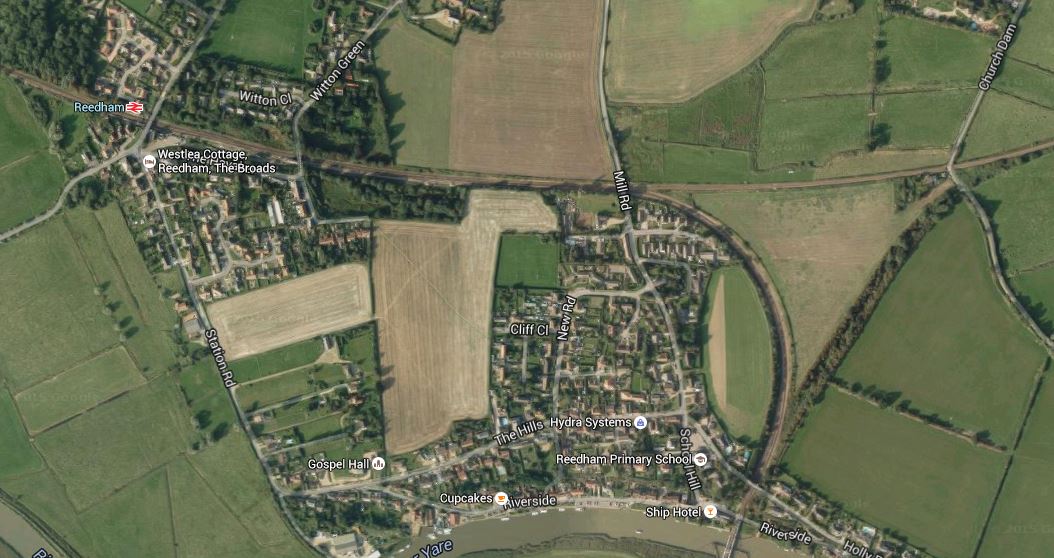 Norwich is to the West, Yarmouth to the North East and Lowestoft is to the South.
Despite being removed in 1880, the line of the third side of the junction is still visible.
But there is opposition as this article in the Great Yarmouth Mercury details. Perhaps, the locals don’t want any more housing?
The article mentions a cost of a billion pounds, which would make it a no-no! However the Todmorden scheme cost less than ten million pounds for a similarly-sized curve.
Currently, the fastest Lowestoft to Yarmouth journey takes about eighty minutes with a change at Norwich.
But these timings are also possible.
- Reedham to Yarmouth – 16 minutes
- Reedham to Lowestoft – 26 minutes
I suspect canny locals know that some trains connect well, so do the trip in under an hour.
It would appear though that if the Reedham chord was relaid, that Yarmouth to Lowestoft could be achieved in about fifty minutes.
I suspect that even if the Reedham Chord is not relaid, Greater Anglia may have plans to incorporate this service into the pattern of trains on the Wherry Lines.
They’ve certainly even got enough trains to run a shuttle using a three-car Class 755 train between Lowestoft and Yarmouth with a reverse at Reedham station.
An hourly service would need only one train.
Norwich To Stansted Airport
Greater Anglia have said that this new hourly service will replace the current service from Norwich to Cambridge on the Breckland Line.
Consider.
- Norwich to Cambridge takes 70 minutes, which is probably timed for 75 mph trains.
- Cambridge to Stansted Airport takes 30 minutes
- Trowse bridge at Norwich, is a major bottleneck on all trains connecting Norwich to the South and it may be improved or replaced. I wrote about Trowse Bridge in Is This The Worst Bottleneck On The UK Rail Network?
- Some sections of the line are electrified.
Would a round trip be possible in three hours?
This would need three trains for an hourly service and six trains for a two tph service.
When this hourly service is combined with services from other operators, there will be two tph from Norwich to Stansted Airport.
So I suspect only one tph will be needed on this route.
To summarise, the current hourly service would need three trains.
Ipswich To Lowestoft
Currently, this is an hourly service, that takes a few minutes under an hour and a half with nine stops.
Looking at the timetable for the 11:17 from Ipswich, the various sections of the journey take.
- Ipswich to Lowestoft – 86 minutes
- Turnround at Lowestoft – 24 minutes
- Lowestoft to Ipswich – 89 minutes
- Turnround at Ipswich – 41 minutes
Which gives a round trip time of four hours.
This is from the Wikipedia entry for the East Suffolk Line and describes the infrastructure.
The line is double-track from Ipswich to Woodbridge and from Saxmundham to Halesworth with the rest of the route being single track, apart from a short passing loop at Beccles. The line is not electrified, has a loading gauge of W10 between Ipswich and Westerfield and W6 for all other sections, and a line speed of between 40-55 mph.
Also note the following.
- The current four hour round trip means that four trains are needed for the service.
- Up and down trains pass at XX:25 at Beccles station and at XX:54-57 at Saxmundham station.
- The turnround times at Ipswich and Lowestoft are long, so that the timetable works and the trains can pass at Beccles and Saxmundham.
Given some track improvements, removal of a couple of level crossings and some clever timetabling, I suspect that the Class 755 trains could probably travel between Ipswich and Lowestoft in around an hour. Greater Anglian would like that for marketing reasons.
Turning these trains in thirty minutes would give a three hour round trip and reduce the number of trains required to three.
The real benefit comes if the line could be upgraded such that the Class 755 trains could do the round trip in two hours, which would reduce the number of trains required to two.
I suspect that there is extensive work being done to find a method to get a time of under an hour between Ipswich and Lowestoft.
When they’ve cracked that problem, they’ll probably move on to increasing the services on the line to two tph.
If they can crack both problems, two tph between Ipswich and Lowestoft running in around an hour, would need just four trains.
To summarise, the current hourly service would need three trains, but a much more customer-friendly fwo tph would need four trains.
When the Lowestoft to London service is introduced, this will probably be a single morning train to London and an evening train back. This would need an additional train.
Ipswich To Felixstowe
Currently, the service is hourly and a single train does a round trip in an hour.
The track is being improved and I’m fairly sure that two tph are possible, which would need two trains.
To summarise, the current hourly service would need a single train, but a much more customer-friendly two tph would need two trains.
Ipswich to Cambridge
Currently, the service is hourly and a single train does a round trip in three hours.
Note the following.
- Three trains are needed to run the hourly service.
- The current three-car trains can get very crowded.
- Some sections of the line are electrified.
- Haughley Junction is going to be improved.
I feel that the Ipswich to Cambridge time can be reduced to under an hour by the new trains.
This would have the following effects.
- Reduce the number of trains required for an hourly service to two trains.
- It might be possible to run a two tph service with four trains.
I suspect that two tph all the way from Cambridge to Ipswich may not be needed, as Greater Anglia’s proposed timetable includes two tph between Ipswich and Bury St. Edmunds and the proposal was developed before Cambridge North station threw a new big and important station into the mix.
Consequently, we could see something very different at the Cambridge end of the route.
Perhaps an hourly service between Cambridge, Cambridge North, Ely and Bury St. Edmunds, needing perhaps two trains.
To summarise, the current hourly service would need two trains, but a much more customer-friendly Western end would need perhaps two extra trains.
Improvements At Ipswich Station
Ipswich station will need extra platform capacity to handle extra services to Cambridge, Felixstowe and Lowestoft.
Colchester Town To Sudbury
Greater Anglia have said that this new route will replace the current service on the Gainsborough Line.
Current timings on this route are.
- Colchester Town to Marks Tey – 14 minutes
- Marks Tey to Sudbury – 20 minutes
- Turnround at Sudbury – 5 minutes
- Audbury to Marks Tey -19 minutes
- Marks Tey to Colchester Town – 16 minutes.
- Turnround at Colchester Town – 5 minutes
This gives a round trip of 79 minutes, with a Marks Tey to Marks Tey time of 44 minutes.
Note the following.
- One train would be needed to run an hourly service, if the round trip could be reduced between an hour.
- Some sections of the line are electrified.
- The Gainsborough Line has an operating speed of 50 mph.
- A new platform will be needed at Colchester Town station.
I think is is highly likely that the Class 755 train will be able to do the round trip in under an hour.
If the time spent on the branch could be reduced to under thirty minutes, then two tph on the route are possible, which would need two trains.
To summarise, the current hourly service would need one train, but a much more customer-friendly two tph would need two trains.
Colchester To Peterborough
Greater Anglia have said that this new hourly service will replace the current service from Ipswich to Peterborough.
Current timings on this route are.
- Colchester to Ipswich – 20 minutes
- Ipswich to Peterborough – 99 minutes
A round trip should be possible in four hours.
Note the following.
- Four trains would be needed to run an hourly service, if the round trip could be under four hours.
- Some sections of the line are electrified.
If this service could be run at two tph, this would need eight trains.
I doubt two tph would be needed, as other trains and operators shadow the route.
To summarise, the proposed hourly service would need four trains.
Summary Of Class 755 Train Services
This is a summary of the current and proposed routes, with their frequencies and the trains needed
- Norwich to Yarmouth – Hourly needs one train.
- Norwich to Sheringham – Hourly needs two trains.
- Norwich to Lowestoft – Hourly needs two trains.
- Lowestoft to Yarmouth – Hourly needs one train.
- Norwich to Stansted Airport – Hourly needs three trains.
- Ipswich to Lowestoft – Hourly needs three trains.
- Lowestoft to London – One train per day would need one train.
- Ipswich to Felixstowe – Hourly needs one train.
- Ipswich to Cambridge – Hourly needs two trains.
- Colchester Town to Sudbury – Hourly needs one train.
- Colchester to Peterborough – Hourly needs four trains.
This is a total of twenty-one trains, which is less than the current number of trains running the service.
The reduction in trains needed is because of the following.
- Class 755 trains are 100 mph trains and the timetable is written for 75 mph trains.
- Class 755 trains will be able to stop at a station quicker than current trains.
- Class 755 trains can take advantage of electrification where it exists.
Three- or four-car trains can be scheduled according to traffic needs.
In my analysis, I added what I thought would be more customer-friendly services.
- Norwich to Yarmouth – Four tph needs four trains.
- Norwich to Sheringham – Two tph needs four trains.
- Norwich to Lowestoft – Two tph needs two trains.
- Lowestoft to Yarmouth – Hourly needs one train.
- Norwich to Stansted Airport – Hourly needs three trains.
- Ipswich to Lowestoft – Two tph needs four trains.
- Lowestoft to London – One train per day would need one train.
- Ipswich to Felixstowe – Two tph needs two trains.
- Ipswich to Cambridge – Hourly needs two trains. Plus two trains to shuttle around Cambridge, Ely and Bury St. Edmunds.
- Colchester Town to Sudbury – Two tph needs two trains.
- Colchester to Peterborough – Hourly needs four trains.
This is a total of thirty-one trains, which is still below the total number of thirty-eight trains.
Greater Anglia probably won’t expand services in the way I have suggested, but consider the following.
- They have a flexible fleet with both three- and four-car Class 755 trains.
- They are the dominant passenger operator.
- Norwich and Cambridge stations have good platform capacity and Ipswich can be improved.
- Most of the signalling and track is in excellent condition.
This would enable train services to be increased as required.
There would also be trains available for new services such as.
- Cambridge to Wisbech.
- Ipswich to Aldeburgh
I could even envisage a Bury St. Edmunds to London service, that splits and joins with the Lowestoft to London service at Ipswich station.
Greater Anglia have planned well.
Infrastructure Required
The infrastructure required to run all these trains includes
- The Wherry Lines are being resignalled, This may not be needed, but it will certainly make things easier.
- Some platforms may need to be lengthened.
- Ideally, all the station platforms will be adjusted so that their height fits the Class 755 trains.
- The Reedham Chord may be reinstated to allow direct Lowestoft to Yarmouth services.
- Track improvements might night be needed on the Esst Suffolk Line.
- Ipswich station will need extra platform capacity to handle extra services to Cambridge, Felixstowe and Lowestoft.
- Colchester Town will need a second platform for the service to Sudbury.
No electrification is required, although to perhaps extend the wires for a few hundred metres in a few places might ease operation.
- From Norwich to where the Bittern and Wherry Lines divide.
- From Ipswich to where the East Suffolk and Felixstowe Lines divide.
- At Marks Tey along the Gainsborough Line.
This will allow the Class 755 trains to run on electricity for longer.
Conclusion
I’m probably very wide of mark, but iI do feel there is scope with the large number of Class 755 trains ordered by Greater Anglia to improve trains in East Anglia by a large amount.
The Terrace At Blackfriars Station
I took these pictures at Blackfriars station.

It looks like a terrace overlooking the Thames.
This Google Map shows the area of the station from above.

The terrace seems to be under construction on the East side of the station.
It does seem rather a wasted space.
Even Vauxhall Corsas Have 4G Wi-Fi
This is the case according to adverts at the side of the pitch in the England Slovakia game at Wembley tonight.
I don’t drive, so I don’t care, but it appears that this increasingly features on cars.
Bombardier have fitted this feature to Crossrail’s Class 345 trains, so will we see it increasingly fitted to all trains, taxis and buses?
It’ll certainly be something that passengers on public transport will expect.
Coastal Communities Among Worst Off In UK, Report Finds
The title of this post is the same as an article on the BBC web site, which they are covering on BBC Breakfast.
When I was fifteen my parents partially-retired to Felixstowe and I remember a very boring couple of summers in the town. In summer 1963, I spent most of it reading Nelkon and Parker in preparation for my A Level Physics course.
In those days, public transport to Ipswich was dire with nothing back after working hours and I can remember that I only ever went to the cinema in Felixstowe once!
Today, the last train from Ipswich is 22:28, but in those days it was about 19:00.
So one factor that applied, was you needed a car to have any social life outside of the dreary town. The few people of my age, I knew in the town couldn’t wait to leave school, so they could earn money to buy a car.
If you look around the country, the coastal areas that are vibrant and successful like say Bournemouth, Brighton, Liverpool, Southend and Swansea, tend to be larger, with excellent external and internal public transport links.
Other non-successful coastal towns like Felixstowe, Hastings, Hull, Lowestoft, Redcar, Skegness and Ysrmouth don’t have the same quality of external transport links, although some like Hull have good bus networks.
I may be being selective, but I believe it would make a big difference to a lot of coastal towns, if they had a first class rail service to the nearby inland larger towns and cities.
If there is no rail route, then a first class bus connection is needed.
Felixstowe
I’ll take Felixstowe as an example.
- The train service is one train per hour and it finishes around ten in the evening.
- The length of the line is such, that one train can do the return trip in an hour.
- Most of the rolling stock used on the line are past it, although I’ve done the trip in a passenger-friendly Class 170 train.
- If it is a sunny Saturday or Sunday, the train can get overloaded at times.
Hopefully, the train service will get better.
- Greater Anglia have ordered new three-car Class 755 bi-mode trains.
- Network Rail are improving the Felixstowe Branch Line.
- Ipswich station is to be upgraded with an extra bay platform for Felixstowe and Lowestoft services.
Point 1 would probably attract more passengers and points 2 and 3 would allow a half-hourly service at selected times of the day.
The increase in capacity and quality, should be enough, so that on a glorious day if people in Ipswich decide to go to the coast, the trains can make it a good experience.
It will be interesting to see how the number of rail passengers to Felixstowe change in the next few years.
Incidentally, Felixstowe station shows how you can create a quality station for a town of 24,000 people.
- The Grade II Listed station buildings have become a Shopping Centre with a cafe and bar.
- There is just a single platform that can take a four-car train.
- There is a ticket machine and a basic shelter.
- The station is on the High Street.
- The car park is shared with the local Co-op supermarket.
- The station is unstaffed, but the trains are double-manned.
How many coastal stations could be Felixstowed?
Felixstowe used to have a second station at Felixstowe Beach, which is near to the Port of Felixstowe and Landguard Fort.
Some might argue that reopening the station would be a good idea, especially as it could be a modern single platform station.
But surely, it would be better to improve the bus services in the town or provide quality bike hire at the station.
Greater Anglia’s Class 755 Trains
Greater Anglia have ordered 24 x four-car and 14 x three-car Class 755 trains.
- The trains are bi-mode.
- In terms of carriages, the new bi-mode fleet will be at more than twice the size of the current diesel fleet.
- Greater Anglia have said, that they will use electric power from overhead wires, even if it’s only available for short distances.
- The trains are probably large enough for an on-board full function ticket machine and lots of buggies, bicycles and wheel-chairs.
- They will probably carry their own wheelchair ramp, as I saw in What Train Is This?
This article in RailNews is entitled Greater Anglia unveils the future with Stadler mock-up and says this.
The bi-mode Class 755s will offer three or four passenger vehicles, but will also include a short ‘power pack’ car to generate electricity when the trains are not under the wires. This vehicle will include a central aisle so that the cars on either side are not isolated. Greater Anglia said there are no plans to include batteries as a secondary back-up.
So Stadler are using their well-proven design, which I saw in Germany.
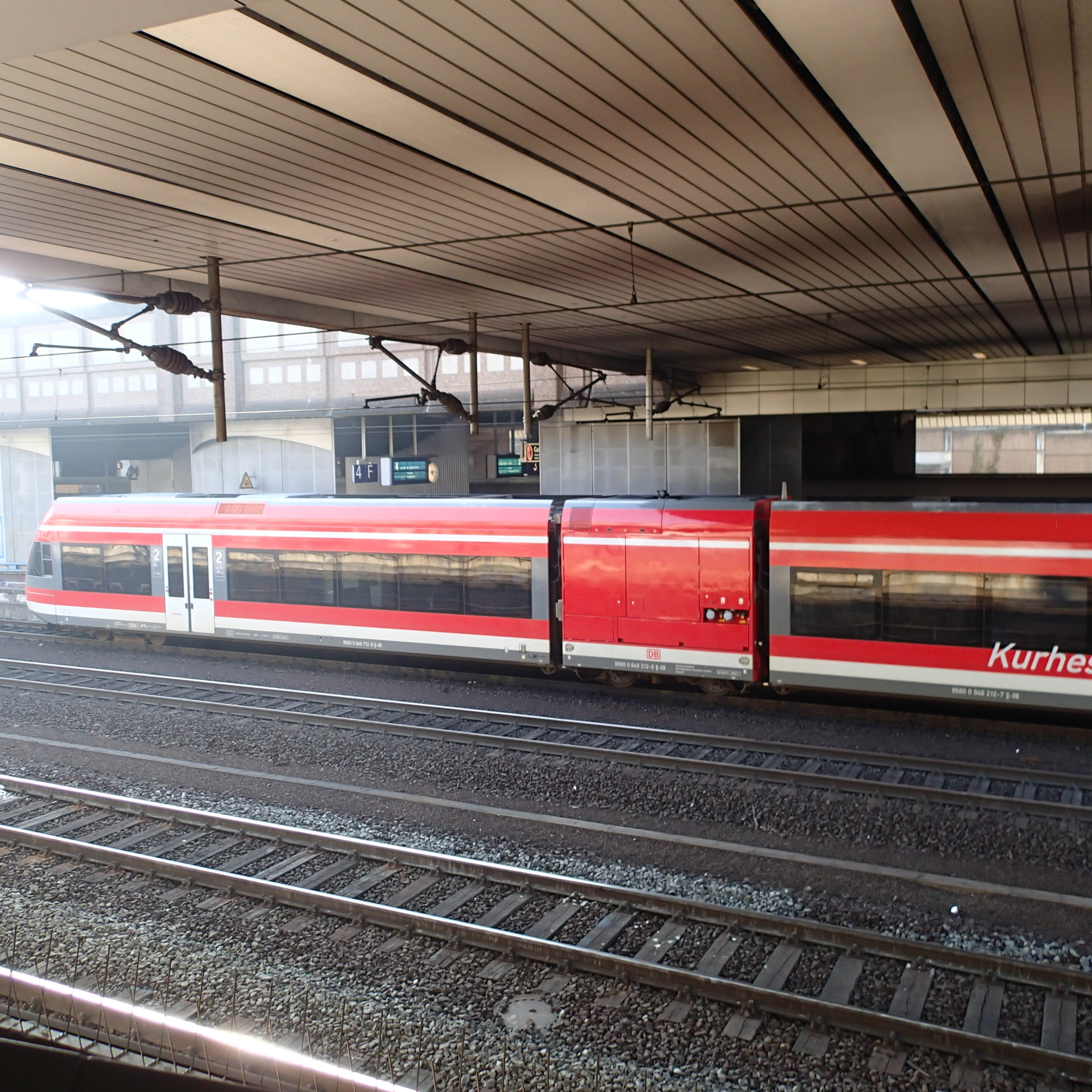
What surprises me is the ruling out of batteries by Greater Anglia.
The central powercar would surely be the ideal place to put energy storage, for the following reasons.
- It could be easily integrated with the diesel power-pack.
- The weight of the battery is probably in the best place.
- It could be part of an energy saving regenerative braking system, which would work under electric or diesel power.
- In Battery EMUs For Merseyrail, I wrote how Stadler were fitting batteries in Merseyrail’s new fleet.
When the trains arrive, it’ll all be explained. Perhaps, Greater Anglia’s words were carefully chosen.
How will these trains change the coastal towns of Cromer, Felixstowe, Lowestoft, Sheringham and Yarmouth?
If it’s positive, Greater Anglia will be setting a strong precedent.
What Needs To Be Done To Railways To And Along The Coast
In no particular order, there are various topics.
A Coastal-Friendly Train Fleet
From personal experience on East Anglian trains, I feel that the passenger profile is different with always several bicycles on a train. Greater Anglia will have researched their passengers’ journeys and this has resulted in their choice of three- and four-car bi-mode Class 755 trains.
- One- and two-car diesel multiple units are being replaced with three-car bi-modes
- The Class 170 trains appear to be being replaced by four-car bi-modes.
So it would appear that Greater Anglia are expecting more passengers on the coastal routes to Cromer, Felixstowe, Lowestoft and Yarmouth, as they are always running at least three-car trains.
I also suspect they will be allowing for more bicycles and buggies, with higher traffic at weekends with good weather.
Their fleet choice will also allow them to use a four-car train instead of a three-car.
Looking at the fleet choices of other train operators like Northern working over a wide area with a large proportion of leisure traffic, they seem to have a degree of flexibility.
Stations In Coastal Towns
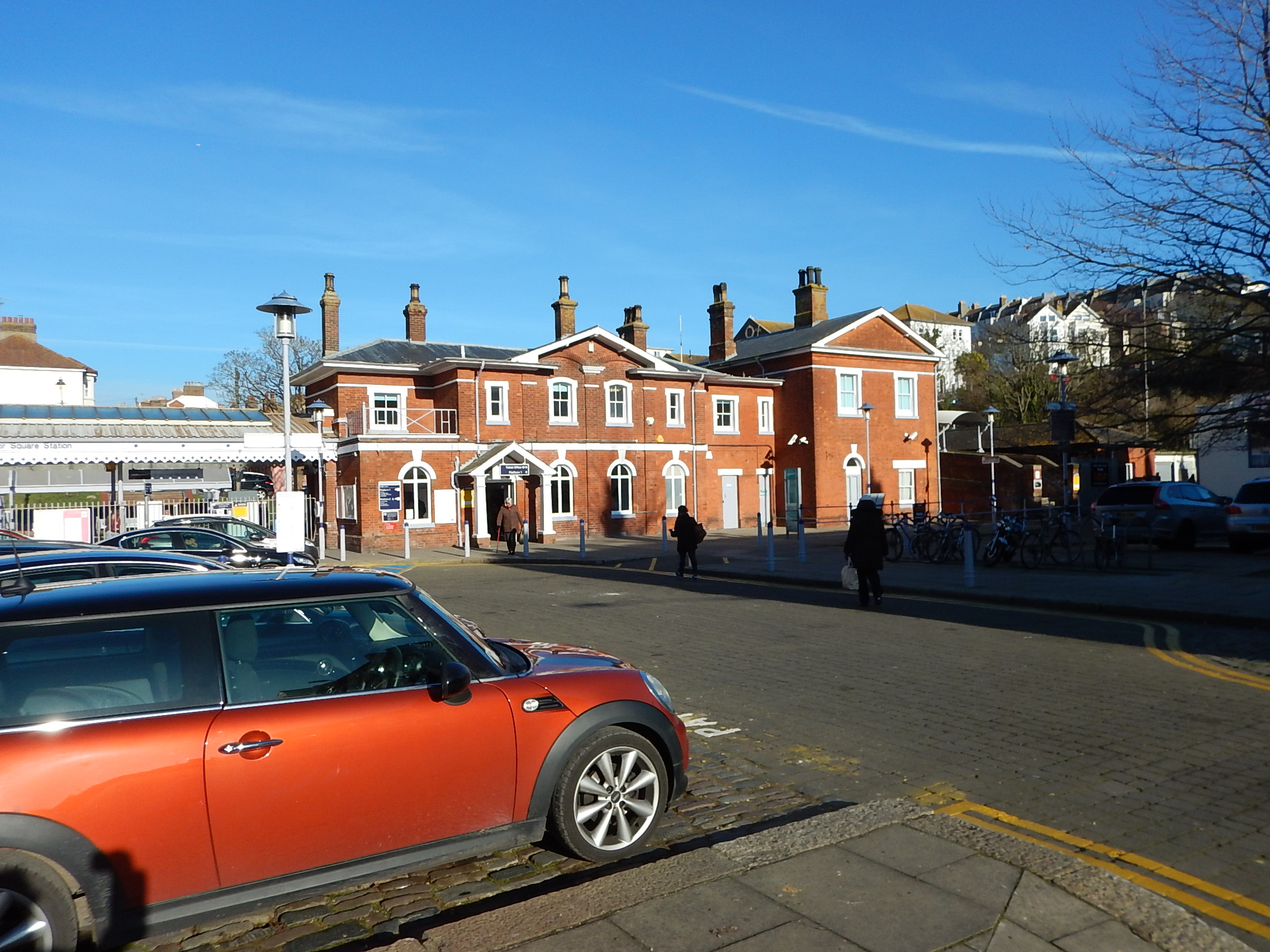
Many stations in coastal towns were built in the grand manner. This is St. Leonard’s Warrior Square station.
Felixstowe station was built in this way and the station buildings are Grade II Listed. This is the single platform.
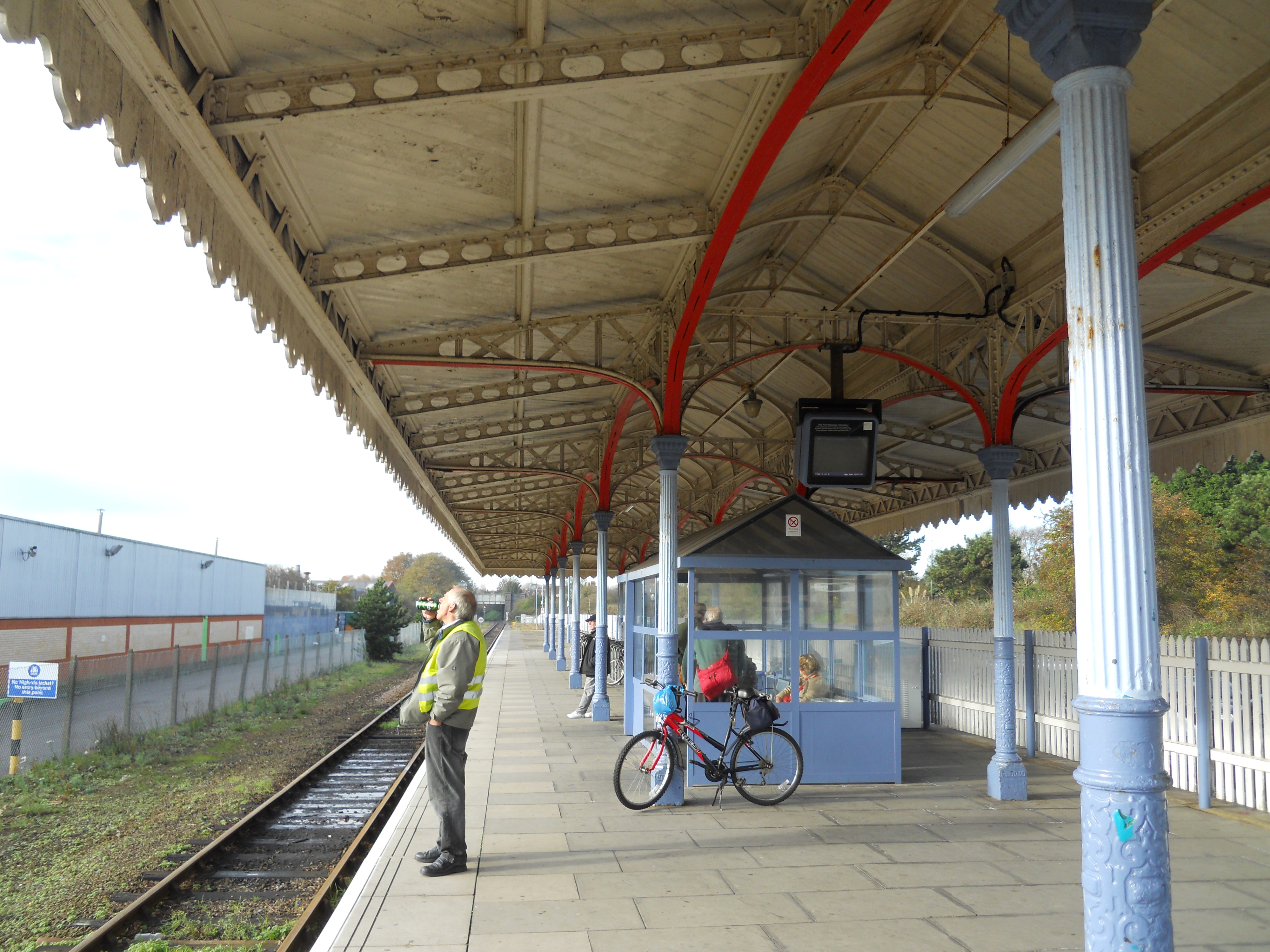
But it also shows how you can create a quality station for a town of 24,000 people.
- The station buildings have become a Shopping Centre with a cafe and bar.
- There is just a single platform that can take a six-car train.
- There is a ticket machine and a basic shelter, underneath an ornate 1898 canopy.
- The station is on the High Street.
- The car park is shared with the local Co-op supermarket.
- The station is unstaffed, but the trains are double-manned.
How many coastal stations could be Felixstowed?
These are a few pictures of other stations in coastal towns.
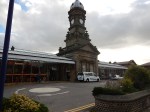
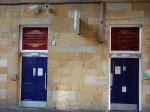
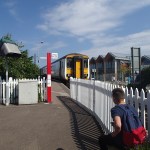
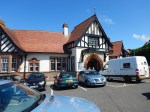
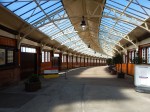
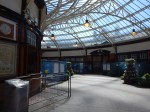
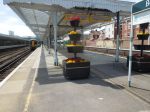
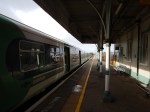
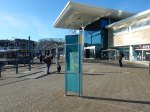
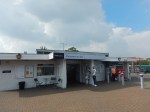

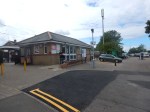
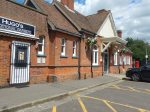
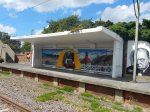
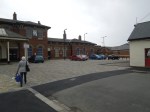
Some are grand, some are simple and some need a lot of improvement.
But if you want to improve the fortunes of a coastal town, or any town for that matter, you must give it a decent station, which will be one of main entry points for visitors.
The larger stations must have the following characteristics.
- A certain style.
- Good understandable information and perhaps a proper Tourist Office.
- A cafe or a bar.
- Decent bus connections to the rest of the town.
- Bicycle hire
- A shop for a paper and some chocolate.
- A cash machine with no extra charges.
Hopefully, the station needs a central location in the town.
But Felixstowe station shows what can be created, with its Victorian canopy and a single platform, tucked away behind a shopping centre, built around the original Listed station building.
These days with modern signalling and double-ended multiple units, single-platform stations like Felixstowe, could probably handle four trains per hour.
New Stations
In DfT Names Five Winners Of Fresh £16m Stations Fund, I talked about new stations funded by the Government’s New Stations Fund. Two of the five stations are near the coast; Bow Street and Horden Peterlee.
So does the Government realise the value of good rail links to coastal areas?
The Walkers’ Halt
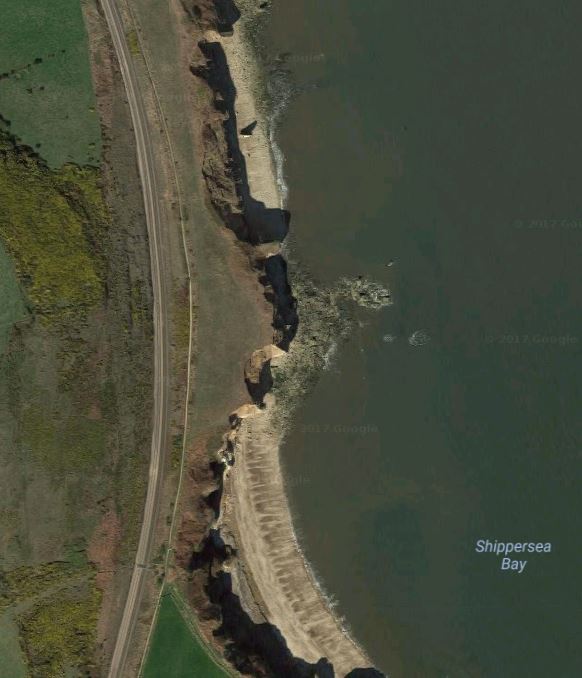
Some of the coastal lines go along some of the most spectacular coast-lines in the UK.
This Google Map shows the Durham Coast Line just South of Seaham station.
A modern train like a bi-mode Class 755 train could have the following characteristics.
- The ability to execute station stops with a short dwell time.
- In-cab radio signalling.
- CCTV to aid the driver at a station stop.
- On-board ticketing machine.
- On-board wheelchair ramp.
- Two crew members.
So would it be able to stop to pick up and set down at an old-fashioned halt with perhaps a single platform?
The England Coast Path
The England Coast Path will be 4,500 kilometres long and go round the whole coast of England.
In places, it must go near to railway lines, so will we see simple walkers’ halts, as I described in the previous section?
It strikes me, that we need a large helping of careful design to make sure that the England Coast Path and our costal rail routes would well together.
I used England as an example, but I suspect, the same logic applies in the rest of the UK.
Conclusion
This post isn’t complete yet!
I do feel though based on my East Anglian experience, that improving the train service to coastal towns could be the first step in improving their prosperity.
Too often going to the coast by train is a second-rate experience. Greater Anglia with its train fleet renewal seem to be creating a new era of getting to the coast in Norfolk and Suffolk.
Other companies should be made to follow.
Would It Be Better To Run Some Suburban Trains With Two Drivers?
Reading an article about South Western Railway in the September 2017 Edition of Modern Railways, I read this statement from Andy Mellors of the company.
SWR does not have any intend to reduce staff numbers and sees a strong bernefit in having more than one person on a train, even if some specific duties change.
The plan is to have a second person onboard every train. We know that our customers appreciate that and from time to time regular customers as well as infrequent travellers need that reassurance as well. We plan to have a second person on-board our trains, and we are not committed to any particular method of operation through our bid.
Between Waterloo and Chessington South stations, trains currently take the following times using the current Class 455 trains.
- Waterloo to Chessington South – 36 minutes
- Turning train at Chessington South – 15 minutes
- Chessington South to Waterloo 38 minutes
For an efficient train service, it is essential that the trains can execute the route as fast as possible.
A modern train like a Class 720 train, will decrease journey times because of the following.
- 100 mph capability
- Fast acceleration and efficient regenerative braking.
- Efficient loading and unloading of passengers.
- Level access for wheelchair users, buggy pushers and those dragging large cases.
- Driver aids, so that time keeping and other measures are improved.
The trains will reduce the journey times, but how do you reduce the fifteen minutes to turn the train at Chessington South?
If the trains working the branch are ten-car units, a lot of the time at Chessington South will be spent walking from one end of the train to the other.
Supposing both members of the crew were qualified to drive the train and they shared duties as a team.
- Each crew member would drive one way, whilst the other looked after passengers, doors and safety.
- As SWR have said all suburban trains will have a toilet, there may be further efficiencies.
- The turnback time could probably be reduced by several minutes.
I believe that with the new trains and a well-thought out method of working, a complete return trip could be made within an hour.
With the current method of working, two trains per hour (tph) is possible and it needs three trains, due to the ninety minute return trip.
But with two crew sharing duties, four tph could be possible and it would need only four trains.
It should be noted that to speed turnround on the Underground, drivers walk back and then step up on the next train.
Conclusion
Obviously, it’s not this easy, but I believe management and unions can work together to find a working method, that is acceptable to all stakeholders.
Specialist Trains Lead The Charge Against Leaf Fall on The Piccadilly Line
The title of this post is the same as the title of this press release on the Transport for London web site.
Last year, the Piccadilly Line suffered badly from leaves on the line as this article on the BBC, which is entitled Piccadilly Line delays: Wet leaves cause train shortage reported. This was the opening paragraph.
The Piccadilly Tube Line has been hit with major delays after half its trains were taken out of service as wet leaves on the track damaged their wheels.
Transport for London’s press release, talks about using RATs.
The two Rail Adhesion Trains (RATs) are part of a package of measures being introduced this Autumn to tackle wheel flats and prevent disruption.
A robust action plan to tackle leaf fall on the Piccadilly line is well underway for the Autumn months, TfL confirmed today.
It follows the publication of an independent report, commissioned by TfL, into leaf fall issues on the Piccadilly line that have led to delays and disruption on the line over the past two years.
Two 1973-stock trains have been converted into specialist engineering trains which will travel on the Piccadilly line treating rails to reduce the risk of poor adhesion. The adhesive material they dispense helps the train wheels grip the tracks during braking. When trains brake on slippery tracks it can cause the wheels to lock and subsequently wear down, an issue known as wheel flats.
Other measures TfL is taking to ensure that services on the Piccadilly line run as smoothly as possible this Autumn include:
- Aggressive vegetation clearance.
- Obtaining better weather prediction data.
- Better signage and information for drivers.
- Developing an Autumn leaf-fall timetable.
- Recruiting more maintenance staff and purchasing more spare wheels.
It’s certainly a comprehensive package of measures.
The Class 769 Trains Are Progressing
The August 30th Edition of Rail Magazine gives a few details about the creation and testing of the Class 769 trains at Brush Traction in Loughborough.
- A test rig will be built to test the combination of MAN diesel engine and ABB alternator.
- The first train will be fitted with a power unit in the next eight weeks.
- After static tests it will move to the nearby Great Central Railway. for dynamic testing.
- The first train will be joined by a second train to test compatibility and multiple working.
- After returning to Brush for approval, they will move to Allerton Depot, where they will be based.
- It is planned that all eight trains for Northern will be in the North West by April 2018.
I find it intriguing that the testing is done on the local heritage railway.
There are two parts of the Great Central Railway separated by the Loughborough Gap.
- The Northern part is the Great Central Railway (Nottingham), which runs from the Midland Main Line at Loughborough to the South of Nottingham.
- The Southern part is the Great Central Railway, which runs between Loughborough Central and Leicester North stations.
It is not said, whether the testing is North or South of Loughborough.
The two heritage railways are trying to bridge the gap at present and I can’t help feeling that once it is bridged, there will be winners all round.
It’s All Over Now, Waterloo!
As was planned, the former International platforms 21 to 24 are now closed and will remain so until the end of next year.
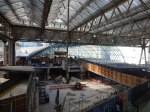
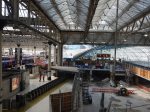


Note that Platform 20 is still open and can be accessed from a hole in the wall on Platform 19.
The platform closure is to allow the following to be done..
- Access to the Underground to be finished.
- Lifts to be added to the platforms.
- The platforms to be completed.
- Retail units to be added to the area.
Operationally, Waterloo station now seems to have at least the same amount of capacity as before the modifications started, but with the following changes.
- Platforms 1 to 6 can now all take ten-car trains.
- Access to the Underground has been improved on Platforms 1 to 4.
- A more efficient track layout has been created tp Platforms 1 to 6.
- The frequency of trains between Waterloo and Wimbledon has been increased.
There is still Platforms 21 to 24 to be added to the station to increase capacity.
South Western Railway’s Plans
In the September 2017 Edition of Modern Railways, there is a short article entitled Uplift In Windsor Line Capacity.
South Western Railway are proposing to make two major timetable changes in December 2018 and December 2020.
The first will see the following changes.
- Waterloo to Reading services updated from two trains per hour (tph) to four tph.
- Waterloo to Windsor services doubled to 4 tph.
They will be run by the new Class 707 trains.
This will be the first benefit of the Waterloo Upgrade.
As Waterloo handles about forty tph at present, this represents a ten percent capacity upgrade for trains.
The LaMiLo Project
I don’t know whether the new platforms or any others at Waterloo have been designed so that they can handle freight movements as in the LaMiLo Project, but you’d think it would be a good idea to make sure new platforms in major cities could handle parcel and pallet trains, where the goods will be collected and distributed by electric vehicles in the City Centre.
Conclusion
It appears that platforms 1 to 6 are now fully operational, although, I think that the lifts still need to be fitted.
So it seems that the doom mongers didn’t get this one right!
But the engineers and project managers seem to have done!
Is Peer-To-Peer Lending Having A Spot Of Bother?
There have been one or two news reports questioning asking tis question.
I invest in Zopa and I have made the prudent decision to put my spare money in a Safeguarded product.
I have had a good run and certainly get more on my savings than I would in a bank. Obviously, I am including any bad debts in this statement.
I shall watch the situation, but I still believe what I said in Stability in Financial Systems.
If there are rumours of a spot of bother, then the following will happen.
- Investors will put their money elsewhere.
- Rates to lenders will rise.
- This will tempt nvestors back in.
It’s a merry-go-round for money!
Note that because Zopa matches investors and borrowers by means of a computer, no human bias can drive the system in a wrong direction. Except a bent programmer and hoipefully systems are in place to check the honesty of their employees.
 The Anonymous Widower