Will c2c Push For Access To Stratford And Liverpool Street?
On Sunday in An Excursion To Shoeburyness, I indicated how instead of coming back the way I came via West Ham, I got off at Stratford and did some shopping at Eastfield.
But would c2c like to serve Stratford and Liverpool Street more?
The Current Weekend Service From Shoeburyness To Stratford And Liverpool Street
Currently two trains per hour (tph) run from Shoeburyness to Stratford and Liverpool Street at weekends, when there is no conflicting engineering work.
Incidentally, with my excursion, I think that I had to come back by c2c as the Great Eastern Main Line was closed for Crossrail work.
If nothing this engineering disruption shows the value of Southend being served by two independent rail lines.
The Stratford Effect
The Queen Elizabeth Olympic Park and the Shopping Centre at Stratford will have a porofound effect on the operation of c2c’s trains.
This page on the c2c web site is entitled Christmas shoppers get direct c2c trains to Stratford.
This is said.
c2c will run two trains an hour on both Saturdays and Sundays that divert to Liverpool Street instead of Fenchurch Street. These will provide direct access to the Westfield Stratford City shopping centre plus easy access to London’s West End. This is in addition to the two trains an hour that run to Chafford Hundred, for the Lakeside shopping centre, as part of c2c’s existing service.
I think the news item dates from 2014, but it does show a level of intent.
There is also this article in the Southend Echo, which is entitled Extra trains planned as West Ham’s stadium move puts added pressure on c2c network.
This is said.
TRAIN operator c2c are running extra and longer trains for fans travelling to West Ham matches at the club’s new stadium in Stratford.
This won’t be a problem for weekend matches, but what about matches on weekday evenings?
c2c’s spokesman went into more detail.
When asked about direct trains running from Southend to Stratford to make the journey as quick and simple as possible for fans, c2c said they already run direct trains to Stratford from Southend and Basildon,but not Grays, and there will be two trains per hour direct to Stratford most weekends – and two more trains per hour to West Ham.
From Grays, all four trains an hour go to West Ham.
For weeknight games and during weekend engineering work, all trains run to West Ham.
At present, the weekend trains between Shoeburyness and Stratford, satisfy the weekend sopping and football, but what about other events at the Olympic Park? The Queen Elizabeth Olympic Park is only going to get busier.
So are the current services really what c2c and its customers want and need?
Car parking is fairly comprehensive at the outer stations according to this page on the c2c web site.
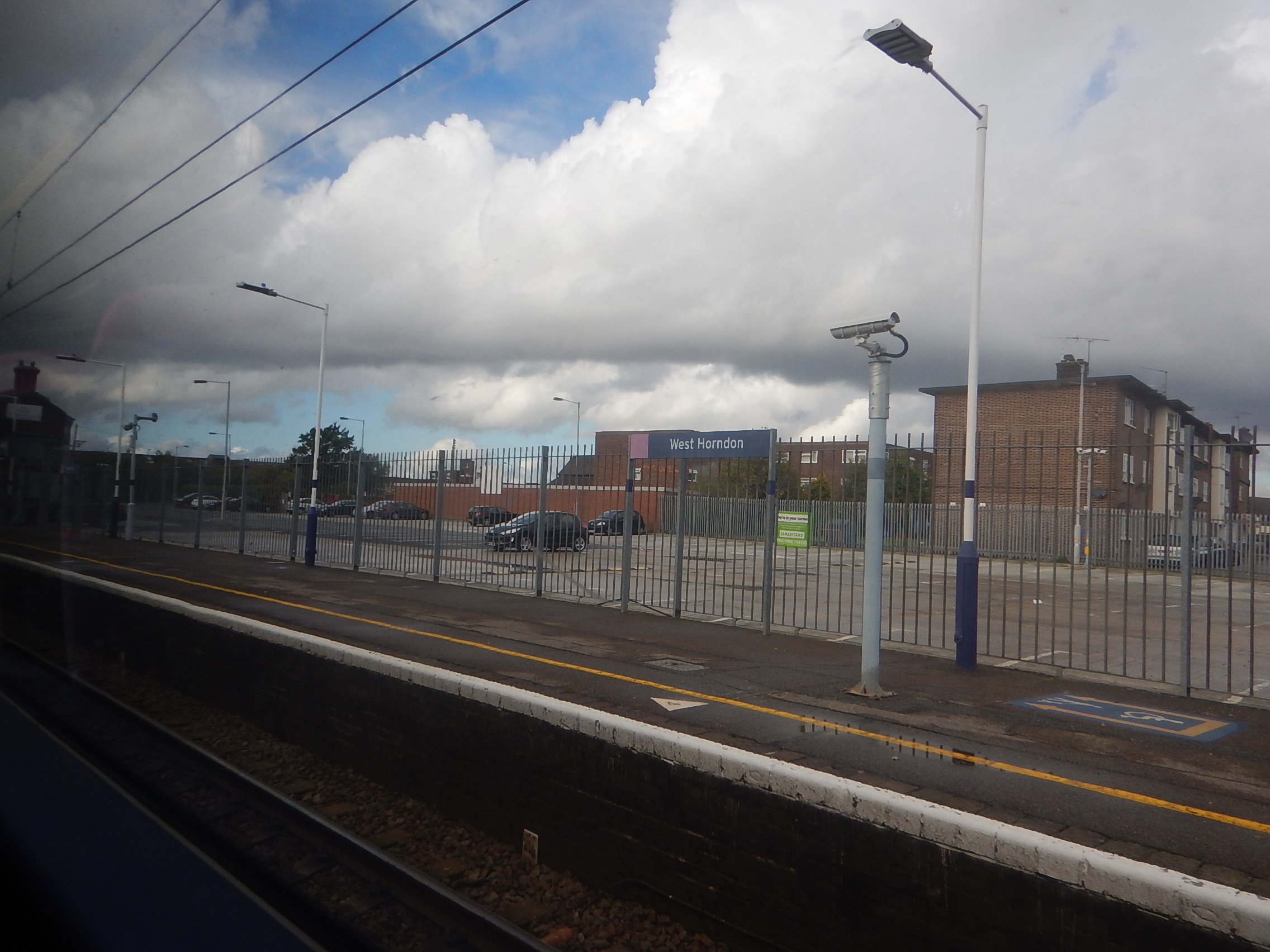
It wasn’t very busy on the Sunday I took this picture at West Horndon station, but for encouraging weekend leisure trips, the availability of car parking must be an asset.
I would imagine that c2c are pushing the authorities for permission to run evening services into Liverpool Street via Stratford.
The Crossrail Effect
When you talk about any of London’s railways, this herd of elephants, with its 1,500 passenger capacity Class 345 trains, always bursts into the room.
For c2c trains to get to Stratford, they need to take the Gospel Oak to Barking Line (GOBlin) between Barking and Woodgrange Park, where they join the slow lines into London.
This map from carto.metro.free.fr shows the lines around Woodgrange Park station.
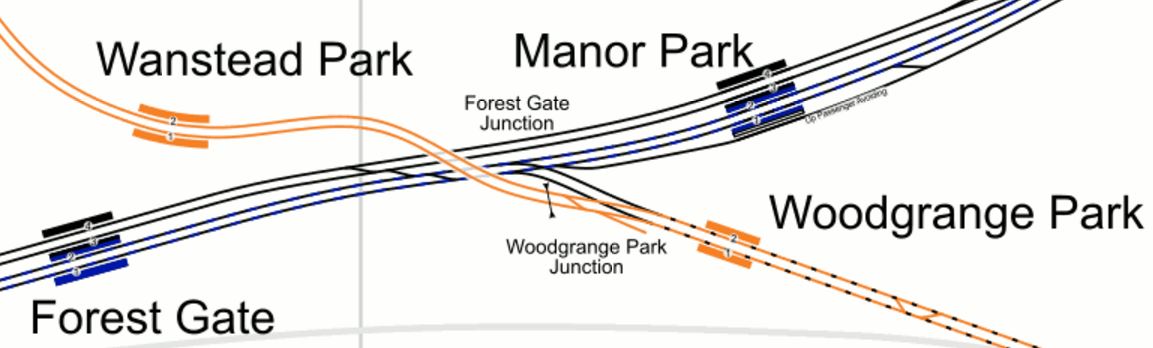
As the GOBlin is currently being electrified and improved, I suspect that there will be no operational problems on the short stretch of shared line.
Will there be problems though, after Crossrail opens and there are increased frequencies of trains to and from London?
In the Peak, Crossrail will be running 16 tph to and from Shenfield, so as they are only running 8 tph in the Off Peak, I suspect that at weekends, there will be capacity for c2c’s 2 tph to Stratford.
It is interesting to look at Crossrail’s proposed Peak service on the Shenfield branch.
- 8 tph between Shenfield and Paddington
- 2 tph between Shenfield and Reading
- 2 tph between Shenfield and Maidenhead
- 4 tph between Gidea Park and Liverpool Street
This says to me, that there are probably paths in the timetable to squeeze 4 tph in the Off Peak into Liverpool Street, as the Gidea Park service is Peak-only.
Access To Liverpool Street
Liverppool Street station has two problems.
- There are not enough platforms – This is a difficult one to solve, although Crossrail might only need a single platform to handle the limited number of services not going through the core tunnel. London Overground regularly turns 4 tph in a single platform.
- The platforms are too short – This will be remedied once Crossrail trains are using the core tunnel.
I’m certain, that in a few years Liverpool Street in the Off Peak, will be able to handle 2 tph with a length of 12-cars for c2c.
It is interesting to note, that my train on Sunday was only eight-cars. Was this because of limitations at Liverpool Street?
Should c2c Stop At Woodgrange Park?
Currently, they don’t, but after the GOBlin is reopened would it be a good idea to create a step-free change to get to and from a lot of stations across North London.
The change at Barking between the two lines is not easy and the alternative is to improve it.
c2c Needs Access To Crossrail
c2c’s current route structure has no connection to Crossrail.
As an example to go from West Horndon to Heathrow Airport, you’d need to change twice.
- At West Ham onto the Jubilee Line.
- At Stratford onto Crossrail.
Neither change is a short walk, but both are step-free in busy stations.
If however, it’s a Saturday or Sunday, you could take a train to Stratford and I suspect when Crossrail opens, just wait on the same platform until a Heathrow train arrives.
It should be remembered, that c2c runs an all-Electrostar fleet and I suspect that these are Crossrail compatible with respect to platform height, so the change at Stratford would be easy with heavy cases, buggy or even a week-chair.
What Will The Future Hold?
From what I have written, it would certainly be possible for there to be two 12-car trains every hour in the Off Peak between Shoeburyness and Liverpool Street calling at Basildon, Upminster and Stratford.
But this would have limitations and possible problems.
- Passengers from stations like Grays would want the Crossrail connection too!
- If it is needed in the Off Peak, is it needed in the Peak?
- Would passengers changing at Stratford cause congestion?
There would also be the mother of all battles between the train companies involved, to make sure they kept market share.
My ideal world scenario would be something like.
- 4 tph all day go into Liverpool Street.
- 2 tph on both c2c routes through Basildon and Grays go into Liverpool Street.
- Chafford Hundred is served from Liverpool Street
- Ticketing is such, that Stratford to Southend can use either route and either Southend station.
- c2c trains to and from Liverpool Street, call at Woodgrange Park for the GOBlin.
My wish list may not be possible, but there is certainly tremendous scope for improvement.
We could even see, a station like Grays, Pitsea or Southend becoming a Crossrail terminus.
Who knows? I don’t!
The New Beam Park Station
Beam Park station is a new station that is to support a large housing development of the same name, which will be built on the London, Tilbury and Southend Railway, between Dagenham Dock and Rainham stations.
This map shows the development, with the station numbered at six.

Beam Park
The station is the Westernmost number on the Southern boundary of Beam Park.
- It is possibly located where Kent Avenue crosses over the railway.
- Note that some sources call it Beam Reach station.
- With up to 5,000 new homes in the area, I would think that the station is needed.
I think it is interesting that London is getting two new stations; Barking Riverside and Beam Park, in the same area of London.
An Excursion To Shoeburyness
After I saw the Class 387/3 trains for c2c at Crewe, I thought that if the weather was nice, I’d take a trip to Shoeburyness. So as the weather was good on Sunday, I bought an extension ticket for under a tenner and went.
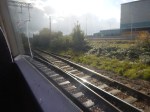

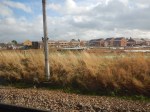
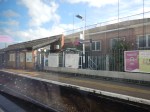


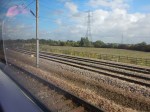

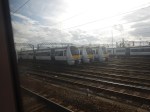


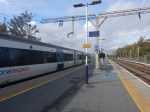
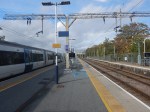
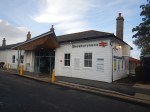




It is very much a trip into deepest Essex.
A few points.
- As I changed trains at Whitechapel station, it looked like they’re starting to fit out the passageways.
- I was surprised to see lots of disused space on the District Line platforms between Barking and Upminster. I guess that was so they could run long trains all the way to Shoeburyness.
- There are quite a few level crossings on the line.
- The Shoeburyness Depot isn’t small.
- The track to Tilbury Riverside station is still visible.
- There appears to be electrification gantries on the single-track leading to Platform 1 at Barking station, which Gospel Oak to Barking trains have used as a terminus for years.
- I came back via Stratford to do some shopping at Eastfield.
Unlike many other rail companies and possibly because they are a smaller franchise, c2c doesn’t seem to have too many published plans and ambitions, other than to keep satisfying their customers.
But then there is very little of an expansionist nature that they could do!
- In future years, there may be a need for a station at London Gateway.
- Would housing and leisure developments around Tilbury Riverside, make it worthwhile reopening the station.
- Much of the infrastructure work will be minor improvements for safety or to gain a few seconds here and there.
- There could be a program of level crossing removal.
- A new station will probably be built at Beam Park, to support housing development.
But there is no major project, like some proposed by companies like Chiltern Railways.
How Could The Twenty Mile Per Hour Limit Be More Strongly Enforced?
Where I live in Hackney, in common with some other London boroughs, there is a lot of twenty mile per hour zones.

20 MPH Signs In Hackney
As the picture shows they are well signed.
But this doesn’t stop drivers and motorcyclists rushing around, often quite a lot in excess of the allowed limit!
Councils have been criticised recently over using box junction cameras as cash machines, as this article on the BBC details. The title of London councils raise millions through box junction fines summarises the article well!
It may be an erroneous observation on my part, but as London gets more congested and the traffic slower in Central London, it does seem that when the traffic eases as it often does in Hackney, that drivers take more than a legal advantage.
Excessive speed also seems to have got worse in this area, since the 20 mph limit was brought in. Red rags and bulls come to mind.
Why can’t we set up a network of automatic number plate recognition cameras, that locate and timestamp vehicles in the 20 mph zones.
Computers would then check all the timings and issue tickets to those, who obviously got from A to B at over the speed limit. Just like cameras on motorways around road works.
It could be a very nice little earner for councils.
An Interloper At Euston
I took these pictures as I came through Euston on Saturday night, as I returned from Blackburn.
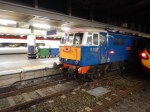


The engine is an immaculate Class 86 locomotive, which was built in the 1960s.
According to Wikipedia, Freightliner still have ten upwards of the locomotives in service and I recently saw two working together on a long intermodal freight service through Dalston Kingsland station.
They may have been bog-standard electric locomotives in their day, but surely if they can be restored and kept running, they are probably a lot more affotdable for main line use by charters, than anything else.
I would assume that E3137 had been hauling a charter into Euston. Long may it continue to do this.
An Excursion To Clitheroe
On Saturday morning before the football, I took a train along the Ribble Valley Line to Clitheroe and back to have a look.



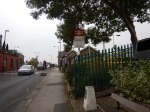
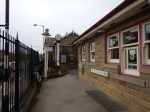
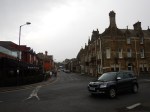
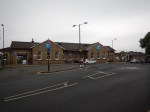
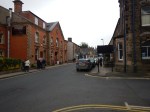
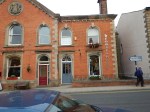
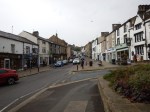
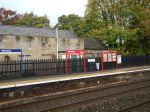
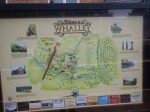
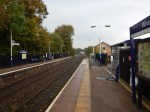
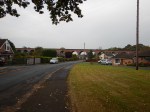
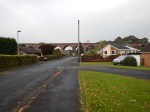
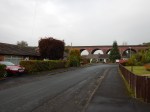
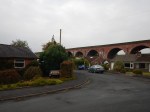
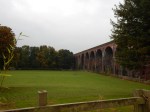
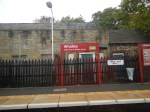
On the way back I stopped to have a look at the 48-arch Whalley Viaduct. Whalley is also a village with an ruins of an abbey.
Clitheroe reminded me very much of a Lancashire version of several I know well in Suffolk.
From the new houses, that I saw in the area, I suspect it’s becoming more important as a dormitory town.
The later history of the Ribble Valley Line between Manchester Victoria and Hellifield via Bolton, Blackburn and Clitheroe, is one of closure and reopening.
- Blackburn to Hellifield was closed to passengers in 1962.
- The only train, other than freight and diversions, was a once a week train between Manchester and Glasgow, which stopped in 1964.
- Blackburn to Bolton was reduced to a single-track.
- Public pressure led to a service between Blackburn and Clitheroe in 1994.
- Later a Sunday service was started between Blackburn and Hellifield.
- The line became a community rail line in 2007.
In the last few years, Network Rail have spent millions of pounds on improvements.
- A five million scheme renewed the permanent way between Blackburn and Clitheroe in 2008.
- Sections of single track have been doubled.
- Signalling has been improved.
- Line speed has been increased.
- Platforms have been lengthened.
- The passing loop at Darwen has been lengthened.
Builders certainly seemed to have been at work on the stations between Clitheroe and Whalley.
It All Happens In 2017
All of this should mean that two trains per hour (tph), can run between Manchester Victoria and Clitheroe in December 2017.
Probably by design rather than co-incidence, December 2017 is also given as the opening date of the Ordsall Chord and the completion of the electrification of the Manchester to Preston Line.
A year later, in December 2018 there could be the extra two through platforms into use at Manchester Pioccadilly, which will help alleviate capacity problems.
I don’t think we’ll see direct services between Clitheroe and London, but an improved Ribble Valley Line connecting with Manchester’s new cross-city line can only be good for passengers.
Things that could or should happen include.
- Two tph between Manchester Victoria and Clitheroe has virtually been promised.
- The service will become faster because of track improvement and new trains in a few years. Applying a conservative estimate reduces the end-to-end journey time from seventy-five to somewhere around fifty minutes.
- The Manchester Victoria to Clitheroe service could probably run two tph each of four carriages by December 2018. It all depends on rolling stock deliveries.
- TransPennine services will go through Manchester Victoria and any sensible train planner would arrange a decent link between Clitheroe and TransPennine services.
It will certainly be a big improvement.
Manchester Airport And Clitheroe
One journey that illustrates how the Ordsall Chord will improve services, is getting between Clitheroe and Manchester Airport.
Currently, these are typical timings.
- Clitheroe to Manchester Victoria – 75 minutes
- |Cliteroe to Manchester Airport via Bolton – 126 minutes
- Salford Crescent to Manchester Victoria – 9 minutes
- Salford Crescent to Manchester Airport – 30 minutes
As Manchester Victoria to Manchester Airport, is effectively via Salford Crescent with the train taking a short cut, it’s probably reasonable to assume that Manchester Victoria to Manchester Airport won’t be more than 39 minutes.
Current services take about twenty minutes from Manchester Piccadilly, but it’s not a proper airport service, which the full route to Victoria could be.
- It doesn’t use the same platforms every time.
- The trains are not built for heavy luggage.
The service certainly doesn’t say Manchester is open for business.
Wikipedia says this about services to Manchester Airport after the Ordsall Chord opens.
On completion, it is anticipated that the chord would allow four trains per hour to travel between Manchester Airport/Manchester Piccadilly and Manchester Victoria in each direction, with a further eight trains per hour possible from Manchester Victoria towards the west via Chat Moss, and six trains per hour from Manchester Piccadilly towards either Chat Moss or Bolton and Preston.
So this means that even if you just miss the connection at Manchester Victoria, you’d only wait a maximum of fifteen minutes for the next train to the Airport.
As I think we can reasonably assume that there will be a Clitheroe to Manchester Victoria time of around fifty minutes, this means that Clitheroe to the Airport could be about ninety minutes plus how long you wait at Victoria for the Airport train.
But I suspect there could be a better connection for Manchester Airport at Bolton.
If you opt for a route with only one change, then the journey takes a few minutes over two hours, often with a wait of thirty-five minutes, whilst trains are changed at Bolton.
- A route with only one change at Bolton, takes a few minutes over two hours, often with a wait of thirty-five minutes at the change.
- I wouldn’t be surprised to see Clitheroe to Manchester Airport in under ninety minutes via Bolton, with the current trains, after the Ordsall Chord is opened.
- But hopefully in |December 2017, Bolton to Manchester Airport will be served by 100 mph electric trains.
- December 2018 could bring the extra two through platforms into use at Manchester Pioccadilly.
Incidentally, various web sites, say it takes an hour to go by car.
One project that will speed up these services is the updating of Bolton station. I showed pictures and made some small assumptions in this post called Bolton Station.
I think it would be possible to have same- or cross-platform interchange between the following services.
- Clitheroe and Manchester Victoria.
- Preston and Manchester Piccadilly/Airport
- Preston and Manchester Victoria
- Wigan Wallgate and Manchester Piccadilly/Airport
This happens to a certain extent at Bolton already, as the Windsor Link Line allows trains to go direct from Bolton to Manchester Piccadilly and onto Manchester Airport.
If it could be arranged that the frequency between Bolton and Manchester Airport was 4 tph, then this would mean a maximum wait of fifteen minutes.
Currently, the frequency is a miserly 2 tph, which explains the long waits at Bolton.
Manchester Piccadilly
I suspect that because even with the Ordsall Chord built, that Piccadilly with its completion date a year later could be the main bottleneck.
You could say run twelve-car semi-fast Class 319 trains from Preston to Manchester Airport,, but if Mancunians are anything like Londoners for ducking and diving, then this could just add to the congestion at Manchester Piccadilly.
It all shows the problems of how the adding of the two extra platforms 13 and 14 in the 1960s was not a project that had any degree of future proofing.
When I see those draded numbers 13 and 14 against my train to or from Manchester Piccadilly, I breathe a sigh and ask myself, why I came this way.
Trains always seem to be late through the platforms and sometimes, I feel the platforms aren’t the safest.
Onward From Clitheroe
I have not taken the line northward from Clitheroe to Hellifield, where it joins to the Leeds to Morecambe Line with its connections to the Settle and Carlisle Line.
At present the historic Settle route is closed after last winter’s storms, but Network Rail is spending £23million to bring it back into top condition.
With the new franchise saying it will run extra trains on this route, I feel that the Settle route will have a busy future.
Blackburn to Carlisle via Settle is certainly a trip I want to take.
You have to ask the following questions about the current services to Clitheroe
- When two tph are going from Manchester Victoria to Clitheroe, should one tph go on to Hellifield?
- Given rivalry across the Pennines, do loyal Lancastrains feel that Leeds has no right to services along the Settle route and some should start in the county of the red rose?
From what I saw of the Ribble Valley Line at Blackburn, Whalley and Clitheroe, the track and stations would certainly be up to the increased footfall.
All the line needs is modern trains.
Conclusion
Without doubt, the Ribble Valley Line is ready to take its place in that group of secondary and rural rail lines across the North, that will take be good for the locals and will attract tourists to the area.
Around Blackburn Station
I stayed in the Premier Inn by Blackburn station and I took these pictures of the area around the station and the nearby Blackburn cathedral.

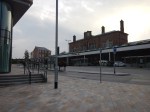
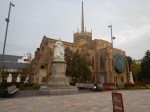



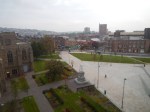
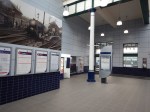
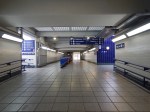
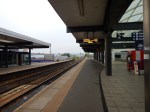
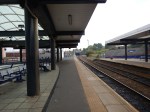
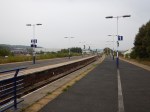
It is an arrangement, that gives the visitor a good welcome to the town. It has the scent of the unexpected about it.
Note these points about the station and the trains.
- The station has recently been rebuilt, but the new trains won’t arrive for a couple of years.
- There are a lot of direct trains across the North from the station to places like Blackpool, Leeds, Manchester, Preston and York, with a couple of rural branch lines in the interesting category.
- Station staff are not very numerous, when you need them.
- You’ll have to hunt the ticket machine.
- There is a Booking Office for buying Ranger and Rover tickets.
- Some parts of the station are showing poor quality construction.
- A return ticket up the Clitheroe Line to Clitheroe cost me £2.50 with a Railcard.
I think with the new trains and some more services, things can only get better.
I might even close the Booking Office, put two ticket machines on each main platform group; 1 to 3 and 4, and get the staff more visible.
In the morning, I had a walk around the part of the town centre nearest to the station.
- There are no maps and just a few finger posts, but it’s not really a place to get lost.
- I bought my paper in a convenient Morrisons about two hundred metres from the station.
- I made the mistake going into the large Shopping Centre, but it was designed like a maze and I didn’t find what I was looking for.
- One gem, I did find later was Cafe Northcote in the Cathedral, where I had an extremely delicious gluten-free egg sandwich.
You could certainly waste an hour or so enjoyably in Blackburn, whilst waiting for a train.
If I compare it to various mid-size towns and cities, where you might miss an hourly train home or get seriously delayed, you get the following.
- Brighton, Cambridge, Liverpool Lime Street, Oxford and Reading – Acceptable for everybody including gluten-free, as there’s an M&S Simply Food in the station.
- Colchester, Ipswich and Norwich – Except for hot drinks and sandwiches, there’s nothing. And you’re away from the centre!
- Derby, Doncaster, Leicester, Nottingham and York – Dreadful, if like me you’re gluten-free.
- Rochester – You’re just across the road from the centre.
- Romford and Southend – You’re in the large town centre, with an M&S, pubs and cafes nearby.
In addition to being better than many in my list, in my view, Blackburn is certainly a better place to get stuck than Blackpool, Burnley or Preston.
Blackburn has certainly raised the stakes about creating a welcoming station.
Northern Rail’s Ticket Machines
This picture sums up Northern Rail’s ticketing machines; lonely, unreliable and crap.
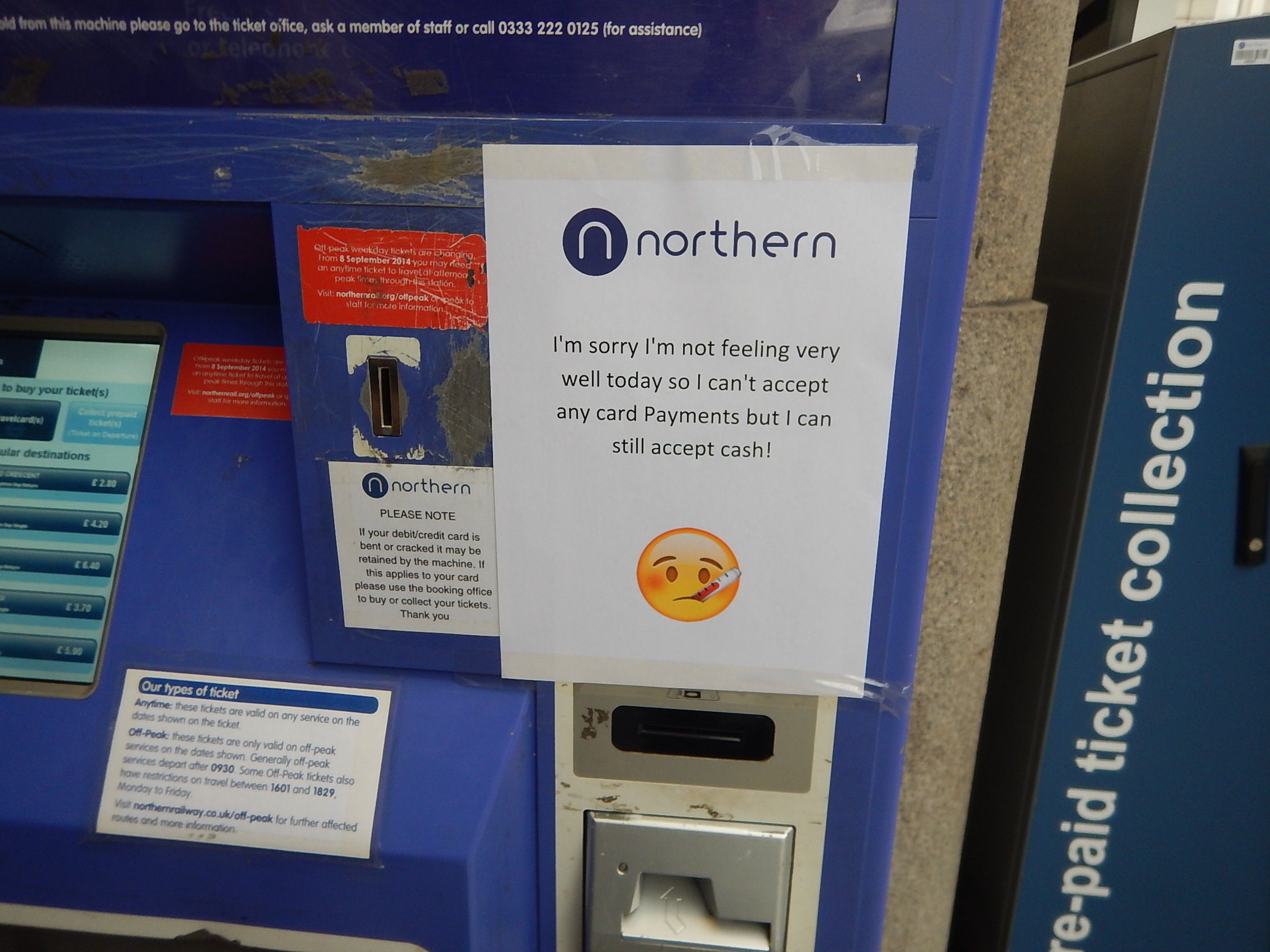
A Niortern Rail Ticket Machine At Manchester Victoria Station
This machine at Manchester Victoria station did work though and after scratching around for a few coins, I was able to get to Blackburn.
A few other comments on my trip to Blackburn on Saturday.
- On my arrival at Liverpool Lime Street station, the queue for the ticket machine was at least fifteen people. So by the time, I’d bought a ticket, my train had left.
- At Manchester Victoria station, there were only two machines for a very busy station.
- At Blackburn station, the machine was hidden in the subway.
- I never saw a machine at the two small stations; Clitheroe and Whalley.
- The last two stations have independent platforms, so if you’re travelling from one without a ticket machine, you’ll have to have a long walk first.
- When I passed through Manchester Piccasdilly on Saturday evening, neither of the Northern Rail ticket machines were fully operational.
The company needs a lot more machines, hopefully with better functionality and reliability. They should also make sure they’re better placed.
Whilst, I’m giving Northern Rail a good kicking, here’s some more annoyances
A couple of stations I visited had a truly dreadful mobile phone signal. I think the law should be that all stations and bus stops should have a top class signal, so that those, who need to text or call their partner, friend or parents can do so.
The two-coach Class 156 train, I rode from Blackburn to Preston was the most overcrowded train I’ve ever ridden. The staff must have known it was so bad as Blackpool had just been beaten at Accrington. So why weren’t we told by the station staff?
Probably because they were keeping well away!
At least we had a nun on board and she probably prayed for our safe deliverance to Preston.
Surely, Northern could have rustled up another or bigger train from somewhere. A four-car Pacer would have been manna from heaven!
What’s missing from this picture?
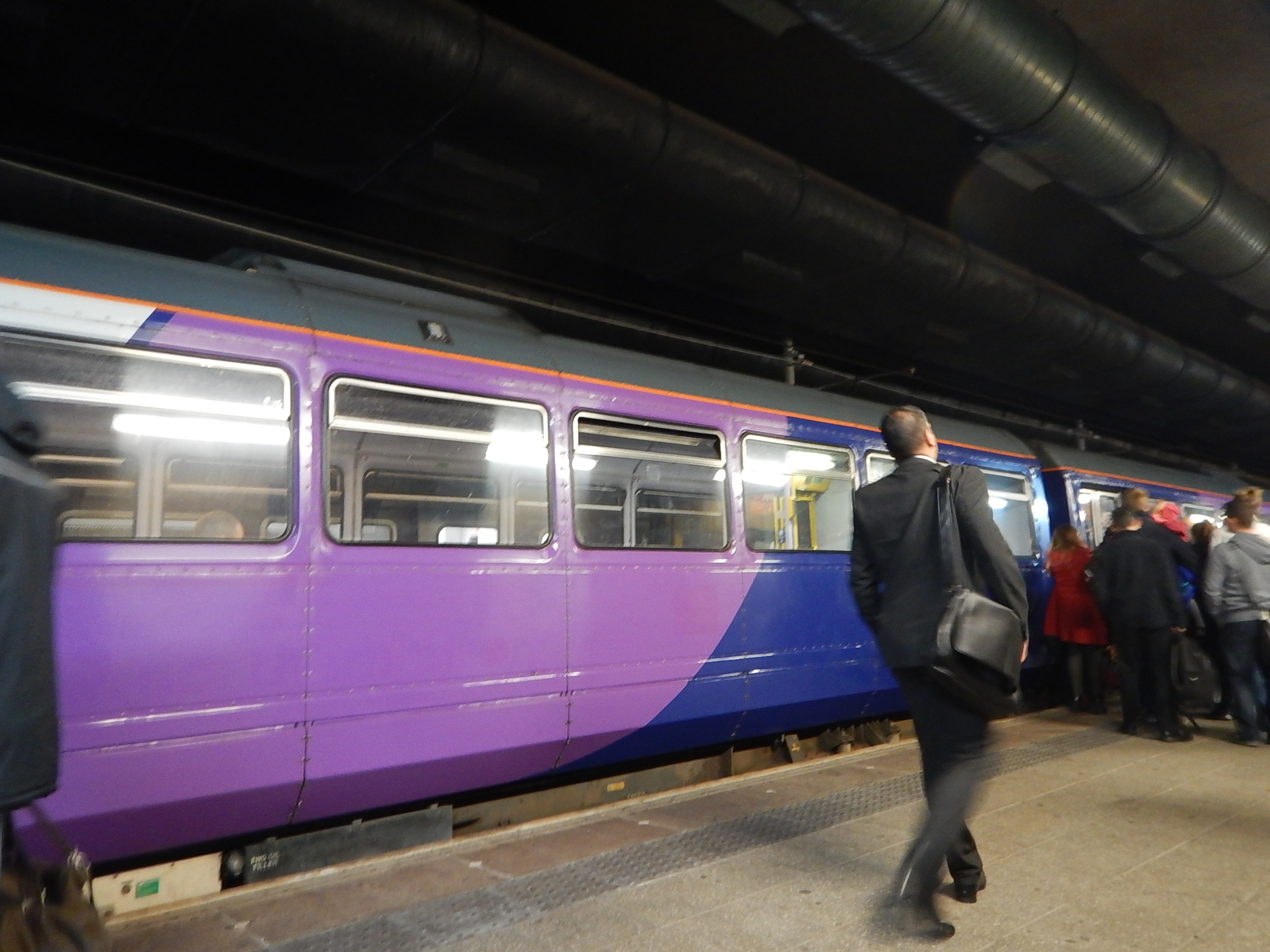
Getting My Train To Blackburn
Although, it was the Peak, there was no prominent staff on the platform to help unload and load this four-car Pacer.
I had to look it up on the Internet, whether our train stopped at Rochdale for a fellow traveller.
Incidentally, Manchester Victoria is starting to look tired and dirty. Is it all the diesel exhaust?
Northern also seem to specialise in bad information on stations. The bus information at Blackburn was abysmal and pointed you to a non-existent bus stop to get to Ewood Park.
I do wonder that Northern are worried if they improve things, then too many passengers might want to use the service and they’d have to buy more trains.
Manchester Oxford Road Station
Manchester Oxford Road Station, is that rare animal, a modern station with a Grade II Listing.
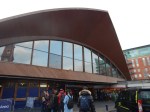
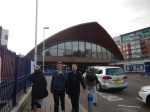
Probably, the most significant thing about the listing of Manchester Oxford Road station, is that there are few stations, built in the 1960s, worthy of any merit.
c2c’s Class 387/3 Trains On Test At Crewe
I took these pictures of two Class 387 trains destined for c2c at Crrwe, as my train passed through on the way to Liverpool.
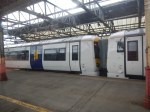
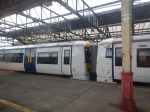
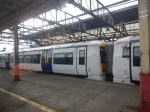
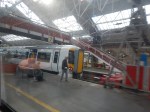
They were numbered 387301 and 387302 and their destination boards said they were going to Wembley Central.
Now that would make an interesting route for c2c!
Why Number The Trains As Class 387/3?
Seriously, though, I’m curious why the c2c trains are numbered as Class 387/3 trains, whereas the trains for Great Western Railway are all numbered as Class 387/1 trains.
This is said in Wikipedia about these trains.
In April 2016, c2c announced that it would operate six of the 20 additional units ordered by Porterbrook until a fleet of 68 new carriages are delivered in 2019.
So as they are a short term fleet, that will do the rounds of various operators, who are short of trains, perhaps starting a new group of numbers is good for housekeeping purposes at Bombardier?
On the other hand if c2c and its customers and staff like the new trains and c2c see that an all-Electrostar fleet has advantages for operational reasons, perhaps the extra 68 new carriages will be Class 387/3 trains.
After all, the highest number for a Class 387/1 is 387174, which only allows for another 25 trains in the sequence, before the numbers interfere with the Class 387/2 numbers.
Which all points to sensible housekeeping, as there is nothing on the Internet, to say there is any differences between the Class 387/1 and Class 387/3 trains.
Could The Class 387/3 Trains Have Batteries?
There are several well-publicised reasons for adding batteries to an electric multiple unit.
- Handling regenerative braking.
- Depots and stabling sidings without overhead wires.
- Train recovery in case of overhead power failure.
- Remote train start-up, ready for the driver.
- Extending routes over lines without electrification.
Note.
- The current Class 357 trains and all Class 387 trains have regenerative braking, so c2c routes can obviously handle it.
- c2c’s depot at Barking is crowded, but would they want the expense of building a second depot anyway.
- Train recovery could be very valuable, especially if a whole fleet was fitted.
- Remote train start-up is available for Aventras and I’ve met a couple of drivers, who would love it!
c2c likes to take a strong green stand as this page on their web site shows.
So the main serious reason we have left is route development.
 The Anonymous Widower