Abbey Wood Station – 21st May 2018
Abbey Wood station has been progressing and I took these pictures.

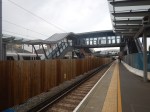
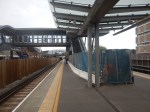
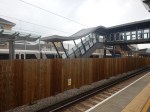


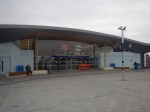

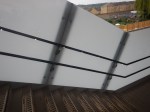
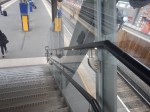

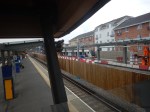
The layout of the connecting bridges between the Crossrail and North Kent Line platforms is now clear.
- At the London End, there is a simple footbridge, with steps to each pair of platforms.
- At the Main Entrance End, there are wide steps and a lift between the station ticket hall and each pair of platforms.
- The third bridge in the middle is the unusual one with wide steps and a single escalator to each pair of platforms.
I would assume, that the direction of the escalators is as follows.
- In the Morning Peak, the North Kent Line escalator is set to Up and the Crossrail escalator is set to Down, to speed passengers from the North Kent Line to Crossrail.
- In the Evening Peak, the Crossrail escalator is set to Up and the North Kent Line escalator is set to Down, to speed passengers from Crossrail to the the North Kent Line.
- At other times with less traffic, both escalators would be set to Up.
I have seen a lot of station layouts all over the UK and Europe and never one like this.
I doubt, I’ve even seen a pair of platforms connected by three separate bridges too!
Could it be a design of genius to allow thousands of passengers to change between the two pairs of platforms in a short space of time?
Other station layouts that enable this rate of passenger transfer, like the interchange between Crossrail and the Central Line at Stratford station, arrange for a cross-platform interchange, with lines going in the same direction sharing a common platform.
But that arrangement would have been difficult at Abbey Wood, unless perhaps the Crossrail tunnel emerged closer to the station or a flyover or dive-under were to be built.
Both options would have required more space and would have been a lot more expensive.
The design of Abbey Wood station with its three footbridges and wide platforms, would appear to be a more affordable alternative.
Train Length
In some of the pictures, a Class 345 train is shown in one of the Crossrail platforms.
This is a full-length train, which is 205 metres long.
The pictures show just how long these trains are.
LED Lights On The Stairs
Three of the pictures in the bottom row, show the stair handrails with their light underneath.
I Like them.
TfL In Talks Over Extending Crossrail Eastwards
The title of this article is the sam as that of this article on Construction News.
The article talks about the following.
- Extending from Abbey Wood to Ebbsfleet International.
- TfL has had discussions with Network Rail.
Serious talks may well happen, once the new Southeastern Franchise takes over later this year.
How To Recycle A Station
Hanborough station on the Cotswold Line in Oxfordshire in being expanded.
Wikipedia says this, about theplans announced in 2016.
Plans were announced to increase services from Hanborough Station, by Great Western Railway. A launch event was held in Witney, at which GWR’s managing director Mark Hopwood said that the investment needed was £275 million. Double tracking would be reinstated between North Oxford and Long Hanborough and two disused platforms reopened. The local constituency MP and Prime Minister David Cameron told delegates at the meeting ” am utterly convinced of the necessity of investing in this line. I will do everything I can to give this vision a boost.”
This article on IanVisits, is entitled How Crossrail’s Legacy Could End Up In Rural Oxfordshire.
The article describes how the temporary station at Abbey Wood station, during Crossrail construction.
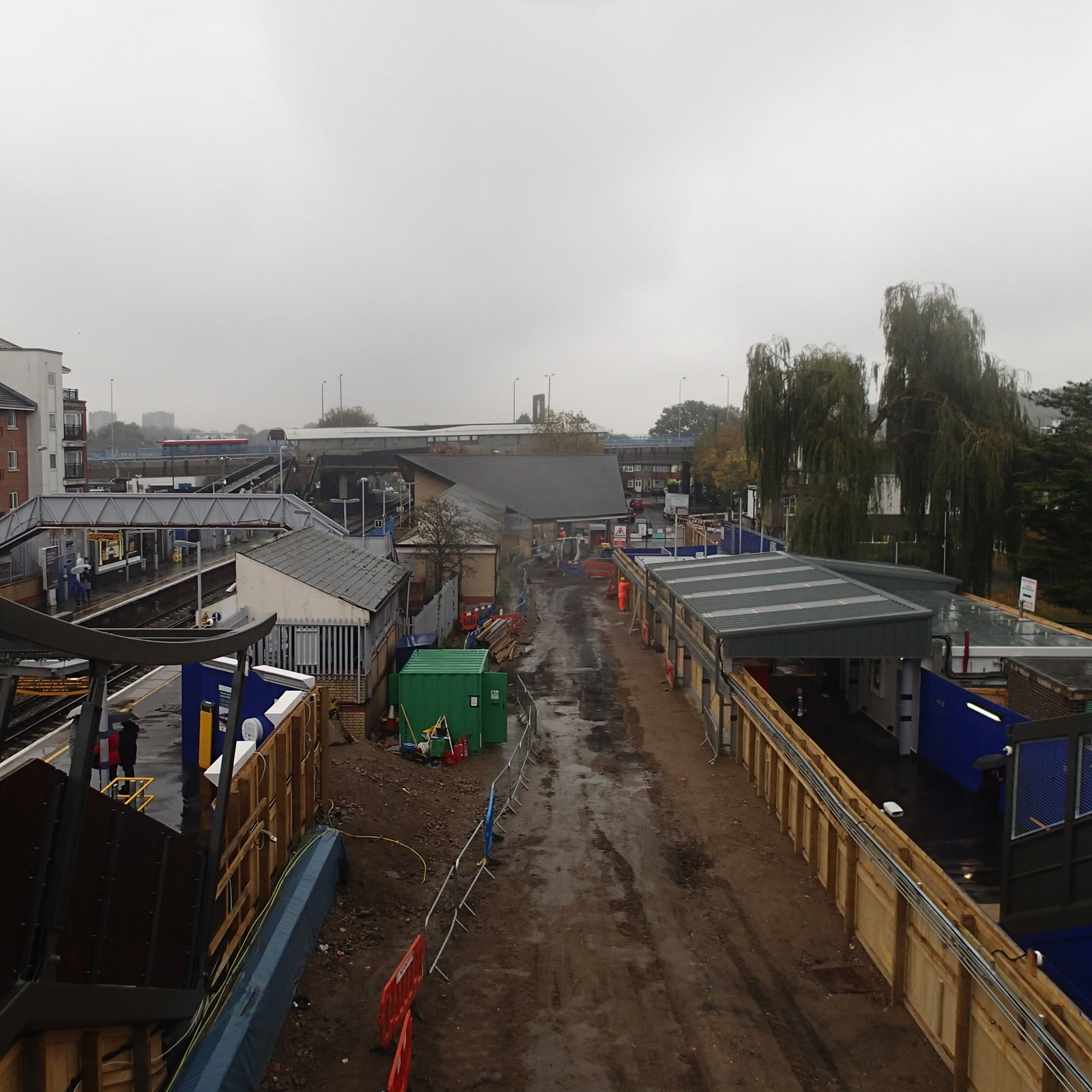
My picture comes from a post called Crossrail Build A Temporary Station.
The station buildings that could go to Hanborough are on the right behind the fence.
Abbey Wood Station Opens
Abbey Wood Station partly opened today.


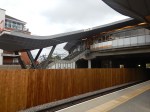

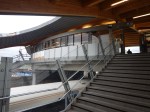
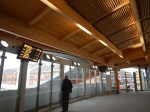
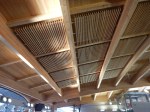
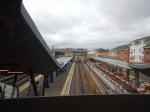

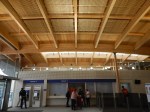
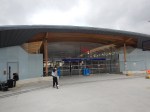

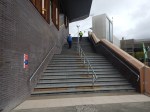
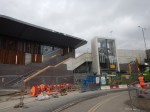
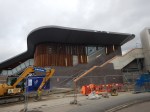

As can be seen, it is not finished, but it can certainly accept all the Southeastern trains calling at the station.
Is it the UK’s first station with three pedestrian bridges and six lifts?
Abbey Wood Station – 30th July 2017
I took these pictures at Abbey Wood staeion.


Note my other post about Abbey Wood station called Construction Of The Platform Structures And Tracks For Crossrail At Abbey Wood Was Cimpleted By Network Rail In May 2017, which was based on a picture caption in the August 2017 Edition of Modern Railways.
Does this also include the electrification?
It now appears that West of the station, the electrification runs all the way to the tunnel entrance. But the electrification is treated differently in the two Crossrail platforms.
- In Platform 3, which traditionally would be the London-bound platform, the wires go under the station bridge and finish on a single vertical gantry. Conveniently, it’s shown in the last picture in the gallery.
- In Platform 4, which is the Northernmost platform, the wires are fixed to the station building. This is shown in the penultimate picture in the gallery.
So it would appear, that Crossrail trains can only go East of the station under electric power only using the track through Platform 3.
I couldn’t see if there was any connection between the track through Platform 4 and that through Platform 3, but there was also some supports for the old bridge in the way.
There would need to be a connection, if the track to the East of the station was to be used as a reversing siding.
What is now clear is that the station must be one of the few stations with three footbridges.
- There is the main one at the East containing the main station building, which probably has lifts.
- One in the middle of the platforms, which looks like it might have lifts.
- There is a smaller footbridge at the Western end of the station.
According to this page on the Crossrail web site the station has a total of six lifts.
I suspect the number of lifts is because the site and the track layout, mean that it has not been possible to organise cross-platform interchange bettween Crossrail and the North Kent Line.
Construction Of The Platform Structures And Tracks For Crossrail At Abbey Wood Was Cimpleted By Network Rail In May 2017
The title of this post, was stated under a picture in the August 2017 Edition of Modern Railways.
The picture had been taken on site from the other side of the fence through the station to this picture I took in July 2017.
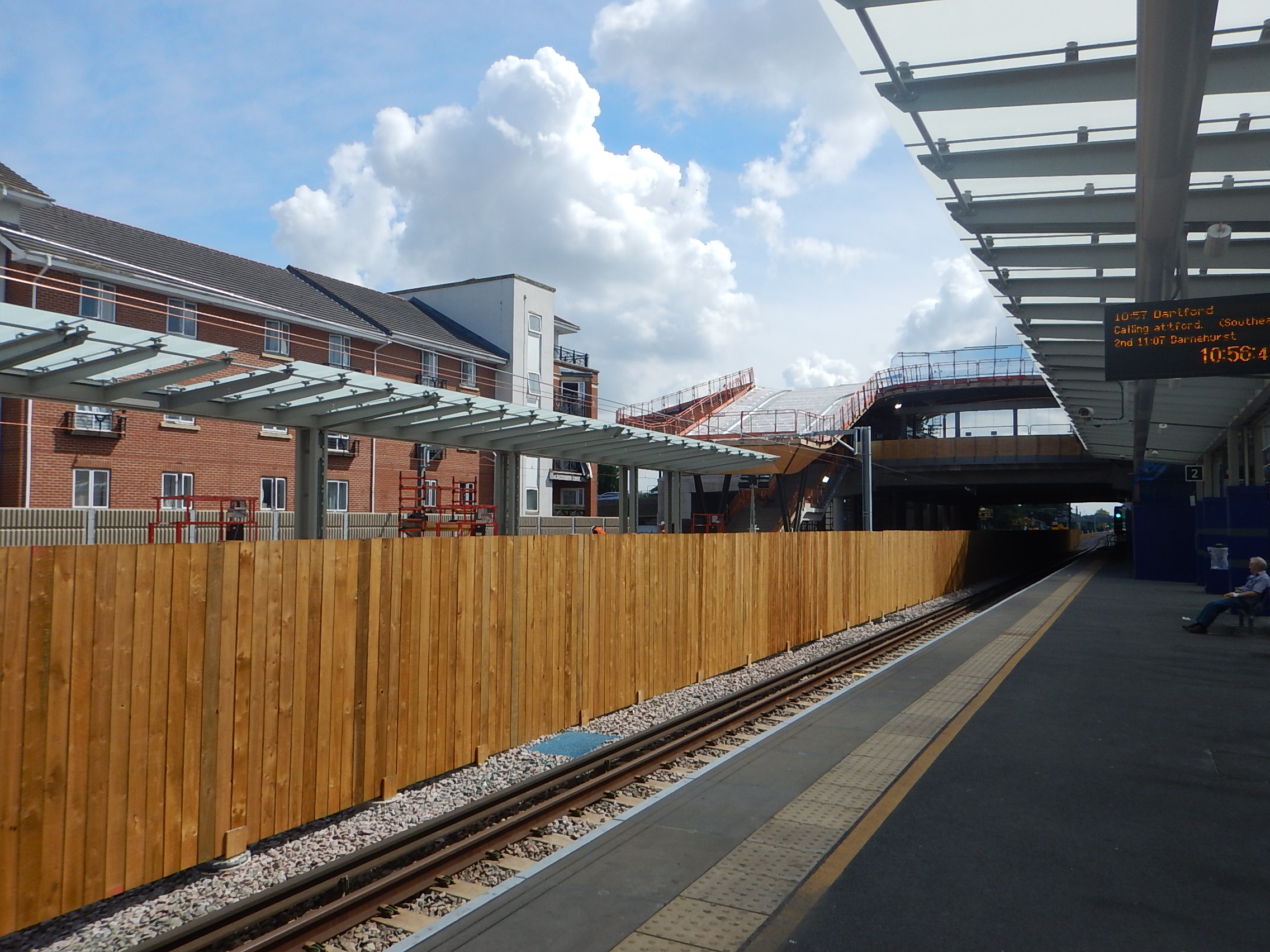
My later picture shows some of the canopies for the Crossrail platforms in position.
If Network Rail’s statement that formed the title of this post is correct, then is the track layout to the East of the station complete?
This picture shows the unelectrified line leading away from the station.
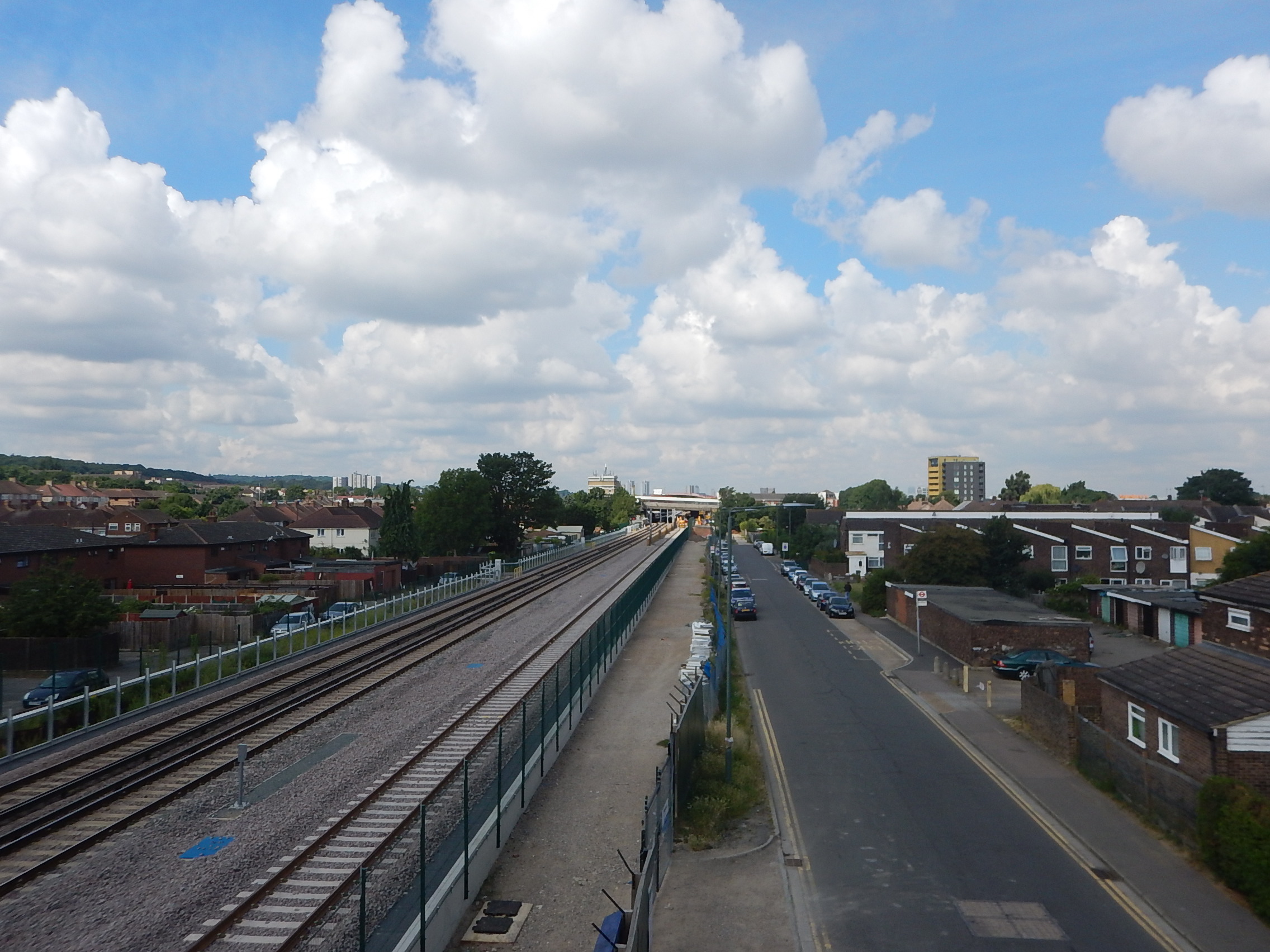
Note the track without any electrification by the fence in the right foreground and the two third-rail electrified North Kent tracks in the left background.
This picture shows the track going towards Belvedere station.

Note the cross-over by the signal.
Can Crossrail Reverse All The Scheduled Trains At Abbey Wood?
Crossrail have now published a more detailed schedule for the services.
The schedule shows that a maximum of twelve trains need to be reversed at each of Abbey Wood, Paddington and Shenfield stations.
In this article on Rail Engineer, which is entitled Signalling Crossrail.
The Class 345 trains are fitted with a system called Auto-Reverse, which I explained in Crossrail Trains Will Have Auto-Reverse.
The driver selects auto-reverse and walks back through the train, as it changes platforms automatically. By the time the driver is in the other cab, the train is in position in the other platform, ready to go back to London.
But the article in Rail Engineer also says this.
Auto reverse (AR) is not provided on Network Rail infrastructure. There will also be the possibility to use AR into and out of the stabling sidings at Abbey Wood so the driver will be at the correct end of the train to finish a shift or, when coming on duty, to start a new run westwards. Service trains will, however, normally reverse in the station. AR may also be used at Custom House and anywhere using crossovers in the central section.
As the normal twelve trains per hour (tph) making up the service, will be using both platforms, cross-overs are provided to the West of Abbey Wood station, as is shown in this picture.
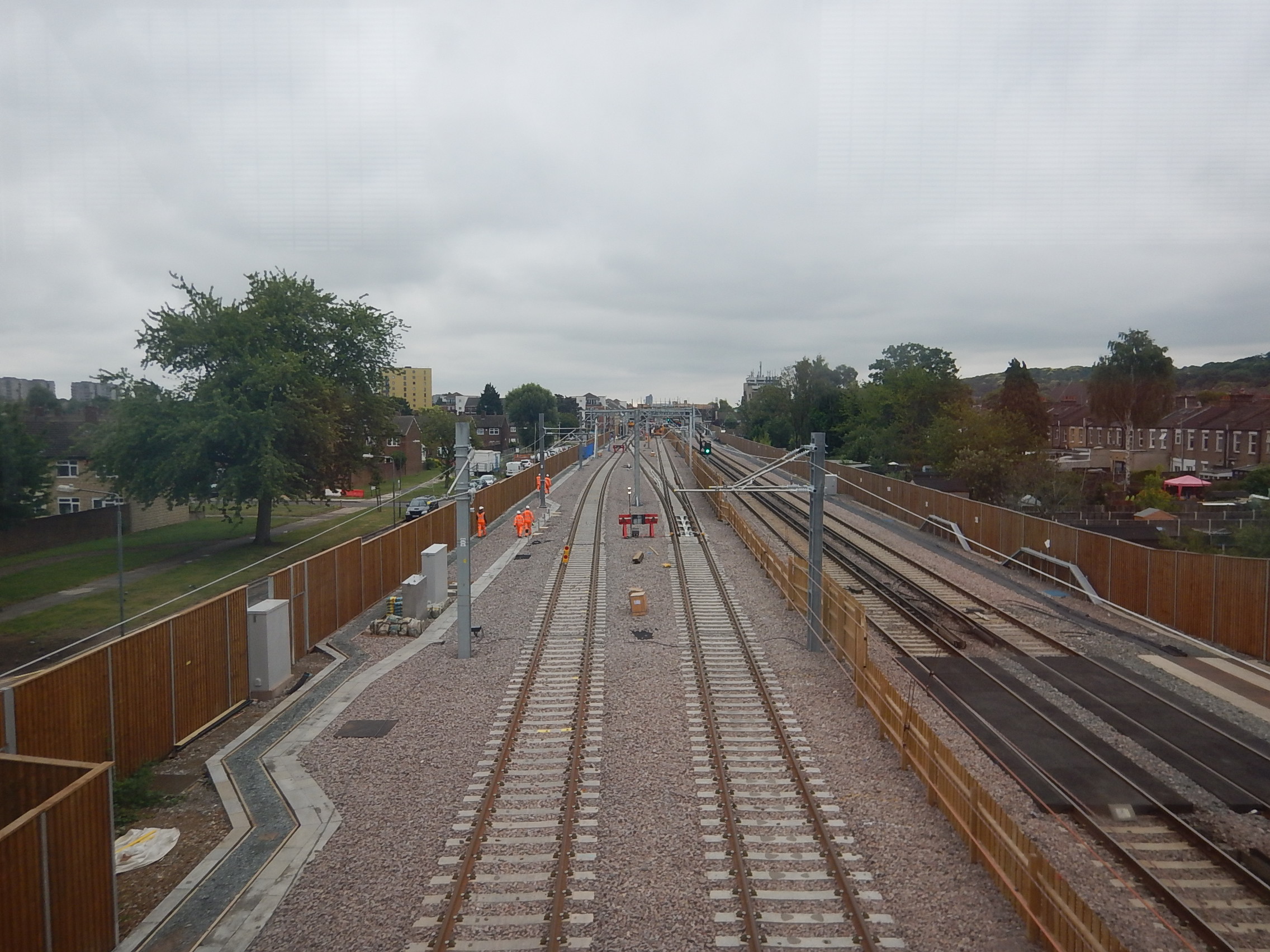
The system used at Abbey Wood will also be used at Shenfield.
Why Has The Reversing Siding Not Been Electrified?
In my view there can only be two explanations, if Modern Railways have got their picture caption right, which categorically said work was finished.
- My reconnaissance was wrong.
- Full electrification is not needed to reverse the trains.
On digging deeper, I took these four pictures at Abbey Wood station.
The pictures show in order.
- The overhead wires for Platform 4 fixed to the station building. Look under the top of the staircase.
- The overhead wires for Platform 3 passing under the station building.
- The overhead wires for Platform 3 passing under the station building.
- The overhead wires for Platform 3 anchored to a solid girder on the other side of the station building.
I couldn’t see the track layout because the wooden fence was in the way, but it would seem logical that the track through Platform 4 will eventually connect to the track through Platform 3.
This would allow the following.
- Trains arriving in Platform 4 to transfer to Platform 3 using the reversing siding.
- Crossrail trains to continue East on the North Kent Line using the single track and the crossovers to the East of the station.
- A failed train could be pushed into the reversing siding, which could probably accommodate two trains.
- Service and maintenance trains to access Crossrail’s Plumstead depot from the East.
But even if there is no connection, two independent platforms can handle the twelve trains per hour, as they will do at Shenfield.
Crossrail Expands Before It Opens
This is certainly something you don’t hear often about a new rail line.
This article in Global Rail News is entitled TfL To Order More Elizabeth Line Trains.
Four new Class 345 trains are being ordered, which will mean that in the Off Peak the following will happen.
- Trains between Whitechapel and Paddington will increase from 16 trains per hour (tph) to 20.
- Trains between Paddington and Shenfield will increase by two tph
- Trains between Paddington and Abbey Wood will increase by two tph
- Trains between Paddington and Reading will double from two tph to four.
- Trains between Paddington and Maidenhead will increase from four tph to six
- From December 2019, six tph will call at Heathrow Terminal 5.
So have Transport for London miscalculated the capacity of the line?
I suspect not!
It’s just that they wanted to be sure that the trains and the signalling can handle the frequency of twenty tph, before ordering the trains.
That has probably been ascertained by now thorough thorough testing.
This article on the BBC, is entitled Crossrail Stations In West London Delayed Until 2019.
I wonder, if this is within the float of these station builds, so that the whole project is not delayed.
Have Crossrail only announced the actual completion date, when it is certain it can be met?
If it is, these two apparently disconnected stories show Project Management at its best, where a project is delivered on the date agreed before as much as a humble spade had entered the ground.
- If it is late the client and the general public complain.
- It it is early, the construction team have probably spent too much money.
So hopefully, everybody’s happy!
I would love to see Crossrail’s schedule of announcements until December 2019.
Like the ordering of more trains mentioned in the first article, I suspect some will be pleasant surprises.
The first article also has this paragraph.
The increased service frequency will be achieved, in part, by replacing five Great Western Railway services with Elizabeth line trains.
So could we see Greater Anglia and Southeastern losing paths and becoming better integrated with Crossrail?
In Abbey Wood Station in my series of Kent On The Cusp Of Change posts, I said that it looks like the track layout allows trains to run on to Dartford, Gravesend or even Rochester, as other trains on a modern signalled North Kent Line.
At Shenfield station, provision has been made in the track layout for trains to continue from Platform 4 to Southend Victoria station and Greater Anglia trains already do it.at a frequency of three tph.
I don’t think it will happen, as the journey is too long for a train without toilets.
But if Platforms 4 and 5 at Shenfield were bi-directional, this would allow Crossrail trains to venture down the Southend Branch.
Small Electrification Projects
My visit to Abbey Wood station yestetday proved to me that some small electrification projects don’t actually need wires or third rails.
The reversing siding for Crossrail, which is also a link to the North Kent Line, consists of the following new tracks.
- A set of points at the Eastern end of Abbey Wood Station to connect the two Crossrail platforms 3 and 4 and allow trains to reverse.
- A track to serve as the reversing siding and the link between the two lines. It is probably about 700 metres long.
- A set of points to connect the libk to the Down North Kent Line.
- A cross-over between the two North Kent Lines.
Only about fifty metres of the reversing siding around the first set of points is electrified.
I have been convinced for some time, that the Barking Riversude Extension will be built without wires, as the project details mention electric trains, but don’t mention electrification.
Aventras may also have a remote wake-up capability as detailed in Do Bombardier Aventras Have Remote Wake-Up?, which would allow trains to be parked overnight in sidings without electrification
Kent On The Cusp Of Change – Abbey Wood Station
The Kent On The Cusp Of Change article in the July 2017 Edition of Modern Railways talks about Kent and Crossrail.
This is said.
In December 2018, the Elizabeth Line is due to reach its south-eastern terminus at Abbey Wood, where there will be interchange with the North Kent line.
A wide range of new journey opportunities will open up, which over time will influence many choices over work and home locations. A train every five minutes from Abbey Wood to Canary Wharf and central London is expected to have a dramatic effect in North Kent.
The article goes on to say that a working group called Crossrail Gravesend is pushing to extend the Elizabeth Line to Ebbsfleet International station for High Speed One.
In this post, I will talk about issues at Abbey Wood station.
The Modern Railways article says that Abbey Wood station is a cross-platform interchange, as do other articles.
Track Layout At Abbey Wood Station
This map from carto.metro.free.fr shows the layout of lines at Abbey Wood station.
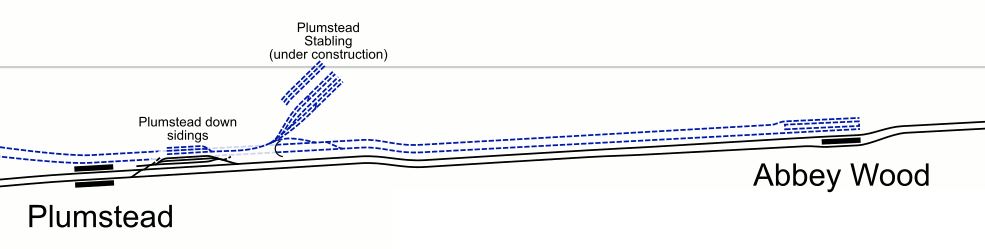
Compare this with this track layout, that I posted in Abbey Wood Station – 29th August 2016.
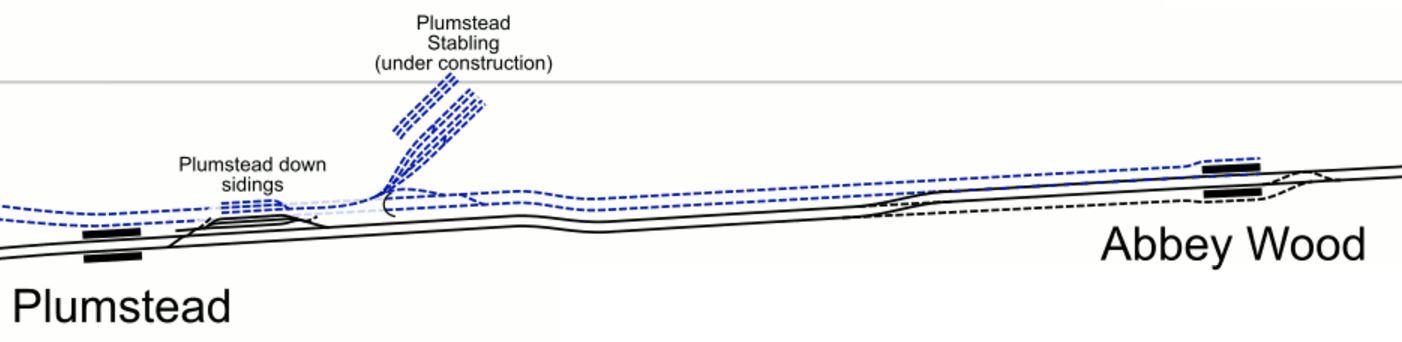
Note the following.
- The older layout shows cross-platform interchange.
- The current one has two pairs of platforms, with Platforms 3 and 4 for Crossrail and Platforms 1 and 2 for other services.
- The current layout probably connects better to the existing lines to Dartford.
These pictures were taken on the 28th June 2017 and show pictures generally taken from the West of the station.




They show a similar layout, of two Northern platforms (3 & 4) for Crossrail and two Southern platforms (1 & 2) for all other services.
Note.
- The two cross-overs to the West of Abbey Wood station to get the Crossrail trains to and from the right platforms.
- The station building and the two footbridges over the lines.
- The solid wooden fence between the two pairs of lines.
- The robust nature of the overhead wiring.
I suspect, that if they had wanted to have Eastbound and Westbound lines each share an island platform, it would have required a flyover, which would have been a large expense.
These pictures were taken on the 10th July 2017 to the East of the station.
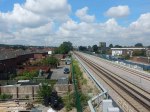
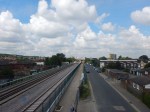

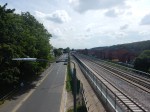
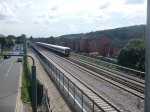
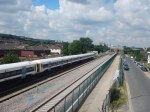


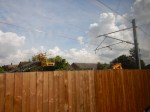

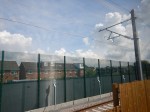


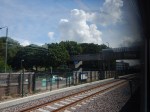

Note that the first seven pictures were taken from a public footbridge that crosses the tracks about five hundred metres to the East of Abbey Wood station and the last few pictures were taken from a train leaving Abbey Wood station for Dartford station.
This recent Google Map shoews from Abbey Wood station, to where the reversing siding ends close to where Aliske Road turns North
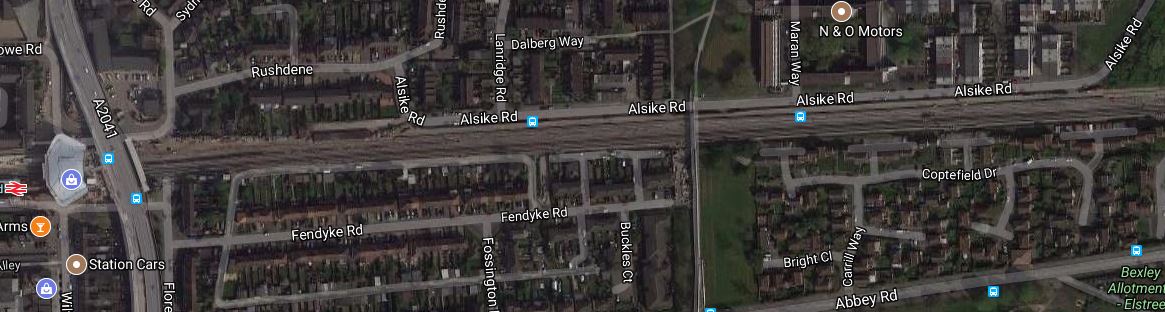
The pictures and the map show the following.
- The two third-rail electrified tracks of the North Kent Line run between Platforms 1 and 2 at Abbey Wood station to Belvedere station.
- The North Kent tracks are fully in use, by services between London and Kent.
- The two Crossrail Platforms 3 and 4 at Abbey Wood station are electrified with overhead wires.
- The two tracks in Platforms 3 and 4 would appear to join together into a single line mainly without electrification, that connects to the North Kent Line about a kilometre to the East of Abbey Wood station.
- There is only a short length of electrification to the East of the station.
It is not what I expected, as it means that there is no cross-platform interchange between services going to North Kent and Crossrail, as various sources including the The Kent On The Cusp Of Change article have said.
Passengers changing between the North Kent Lines and Crossrail will have to go over through the station or use the bridge.
So how will the station handle the various train movements?
Comparison Between Abbey Wood and Shenfield Stations
Abbey Wood will after rebuilding be a station with two North Kent and two Crossrail platforms
Shenfield station has now been converted into a station with six platforms, three of which can be used as Crossrail platforms.
In the Peak, services to the two stations are as follows.
- Shenfield – 10 trains per hour (tph)
- Abbey Wood – 12 tph
In addition 4 tph on the Shenfield Branch turn-back at Gidea Park station.
In the Off Peak, services to the two stations are as follows.
- Shenfield – 8 tph
- Abbey Wood – 8 tph
So it would appear that Abbey Wood is the harder station to operate with more services in the Peak and one less platform.
Train Stabling At Abbey Wood Station
Train stabling needs to be provided on a busy branch line, as it makes it easier to adjust the number of trains running to the demand throughout the day.
At Shenfield, the stabling sidings are beyond the station, which must be easier operationally, than the position of the sidings at Abbey Wood, where they are back down the line at the Plumstead tunnel portal.
If you look at the second set of pictures taken to the East of the station, spaqce would appear to be very limited. So is this why stabling is not ast of Abbey Wood station.
Turning Back Crossrail Trains At Abbey Wood
At Shenfield, train operators have been turning back Class 315 trains at a rate of six tph since 1980, so with the addition of a new platform and modern trains and signalling, the handling of ten tph should be achievable.
But at Abbey Wood in the Peak, there is a need to turn trains round at a rate of twelve tph or a train every five minutes.
The operation could involve each of Platform 3 and 4 handling six tph, using the cross-overs to the West of the station to get the train between each platform and the right Crossrail track, but handling six tph on two platforms feeding a 12 tph double track railway is a tough ask.
From what I have seen, I think that Crossrail will turnback their trains like this.
- All Crossrail trains from London arrive in Platform 4.
- All Crossrail trains to London depart from Platform 3.
- All trains arriving in Platform 4 use the unelectrified single track line as a reversing siding to get to Platform 3
- As the pictures show, the single track line is probably long enough to store a failed train, for later recovery.
But the Class 345 trains have a system called Auto-Reverse.
When the train is ready to leave Platform 4,the driver initiates an Auto-Reverse and the train moves automatically into the reversing siding, whilst the driver starts to walk back through the train to the other cab.
- By the time, the train is in the reversing siding, the driver is ready to drive the train into Platform 3.
- The process will have to be done within five minutes.
- The process could also involve the basic cleaning and removal of rubbish, with cleaners getting on at Platform 4 and getting off at Plstform 3.
Crossrail is not your bog-standard railway.
Trains Leaving Service At Abbey Wood
Suppose a train was leaving service at Abbey Wood.
Normally, it would probably perform the Auto-Reverse and go to the stabling sidings at the Plumstead tunnel portal.
It might even go the wrong way directly out of Platform 4, if the signalling was bi-directiomal.
Remember too, that Class 345 trains could be two independent half-trains, so if one half fails, the other could be designed to get the train to safety and out of the way.
Class 345 trains are not a bog-standard trains.
Running Crossrail Trains To And From Gravesend
From what I have seen, I’m convinced that the track layout at Abbey Wood station, means that Crossrail can be easily extended to and from Dartford, Gravesend, Rochester, Gillingham or Rainham.
Let’s assume the terminal for four tph is Gravesend.
Crossrail trains from London to Gravesend will do the following.
- Stop in Platform 4 at Abbey Wood station.
- Lower the pantograph
- Take the single uon-electrified line alongside the North Kent Line.
- Cross over to the Down North Kent Line.
- Use the third-rail electrification to travel to Gravesend.
Crossrail trains from Gravesend to London will do the following.
- Use the third-rail electrification to travel from Gravesend.
- Cross over to the single non-electrified line alongside the North Kent Line before Abbey Wood station.
- Stop in Platform 3 at Abbey Wood station.
- Raise the pantograph.
The Crossrail trains would be needed to be fitted with third-rail shoes.
Interchange BetweenThe Extended Crossrail And Other Services.
Suppose you are going from Ramsgate to Paddington, you would get a Highspeed service to Gravesend and then wait for a Crossrail train to call at the same platform.
To repeat myself, Crossrail is not a bog-standard railway.
Crossrail’s Trump Card
When the trains turnback at Abbey Wood or extend to and from Gravesend, the Class 345 trains will have to use the non-electrified single track line shown in the pictures.
It may be electrified in the next year! But why bother?
The distances that need to be handled without power are not much more than a kilometre at slow speed.
The Class 345 trains could be fitted with batteries to bridge the gaps in the electrification.
These batteries will also do the following.
- Handle regenerative braking.
- Provide emergency power, in the event of complete tunnel power failure.
Conclusion
To repeat myself again, Crossrail is not a bog-standard railway.
See Also
These are related posts.
- Ashford Spurs
- Crossrail
- Elimination Of Slow Trains
- Fawkham Junction Link
- Highspeed Routes
- High Speed To Hastings
- Historic Routes
- Longfield Station
- Maidstone
- Reading To Tonbridge
- Thameslink
- Thanet Parkway Station
- Track Improvements
- Ultimate Class 395 Train
- Victoria As A Highspeed Terminal
To know more read Kent On The Cusp Of Change in the July 2017 Edition of Modern Railways.
Kent On The Cusp Of Change – Crossrail
The Kent On The Cusp Of Change article in the July 2017 Edition of Modern Railways talks about Kent and Crossrail.
This is said.
In December 2018, the Elizabeth Line is due to reach its south-eastern terminus at Abbey Wood, where there will be interchange with the North Kent line.
A wide range of new journey opportunities will open up, which over time will influence many choices over work and home locations. A train every five minutes from Abbey Wood to Canary Wharf and central London is expected to have a dramatic effect in North Kent.
The article goes on to say that a working group called Crossrail Gravesend is pushing to extend the Elizabeth Line to Ebbsfleet International station for High Speed One.
Current Services Between London, Abbey Wood And The Medway Towns
Adding together current services at Abbey Wood station as given in Wikipedia with the proposed Thameslink service between Rainham and Luton, which I wrote about in Thameslink To Rainham, gives the following service level at Abbey Wood station.
Westbound;
- 6 trains per hour (tph) to London Cannon Street via Greenwich
- 2 tph to London Charing Cross via Lewisham
- 2 tph to Luton via Greenwich.
All trains will call at London Bridge station, which after rebuilding for Thameslink is complete, will be a formidable interchange to other services, such as the Underground, buses and Shank’s pony.
Londoners tend to think of Crossrail, as London’s most important rail project, but I do think that the rebuilding of London Bridge station in a few years time will be considered the second most important.
In addition, as Abbey Wood will be connected to Crossrail, there must be few places in Central London, to which travel is difficult from Abbey Wood station.
Eastbound;
- 2 tph to Barnehurst via Slade Green returning to London via the Bexleyheath Line
- 2 tph to Dartford
- 2 tph to Gillingham (Kent)
- 2 tph to Rainham (Kent)
- 2 tph to Crayford via Slade Green returning to London via the Dartford Loop Line,
This map from carto.metro.free.fr shows the lines around Dartford station.

Note.
- Barnehurst is on the Bexleyheath Line.
- Cayford station is on the Dartford Loop Line.
- The North Kent Line goes East from Datford station to Gravesend , the Medway Towns and Thanet.
In addition at Abbey Wood station, using their separate platforms and separate tracks to the Crossrail tunnel, 12 tph will be providing the Crossrail service.
Future Services From London To The Medway Towns
Looking at the Southeastern services to Gillingham and the Thameslink services to Rainham, the following can be said
- These are the only services, that go more than a few miles past Abbey Wood station.
- The Gillingham service is a Southeastern Metro service, so probably needs to be run by faster modern trains, rather than the current Class 465 trains.
- The combination of the Gillingham and Rainham services will hopefully give a very passenger friendly train every fifteen minutes between Abbey Wood and Gillingham, via Dartford, Gravesend, Rochester and Chatham.
- The Gillingham service calls at Lewisham, Blackheath, Charlton and Woolwich Arsenal between London Bridge and Abbey Wood.
- The Rainham service calls at Greenwich between London Bridge and Abbey Wood.
I do wonder, if it would be better if the Southeastern service from Charing Cross to Gillingham were to be extended to Rainham and always run by a twelve-car train.
- Rainham is only four minutes further from London than Gillingham.
- Rainham has a twelve-car bay platform.
- Gillingham’s bay platform may not be able to take a twelve-car train.
- Four tph can be handled in a single bay platform.
This would give a high-capacity four tph service between Abbey Wood and the Medway Towns, with two tph from Thameslink and two tph from Southeastern.
But the major factor would be that passengers would surely find it a very easy service to use.
Service Frequencies East Of Dartford
Note that of the eastbound trains, only 6 tph go through Dartford, as the other 4 tph loop back to London.
Between Dartford and Rochester, there is only the 4 tph to Gillingham/Rainham, although they are joined by 2 tph Highspeed trains between Gravesend and Rochester.
It would thus appear that the maximum frequency between Abbey Wood and Rochester is probably 6 tph.
When you consider that the trains through the area, will all be modern trains fitted with the latest ERTMS signalling, handling these numbers of trains and perhaps 4-8 tph for Crossrail between Abbey Wood and Gravesend in the future, will be well below the 24 tph handled by Crossrail and Thameslink in their central tunnels.
The New Track Layout At Abbey Wood Station
Looking at the new track layout at Abbey Wood station, it appears to be very simple with just a reversing siding to the East of the two Crossrail platforms 3 and 4.
Cross-overs appear to be provided so that the following is possible.
- Trains from Crossrail can continue towards Dartford after calling at Platform 4.
- Trains from Dartford can continue towards Crossrail after calling at Platform 3.
It looks to me, that the track layout is designed, so that Crossrail trains can easily run to and from Dartford or any other station that the planners decide is the terminus.
Capacity Between Abbey Wood And Rochester
As the double-track line between Abbey Wood and Rochester with modern signalling can probably handle up to probably 24 tph, there is capacity for a lot of Crossrail trains to go past Abbey Wood.
Suppose Crossrail is extended to Gravesend with 4 tph extended to the new terminal and trains stabled at a new depot at Hoo Junction to the East of the town.
The following frequencies to and from London would apply at various stations.
- Abbey Wood – 10 tph + 12 tph Crossrail
- Belvedere – 10 tph + 4 tph Crossrail
- Erith – 10 tph + 4 tph Crossrail
- Slade Green – 10 tph + 4 tph Crossrail
- Dartford – 6 tph + 4 tph Crossrail
- Stone Crossing – 4 tph + 4 tph Crossrail
- Greenhithe – 4 tph + 4 tph Crossrail
- Swanscombe – 4 tph + 4 tph Crossrail
- Gravesend- 4 tph + 4 tph Crossrail + 2 tph Highspeed
North Kent is going to get a better train service.
Hoo Junction
Hoo Junction, which is a few miles to the East of Gravesend station, has been identified by Crossrail planners, as a suitable area for a depot to serve an extended South-Eastern branch of the line.
Chris Gibbs, in his extensive report on GTR’s performance, suggests that the Hoo Junction area , be used as a depot for Thameslink services to North Kent. I wrote about this in Gibbs Report – Hoo Junction Depot.
In addition, Southeastern are running short of space in Slade Green Depot.
But that’s just the railways.
This report on the BBC indicates that the new Lower Thames Crossing will cross North-South between Gravesend and Hoo Junction.
Should there be a Park-and-Ride station at Hoo Junction?
It would have a four tph service between London and the Medway Towns with a stop at Abbey Wood for Crossrail.
In Gibbs Report – Hoo Junction Depot, I came to the following conclusion.
Crossrail, the Department of Transport, Kent County Council, Network Rail, Southeastern, Thameslink and all other stakeholders and residents should sit round a large table and agree a common long-term philosophy that is in all their best interests for the future.
What happens at Hoo Junction, will be tremendously important to transport infrastructure in the South East of England in general and Kent in particular.
Crossrail To Ebbsfleet International Station
The article talks about extending Crossrail to Ebbsfleet International station, by adding two new tracks through Slade Green and Dartford stations, serving existing stations.
As I showed in the previous section, I think extra tracks are not necessary, as modern signalling can handle the required number of trains with ease. I suspect though, that the 75 mph Class 465 trains will need to be retired from the North Kent Line, as their performance is just not good enough.
The report says this about the connection at Ebbsfleet.
There would be a new station that would have pedestrian access with Ebbsfleet HS1 station and Northfleet on the historic line – this could be the terminus, or the new line might reach as far as Hoo Junction on the east side of Gravesend.
I’ve always felt that Ebbsfleet International station was a logical South-Eastern destination for Crossrail, mainly because of the space at the station for platforms, depots and car parking.
Consider.
- St. Pancras station may have too few platforms for Continental services in the future, so Ebbsfleet International may end up being a terminus for some of these services.
- Southeastern is developing the Highspeed commuter services to East Kent and East Sussex, which probably need a connection to Crossrail and/or Thameslink.
- The Fawkham Junction link connects Swanley and Ebbsfleet International stations, and it could be used by extra Highspeed services or Thameslink.
I’ve always felt that there’s a simple solution in there, but vested interests and politicians seem to stop railway planners from finding it.
So why not use upgrade Northfleet station with the following features?
- The ability to accept the services along the North Kent Line – 4 tph + 4 tph Crossrail
- The ability to accept twelve-car trains.
- A pedestrian link to Ebbsfleet International station based on something a bit sexy. Perhaps a fast travelator or some other form of people mover.
This Google Map shows that there is plenty of space between the stations.
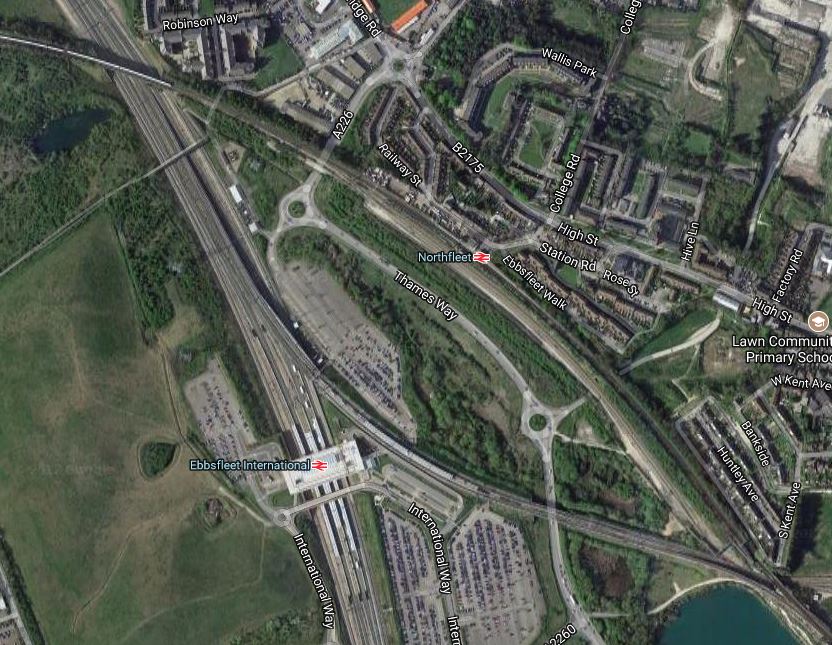
Northfleet station is to the North-East of Ebbsfleet International station.
Could it be that a simple solution would work?
- Belvedere, Erith, Slade Green, Dartford, Stone Crossing, Greenhithe and Swanscombe become Crossrail and North Kent stations.
- Northfleet station is connected to Ebbsfleet International station in a passenger-friendly way.
- The four tph service through the Medway towns to London Bridge continue and are better-integrated with Thameslink at London Bridge.
- The Swanley link to Ebbsfleet is reopened to allow more service opportunities.
But then what do I do know?
Is Abbey Wood Station A Cross-Platform Interchange?
One thing that the Modern Railways article says, is that Abbey Wood station has been designed with cross-platform interchange, in such a way that any delays to Kent services don’t have any knock-on effects on the new services.
The Modern Railways article says that Abbey Wood station is a cross-platform interchange, as do other articles.
This map from carto.metro.free.fr shows the layout of lines at Abbey Wood station.
Compare this with this track layout, that I posted in Abbey Wood Station – 29th August 2016.
Note the following.
- The older layout shows cross-platform interchange.
- The current one has two pairs of platforms, with Platforms 3 and 4 for Crossrail and Platforms 1 and 2 for other services.
- The current layout probably connects better to the existing lines to Dartford.
These pictures were taken on the 28th June 2017.
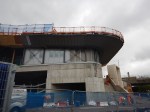

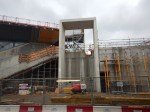
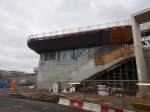
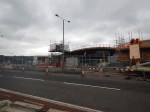

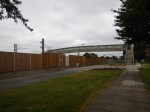


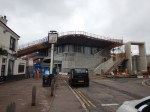
They show a similar layout, of two Northern platforms (3 & 4) for Crossrail and two Southern platforms (1 & 2) for all other services.
Note.
- The two cross-overs to the West of Abbey Wood station to get the Crossrail trains to and from the right platforms.
- The station building and the two footbridges over the lines.
- The solid wooden fence between the two pairs of lines.
- The robust nature of the overhead wiring.
I suspect, that if they had wanted to have Eastbound and Westbound lines each share an island platform, it would have required a flyover, which would have been a large expense.
But at least with this layout, Crossrail trains can have their own pair of lines to the East, running to the North of the current tracks. The Modern Railways article says this.
Mindful of this, the working group is proposing two new dedicated tracks for the extension, running alongside the line through Slade Green and Dartford, with platforms serving the existing stations.
This Google Map shows the route through Dartford.

In some places putting in two extra tracks would be very difficult and extremely expensive and very disruptive to local residents.
Given the capabilities of modern signalling, now being demonstrated on Thameslink in Central London, I believe that something practical for the train companies and friendly for the passengers will emerge.
But one thing is certain. There will not be cross-platform interchange between Crossrail and other services at Abbey Wood station.
Interchange Between North Kent Services And Crossrail
I have a feeling, that this will come down to personal preferences.
After the opening of Crossrail to Abbey Wood in 2018 and the opening of Thameslink to Rainham, passengers will probably have to use Abbey Wood, where it will be an up-and-over via escalators, lifts or stairs.
If and when Crossrail is extended to Gravesend, any of Abbey Wood, Dartford and Gravesend, could be used as a same-platform interchange.
It would also be possible to take a Highspeed service from Ramsgate and change to Crossrail at Gravesend. Would this avoid the extra charge for High Speed One?
I think that Gravesend could become the interchange of choice, as it could have the following London-bound trains, if Crossrail is extended.
- 2 tph – Thameslink to Luton
- 2 tph – Southeastern to Charing Cross
- 2 tph – Highspeed to Ebbsfleet International, Stratford international and St. Pancras.
- 4 tph – Crossrail
There could be a need to improve the platforms to cope with the increase of passenger numbers.
Conclusion
Crossrail will get very involved with the new Southeastern franchise.
See Also
These are related posts.
- Abbey Wood Station
- Ashford Spurs
- Elimination Of Slow Trains
- Fawkham Junction Link
- Highspeed Routes
- High Speed To Hastings
- Historic Routes
- Longfield Station
- Maidstone
- Reading To Tonbridge
- Thameslink
- Thanet Parkway Station
- Track Improvements
- Ultimate Class 395 Train
- Victoria As A Highspeed Terminal
To know more read Kent On The Cusp Of Change in the July 2017 Edition of Modern Railways.
 The Anonymous Widower