Redevelopment Of Scottish Port Begins As Owner Secures GBP 400 Million For Offshore Wind Upgrade
The title of this post, is the same as that of this article on offshoreWIND.biz.
This is the sub-heading.
Haventus, the owner of the Ardersier Port in the Moray Firth, Scotland, has taken a final investment decision and kicked off construction work on redeveloping the port to serve both fixed-bottom and floating offshore wind projects. The revamped port is expected to open in the second half of 2025.
These are the first two paragraphs.
This month, Haventus was granted a GBP 100 million (approximately 117 million) joint credit facility from the Scottish National Investment Bank and UK Infrastructure Bank with GBP 50 million (approx. EUR 58.5 million) investment from each.
This follows a GBP 300 million (approx. 351 million) investment commitment by the energy investment firm Quantum Capital Group in 2023 when Haventus began the redevelopment of Ardersier Port.
This page on the Haventus web site, gives more details of the Port of Ardersier.
Included are.
- Access channel width – 160 m.
- Access channel depth – 12.4 m.
- Landside area – 350 acres.
- 420m main quay.
- 80 m Ro/Ro capable berth.
- People-friendly midges
- Green Freeport tax site designation
- More space is available if required.
There is also an informative video.
Haventus say they are delivering a world-leading energy transition facility. I can go along with that!
These are my thoughts.
The Location Of The Port of Ardersier
This Google Map shows the location of the Port of Ardersier.
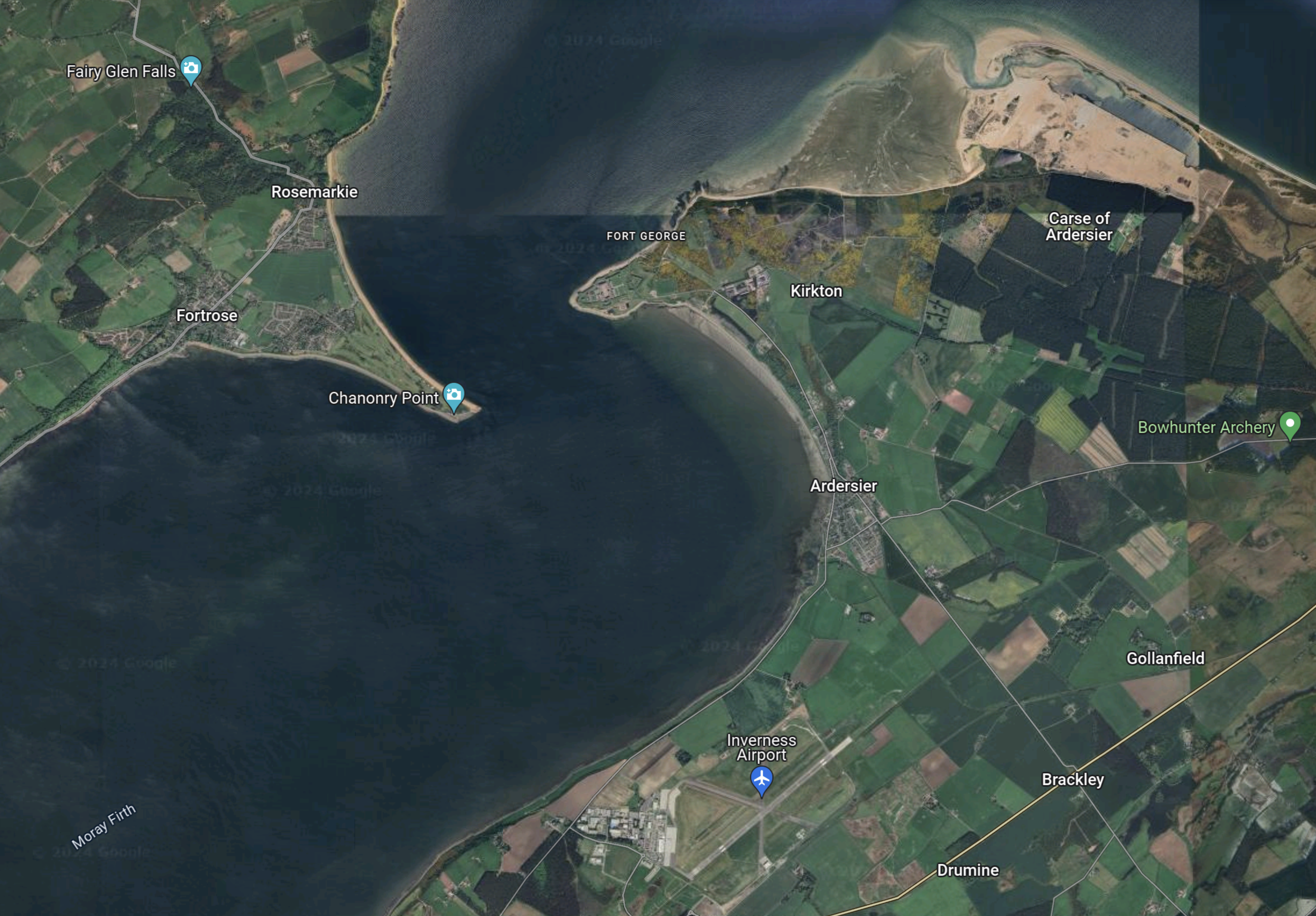
Note.
- The large expanse of water in the middle of the map is Moray Firth.
- The blue arrow at the bottom of the map indicates Inverness Airport.
- Inverness Airport, has a railway station on the Aberdeen and Inverness Line.
- The village of Ardersier is on the the Eastern bank of the Moray Firth
- The Port of Ardersier is in the North-East corner of the map.
The city of Inverness, with a population of around 48,000, is a few miles South-West of the South-West corner of the map.
Which Windfarms Will Be Built And Serviced From The Port Of Ardersier?
This map shows the various ScotWind leases, around the North of Scotland.

The numbers are Scotwind’s lease number in their documents.
These are the Scotwind wind farms to the North-East of Scotland, that could reasonably be assumed to be built and served from the Port of Ardersier.
- 7 – DEME Concessions Wind – 200 km² – 1.0 GW – Floating
- 8 – Falck Renewables Wind – 256 km² – 1.0 GW – Floating
- 9 – Ocean Winds – 429 km² – 1.0 GW – Fixed
- 10 – Falck Renewables Wind – 134 km² – 0.5 GW – Floating
- 11 – Scottish Power Renewables – 684 km² – 3.0 GW – Floating
- 12 – BayWa r.e. UK – 330 km² – 1.0 GW – Floating
These are the Scotwind wind farms to the North-West of Scotland, that could reasonably be assumed to be built and served from the Port of Ardersier.
- 13 – Offshore Wind Power – 657 km² – 2.0 GW – Fixed or Floating
- 14 – Northland Power – 390 km² – 1.5 GW – Floating
- 15 – Magnora – 103 km² – 0.5 GW – Floating
- 16 – Northland Power – 161 km² – 0.8 GW – Floating
These ten wind farms add up to 12.3 GW.
Transport
Consider.
- Obviously, heavy components will be brought in by sea, using the Ro/Ro capable berth or using a crane to unload a barge.
- Personnel will be able to fly in for the day.
- Will some visitors rom London use the Caledonian Sleeper to and from Inverness station to get a full day on site and a good night’s sleep, whilst travelling.
But I do see a problem with local traffic to and from the site.
Hydrogen Buses
This page on the Sizewell C web site, discusses how they will use hydrogen buses.
I could see the Port of Ardersier taking a leaf out of Sizewell C’s book and run hydrogen buses to Inverness, Inverness Airport and other nearby towns.
The North of Scotland certainly won’t be short of green hydrogen to power the buses.
Hydrogen
Conclusion
If you thought that the only useful wind-driven thing to come out of Scotland was bagpipes, you had better think again.
The Port of Ardersier will be the factory and operation and maintenance port for one of the largest offshore wind industries in the world.
Councillors Approve Train Station For Inverness Airport
The title of this post, is the same as that of this article on Rail Technology Magazine.
These are the first two paragraphs.
Planning permission has finally been granted for a two-platform train station at Inverness Airport.
The plans were “reluctantly” granted by the Highland Council, as much debate over the Petty Level crossing which is to be removed as a consequence.
Ir certainly looks like there were strong arguments over the level crossing.
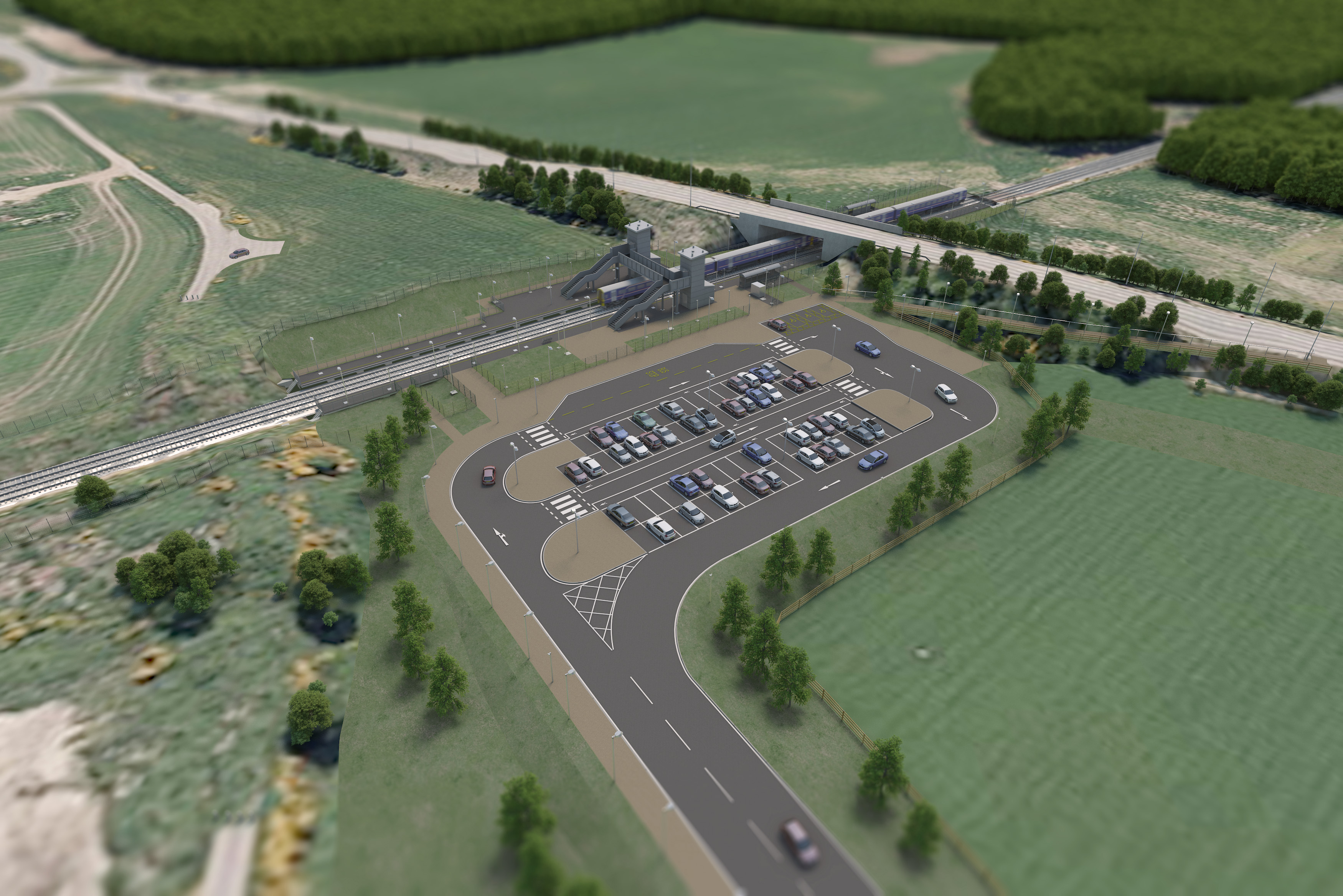
This Network Rail visualisation shows the station from a virtual helicopter hovering over the Airport.
And this Google Map shows the Airport from the South-West
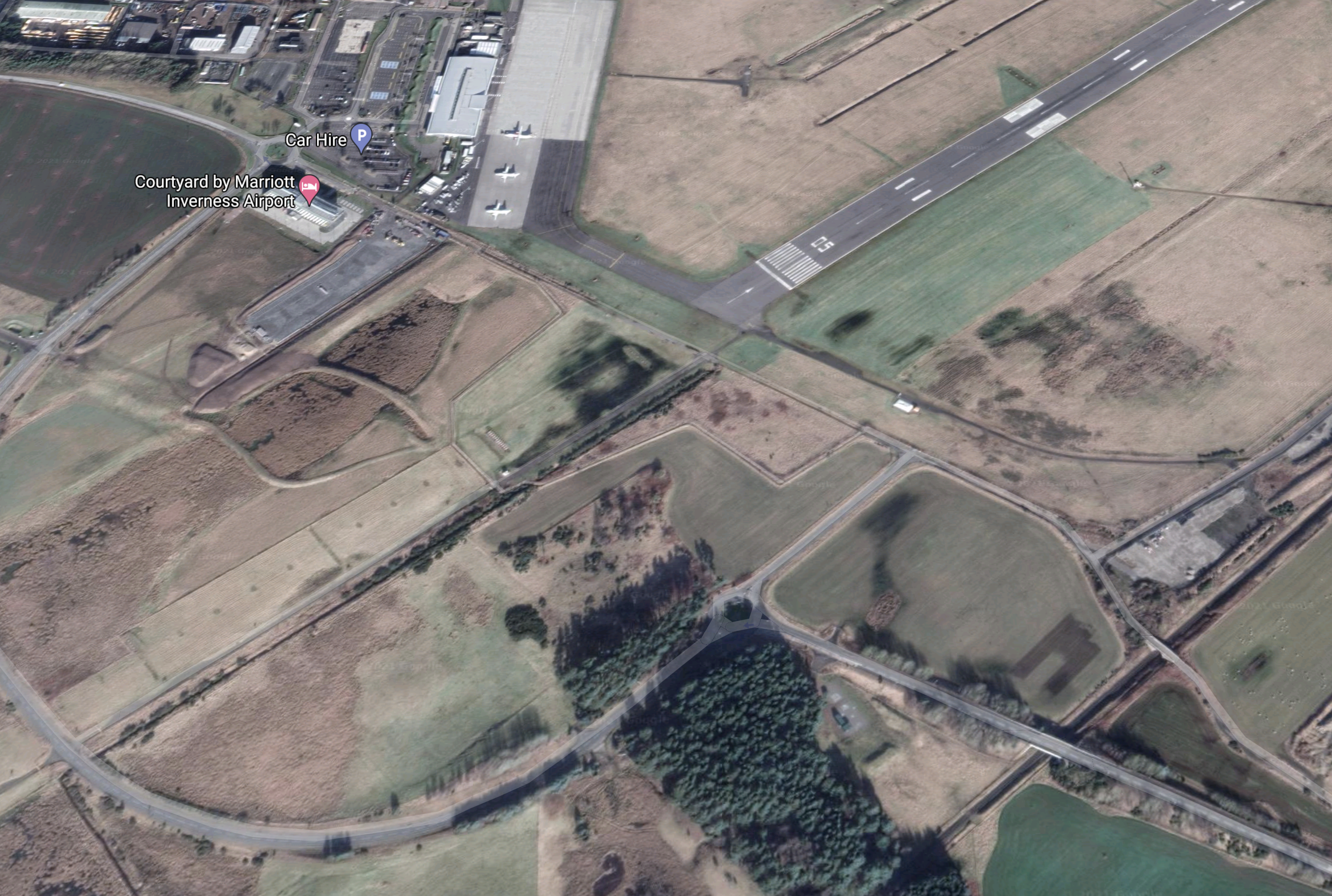
Note.
- The link road to the A96 crossing the railway in both images. But from opposite directions.
- In the Network Rail visualisation you can see the roundabout, where the link road joins the A96 in the top left corner.
- The current railway is only single track, but Network Rail will be doubling it.
- From these images and this document on the Network Rail web site, I can deduce this about the station.
- The station will have two platforms that will be capable of handling six-car trains.
- The footbridge is shown with lifts.
- The station will be able to be used as a Park-and-Ride for Inverness.
I suspect there will be a shuttle bus to the Airport terminal.
Travel Between London And Inverness
I’ve been to Inverness twice and and in both cases, I’ve gone by train.
- The first time, I went by a day train from Edinburgh. And I was in the cab courtesy of East Coast. I wrote about it in Edinburgh to Inverness in the Cab of an HST.
- The other occasion, I took the Caledonian Sleeper to Inverness and that is a civilised way to go.
I feel that on this route very keen competition could develop.
Advantages Of Flying
Flying to Inverness Airport has these advantages.
- A shorter journey time.
- A greater choice of destinations.
- Destinations in the sun.
- After the new station is built it will be rail connected all the way to Aberdeen.
This Google map shows Inverness and Inverness Airport.
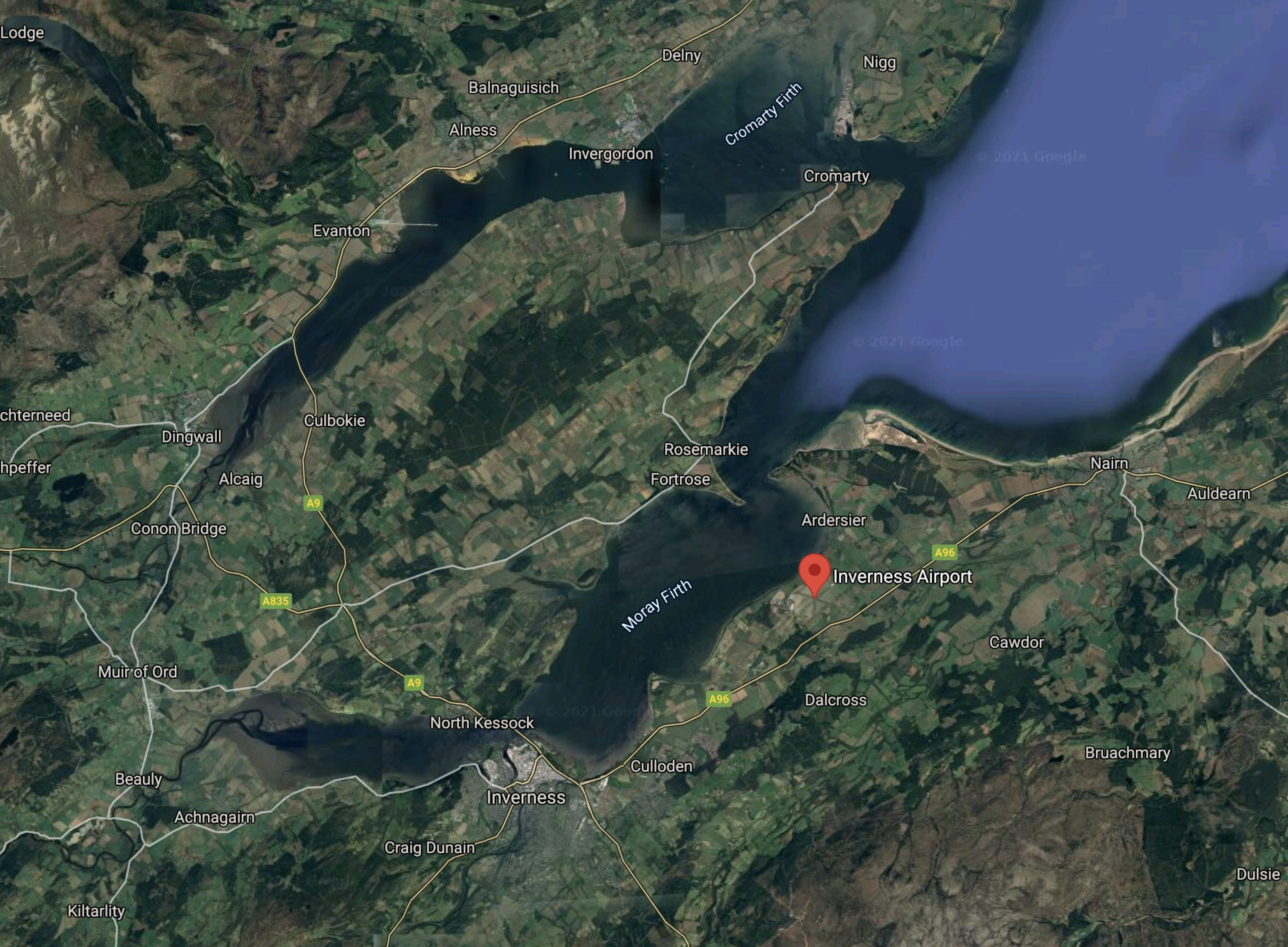
Note.
- The city of Inverness is at the Southern end of the Moray Firth.
- With all the water, I suspect the airport can be a good neighbour as far as noise and pollution are concerned.
- The Airport would have good access to green hydrogen and electricity from renewable sources.
- Even the Airport train and all the ground-handling equipment could run on hydrogen.
I feel that the Airport could sell itself as an environmentally-friendly way to the Highlands, when sufficient numbers of zero-carbon aircraft are available.
- You should be able to fly in from Amsterdam, Birmingham, Brussels, Geneva, London, Manchester etc. and not feel any environmental guilt.
- Airbus’s proposed hydrogen-powered ZEROe Turbofan is quoted as having a range of 2,000+ nautical miles,
- That distance would put a lot of the sun in range of Inverness Airport.
- Smaller feeder airliners could connect to other airports in the North of Scotland and the islands.
Inverness Airport will not be beaten without a fight.
Advantages Of Trains
Taking the train to Inverness has the following advantages.
- Luxury
- Zero Carbon-Footprint
- The possibility of an overnight trip on a sleeper train.
- The scenery through the Highlands.
I also believe that it would be possible to design a hydrogen-powered luxury train. I laid out my ideas in LNER Seeks 10 More Bi-Modes.
I believe a train could have this specification.
- 140 mph operation on 25 KVAC overhead electrification. This was done by British Rail almost forty years ago.
- Ability to use full digital in-cab signalling. This is on its way and already working in some applications.
- 110 mph operation on hydrogen. Hitachi are planning 100 mph battery trains, so it should be possible.
- 400 mile range on one filling of hydrogen. This is working in Germany.
- Ability to be upgraded to higher speeds on electric power, should the East Coast Main Line be upgraded for higher speeds in the future. The train manufacturers are probably ahead of track designers with this one.
I believe a sub-seven hour time would be possible between London and Inverness.
Conclusion
This is the sort of route, where rail and air will have a hard fight for supremacy.
Scottish Town Regains Its Station After 56 Years
The title of this post, is the same as that of this article on Railnews.
This is the introductory paragraph.
Trains are calling at Kintore in Aberdeenshire today for the first time since December 1964.
Some points about the new Kintore station.
- It is a two platform station on the newly double-tracked Aberdeen and Inverness Line.
- The station has a footbridge with lifts.
- The station is 13.4 miles or 19 minutes from Aberdeen.
- The station is 94.8 miles or two hours and twenty-three minutes from Inverness.
- All the services I can find yesterday, seem to have been run by Class 158 trains.
- There is a 168 space car park, with 24 charging points.
The station cost £15 million.
London Overground Syndrome
I have a feeling that Aberdeen and Inverness Line could be a prime candidate for suffering from London Overground Syndrome.
I suspect though, that ScotRail will quickly eradicate it, by putting on more trains.
 The Anonymous Widower