The Engineering and Architecture of CrossRail
My previous post about CrossRail may give the impression, that I’m rather against the project.
I’m not, as I believe it will really open up London to residents, commuters and tourists. The only problem is it won’t be fully open until 2018 or so.
Railways should always go through a major city, rather than have expensive stations on the ends of two radial lines. It’s cheaper in terms of capital cost and ensures that the expensive trains work harder. Thameslink does this on a North-South basis and CrossRail will do it on an East-West basis, with an major interchange between the two lines at Farringdon station.
Modern Railways this month has a major section on the CrossRail project. It is a fascinating read, which describes how the railway is being threaded from one side of the London to the other and the designs of the various stations on the route.
The biggest conclusion I get after reading the report, is that this a project that although built to a tight budget, will be something of which London will be proud and will be something that can grow and grow as the City demands more transport links. From the pictures in the article it would appear that the visible face of the railway will be impressive and not like the rather utilitarian Victoria line. On the other hand a lot of the design is more on the side of the practical and well-thought, rather than the spectacular, such as seen on some parts of the Jubilee line.
I also feel that particular attention is being paid to the management of the whole project and this has allowed the cost to be reduced by a billion pounds or so, by taking slightly longer. Hopefully, this will also enable the project to be built on time, but these days, we are getting a much better record at completing large projects on time, so I wouldn’t be suprised if the engineers adjusted the project to increase the certainty of an on-time completion.
But that is good project management!
With my history in the field of project management, CrossRail seems to be a project, I’d have enjoyed getting my teeth into.
A Walk From Bromley-By-Bow
In some ways London can be confusing to the visitor in that it does tend to reuse place names. For instance tonight I wanted a walk and as there had been reports of a new bridge over the River Lee at Bow, I thought I’d try and find it. So I went not to Bromley but to Bromley-by-Bow station, which is on the District and Metropolitan lines. This is also the destination of the 488 bus, which starts running from Dalston Junction station tomorrow, so I wanted to see if it was worth a visit.
Initial impressions were not good, as I took a rather grim underpass to the other side of a dual carriageway leading to the Blackwall Tunnel and then passed a typical Tescos.
Has any of their supermarkets, ever won an award for atchitecture? This one certainly didn’t deserve one, unless it was for the demolishing the worst building in East London.
My walk had to get better.
Is The Cause of High Unemployment Our Housing and Transport Policies?
There was a program on BBC Radio 5 this morning about unemployment. It was the usual left versus right battle, which has been fought so many times to a non-conclusion, that the program got boring, so I went shopping at Upper Street.
I have lived in several houses and flats in my life and in some ways, where I am now suits me best. Visitors like it too and they feel it is absolutely right for me.
So what is this house like. It’s a three bed-roomed house with two en-suite bathrooms and one that isn’t. It’s modern and it’s built upside down, with two bedrooms, a bathroom and the garage on the ground floor and a seven-metre square living area, kitchen and a bedroom on the first floor. It has a lot of chocolate-coloured steel and big glass windows. Unfortunately, it was built by Jerry. It doesn’t have a garden, but it does have two patios front and back.
In some ways the nearest to it in feel, was our flat in Cromwell Tower, in the Barbican, where we raised our three sons for the first few years of their lives. There we had three bedrooms, a large living room, kitchen, an underground car park and superb views across to St. Paul’s.
My house is however not the sort of house that most people aspire to or in fact that many can afford.
So many prefer one of Pete Seeger ‘s Little Boxes on a new estate somewhere in the countryside with space for two cars. After all, these sort of estates don’t get inhabitated by the riff-raff do they? They are also as eco-friendly as Obama’s Beast.
I have now come to the conclusion that I don’t like to live in the countryside. It is all so sterile, unfriendly and full of lots of little cliques. After the loss of C and my son, not one person in the village came to see me. After all I was a loser wasn’t I, especially as I had a stroke? There’s a great belief too, that widows might decide to walk off with your partner! It was a real relief to escape on a train to somewhere, where something actually happened. But there was no public transport, so simple things like getting any food meant a taxi or scounging a lift.
I also should say I hated living in Cockfosters as a child. There the problem was that there were no children of my own age and most of my school friends lived some distance away. Only when I was old enough to work in my father’s print works and ride my bike all over the area did I feel liberated.
How I live now, is surprisingly similar to how C and I used to live with the boys in the Barbican and St. John’s Wood before that. Except of course that I am now alone and do the things like food shopping, that C used to do. But then when I wander round Chapel Market, it’s like going back to the early seventies and she’s still guiding me.
It’s a friendly and a mixed area, with some good shops, four pubs that know their gluten-free within walking distance, several gardens and superb public transport links. The people are friendly too and I’m starting to add to my circle of friends. In this sort of mixed area, you also develop passing acquaintances with people, who you say hello to as you pass. In the countryside, it’s a bit difficult to talk to someone about their basset hound as I did today, when the dog is in the back of a 4×4 passing at speed.
So the sort of mixed area where I live is not to most people’s taste, but in my view, if we want to decrease unemployment and create worthwhile jobs, then this sort of area can do it’s bit. Another mixed area, I know well is the centre of Cambridge and it could be argued that that mixing helps with the development of ideas.
How many good ideas have been hatched in pubs or coffee shops? Sterile country villages might have an award winning gastro-pub, but the only ideas that come out of places like that, are things like better ways to cook asparagus.
One of the complaints in all the villages I’ve lived was the lack of any staff locally. This was mainly because, those same people didn’t want any affordable housing built, that might spoil their view and lower the tone of the place. I have a lovely lady, who sorts my house out, once a week and she was fairly easy to find. Incidentally she comes on a bus from the other side of Dalston JUnction station. so just at a selfish level, good public transport helps people to get to their jobs. In those much admired villages, there is no public transport, so everybody has to drive, so those that can’t afford their own car, often can’t get a decent job. But then a lot of those that live in villages don’t want more public transport, because of all the noise and inconvenience of passing a bus in a large 4×4. But they have their own cars anyway!
To illustrate what I say further, I will take the Suffolk town of Haverhill, which has large numbers of little boxes, which asre being added too at a fast rate. There are jobs in the town, but many require a car to get to, as the town isn’t the most cycle-friendly and the public transport is limited. Haverhill is also a sensible commute to Cambridge, where there are far better-paid and more worthwhile jobs, but the only way to do it, is to use a bus or car. There used to be a railway, but that was axed in the Beeching cuts. Axing it actually wasn’t the problem, but building over the right-of-way was, as that railway, which is needed to provide a link etween Sudbury and Cambridge, could have been reinstated. In Scotland, they have been reinstating railways like Airdrie to Bathgate with some degree of success.
If I was in charge of eployment policy in this country, I would reinstate railways like Sudbury to Cambridge, as they not only create employment, but allow people to get better jobs. Recently, the line from Ipswich to Cambridge has been updated with better and bigger trains and the investment has led to a large increase in passenger numbers.
Where I live, we also have the example of the recently-rebuilt North and East London Lines of the London Overground, which are now used and liked by everybody. In fact, so much so, that frequencies are being increased.
I have also read and heard stories how the new lines have decreased unemployment, just by enabling people to move more easily from where they live to where the jobs are.
I think too, we concentrate on unemployment and rightly so, but in many cases better transport links will enable people to move up the employment ladder. This is just as important, as not only does it create a need to replace the person who’s left, but if people earn more, they tend to spend more and that helps to create jobs.
The Legacy of the Hackney Mole Man
The Mole Man of Hackney or William Lyttle became notorious because of all the tunnels he dug under his house and in some cases his neighbours. He supposedly has cost Hackney Council around £400,000 in making his house safe. This report from the Guardian a few years back gives a lot of detail.
Even now, a couple of years after his death, the site is still in the middle of a planning argument according to this report.
This is a difficult one, in that the building may once have had some architectural merit. I also know from personal experience how expensive it can be to restore buildings when they get to this state. So a complete restoration may only be possible by someone who has more money and imagination than sense.
I’m glad I don’t live next to what is left of the house.
Forty Years On!
It is almost forty years since C and myself moved into the Barbican with our young family.
Now they are building the Heron next door.

The Heron Peeks Above the Barbican
The Barbican and its three iconic towers were very much of the 1960s, just as the Heron is of today. The Barbican with its sculptured concrete is pretty much unique, but from what I’ve read and seen, the Heron will be very modern and have a very much lower carbon footprint.
All of the towers in the Barbican will share one thing with the Heron and that is superb views. But the view from the Heron won’t have the view we did of Whitbread‘s working brewery complete with its dray horses, that in the 1970s still performed some of the local deliveries in the city.
But living in the Barbican was a pleasureable experience in the 1970s and we all liked it. I still felt good as I went back to the complex to visit the library to do some research for a book.
I hope living in the Heron will be just as pleasureable. But it will probably not have the eclectic mix of people that the Barbican had when it opened. I suspect now the Barbican has changed, what with buy-to-let, second homes in the country and the changes brought by the credit crunch.
The Latest Example of Jerry’s Handiwork
One of the features of my house is the chocolate-coloured steel beams used to hold up the roof, form the staircase and as a design feature. This picture shows the beam above the windows in my living room.
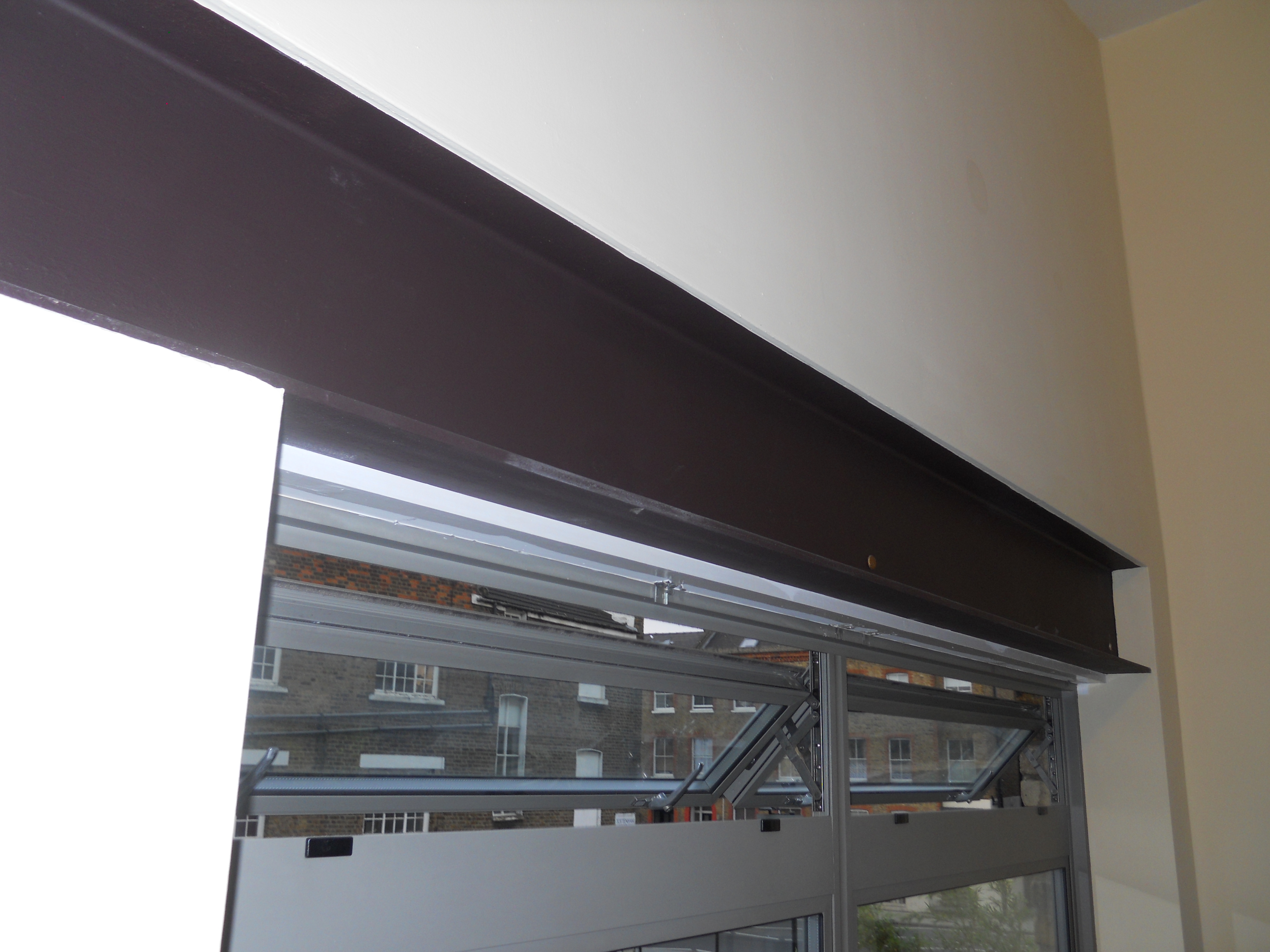
Steel Beam Above the Window
You will notice what looks to be brass bolts holding the beam up. In fact they are not bolts at all, but crude brass-coloured pads stuck on the beam.
Yet again Jerry has done the cheap and nasty, rather than followed the instructions of the architect. Well I hope so, as if the architect specified foundations in the same way, the house will fall down.
It looks like I’ll be making some special bolts again.
St. George in the East
Walking round London, you often come across surprising buildings, gardens or other sites.
I was in need of a drink and the courtyard of this church was selling tea, coffee and cakes in aid of a children’s hospice, Richard House.
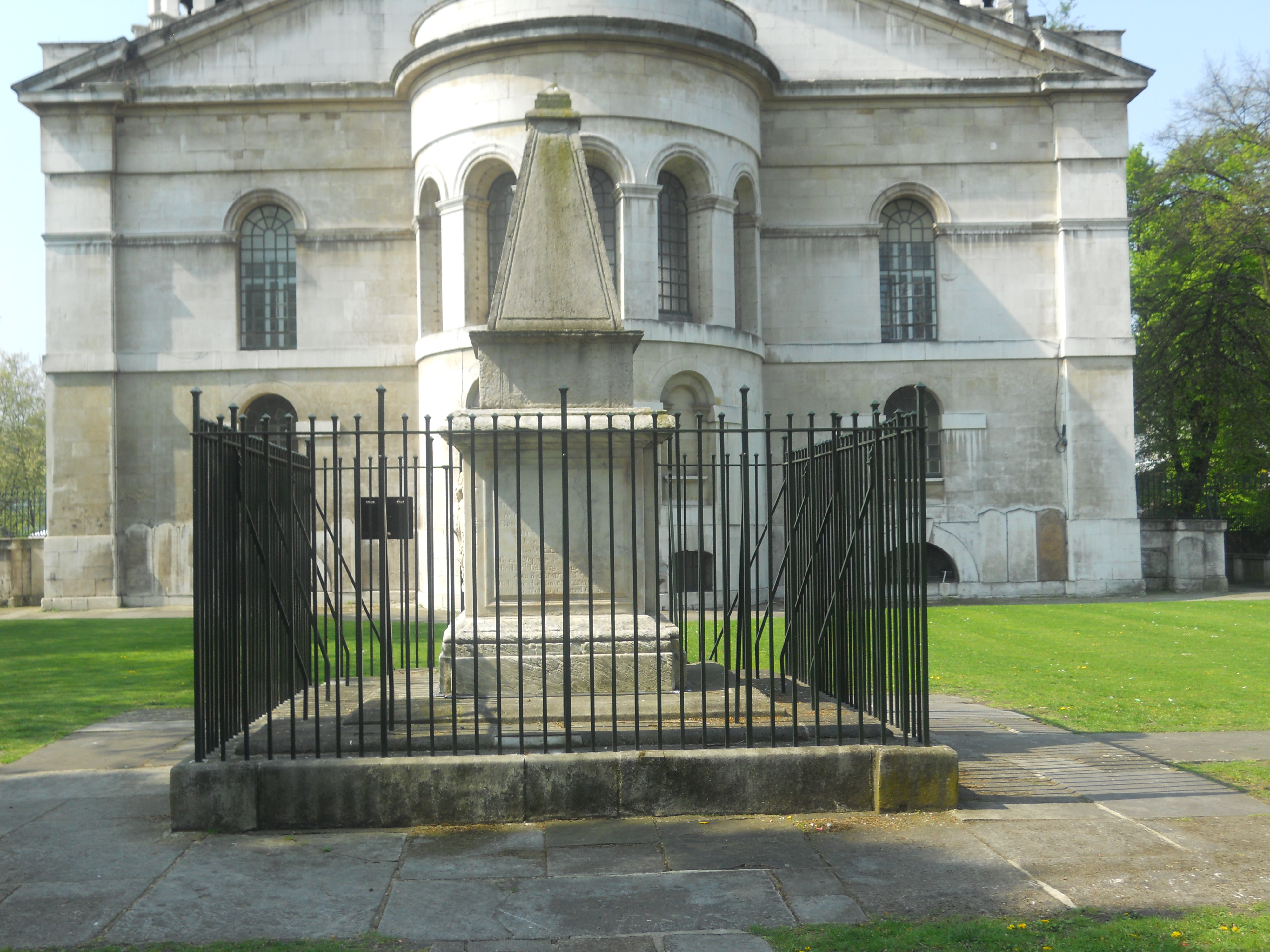


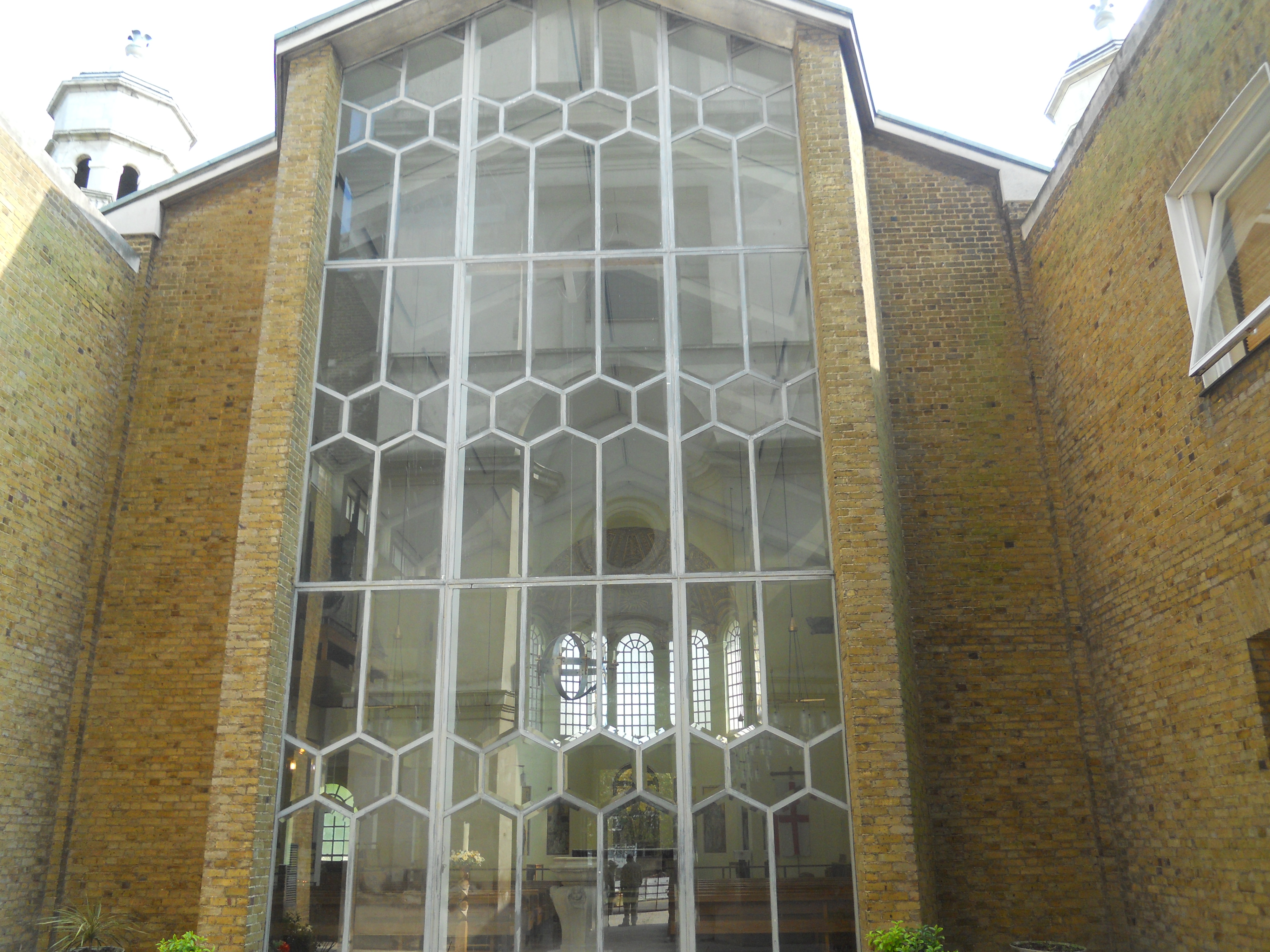
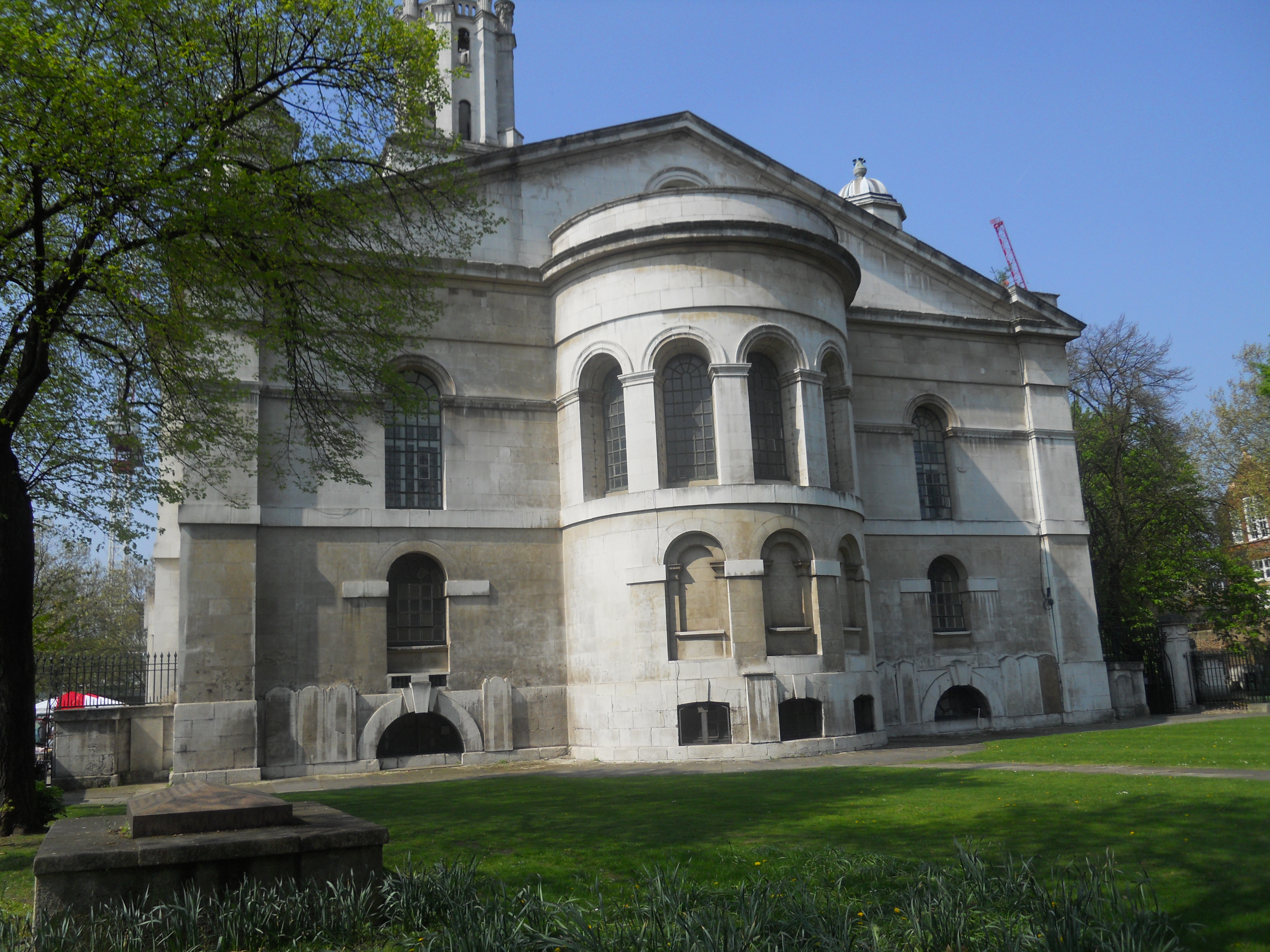
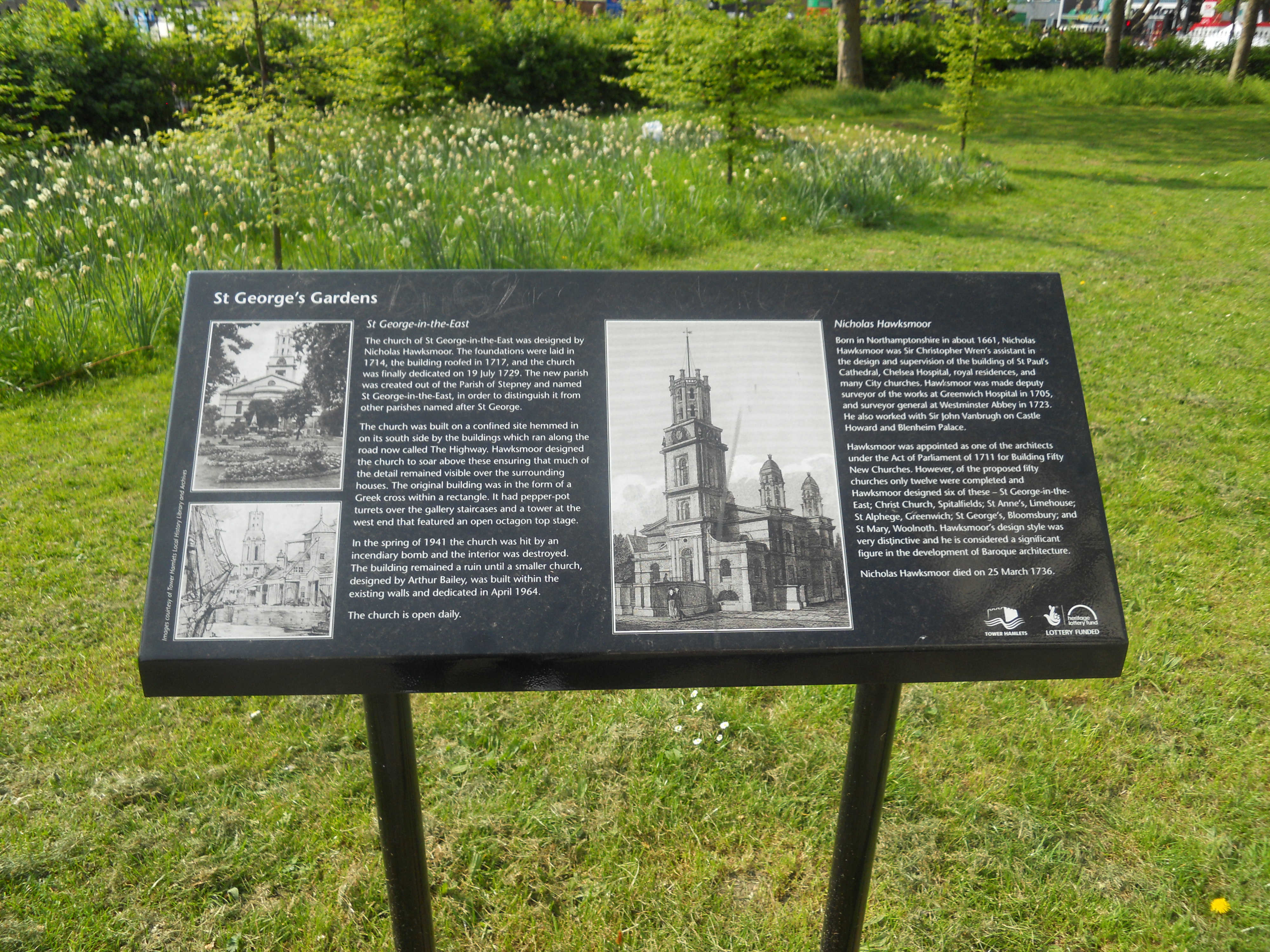
Note the excellent information board from English Heritage. We need a lot more of these!
So I went in and had a cuppa.
St. George in the East was designed by Nicholas Hawksmoor, who also designed Blenheim Palace and Castle Howard amongst many other famous buildings.
The church was badly damaged in the Blitz and a new interior was built inside the shell of the original.
Back To The Sixties
In 1965 when I went to Liverpool University, the Electrical Engineering and Electronics building was brand new.
It appears to have worn reasonably well and is just how I remember it all those years ago. So bits have been replaced and it’s been redecorated, but it is a real credit to its creators, which you can’t say for many of the buildings of the time.
It’s still contains all the original prints too. Some of which I seem to remember.
However the infamous legend by one painting has been removed. It had been beautifully typed and framed and said something like. “Unfortunately, we were unable to afford a painting by this artist. ut he was kind enough to sell us the rag on which he wiped his brushes!”
After the lecture, we retired to one of the staff’s room and I was pleased to see that he still had a genuine blackboard with real chalk on the wall.
How civilised!
Sitting on a Bennet
The last time I sat on a wooden seat in a football ground was at Crystal Palace. That was the day I got a splinter in the palm of my hand.
No such incident happened at Fulham, as the original 1905 Bennet seats are still in good condition. And they are comfortable too.
Can there be many places, where you sit on a wooden seat over a hundred years old? Perhaps a few churches maybe! There is more on the stand here in Wikipedia.
I shall return to the Cottage and hopefully the result will be better.
It was also good to hear the rumble of rythmic foot stamping in a wooden stand. The old stand at White Hart Lane could be made to make a fearsome noise.
A Trip To Leitch’s Gem By the Thames
Archibald Leitch has appeared in this blog before, with respect to his first building, the Sentinel Works in Glasgow, and two football stadia; White Hart Lane and Fratton Park.
Today though I went to see Fulham host Bolton in Leitch’s gem-by-the-Thames, Craven Cottage.
I had started my journey from Oxford Street, so I took the Central line to Notting Hill Gate station, where I changed to the District line for Putney Bridge, which is the most convenient station for the Cottage.

Notting Hill Gate Station
As you can see from the picture, it is another example of Victorian architecture worth visiting.
Putney Bridge station is an impressive one about ten minutes walk away from Craven Cottage.
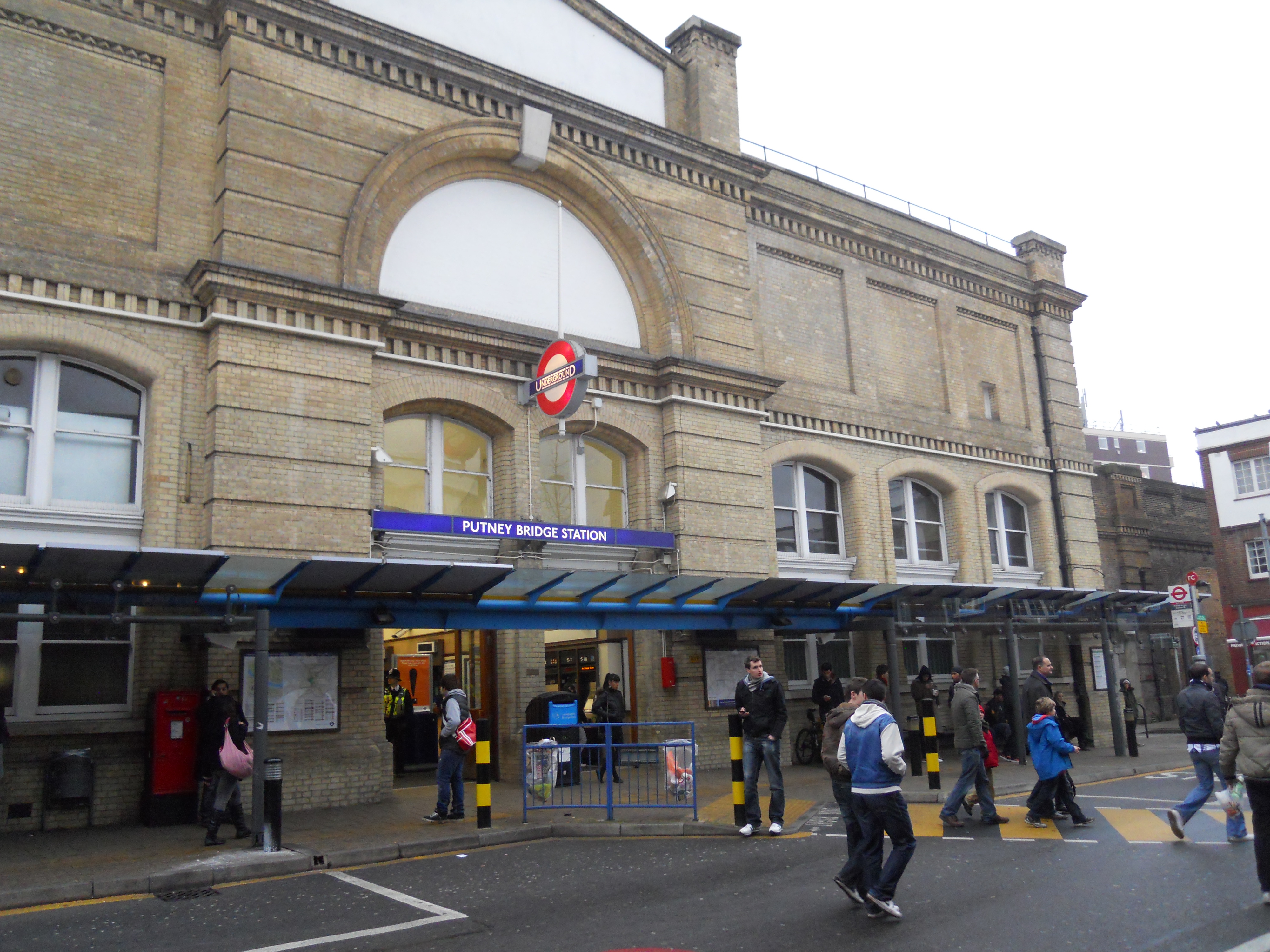
Putney Bridge Station
But whereas many walks from stations to football grounds are boring, this one is through the Bishop’s Park by Fulham Palace alongside the River Thames.

Walking to Craven Cottage
So very different to the approach to say Middlesbrough or Scunthorpe.

Johnny Haynes Stand at Craven Cottage
This picture shows the restored Stevenage Road Stand at Craven Cottage. It was built in the first few years of the 20th Century and has now been renamed after one of Fulham’s most famous players; Johnny Haynes.
 The Anonymous Widower