Kittiwakes at the Baltic
Kittiwakes are a bird that normlly nests on cliffs. But they have nested at the Baltic for many years.
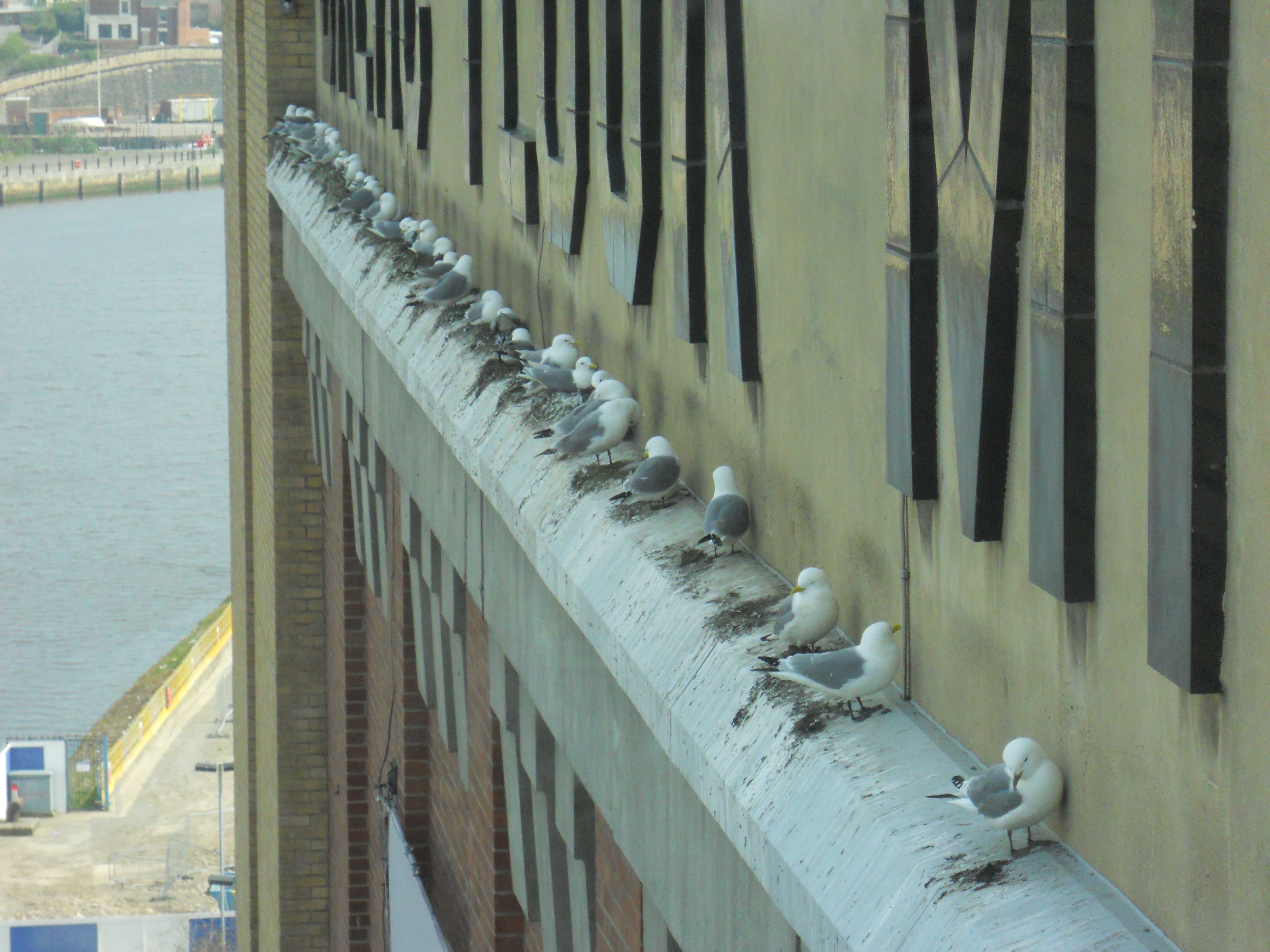
Kittiwakes on the Baltic
They may like it, but I don’t think I’d like to raise a family there!
Birds in the Snow
Or rather some imprints of them in the snow.

Bird in the Snow
Unfortunately, this picture only shows where the bird was sitting. I actually saw the marks of its wing tips where it had taken off. I could make excuses, but it was just a badly taken photo.

Wingtip in the Snow
This picture shows the marks a bird’s wingtip had made. There was no other marks in the snow for some metres around.
It may have been the same bird as the other as these marks were similar to those just outside the other photo. Perhaps in its flapping to get airborne out of the snow, it just touched the ground.
Parakeets in Den Haag
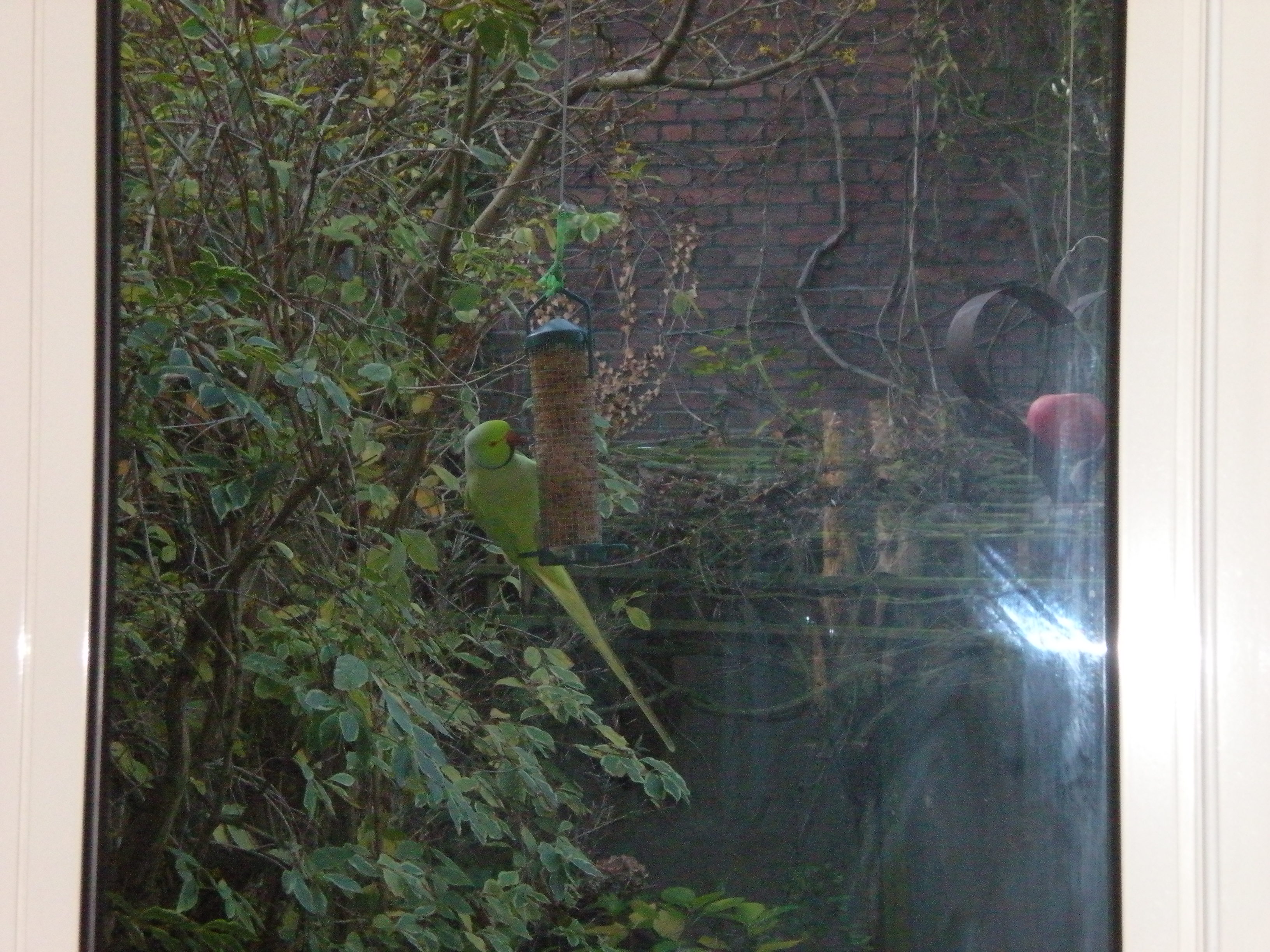
I took this picture of a parakeet at a bird feeder in the garden of the house where I stayed in Den Haag.
Parakeets in Den Haag
Unfortunately, by the time I’d got the camera sorted, the rose-ringed parakeet had flown. That’s what birds do! They fly.
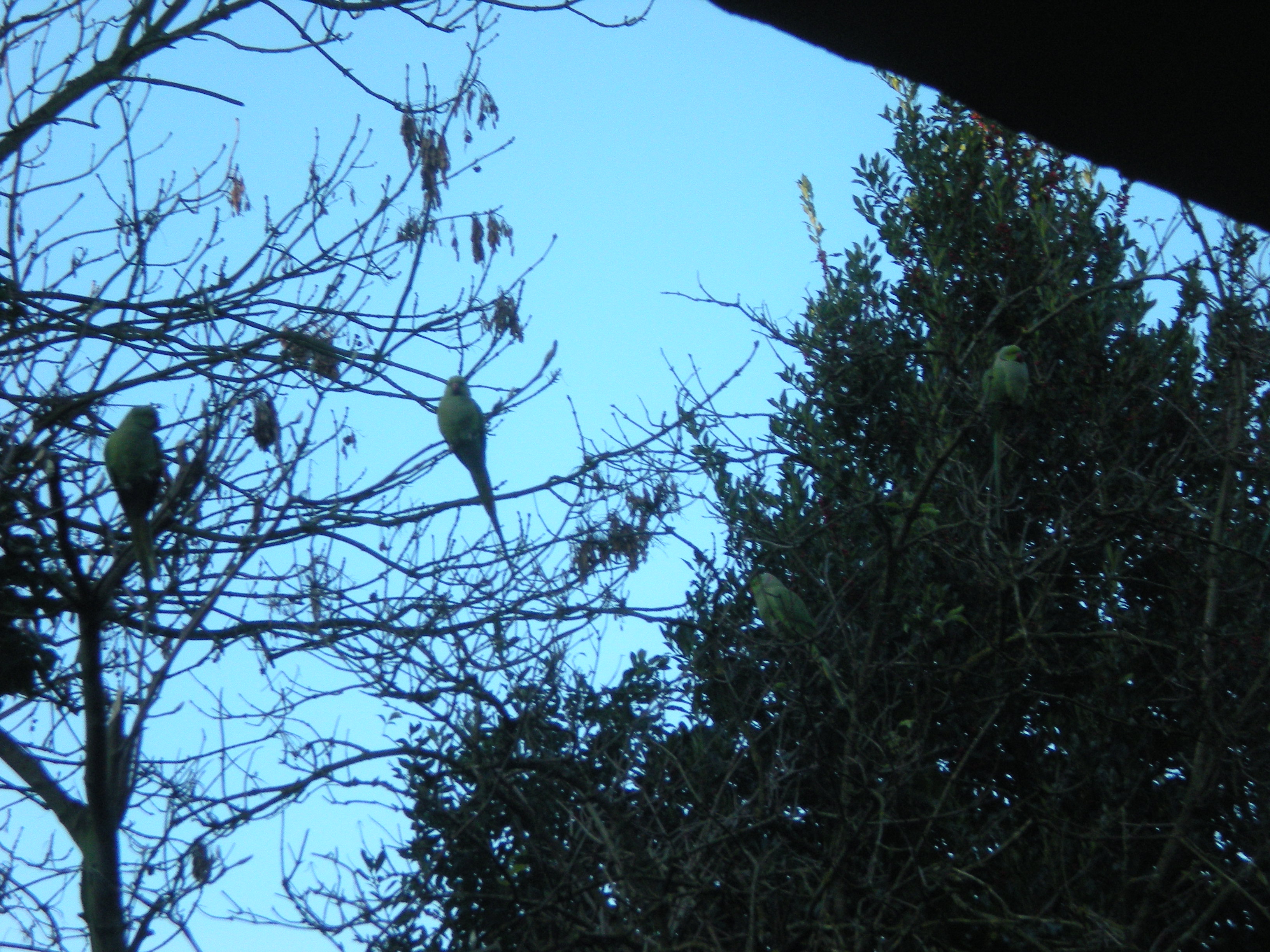
But I did get this picture of several parakeets in the garden.
Parakeets in Den Haag
There is quite a few references to parakeets in Den Haag on the Internet. They’ve been in Holland for some time.
Goldfinches
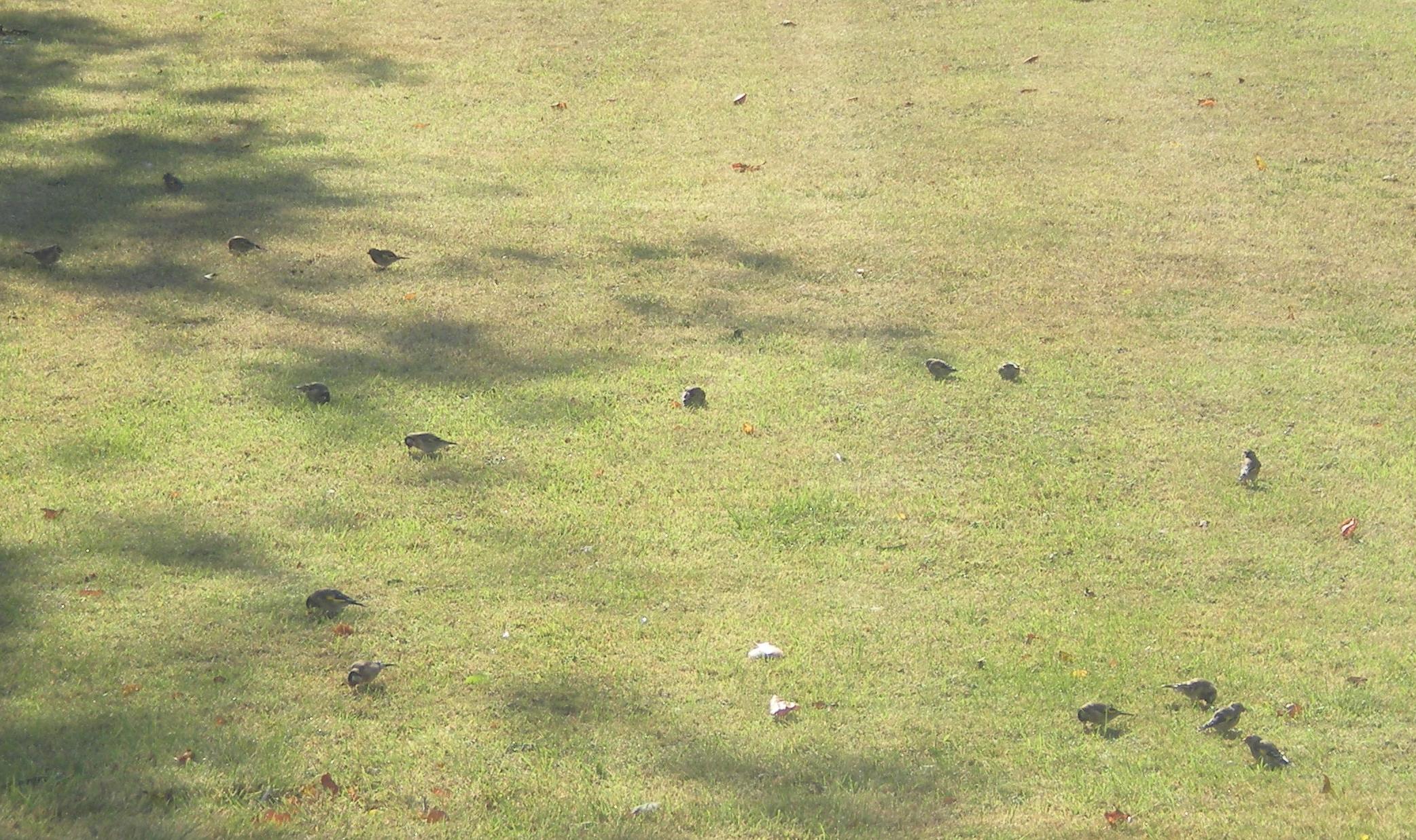
There are masses about this year. Each dot on this picture is one on my lawn.
Goldfinches
I’m no birdwatcher, but my books tell me that they tend to forage in flocks before flying off to southern and western Europe for the winter.
Green Woodpecker
According to my Collins Bird Guide, green woodpeckers are shy and wary. But obviously, this juvenile, who I think is a male, isn’t! I took this video on the front drive just outside my office window. He was perhaps four metres away at the furthest.
If you want to know more go to the RSPB site.
When we first moved here about fifteen years ago, I never saw a green woodpecker. Now I usually see one or two every day in the summer months. I suspect that the individual in the video comes most days to eat on the ants in the grass. He’s always in the same place.
Now I have got some decent photos of him, I will be able to check.
A Technical Note – The video was filmed on a Fuji S5700, still/video camera and processed from a .avi file into .wmv using Windows Movie Maker. The latter software is excellent and comes FREE with Windows XP and Vista.
RSPB and the A11
It now looks like that the RSPB are trying to stop the dualling of the A11. This was reported in yesterday’s East Anglian Daily Times.
Now I like birds, but they are very adaptable creatures and if we make adequate provision, they will move. But the trouble with a lot of bird groups is that birds come first and people and commerce second. Now, who is it that pays for their little feelgood group?
As I indicated in my post Where Have All the Birds Gone, it could be that some of the beliefs of the bird groups, actually reduce such things as song birds. I only say could be, but endless studies never seem to find a problem as to where have all the sparrows gone.
On the other hand, I’m not in favour of shooting either. In one picture, my late wife is pictured with a racing professional, who was shot because a gun was handy. I just don’t like guns and have banned them from my land, except where say a deer, that has been injured by a car, needs to be humanely put-down. They are just too dangerous to be in the hands of a lot of people who own them.
We just need balance between everything, so that people, commerce, farmers, birds and animals all thrive.
But please let’s have the missing link in the A11! And while we’re at it, let’s make the A47 all dual-carriageway from Yarmouth to Peterborough.
Where Have the Birds Gone?
I was on Newmarket Heath yesterday, with a racehorse trainer, who like me is a countryman.
Newmarket Heath has not changed much environmentally in centuries. The link gives a history on the racecourse website. The grass is mown fairly short and it is not fertilised with anything artificial. The wildflowers are of a bigger variety than normal and there are hares (big bunnies) in abundance. It’s importance as a wild life area is recognised in that it is a Site of Special Scientific Interest.
We wondered, if when everything is so constant, have a lot of the birds and especially the songbirds disappeared in recent years.
As someone, who has been on the Heath for over twenty years and knows it well, the trainer put it down to one thing – sparrowhawks.
Now the site of birds of prey is wonderful. But so is the site of all the smaller birds that sing and give us so much pleasure! It’s a tricky dilemma, but then if they’ve gone on Newmarket Heath, where conditions haven’t changed in centuries, it can’t be down to bad farming practices in that instance.
In my garden, I used to have lots of yellow hammers, swallows and pied wagtails. They have become a lot less common in recent years.
 The Anonymous Widower