|Aberthaw Resumes Cement Dispatch
This is the title of another article in the January 2017 Edition of Modern Railways.
I wasn’t sure where Aberthaw was, so I looked it up on the Internet and this Google Map shows Aberthaw Cement Works, Cardiff International Airport and the Vale of Glamorgan Railway, that links Cardiff Central station in the East to Bridgend in the West.
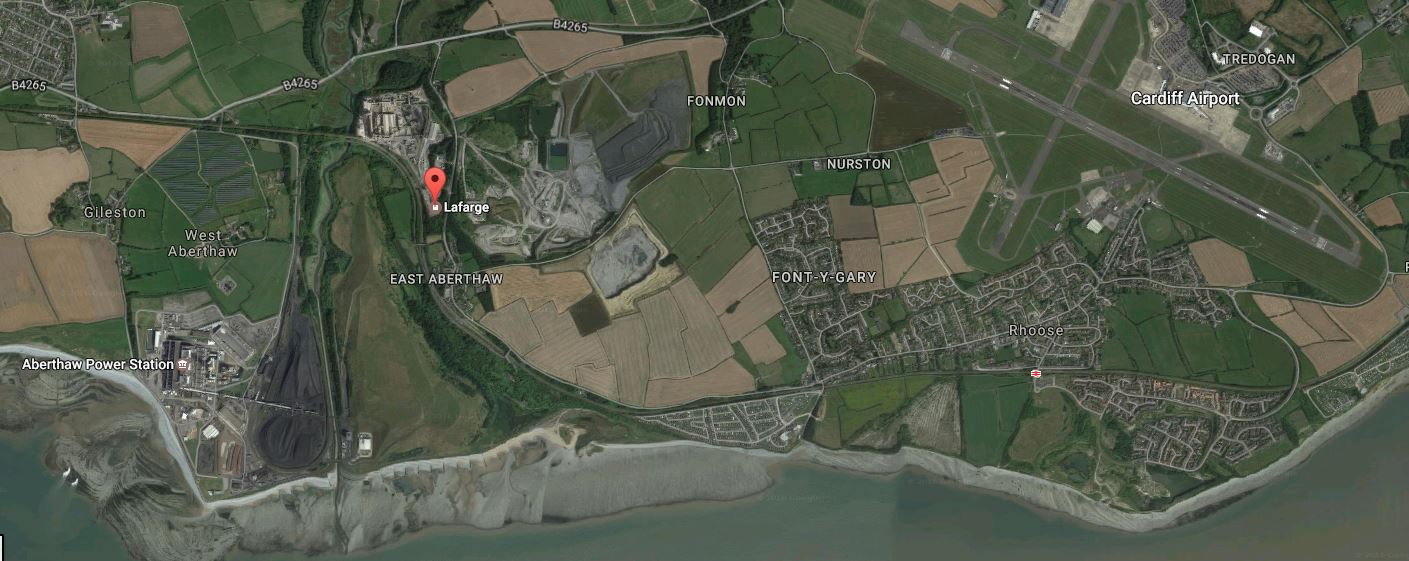
Note.
- The red arrow indicates the cement works.
- The Airport terminal is on the North side of the long runway,.
- Rhoose Cardiff International Airport railway station is on the other side of the runway and connected to the Airport by a sguttle bus.
- The line was closed by Beeching to passenger traffic in 1964, but was reopened in 2005.
Could Cardiff Airport benefit from the same sort of train-train link, that has been proposed for Glasgow that I wrote about in The Glasgow Airport Rail Link Will Be A Tram-Train?
But the map does illustrate the benefit of rail access to the cement works.
- The works is close the Vale of Glamorgan Line.
- Trains from the cement works can go East to places that need the product, including surprisingly, the South West of England.
- The rail link could cut the number of truck movements by 25%.
This would seem to be an ideal use for rail freight.
Are we doing enough to develop similar links, from other large factories all over the UK?
As the line is supposed to be electrified in a few years, could it be that a proper review of the line should be done first, to see whether any other projects should be done at the same time.
The reason I say this, is that the history of the line is much the same as that of the Grand Old Duke of York and his soldiers.
Cardiff To Southampton By Electric Train
When I was waiting on Bath Spa station to return to London, a Class 158 train from Cardiff stopped at the station, on its way to Brighton via Southampton.
The train travels the full length of the Wessex Main Line from Bristol Temple Meads to Southampton, using the soon-to-be-electrified South Wales Main Line and the electrified West Coastway Line to complete the full route.
I wondered how much of the route will be electrified, once Cardiff to Bristol is hopefully electrified in the next few years. The current date for wires to Cardiff is December 2018.
I would estimate the length of the non-electrified section between Southampton and Bath is about sixty to sixty-five miles.
So it would appear that, the line could be within range for a Class 387 train or a new Aventra, with an IPEMU capability.
Obviously, Great Western Railway could also run a five-car Class 800 train on the route, using the on-board diesels to bridge the gap.
One way or other by 2020, Cardiff to Southampton will be run by electric trains, with a much increased capacity.
The Death Of Traditional Steel Making
If we’re being serious about making steel using the traditional methods of blast furnaces, converters and lots of energy, it’s not a very green process and it contributes to pollution and global warning.
We have a serious oversupply of steel in the world and this page lists production by countries.
In 2014, the world produced 1670 million tonnes of steel, of which we produced just twelve.
Looking at the production levels, there are quite a few countries that produce produce small numbers of million tonnes of steel like we do.
As China produced 822 million tonnes of steel in 2014, how many of these countries will be forced out of steel making in the next few years?
What will save steel making in a lot of countries is improvements in technology.
The parts of the steel industry, that seem to be the most profitable are the downstream uses of the metal, like making rails for railways. In this country, we have a reputation for using steel in innovative ways, but few of these uses need steel made in Britain, although they may need a quality steel to start with.
But that quality steel can come from anywhere with the knowledge to produce it.
China will acquire that knowledge, just as the Japanese did in the 1950s and 1960s.
It is interesting to look at iron ore by country in 2014. Out of a world product total of 3.22 million tonnes, we see.
- China – 1.5 million
- Australia – 0.66 million
- Brazil – 0.32 million
- India – 0.15 million
- Russia – 0.1 million
So does this partly explain China’s massive production of steel?
I think Australia and Brazil are the two most important countries on this list. Both have large amounts of energy and because they are ambitious intelligent countries, as the steel-making technology develops, will we see them increasingly becoming makers of quality steel?
I don’t know, but it says to me, that even producing quality steel in a niche market won’t be profitable for long.
The money and employment is in using quality steel, not in making it.
It may be a hard unpopular view, but we should let the rest of the world fight over supplying us with quality steel. If we want security of supply, I’m sure the Aussies would provide it.
As to the steel-making areas like Teesside and South Wales, we have to move on.
The Future On Teesside
In fact Teesside seems to be doing that, if a BBC report this week wasn’t truly negative.
What puzzles me about Teesside, is that there is little mention in the media about York Potash. This is from Wikipedia.
The project intends to mine the world’s largest deposit of polyhalite – a naturally occurring mineral – located on the Yorkshire coast.
The mine site is located outside the village of Sneatonthorpe, between Whitby and Scarborough in North Yorkshire. The project plans to construct two 1,500 m (4,900 ft) shafts to reach the mineral seam which includes a mineable area of around 25,200 hectares (62,000 acres).
To minimise the amount of visible infrastructure within the North York Moors National Park, a protected area, the polyhalite will then be transported 37 kilometres (23.0 miles) in an underground tunnel to the company’s processing plant at Teesside. After granulation and drying, the finished product – marketed by Sirius Minerals as POLY4 – will be exported from the nearby harbour facilities.
Could it be that, this project appears to not be very green and in the minds of many is creating a giant hole in the North York Moors National Park?
My view is that the UK needs more big projects like York Potash, that earn billions of pounds from exports, create thousands of jobs and don’t despoil the environment.
So what have we got for South Wales and Port Talbot in particular?
Nothing as big as York Potash, but there are plans for the world’s first tidal lagoon power station in Swansea Bay Wikipedia says this about the Tidal Lagoon Swansea Bay.
It is planned to be the first of six tidal lagoon power plants to be constructed in the United Kingdom, and one of four planned to be built in Wales. The tidal lagoon would have a capacity of 320 MW.
The project was named as part of the UK government’s 2014 National Infrastructure Plan and was granted planning permission by theDepartment for Energy and Climate Change in June 2015. Power production is expected to begin in 2019. The operational life time of the artificial lagoon is 120 years, effects of global warming have been included in the planning. It is also to be constructed to withstand 500-year-storms and to function as a coastline protection against storms and floods.
So what are we waiting for?
The economics depend very much on the strike price for electricity generated and the Government seems reluctant to set one. I do wonder if they have got themselves tied in knots with trying to build a white elephant at Hinckley Point, that they can’t think of anything else.
Consider.
- I’m not against nuclear power, but Hinckley Point C is so expensive and its strike price is so high, that it will be a millstone around the necks of energy users for decades.
- If we want to go nuclear, there are smaller and proven reactor systems available.
- Electricity generation is going more distributed with the growth of solar panels, local heat and power systems and other technology.
- Large energy users are changing technology to cut use.
- The tidal lagoon technology gives protection against storms and floods.
- Tidal lagoons could be the twenty-first century equivalent of the nineteenth-century seaside pier.
- If the technology and economics of the tidal lagoon work, it will produce carbon-free electricity for at least 120 years.
- There are other places, where tidal lagoons could be built.
You could bet your life on the Dutch building a tidal lagoon, but they don’t have the tides.
Rather than back a doomed steelworks, the Government should back the unique energy project of the Tidal Lagoon Swansea Bay.
If the energy economics don’t work out, you still get the coastal protection and leisure facilities.
A Metro For Teesside
The Tees Valley Metro has been in planning mode for some years and I can’t understand why it hasn’t happened yet.
All that seems to have happened is the opening in 2014 of James Cook University Hospital station, which I wrote about in James Cook Station – The Reinvention Of The Halt. The station certainly seems to be attracting a level of use, typical of a station of its type.
I also wrote about the metro in The Creation Of The Tees Valley Metro.
A Metro For South Wales
The Welsh are also keen to create a South Wales Metro for some time. I wrote about my observations on the trains in the area in The Welsh Could Be Having A Lot Of Fun Playing Trains In The Cardiff Valleys.
This project should be beaten into action as soon as possible.
It is interesting to take a look at a Google Map of the coast between Swansea and Port Talbot.
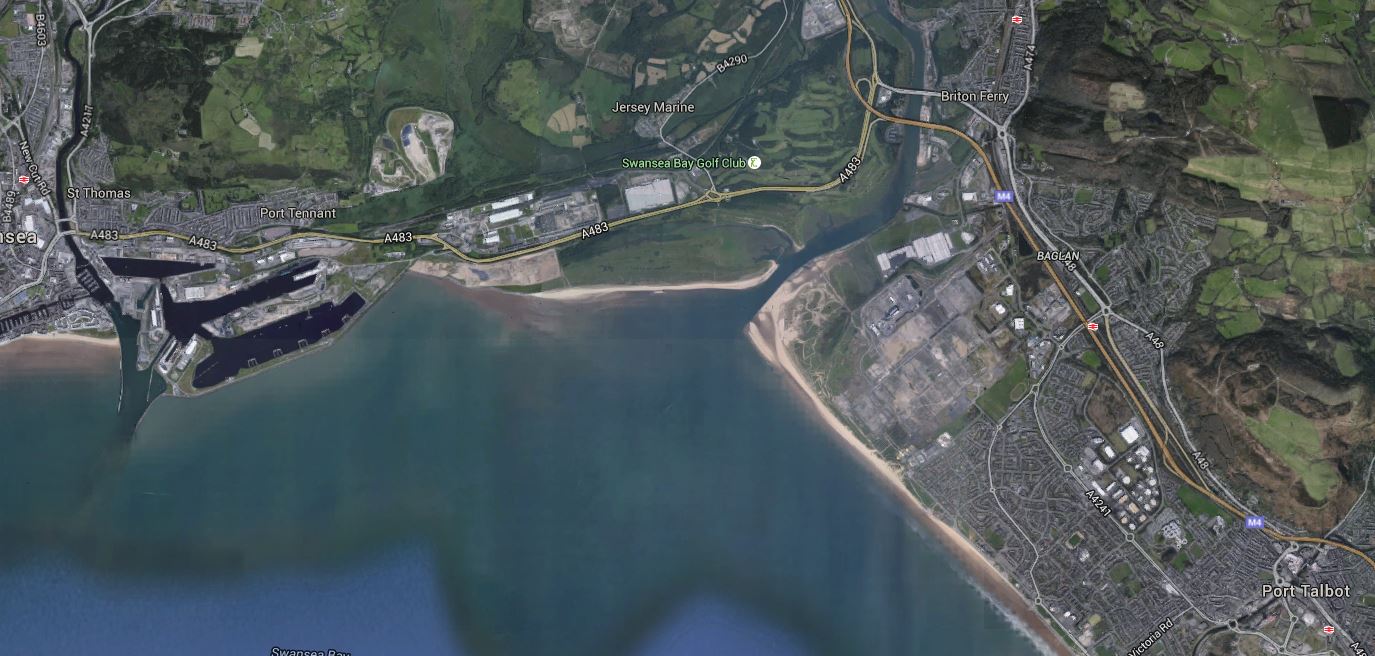
Swansea To Port Talbot
I don’t know the area well, but I know many people, who have enjoyed leisure time spent all along the South Wales Coast.
Perhaps, if the steelworks were to be closed, it could be treated to a Barcelona solution, where their steelworks was closed and the area turned into beaches and parks, which formed part of the Olympics in 1992.
The Tidal Lagoon Swansea Bay would be generally sitting in the western part of the bay.
I believe that a comprehensive South Wales Metro, could go a long way to creating more jobs, than will be inevitably lost at Port Talbot.
Conclusions
Steel production is virtually dead in the UK and we must move on.
If we can find an innovative project to replace steel making, we should back it and as with York Potash, it doesn’t necessarily mean billions of public money.
But decent infrastructure and local rail, tram and bus systems can go a long way to creating the jobs needed everywhere.
In both the examples of Teesside and South Wales, surely if nothin else, a decent metro would give a boost to tourism.
A Trip To Cardiff
Yesterday, I went to Cardiff to see Ipswich lose to Cardiff City.
These are some pictures I took on the way.




I think it is true to say that the electrification is being put up by snails and there seems to be little progress since I wrote Passing Didcot Power Station twelve months ago.
Note the following.
- Very little seems to be happening around Reading station, except the erection of a few masts.
- The cause of a lot of the trouble – the HOPS train at Swindon.
- The depot for the Class 800/801 trains at Filton Triangle.
- The extra platforms at Cardiff Central station.
- The work at Cardiff to create a new Central Square.
A lot of the work, that is this side of Bristol, is a total disaster.
The Welsh Count Up From Zero
Like Kings Cross station, Cardiff Central now has a Platform Zero.

The Welsh Count Up From Zero
In the same manner as Kings Cross they needed another platform, so as it was next to Platform 1, from where I took the picture, it was obvious numbering.
This aerial view from Google Earth shows the platform well.

Cardiff Station
Platform Zero is the topmost of the platforms in this view on the left. It would appear that a train is in the platform and it will probably be on its way to Ebbw Vale Parkway.
In the next platform, there would appear to be a London-bound InterCity 125.
The bottom two platforms are 6 and 7 and are used by the other Valley Lines. So unless you are going to Ebbw Vale, and you are needing to use the Valley Lines, you just go up to these two back-to-back platforms to catch your train.
Cardiff Central is in the process of a major upgrade by Network Rail, which looks to be exciting. I remember coming to Cardiff a few years ago to a football match at the Millenium Stadium and geting away was a total nightmare. Hopefully, soon that chaos will be a thing of the past.
From Cardiff To Treherbert
After the match, I could have come home directly in the morning, but I wanted explore the Valley Lines.
I started by going to Cardiff Central station, where I got a train to Cardiff Queen Street followed by one from there to Treherbert, as for no better reason, than it was the first that turned up.










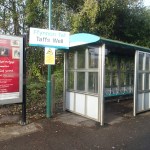





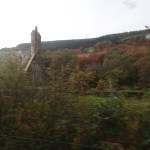
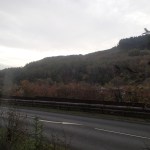

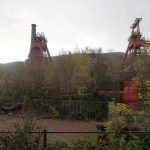

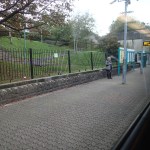
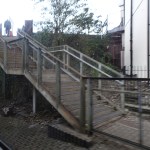
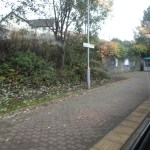


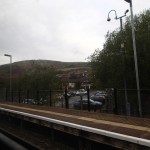
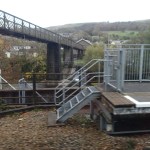
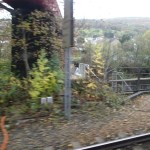
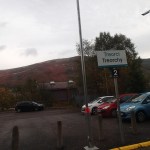
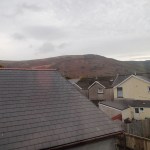

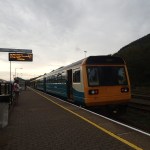
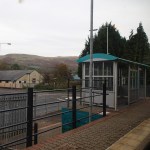

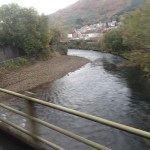
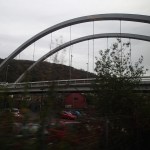

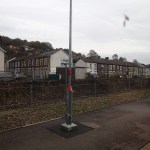
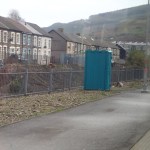
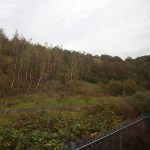
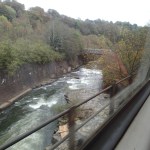

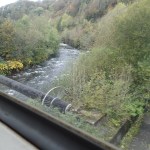
The pictures tell the story of the very scxenic journey up to Treherbert and down to Pontypridd.
As befits the UK’s stereotypical view of a wet Wales, the stations seem to be well sheltered and generally in good repair.
The Class 142 on which I travelled, was one of the better Pacers that I’ve ridden in and was reasonably clean and tidy.
Cardiff’s Bus Information
My hotel needed a bus to get to the City Centre, and as I like to use buses if I can, I took a few pictures of the information.
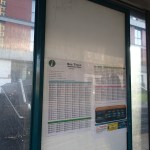
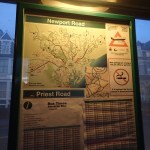


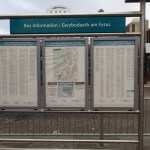
If it wasn’t for a stop outside of the hotel, which showed all buses went to the City Centre, I doubt, I’d have actually managed the buses though. As an example, if you turn up at Cardiff station, there is a long list of buses, which is useless in finding the stop for a particular number bus.
As in many places in the UK, Cardiff buses are impossible to use for visitors.
Around Cardiff City Centre
I took these pictures as I walked around Cardiff City Centre.










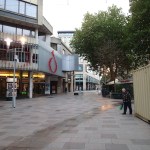



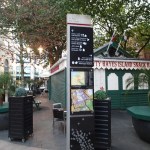






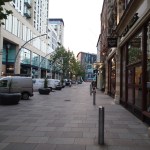






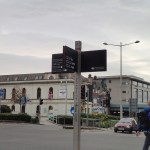

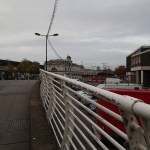



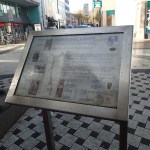

I didn’t see too many clocks and statues weren’t that numerous, but I did like the fact that a large area is pedestrianised.
Match Thirteen – Cardiff 3 – Ipswich 1
This was very much the case of the unlucky thirteen.
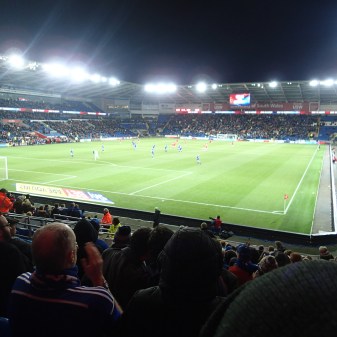
Cardiff 3 – Ipswich 1
We played well to get a first goal and then probably threw it away.
Mick McCarthy wasn’t pleased.
Watch Your Step In Cardiff
The route from my hotel to the City Centre of Cardiff was like this for a lot of the way.
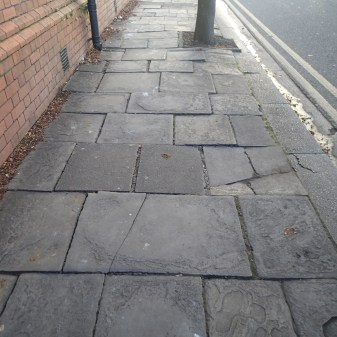
Watch Your Step In Cardiff
The lights that controlled the crossings weren’t good either.
 The Anonymous Widower