Vital Bridge Replacement Means No Trains On Liverpool Street – Chingford line For 16 Consecutive Days This Summer
The title of this post, is the same as that of this press release from Network Rail.
These four paragraphs outline the project to replace the bridge.
Trains will not be able to run for 16 straight days while Network Rail delivers a critical stage of a bridge replacement project between Saturday 20 July and Sunday 4 August.
The 150-year-old bridge over the railway is located to the south of Hackney Downs Park and carries the junction of Downs Park Road and Bodney Road. It backs directly onto a tunnel, which emerges further down the line towards Clapton.
The bridge is monitored closely to check it is safe, but its cast iron girders are in poor condition, and they are continuing to deteriorate. A replacement structure is needed to avoid an unplanned closure and keep passengers and road users moving in future.
Over the 16 consecutive days, engineers from Network Rail’s contractor, Murphy, will demolish the old bridge and start building the new one.
This Google Map shows Hackney Downs station and the location of the bridge to be replaced.

Note.
- Hackney Downs station at the bottom of the map.
- The tracks to Enfield Town and Cheshunt stations going to the North-West corner of the map.
- The tracks to Walthamstow and Chingford stations going to the North-East.
- Mossbourne Academy is between the two tracks.
- The bridge to be replaced is where the tacks to Chingford disappear into a tunnel.
This 3D Google Map shows the bridge in more detail.
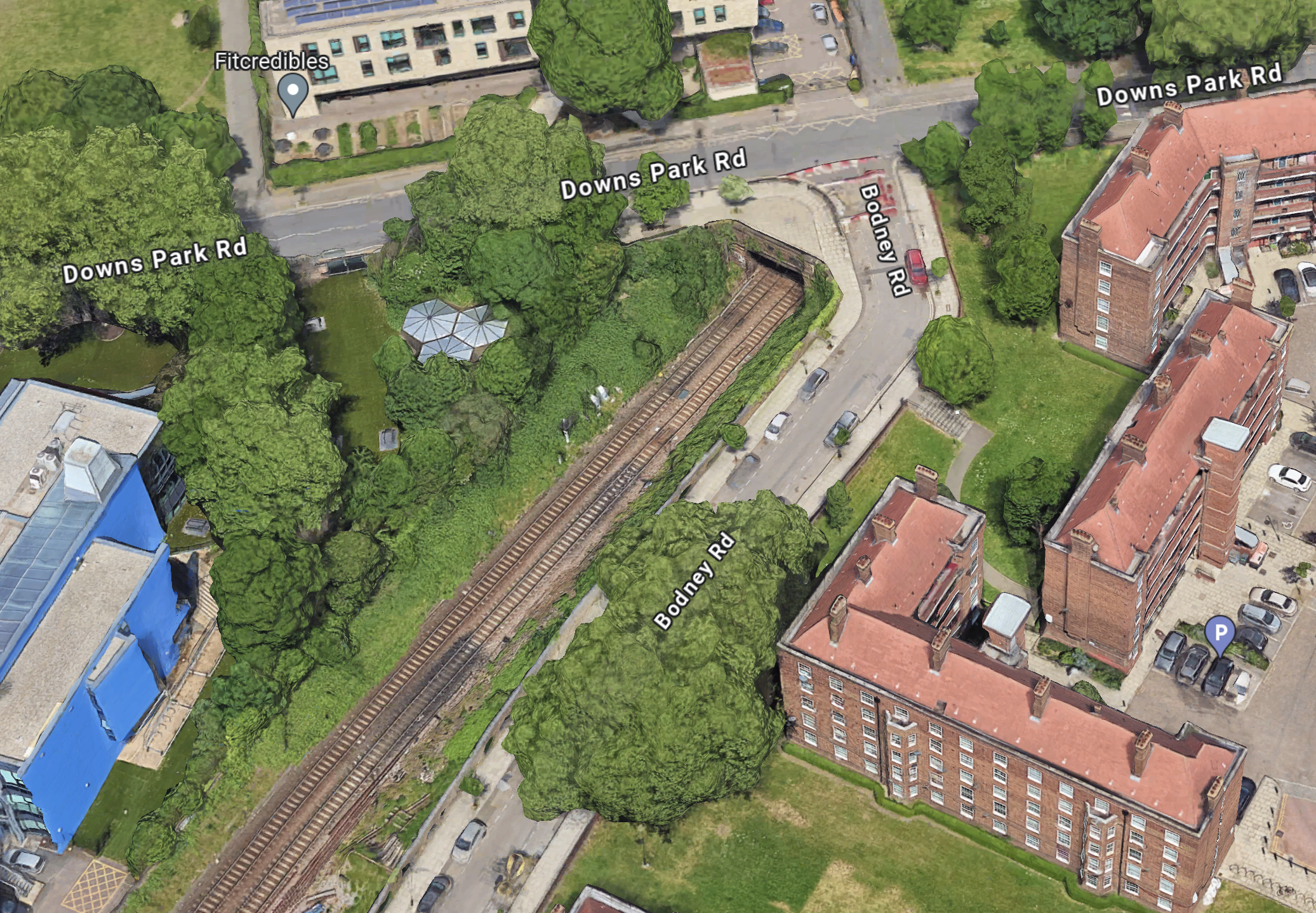
Note.
Downs Park Road running across the top of the map.
Bodney Road running down the side of the railway.
The blue building is Mossbourne Academy.
This Network Rail image shows the current bridge.

It certainly looks like it’s seen better days.
This Network Rail visualisation shows the how the new bridge will probably look from above.

It looks like the landscaping will be fairly simple.
I have some further thoughts.
The Disruption
Sixteen days is a long closure, but rebuilding the bridge before it possibly falls down, is probably prudent.
So make sure you read the full press release from Network Rail.
Hopefully, it will all go well!
Further Works
Hackney Downs and Clapton stations opened in 1872, so the bridge and the tunnel must be at least 150 years old.
So I wouldn’t be surprised, that when Network Rail do a full underground survey, they find other problems.
Rectification could delay the reopening.
Conclusion
It looks to be a well-prepared project.
But I do have my reservations about Network Rail finding something nasty.
Those naughty Victorians would cut corners and bodge things and then not write it down.
Extending the Elizabeth Line – Stratford To Walthamstow and Chingford
A lot of people in Walthamstow and Chingford would like a direct rail connection to Stratford with its shopping, sporting, entertainment and employment opportunities.
The Hall Farm Curve used to provide this connection, but it was removed in 1968, despite having been electrified in 1960.
This map from cartometro.com shows the curve.

Note.
- The Chingford branch line is shown in orange.
- The triple-track Stratford branch of the West Anglia Main Line crosses the Chingford branch line at right angles.
- Lea Bridge station reopened in 2016.
It has been stated that the Hall Farm Curve would be reinstated as an electrified single track.
There would probably be a need for a crossover to the North of the former Hall Farm junction to enable trains from Lea Bridge to get to the Chingford-bound track.
The Hall Farm Curve would also give access to Elizabeth Line and Greater Anglia services at Stratford. But it may be that when the Elizabeth Line opens fully in November, travellers get used to going into Liverpool Street and changing there.
Services Between Stratford and Chingford Via Walthamstow
Providing this service might be difficult, but not impossible.
- Trains could use the High Meads Loop at Stratford.
- Digital signalling may allow more trains to be squeezed in.
- Chingford could certainly handle eight trains per hour (tph)
But there is always the problem of the level crossing at Highams Park station.
Changing Between The Elizabeth And Chingford Branch Lines At Liverpool Street Station
Consider.
- At present Liverpool Street station on the Lizzie Line has sixteen trains per hour (tph).
- Eight tph go to both Eastern termini at Abbey Wood and Shenfield.
- In the West two tph go to each of Heathrow Terminal 4, Heathrow Terminal 5, Maidenhead and Reading, with the other eight tph reversing at Paddington.
- If you travel in the Eastern end of a Lizzie Line train, you should enter Liverpool Street station opposite to where all London Overground services including those to and from Chingford terminate in the station.
- The walking route between the Elizabeth And Chingford Branch Lines At Liverpool Street is step-free.
Some passengers will use this route to places like Walthamstow Central, but others moan, that there is no direct connection between the Victoria and Lizzie Lines.
Stations Without Step-Free Access On The Chingford Branch Line
These stations on the Chingford Branch Line do not have full step-free access between train and street.
- Bethnal Green
- Cambridge Heath
- London Fields
- Hackney Downs
- Clapton
- St. James Street
- Walthamstow Central
- Wood Street
Only Hackney Downs and Walthamstow Central have been mentioned with respect to installing some form of step-free access.
Increasing Capacity Between Liverpool Street And Chingford
The Chingford Branch Line can handle pairs of four-car trains and running these all day, would surely be the best way to increase capacity.
Conclusion
If money was no object, the Chingford Branch Line could be improved to make it a much better feeder line for the Elizabeth Line.
I also have a feeling, that a lot of people living in North-East London will switch their travelling from the Victoria Line to the Chingford Branch Line and the Lizzie Line.
London Underground Gets Approval For Walthamstow Central Tube Station Upgrade
The title of this post, is the same as that of this article on Ian Visits.
It is from over a year ago and I’m only including it, as it includes a cutaway of the upgrade.
I go regularly to Walthamstow Central station and hopefully, this will make my journeys easier in busy times.
This paragraph from Wikipedia describes some of cost-cutting design features of the current station.
The underground station, like many stations on the Victoria line, was built to a low budget. White ceiling panels were never fixed to the ceilings above the platforms; instead the steel tunnel segments were painted black and used to support the fixtures and fittings, cutting lighting levels. A concrete stairway sits between two escalators instead of a third; this economy caused a disruptive station closure for several weeks in 2004 when both escalators went out of service.
Hopefully, these short comings will be addressed in the upgrade.
But it doesn’t appear there will be step-free interchange between Underground and Overground.
A Trip On An Electric Double Deck Bus On Route 212 Between Chingford And St. James Street Stations
I took these pictures on the route between Chingford and St. James Street stations.


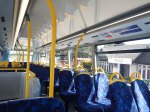

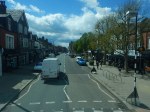
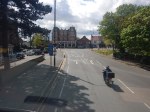
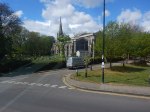


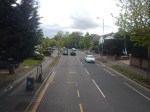
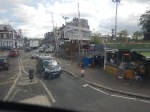
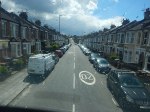

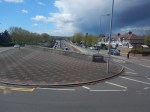
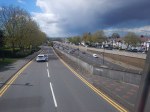
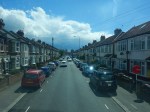
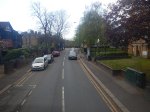



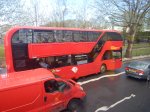
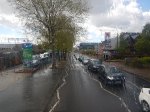


Note.
- The bus is an Alexander Dennis Enviro 400 EV, which is built on on BYD Auto‘s K10 chassis, powertrain and batteries.
- Wikipedia quotes a performance of 303 km service range from a 320kWh lithium iron phosphate battery and two 150 kW motors.
- This range would be comparable with a diesel bus, that typically does 200 miles per day.
- It certainly handled the route from Chingford well. But then it was very much downhill, so it got help from Newton’s friend.
- I rode on the top deck up the front and the ride was as I’d expect from a quality busin the UK.
As there wasn’t any sign of charging equipment at either end of the route, I suspect that the route is well-suited for the buses.
I know someone, who used to manage this route and they called it a basket case.
I can certainly understand that.
- The route is narrow in places with cars parked on both sides of the road. This must delay services.
- I was lucky with the level crossing at Highams Park station, but at busy times it could be a nightmare.
Will the new Class 710 trains on the parallel Chingford Branch Line improve matters, by attracting passengers away from their cars in the area and the buses?
There has also been talk of a new station at Chingford Hatch, which could also be served by the 212 bus.
Latest On The New London Overground Class 710 Trains
The August 2018 Edition of Modern Railways has a two-page article on the latest on the new Class 710 trains for the London Overground.
Seating Arrangement
Wikipedia says this about the seating.under Background And Specifications.
The units will be delivered in two sub-classes; an AC-only version with longitudinal and transverse seating (very similar to the S8 units on the Metropolitan line of the London Underground) for use on the West Anglia and Romford-Upminster services, and a dual-voltage version with longitudinal seating for the Watford DC and GOBLIN services.
But it now appears that all the seats on the trains will be longitudinal ones.
I use the current trains a lot to go to Walthamstow and I also use the Class 378 trains, which have longitudinal seats, frequently on the North and East London Lines of the Overground.
I probably aren’t bothered too much about longitudinal seats, but I suspect there will be others who will complain.
This discussion of RailForums is entitled Annoying Things About The Class 378. Search for “seat” and you don’t find many complaints about the longitudinal seating, which is also used on much of the Underground.
On the other hand, if all the trains have identical interiors, this must save on construction and maintenance costs.
If the interiors are basically similar to the Class 378 trains, it must also save on staff training costs.
I actually think, that the biggest complaint will not be about the new trains, but why don’t the older Class 378 trains have wi-fi and USB charging points!
Eight-Car Trains On West Anglia Routes
The article also states that services on West Anglia routes to Cheshunt, Chingford and Enfield Town stations will work as eight-car trains or a pair of four-car trains.
If they are always working in pairs, why not build them as eight-car trains in the first place?
In A Detailed Layout Drawing For A Class 345 Train, I said that the formation of a Class 345 train for Crossrail is as follows.
DMS+PMS+MS1+MS3+TS(W)+MS3+MS2+PMS+DMS
Note.that the train is composed of two identical half-trains, which are separated by the TS(W) car.
As the Modern Railways article says that these trains are to be the last to be delivered, would it not be sensible to fully understand the four-car units and then decide if instead of pairs of four-car units, they were built as eight-cars.
Consider.
- Trains would be formed of identical four-car half-trains.
- An eight-car Class 710 train would be nearly fifty metres shorter than a nine-car Class 345 train.
- Passengers would be able to walk through the whole train.
- Passengers can position themselves for their best exit at their destination station.
- Would passenger security be better on a train, where passengers could walk all the way through?
- I have seen drivers on Class 345 trains change ends inside the train
- Aventras and other modern trains are fitted with intelligent control systems, that determine the number and type of the intermediate cars in the train.
- Two Driving Motor Standard Cars (DMS) would be replaced with simpler Trailer Standard (TS) or Motor Standard (MS) cars.
- The choice of a TS or MS car would depend partly on performance issues, which could be tested with the earlier four-car trains.
- Building and maintenance cost savings by reducing the number of driving cars, must be possible.
- Capacity could be increased by adding cars in the middle, if platforms were long enough!
- Would providing overnight stabling for fifteen eight-car trains be easier than for thirty four-car trains?
It should also be noted, Cheshunt station has a very long platform without a roof. Passengers could walk to the front of the train inside a warm dry train. This already happens with the Class 378 trains at Highbury & Islington station.
Romford-Upminster Shuttle
The Modern Railways article says this about the service on the Romford-Upminster Line.
TfL is still considering whether to utilise a ‘710’ on the Romford to Upminster shuttle or to retain an older unit for the line.
I wrote about this in A Heritage Class 315 Train For The Romford-Upminster Line, after this article in London Reconnections, which is entitled More Trains for London Overground: A Bargain Never to be Repeated, said that it is possible that this line could be served by a Class 315 train, held back from the scrapyard.
I came to this conclusion.
If it is decided that a Class 315 train is to be used on the Romford to Upminster Line, I believe that the service could be marketed as a quirky heritage unit, that in conjunction with its main purpose of providing a public service, could also be used for other education, training, marketing, innovation and research purposes.
Eversholt Rail Group might even shift a few redundant Class 315 trains!
Why not?
Chingford Upgrades
The Modern Railways article says this.
A £7million investment has seen the stabling facility at Chingford upgraded, including the addition of an AVIS-scanner here as well.
These pictures show the investment.
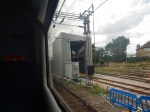
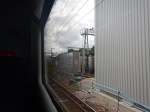
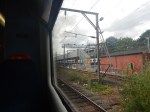
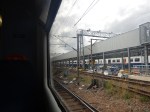

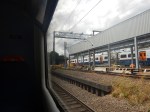


With the Automatic Vehicle Inspection System (AVIS), Chingford is becoming more than a stabling facility.
Note the large maintenance structure, so that trains can be worked on in the dry.
A Few Questions Of My Own
I have a few of my own questions.
If The Thirty Four-Car Trains For West Anglia Routes Are Converted To Eight-Cars, What Happens To The Spare Driving Motor Cars?
If the thirty four-car trains are converted to fifteen eight-car trains, it appears to me that Bombardier could have at best many of the long-lead components for thirty Driving Motor Standard (DMS) cars. At worst, they would have thirty DMS cars for Class 710 trains.
But London Overground will have need for a few more trains in a few years.
In Increased Frequencies On The East London Line, I showed this London Overground table of improvements.
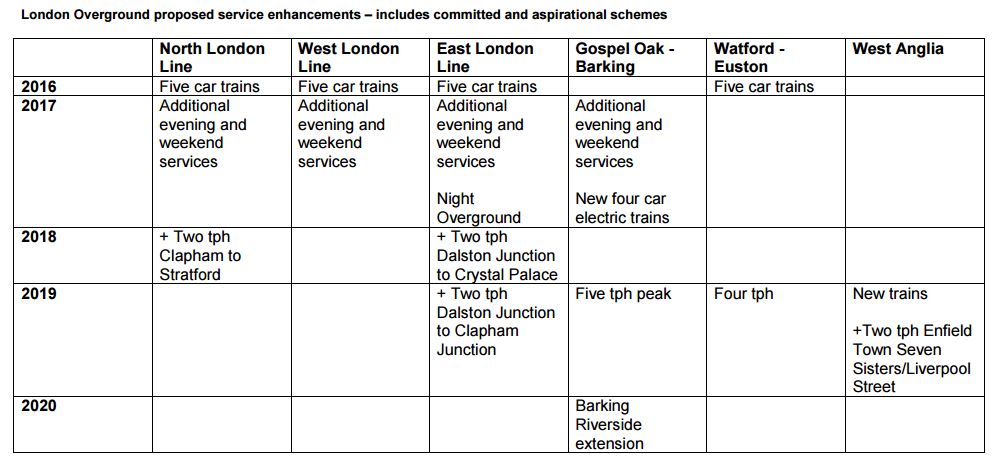
LO Improvements
Note that two extra tph are proposed on the Liverpool Street to Enfield Town service. I calculate, that this would need another two Class 710 Trains.
Similarly, to add two tph to the Liverpool Street to Cheshunt service, would appear to need another three trains.
The Mayor is also looking favourably at creating the West London Orbital Railway.
I estimate that the two proposed routes would need around four trains each to provide a four tph service, if they could be run using dual-voltage Class 710 trains with a range of perhaps ten miles on battery power.
What Is Happening About The Hall Farm Curve?
I heard from someone, who should know, that the Hall Farm Curve and the Coppermill Curve will be reinstated.
These curves would allow the following.
- A direct service between Chingford/Walthamstow and Stratford.
- Better access to the upgraded stabling at Chingford.
But I think these curves would be invaluable in maintaining services, during the construction of Crossrail 2.
Will A Bay Platform Be Developed At Lea Bridge Station?
I also wonder if a bay platform will be developed at Lea Bridge station, which would enable a four tph service to be run between Lea Bridge and Chingford stations, if Chingford Branch trains couldn’t get into Liverpool Street station, because of construction works.
I certainly feel that the curves connecting the lines at Coppermill Junction will have a major part to play in the development of East London’s railways.
Could Electrification Be Removed From The Chingford Branch Line?
This article in Rail Engineer also quotes Jon Shaw of Bombardier on onboard energy storage in the new Aventra trains, like the Class 710 trains that will work the Chingford Branch Line.
As part of these discussions, another need was identified. Aventra will be an electric train, but how would it serve stations set off the electrified network? Would a diesel version be needed as well?
So plans were made for an Aventra that could run away from the wires, using batteries or other forms of energy storage. “We call it an independently powered EMU, but it’s effectively an EMU that you could put the pantograph down and it will run on the energy storage to a point say 50 miles away. There it can recharge by putting the pantograph back up briefly in a terminus before it comes back.
I believe that once the concept of onboard energy storage is accepted, that Network Rail and operators, will question whether there is a need for so much electrification.
In a few years time, all trains, except perhaps a few engineering ones, on the Chingford Branch Line North of St. James station will be new Class 710 trains with the following characteristics.
- Enough onboard energy storage to handle regenerative braking and handle the twenty mile out-and-back trip on the branch.
- By using onboard energy storage, the trains have a remote wake-up facility, as discussed in Do Bombardier Aventras Have Remote Wake-Up?.
- The ability to raise and lower a pantograph quickly.
So would it be possible to remove electrification, North of Clapton Junction.
This map from carto.metro.free.fr shows the area of Coppermill junction, with the Chingford Branch Line shown conveniently in orange.

Coppermill Junction
I will now list the advantages of removing the electrification between Clapton Junction and Chingford.
Maintaining The Overhead Wires
Overhead wires get damaged, vandalised and stolen at a surprisingly high frequency.
Network Rail would love to see the wires come down.
The only objectors would be the thieves, who nick the wires to sell.
The Sidings At Chingford Could Be Without Electrification
As all the trains stored there would have their own onboard energy storage, they would move in and out under their own power.
The Chingford sidings could thus be without electrification.
This would.
- Reduce maintenance costs for the sidings.
- Enable track layouts to be changed without changing the electrification.
- Increase safety levels for everybody working in the sidings.
The only electrification needed at Chingford might be a short stretch of overhead wire to top up trains low on electricity.
All Height Restrictions Could Be Removed At The Highams Park Level Crossing
After the recent accident on the M20, reported in this story on the BBC,, which is entitled M20 motorway shut after lorry crash causes bridge collapse, I don’t think it is wise to underestimate the stupidity of some drivers.
So if there were no overhead wires at the Highams Park level crossing, it might avoid a serious incident.
Easing Station Rebuilding and Building
Wood Street station needs to be rebuilt to make the station step-free and it would be much easier and less disruptive to train services, if there were no overhead wires to get in the way.
If any new stations are added to the line, then the cost of building must be more affordable, if there are no overhead wires to get in the way.
Less Visual and Noise Intrusion
Obviously, removal of overhead wires will reduce the visual intrusion.
But, it will also reduce the noise, as overhead wires are a source of noise from electric trains.
Note too, that as the new trains will use regenerative braking at most times, there will be much less noise from wheel-brakes.
A Safer Railway
There is no doubt, that a railway without electrification is a safer railway, as there is no electricity, except for points and signals.
Conclusion
It would be advantageous for several reasons if electrification could be removed from the Chingford Branch Line.
Related Posts
Improving The Chingford Branch Line
Could Reversing Sidings Be Used On The Chingford Branch Line?
Could The Hall Farm Curve Be Built Without Electrification?
New Stations On The Chingford Branch Line
Rumours Of Curves In Walthamstow
Will Walthamstow Central Station On The Victoria Line Be Expanded?
Crossrail 2 And The Chingford Branch Line
The Chingford Branch Line will be effected both during construction and after opening by Crossrail 2..
In Rumours Of Curves In Walthamstow, I said this.
But with the design stage of Crossrail 2 well underway, I do wonder, if connecting Chingford station and the related sidings to the West Anglia Main Line, might give Crossrail 2 better options to build the line or provide alternative services, whilst the West Anglia Main Line is rebuilt through the area.
I still think that the Chingford Branch Line will be an invaluable resource to help get the Northern end of Crossrail 2 built.
If the Coppermill Curve is built in the near future, I feel the main reason will be to help build Crossrail 2 and rebuild the West Anglia Main Line to four-tracks.
Once Crossrail 2 is open, I think that the two lines will be connected together at Seven Sisters/South Tottenham. There is a lot of scope for a major passenger-friendly interchange and as it will be a few years after Crossrail, the design will draw on the experience of theearlier line.
Conclusion
The Chingford Branch Line will end up being tightly linked to Crossrail 2.
Related Posts
Improving The Chingford Branch Line
Could Reversing Sidings Be Used On The Chingford Branch Line?
Could The Hall Farm Curve Be Built Without Electrification?
New Stations On The Chingford Branch Line
Rumours Of Curves In Walthamstow
Will Walthamstow Central Station On The Victoria Line Be Expanded?
Could Reversing Sidings Be Used On The Chingford Branch Line?
In Improving The Chingford Branch Line, I showed how the new Class 710 trains and some adjustment to timetables could run eight trains per hour (tph) to Chingford, with 4 tph each going to Liverpool Street and Stratford, by getting the trains to cross at the level crossing at ighams Park station.
Several stations in London, including some on the Underground, have what is known as reversing sidings. In How Trains Reverse At West Croydon, I described the working of the reversing siding there, which London Overground trains use to swap tracks to get back to Dalston Junction station.
So could a strategically placed reversing siding be placed to turn back some services, before the Highams Park level crossing?
I don’t think a reversing siding would be needed until the Coppermill Curve was reinstated to allow trains to go to and from Tottenham Hale to Walthamstow, And even then, it would only be needed if more than eight tph were running to Walthamstow.
A reversing siding would allow the following.
- More than eight tph to go to Walthamstow.
- The creation of a triangular service from Tottenham Hale to Lea Bridge via Walthamstow.
- Services between Chingford/Walthamstow and Seven Sisters/South Tottenham for a future Crossrail 2.
- Services between Chingford/Walthamstow and Gospel Oak along the Gospel Oak to Barkjing Line.
This map from carto.metro.free.fr shows the railway lines around Seven Sisters station.
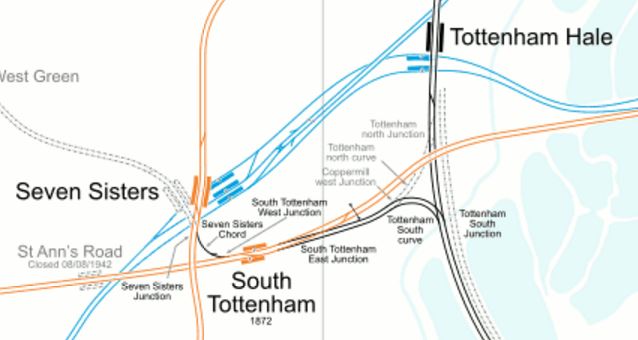
There are certainly a lot of possibilities.
- The Seven Sisters Chord gives access to Seven Sisters, Enfield Town and Cheshunt.
- The Gospel Oak to Barking Line gives access to Cricklewood, Gospel Oak, Richmond and West Hampstead.
- The Gospel Oak to Barking Line gives access via Cricklewood to the Dudding Hill Line for Acton..
- The Gospel Oak to Barking Line gives access via |Willesden Junction to the West London Line for Clapham Junction.
If another four tph service is created to Walthamstow, I suuspect it will be a third long East-West service, which will give eight tph on the busy part of the Gospel Oak to Barkling Line west of South Tottenham.
There are only three stations or four if you add in Forest Road, which I talked about in New Stations On The Chingford Branch Line.
- St. James Street
- Walthamstow Central
- Wood Street
- Forest Road.
I’ll look at each in detail.
St. James Street Station
This is probably too difficult and it’s the first station.
Walthamstow Central Station
This Google Map shows the station.
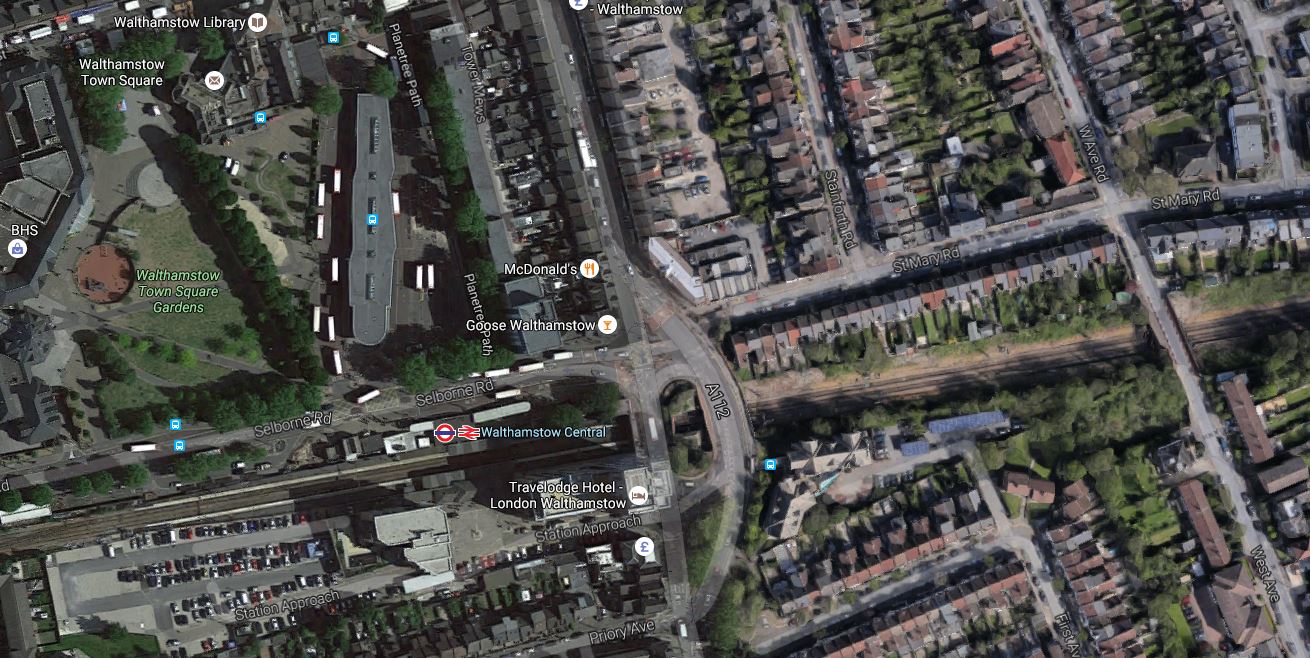
Walthamstow Central Station
I think it could be a possibility.
I think that the platforms are certainly able to accept eight car trains and might even take twelve, so there should be space for a reversing siding between the two lines to the East of the station.
Wood Street Station
This Google Map shows the station.
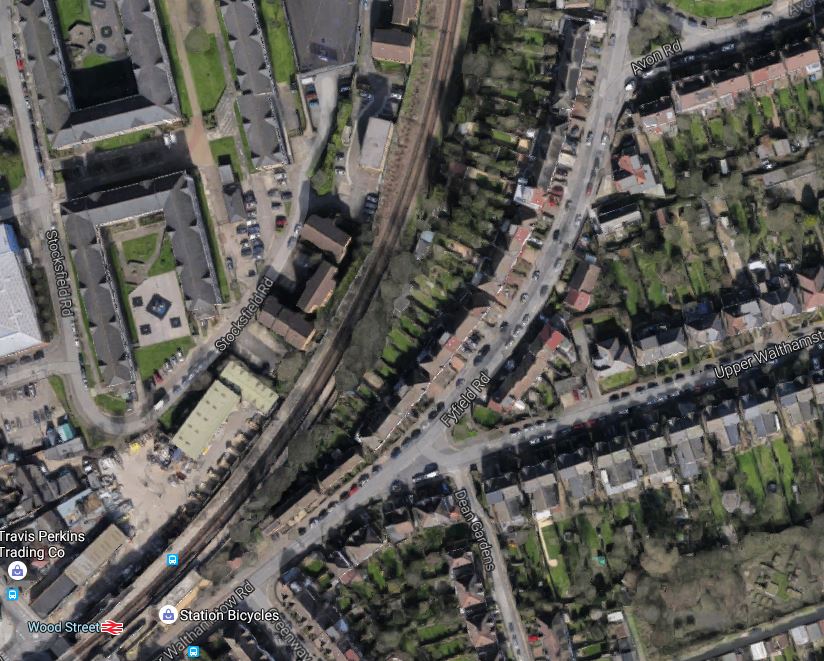
Wood Street Station
Again, I think this is a possibility.
Wood Street station will need a lot of rebuilding to make it step-free and there is space beyond the platforms towards Chingford to put in a reversing siding for a train.
These pictures show the station.


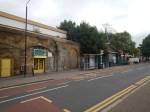

It is a station with potential.
Forest Road Station
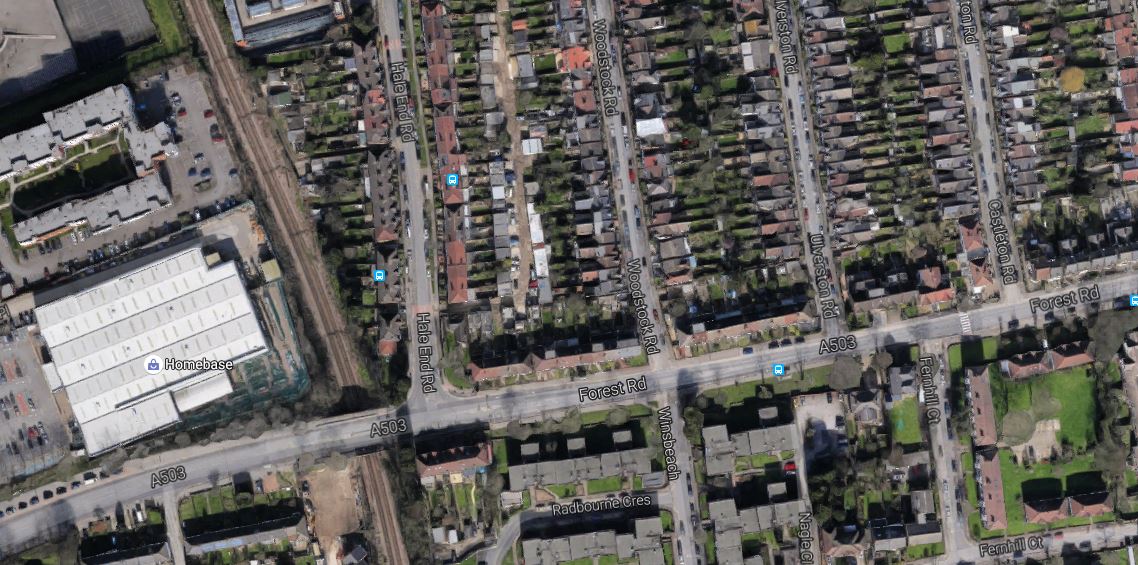
This Google Map shows where Forest Road station will probably go.
Forest Road Station
It could be just too restricted a site.
How Would The Trains Be Organised?
I think that Walthamstow Central or Wood Street will be the station with a reversing siding.
Say there are going to be three 4 tph services. They could be.
- Gospel Oak to Walthamstow Central or Wood Street
- Liverpool Street to Chingford
- Stratford to Chingford
The sequence at the reversing station would be.
- The train from Gospel Oak arrives in the down platform, discharges passengers and goes into the reversing siding.
- The two Chingford services arrive in the down platform, one after the other, pick up any passengers and go to Chingford.
- The two Chingford services arrive in the up platform, one after the other, pick up any passengers and go to Stratford and Liverpool Street.
- The train for Gospel Oak comes out of the reversing siding into the up platform, picks up passengers and goes on to Gospel Oak.
No passengers would have to change platforms to change trains.
Would It Be Sensible To Have A Reversing Siding Anyway?
I’m no expert, but I think the answer is Yes!
Crossrail have a reversing siding at Chadwell Heath station, that they say is for service recovery, in this page on their web site.
So perhaps, if say there was a problem on the highams Park level crossing, a train or two could be diverted to the reversing platform to await their slot on the return from Chingford.
Conclusion
A reversing siding at either Walthamstow Central or Wood Street would allow extra services to be developed around the Coppermill Curve and also be useful for service recovery.
Related Posts
Improving The Chingford Branch Line
Could Electrification Be Removed From The Chingford Branch Line?
Could The Hall Farm Curve Be Built Without Electrification?
Crossrail 2 And The Chingford Branch Line
New Stations On The Chingford Branch Line
Rumours Of Curves In Walthamstow
Will Walthamstow Central Station On The Victoria Line Be Expanded?
Wikipedia – Chingford Branch Line
New Stations On The Chingford Branch Line
I have pulled this post out of What Might Have Been At Walthamstow And Woodford, as I want to have a series of linked posts that described the various ways that the Chingford Branch Line could be improved.
In the Future Developments section of the Wikipedia entry for the Chingford Branch, it is said that there may be a station at both Forest Road and Chingford Hatch, either side of Highams Park station.
This map shows the area.
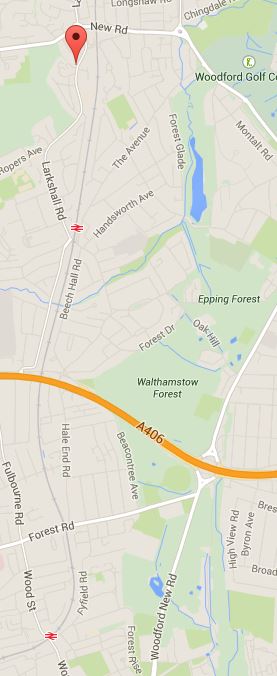
Around Highams Park
The red arrow indicates Chingford Hatch, with the two stations shown being Highams Park in the middle and Wood Street at the bottom.
Chingford Hatch Station
This Google Map shows the location of Chingford Hatch between Highams Park and Chingford stations.
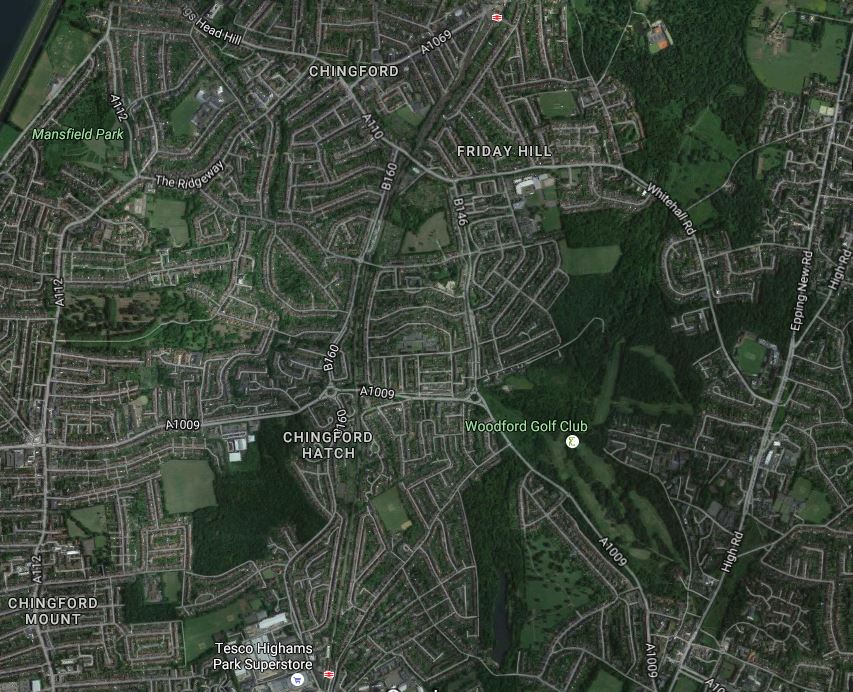
Chingford Hatch
Chingford station is at the top and Highams Park station is st the bottom.
I suspect if the station is built, it will be somewhere near the roundabout. The railway is a short distance to the East.
As the railway appears to be on a bridge, it won’t be a simple station to build.
Forest Road Station
This Google Map shows the probable location of a new station on Forest Road in Walthamstow.
Forest Road Station
The station would probably be built where Forest Road crosses the railway line.
I suspect that if the station was built, it would be a simple affair with platforms on either side of the current line.
At present there is no more information on either station.
Walthamstow Village Station
This Google Map shows the up-and-coming area of Walthamstow Village.

Walthamstow Village
The railway is in a deep cutting and I suspect despite what the locals might think a station wouldn’t be practical.
But I suspect, there would be space for a reversing siding, that could be used by trains reversing at Walthamstow Central station.
Conclusion
Both proposals look sound, but passenger statistics will define if new stations are built.
Related Posts
Improving The Chingford Branch Line
Could Electrification Be Removed From The Chingford Branch Line?
Could Reversing Sidings Be Used On The Chingford Branch Line?
Could The Hall Farm Curve Be Built Without Electrification?
Crossrail 2 And The Chingford Branch Line
Rumours Of Curves In Walthamstow
Will Walthamstow Central Station On The Victoria Line Be Expanded?
Wikipedia – Chingford Branch Line
 The Anonymous Widower