Nineteen Tri-Mode Flex Class 769s For GWR
The title of this post is the same as that of this article on Rail Magazine.
This brings the number of Class 319 trains to be converted to Class 769 trains, to thirty five.
- These trains for Great Western Railway (GWR) will be tri-mode trains and able to operate on 25 KVAC overhead and 750 VDC third rail electrification and diesel power.
- The Rail Magazine article, says they will support the introduction of refurbished Class 387 trains on Heathrow Express and on services from Reading to Gatwick and Oxford.
- The trains would release diesel Class 165 trains and Class 166 trains to be refurbished and improve services in the Bristol area.
Although, there appears to have been so sighting of a Class 769 train on the UK network, the trains must have shown up well in testing, as no-one would order nineteen trains, that didn’t meet the specification.
According to the Future section in the Wikipedia entry for the Class 319 trains, there are forty-five of the trains sitting in sidings off lease.
So there won’t be a shortage of trains to modify.
Good Design Always Wins!
I do find this story rather heartwarming.
When the Advanced Passenger Train project fell well behind schedule, Terry Miller and his team at Derby, came up with a short-term proposal for a High Speed Diesel Train, which when launched in 1975 was known as the InterCity 125.
Forty years later most of these iconic trains are still in service
But that wasn’t the end of the story.
The design of the Mark 3 carriages of the InterCity 125, was used by British Rail to build large numbers of less iconic electric and diesel multiple units, of which the Class 319 train was just one of seventeen classes of train based on the Mark 3.
The legacy of Terry Miller and his team is echoing down the years.
The Class 769 train is one of the ultimate echos.
How Will GWR Deploy The Class 769 Trains?
Nineteen trains is a substantial order and train companies don’t buy trains to stick them in sidings, so how will they be used?
Before answering the question, I’ll put in a few facts.
- According to Porterbrook’s brochure, Class 387 trains are four twenty metre coaches.
- According to Wikipedia, Class 319 trains are four twenty metre coaches.
- Both trains can be configured to work on 25 KVAC overhead of 750 VDC third-rail electrification.
- Porterbrook’s brochure says that Class 387 trains have a lot of modern features like, information systems for driver and passengers, air conditioning and passenger counting. The brochure also says that Class 387 trains will be ERTMS-ready.
I wouldn’t be surprised to see the Class 769 trains given a quality refurbishment, very much in excess of that Northern have given to their Class 319 trains.
Remember, that GWR must have massive experience about improving Mark 3 carriages from forty years of work with InterCity 125 trains.
GWR were also behind the superb refurbishment of a Class 150 train, that I wrote about in What Train Is This?. So they have form!
The quality must be in excess of that of the Class 165 and Class 166 trains, that they will often replace. And those two classes are not crap, just diesel, too slow for some routes and often lacking in capacity.
In Could A Three-Car Class 769 Train Be Created?, I showed that if a three-car Class 769 train is needed, that this is possible. But it would lose about sixty seats and the universal access toilet, if it follows a similar route as converting a four-car Class 321 train to a three-car Class 320 train.
Covering For Class 387 Trains Going To Heathrow Express
This page on the First Group web site, is the original press release about the procurement.
This is said.
Initially, the fleet will support the introduction of refreshed trains on Heathrow Express services, but will be predominantly be used on routes between Reading and Gatwick, and Reading and Oxford, where the train’s tri-mode can be used to its fullest. However, the tri-mode nature of the train will give GWR maximum flexibility to use them in other areas of the network should they be required.
The purchase of nineteen trains will surely be enough to cater for the loss of Class 387 units to Heathrow Express duties to replace the Class 332 trains.
I wrote about this in GWR Announces Plans To Replace Class 332s As It Takes Over Heathrow Express Service.
I estimated that if each Heathrow Express train eventually becomes two Class 387 trains working together as opposed to the current pair of Class 332 trains, that fourteen Class 387 trains will be needed for Heathrow Express.
Consider.
- GWR have forty-five Class 387 trains in their fleet.
- If Heathrow Express needed to be be worked by twelve-car trains, this would increase the number needed to twenty-one. That would still leave GWR with twenty-four trains for other services.
- There are plans for Southern and Western access to Heathrow, which could mean a need for more Class 387 trains for Heathrow Express .
- c2c could release their six Class 387 trains in the early 2020s, when their new Aventras arrive.
- Great Northern might be persuaded to release some of their twenty-five Class 387 trains.
It certainly looks, that all possibilities are covered for Heathrow, who are probably paying a substantial fee to GWR to run the service.
Reading And Oxford
The First Group press release mentions that Class 769 trains could be running between Reading and Oxford stations.
So does this mean that the current two trains per hour (tph) service between Paddington and Didcot Parkway station will be extended to Oxford and run by Class 769 trains?
Consider.
- A new South-facing bay platform is planned at Oxford station, that could be sized for a trio of Class 769 trains.
- All services between Paddington and Oxford will become electric or bi-mode.
- Class 387 and Class 769 trains are based on twenty metres carriages, so there should be no platform issues.
- A number of Class 387 trains would be released for modification.
- Several Class 165 and Class 166 trains will be released on other parts of the GWR network.
The only problem I see is that some passengers may complain about losing the Class 387 trains, with their comfortable seats and tables..
GWR must get the interior of the Class 769 trains spot-on!
Reading And Bedwyn
This is another route, where Class 769 trains could be used to advantage.
The turnback siding at Bedwyn station would need modification to incoporate a bi-mode Class 800 train, but a Class 769 train would fit the existing infrastructure.
Reading And Gatwick
If ever the Victorians designed a route that would be ideal for a tri-mode train it is GWR’s service between Reading and Gatwick Airport.
- It has sections with 750 VDC third-rail electrification.
- At Reading, it could be extended using the 25 KVAC electrification along the Great Western Main Line to perhaps Oxford.
- Currently, the service is run by Class 165 trains.
Could a way be found to take the trains into Heathrow as an alternative Western terminal, when the Southern and Western rail routes to the Airport are built?
This route has needed a bi-mode train for decades.
Cardiff to The South Coast via Bristol, Bath, Salisburu and Southampton
This over three hour route is currently run by Class 156 trains.
Consider.
- This route has significant overcrowding according to Wikipedia and my personal experience
- Cardiff to Bath should eventually be electrified with 25 KVAC overhead wires.
- Brighton to Southampton is electrified with 750 VDC third rail.
- GWR run this route and have Class 800 trains.
- Running at over 100 mph is only possible in a few places.
- Dual voltage Class 800 trains must be possible, but at five-cars, they may be too long for some stations.
To run this route efficiently, GWR would need an appropriate number of dual voltage bi-mode trains.
GWR will soon have two trains that could handle the route; Class 800 trains or Class 769 trains.
I suspect that the Class 769 train would be most suitable, especially as at busy times like the summer, they could run eight-car trains.
Transwilts
Transwilts is a Community-run rail service in Wiltshire. This page on the Transwilts web site, shows the rail routes in their area.
Currently, most local services seem to be run by two-car Class 150 and one-car Class 153 trains, so when passenger numbers increase, larger trains including Class 679 trains may be used.
I was in this area once a few days before the Glastonbury Festival. You couldn’t have squeezed ia chihuahua onto the train!
Slough And Windsor And Eton Central
Class 769 trains could work this short branch line. But they might be need to use a three-car version.
Henlry Branch Line
The Henley Branch Line has the following characteristics.
- The branch is not electrified.
- The branch is only single track.
- There is a single-track bridge over the Thames.
- Most services are shuttles between Henley-on-Thames and Twyford stations.
- In the Peak and during the Henley Regatta direct trains operate to and from Paddington.
- Crossrail will call at Twyford with a frequency of four tph between London and Reading.
I have just flown my virtual helicopter along the line and it looks like there is insufficient space to create a complete double track railway, that could work at a very high frequency.
But there is space to add a passing loop or loops, that would allow a four tph frequency on the branch to match Crossrail.
Class 769 trains would be able to work the updated branch using their onboard diesel generators.
- Modern signalling would probably be needed to be installed on the branch, as it will certainly be on the trains, as they work between Paddington and Reading.
- Selective door opening or platform extensions will be needed at intermediate stations, so that two Class 769 trains working as an eight-car train could use the branch.
- Trains could either run as shuttles or direct to Paddington.
In my view, there is a simple solution in there, which is much better than mine.
But the residents of and visitors to Henley will get the quality service they desire.
- Comfortable, air-cooled trains with wi-fi.
- Four tph with a change at Twyford to Crossrail.
- Direct electric trains in the Peak and during the Henley Regatta.
Maidenhead And Marlow
The Marlow Branch Line must be a particular problem for GWR.
- The line is single track.
- There is no electrification.
- The one tph shuttle trains between Marlow and Maidenhead take around 20-25 minutes, with a reverse at Bourne End station.
This extract from the Wikipedia entry for Bourne End station described the Services.
Bourne End is a terminus but effectively acts as a through station, with the driver having to change ends to continue to the next station. During peak hours service frequency is increased by having two trains work the line, each using Bourne End as the terminus: one runs Marlow – Bourne End and one Maidenhead – Bourne End, with passengers changing trains at Bourne End. Four trains per weekday operate between Bourne End and Paddington in the morning peak and coming back in the evening peak.
This Google Map illustrates the problem at Bourne End station.
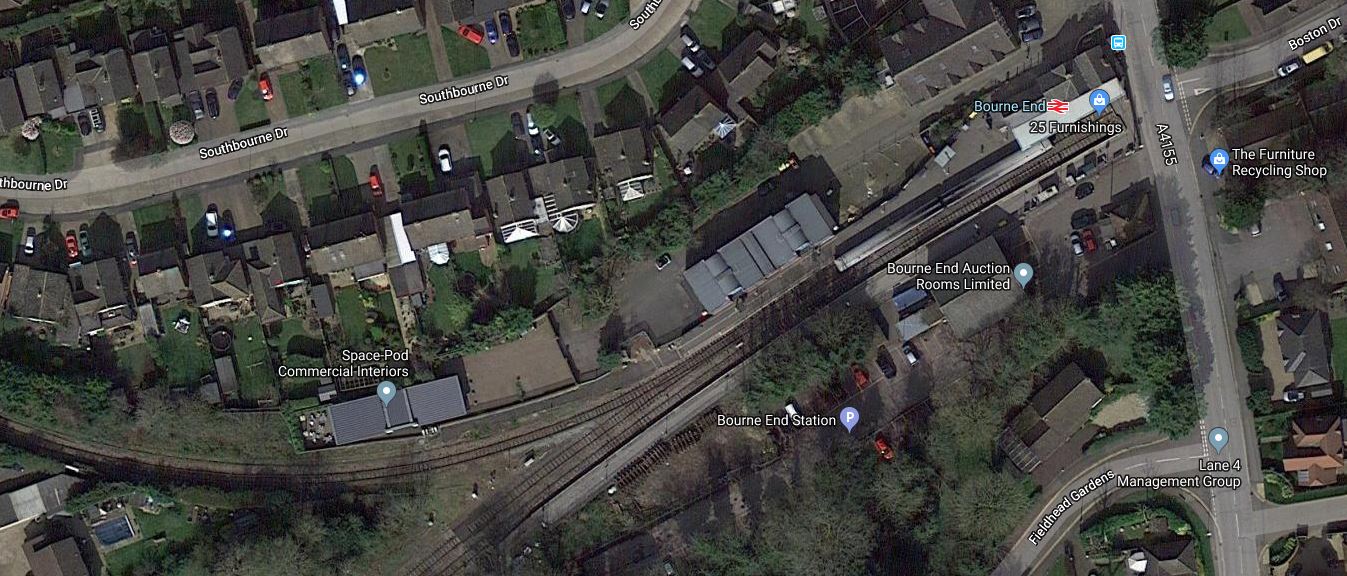
Note.
- The line to Marlow curves out of the Western side of the map.
- The double-track to Maidenhead goes in a South-Westerly direction out of the Southern side of the map.
- The Class 165 or Class 166 train in Platform 1 of the station is formed of two twenty-three metre carriages, so it’s forty-six metres long.
- Platform 1, is connected to both Marlow and Maidenhead, whereas Platform 2, is only connected to Maidenhead.
- A four-car Class 769 train is eighty metres long, with a three-car Class 769 at just sixty metres.
Just looking at the geography, I have my doubts that the existing track and platform layout at Bourne End could handle the reversing of a four-car Class 769 train. It’s might be too long to clear the junction, so would be unable to reverse and take the other route.
But I suspect with a bit of innovation, this might be possible.
Track realignment is the obvious possibility.
The other possibility would be to use a three-car Class 769 train, which is just fourteen metres longer than the current trains.
Four-car Class 769 trains could also be used for a direct service between Bourne End and Paddington in the Peak.
Greenford Branch Line
In Could Three-Car Aventras Run Services On The Greenford Branch?, I tried to answer the question in the title.
This was my conclusion.
Three-car Aventras could provide a good service on the Greenford Branch Line, but there are issues and it may be more complicated than anyone thinks to run a service, that is acceptable to passengers.
I was assuming three-car Aventras with batteries, but three-car Class 769 trains, which carry much more energy in their diesel tanks, might do it.
Conclusion
Nineteen Class 769 trains will find a lot of work to do.
I also feel that three-car trains will also be needed for routes like the Green and Marlow branches.
No Wires At Salford Crescent Station – 17th April 2018
These pictures show the state of the electrification at Salford Crescent station.
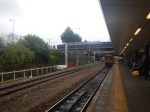
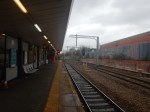
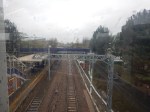
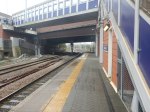
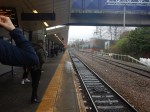
Note that there were no overhead wires through the station and also on the line to Salford Central and Manchester Victoria station. There still appears to be a lot of work to do.
Under Improvements the Wikipedia entry for the station says this.
In 2007, Network Rail recognised that Salford Crescent could not cope with existing passenger levels, leading to platform overcrowding. It suggested expansion of the station with extra platforms, greater use of it as an interchange and use as a terminus for services from east of Manchester. It also raised the possibility of moving the station.
In 2012, improvement work started at the station, including platform extensions, a new rain canopy and the relocation of the ticket office to street level. The works were completed in October 2013 and officially opened by Mayor of Salford, Ian Stewart.
This Google Map shows the station.
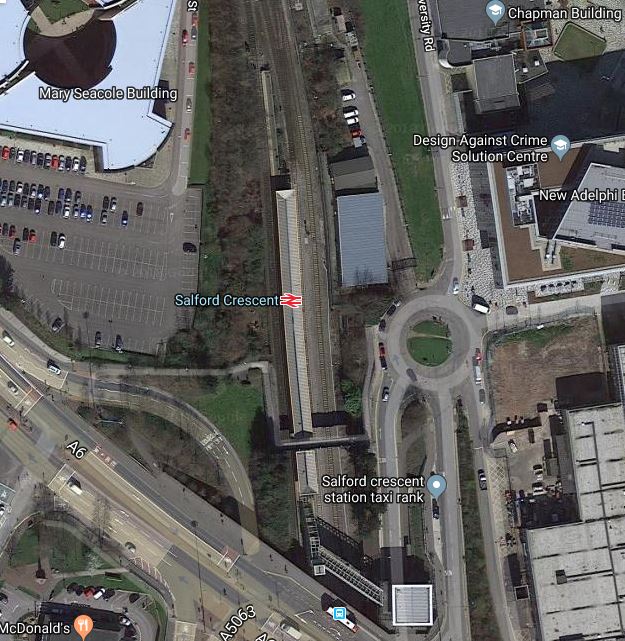
I think, it will be a tight fit for extra platforms, as the station is surrounded on all sides by Salford University.
The solution would probably be to build on top of a new station, that was in a strong concrete box.
Changing Trains At Salford Crescent Station
Today, I arrived at Salford Crescent on a train running between Bolton and Manchester Victoria stations.
As I needed to go to Manchester Piccadilly station, I left on a train running between Blackpool North and Manchester Airport stations.
Consider.
- In the few minutes, I was on the station, I must have heard staff asked, which train do I get to Piccadilly or Victoria, several times.
- Surrey Quays station handles three routes at the South end of the Thames Tunnel and currently handles sixteen trains per hour (tph)
- With high-quality signalling and a measure of automatic train control, I could expect Salford Crescent station to handle at least 12 tph, in both directions.
- Is the island platform wide enough?
- Is loading slowed as a lot of trains calling at the station are just two cars, with four doors?
- Is loading slowed as many of the trains, aren’t step-free from the platform to the train?
- Are there always staff on the platform.
I believe that operation of the station could be improved.
Reversing Direction At Salford Crescent Station
The current island layout allows passengers to change direction by walking across the platform.
As an example, if you go between Farnworth and Swinton stations, one of the recommended routes is via Salford Cresent.
An Improved Design For Salford Crescent Station
Perhaps before deciding to rebuild the station, serious work should be done to see if the station throughput in terms of trains and passengers can be improved.
My ideas would include.
A Wider Platform
This picture shows the island platform at Canonbury station.
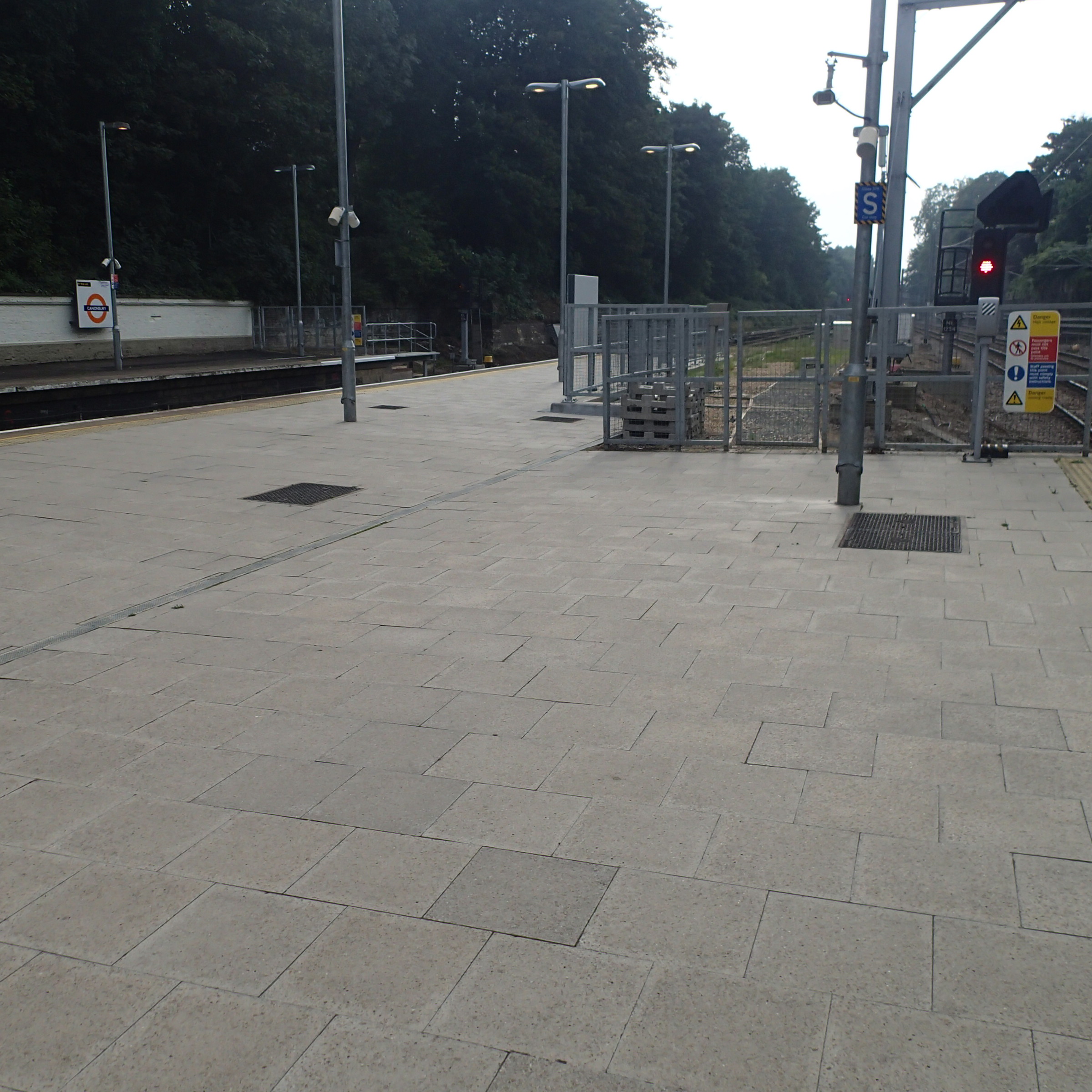
It could handle a whole company of Grenadier Guards and all their kit, whereas Salford Crescent would struggle with a platoon.
Canonbury’s wide platform also has the following in the centre.
- A large covered shelter.
- A large number of seats.
- A coffee stall
It also allows passengers to stand well-back when a train goes through the station, without stopping.
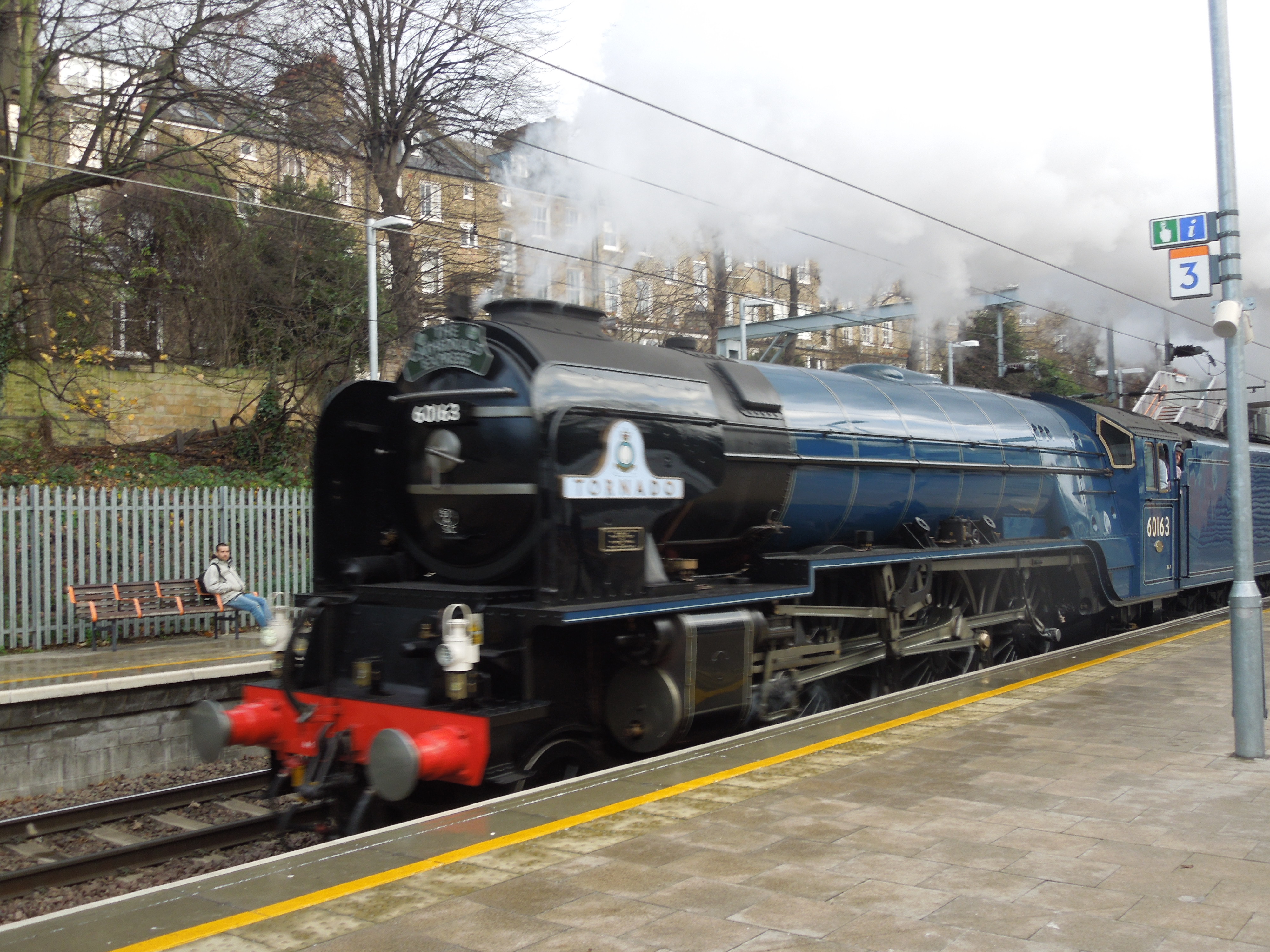
Note that Canonbury is a station, where the platforms are uncovered. Would this be a wise idea in Manchester, even with a large central shelter?
Lomger Trains
a lot of trains going through Salford Crescent station are just two cars.
Northern‘s new trains will include, the following electric trains and bi-mode trains.
32 – four-car Class 319 trains
12 – four-car Class 331 trains
31 – three-car Class 331 trains, which will replace the Class 323 trains.
11 – four-car Class 769 bi-mode trsins.
If all trains calling at Salford Crescent were four-cars or more, this would probably mean at least eight doors, which would would speed up loading and unloading.
This would reduce dwell times at the station and increase capacity in terms of the number of trains per hour.
Level Access Between Platform And Trains
If the platforms are widened, I susopect with Harrington Humps, that this could be achieved.
This picture shows two Hsrrington Hump is at Canonbury.
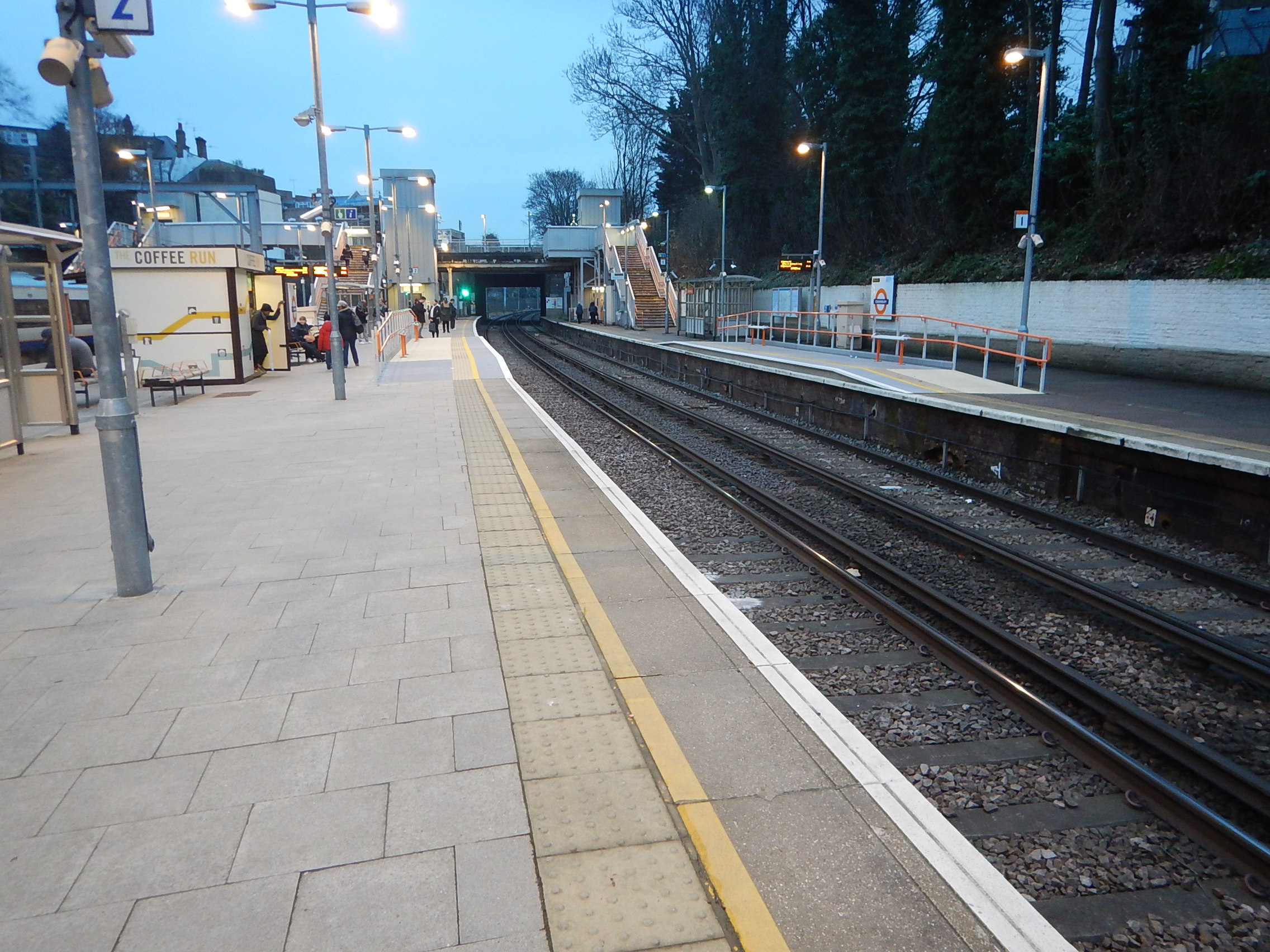
If passengers in wheelchairs, buggy-pushers and those pulling heavy cases could just walk or push the,selves across.
Again, this would reduce dwell times and increase capacity.
Better Information
Given that I heard passengers asking the same question, I suspect that better informayion, could make the station easier fot interchang passengers.
Using the displays on Thameslink and at London Bridge station would be a good start.
An Up Escalator
Sal;ford Central station has a long set of stairs and a lift.
Many passengers with movement difficulties would welcome an up escalator.
Conclusion
I believe that a much improved station can be creased , without the expence of adding a new platform.
Northern’s Plans For Between Preston And Ormskirk
The service on the Ormskirk Branch Line between Preston and Ormskirk stations is an infuriating one.
- The Class 153 trains that run the service seem to be unreliable when I use it.
- The frequency is roughly hourly and not clockface by any means.
- Sometimes the trains are very full.
- The signalling appears to be old-fashioned.
But it seems that from May 21st, things will be getting better.
The timetable shows the following.
- Trains leave Ormskirk hourly from 07:01 until 23:11 and take 31 minutes to get to Preston.
- Trains leave Preston hourly from 06:26 until 21:26 and take 30 minutes to get to Ormskirk.
Journey times are actually similar to now, so I would assume they are for a Class 153 train.
What a pity, that the round trip will take over an hour.
Northern will need two trains to run this service, but if they could do a round trip in an hour, only one train would be needed.
Consider.
The Class 153 train is only a 75 mph train.
Part of the journey is along the electrified West Coast Main Line.
Northern have or soon will have faster trains in their fleet
- Class 158 train – 90 mph
- Class 170 train – 100 mph
- Class 769 train – 100 mph on electric, 90 mph on diesel.
I suspect that any one of these trains could achieve the hourly round trip.
All would offer increased capacity and better quality interiors.
The Class 769 train would handle the route with ease.
- The train could use the electrification on the West Coast Main Line.
- The train is faster.
- It is a four-car train.
I doubt it will happen, but the trains could continue on the Merseyrail network, if their third-rail electrification shoes, were to be refitted.
But who knows what will happen if Merseyrail and Northern decide to bring the railways between Blackpool, Kirkby, Ormskirk, Preston, Southport and Wigan into the twenty-first century?
There’s certainly a lot happening in the area at the timetable change on May 20th.
- Blackpool to Liverpool gets an electric hourly service.
- Blackpool to Manchester Airport gets an hourly service, which will go electric in time.
- Ormskirk to Preston gets a proper hourly service.
- Wigan North Western to Alderley Edge gets a new service using Class 769 trains.
- Wigan North Western to Stalybridge gets a revamped service using Class 769 trains.
Porterbrook’s affordable bi-mode Class 769 train seems to be fully involved.
What Rolling Stock Will Northern Use Between Blackpool North And Manchester Airport Stations From Tomorrow?
I was alerted to the opening of the service, by this article in Rail Technology Magazine, which is entitled Blackpool To Preston Route To Reopen After Major 5-Month Transformation.
As I was coming up to see someone on Tuesday, I’ve decided to come up on the first Virgin from Euston at 16:33 to Blackpool North station.
My train coming up from London, is I suspect a Class 221 train, as I’m in First in Coach E. So I’ll be diesel-hauled all the way.
I have read somewhere that four-car trains will be running between Blackpool North and Manchester Airport stations, so as these trains will be going via Bolton, where there is still no electrification, I would expect, that Northern will be running a couple of Class 156 trains on this route.
But the route would also be an ideal one to introduce the long-awaited Class 769 trains!
- Trains call at Poulton-le-Fylde, Preston, Buckshaw Parkway, Chorley, Horwich Parkway, Bolton, Salford Crescent, Deansgate, Oxford Road, Piccadilly and Heald Green.
- It is electrified, except for between Preston and Deansgate, which could be ready in May 2018.
- The trains are four-cars with a universal access toilet, so are a step up from the previous rolling stock.
In their news release on the reopening of the Blackpool to Preston route, Northern says this.
Train services between Preston and Blackpool North will resume from Monday 16 April 2018 initially with one train per hour allowing time for driver training on the route.
Obviously, drivers have to learn the route, but as Northern have a fleet of thirty-two Class 319 trains, I suspect they have enough drivers to handle this fleet, when they eventually get to run between Blackpool North and Manchester Airport.
I think it’s unlikely, but I wouldn’t be completely surprised to see Class 769 trains working this route for training purposes.
In Does A New Service Start Between Wigan North Western And Alderley Edge Stations Using Class 769 Trains On May 20th?, I came to the conclusion that from May 20th, Northern will be adding these two hourly services using Class 769 trains.
- Wigan North Western and Alderley Edge
- Wigan North Western and Stalybridge
So will the training of the drivers be completed between Blackpool North and Preston?
Blackpool North And Liverpool Lime Street
I have been exploring this route on the timetable.
I found these trains running from Blackpool North to Liverpool Lime Street.
- Sundays from April 22nd an hourly train between 11:00 and 22:00
- Monday to Saturday from April 20th a direct train at 18:02.
- Sundays from May 21st an hourly train between 08:30 and 22:00
- Monday to Saturday from May 21st an hourly service between 06:00 and 22:00
And these trains running from Liverpool Lime Street to Blackpool North.
- Sundays from April 22nd an hourly train between 08:47 and 20:47
- Monday to Saturday from April 20th a direct train at 07:56.
- Sundays from May 21st an hourly train between 06:36 and 22:15
- Monday to Saturday from May 21st an hourly service between 06:00 and 22:00
I would assume that all trains would be served by Class 319 trains.
I think that Northern are being canny here.
- Liverpool Lime Street and Blackpool North services will be run from the next weekend, with an hourly Sunday service. This will sort out any possible problems with an hourly service, before it is introduced on May 20th.
- They have added a couple of trains to help commuters between Liverpool and Blackpool.
- There is still a lot of capacity between Preston and Blackpool North for training.
It will be interesting to see how passengers react to the new timetable on May 20th.
Two Trains Per Hour Between Manchester Piccadilly And Buxton Stations From May 21st
If you are going between Manchester Piccadilly and Buxton stations tomorrow, just after ten in the morning, the trains are as follows.
- 10:49 – 11:58 – 59 minutes
- 11:49 – 12:58 – 59 minutes
But do the journey on May 21st and the trains will be as follows.
- 10:11 – 11:06 – 55 minutes
- 10:47 – 11:49 – 62 minutes
- 11:11 – 12:06 – 55 minutes
- 11:47 – 12:49 – 62 minutes
Returning on or after May 21st, the trains will be as follows.
- 10:02 – 10:56 – 54 minutes
- 10:34 – 11:36 – 62 minutes
- 11:02 – 11:56 – 54 minutes
- 11:34 – 12:36 – 62 minutes
Note.
- Two extra trains have been added to the service, to give two trains per hour (tph)
- The faster trains stop at Stockport, Davenport, Woodsmoor, Hazel Grove, Disley, New Mills NewTown, Whaley Bridge and Chapel-en-le-Frith.
- The slower trains have additional stops at Levenshulme, Heaton Chapel, Furnace Vale and Dove Holes.
As the times aren’t that different to the current ones, I suspect that the timings could be achieved by the current Class 156 trains, that work the route.
I have seen an early copy of Porterbrook’s brochure for the Class 319 Flex train, which is now the Class 769 train.
This is an extract.
Porterbrook determined that the most arduous route would be Manchester Piccadilly to Buxton, which has a steep gradient and multiple stops along its 25 mile route 9(8 miles of which is electrified). This anlysis was included to give confidence that the Class 319 Flex would be comparable to existing Diesel Multiple Unit (DMU) technology across a range of different routes, stopping patterns and gradients.
Take a quick look at the Buxton Line on Wikipedia.
This is said.
Due to steep gradients on this line, Class 142 and Class 153 DMUs are banned from the section of line between Hazel Grove and Buxton. Therefore, services to Buxton are worked by Class 150 and Class 156 DMUs. Also Class 158 DMUs were once blocked from operating on the line to Buxton due to the possibility of the large roof-mounted air vents striking low bridges on the route.
Note the two extracts both say “to Buxton”, as obviously, the trains can use the free power boost of gravity on the way down.
If Class 769 trains were to be used on the Manchester Piccadilly to Buxton service, the following would apply.
- Between Manchester Piccadilly and Hazel Grove, the trains could use the electrification.
- They are four-car trains as opposed to the two-car Class 156 trains that currently run the service.
- The service could be extended on the other side of Manchester, when the electrification is finally complete.
I think there’s every chance that Northern are preparing to run Class 769 trains, on the route for which they were designed.
Instead of just one two-car tph, as at present, Buxton could be getting two four-car tph.
Capacity could be increased by four times.
Does A New Service Start Between Wigan North Western And Alderley Edge Stations Using Class 769 Trains On May 20th?
On the Wikipedia entry for Class 769 trains, this is said about the introduction into service of the trains by Northern.
Scheduled to begin entering service in May 2018, Northern plans to deploy its Class 769 units on the Windermere branch line and also their Manchester Airport to Windermere, Wigan North Western to Alderley Edge and Wigan North Western to Stalybridge services
I have looked at the National Rail timetable for the 19th of May and looked up getting between Wigan North Western and Alderley Edge station involves a change at Manchester Piccadilly station.
But look at the journey on the 21st of May and there is an hourly direct train.
- First train – 08:50
- Last train – 19:50
- Journey time – 78 minutes
The train will stop at Hindley, Westhoughton, Bolton, Salford Crescent, Deansgate, Manchester Oxford Road, Manchester Piccadilly, Levenshulme, Heaton Chapel, Stockport, Cheadle Hulme, Handforth and Wilmslow.
In the other direction, the service is as follows.
- Hourly
- First train – 06:49
- Last train – 19:48
- Journey time – 70 minutes
It is an ideal route for a Class 769 train.
- Between Wigan North Western and Bolton is not electrified.
- I also suspect that Bolton and Salford Crescent won’t have the wires completed by the 20th of May.
Manchester will be getting another cross-city service courtesy of a thirty-year-old electric train, with a couple of diesel engines slung underneath.
Wigan North Western And Stalybridge
An hourly service from Wigan North Western to Stalybridge also appears to be in the timetable from the 21st of May.
- First train – 08:08
- Last train – 22:50
- Journey time – 59 minutes
The trains will stop at Hindley, Westhoughton, Bolton, Moses Gate, Farnworth, Kearsley (Manchester), Salford Crescent, Salford Central, Manchester Victoria and Ashton-under-Lyne.
In the other direction, the service is as follows.
- First train – 06:30
- Last train – 21:29
- Journey time – 63-66 minutes
It is another ideal route for a Class 769 train.
- Between Wigan North Western and Salford Central not fully electrified.
As the current service between Wigan Wallgate and Stalybridge seems to have been discontinued, it looks like Pacers and elderly diesels are being replaced by electric trains.
Conclusion
It looks to me, that as the electrification through Bolton and Salford Crescent, that Northern are doing the best they can with what they have available.
I estimate that Northern will need around six trains to run these two services, one of which is new and the other a change of terminus from Wallgate to North Western at Wigan.
Improving The Train Service Between Rose Grove And Colne Stations
The East Lancashire Line is the line that runs across the town of Burnley on the spectacular Bank Top Viaduct.
- One train per hour in each direction runs between Blackpool South station on the coast and Colne station in the hills.
- The five stations on the route; Burnley Barracks, Burnley Central, Brierfield, Nelson and Colne, are all single-platform stations.
- Only Burnley Central station is more than rudimentary.
- All station have platforms long enough for two Class 150 trains working as a four-car unit.
- The line joins the cross-Pennine Calder Valley Line at Gannow Junction to the East of Rose Grove station.
In the Wikipedia entry for Colne station, this is said.
The remainder of the branch from Gannow Junction (near Rose Grove) to Nelson was also reduced to single track in December 1986 and so the entire line from there is now operated as a 6 1⁄2 miles (10.5 km) “long siding” with no intermediate passing loops (this restricts the service frequency that can operate along the branch, as only one train can be on the branch at a time).
It would thus appear that without track and/or signalling works, the service along the line will be restricted to an hourly train.
Track Improvements
To make improvement of the line more difficult, the line crosses Burnley town centre on the High Bank Top Viaduct.
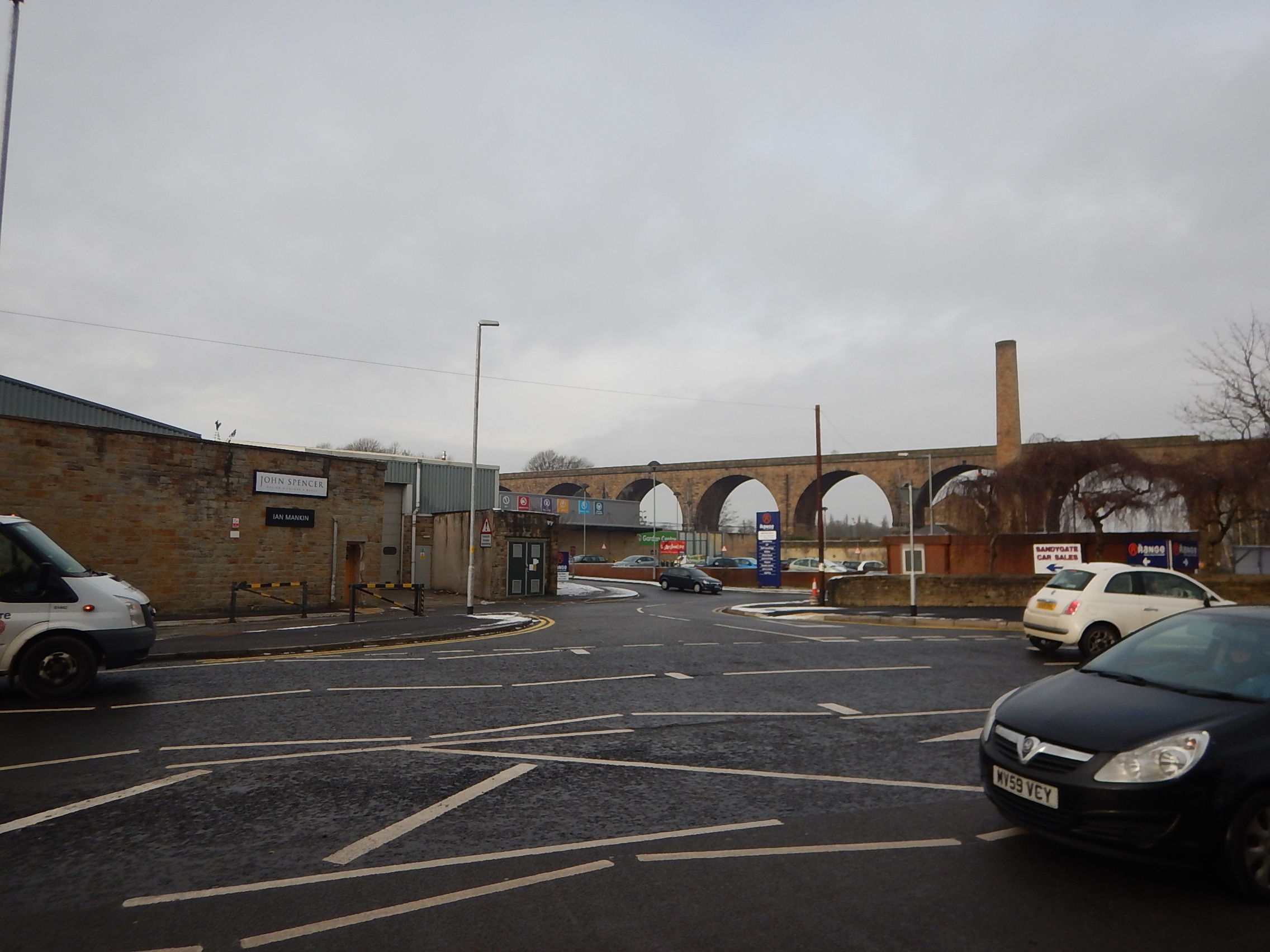
This second picture was taken from a train crossing the viaduct.

North of Burnley Central station, the terrain gets more rural and if needed the installation of a passing loop would be easier, than on the Bank Top Viaduct.
Station Improvements
I have been in a four-car train on the line, so I feel it could be theoretically easy to double the capacity by running four-car trains instead of the current two-car Class 150 trains.
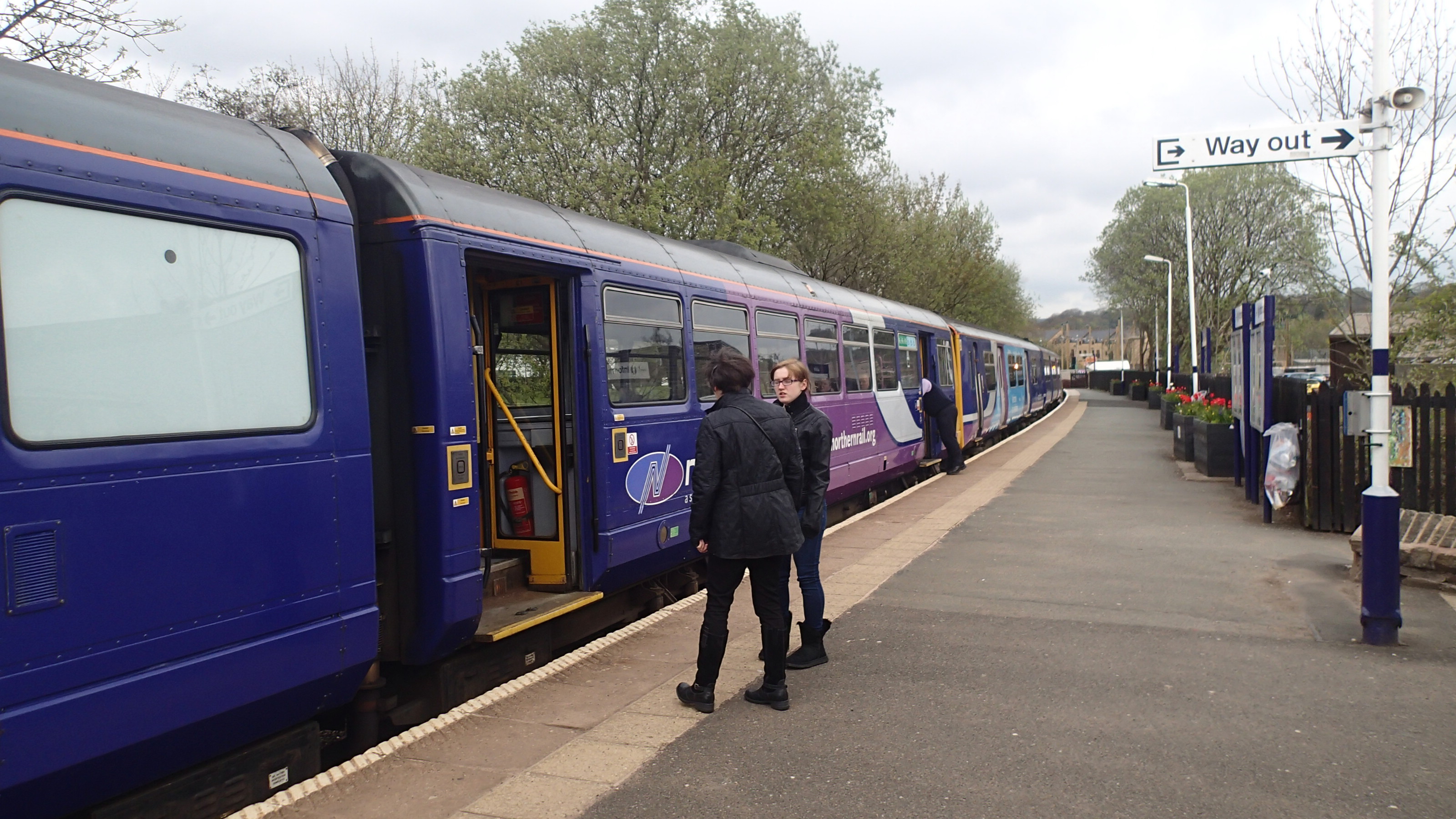
This picture was taken of a pair of two-car diesel units, that took me between Colne and Blackpool South stations.
- Most platforms seem to be long enough, but more shelters and ticket machines are needed.
- Only Burnley Central station has booking office and a warm waiting room.
- By hint of the simplicity of the stations, several are step-free.
Improvements to the stations are needed, but no station needs substantial rebuilding.
Signalling Improvements
The signalling of the line between Rose Grove and Colne stations would appear to rely on only one train being on the line at any one time.
In order to have more than one train on the branch a more sophisticated signalling system is needed.
Service Improvements
The November 2017 Edition of Modern Railways indicates that the Sunday service on this line will increase from two-hourly to hourly.
I was on the line on a sunny Sunday a few years ago and the four-car train was packed with families going to Blackpool for the day.
If anything this Sunday improvement will hasten the need for the doubling of service frequency between Blackpool South and Colne.
Could Two Trains Per Hour Work Between Rose Grove And Colne Stations?
The signalling would have to be improved for safety reasons, as the current safety system of one train on the branch would be inadequate.
If trains left Rose Grove and Colne stations on the half hour, then trains would call at Burnley Barracks station at the following times.
- xx:03 – Service U1 going up
- xx:17 – Service D1 going down
- xx:33 – Service U2 going up
- xx:47 – Service D2 going down
Time for Burnley Central would be as follows.
- xx:06 – Service U1 going up
- xx:14 – Service D1 going down
- xx:36 – Service U2 going up
- xx:44 – Service D2 going down
Times for Brierfield would be as follows.
- xx:09 – Service D1 going down
- xx:11 – Service U1 going up
- xx:39 – Service D2 going down
- xx:41 – Service U2 going up
Times for Nelson would be as follows.
- xx:06 – Service D1 going down
- xx:14 – Service U1 going up
- xx:56 – Service D2 going down
- xx:44 – Service U2 going up
Times for Colne would be as follows
- xx:00 – Service D1 starts to go down
- xx:20 – Service U1 arrives
- xx:30 – Service D2 starts to go down
- xx:50 – Service U2 arrives
Note.
- The trains take twenty minutes for the trip.
- U1, U2 are two services going up to Colne.
- D1, D2 are two services going down from Colne.
It would appear that a passing loop would be needed between Burnley Central and Brierfield stations. Looking from my helicopter at this section of line, a lot is in open country and there would appear to be space for a long passing loop.
Rolling Stock Improvements
The current rolling stock is inadequate and staff and passengers on the line have told me, that the route between Blackpool South and Colne stations, needs four-car services at times.
Because the Western end of the route will be electrified between Preston and Blackpool and Liverpool, there is a strong case for bi-mode trains, be they refurbished ones like Class 769 trains or new trains. Northern has new Class 195 trains on order, but they are pure diesels.
Given that the route may get extra electrification between Preston and Blackburn, if the Calder Valley Line is improved, Class 195 trains are probably not an ideal solution.
Class 769 Trains Between Blackpool South And Colne Stations
Current plans will see electrification of the route between Preston and Kirkham and Westham stations.
This would mean that nearly ten miles of the Blackpool South to Colne route will be electrified.
So would it be sensible to call for Bedpan Specials or Class 769 trains, which could make use of the electrification?
Consider.
- According to a technical specification that I’ve seen, the trains have been designed to handle the Buxton Line, which is stiffer than the hill up to Colne.
- The trains are four cars.
- I believe, that three Class 769 trains would replace the current trains, which could then be appropriately scrapped or refurbished.
- If more electrification is added between Blackburn and Blackpool South, the trains will take advantage.
I also believe that with a passing loop and modern signalling, that the extra performance of the Class 769 trains might make it possible to run two trains on the route with careful planning and precise driving.
But above all, the Class 769 trains are affordable and are probably available within a year.
An interesting observation, is that Northern have increased their order by three trains recently. So have they decided to use them on the Blackpool South to Colne service?
How Would A Re-Opened Skipton To Colne Rail Link Affect The East Lancashire Line Services?
There has started to be increased speculation lately, that the rail link between Skipton and Colne will be reopened. Chris Graying even mentioned this line in the House of Commons.
If the rail link were to be reopened, it would create another route across the Pennines between Lancashire and Yorkshire.
- It would be unlikely to be a high-capacity or high-speed link.
- There is electrification at both ends.
- The line would be ideal for bi-mode trains like a refurbished Class 769 train or a new Class 755 train.
- Colne could be upgraded to a single-platform through station.
Two trains per hour between Leeds and Preston through a scenic part of the Pennines would be a major development and tourism asset.
It could actually improve services on the Lancashire side of the border,, as services would no longer have to be turned back at Colne, but would do this at either Skipton or Leeds.
A Walk Between Burnley Manchester Road And Burnley Central Stations
This is another walk in Burnley to go with A Walk Between Burnley Barracks And Burnley Manchester Road Stations.
Burnley Manchester Road and Burnley Central stations are not that far apart.
This Google Map shows Burnley’s three stations in relation to the Town Centre and Turf Moor.
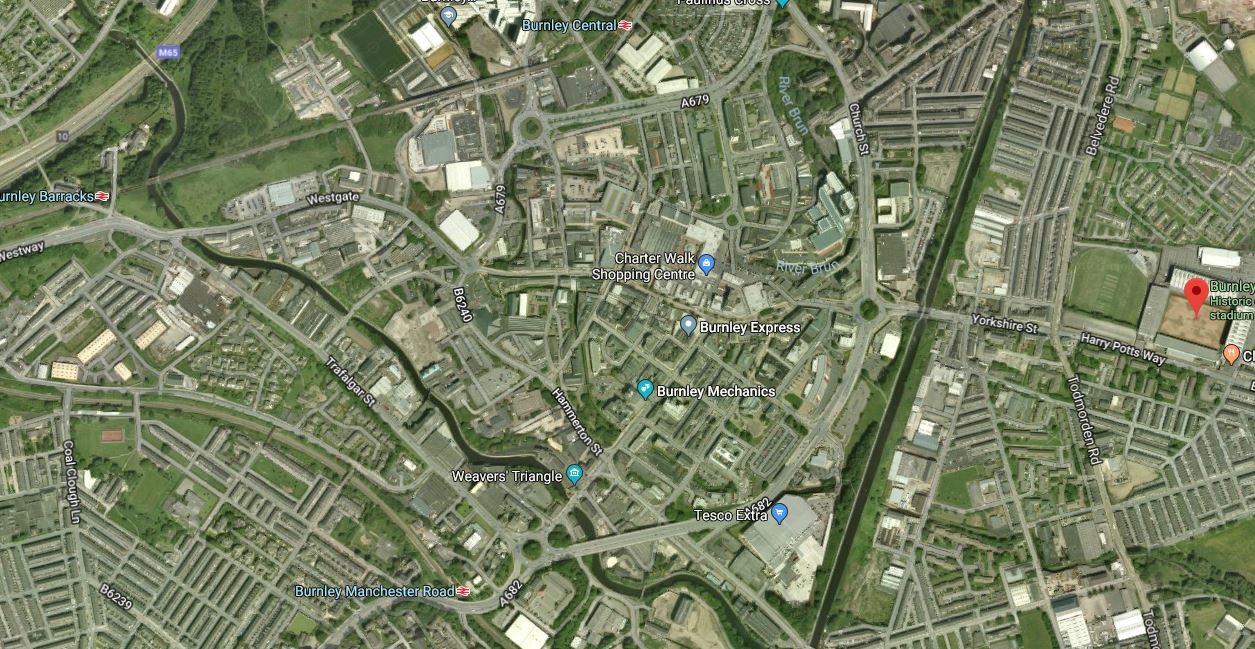
The various locations are as follows.
- Turf Moor is indicated by the red arrow in the East.
- Burnley Barracks station is in the North-West corner.
- Bunley Central is at the North.
- Burnley Manchester Road is at the South.
- The Leeds and Liverpool canal weaves its way through the town passing close to Burnley Barracks station.
What the map doesn’t show is the terrain. The main station at Manchester Road is on one stretch of high ground and Central station and Turf Moor are on another.
So I walked down the hill from Manchester Road station, through the Shopping Centre and up the hill the other side to Central stion.

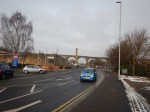
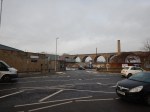
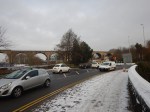
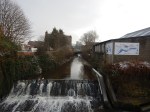
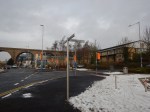
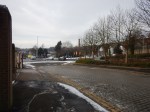
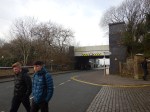
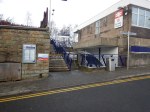
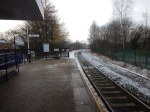
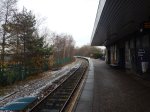
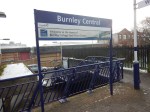

It was an easy walk down the hill followed by a stiffer one up to Central station.
Improvements to the East Lancashire Line.
In A Walk Between Burnley Barracks And Burnley Manchester Road Stations, I concluded the post with the following.
If new four-car Class 769 trains replace the current two-car scrapyard specials on the East Lancashire Line, the following will happen.
- Capacity on the route will be doubled.
- The service will be faster, due to the increased speed and power.
- No expensive platform lengthening will be required.
- An hourly service between Blackpool South and Colne will have no problems operating seven days a week.
- Some stations, like Burnley Barracks, will need improvements to handle the extra passengers.
Two trains per hour will need track work to add passing loops and modern signalling, and a few more trains.
The big question has to be asked, if stations like the single-platform Burnley Central can handle two trains per hour in both directions.
I discussed this in Improving The Train Service Between Rose Grove And Colne Stations and came to the conclusion, it was possible with a passing loop between Burnley and Brierfield stations, modern signalling and Class 769 trains.
It could all come together very nwell for the residents of East Lancashire.
A Side-Effect Of Northern’s Plan To Use Class 769 Trains Across Manchester
It would appear that Northern will use some Class 769 trains on routes across Manchester’s electrified core to connect two lines without electrification.
I think that one route could be to connect Clitheroe on the Ribble Valley Line to Buxton on the Buxton Line.
These two branches could be connected by an electrified line between Hazel Grove and Bolton stations, outside of which they’d generate their own power using on-board diesel alternators.
Pacers, Class 150 trains or Class 156 trains currently work the two lines without electrification, but if it was designed to create a North-South cross-Manchester service, Class 769 trains could easily handle the extended route.
Northern have around a hundred Pacers and have pledged to remove all of them from service. Probably, most will go to the scrapyard, but some might end up with enthusiasts or masochists, or in strange export markets.
- A 75 mph two-car train like a Class 150/156 train or a Pacer would be replaced with a 90 mph four-car train. Which must speed up and improve the service.
- Capacity would be increased by at least one car in each replacement train.
- If a Pacer is replaced on the route, it goes out of service.
- If a Class 156 train is replaced it goes elsewhere to kick a Pacer out of service.
- If a Class 150 train is replaced, it probably gets a good refurbishment to kick a Pacer out of service.
So as each new Class 769 train enters service, it can push a Pacer out of service and replace it with a better train.
The same probably occurs when a Class 319 train enters service on the Northern network, if it directly replaces another train.
Passengers on their local line, might not see a new electric train, but their Pacers will gradually be replaced with better stock.
Then as the brand-new trains from CAF get introduced in a couple of years, everybody will see better trains.
In some businesses, you might think it a way to con the customers. But here, they’ll just see a process of continuous improvement of the rolling stock on their regular journeys.
Why Has 319448 Not Been Repainted?
In the November 2017 Edition of Modern Railways, there is a picture of this Class 319 train passing behind the Ordsall Chord bridge on Page 49.

The train is on the right hand page and appears not to be in the usual Northern Electrics blue.
So why has it not been painted?
319448 Is A Class 319/4 Train
319448 is a Class 319/4 trains, which are probably the best variant of the Class 319 trains, as they have been refurbished a couple of times and have a First Class section, less 2+3 seating and a Universal Access Toilet.
These pictures which show a typical Class 319/4 train, were taken when the trains were being used on Thameslink.
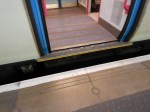
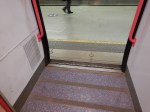
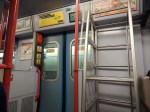
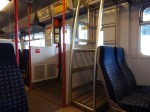
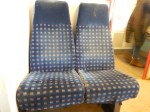
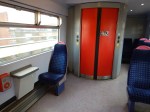
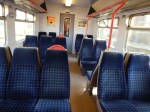

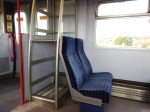
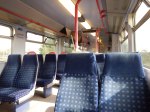

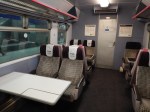


So preparing 319448 for service in the North-West was probably a lot easier, than some of the other Class 319 trains.
Northern probably needed an extra Class 319 train urgently and bringing it into service in Thameslink condition was probably acceptable to customers and their cash-flow.
The exterior painting and the tidying up of the interiors can probably be done later, when there is less pressure on stock numbers.
319448 Is Going To Be Converted To A Class 769 Bi-Mode Train
In the Wikipedia entry for the Class 769 train, the serial numbers of the Class 319 trains to be converted are given.
769424, 769431, 769434, 769442, 769448, 769450, 769456, 769458, 769???, 769???, 769???
Note.
- The first three digits identify the train class and the last three digits the train number in that class.
- After conversion 319424 will become 769424
According to Issue 834 of Rail Magazine, 319456 and 319434 are in Loughborough for the conversion.
So it looks like 319448 will be converted to 769448.
Northern’s Need For Class 769 Trains
The Wikipedia entry for the Class 769 train, says this about Northern’s initial use of the trains.
Northern have indicated that the use of these trains would be of most benefit on routes that are part electrified, whereby they would be able to use the pantograph for the main part, while being able to operate using diesel power away from the overhead lines. The first route to be confirmed by Northern for the running of Class 769 units was the Windermere branch line between Oxenholme and Windermere in North West England.
Once the current electrification program between Manchester and Blackpool, Preston and Stalybridge is complete, there are several partially-electrified routes, where Class 769 trains might be used in North West England.
- Blackpool South to Colne
- Liverpool Lime Street to Chester via Runcorn and the Halton Curve.
- Manchester Piccadilly to Buxton
- Manchester Piccadilly to Liverpool Lime Street via Warrington
- Manchester Victoria to Blackburn via Todmodern and Burnley
- Manchester Victoria to Clitheroe via Bolton and Blackburn
- Manchester Victoria to Kirkby
- Manchester Victoria to Southport
- Preston to Barrow
- Preston to Ormskirk
If the trains are a success, then surely more trains will be deployed around the electrical networks in Leeds and Newcastle.
A Possible Conversion Plan
Could the conversion of a Class 319 train to a Class 769 train be something like this multi-stage process.
1. Pre-Service Changes
The Class 319/4 trains have for several years been running without serious problems on the Thameslink route,
However, due to different operational rules, I suspect that there will be some changes that have to be carried out before the trains can run in the North. 319448 has obviously had these changes.
2, Pre-Conversion Test Running
If I’ was going to spend a lot of money converting a train, I’d give it a thorough testing with experienced drivers and engineers to make sure there wasn’t an expensive fault.
Northern have a team of drivers with lots of experience of their current fleet of thirty-two Class 319 trains.
The train could even be used in passenger service, as it is an unmodified Class 319/4 train little different to the others in Northern’s fleet.
3, Conversion To Class 769 Train
The train can then be removed from service and converted to a Class 769 train.
4, Testing And Entry Into Service
The trains can be appropriately tested.
5. Interior Refurbushment And External Painting
Doing this last is probably a lot easier, given that the Class 319/4 trains are generally in a good state cosmetically.
A Production Line Would Be Possible
I believe if you do the Project Management professionally for the conversion of the eleven trains need by Northern and the extra five for Wales, it will be possible to fit together a very orderly and efficient production line.
I can envisage that production of units getting quicker as experience is gained.
 The Anonymous Widower