GE To Partner BNSF On Battery Freight Locomotive Tests
The title of this post is the same as that of this article on Rail Engineer.
The article includes this image.
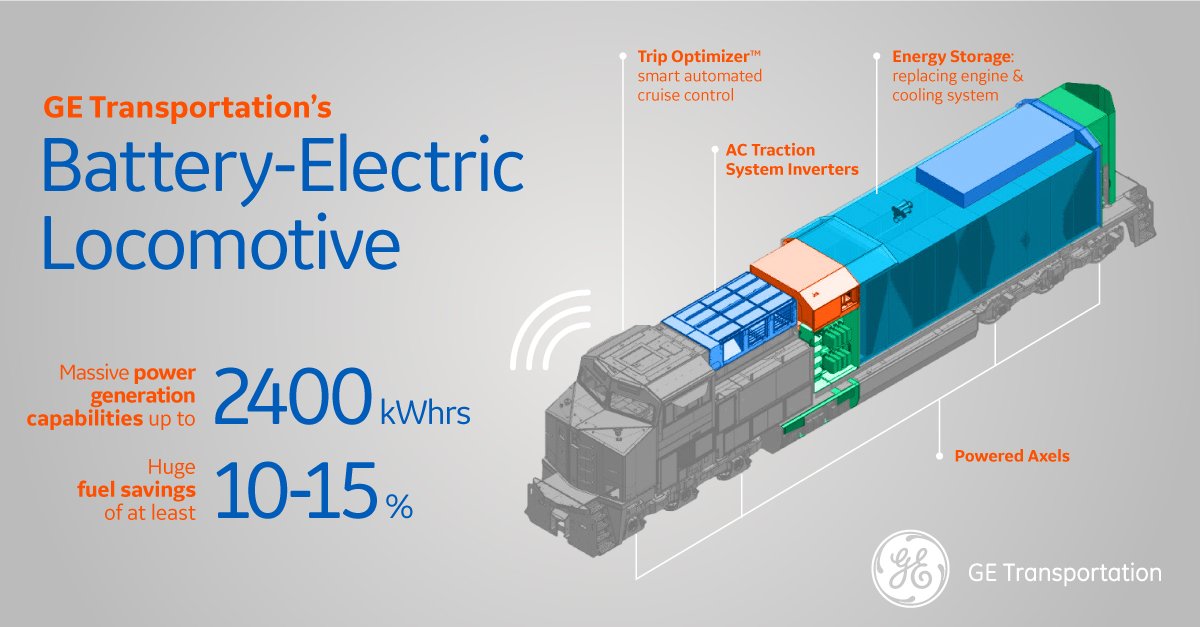
I think that there are some mixed up captions on the image.
It talks about Massive Power Generation Capabilities up to 2400 kWhrs.
kWhrs are a unit of total energy and could refer to the battery storage capability of the locomotive.
If you look at our much smaller ubiquitous UK diesel freight locomotive, the Class 66, this has a power output of 2,460 kW.
If the GE locomotive, which is experimental had a battery of 2400 kWh, then it could supply 2400 kW for an hour.
But the concept seems sound, where the battery electric locomotive would be paired with a diesel locomotive to haul a freight train. Fuel savings of ten percent are expected.
A Diesel/Electric/Battery Hybrid Locomotive For The UK
I could see a practical diesel/electric/battery locomotive being developed for the UK.
A Class 66 Replacement
Over four hundred of the these locomotives were built and they are currently used by these operators in the UK.
- Colas Rail – 5
- DB Cargo UK – 161
- Direct Rail Services – 19
- Freightliner – 127
- GB Railfreight – 88
Which adds up to a surprisingly precise four hundred locomotives.
- They have a power output of 2,460 kW – Call it 2500 kW for ease of calculation.
- They have a top speed of 75 mph, although some can only manage 65 mph.
- They weigh 68 tonnes.
- They are noisy, smelly and don’t meet the latest EU pollution regulations.
- Class 66 drivers, I’ve spoken to, are not keen on the working environment.
But they do various jobs for their operators competently and are not the most expensive of locomotives.
There are also other modern similar-sized diesel locomotives like the thirty Class 67 and thirty-seven Class 70, but these are not as unfriendly, to the environment and staff.
Many of the Class 66 locomotives pull heavy freight trains on routes that are fully or partly electrified like the East Coast Main Line, West Coast Main Line, Great Western Main Line, Midland Main Line and Great Eastern Main Line. The services are diesel-hauled because at the ends of the route, they need to use diesel power.
A specification for a locomotive to replace the long-haul Class 66 locomotives for working fully or partly-electrified routes could be something like.
- Power on electrification of upwards of 3000 kW.
- Ability to move a heavy freight train in and out freight terminals to and from electrification.
- Ability to do a small amount of shunting.
- Sufficient diesel or battery power to handle the train, away from electrification.
- Ability to switch between electric and diesel/battery power at line speed.
I’ve heard from those who work at the Port of Felixstowe, that port operators wouldn’t electrify the port, for both cost and Health and Safety reasons.
The Felixstowe Problem
The Port of Felixstowe is at the end of the twelve mile long Felixstowe Branch Line, which is not electrified.
Trains seem to be allocated up to just over an hour for the journey between the Great Eastern Main Line and the Port.
This would mean that any proposed locomotive must be capable of handling a branch line to a port or freight depot remote from the electrified network.
Similar problems exist at other ports and freight depots including Hull, Immingham, Liverpool, Southampton, Tilbury and Teesport.
The Southampton Problem
If anything, the Port of Southampton has the worst problem, in that it only has access to the third-rail electrification South of the Thames, until freight trains reach Reading, where there is 25 KVAC overhead electrification. It looks like that trains take about ninety minutes between the Port of Southampton and Reading.
Even, if a powerful dual-voltage locomotive were to be available, I doubt that the power supply to the electrification could provide enough power.
The proposed solution to the Southampton problem was the Electric Spine, which would have linked the port to Northern and Central England with a 25 KVAC overhead electrified route.
It has now been largely cancelled.
An alternative would be a locomotive, that could pull a heavy freight train between the Port of Southampton and Reading in an environmentally-friendly way.
One point to note is that a Class 92 locomotive is rated at 4000 kW on 750 VDC third-rail electrification.
Thoughts On A Battery Locomotive
Suppose an operator needed a battery locomotive to go between Southampton and Cardiff, that would be a straight replacement for a Class 66 locomotive.
The proposed battery locomotive would need to be able to supply the 2500 kW of the Class 66 locomotive for two hours to handle the route between Reading and Southampton.
So it would need a battery capacity of around 5000 kWh, which is twice the size of the American test locomotive. A battery this size would probably weigh around fifty tonnes.
I am probably being conservative here, as regenerative braking would probably reduce the amount of energy needed to move the train.
The electro-diesel Class 88 locomotive would probably weigh around eighty tonnes without the diesel engine. So would it be possible to design an electric locomotive incorporating a 5000 kWh battery, with a weight of perhaps one hundred and thirty tonnes.
- It would be about the weight of a Class 70 locomotive.
- It would probably need to be a Co-Co locomotive, to reduce the axle-loading, to that of a Class 70 locomotive.
- It might need to be longer than other comparable locomotives to have enough space for the battery.
- The battery would handle the energy generated by the regenerative braking.
- It could have the 4000 kW power of a Class 88 locomotive.
- It should probably be designed with a 100 mph top speed and the ability to haul passenger trains
- It would be able to use both 25 KVAC overhead and 750 VDC third-rail electrification.
If it is not possible now, as battery energy densities improve, it will be in a few years time.
Other countries other than the UK need a locomotive with a similar specification and I am certain at least one manufacturer in Europe will build a locomotive to this or a similar specification.
A Battery/Electric Locomotive And Felixstowe
Handling the Felixstowe Branch Line would entail the following.
- The locomotive must enter the branch with a battery containing enough energy for the sixty minute run to the Port.
- As the locomotive would probably have hauled a train from London or Haughley Junction using the existing electrification, a full enough battery probably wouldn’t be difficult.
- In the Port, there could be a charging station for the locomotive, where they would connect to a short length of 25 KVAC overhead electrification.
- On leaving the Port, the locomotive would start with a full battery, which would be enough power to reach the Great Eastern Main Line.
- Trains going South to London would run on electrification as far as they could and would arrive in London with a full battery.
- Trains going West to Peterborough, would hopefully be able to top up their battery between Ipswich and Haughley Junction, where they would enter the section without electrification to Peterborough, which takes between two and two-and-a half hours.
It should be noted that, freight trains often wait at Ely in a passing loop alongside the station, to keep out of the way of passenger trains. As Ely is electrified with 25 KVAC, this loop could be electrified, so that locomotives could sneak a top-up during the wait.
I am fairly certain, that a 4000 kW electric locomotive fitted with a 5000 kWh battery could handle all freight services to and from the Port of Felixstowe, at least as far as London and Peterborough.
A Battery/Electric Locomotive Between Peterborough And Nuneaton
How would a battery/electric locomotive handle this important route between Felixstowe and the Midlands and North?
Currently freight trains between Peterborough and Nuneaton have a timing on the section without electrification between Werrington Junction and Nuneaton of a few minutes under two hours.
This should be possible, given the battery range and power of the locomotive.
It would also mean that the battery/electric locomotive could haul a train between the West Coast Main Line and Felixstowe.
A Battery/Electric Locomotive And Southampton
Trains hauled by a battery/electric locomotive on this route, could probably take advantage of the third-rail electrification to top-up the battery as required, which would make it very likely that a 4000 kW electric locomotive fitted with a 5000 kWh battery could handle the route with ease.
A Battery/Electric Locomotive Between ReadingAnd The Midlands And The North
From Reading routes to Bristol, Cardiff and London are fairly easy, but the problems start, if trains need to go to Oxford, Birmingham or the Midlands and the North.
This is where the Electric Spine would have been useful
I have traced some trains from Southampton to the Midlands and the North.
- Southampton to Birch Coppice – There is a three hour section without electrification from Didcot to Birch Coppice.
- Southampton to Birmingham Freightliner Terminal – There is a two-and-a half hour section without electrification from Didcot to the terminal.
- Southampton to Castle Bromwich Jagiuar – There is a two-and-a-half-hour section without electrification from Didcot to Castle Bromwich Jaguar.
- Southampton to Liverpool – There is a two hour section without electrification from Didcot to Coventry.
All of these services are routed through Didcot, Oxford and Banbury. Extending the planned electrification between Didcot and Oxford to Banbury would probably reduce the amount of time on battery power by around thirty minutes.
TransPennine Passenger Services
TransPennine Express will soon be running services between Liverpool Lime Street and Newcastle using rakes of Mark 5 coaches, that will be hauled by a Class 68 diesel locomotive, which has a power of 2800 kW and a maximum speed of 100 mph.
On the TransPennine route, the current service takes seventy-one minutes between the electrified stations of Manchester Victoria and York.
The proposed battery/electric locomotive could handle this with ease to provide a flagship electrically-hauled service across the Pennines without any difficult electrification.
The locomotive would be charged on the current electrification between Liverpool and Manchester Victoria and along the East Coast Main Line.
Chiltern Main Line Passenger Services
Chiltern Main Line passenger services between London Marylebone and Birmingham, are another route, where a rake of coaches are hauled by a Class 68 locomotive.
The problem is that there is no electrification on this route and although a charging station could be provided at Marylebone and Moor Street, it is questionable, if enough power could be taken on during turnround.
But I said earlier, that to ease the passage of freight from Soiuthampton to the Midlands, that Didcot to Banbury should be electrified.
So could this electrification be continued all the way to Birmingham?
This would mean that the battery/electric locomotives would only need to be able to handle the hour-long journey to and from Marylebone, which would have 25 KVAC electrication over the platforms to top up the battery.
The solution is not as easy as TransPennine, but Chiltern Main Line to Birmingham would become an electric service.
The Stadler Class 88 Battery/Electric Locomotive
As Stadler seem to have a monopoly of new locomotives in the UK at present, I will look at their proven Class 88 locomotive.
- It has a power of 4,000 kW on electricity.
- It has a power of 700 kW using an onboard diesel.
- It has a top speed of 100 mph.
- The Caterpillar C27 diesel engine weighs around seven tonnes.
- The locomotive has regenerative braking.
The locomotive is certainly no weakling on electricity, although performance, when pulling a heavy freight train on diesel might be desired to be better. This article on Rail Magazine is entitled Inside Direct Rail Services. This is an extract about the pulling ability of the Class 88 locomotive.
Sample performances over the northern section of the West Coast Main Line (Preston –Carlisle–Mossend) demonstrate that Class 88 can operate the same train weight to the same schedule as Class 68 using 15% less energy. Alternatively, it offers a 45-minute time advantage over a ‘68’ and 80 minutes for Class 66. This gives a competitive edge because a significant proportion of movement costs are absorbed by fuel.
When hauling the maximum permitted load of 1,536 tonnes on the 1 in 75 banks on this route, Class 88 has a balancing speed of 34mph in electric mode or 5mph in diesel mode. Taken together, all these factors helped Class 88 win the Rail Freight Group ‘Rail Freight Project of the Year’ Award in the Innovation and Technical Development category this year.
The locomotive doesn’t appear to be a wimp.
But could the Class 88 locomotive be fitted with a battery?
Current energy storage technology seems to be able to store about 100Wh/kg. So on this basis a seven tonne battery would store about 700 kWh.
I think in a few years it would be possible to build a version of a Class 88 locomotive with no diesel engine and a battery with a 1000 kWh capacity.
But even so, the 1000 kWh battery may be too small.
Would it be able to handle these important routes with a full-length freight train?
- Haughley Junction to Peterborough
- Peterborough to Doncaster via Lincoln
- Peterborough to Nuneaton.
- Southampton to Reading
- Immingham to Doncaster
However, Stadler and Direct Rail Services will be able to extensively model the performance of a battery/electric Class 88 locomotive pulling various weights of freight train on different routes in the UK.
The modelling would show how much battery capacity would be needed for various routes.
Suppose though the battery capacity needed was say 2400 kWh, as I suspect has been specified by the Americans for their locomotive. This would be too heavy and large for the small Class 88 locomotive
But just as the Americans are using their battery/electric locomotive in combination with a diesel locomotive, why not run the battery-electric Class 88 locomotive as a pair with a standard electro-diesel Class 88 locomotive?
TransPennine Passenger Services With A Class 88 Battery/Electric Locomotive
Currently electrification is planned or very likely on the Liverpool to Newcastle route between.
- Manchester Victoria and Stalybridge
- Leeds and Colton Junction on the East Coast Main Line.
This would mean that only around forty minutes of the entire Liverpool to Newcastle route would be without electrification.
Would a battery/electric locomotive with a 1000 kWh battery be able to bridge the gap in the wires between Stalybridge and Leeds?
The battery would be fully charged, at both Stalybridge and Leeds, as the locomotive would have been running under the wires for some time.
It is a very interesting and in my view, a totally feasible possibility.
Conclusion
My modelling experience says that there is at least one solution in there.
- A new build battery/electric locomotive could be designed.
- A battery/electric version of the Class 88 locomotive must be possible and it could work alone or with the current electro-diesel Class 88 locomotive.
I am sure that Jo Johnson’s dream of removing diesel from UK railways will take a big step forward in the next decade, when a battery/electric locomotive with sufficient performance becomes available.
I also believe that short lengths of electrification like Oxford to Banbury, may usefully increase the range of an electric/battery locomotive.
A Hydrogen-Powered Locomotive
If Alstom’s ventures in Germany and the UK with hydrogen-powered trains, are successful, I don’t think it will be long before engineers start thinking about a hydrogen-powered locomotive.
Consider some of the various locomotives used in the UK.
- Class 66 – Diesel – 2,500 kW – Over 400 in service
- Class 67 – Diesel – 2,400 kW – 30 in service
- Class 68 – Diesel – 2,800 kW – 34 in service
- Class 70 – Diesel – 2,800 kW – 37 in service
- Class 88 – Diesel – 700 kW – Electric – 4,000 kW – 10 in service
- Class 90 – Electric – 3,700 kW – 50 produced.
- Class 91 – Electric – 4,800 kW – 31 produced
- Class 92 – Electric – 5.000 kW – 46 produced.
Note.
- Many of the diesel locomotives, like the Class 66, don’t meet the latest emission regulations.
- Class 66 locomotives spent a lot of time pulling freight trains on electrified lines.
- The Class 90 electric locomotives are getting old and need careful maintenance.
- The Rail Minister, Jo Johnson, would like to see diesel power on UK railways gone by 2040.
I have not included some of the heritage locomotives, that are regularly seen on the UK rail network pulling freight.
This picture shows a pair of Class 86 locomotives hauling a freight train through Hackney Wick station.
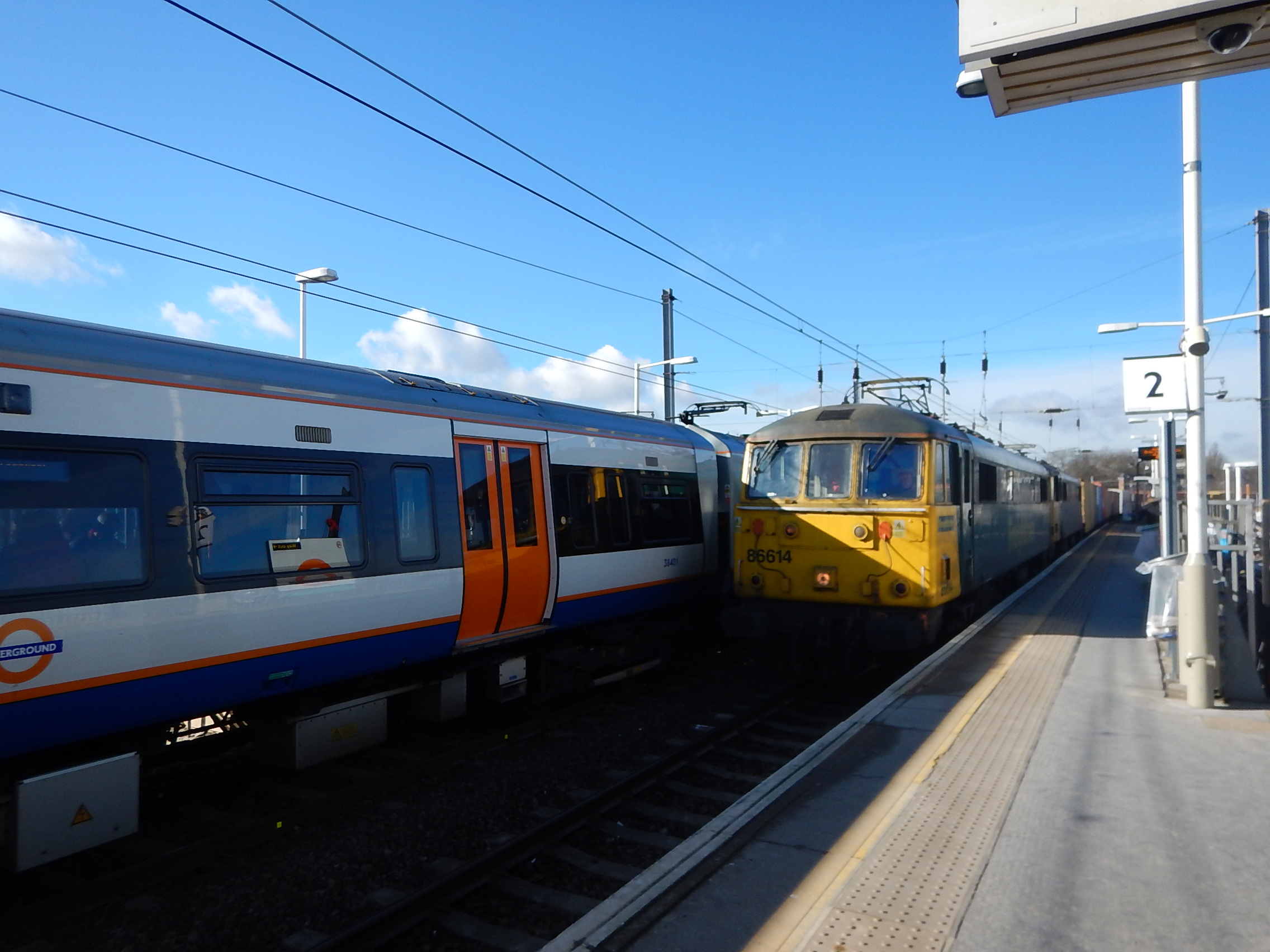
These two Class 86 locomotives date from the mid-1960s. But they do have 2,700 kW of power. Each!
According to Wikipedia, fourteen of Freightliner‘s thirty Class 86 locomotives are still in regular use.
Not only is this a tribute to 1960s engineering, but it does show that there is a shortage of suitable locomotives in the UK.
So could a modern environmentally-friendly locomotive be developed to fill the gap?
A Look At The Class 88 Locomotive
There could be a clue as to what could be a useful power output in the design of the Class 88 locomotive.
- These are a modern design from Shadler that entered service in 2017.
- They have a power output of 4,000 kW from electricity.
- They have a power output of 700kW from diesel.
- They can switch between power sources automatically.
- They can haul passenger trains, as well as heavy freight trains.
- They comply with Euro III B emission limits.
Did Direct Rail Services make sure they got a correctly-sized locomotive with the right capabilities?
They obviously find the diesel Class 68 locomotive to their liking, as they have bought over thirty.
So they probably knew very well, the sort of power that they would need from a dual-mode electro-diesel locomotive.
On electricity, the Class 88 locomotive is more powerful than a Class 90 electric locomotive, which commonly haul heavy freight trains on the electrified network.
In this article in Rail Magazine, the following is said about Class 88 locomotives, operating from Preston to Glasgow.
When hauling the maximum permitted load of 1,536 tonnes on the 1 in 75 banks on this route, Class 88 has a balancing speed of 34mph in electric mode or 5mph in diesel mode.
This shows how a well-delivered 700 kW, isn’t that inadequate.
I suspect that there is sufficient power to bring a heavy freight train out of Felixstowe and the other ports without electrification.
So perhaps, we should take the specification of a Class 88 train, as a starting point for the specification of a proposed hydrogen locomotive?
Possible Routes And Duties
There are also some specific problems associated with various routes and duties, where the current UK fleet of locomotives are used.
InterCity 225 Trains
There are currently thirty-one InterCity 225 trains, running on the East Coast Main Line.
- They are hauled by a 4,800 kW Class 91 electric locomotive.
- The trains consist of nine Mark 4 coaches and a driving van trailer.
- The trains were designed for 140 mph, but normally run at 125 mph.
- The trains have a capacity of over five hundred passengers.
- The trains could be made to meet all proposed access regulations for those with reduced mobility, with not a great deal of expensive work.
- Most of the trains will be replaced by Class 800 trains in the next couple of years.
- The trains are owned by Eversholt Rail Group, who are gaining a reputation for innovation.
The trains could probably give a few more years of service.
One suggestion, that has been made, would be to run the trains on the Midland Main Line.
- Sections of the route allow running at 125 mph.
- The route needs an urgent replacement for InterCity 125 trains.
- The route is only to be electrified as far as Kettering and Corby.
So an alternative and powerful locomotive would be needed, that could run on both lines with and without electrification.
The Class 91 locomotives are powerful beasts running on electricity, but with careful calculations, I’m sure that the power needed on lines with and without wires should be known.
The trains might also be formed of less coaches and selective electrification could be used in stations to accelerate the trains.
Note that accelerating the train to 125 mph, will be the major use of electricity. Hence, electrified stations would be welcome.
Expect some innovative proposals to use Mark 4 coaches from the InterCity 225 on the Midland Main Line.
Initially, could two Class 88 locomotives working in push-pull mode, handle say six Mark 4 coaches between London and Derby, Nottingham and Sheffield?
Who knows? But there are probably teams of engineers working away to create plausible solutions for the bidders for the new East Midlands Franchise, which will be awarded in April 2019.
Class 66 Locomotive Replacement
Because of their number, you see Class 66 locomotives everywhere on the UK network.
- They haul long inter-modal freight trains.
- They haul freight into and out of docks like Felixstowe, that are without electrification.
- They haul engineering trains.
- They are often seen hauling trains using diesel power on electrified lines.
But they are one of the most environmentally-unfriendly of diesel trains, which don’t meet the latest emission regulations.
How long before residents and rail passengers, start to complain about these locomotives, where electric haulage is possible?
I believe there is an increasingly urgent need for a go-anywhere replacement for the Class 66 locomotive.
It would appear, that the Class 88 locomotive, was specified so it can take over some of the duties of a Class 66 locomotive,
Could this see more orders for the Stadler locomotive?
I also believe that we could see other types of locomotive built to replace the Class 66 locomotive.
We might even see a locomotive with a lower power rating able to use electric or hydrogen power for work with all the smaller trains, that Class 66 locomotives haul.
Hydrogen Instead Of Diesel
The 700 kW diesel engine in a Class 88 locomotive is a Caterpillar C27, which drives an ABB alternator.
The engine alone weighs three tonnes.
By comparison Ballard make a hydrogen fuel cell that has an output of 100 kW, for a weight of 385 Kg.
This gives a weight of 2.7 tonnes for an output of 700 kW.
There will need to be a substantial battery. I estimate that a 500 kWh battery will weigh about eight tonnes.
On balance, the hydrogen-powered locomotive will probably be heavier than a diesel one, but it will have environmental advantages.
But with good design, I do think that a locomotive with similar performance to a Class 88 can be produced.
It might need to be longer or articulated and have more axles, to cope with extra weight.
Conclusion
I am led to the belief that a hydrogen-powered locomotive with sufficient power is possible.
They may be able to handle a lot of the duties of Class 66 locomotives, but I doubt they would be powerful enough for hauling full rakes of Mark 4 coaches.
It will be interesting to see, what solutions are proposed to solve the forthcoming rolling stock shortage on the Midland Main Line.
Jumbo Trains Are Arriving
This article on Global Rail News is entitled DB Cargo UK’s First “Jumbo Train” From Cardiff Makes Maiden Journey. This is the first paragraph.
DB Cargo and Cemex UK made history earlier this month when the freight operator’s first “jumbo train” of 34 wagons made its maiden journey from Cardiff.
The cargo was building materials from South Wales for London and the South East.
Yesterday, I also took this picture of a very long cement train at Stratford.
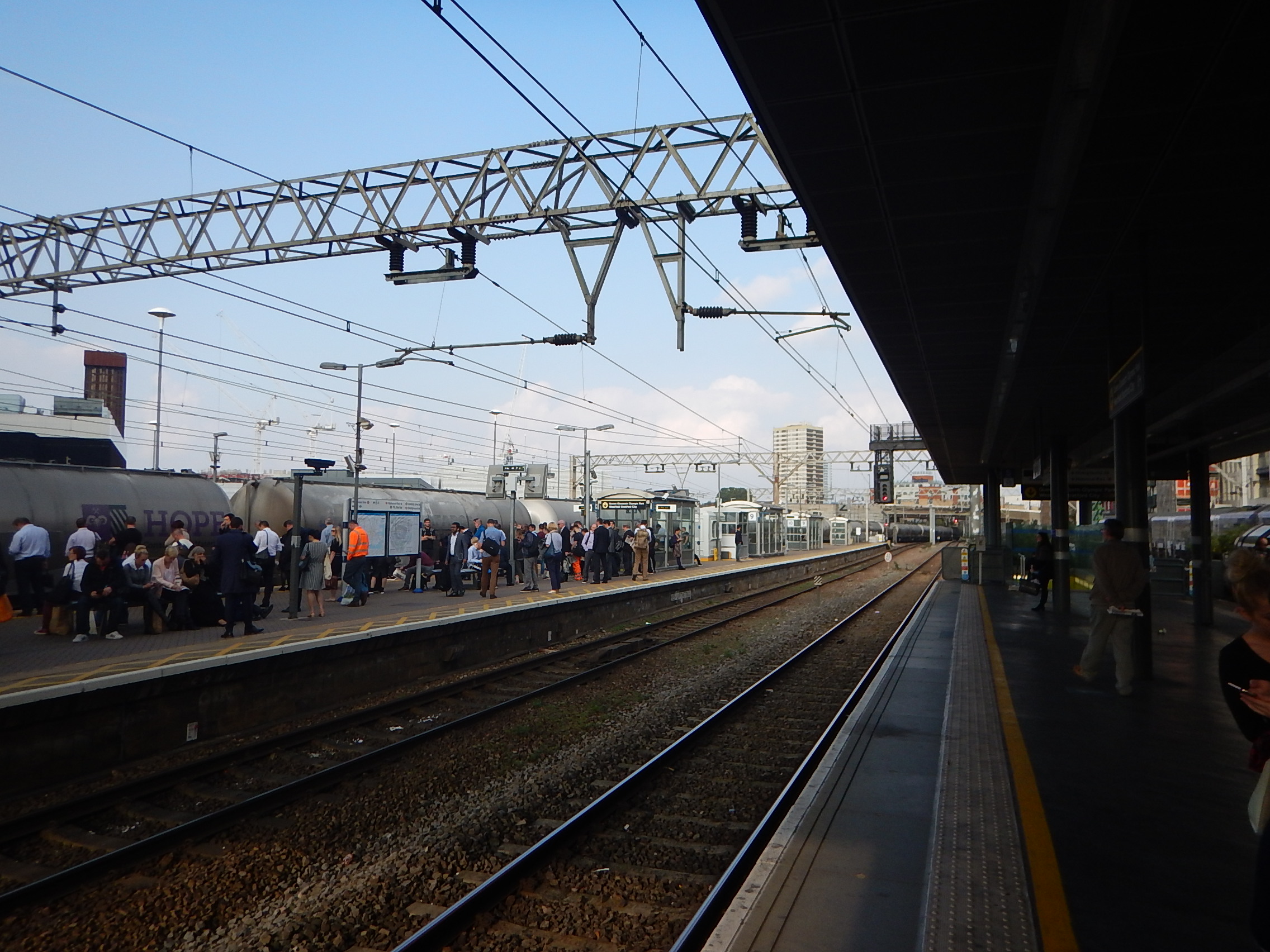
The building boom in London and the South East is still requiring large amounts of cement and aggregate.
Long trains like these have various consequences.
- They increase the capacity of the railway, as longer trains make better use of the available freight paths.
- They take more trucks off the road.
- Track, junctions and sidings may need to be updated to handle the longer trains.
- The trains need two locomotives.
It’s not just aggregates and cement that will be transported this way, but containers, new cars and vans, bio-fuel for power stations and aviation fuel.
New Locomotives
The biggest need will be for new locomotives. At present, Wales to London aggregate trains are hauled by a pair of Class 66 diesel locomotives. When electrification is complete between London and Cardiff, surely this route should be handled by a pair or even a single large electric locomotive.
This article in Rail Magazine is entitled GB Railfreight In ‘Locomotive Acquisition’ Talks.
So at least one freight company is looking for new motive power.
What characteristics will the locomotives need?
Adequate Performance
The power and operating speed of the various modern locomotives used for freight are as follows.
- Class 66 – Diesel – 2,460 kW – 75 mph
- Class 67 – Diesel – 3,200 kW – 125 mph
- Class 68 – Diesel – 2,800 kW – 100 mph
- Class 70 – Diesel – 2,750 kW – 75 mph
- Class 90 – Electric – 3,730 kW – 110 mph
- Class 92 – Electric – 5,040 kW – 87 mph
There is also the Class 88, which can run on both electric or diesel power.
- Diesel – 700 kW
- Electric – 4,000 kW
An operating speed of 100 mph is quoted in Wikipedia.
If the locomotive was to replace two Class 66 locomotives working together, it would appear the locomotive would need a power of around 5,000 kW.
I took this picture of a Class 90 electric locomotive and a Class 66 diesel locomotive double-heading a freight train.
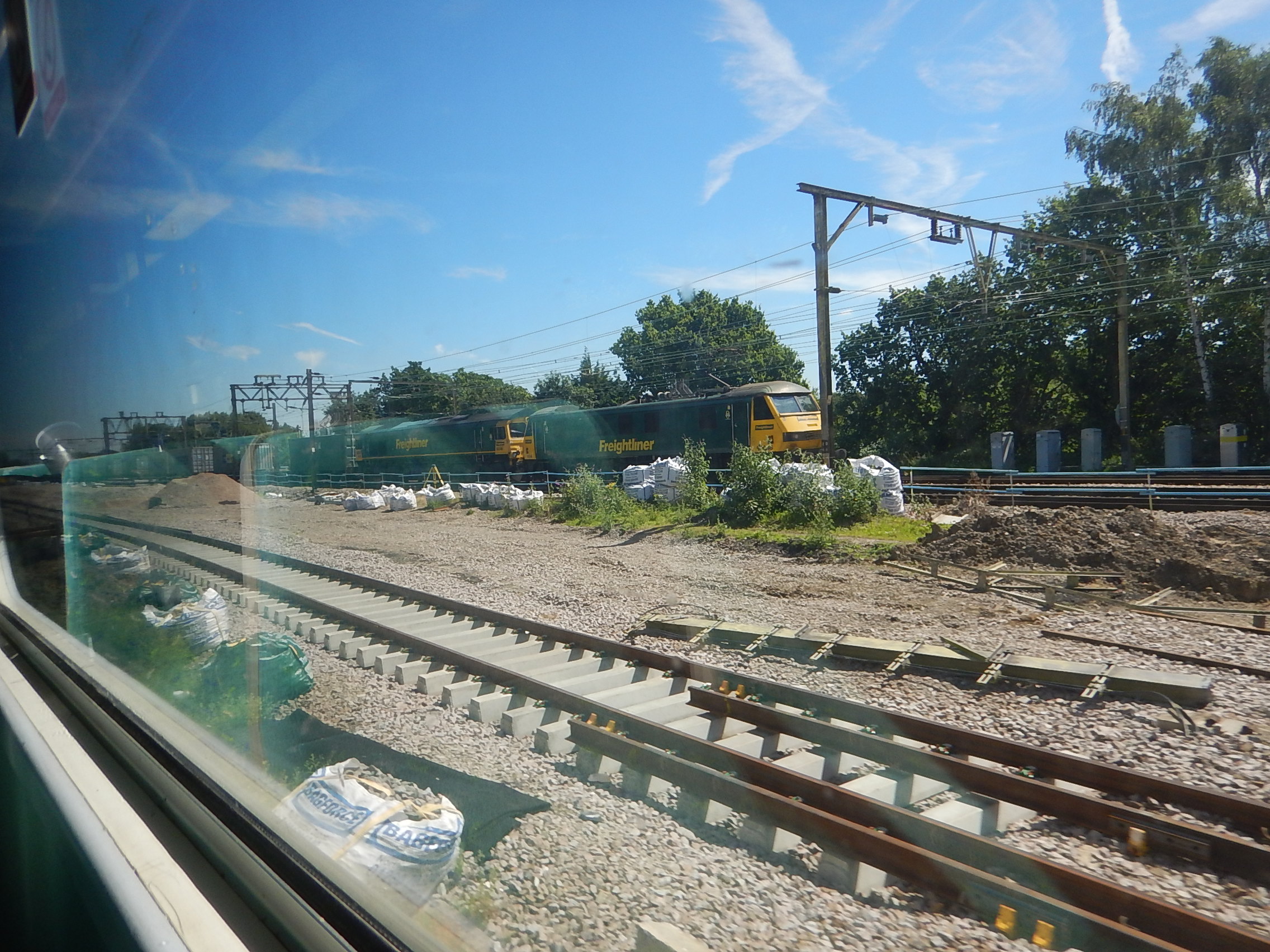
The two locomotives would have a combined power of about 6,200 kW.
Diesel, Electric Or Dual Power
Does the picture, indicate a need for a high-power dual mode locomotive?
Or was it just convenient to pull the freight train out of the Port of Felixstowe with a Class 66 locomotive and then add a Class 90 locomotive to pull the train on the electrified route to London?
As the freight companies are regularly reported as needing more locomotives, I suspect some unusual motive power is used at times.
Now that the Class 88 dual-mode locomotives are coming into service, I would suspect that the capability of these locomotives is being examined in detail.
It may only have 700 kW using diesel, but 4,000 kW using electricity is very respectable, although not as much as two Class 66 locomotives working together.
The Bombardier TRAXX
The Bombardier TRAXX is a family of locomotives, that come in electric, diesel and dual-mode versions.
Several hundred have been ordered.
A version of this locomotive or something similar might fit the specification.
Conclusion
Some more powerful freight locomotives are needed, but the designs should be available.
Along The Felixstowe Branch
In the December Edition of Modern Railways magazine there is an article entitled Loop Planned For Felixstowe Branch.
The Proposal
To allow an increase in the numbers of freight trains on the line from 33 to 47 every day, Network Rail propose to do the following.
- Create a 1.4 km loop at Trimley. Note that 775 metres is the maximum train length in the UK.
- Close six level crossings
- Create a bridge for a bridleway.
Network Rail hope that this will be sufficient for a few years, but in the future the aspiration is for double-tracking and electrification all the way between Felixstowe and Nuneaton.
I have flown my helicopter along the route and it is single track all the way between Westerfield and Trimley stations, with the exception of a passing loop East of the Spring Road Viaduct, which is centred on Derby Road station.
This Google Map shows the Branch Line East of Trimley station.
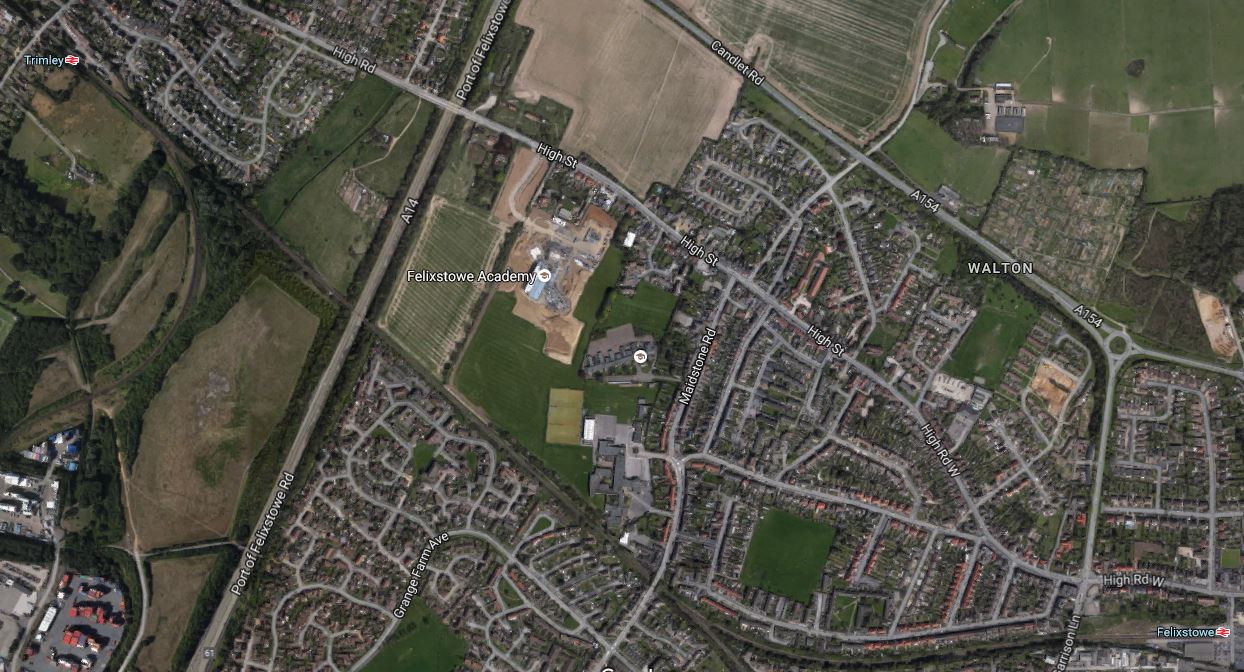
The Eastern End Of The Felixstowe Branch Line
Trimley station is in the North West corner of the map, whilst Felixstowe station is in the South East corner.
Just before the level crossing at Trimley, the line splits into two and the two tracks run together for a time, before the Southern track branches off to the North Terminal at the Port of Felixstowe.
The other track then continues East and splits with one branch going straight into Felixstowe station and the other going to the South Terminal at the Port.
All tracks are single track, except between Trimley station and the first junction.
The Intermediate Stations
I think it is probably true to say, that Westerfield, Derby Road and Trimley stations are one the worst run of three stations in the country.
In James Cook Station – The Reinvention Of The Halt, I talked about the new James Cook station, that serves Middlesborough Hospital. This station had 23,000 passengers in 2014/15, as against the 30,000 average for these three Suffolk stations in the same year.
I’m sure if they were of the same standard as James Cook station, they would see an increase in passengers.
This Google Map shows Westerfield station.
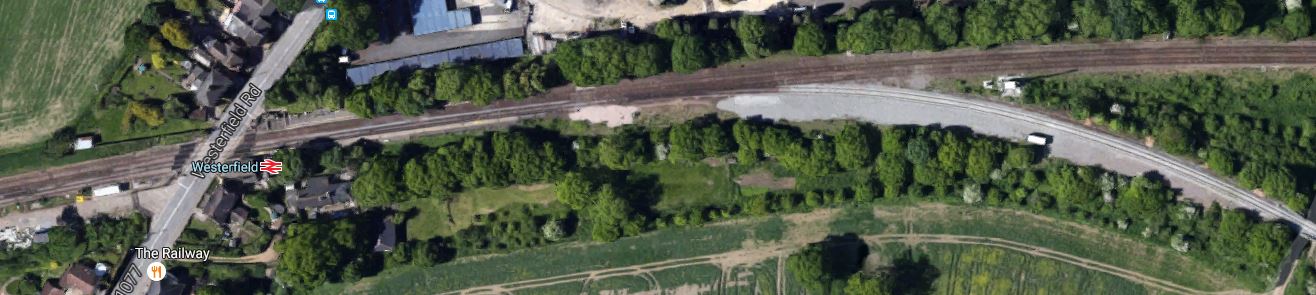
Westerfield Station
Note how the single-track Felixstowe Branch leaves the double-track East Suffolk Line to the East of the station.
A large housing development called Henley Gate, which is part of the Ipswich Garden Suburb could be built to the West of the station. This might be an opportunity to improve the station and the level crossing. This web page on the Ipswich Borough Council web site, shows a map and a few details.
If the thousand houses promised for the site are built, I’m sure Westerfield station could be one that attracted a few more passengers, who cycled to the station.
According to Wikpedia, this Derby Road station used to be a lot busier. This is said.
People living on the eastern side of the town generally preferred to use Derby Road when travelling to Felixstowe and the station could be very busy on sunny weekends with day trippers to Felixstowe Beach and Felixstowe Pier stations. They could reach the station on the Ipswich Tramway which terminated outside the station entrance.
But this Google Map, of the area round the station show that it surrounded by housing.
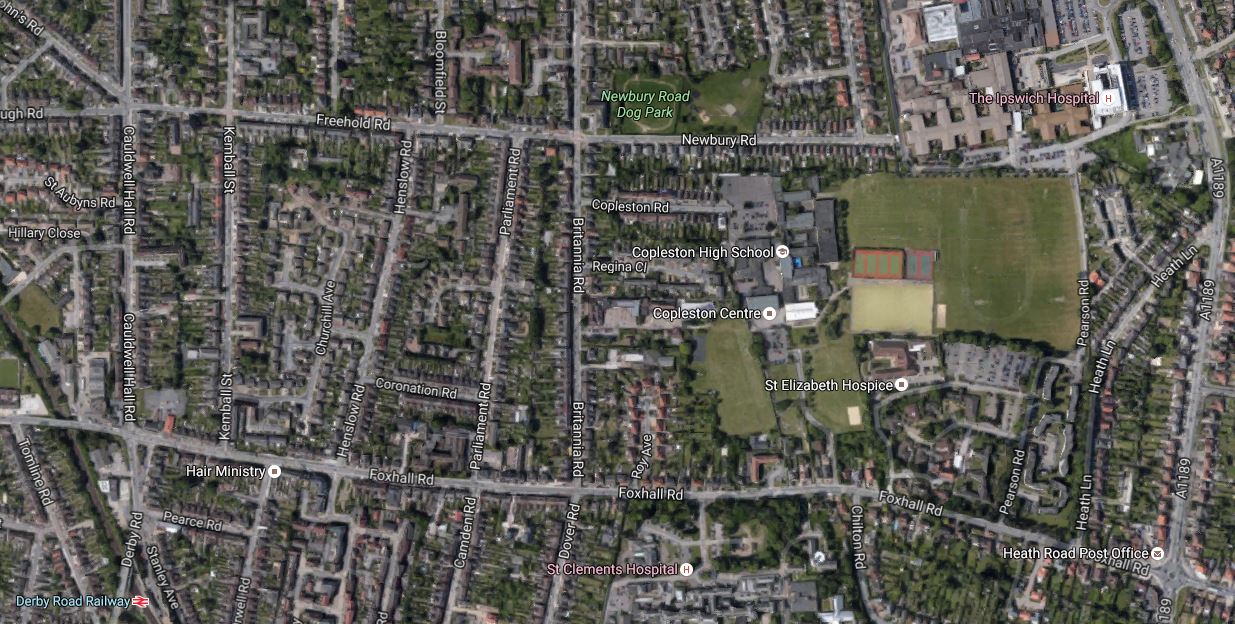
Around Derby Road Station
The station is at the South West corner of the map, with The Ipswich Hospital is at the North East corner of this map. I ask these questions.
- Is there a shuttle bus between the station and the hospital?
- Is there secure bicycle parking at Derby Road station?
- Could it be that if a decent train with greater capacity and perhaps better provision for bicycles and buggies ran through the station, that there could be an increase in passengers?
From what I’ve seen of the station, it’s suffering from Abellio’s Managed-from-Norwich Syndrome, which a lot of stations in East London did, until placed under the control of Transport for London.
The next station after Derby Road used to be Orwell station, which served the villages of Orwell and Nacton.
At some point in the future, I wouldn’t be surprised to see a station between Derby Road and Trimley, either inside or outside of the A14.
Trimley station is virtually derelict, but there are plans to convert it for community use.
I believe, all the intermediate stations on this line could have a future. Factors involved could be.
- Nearby housing and/or commercial development.
- Cycle-and-Ride passengers.
- A decent train to Ipswich and Felixstowe, with plenty of space for bicycles and buggies.
- A reliable clock-face hourly service.
- Easy connection to Long distance trains at Ipswich station.
- A cafe or coffee kiosk
Passengers, who are going to work, need a service that is totally reliable, and this service has suffered in the past few years.
Dualling The Line
If my virtual helicopter ride, showed one thing, it was that there are wide margins around the current single track from Derby Road to Trimley, which hopefully would make installation of a second track reasonably straghtforward.
However, I did count six level crossings with barriers and what looked like five crossing points without. All will have to be upgraded for the second track or removed.
It is interesting to see, that Network Rail are proposing to close six crossings in their current plan, so is this to get rid of one of the major problems of the dualling early?
Perhaps, they have decided that removing six level crossings and dualling the line at the same time, would raise too many simultaneous problems for their legal department. But doing the level crossings first with a less ambitious dualling is less likely to be challenged.
The other big problem could be widening the bridge over the A14 dual-carriageway.
This Google Map shows the bridge.
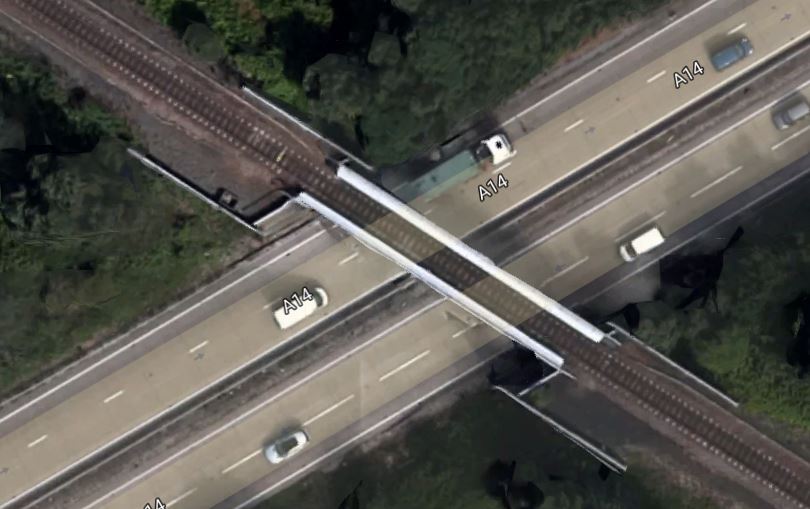
The Felixstowe Branch Line Crosses The A14
But it looks to me, that everything is there to just slip in a second span.
So that could be at least future-proofed!
Where Is The Proposed Dualling?
According to the article in Modern Railways, the loop at Trimley is 1.4 km. long.
My estimate is that the distance between the two junctions, where the two branches go off to the Port of Felixstowe, is about this distance.
So could it be, that the loop is not for freight trains, but to allow the passenger trains to access Felixstowe station?
- The Northern track would be bi-directional and connect Trimley and Felixstowe stations and would be for exclusive use of passenger trains.
- The Southern track would be bi-directional and connect Trimley station to both the lines to the Port of Felixstowe and would be for exclusive use of trains to and from the Port.
- At night, the track could be configured, so that two bi-directional tracks, that joined just to the West of Trimley station, went to each freight terminal The Northern track would serve the South Terminal and the Southern Track would serve the North Terminal.
The Port of Felixstowe has argued at times, that the Felixstowe Branch Line should be freight-only. Is this Network Rail’s proposal to create two separate freight and passenger lines using the same track?
From my observations at Ipswich that I wrote about in Curious Rail Construction At Ipswich Station, I am convinced that they have simplified track layout around Ipswich Freight Yard, so that freight and passenger trains, don’t conflict with each other at Ipswich.
So does this proposal remove conflicts at Felixstowe?
I think it does.
After the proposed loop is built, the line will be effectively in three sections.
- A core line between Westerfield and Trimley stations with the existing passing loop at Derby Road.
- At the Felixstowe end, there will effectively be separate lines into Felixstowe station, and the North and South Freight Terninals.
- At the Ipswich end, there will be separate lines into Platforms 0 and 1 at Ipswich station, Ipswich Freight Yard and to both directions on the Great Eastern Main Line.
- All of the connecting end lines would work with the simple rule of only allowing one train on the line at any one time.
At Felixstowe, freight trains might even be paired with one going into the North Terminal at the same time as one came out of the South Terminal. And vice-versa!
The train coming out, would wait at a signal before the junction for its branch and then when the other train had cleared the other junction going into the Port, it would be allowed to proceed through Trimley.
At night, trains could also be assembled as flights, so that several trains came in and out of the port in a stream. The reorganised Ipswich Yard must help in this.
As the new passenger trains will be somewhat faster than the current Class 153 trains and will be able to get away from stations quicker, I wonder if the timings will be such that two trains per hour might be possible.
These are current timings between Westerfield and Trimley in the core section.
- Passenger train – 14 minutes
- Freight train – 16 minutes
As trains don’t conflict on the double-track outer sections and have their own separate routes, it should be possible to have one 14 minute passenger and one 16 minute freight cycle in every half-hour, provided the trains pass at Derby Road.
With faster trains, fitting in two passenger trains and two freight trains in both directions in every hour might well be possible.
But you also have to content with other services on the East Suffolk Line and other constraints, so I suspect that by being extremely thorough and downright devious, that the published figure of 47 trains a day is very feasible. And feasible when running two tph between Ipswich and Felixstowe!
Two passenger trains would be needed for the service.
Higher Speed Between Westerfield And Trimley
Once all the improvements at the two ends of the line are complete, the major constraint on capacity on the line is the time a train takes between Westerfield and Trimley.
The line is configured for 75 mph, but I wonder what sort of speed could be reached could be attained safely on the line between Westerfield and Trimley, with the following.
- Removal of level crossings
- Improved signalling.
- Some minor track improvements.
It should be born in mind that there are no junctions from where the Felixstowe Branch leaves the East Suffolk Line at Westerfield and Trimley.
The speed limit would then probably be set by the maximum speed over the Spring Road Viaduct.
The distance between Westerfield and Trimley is almost exactly 10.5 miles.
This means that the freight train averages about 40 mph and the passenger train a miserly 45 mph.
So what sort of speeds can the various trains achieve.
- Class 153 – 75 mph
- Class 170 – 100 mph
- Class 66 – 65/75 mph
- Class 67 – 125 mph
- Class 68 – 100 mph
- Class 70 – 75 mph
- Class 88 – 100 mph
It could be that the slow speed of the Class 66 locomotives are one of the constraints on the line, as timings must assume that locomotives could be the 65 mph variant.
If it were possible to raise the line speed to 90 mph, it could reduce timings on the line between Westerfield and Trimley.
These figures certainly show, why Network Rail are so keen to remove the level crossings on the line.
I suspect that suitable trains and locomotives could reduce times as follows if the line had a 90 mph limit.
- Freight – 13 from 16 minutes.
- Passenger – 12 from 14 minutes.
It might only save a couple of minutes with my crude estimate, but it certainly shows there are savings to be made by upgrading the line and using modern trains and locomotives.
Class 66 Locomotives
I don’t like Class 66 Locomotives and have believed for some time, that they have little place on the electrified lines in built-up areas. I wrote The Noisy Class 66 Locomotive on the subject a couple of years ago.
My crude analysis in the previous section shows that their slow speed actually cuts capacity.
Freightliner are one of the big operators of |Class 66 locomotives to and from the Port of Felixstowe. Wikipedia has a section on Class 66 Locomotives operated by Freightliner.
This is said.
Freightliner followed EWS by initially ordering five new Class 66/5 locomotives, and have continued to order in small batches. As of summer 2010, the 66/5 fleet had reached 98 examples; 66521 was withdrawn after the 2001 crash at Great Heck and later scrapped.
In 2000 a new Class 66/6 sub-class was built, with a lower gear ratio, enabling heavier trains to be hauled, albeit at slower speed. There are presently 25 examples of this class, numbered 66601-625. Some of these locomotives have since been exported for use with Freightliner Poland.
As freight trains are getting longer, it would appear that the slow 66/6 locomotives should be removed from this route as their 65 mph maximum speed is a constraint on maximising traffic between Westerfield and Trimley.
Electrification
Electrification is often talked about with respect to the Felixstowe Branch.
Reasons in favour include.
- Freight trains going to and from London could be electric hauled.
- Engine changes at Ipswich Yard would be minimised.
- Electric haulage is more environmentally friendly.
But there are powerful reasons not in favour.
- Cranes in a Port and 25kV overhead wires are bad bedfellows.
- If the Class 88 Locomotive and other electro-diesel types are a success, they are probably more affordable than electrification.
- Passenger services in the near future will be run by trains with an on-board power source; diesel, bi-mode or battery.
- The main route to the Midlands via Peterborough and Nuneaton is not electrified.
But above all we seem so bad at electrification, the risk in wiring the line is too great.
I don’t think it is likely that the Felixstowe Branch will be electrified until the whole route to the Midlands is wired.
Coal’s Economic Victims
Coal still claims victims, but these days, the biggest ones are economic and corporate.
In the United States, this article has been published on Bloomberg, with a title of Coal Slump Sends Mining Giant Peabody Energy Into Bankruptcy.
The article makes these points.
-
Biggest U.S. producer felled by cheap gas, China slowdown
-
Environmental costs could complicate miner’s reorganisation
How many US pensions have lost value because Peabody was considered a safe investment?
As fracked cheap gas is given as the reason for Peabody’s fall, don’t think that the US is swapping one dirty fuel for another!
- When you burn coal, which is virtually pure carbon with impurities, you create a lot of carbon dioxide and spread the impurities, which are sometimes quite noxious over a wide area.
- But natural gas is mainly methane, which is one carbon atom and four of hydrogen. So burning gas creates a lot of water, as well as less carbon.
I seem to remember that to get the same amount of heat energy from natural gas, as from a given quantity of coal, you only create about forty percent of the carbon dioxide.
This page on the US Energy Information Administration probably can lead you to the answer.
In the UK, there are two recent stories on Global Rail News.
Rail freight is going through a bit of a crisis in the UK, because we are burning much less coal in power stations.
As coal is moved to power stations by diesel-hauled trains in the UK, from open-cast sites and the ports, the burning of less coal in power stations is having a serious effect on rail freight companies.
At least, if any train drivers are made redundant, there are plenty of vacancies for drivers of passenger trains and I’ve yet to meet a freight train driver, you likes the dreaded Class 66 locomotives, with all their noise, vibration and smell, that generally pull coal trains.
But it’s not all bad news, as this article from the Railway Gazette, which is entitled Freightliner wagons use recycled coal hopper components, shows. This is said.
Freightliner has taken delivery of the first of 64 open wagons which are being built by Greenbrier Europe using bogies and brake components recovered from coal hoppers made redundant as a result of the decline in coal traffic.
Freightliner Heavy Haul needed a fleet of high capacity box wagons for a new contract to haul construction materials for Tarmac, and decided to investigate the possibility of using recycled parts from redundant Type HHA 102 tonne coal hoppers. With assistance from engineering consultancy SNC Lavalin, Freightliner and Greenbrier Europe identified that with some modifications the bogies and some of the braking equipment would be compatible with an existing design of Greenbrier box wagon.
To a small extent, the movement of aggregates around the country by rail instead of truck, is replacing the coal trains on the the railways.
Oxford Now Wants Silent Track
Network Rail must rue the day they agreed to extend the Chiltern Line to Oxford, as the locals have done everything they can to tell Network Rail, that they don’t want the new railway. I wrote about it in July 2015, in Network Rail’s Problems In Oxford.
This article in the Oxford Mail was published yesterday. This title is.
City council bosses to force Network Rail to install Silent Track on another stretch of North Oxford railway.
Which is a good precis of the article.
So what is silent track?
This article on Railway Technology is entitled Tata Steel’s SilentTrack to reduce noise levels at London Blackfriars station.
It gives a sensible explanation.
I know something about noise and vibration and feel very strongly that we should do what we can to minimise noise, where it causes problems.
Noise from a railway comes from several sources.
- The track
- Diesel locomotives and multiple units.
- Pantographs on electric locomotives and multiple units.
- Freight wagons.
All contribute to a various degree.
In my view, the worst noise comes from diesel locomotives like the noisy and smelly Class 66 locomotives and there is not much point on spending millions on silent track and then allowing these to run through sensitive areas.
The sooner lines like this one through North Oxford are electrified the better.
An Unusual Double-Headed Freight Train
I travel up and down the Great Eastern Main Line regularly and recently, there seems to have been a greater incidence of freight trains with two locomotives on the front.
I am pretty certain, I’ve seen several trains with two Class 66 diesel locomotives or two Class 90 electric locomotives on the front.
But today from a train at Shenfield I took this rather poor picture.
Is This A Class 90 And A Class 66 Working Together?
It would appear to show a Class 90 and a Class 66 working a freight train together.
Does this happen regularly? I can’t find any other pictures on the web.
I should get my camera out faster in future!
A Stray Class 68 Locomotive At Stratford Station
I took these pictures of a Class 68 locomotive.
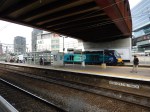
You don’t see them very often at Stratford station.
But when you see them in a station, as I did here, you realise how much less noisy and smelly they are than the ubiquitous Class 66 locomotive.
This blog post from Reading University entitled EU Emission limits bite for new freight locomotives, gives a few details.
- The Class 66 meets the Stage 3A emission regulations, but the author does not know of any plans to meet Stage 3B.
- The Class 68 meets the Stage 3A regulations, and can be easily modified to meet Stage 3B.
- The Class 70 meets the Stage 3A regulations, but not Stage 3B, although that could be a future option.
You certainly don’t see anything other than a Class 68 pulling a passenger train.
Are You Annoyed By Noisy Trains At The Bottom Of Your Garden?
I have just found this document on the European Parliament web site, which is entitled Reducing Railway Noise Pollution.
It is a fascinating document and this is the abstract.
12 million EU inhabitants are affected by railway noise during the day and 9 million during the night. This study lists measures, funding and regulations to reduce it. The introduction of modern rolling stock will lower noise most significantly. In the short run, the replacement of cast iron by composite brake blocks on rail freight cars is most important. Developing a regulation scheme for a staged process towards low-noise rolling stock is the heart of a rail noise abatement strategy.
Many of us in the UK, would think that we suffer badly from the noise of trains, but it would appear that Germany and other Central European countries suffer badly from all freight trains passing through. The Rhine Valley which has over 400 freighs trains a day, suffers badly from noise.
So how can we reduce noise?
- As the abstract says new rolling stock is the best way to reduce noise and many of our trains have been replaced with new or refurbished ones in the last few years.
- The report says that most (approximately 75%) of UK freight wagons have disc brakes or composite brake blocks. So that is good.
- In my view one of things that gets most complaints is noisy and smelly diesel locomotives, like the dreaded Class 66 locomotives. They may be liked by the freight companies, but they are not favourites of drivers and those living by the railway. More friendly types of diesel locomotives like the Class 68 are starting to appear and it can’t be too soon.
- Surprisingly, with electric trains, pantograph noise is a problem. I’d hand that and any other aerodynamic problems over to the engineers in Formula One and aircraft design. I have read that Bombardier’s new Aventra will be very clean aeodynamically, which must make for a reduction in noise.
Let’s hope that these small improvements continue to reduce the noise by trains.
The report also says this about physical noise barriers.
Noise barriers are a visual intrusion, particularly since they are a target for graffiti; they have a high cost, and cause problems for track access. Their effectiveness depends on their absorption properties, their height, and the proximity of the barrier to the noise source and/or to the receiver.
I am not a fan, as they ruin my taking of photographs.
Last Ever Class 66 Locomotives Arrive In UK
The title of this post in the headline in an article on Global Rail News. It describes how the last seven Class 66 freight locomotives have now been delivered to the UK.
In my view it is mixed news.
- We need more freight locomotives to get cargo traffic off the roads and these seven will help.
- Class 66 locomotives don’t meet the current EU emission regulations as is explained here.
- They are extremely noisy, vibrate badly and are a constant source of complaints, where they run through built-up areas.
- Once they are imported, will we ever see the back of them?
In addition, we are electrifying more and more lines and in particular freight routes, so where are orders for new electric locomotives?
 The Anonymous Widower