Covid: What’s Happening To The EU Vaccine Scheme?
The title of this post is the same as that of this article on the BBC.
These are the introductory paragraphs.
The European Union has been criticised for the slow pace of coronavirus vaccinations in member states.
It has introduced export controls on vaccines produced in the EU after the roll-out was hit by delays and supply problems.
The delays and supply problems seem to concern the AstraZeneca plant in Belgium. Get that running flat out would surely help to solve the problem.
Wikipedia has an interesting statement under Production and Supply for the AZ vaccine, in the Wikipedia entry for the vaccine.
On 13 June 2020, AstraZeneca signed a contract with the Inclusive Vaccines Alliance, a group formed by France, Germany, Italy, and the Netherlands, to supply up to 400 million doses to all European Union member states. However, the European Commission intervened to stop the deal being formalised. It took over negotiations on behalf of the whole EU, signing a deal at the end of August.
It looks to me that the EU strangled a deal that could have saved their bacon, if Wikipedia is correct.
- Did the delay mean that AstraZeneca delayed completing their European factories, as they were worried about getting any order at all?
- Sometimes, it is difficult financing firm orders, let alone ones that might be cancelled at the whim of politicians.
- Was Macron hoping the French vaccine was coming through and so could replace the AstraZeneca vaccine? But it didn’t appear, so the EU had to go cap-in-hand to AstraZeneca, who now had the problem of getting the equipment from suppliers, they’d mucked about.
It looks to me like an almighty coq-up!
The section about the Oxford vaccine in Wikipedia, also says that the vaccine has been licenced to the US, Argentina for Latin America and India and that production from the UK and EU factories will be between 100 and 200 million doses per month, when up to full speed.
Those production figures look like they could satisfy the UK’s order for 100 million doses and 400 million for the EU, if AstraZeneca can get the Belgian plant fully working.
I wouldn’t be surprised to see a solution something like this.
- Novavax gets UK certification very soon.
- Novavax starts supplying doses to the UK, in perhaps March.
- AstraZeneca sends some UK vaccine to the EU, with Novavax keeping the vaccination rate high.
- AstraZeneca gets their EU factories up to speed in something like June.
- The EU gets its vaccines and is now able to vaccinate at a vaguely acceptable rate if they get their systems right.
- Moderna comes on stream around the middle of the year.
- The UK has adequate deliveries of AstraZeneca, Moderna, Novavax and Pfizer vaccines and starts mass vaccination for everyone, around the start of September.
If the EU had allowed the original deal to proceed for EU vaccines, the timescales would probably be have been three months earlier.
Conclusion
The EU will get its vaccines, but later than if they’d placed their orders at the same time as the UK did.
Macron Rex: Interfuctus Est.
The title of this post, is a tagline in the big cartoon in today’s copy of The Times.
It is drawn in the style of the Bayeux Tapestry and has all the players in our spat with the EU.
Many have been shot by syringes.
Does President Macro have a sense of humour?
Try to see a copy and examine the detail!
The Voice’s Tom Jones, 80, Feels ‘Bulletproof’ After Second Covid Vaccine
The title of this post is the same as that as this article on the Metro.
The title says it all and surely Tom Jones is the type of celebrity, who could encourage others to have the jab.
A Way Out Of The AstraZeneca Vaccine Row With The EU
This article on the BBC is entitled Brexit: EU Introduces Controls On Vaccines To NI.
These are the introductory paragraphs of the article.
The EU is introducing controls on vaccines made in the bloc, including to Northern Ireland, amid a row about delivery shortfalls.
Under the Brexit deal, all products should be exported from the EU to Northern Ireland without checks.
But the EU believed this could be used to circumvent export controls, with NI becoming a backdoor to the wider UK.
The row involving AstraZeneca, the UK and the EU is now getting serious,
I think, the EU are missing an opportunity.
My Experience Of The AstraZeneca Vaccine
Yesterday, I received my first dose of the AstraZeneca vaccine, which I wrote about in Job Done – I’ve Now Had My First Covid-19 Vaccination.
As I am an engineer, who helped to finance a drug-delivery system, I know a bit about the subject of drug delivery.
My jab yesterday seemed to have been administered very quickly and painlessly, without fuss. I regularly have B12 injections as I’m coeliac and this AstraZeneca one was certainly less painful for me.
Have AstraZeneca designed the vaccine and its delivery system so that it will have application in mass vaccination situations like refugee camps, where thousands may need to be vaccinated quickly?
Consider.
- It can be transported and stored at easy-to-manage temperatures.
- I suspect that a skilled vaccinator can vaccinate more patients per hour, than with other vaccines.
- I didn’t feel a thing, which must help those with needle phobia.
- The vaccinator didn’t need to apply a plaster, just using a cotton wool pad and pressure. This must save time.
This looks to me, like disruptive innovation is at work.
Surely, though by streamlining the vaccination process, this will increase the number of patients vaccinated by a well-trained team. This will be what doctors ordered.
The Real Problem With The AstraZeneca Vaccine
I have worked a lot in the design of project management systems and very often, when projects go awry, it is due to a lack of resources.
It strikes me that the problem with the AstraZeneca vaccine, is that there are not enough factories to make the vaccine.
As it is easier to distribute and AstraZeneca are making it without profit, perhaps the EU should approach the UK about creating a couple of large factories to make the vaccine in suitable places across the UK and the EU.
A proportion of this increased production could be distributed to countries, that couldn’t afford a commercial vaccine or didn’t want to get ensnared by the Chinese in a Vaccines-for-Resources deal.
It should also be remembered that Oxford are at the last stages in the testing of a vaccine for malaria. That would surely be a superb encore for Oxford University and AstraZeneca. I suspect the UK will back it, but it would surely be better, if the EU backed it as well.
Covid-19 Vaccination On The Island Of Ireland
Every day, The Times publishes a table of how many people in various countries have been vaccinated against the Covids.
Today’s figures included.
- UK – 11 %
- Ireland – 3 %
Out of curiosity, I calculated today’s figure for Northern Ireland. It was 10.4 %.
As the people of Ireland form a rich pattern of families, commerce and employment on both sides of the border, will these figures cause tensions in the Republic?
Job Done – I’ve Now Had My First Covid-19 Vaccination
I arrived a few minutes early at the Francis Crick Institute, for my appointment to be vaccinated.
I had booked to be vaccinated there, as I wanted to have a look inside one of London’s new modern buildings.








Note.
- The multi-triangular steel sculpture in front of the building is by Conrad Shawcross, who is the son of the journalist, writer, and broadcaster; Sir William Shawcross and the historian, critic and writer; Dame Marina Warner.
- I am a great fan of large sculptures like these being displayed in full view in suitable public spaces, rather than hidden away in store-rooms or in the farthest toom of a gallery. I wrote about this in Is There Space On The Overground For Large Art?.
I was had been told to enter from the North side of the building.
As the pictures show there were no signs, but someone spotted me and gave me directions.
I was directed to stand in a particular place and then told to enter the building, by walking down a set of stairs to the basement.
- I think my temperature could have been automatically checked before entry, as it certainly wasn’t anywhere else, that I noticed.
- There was a stair-lift at the entrance, for those not able to manage the stairs.
- Not that I saw anybody walking with more than the aid of a stick!
Once in the basement, I was asked to sit on one of about ten socially-distanced chairs.
Registration
There were a group of about six young ladies and perhaps a couple of young men, who then registered all those who had come for vaccination.
This was done mainly using your NHS number, so make sure you bring it.
Interview
Once registered, I was moved to another set of socially-distanced chairs, each of which was outside a cubicle.
I was then called in to the cubicle and given an interview by a young doctor.
She asked general questions and some about the drugs I take, so make sure you know what drugs you’re taking.
But otherwise the questions were ones everybody should know about themselves.
Vaccination
Once interviewed, I was moved to another set of socially-distanced chairs, each of which was outside a cubicle.
After about five minutes, I was called into the cubicle to be vaccinated, by a young lady.
I was only asked one question and that was whether I was right-handed or left-handed.
I am complicated, as because my left arm was badly broken by the school bully and I am right-handed, I prefer to have injections in my dominant right arm.
I also told her, that my unusual skin, means I don’t bleed from injections and she wouldn’t need a plaster.
She then said, that very few need a plaster with this vaccine.
The injection was quick and one of the few where the vaccinator didn’t say something like “Sharp scratch!”
I held a small cotton wool pad over the spot for perhaps thirty seconds, but despite being on Warfarin, my skin did its usual good job of stopping any bleeding.
I declined the sticker saying I’d been vaccinated and before I left, I was told I’d had the AstraZeneca vaccine.
Timings
From the time I arrived until the time I left was about half-an-hour.
Professionalism
It was all very professional and well-organised.
I’ve worked in factories and it was arranged very much how some factories are arranged, where the product being built is moved from one work-station to another until they reach Despatch.
It was also very relaxed and unhurried with lots of extra young people directing the patients around the various seats and cubicles.
Throughput
I have done my share of time-and-motion studies in the past and I suspect that, as time progresses, that the number of patients handled by this facility could be increased.
On the other hand, it may be kept a bit below capacity to make sure the relaxed atmosphere is preserved.
A Thought On The Staff
I must admit, I didn’t see all of the staff, but of the ones I saw, only one wasn’t white and she was Chinese and called Ying. Incidentally, she registered me, when I arrived.
A Thought On The Patients
All of the patients were white and with the exception of one other and myself, they were all female. As the patients were mainly over sixty and had probably made a choice to be vaccinated at the Francis Crick Institute on their computer, I find the ethnic distribution of the patients curious.
A Thought On The AstraZeneca Vaccine
I have a regular B12 injection and a flu vaccination every year, so I’m used to injections. The practice nurse is very quick, but the lady, who vaccinated me today was exceptionally quick.
- She also had a couple of syringes ready-filled waiting for me and following patients.
- She was able to vaccinate me, without my taking off my short-sleeved shirt and thermal vest.
- I also hardly felt a thing.
- I didn’t need a plaster.
As a friend, who also had the AstraZeneca vaccine, also said he didn’t feel a thing, I wonder, if AstraZeneca have designed this vaccine and its delivery system, so that patients can be quickly vaccinated.
Imagine market day, in a very populous country like Brazil, India or Nigeria! Has this vaccine been designed to handle mass vaccinations in an environment like that?
It should be remembered that this is AstraZeneca’s first vaccine.
I have a feeling, that this vaccine could have been designed to a new set of rules, so that teams can vaccinate large numbers of people quickly.
Should Coeliacs On A Long-Term Gluten-Free Diet Have The Pfizer Or AstraZeneca Vaccine?
This is an interesting question.
I believe that coeliacs on a long-term gluten-free diet have a strong immune system and this is responsible for the group, to which I belong, having a 25 % less risk of suffering from cancer, according to Joe West at Nottingham University.
This strong immune system may react to and attack a two-dose viral-vector vaccine like the AstraZeneca, so would I be better off with the Pfizer?
I wrote about why this could happen in Coronavirus: Why Combining The Oxford Vaccine With Russia’s Sputnik V Vaccine Could Make It More Effective.
This is an extract from that post.
A Possible Problem With Viral-Vector Vaccines
This is a paragraph from the article on the Conversation, which talks of a problem with viral-vector vaccines.
When a person is given a viral-vector vaccine, as well as generating an immune response against the coronavirus’s spike protein, the immune system will also mount a response against the viral vector itself. This immune response may then destroy some of the booster dose when it is subsequently delivered, before it can have an effect. This has long been recognised as a problem.
It looks like a case of shoot the messenger to me.
The Russian solution is to use different viral-vectors in the two doses.
Conclusion
As I believe, I already have a degree of natural protection from my diagnosed coeliac disease and long-term gluten-free diet and the resulting strong immune system, I think on balance, I’d personally choose the Pfizer vaccine.
But the choice of vaccine will probably not be down to me!
French Pharma Giant Sanofi To Produce Rivals’ Covid Vaccines
The title of this post, isthe same as that of this article on The Times.
This is the introductory paragraph.
A growing sense of national failure in France over the inability to produce a viable Covid-19 vaccine has been compounded by the decision of its largest pharmaceutical company to produce doses developed by its rivals, Pfizer and Biontech.
France doesn’t seem to have backed the right horse!
But at least producing doses of the Pfizer vaccine will help to solve Europe’s severe vaccine shortage.
Well! That Was Painless!
I checked the post before I went to bed and there was an NHS envelop on the mat.
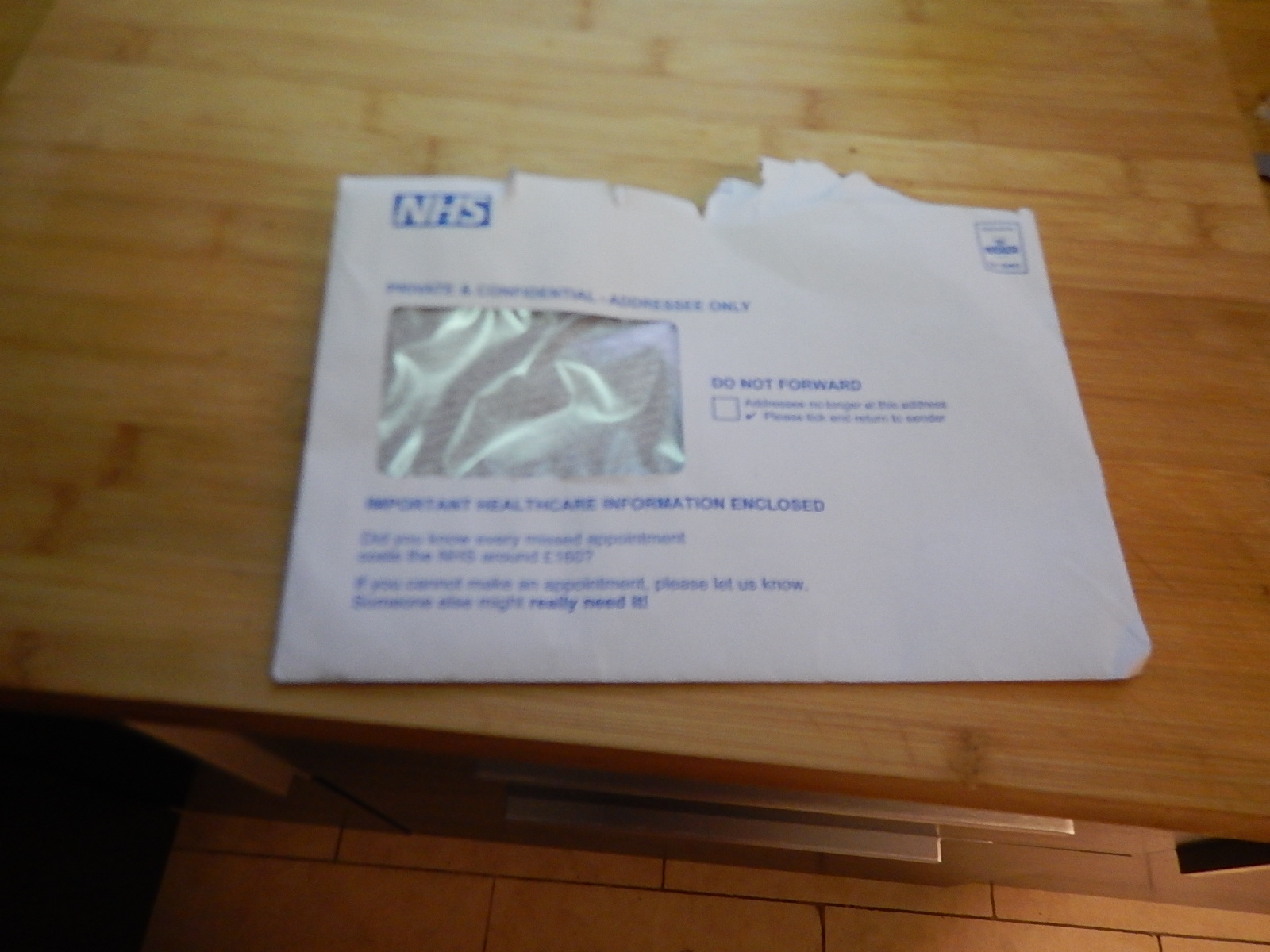
It was my call to be jabbed!
I have just booked and I’ll have my first dose tomorrow, at the Francis Crick Institute.
I booked using my computer and it was a well designed system, that worked without a hitch.
Coronavirus: Why Combining The Oxford Vaccine With Russia’s Sputnik V Vaccine Could Make It More Effective
The title of this post is the same as that of this article on The Conversation.
The Oxford–AstraZeneca COVID-19 Vaccine
This paragraph from the Wikipedia entry for the Oxford–AstraZeneca COVID-19 vaccine, gives the basic details of the vaccine.
The Oxford–AstraZeneca COVID-19 vaccine (codenamed AZD1222) is a COVID-19 vaccine developed by Oxford University and AstraZeneca given by intramuscular injection, using as a vector the modified chimpanzee adenovirus ChAdOx1. One dosing regimen showed 90% efficiency when a half-dose was followed by a full-dose after at least one month, based on mixed trials with no participants over 55 years old. Another dosing regimen showed 62% efficiency when given as two full doses separated by at least one month.
It puzzles me and I suspect it puzzles experts, that the two different vaccination regimes gave different answers.
The article on the Conversation says this.
This was intriguing. Why would giving people less of the vaccine lead to a more effective immune response? The answer to this may lie in the design of the vaccine, and could mean that there are ways to make this vaccine – and others that use the same design – more effective.
I will attempt to answer this question, in the rest of this post.
The Russian Sputnik V Vaccine
This paragraph from the Wikipedia entry for the Oxford–Russian Sputnik V vaccine, gives the basic details of the vaccine.
Gam-COVID-Vac, trade-named Sputnik V, is a COVID-19 vaccine developed by the Gamaleya Research Institute of Epidemiology and Microbiology, and registered on 11 August 2020 by the Russian Ministry of Health.
In most countries following guidelines of the World Health Organization, vaccine candidates are not approved for regular use until safety and efficacy data from Phase III trials are assessed and confirmed internationally by regulators. Gam-COVID-Vac was initially approved for distribution in Russia on the preliminary results of Phase I-II studies eventually published on 4 September 2020.
The quick approval of Gam-COVID-Vac was met with criticism in mass media and precipitated discussions in the scientific community whether this decision was justified in the absence of robust scientific research confirming the safety and efficacy of the vaccine.
In December 2020, interim analysis from 22,714 participants in a Phase III trial were published, claiming 91% efficacy with no unusual side effects.
Wikipedia says, that a medical citation is needed for the Phase III trial.
Both Vaccines Are Viral-Vector Vaccines
The Oxford vaccine is based around a modified chimpanzee adenovirus ChAdOx1, whilst the Russian vaccine is based on two human adenoviruses.
Adenoviruses are a family of viruses, that include the common cold.
The two shots of the Oxford vaccine are identical in composition, but the two shots of the Russian vaccine use a different adenovirus.
Both vaccines are what is known as viral vector vaccines.
Both vaccines would appear to deliver the same details of the spike protein of the virus to prime the body’s immune system to fight the real virus.
A Possible Problem With Viral-Vector Vaccines
This is a paragraph from the article on the Conversation, which talks of a problem with viral-vector vaccines.
When a person is given a viral-vector vaccine, as well as generating an immune response against the coronavirus’s spike protein, the immune system will also mount a response against the viral vector itself. This immune response may then destroy some of the booster dose when it is subsequently delivered, before it can have an effect. This has long been recognised as a problem.
It looks like a case of shoot the messenger to me.
The Russian Solution To The Problem
The Russian vaccine appears to get round the problem, by using two different adenoviruses in their two shots. There are fifty adenoviruses that affect humans, so they have a wide choice.
The first shot would only prime the immune system to the spike protein and one adenovirus, which could mean that the second and different adenovirus gets through without being attacked.
Co-Operation Between AstraZeneca And The Russians
This is the last sentence from the article on the Conversation.
This has now led to AstraZeneca testing a new hybrid vaccine schedule, comprising one dose of its vaccine and one of the Ad26-vector Sputnik V, to see if this makes the Oxford/AstraZeneca vaccine more effective.
I like the thinking behind this idea.
The priming for the immune system gets delivered by two totally unrelated delivery systems.
Conclusion
I wouldn’t be surprised to see this type of hybrid vaccine developed.
Surely, if we need to vaccinate every year against an ongoing Covid-19 threat, eventually, a succession of viral-vectors can be developed to fool the immune system.
The negotiation with the Russians could be tricky.
 The Anonymous Widower