Crossrail 2 October 2015 – Tunnels, Shafts And Head-Houses
Crossrail 2’s underground structures will be very similar to those of Crossrail.
Tunnels
The tunnels will be built in the same way to those of Crossrail, using tunnel boring machines or TBMs.
But I believe there will be slight differences.
- The tunnels of High Speed One, which Crossrail 2 has to cross at Dalston, are at a depth of 34 to 50 metres, so will we see Crossrail 2 bored across London below all the other foundations and infrastructure?
- Crossrail 2 will be built some years after Crossrail and tunnelling technology is improving by leaps and bounds.
- Because Crossrail 2 tunnels will be going through similar terrain to Crossrail, I wouldn’t be surprised to see a much faster process, simply because everything is easier, the second time around.
- Tunnel spoil will probably be taken away by rail, as only the Tottenham Hale site has access to water.
These tunnels under London are getting very much a routine task.
Shafts
There is a Crossrail 2 document entitled Crossrail 2 Shafts.
This is said about the need for shafts.
Shafts would connect the underground Crossrail 2 tunnels with the surface. During everyday operations, the motion of trains would push air out of the tunnels and pull air into them from the atmosphere. As the air pushed out is usually warmer than the air pulled in, the shafts would help to provide a more comfortable temperature for passengers and staff. During periods of disturbed service, when trains could be held in Crossrail 2’s tunnels for an extended period of time, the shaft’s ventilation system would deliver cooler air from the atmosphere to the tunnels and to stationary trains. In the unlikely event of a fire, the shafts would control smoke, provide access for the fire and rescue services and provide a safe evacuation route for passengers.
The document also describes what a shaft might look like.
Most of the shaft would be underground with an aboveground structure known as a ‘head-house’. This would provide access to the shaft itself, the equipment within it and the tunnels below. A head-house is ideally located directly above the shaft and tunnels, except in some cases where they can be located separately and connected by a short underground passage. A street-level entrance would provide access for the fire and rescue services, for the safe evacuation of passengers in an emergency as well as for maintenance. Direct access to the head-house is required for emergency and maintenance vehicles.
A typical head-house is also described.
At stations the head-house would typically be integrated with the overall station structure. At locations between stations the head-house would be separate. At this early stage of Crossrail 2 design, we expect a typical headhouse to occupy an area of around 25 metres by 25 metres and to be at least two storeys high – although the size of each head-house would be influenced by local factors including the depth of the tunnels and the height of surrounding buildings at each site. Further design work would be required to determine our requirements at each individual location.
As the Crossrail 2 scheme develops further, we would engage with the relevant local authority, interested stakeholders and local communities to inform the designs for each head-house.
But although the head-houses for the Channel Tunnel Rail Link were all very similar, it is true to say that there is nothing like a standard shaft and head house.
The Ventilation Shafts For Crossrail And The Channel Tunnel Rail Link
It is worthwhile looking at the shafts and head-house designs for Crossrail, which I described in The Ventilation Shafts For Crossrail.
Every one seems different, although I suspect that there lots of similarities in the equipment used.
But compare those with those of the Channel Tunnel Rail Link.
The only certainty about the shafts and head-houses of Crossrail 2, is that they will be smaller, more elegant and better designed.
Crossrail 2 October 2015 – New Southgate Station
This post looks at the works around New Southgate station.
I’ve known this area for over sixty years, as when my father used to take me to his printing works in Wood Green, he would drive past New Southgate and Alexandra Palace stations. Some parts have hardly changed in that time.
In my mind Alexandra Palace station will always be Wood Green station, whereas the Piccadilly Line one will always be Wood Green Tube station.
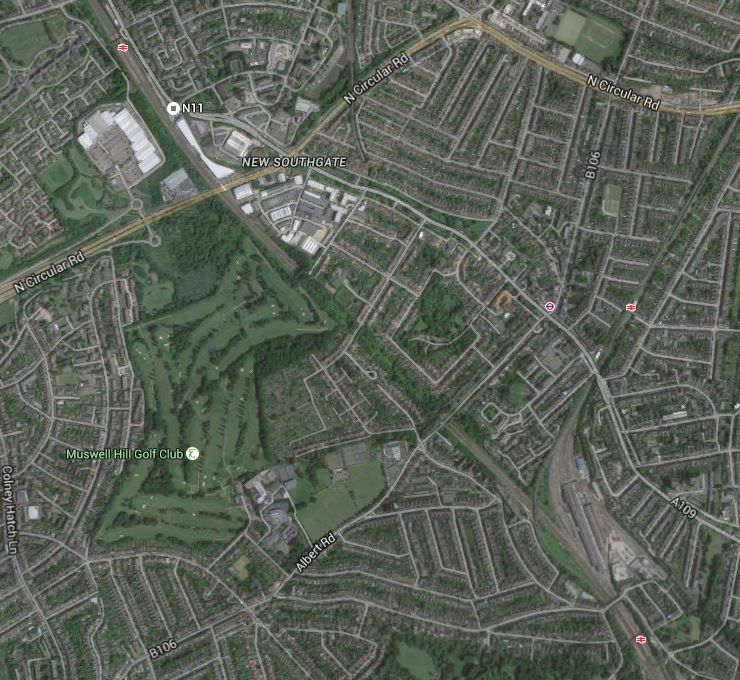
This Google Map show the area.
Crossrail 2 In New Southgate
New Southgate station is in the top left (North East) and Alexandra Park is at the bottom.
Note the following.
- The Hertford Loop Line branches off North of Alexandra Palace station to the North East.
- The station on this line is Bowes Park.
- To the right (East) of this junction is Bounds Green Depot, where the long distance expresses to the North are stabled and serviced.Bounds Green Depot is due to be upgraded for the new Hitachi trains that will run the services in the next few years.
- There is a tunnel between New Southgate and Alexandra Palace stations
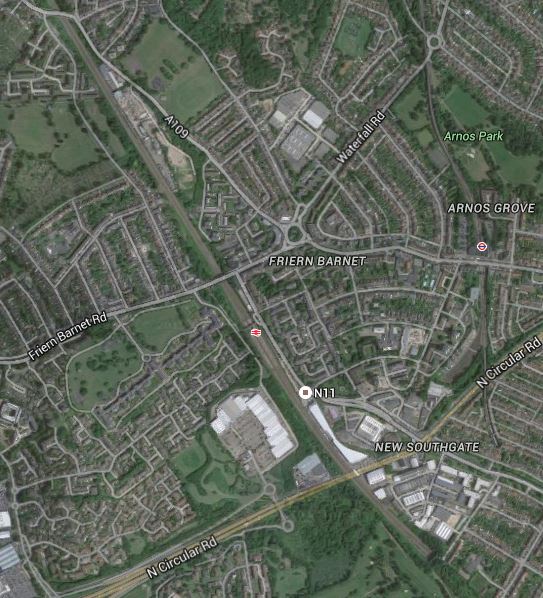
In this document on the TfL website entitled New Southgate Station, details are given of how Crossrail 2 will be fitted into the area and connected to the East Coast Main Line. This Google Map shows the area North and South of New Southgate station.
Crossrail 2 Sites At New Southgate
There are three main areas of work-sites, all of which are to the East of the railway. Because of the amount of concrete and industrial roofs, they show up white on the map.
- The top site alongside Oakleigh Road South (A109) is shown on old maps as being railway sidings, is a proposed site for the train depot and stabling, Crossrail 2 and tnnelling support.
- The second site squeezed between the railway and North of the A406, will be the station site, where new Crossrail 2 platforms will be built.
- The third site to the South of the A406, which is now part of the Bounds Green Industrial Estate, will be the actual tunnel portal.
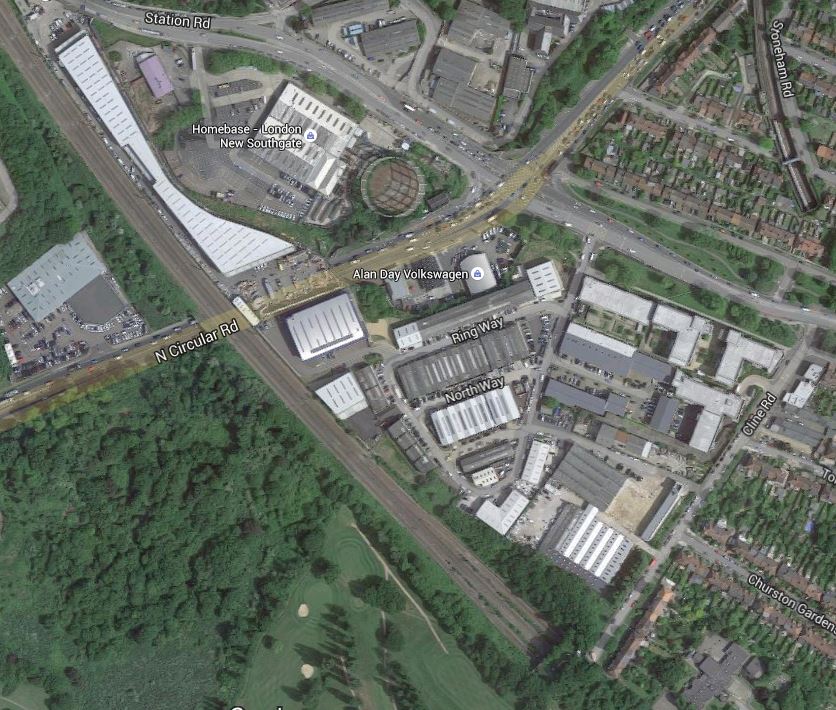
One by-product of all this work could be that the North Circular Road (A406) at this point could be opened out. This Google Map shows the area, where the Crossrail 2 station will go, the bridge over the A406 and the area around the proposed Crossrail 2 tunnel portal.
Crossrail 2 Over The A406
Note the following.
- The map shows most of the two southern work sites for Crossrail 2.
- Looking at this it would appear that the Crossrail 2 tunnel portals will be on that green space alongside the portals of the existing tunnels.
- The white almost boot-shaped building will be replaced with Crossrail 2 platforms.
- The bridge appears to extend far enough to take the extra Crossrail 2 tracks over the A406. It looks like it is used for truck parking at the moment.
- Could the condition and size of the bridge, mean that there would be little disruption to traffic durin construction?
- There doesn’t appear to be an demolition of residential property.
I just wonder if a top class architect could give New Southgate a spectacular station above the A406.
I’ve driven under that bridge so many times and can see some form of sculptured steel, brick and glass building with a giant Crossrail roundel advertising its presence.
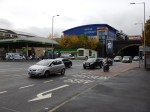
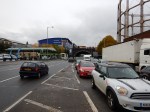
These pictures were taken as I walked down past New Southgate station and crossed the A406.
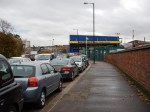

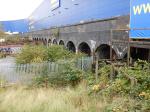
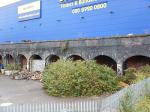

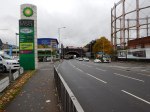
The Builder Depot is the boot-shaped building and it looks as if it was built on an old railway embankment.
The North Circular Road was certainly very busy.
Crossrail 2 October 2015 – Managing Excavated Materials
How Crossrail 2 gets rid of all the excavated materials from the tunnels is important to London, its residents and visitors.
I think it is true to say, we don’t want to see herds of trucks moving tunnel spoil to landfill.
Crossrail took most of the spoil to Wallasea Island to create a nature reserve, moving most of the spoil there by rail and water.
In this document on the TfL website entitled Building Crossrail 2 – our approach to minimising construction impacts, this is said about managing excavated materials.
From Tottenham Hale and New Southgate in the north to Wimbledon in the south, tunnels will be bored over approximately three years by large machines known as Tunnel Boring Machines (TBMs). These machines would be similar to the ones used to build the Crossrail 1 tunnels, excavating earth and building a tunnel around them as they go.
Current proposals are that two TBMs would be deployed to each of the following ‘drives’:
- New Southgate to Stamford Hill junction, where the machines would be dismantled at the proposed Stamford Hill shaft
- Tottenham Hale to Victoria and Wimbledon to Victoria, where the machines would be dismantled at the proposed Victoria Coach Station shaft
The excavated materials would be removed along the tunnels, rather than taking material out on the surface through station worksites and using vehicles to remove it. The construction of Crossrail 2 is being planned to minimise lorry movements where possible. By connecting the tunnels first we would provide an underground route to remove excavated soil from our sites. As a result a typical Crossrail 2 station would need roughly half the number of waste lorry movements compared with similar projects in the past, which would minimise the risks to public safety, congestion and pollution.
We are already planning ways of finding productive uses for excavated material. Crossrail 1 has used almost all of its excavated material in land reclamation projects across London and the South East, including creation of the bird reserve at Wallasea Island.
Obviously, it needs to be filled out a bit, but it is a good starting framework.
So it would appear that tunnelling would start from three sites.
- New Southgate
- Tottenham Hale
- Wimbledon
These three sites are all on major rail lines, with a brief look saying there is quite a bit of space at each. So at least there is space for a couple of sidings, where trains can be filled up with tunnel spoil for moving away from London.
In these posts I take a more detailed look at the three sites.
Crossrail 2 Consultation – October 2015
This is the latest Crossrail 2 Consultation from the TfL web site.
I will be extracting relevant information piece-by-piece from the consultation documents.
This is a list of my extracts.
- Angel Station
- Dalston Station
- King’s Road Chelsea Station
- Managing Excavated Materials
- New Southgate Station
- Shoreditch Park Area
- Tooting Broadway Or Balham
- Tunnels, Shafts And Head-Houses
- Wimbledon Station
I shall be starting with ones that are relevant to where I live in Dalston.
These are links to various Crossrail 2 documents I’ve used as sources.
This page is Crossrail 2’s index.
Crossrail 2 October 2015 – Shoreditch Park Area
This is Crossrail 2’s map of their possible worksites in the Shoreditch Park area. It comes from this Crossrail 2 document entitled Crossrail 2 Shafts.

Crossrail 2 Shoreditch Park
Note that the Worksites are labelled A to E.
To show them in more detail, this is a Google Map of the same area.

A Google Map Of The Area
Crossrail 2 have said this about the choice of work site.
A single worksite would be required to build and equip the shaft and the junction.
We are currently considering a number of options for the shaft in the area. Our current options have been selected because they would allow us to position the possible ‘Eastern Branch’ junction under the open space of Shoreditch Park.
Bear in mind that Crossrail 2 tunnels will be twenty or so metres down, so positioning the junction, which could be noisy, as trains rattle over the points, under a park some fifty metres and more from any dwellings, could be a good idea. Crossrail 2 wouldn’t want a repeat of the Victoria Line noise problems at Walthamstow
If we assume that one work site is what they’d like to do, I don’t feel that they would use more than two. The sites are as follows.
- Sites A and B to the West are commercial storage.
- Site C is the North-West corner of the Park
- Sites D and E are in the Britannia Leisure Centre.
The sites D and E are on the Hackney branch of the line, so unless that line is built in Phase 1, I doubt that they will be used.
If they are, knocking down and rebuilding leisure centres or commercial premises is a lot less costly and inconvenient, than demolishing houses or flats.
I don’t know what Crossrail 2 will do, but I visited the Crossrail site at Stepney City Farm, which is over a massive junction on Crossrail, so is very similar to Shoreditch Park.
I found a very good relationship existing between all parties. There certainly hasn’t been any bad reports about the Stepney City Farm site on the web.
This report is from the East London Advertiser.
Crossrail 2 will cause themselves a lot of problems, if they don’t do as well as Crossrail!
I took these pictures as I walked from the Britannia Leisure Centre through Shoreditch Park to Eagle Wharf Road. At the end of Eagle Wharf Road, I crossed the Regent’s Canal and looked at the building in Eagle Wharf Road from the towpath.



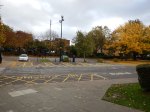

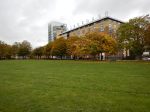


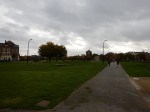

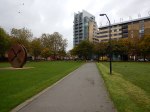

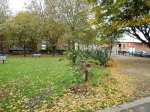


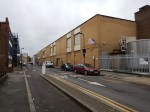


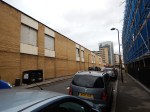

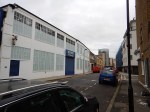

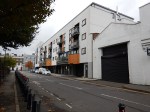
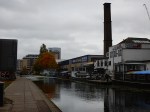




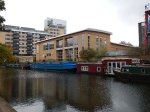

I can’t see any obvious reason, why the Leisure Centre would be used for Crossrail 2, as neither of the commercial buildings in Eagle Wharf Road are of the finest quality and given Crossrail’s treatment of Mile End Park, there would appear no reason the corner of the Park can’t be used.
One of the great advantages of the Park, would be that if you need to bring in some really heavy equipment, you’d just remove the iron railings and roll it through the gap.
Under current plans, there would appear to be no reason to extract or insert a tunnel boring machine in the Shoreditch area.
But choosing the Park would allow this to be done if required.
There is also the problem of a head-house.
It might be difficult to provide one in the Park, but evacuating into a large park from a problem in the tunel might be very safe.
Head houses on the sites in Eagle Wharf Road could even be built into any new buildings on the site.
Architecture and engineering design is moving on apace and who knows what will be possible when Crossrail 2 is built?
Crossrail 2 Changes Its Mind!
This map from the Crossrail 2 web site, show the new route for Crossrail 2.
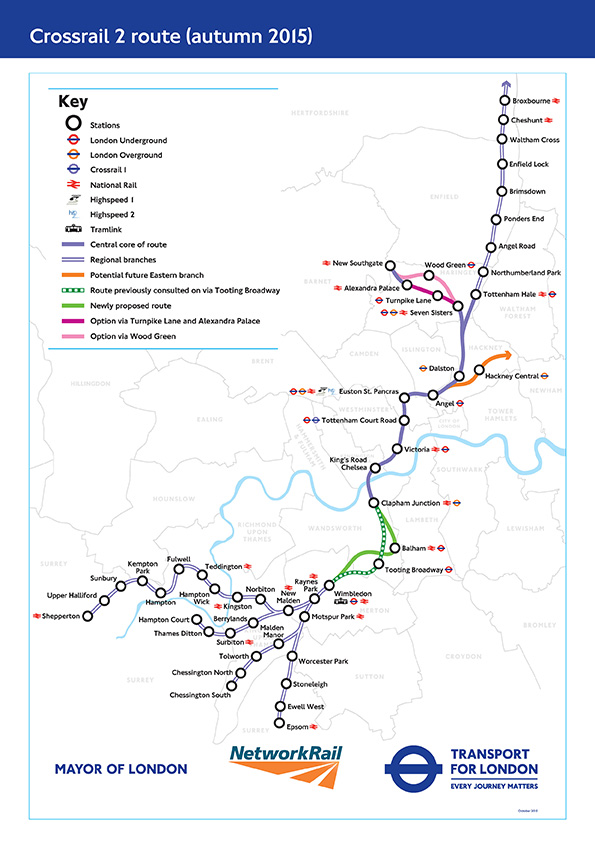
Crossrail 2 Route – Autumn 2015
So what are the changes and how do I think they stack up?
Broxbourne Instead Of Hertford East
Broxbourne station is the first, where traffic from Bishop’s Stortford, Cambridge, Hertford East and Stansted Airport all come together.
So perhaps by making Broxbourne a station, where passengers from Cambridge or Stansted can change across a platform for Crossrail 2 and all its destination in Central and South West London is a good idea.
As someone, who lived for nearly thirty years near Cambridge, it would certainly have pleased me.
This Google Map of Broxbourne station explains a lot.
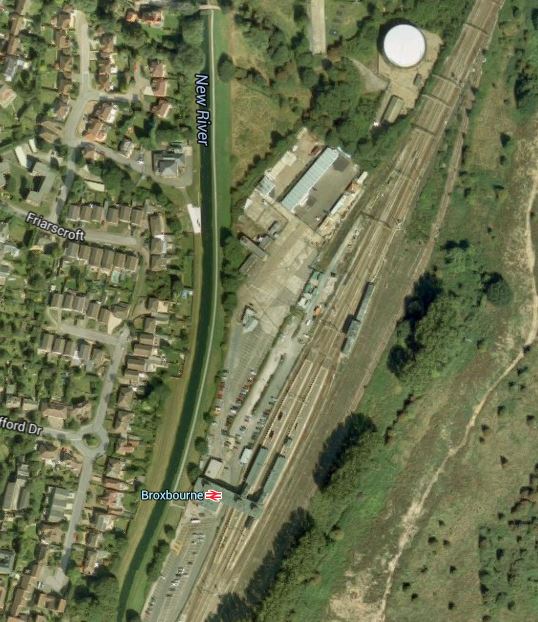
Broxbourne Station
Note that Broxbourne station is now a four platform station sitting on a large site. For comparison purposes this is a Google Map of Hertford East station.
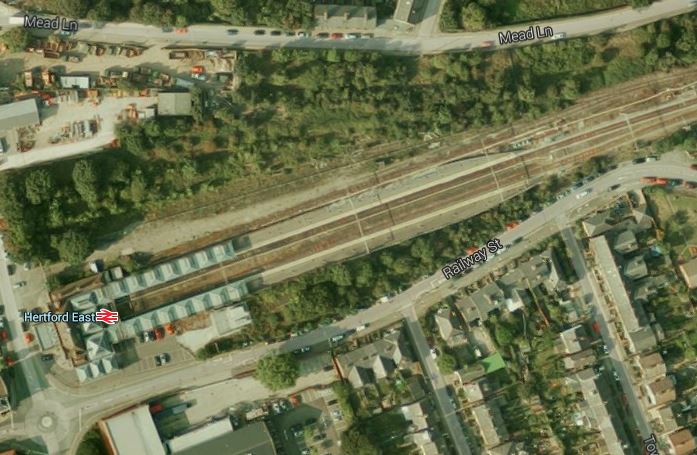
Hertford East Station
It is a much more cramped site compared to Broxbourne. The other stations on the branch would need substantial upgrading.
- Ware is a one platform station with an adjoining level-crossing.
- St. Margaret’s is a small station with a level-crossing.
- Rye House is a small station on another cramped site.
I suspect that operating an intensive service over the level crossings and the partly single-track branch was considered a serious obstacle to using Hertford East as a terminus of Crossrail 2.
There are other possible reasons.
- There is lots of space at Broxbourne for car parking and a proper bus interchange.
- As it now looks that the West Anglia Main Line will be four-tracked for a lot of its route, could cross-platform interchange be provided between the fast services from Cambridge, Stansted and the North and Crossrail 2, at Broxbourne.
- The space at Broxbourne would allow some extra platforms to be created.
- Broxbourne may well be a better interchange between fast services and Crossrail 2 than Tottenham Hale, which is another station on a cramped site.
Broxbourne has so much more potential for extra services than Hertford East.
The Future Of The Hertford East Branch
The Hertford East branch may turn out to be just a branch after Crossrail 2 is built.
If for instance, the West Anglia Main Line was to be three- or four-tracked as far as the Hertford East branch,then Hertford East services could have their own dedicated tracks to Broxbourne, just as the East London Line does to Highbury and Islington station.
This gives a service with the following characteristics and advantages.
- Generally Hertford East services are self-contained and could be mainly a two, three or four trains an hour shuttle, with possibly extra services to and from Liverpool Street in the peak.
- The frequency is probably limited by the level crossings on the branch.
- Hertford East services could probably be arranged, so they didn’t have to cross the West Anglia Main Line, which could remove a capacity restraint on the main line.
- Passengers would change at Broxbourne to and from fast services to Liverpool Street and Crossrail 2
- Would a separated branch give scope for some clever platform arrangements at Broxbourne?
- Would a separated branch free up paths into a very crowded Liverpool Street?
I think it is true to say, that if the level crossings and single-track sections on the branch could be removed, this would allow a much better service to Hertford East.
Turnpike Lane And Alexandra Palace Or Wood Green?
In the original plan, where Crossrail 2 passed through Turnpike Lane And Alexandra Palace stations, this gave possible interchanges to the following lines.
If the only station in that area is Wood Green, Crossrail 2 loses the connection to the Hertford Loop Line, which was at Alexandra Palace.
By 2019, the Hertford Loop Line will have good connectivity to the following lines.
- Piccadilly Line at Finsbury Park
- Victoria Line at Finsbury Park and Highbury and Islington
- Thameslink at any station between Alexandra Palace and Finsbury Park
- Crossrail at Moorgate
- Harringay could be linked to Harringay Green Lanes on the Gospel Oak and Barking Line.
- North and East London Lines at Highbury and Islington.
Some of these links will probably be better than they are now by 2019, due to upgrading at Finsbury Park and Highbury and Islington stations.
So I suspect that building two stations instead of one for Crossrail 2 in the Wood Green area was not considered good value for money.
Crossrail 2 have produced a detailed document about their route through the area.
Kings Road Chelsea
The contentious Kings Road Chelsea station has moved slightly, but those who think they are above the plebs still seem to be against the new station.
For a bit of sense, you can always read this report on Crossrail 2 from the local council. I particularly liked this extract on station size.
A King’s Road Crossrail station would not be “five times the size of Peter Jones” or as big as the “Westfield shopping Centre” as some have claimed. Kensington and Chelsea would remain the planning authority for the station development and the station would therefore have to be in keeping with the traditional scale and character of this part of the King’s Road. –
Or they could read up about that other difficult to design station; Camden Town, which I described in The Camden Town Station Upgrade Exhibition.
Good design there,seems to have sent the Nimbys back to their caves.
Tooting Broadway Or Balham?
Both Tooting Broadway and Balham stations are on the Northern Line, but I think Balham is being preferred as it is also a busy main line station.
As some of the main line services through Balham, are duplicated by Crossrail 2, the new line now offers opportunities to release the pressure off the lines through Balham.
If you look at a map of the railway lines in the area, it may be that Crossrail 2 will send the new tunnels in a wide circle from Balham to Wimbledon under Tooting and Haydons Road stations, so that the tunnels are dug totally under existing railway land.
Using Balham rather than Tooting Broadway seems a good idea.
Crossrail 2 Shafts
Crossrail 2 have also published a list of where their shafts will be.
- Downhills Recreation Ground
- Stamford Hill area
- Shoreditch Park area
- Victoria Coach station – According to Wikipedia, the freeholder want to redevelop this site and relocate the coach station.
- Westbridge Road
- Wandsworth Common
- Springfield
- Weir Road
I shall update this as I find out more.
These Protesters Give Nimbys A Bad Name
I did laugh when I saw this article about Crossrail 2 in the Metro.
It is the sort of selfish protest that gives protesters and Nimbys a bad name.
As someone, who has lived through the upgrading of the North and East London Lines to create the London Overground, I have seen how better transport links create prosperity for a wide range of people of all levels of wealth.
But then any poor people have been ridden out of Chelsea on a rail!
If I’m still alive when Crossrail 2 opens, I will take the line to Chelsea and stare at my betters. Probably with my tongue out.london.
On second thoughts I won’t, as Chelsea is jammed solid with Chelsea tractors. Protesters like those, will only be satisfied if they had a free motorway to the rest of
Crossrail Are Uphill Excavating Again
In Coal Mining In Whitechapel, I described how the Crossrail contractors were using a technique called uphill excavation to connect the Crossrail tunnels to the existing Whitechapel station above.
In this document on the Crossrail web site, the company describes how the technique is being used again to connect the running tunnels to the Broadgate ticket hall above. This is said about the methods used.
This excavation will be carried out using an innovative method of uphill excavation. Traditional uphill excavation is considered unsafe due to the risk of excavated material falling onto the excavator and operatives, however the BBMV team realised that the ability to excavate upwards from existing tunnels at the base of the escalator shaft would generate significant time and cost savings. In response BBMV introduced a bespoke uphill excavator that is suspended from the ceiling of the construction tunnel and advances in line with the tunnel progression. A walkway along the side of the excavator provides the engineer with a safe working area and emergency egress for the operator. Once this excavation of this escalator shaft is complete we will begin to construct an access passage that will lead passengers from the Ticket Hall into the station tunnels, in early 2016.
There is also the first published picture I’ve found of an uphill excavator.
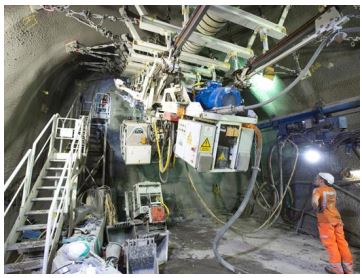
BBMV’s Uphill Excavator
I think we’ll find in the coming years that uphill excavation will be increasingly used in the construction of railways and other tunnels underneath towns and cities.
I’m sure, Crossrail 2 will use the technique to create stations at Angel, Chelsea and Tottenham Court Road. The biggest advantage is that it will silence the Militant Wing of the heritage lobby and all the luvvies, who are against London getting a better public transport system.
I also think, that we could build underground stations for HS2 at Euston, Birmingham, Manchester and Leeds, and use the technique to provide link tunnels to the existing stations above.
The Piccadilly And Victoria Lines, Manor House Station And Harringay Green Lanes Station
The planners and the politicians created a real dog’s breakfast here, when the Victoria Line was designed and built in the 1960s.
A Few Facts
I’ll start with a few facts, as far as we can trust Wikipedia.
From the Planning and construction section of the entry for the Victoria Line.
A test tunnel from Tottenham to Manor House under Seven Sisters Road had been bored in 1959 and was later incorporated into the running tunnels.
From the entry for Seven Sisters station.
The section of Victoria line between Seven Sisters and Finsbury Park stations is the longest between adjacent stations in deep level tunnels on the London Underground network.
From our own observations.
There is a ventilation station at the junction of Green Lanes and St. Ann’s Road. This was put in, as it’s a long way between Turnpike Lane and Manor House stations. The Cockfosters Extension section of the entry for the Piccadilly Line says this.
It was also planned to build a station between Manor House and Turnpike Lane at the junction of Green Lanes and St Ann’s Road in Harringay, but this was stopped by Frank Pick, who felt that the bus and tram service at this point was adequate. However, a ‘Ventilation station’, in similar architectural style to tube stations of the time was provided at the site, and is visible today. There was also some opposition from the London and North Eastern Railway to the line.
I think we underestimate the influence the LNER had on shaping London’s railways. Much was positive, but some was about protecting their interests.
I had a great uncle, who lived in Harringay and in the 1950s, we’d go and visit him on the 29 bus, as it was a long walk from Turnpike Lane.
What Might Have Been
Here again from various parts of Wikipedia.
From the Victoria Line section of the entry for the Piccadilly Line
During the planning stages of the Victoria line, a proposal was put forward to transfer Manor House station to the Victoria line, and also to build new “direct” tunnels from Finsbury Park to Turnpike Lane station, thereby cutting the journey time in and out of central London. This idea was eventually rejected due to the inconvenience to passengers that would have been caused during rebuilding, as well as the costs of the new tunnels.
From the entry for Seven Sisters station.
During the planning phase of the Victoria line, thought was given to converting Manor House into a Victoria line station and diverting the Piccadilly line in new tunnels directly from Finsbury Park to Turnpike Lane via Harringay Green Lanes, but the idea was abandoned because of the inconvenience this would cause, as well as the cost.
From fifty years and more after construction of the Victoria Line it might seem to be a feasible plan on a cursory look.
- It would speed trains on the Piccadilly Line to Kings Cross and Central London, as the route is shorter.
- There would be an extra station at Harringay Green Lanes on the Piccadilly Line, which would replace Manor House.
- It might also be feasible to turn the ventilation station at Green Lanes into a station.
- There would be an extra station at Manor House on the Victoria Line.
Also affecting these services will be this summer’s upgrade to the Victoria Line which will allow thirty-six trains per hour on that line.
So if you take the two improvements together passengers on both the Victoria and Piccadilly Line would get a better service with extra stations.
Enter Crossrail 2
Crossrail 2 will add another dimension to the planning in this area.
I’ll start with a personal observation from my childhood.
Many times, I travelled from Oakwood to Leicester Square or South Kensington and it’s a long way! It probably still is! And in trains that are a lot more crowded.
The opening of Crossrail 2 will affect the Piccadilly and Victoria Lines.
- Passengers on the Piccadilly Line from Wood Green northward may switch to Crossrail 2 at Turnpike Lane.
- Passengers on the Victoria Line from Walthamstow may switch to Crossrail 2 at Tottenham Hale.
- Many passengers from the London Boroughs of Barnet, Enfield, Harringey and Waltham Forest, will change their route to Central London with the arrival of Crossrail 2. And before that an upgraded Thameslink.
I think overall, we’ll see an easing of the lot of passengers on both the Piccadilly and Victoria Lines, by the end of the next decade. The Piccadilly Line should also have been upgraded with new and larger trains, running to an increased frequency. The Future Upgrades section for the Wikipedia entry for the Piccadilly Line says this.
On current plans, resignalling work on the Piccadilly line will begin in 2019 and new trains should be in service by 2022.
If the Piccadilly Line eases South of Turnpike Lane, then there may be scope for opening more stations on the line at perhaps the ventilation station on Green Lanes and Harringay Green Lanes.
And what about an interchange to the North London Line at Maiden Lane to serve the Kings Cross Central development?
How Could New Stations Be Built?
Doing anything at present to create any new stations on the Piccadilly Line is probably not feasible, as it would be impossible to shut the Piccadilly or Victoria Lines for long enough to do anything substantial. There’s been enough chaos caused by shutting the outer reaches of the Victoria Line this summer.
Transport for London have a similar problem about creating a link between the Central Line and the East London Line at Shoreditch High Street station. Transport for London feel that nothing can be done until Crossrail opens. I discussed that link in Will Shoreditch High Street Be Connected To The Central Line?.
Creating new stations on the Piccadilly Line probably can’t be done, until Crossrail 2 is opened, as how do the passengers get to work, rest and play?
I think that in a few years time actually creating the stations will not be as difficult as it would be today, from a construction point-of-view. The experience gained on building Whitechapel station on Crossrail, where a technique called uphill excavation has been used, might be applicable.
Conclusion On The Piccadilly Line In Harringay
My view is that a sort out of the Piccadilly Line and its stations in Harringay is possible and probably very worthwhile, but only after Crossrail 2 has been opened.
Planned Rail Development At Harringay Green Lanes Station
Over the next few years, there will be two major developments on the GOBlin through Harringay Green Lanes station.
The line is going to be electrified with 25 KVAC overhead lines, which will mean putting up structures to support the cables. The bridge across Green Lanes will probably be replaced, as it doesn’t look to be in the best of condition and to be safe, it will probably be replaced before the wires are erected.
The new electric trains will be four-car and this will probably mean the platforms have to be extended. I suspect that Transport for London may well future-proof the station and extend the platforms for perhaps six or even eight-car trains.
There is definitely space at the eastern end of the station to do the platform extension, but why not extend the platforms over the bridge and perhaps even use glass sides, as they’ve done at Deptford. Extending over the road will also mean that in future a western entrance or link to Harringay station could be created.
As no plans to replace the bridge have been published that I can find, could it be that Network Rail and their architects are working with property developers to design a proper flagship station?
I also think that designing a station to carry the overhead wires in its structure, as I’ve seen at Liege station, may simplify the design and save on the cost of the building.
Property Development And Harringay Green Lanes Station
If you want a profitable development, building car parking is a waste of money, so good access to public transport is essential.
For this reason and especially for housing, property development will be the force that drives the development of London’s transport system.
There is a lot of scope for property development in the area around Harringay Green Lanes station.
This document from the London Borough of Harringey entitled Harringay’s Local Plan lists a large number of development sites around the station.
On Page 92 the document details the St. Ann’s Hospital Site, which lies to the north of the GOBlin. It details how the South West corner of the hospital site will be connected to Green Lanes and the station.
On Page 94 the document goes on to talk about the Arena Retail Park, which adjoins the station.
Both sites have something that developers love. They are both in single ownership; one public and the other private.
So you can have control of the sites without the sort of problems that Tottenham Hotspur have had on building their new stadium, which has delayed the development for some years.
As it will be in the developers’ interest and profitability to have good public transport, I would be very surprised not to see a very good station built at Harringay Green Lanes to serve their developments and also to improve the transport opportunities for locals. This is said in the document.
Access to Harringay Green Lanes Station should be improved by creating a
new entrance on Portland Gardens.
Also, no sane developer would build this station without a secret place, where the escalators and lifts to the Piccadilly Line could be installed. As an example, Tottenham Court Road and perhaps Angel stations, are already ready to accept Crossrail 2.
I believe that given the amount of property development that will take place in the area, a new station at Harringay Green Lanes will be one of the first new buildings to be constructed.
Imagine the advertising potential for your development to see a shiny glass and steel station built over Green Lanes, as you drive or ride a bus through the area. Buiilding the station partly over the road would mean you need to use less valuable land and it would be easier to create a Hackney style link to Harringay station along the railway. If you want to see what can be done, go to Deptford station.
Tailpiece
If you have a flagship station at one end of Green Lanes in Harringay, why not have one at the other by converting the ventilation station into a real one?
I just wonder if that should and could be done before Turnpike Lane is rebuilt for Crossrail 2, so that there is an alternative station, if Turnpike Lane had to be closed.
Crossrail have shown that they like to be good neighbours and converting the ventilation station could be something they’d look at to cool the anger of diverted passengers and local residents. The superb new Pudding Mill station on the DLR was built by Crossrail, as the old station was in their way and had to be demolished. I was very surprised that the new station is so spectacular, but I suspect that through good design, clever use of space and leaving out expensive escalators and various utilities not needed if there are driverless trains and no booking office, that the station wasn’t as expensive as it looks. The property developers and West Ham United won’t be complaining.
Could The Gospel Oak to Barking Line Transform East London?
Two reports on the web prompted me to write this post.
The first was an article on CityMetric entitled Forget Road Bridges. TfL Should Extend The Overground To Thamesmead And Abbey Wood, which prompted me to write No To Silvertown Tunnel.
The second report was on various web sites with headlines like Enfield Council Shortlists Developers For Meridian Water.
Enfield Council is planning to build substantial numbers of new homes at a 85 ha site called Meridian Water near Lee Valley Regional Park over the next couple of dcades.
To help the development at Meridian Water, the station at Angel Road is to be improved and this page on the Meridian Water web site gives details. This extract details the development of the station and the related rail line and transport interchange.
The station will be a thriving new hub that combines rail and bus services to provide better access to Meridian Water for future residents and businesses. Meridian Water is a new £1.5 billion, 85 hectare, eco-development which will provide up to 5,000 new homes and up to 3,000 new jobs. The improvements, which will be completed in the next five years, will bring benefits for those that currently live and work in the area, as well as the new residents of the Meridian Water development. The project is being funded with £2.5 million from the Greater London Authority with a further £1 million from Enfield Council. This new station combined with additional investment in three tracking the railway, will bring forth a four trains per hour service at Angel Road Station.
All good stuff and very much about motherhood and apple pie in the manner of the way that the Metropolitan Railway used to sell Metroland.
But let’s not knock it for that, as London needs lots of new housing and the current station, Angel Road, which will be renamed Meridian Water, is one of the worst transport interchanges in the UK,. They’ve probably got better stations in many of the worst slums in The Third World.
Angel Road is just two platforms and a bridge as Before Crossrail 2 – Angel Road shows, whereas the average station in deepest Africa or South America, probably has at least someone, who’ll help you or sell you a tasty local morsel or a bottle of fizzy drink.
Whilst looking at developments in this area, it is worth looking at the wider area and investigate how transport links might develop. This Google Map shows the Lower Lea Valley from Angel Road and Meridian Water in the North to Lea Bridge Road in the South.
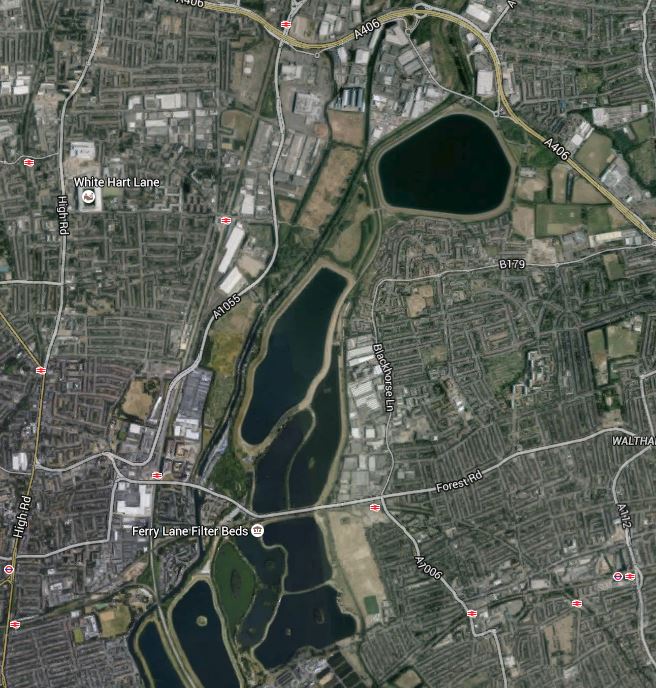
Lower Lea Valley
In addition to the housing developments at Meridian Water, more housing is being developed around Tottenham Hale station and other places in the area. But the development that will have the biggest impact on the area is not these developments but Thames Water and Waltham Forest’s massive plan to create the Walthamstow Wetlands. The project web site has this strap-line.
Transforming Walthamstow Reservoirs into a new urban wetland reserve for London
I have written about the Walthamstow Wetlands before in Before Crossrail 2 – Walthamstow Wetlands and now the project has its own web-site, I shall be following this exciting project a lot more. I believe the project has a lot going for it, but also it could be very important for Thames Water, who over the last few years haven’t exactly had the best of publicity at all times, what with our water bills and the Thames Tideway Scheme.
Because so much of London’s water is stored in the Lea Valley, it is very much in their interest to be good neighbours to the people and wildlife of the area.
The map also shows the rail links through the area.
1. The Lea Valley Lines
The Lea Valley Lines go northwards from Liverpool Street, Stratford and Hackney going up to Broxbourne, Hertford, Cambridge and Stansted Airport and as indicated earlier, extra tracks are being added and stations like Angel Road are being upgraded. A new station at Lea Bridge is also being built.
2. The Victoria Line
The Victoria Line goes underneath the area and links Central London to Tottenham Hale and Walthamstow. The line was built on the cheap in the 1960s and I have dreamed of what might have been. This August the line is closed to rectify one of its shortcomings, which will increase the capacity of the line.
3. The Chingford Branch Line
The Chingford Branch line crosses the Lea Valley Lines and the Walthamstow Wetlands as it links Chingford to Hackney and Liverpool Street. It is a line that can’t be extended, but there are plans to link it to the Lea Valley Lines by reinstating the Hall Farm Curve to allow trains to run from Stratford and Lea Bridge to Walthamstow and Chingford.
4. The Gospel Oak to Barking Line
The Gospel Oak to Barking Line (GOBlin) is the forgotten and down-trodden Cinderella, who could gatecrash the party in the Lea Valley and be a star of East London’s transport system.
Over the next few years, the following will or may happen to the line.
- Electrification
- Extension to Barking Riverside
- New four-car electric trains
- Smaller numbers of day-time freight trains.
- Increased passenger train frequency
The first three are hopefully cast in stone, as to cancel them now, would probably cost more than doing them. Especially, as the new trains have been ordered.
I am hopeful, that once the line is upgraded and electrified, this will enable freight operators to switch to electric traction, that could mean quieter services that might possibly run through at night.
As an aside, if I was standing for London Mayor, I would say I would put a limit of perhaps two non-electric trains a day on both the GOBlin and the North London Line. The freight operators would protest, but Class 66 locomotives have no business going through residential areas and crowded stations. Especially, when environmentally acceptable locomotives are available.
If the number of day-time freight trains could be reduced, this would allow more passenger services.
5. Crossrail 2
Crossrail 2 will have a big impact, when and if it arrives, as it will serve Tottenham Hale, Northumberland Park and Angel Road.
Before I finish this post, I have to ask, if we are doing enough with our transport network to serve large developments like Meridian Water, the Walthamstow Wetlands and Barking Riverside.
So what would I look at?
1. Crossrail 2
Politicians of all colours and tendencies are putting their faith in Crossrail 2.
But, I believe that the line, although surveys show it is much-needed, is a bit like the US Cavalry in a 1950s film, arriving in force after the poor settlers or ranchers have virtually been wiped out by the Indians.
We should prepare for Crossrail 2, so that all the engineering and architectural connections are there and all surface stations are upgraded over the next few years. This would mean that building Crossrail 2 would be just a matter of accurately threading the needles and then linking the tunnels to the existing stations.
Perhaps we should think of Crossrail 2 as a series of closely-related projects, rather than one huge mega-project.
- The main tunnels from Walthamstow Marshes to Wimbledon.
- The rebuilding of Central London stations to make them Crossrail 2-ready. Tottenham Court Road is already awaiting the tunnellers.
- The upgrading and rebuilding of the surface stations and rail infrastructure.
The great advantage of this, is that political responsibility for a lot of the work like the upgrading of surface stations, can be shared with the relevant Local Authority.
This post started with Enfield Borough Council and the Meridian Waters project and wandered into rail infrastructure, because Angel Road station is an important part of that project.
I doubt I’ll ever live long enough to see the opening of Crossrail 2. But I live in hope!
2. Improving Connectivity On The Gospel Oak to Barking Line
The Gospel Oak to Barking Line hasn’t got the best connectivity to other lines and it is also blessed with some difficult out of station interchanges for even strong walkers.
Walthamstow is an example, where the walk between Queen’s Road and Central isn’t that long but it is tortuous. This Google Map shows the area.
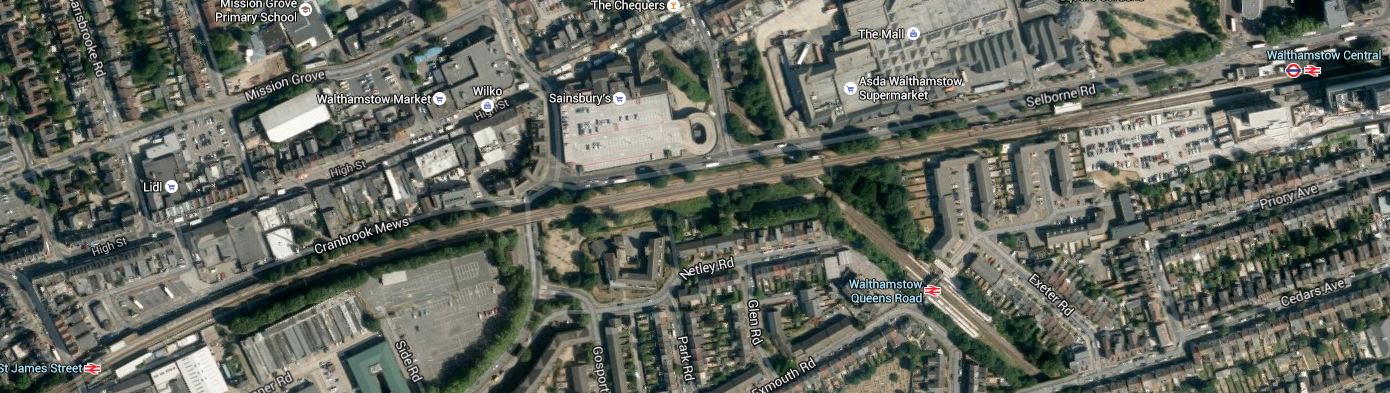
Walthamstow Stations
The East-West line is the Chingford Branch, with St. James Street station in the West and Central in the East. Croosing this line is the GOBlin with its station at Queen’s Road.
Surely something better could be done in Walthamstow. Interchange for someone pushing themselves in a wheelchair would be very difficult.
There is also an out of station interchange between Wansted Park on the GOBlin and Forest Gate on the lines out of Liverpool Street, which in a few years time will be Crossrail. This map shows the area.
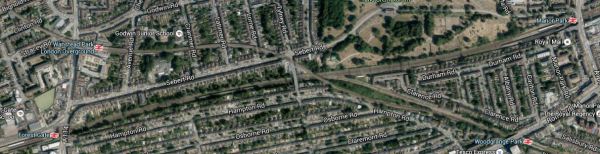
Wanstead Park And Forest Gate
It is an area, where some selected development could be of value, especially as the GOBlin passes over the Liverpool Street Lines. I’ve walked this interchange a couple of times and the following would help.
- Step-free access at both stations. Forest Gate is getting this with Crossrail.
- A light-controlled crossing at Wansted Park station
- A minor rerouting of the buses so that some passing through the area stop at both stations.
This would mean that someone pushing themselves in a wheelchair could use the interchange.
One station that needs to be improved is Blackhorse Road, which connects the GOBlin to directly to the Victoria Line. This Google Map shows the area.
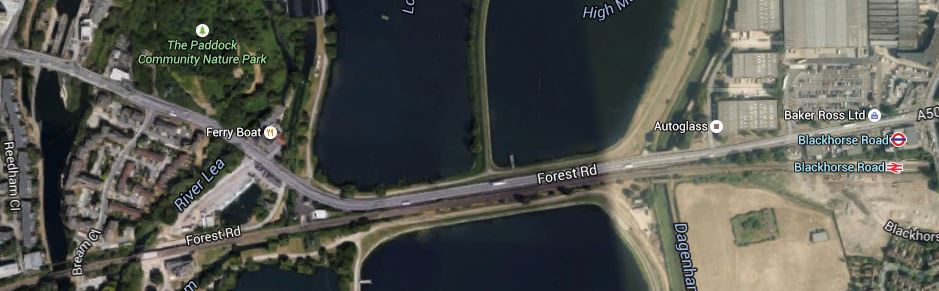
Blackhorse Road Stations
Note that the station site is not particularly cramped and it would be a not-to-difficult walk to the Walthamstow Wetlands, especially if you could hop on a bus for a couple of stops.
There is also the possibility of an improved station at Harringay Green Lanes, where a large amount of property development is possible according to this document on the Harringey Council web site. I talked about the possibilities in The Piccadilly And Victoria Lines, Manor House Station And Harringay Green Lanes Station, where I believe a flagship station could be built across Green Lanes.
This section in the Wikipedia entry for the GOBlin, lists other ideas for extra connectivity for the line.
But I believe there are three other important interchanges that will or may happen and I describe them in the next three sections.
3. Seven Sisters Interchange With Gospel Oak to Barking Line
Transport for London’s Plan for 2050, has a section in an Appendix with the heading of News links and/or Stations for Strategic Interchange. In a list of places where this might be done are the words Seven Sisters (GOB). Seven Sisters station is currently a valid out of station interchange with South Tottenham station on the Gospel Oak to Barking Line. In Crossrail 2 At South Tottenham/Sevens Sisters, I speculated as to how the two stations could be linked by a large double-ended Crossrail 2 station. This Google Map shows the two stations.
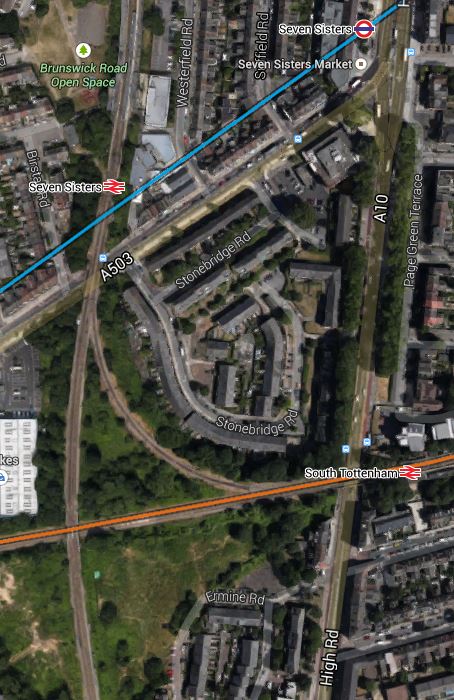
South Tottenham And Seven Sisters
There are also other possibilities here, like building a new station, housing or commercial development or allowing trains to link from the Northbound Lea Valley Lines through Seven Sisters to the Eastbound GOBlin. But whatever happens here, the GOBlin will eventually be linked to the Victoria Line and Crossrail 2.
Search the Internet and You’ll find little about this project, which is just two words buried in a TfL report.
4. Extending The GOBlin To Angel Road
This is speculation on my part, but the Meridian Water development will need more than just the one station at Angel Road. As the GOBlin goes across the southern part of the development site, is there an opportunity for an innovative connection through the development to Angel Road? This is a Google Map of the area from Angel Road in the North to Blackhorse Road in the East.
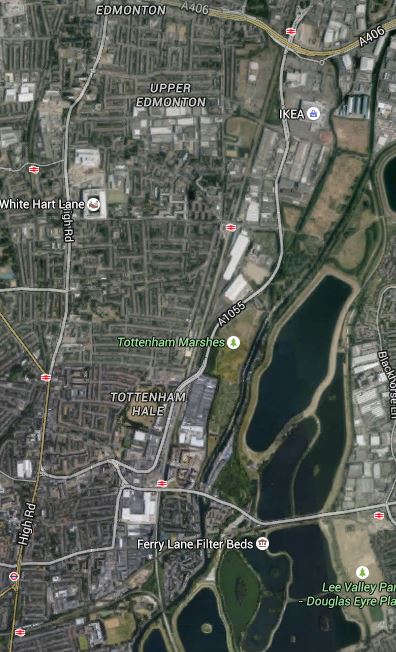
Blackhorse Road To Angel Road
The connection might be difficult for a train, but use a Class 399 tram-train and it could twist and turn its way between Blackhorse Road and Angel Road stations amongst the reservoirs and the developments to serve both those developments and the Walthamstow Wetlands.
5. Extending The GOBlin To Thamesmead And Abbey Wood
In No To Silvertown Tunnel, I examined the possibilities of extending the GOBlin from Barking Riverside over or under the Thames to Thamesmead and Abbey Wood station, where it would join up with Crossrail.
I felt that this would best be done using Class 299 tram-trains as they could go walk-about on both sides of the river giving much needed connectivity to the housing on both sides of the river. If it could be done, I felt that a bridge shared with pedestrians and cyclists would be the best way to join the two banks of the Thames.
6. The Hall Farm Curve, High Meads Loop and Dalston Eastern Curve
These three curves, if reinstated for passenger trains would create routes between the Chingford Branch and Lea Bridge, Stratford and any desirable station to the West. Reopening the Dalston Eastern Curve would give access to the East London Line for Crossrail at Whitechapel and South of the Thames.
As there could be spare capacity on the East London Line, which has been designed for twenty-four trains per hour, there could be a myriad of ways it can be used to increase the services under the Thames, so what Transport for London might do would be pure speculation on my part.
But I think they will eventually use these three curves to improve services in the Lea Valley.
7. Tram-Trains On The GOBlin
This may seem a bizarre idea, but having seen these hybrid vehicles all over Germany, I believe tram-trains are the way to add extra destinations to core electrified lines. On the Gospel Oak to Barking Line, in addition to being used to connect to Angel Road, as I showed previously, they could also be used with a tunnel or a bridge to extend the line from Barking Riverside under or over the river to Thamesmead and Abbey Wood.
People might worry that when running as trains, they may need different stations to the other trains, but the Germans seem to be able to design stations that accept both vehicles and I suspect the planned Rotherham extension of the Sheffield Supertram, will come up with solutions applicable to our standards. As to the required overhead lines, the Class 399 tram-trains can run using any of the voltages used for trams and trains in the UK.
There may be other places on the GOBlin and the other rail lines in East London, where tram-trains could be used effectively.
This will obviously be up to the planners, but I will be very surprised if tram-trains don’t infiltrate there way into many places all over the UK. At the moment transport planners, haven’t the experience of seeing a well-designed tram-train system working in the UK, but after what I believe will be a successful trial in Rotherham, I think we’ll see planners embracing the technology with open arms.
Conclusion
The GOBlin won’t be Cinderella any more!
 The Anonymous Widower