Innovation In Railway Projects
This article in Rail Technology Magazine is entitled NR routes to publish ‘pipeline’ of third party opportunities by year end. It lays out a new philosophy of how rail infrastructure projects could be handled in the future. I suggest you give the article a careful read.
Some politicians will say it is privatisation by another name. But to me it is just a way of getting a project built faster in a safe manner.
This is a paragraph.
By the end of this year, NR’s routes will publish ‘pipelines’ of projects that they want to put out to market. The infrastructure owner will also be working with government on producing a list of third-party opportunities. Initially these opportunities may be at the smaller end of the spectrum such as new stations, depots and car parks.
Take the simple example of a depot. These days fleets of new trains often mean a large increase in depot capacity as trains are longer and fleets are larger. As fleets are often bundled in with maintenance, there is a specialised multi-million pound asset that needs to be created. Big investors create office blocks, sporting venues and shopping centres and lease them to other businesses, so why shouldn’t they build the infrastructure that the railway needs?
This article in the EADT is entitled New rail depot unveiled by Greater Anglia at Brantham on Suffolk/Essex border.
The article dates from February 2017 and says that design is starting and the depot will be open by the end of 2018.
Not a bad timescale for a depot covering 22 acres with fifteen electrified tracks, two of which are under cover.
Why should the taxpayer get involved in a project like this?
Network Rail’s only involvement should be to ensure that the depot interfaces with the railway correctly.
This article on the BBC is entitled Crossrail stations in west London delayed until 2019.
I took this picture at one of the of the five stations; West Ealing, yesterday.
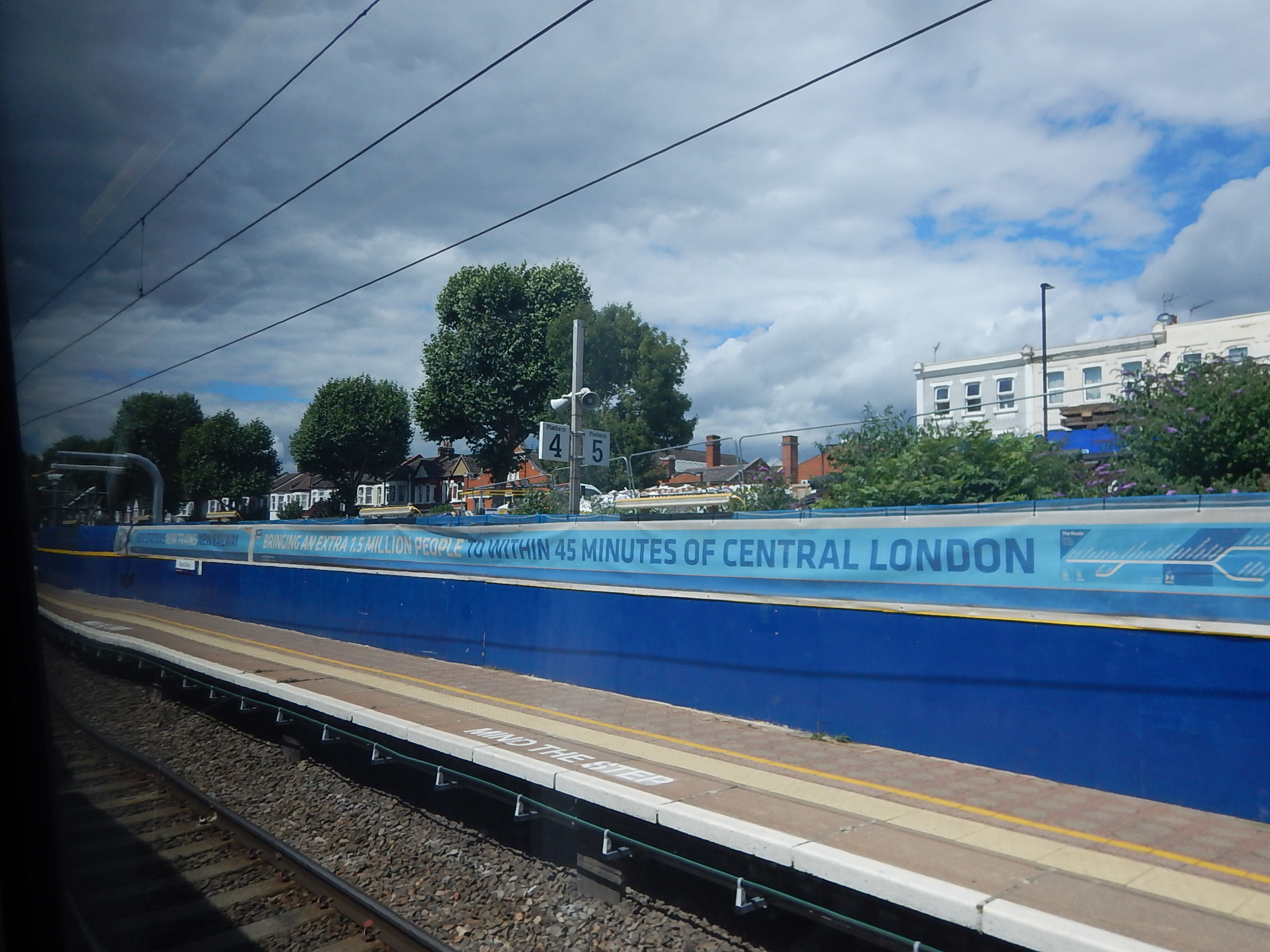
Nothing appeared to be going on, despite the fact that much of the construction is well to the side of the railway. Compare this with the situation at Abbey Wood station, that I saw a few days ago.
I suspect Crossrail wish they had taken control of the Project Management of the five West London stations themselves.
Network Rail seem to have a culture that if assets are built a few years late, it is totally acceptable.
This culture must stop!
Abbey Wood Station – 30th July 2017
I took these pictures at Abbey Wood staeion.


Note my other post about Abbey Wood station called Construction Of The Platform Structures And Tracks For Crossrail At Abbey Wood Was Cimpleted By Network Rail In May 2017, which was based on a picture caption in the August 2017 Edition of Modern Railways.
Does this also include the electrification?
It now appears that West of the station, the electrification runs all the way to the tunnel entrance. But the electrification is treated differently in the two Crossrail platforms.
- In Platform 3, which traditionally would be the London-bound platform, the wires go under the station bridge and finish on a single vertical gantry. Conveniently, it’s shown in the last picture in the gallery.
- In Platform 4, which is the Northernmost platform, the wires are fixed to the station building. This is shown in the penultimate picture in the gallery.
So it would appear, that Crossrail trains can only go East of the station under electric power only using the track through Platform 3.
I couldn’t see if there was any connection between the track through Platform 4 and that through Platform 3, but there was also some supports for the old bridge in the way.
There would need to be a connection, if the track to the East of the station was to be used as a reversing siding.
What is now clear is that the station must be one of the few stations with three footbridges.
- There is the main one at the East containing the main station building, which probably has lifts.
- One in the middle of the platforms, which looks like it might have lifts.
- There is a smaller footbridge at the Western end of the station.
According to this page on the Crossrail web site the station has a total of six lifts.
I suspect the number of lifts is because the site and the track layout, mean that it has not been possible to organise cross-platform interchange bettween Crossrail and the North Kent Line.
Construction Of The Platform Structures And Tracks For Crossrail At Abbey Wood Was Cimpleted By Network Rail In May 2017
The title of this post, was stated under a picture in the August 2017 Edition of Modern Railways.
The picture had been taken on site from the other side of the fence through the station to this picture I took in July 2017.
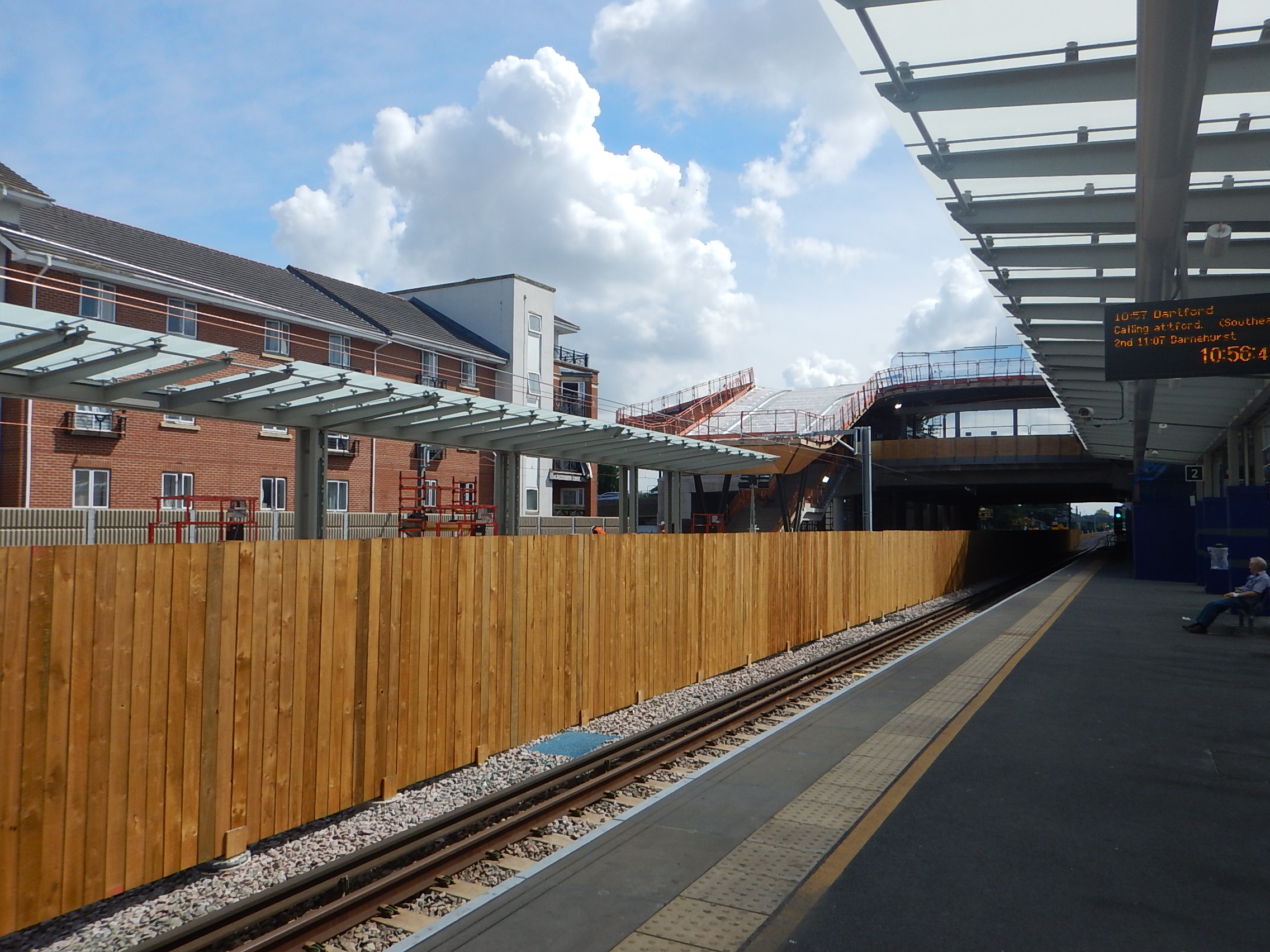
My later picture shows some of the canopies for the Crossrail platforms in position.
If Network Rail’s statement that formed the title of this post is correct, then is the track layout to the East of the station complete?
This picture shows the unelectrified line leading away from the station.
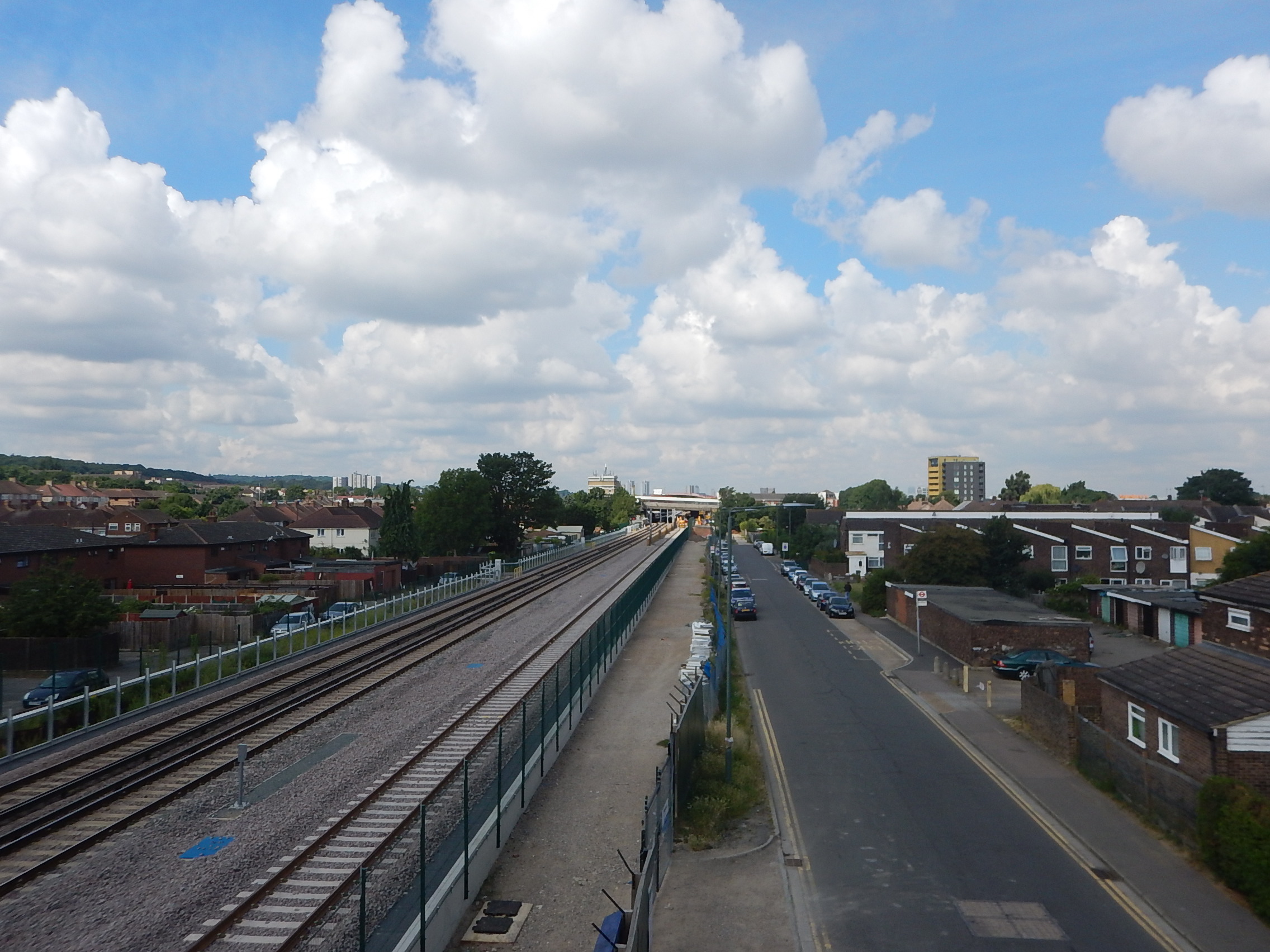
Note the track without any electrification by the fence in the right foreground and the two third-rail electrified North Kent tracks in the left background.
This picture shows the track going towards Belvedere station.

Note the cross-over by the signal.
Can Crossrail Reverse All The Scheduled Trains At Abbey Wood?
Crossrail have now published a more detailed schedule for the services.
The schedule shows that a maximum of twelve trains need to be reversed at each of Abbey Wood, Paddington and Shenfield stations.
In this article on Rail Engineer, which is entitled Signalling Crossrail.
The Class 345 trains are fitted with a system called Auto-Reverse, which I explained in Crossrail Trains Will Have Auto-Reverse.
The driver selects auto-reverse and walks back through the train, as it changes platforms automatically. By the time the driver is in the other cab, the train is in position in the other platform, ready to go back to London.
But the article in Rail Engineer also says this.
Auto reverse (AR) is not provided on Network Rail infrastructure. There will also be the possibility to use AR into and out of the stabling sidings at Abbey Wood so the driver will be at the correct end of the train to finish a shift or, when coming on duty, to start a new run westwards. Service trains will, however, normally reverse in the station. AR may also be used at Custom House and anywhere using crossovers in the central section.
As the normal twelve trains per hour (tph) making up the service, will be using both platforms, cross-overs are provided to the West of Abbey Wood station, as is shown in this picture.
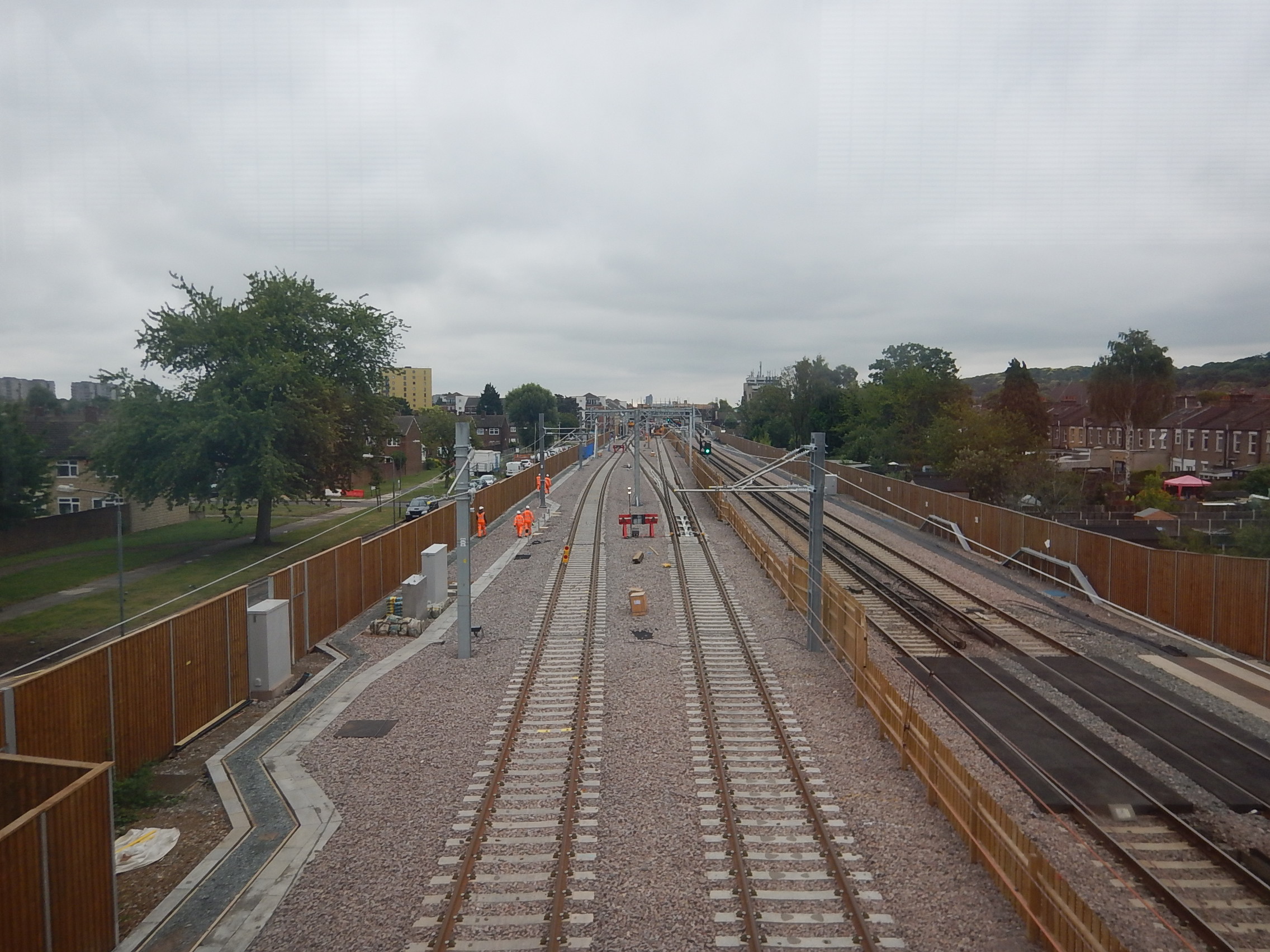
The system used at Abbey Wood will also be used at Shenfield.
Why Has The Reversing Siding Not Been Electrified?
In my view there can only be two explanations, if Modern Railways have got their picture caption right, which categorically said work was finished.
- My reconnaissance was wrong.
- Full electrification is not needed to reverse the trains.
On digging deeper, I took these four pictures at Abbey Wood station.
The pictures show in order.
- The overhead wires for Platform 4 fixed to the station building. Look under the top of the staircase.
- The overhead wires for Platform 3 passing under the station building.
- The overhead wires for Platform 3 passing under the station building.
- The overhead wires for Platform 3 anchored to a solid girder on the other side of the station building.
I couldn’t see the track layout because the wooden fence was in the way, but it would seem logical that the track through Platform 4 will eventually connect to the track through Platform 3.
This would allow the following.
- Trains arriving in Platform 4 to transfer to Platform 3 using the reversing siding.
- Crossrail trains to continue East on the North Kent Line using the single track and the crossovers to the East of the station.
- A failed train could be pushed into the reversing siding, which could probably accommodate two trains.
- Service and maintenance trains to access Crossrail’s Plumstead depot from the East.
But even if there is no connection, two independent platforms can handle the twelve trains per hour, as they will do at Shenfield.
Finance For Crossrail
In the August 2017 Edition of Modern Railways, there is a Crossrail Update, with a section entitled Planning Cash Comes Good.
It starts with this paragraph.
How often do you come across a rail project that receives more funding than it budgeted for? well, an update to the TfL Finance Committee suggests Crossrail could be heading that way. Long, long ago when the Crossrail budget was nailed down it was agreed that £600million should be contributed in the form of planning obligations – the idea bing that property developers who benefit from the improved transport links that will be provided by the Elizabeth Line should contribute to the capital cost.
This is the current progress.
- So far £100million has been collected from Section 106 contributions, with £200million still to come.
- However, the Mayor of London’s Community Infrastructure Levy has contributed £400million to date.
- The forecast is that by the time the line opens receipts will have risen to £700million.
I suspect that other Mayors will be looking at Crossrail’s funding model.
What Service Will Eleven Class 345 Trains Provide On The Shenfield Metro?
This article in the International Railway Journal is entitled Crossrail Trains Enter Passenger Service.
This is the third paragraph.
In the initial phase of operation from Liverpool Street TfL Rail will operate 11 trains, which have been formed as 160m-long seven-car sets to cope with shorter platforms. All 11 of these trains will be in service by September, replacing pairs of class 315 EMUs, which date from the early 1980s. Some of these trains will be retained until the full Elizabeth Line service begins in 2019.
So it would appear that when these eleven trains are all in service, the Shenfield Metro service will be run by new Class 345 trains.
A Class 345 Train At Shenfield Station
These pictures show a Class 345 train at Shenfield station.


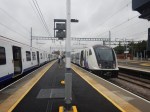
There’s still only one train running.
Note how the step-free access isn’t much better than the Class 315 train on the left.
17 Tube Stations That Face Chronic Overcrowding If Crossrail 2 Is Stopped
The title of this post is the same as that of an article in today’s Standard.
This is the first two paragraphs.
Hundreds of thousands more Londoners will suffer chronic overcrowding on the Tube if Crossrail 2 does not go ahead, it was claimed today.
Transport for London released a list of 17 Underground stations that could buckle under the strain of too many commuters within a few years.
It then lists the stations.
- Euston
- King’s Cross St. Pancras
- Liverpool Street
- London Bridge
- Victoria
- Waterloo
- Finsbury Park
- Stockwell
- Stratford
- Oxford Circus
- Highbury & Islington
- Clapham Common
- Clapham North
- Clapham South
- Holborn
- Warren Street
- Leicester Square
It then quotes Caroline Pidgeon, who obtained the list, as follows.
Overcrowding on the Underground is already a daily battle, with many passengers facing regular delays to simply get through barriers at stations.
Unless Crossrail 2 is built these delays will increasingly build up until drastic measures are necessary at 17 key Tube stations, not to mention Clapham Junction railway station.
“Planning ahead for Crossrail 2 is not an optional extra for London’s transport network but of vital importance to keep London moving.
She has certainly highlighted a serious problem.
Call For Crossrail 2
Two years ago to the day, I wrote a post called Call For Crossrail 2 in response to a letter in The Times, from a wide cross section of business leaders calling for a start to be made on the line.
In the post, I talked about improving various stations, just by building Crossrail 2, so in the following notes on the list of crowded stations, I will refer to this post several times in the following.
Euston
Euston tube station is a particular problem in that in the next decade or so, the following will or could happen.
- HS2 will arrive at the station.
- Euston main line station will be rebuilt.
- Crossrail 2 will pass under the station.
- A connection will be created to Euston Square station for the Circle and Metropolitan Lines.
- There might even be an extension of the Docklands Light Railway to Euston.
- Step-free access must be added for all platforms.
Hopefully, the rebuilding for whichever comes first of HS2 or Crossrail 2, will make provision for even the most fanciful of expansions.
One Transport for London engineer told me that one of the main reasons for building HS2 and terminating it at Euston, is to be able to sort out the dreadful Euston tube station.
Kings Cross St. Pancras
Kings Cross St. Pancras tube station had a pretty good makeover around the time of the 2012 London Olympics, but it does suffer congestion and travellers have to walk long distances.
The Wikipedia entry for Kings Cross St. Pancras tube station has a section for Crossrail 2. This is said.
Since 1991, a route for a potential Crossrail 2 has been safeguarded, including a connection at King’s Cross St Pancras and Euston, forming the station Euston King’s Cross St Pancras. The proposed scheme would offer a second rail link between King’s Cross and Victoria in addition to the Victoria line. The locations for any new stations on the route will depend on the loading gauge of the final scheme. In the 2007 safeguarded route, the next stations would be Tottenham Court Road and Angel.
There is also a proposal to reopen the closed York Road tube station. In the Wikipedia entry for York Road station under Proposed Reopening, this is said.
One of London’s largest redevelopment projects, King’s Cross Central, began construction in 2008 across the road from the station. Islington council and Transport for London commissioned a study in 2005 to consider the possible reopening of the station. At the same time, however, it was recognised that other transport priorities reduced the likelihood of such a project moving forward in the near future. The site would need extensive overhauls to bring the station up to modern day standards, at a cost estimated at £21 million in 2005. Local political groups have been keen to see the station reopened in order to reduce passenger congestion at King’s Cross St. Pancras and to encourage development in the surrounding community. The Islington Liberal Democrats advocated the reopening of the station in their 2006 local election manifesto, and at least one candidate for the Islington Conservative Party similarly campaigned for the station to be reopened. However, to date, the reopening proposal has not been taken forward.
I wonder if York Road tube station will ever be reopened.
Liverpool Street
The Liverpool Street station complex will be even bigger and busier after Crossrail opens.
The main difference will be that the current Shenfield Metro will now disappear into the ground at Stratford and go under Central London to Heathrow and Reading.
Crossrail 2 will effectively channel the Lea Valley services, that current go into Liverpool Street station under London to emerge in the Wimbledon area.
Effectively, Crossrail and Crossrail 2 major effect on Liverpool Street station are to free up capacity in both tracks and platforms, thuis allowing more longer distance services to use the station.
London Bridge
London Bridge station is being rebuilt and expanded, but little seems to be planned for London Bridge tube station to cope with more passengers.
In Call For Crossrail 2, I said this about Crossrail 2 and the Northern Line.
Crossrail 2 will have interchanges with the Northern Line at Angel, Kings Cross St. Pancras, Euston, Tottenham Court Road, Tooting Broadway and possibly Clapham Junction. So it looks like that Crossrail 2 will certainly make journeys easier for users of the Northern Line.
This should mean that travellers on the Northern Line will be able to avoid a congested London Bridge tube station.
Victoria
Victoria tube station is being extended and rebuilt, which should result in sufficient capacity for more than a few years.
In Call For Crossrail 2, I said this about Crossrail 2 and the Victoria Line.
Crossrail 2 will effectively by-pass the central part of the Victoria Line as the two lines connect at Tottenham Hale, Seven Sisters, Kings Cross, Euston and Victoria.
This should take some of the pressure from Victoria tube station.
Waterloo
Waterloo tube station is a very busy tube station, as it has to cope with all the passengers using Waterloo station.
Crossrail 2 will allow passengers to bypass Waterloo, when travelling to and from Central London.
However, three major improvements will be delivered this year.
- The old Eurostar platforms are being brought back into use.
- Extra capacity is being added to the Underground station.
- I also think that when they have completed the improvements at the Bank end of the Waterloo and City Line.
- Will improvements follow at the Waterloo end?
I think Waterloo shouldn’t be judged until the current round of work is completed.
Finsbury Park
Finsbury Park station is a station that suffered badly when the Victoria Line was tunnelled through in the 1960s.
Lifts are being installed, but extra services will be added.
- Thameslink will call regularly at the station.
- The services on the Northern City Line will become the Great Northern Metro with an increased frequency.
Crossrail 2 will provide relief for Finsbury Park, as it provides a by-pass for the Victoria Line.
But the station needs to have quite a bit of rebuilding.
Stockwell
Stockwell tube station is where the Victoria and Northern Lines meet South of Victoria.
This map from carto.metro.free.fr shows the lines at Stockwell station.
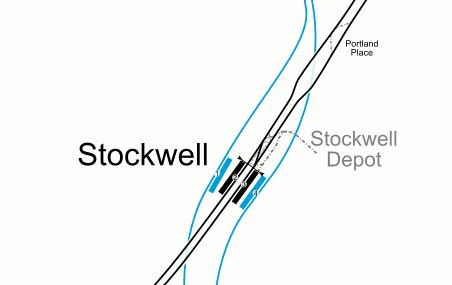
I’m not sure how Crossrail 2 helps here, but I suspect Transport for London hope that the new line will divert passengers away from Stockwell.
Stratford
Stratford station is another station that will be partially bypassed by Crossrail 2.
I do think that after Crossrail opens, that changes will be made at Stratford station to perhaps move some Liverpool Street services to Stansted and Cambridge.
This would bring more services to some not very busy platforms.
In West Anglia Route Improvement – The High Meads Loop, I described how it might all work.
This map from carto.metro.free.fr shows the lines in this area.
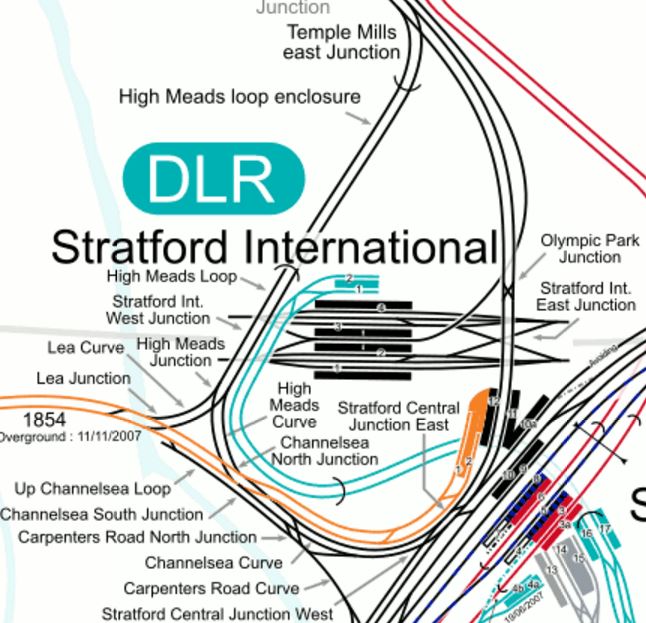
Trains from Cambridge and Stansted would arrive at Temple Mills East Junction and would go round the High Meads Loop dropping and picking up passengers in Platforms 11 and 12 bwfore returning North.
An extra platform could even be added to serve services in Stratford International station.
The tunnels under the platforms at Stratford station would probably need improvement, but who knows how Eastenders will duck and dive after Crossrail opens.
As an example, passengers from Shenfield to Canary Wharf will probably use the cross-platform change at Whitechapel station, rather than pick up the Jubilee Line or the DLR at Stratford.
Oxford Circus
Oxford Circus tube station has needed improvement for years.
Crossrail will give some relief, as there will be new additional entrances to Tottenham Court Road and Bond Street stations closer to Oxford Circus.
I did look at what might happen in What Will The Elizabeth Line Do For Oxford Street?.
I came to this conclusion about Crossrail 2 and Oxford Street.
Crossrail 2 has just one interchange in the Oxford Street area at Tottenham Court Road station.
I would be very surprised in that in the massive rebuilding of the current station for Crossrail, that provision hasn’t been made to connect to Crossrail 2.
There have been surface issues around the station concerned with Crossrail 2, but given good planning of the project, I feel that the building of Crossrail 2 would only effect the area in a similar way to the replacement of a major block on Oxford Street.
Crossrail 2 will have two major effects.
- It will bring large numbers of visitors to the Oxford Street area.
- Just as Crossrail and the Central Line will work as a high-capacity pair, it will work closely with the Victoria Line to relieve that line.
This leads me to the conclusion, that the wider Oxford Street area needs to be and will be pedestrianised.
In some ways preparation for the pedestrianisation has already started by reorganising the buses.
Oxford Circus tube station is also high on Transport for London’s improvement list.
This map from carto.metro,free.fr shows the lines through the station.
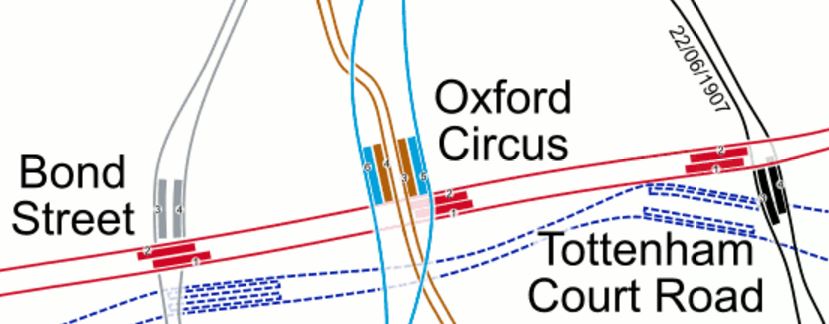
I suspect that if developers were interested in rebuilding any of the buildings on the South side of Oxford Street or perhaps even around the BBC to the North, that there could be arm-twisting and deal-making to sneak new entrances into Oxford Circus tube station.
Highbury & Islington
Highbury & Islington station, is one of my local ones and it is getting some much-needed improvement.
- The Northern City Line will be getting frequent new Class 717 trains to create the Great Northern Metro.
- Highbury Corner will be remodelled to improve pedestrian access to the station.
- Bus and taxi access is being improved..
But nothing has been announced about improving the chronic access to the two deep-level lines at the station.
Speaking to staff at the station, they feel that a solution is possible, using the second entrance on the other side of the road.
In some ways the Great Northern Metro with its cross-platform interchange with the Victoria Line could be the saviour of this station, as it gives direct access to the City and to Crossrail at Moorgate station.
One of London’s forgotten lines could be riding to the rescue.
Clapham Common
Clapham Common tube station is one of my least favourite. This picture shows why.
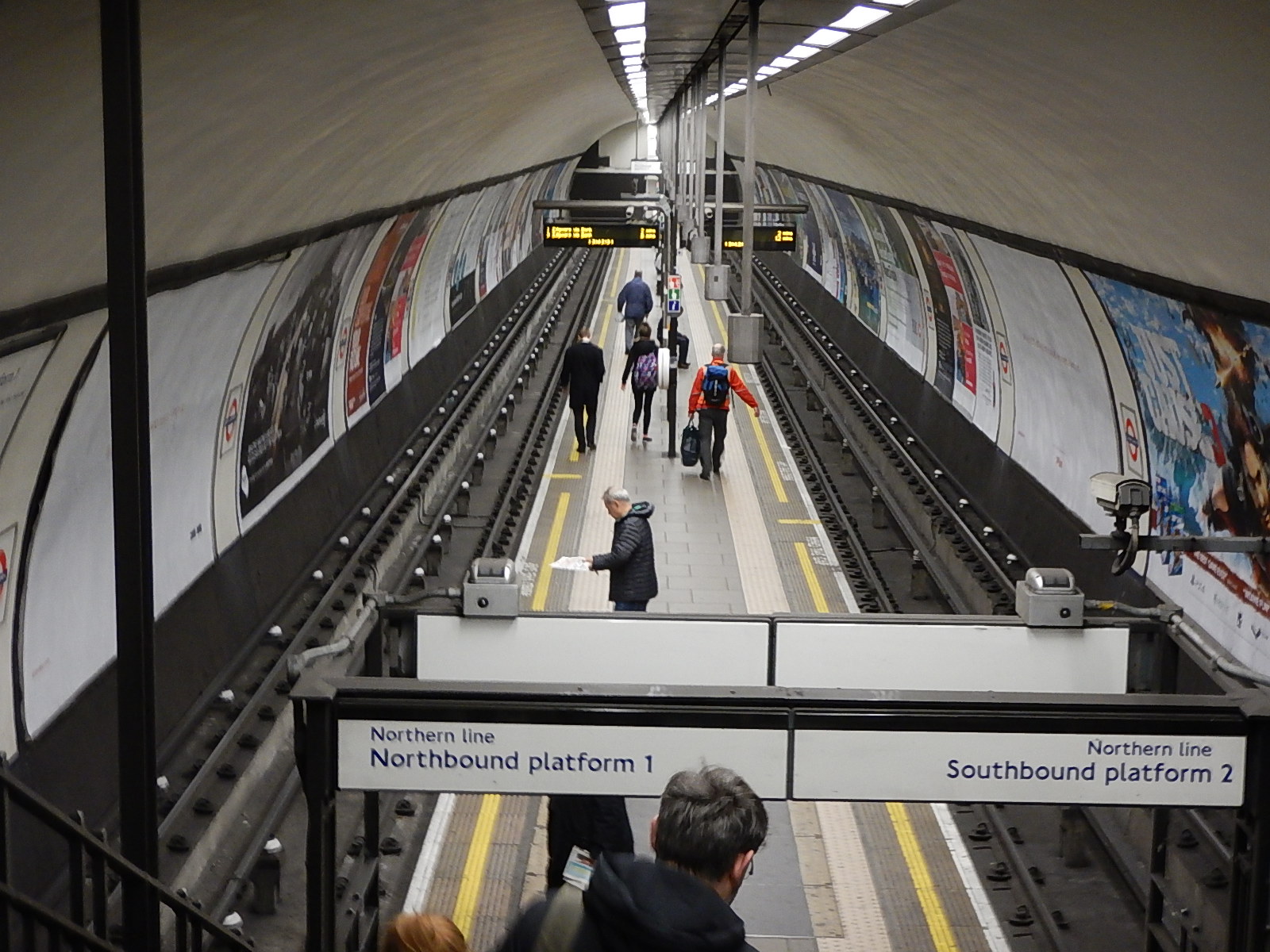
It’s downright dangerous now, so when the Northern Line frequency is increased will the station cope?
Clapham North
Clapham North tube station is another dangerous island platform.
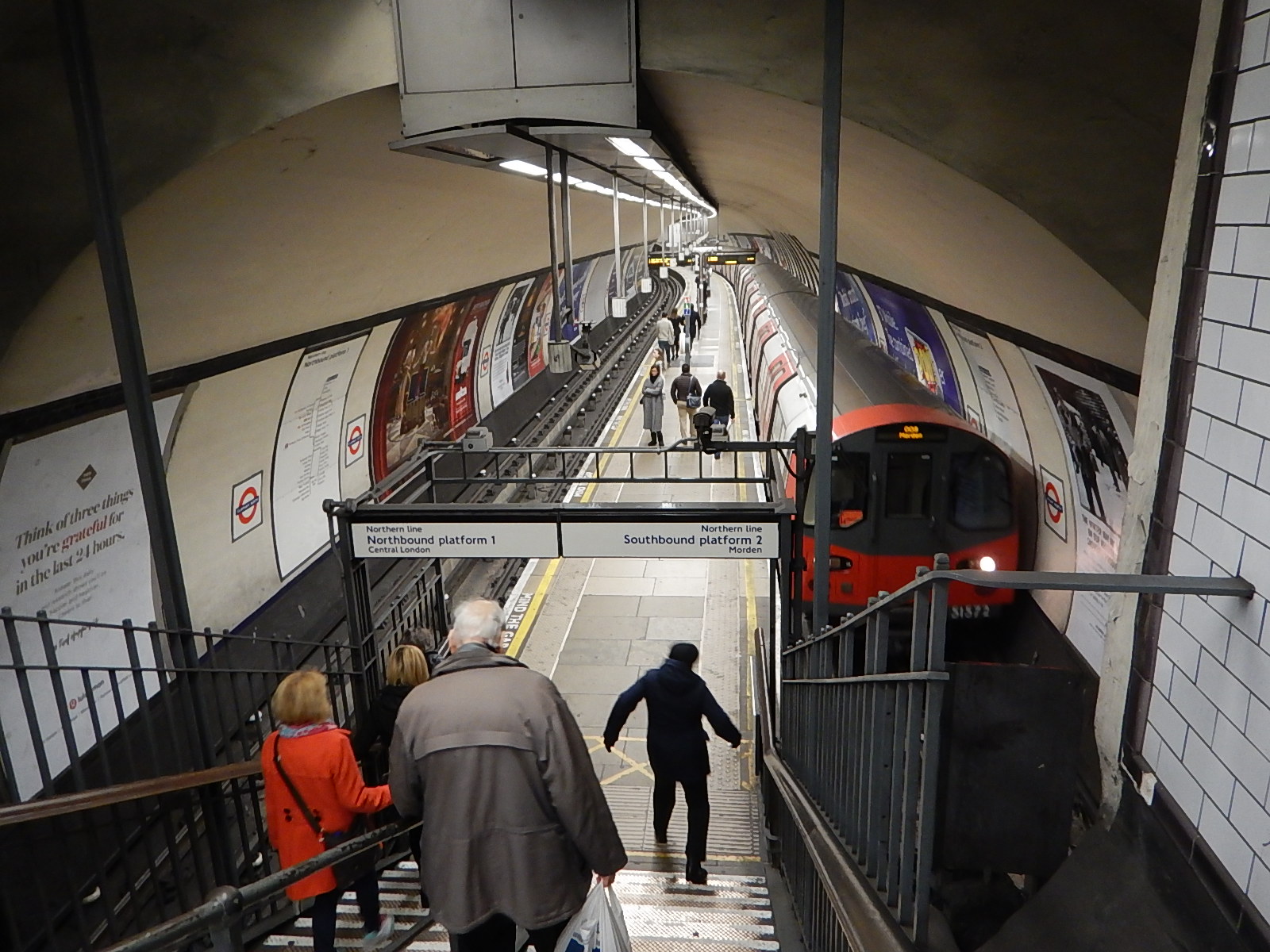
But at least the station has escalators.
In A Journey Round The Clapham Stations, a post I wrote in December 2015, I said this.
Having seen Clapham North and Clapham Common stations today, I do wonder if a diversion could be dug as at Angel, Bank and London Bridge, to create safe new stations. This new tunnel could surely be part of the works to add step-free access to one or both stations and connect the tunnels to Clapham High Street station.
What with the Northern Line Extension to Battersea, the rebuilding of Bank and Camden Town stations and all the resignalling of the past few years, the Northern Line could at last be fulfilling its potential.
This could go a long way to sorting the problem of the Clapham stations.
Clapham South
Clapham South tube station is not as bad as the other two Clapham stations discussed earlier.
Crossrail 2 may reduce the level of overcrowding on the Northern Line trains through the three Clapham stations, as passengers could change at Balham or Tooting Broadway stations to and from the new high-capacity line.
However, nothing short of some serious building work will solve the island platform problems at Clapham Common and Clapham North stations.
Holborn
Holborn tube station is very busy, but is one that could benefit from Crossrail, due to that line’s relationship with the Cerntral Line.
Crossrail 2 will certainly benefit the station, as it will relieve the pressure on the Piccadilly Line.
But Transport for London have published plans to add a second entrance and full step-free access. This is a 3-Dview of the plans.

Note the second entrance will be in Procter Street.
The only problem is that it could be 2021 before a decision is made.
However as a Piccadilly Line station, Holborn will benefit from the New Tube For London, before the upgrade.
Warren Street
Warren Street tube station is another Central London station on the Victoria Line, that could benefit from Crossrail 2’s duplication of the Victoria Line.
Leicester Square
Leicester Square tube station is just one stop on the Northern Line from the major new interchange of Tottenham Court Road station, which will be served by both Crossrail and Crossrail 2.
The station has needed more capacity since I first used it in the 1950s.
It needs step-free access.
This map from carto.metro.free.fr shows the lines around Leicester Square station.
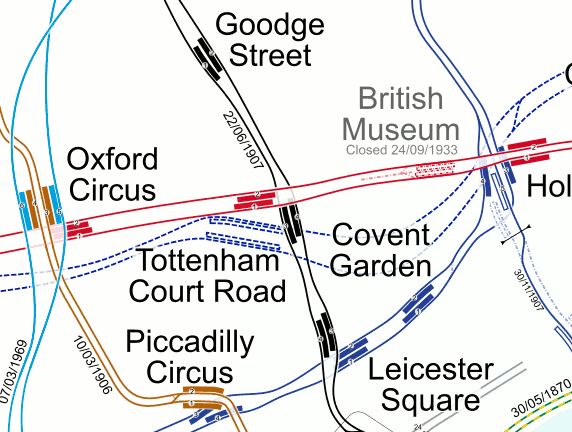
There is quite a tight knot of stations, of which only Tottenham Court Road has both escalators and lifts, although Goodge Street and Covent Garden have lifts only.
Leicester Square is an unusual station in that both the Northern and Piccadilly Lines are accessed by short passages and a short staircase from a fair-sized lobby at the bottom of a long set of escalators.
Clapham Junction
Clapham Junction station is the only non-Underground station in the seventeen stations named, where overcrowding could become chronic if Crossrail 2 is not built.
It is the busiest station by number of trains in Europe, so it must be difficult to keep on top of increasing numbers of passengers.
In the Wikipedia entry for the station under Future Proposals, this is said.
In 2007 the alignment of one of the two variants of Crossrail 2, that via the station rather than Putney and Wimbledon, was safeguarded. The Department for Transport and Transport for London continue to discuss proposal for a Clapham Junction Northern Line extension and its London Underground alignment has been legally reserved through Battersea Park, and would connect Clapham Junction to the London Underground for the first time.
Government and Network Rail funding for in the early 2010s of £50 million of improvements was granted. This comprised an upgrade to the main interchange: new entrances and more retail.
Surely something needs to be done, if Crossrail 2 is not built.
My proposals would include.
- Developing the West London Line services.
- Extending the Northern Line from Battersea Power Station station.
- Improving the frequency of trains into Waterloo.
- Make the station subway step-free.
There may be a need for more platforms, but the London Overground found this difficult.
This map from carto.metro.free.fr shows the platforms in the station.
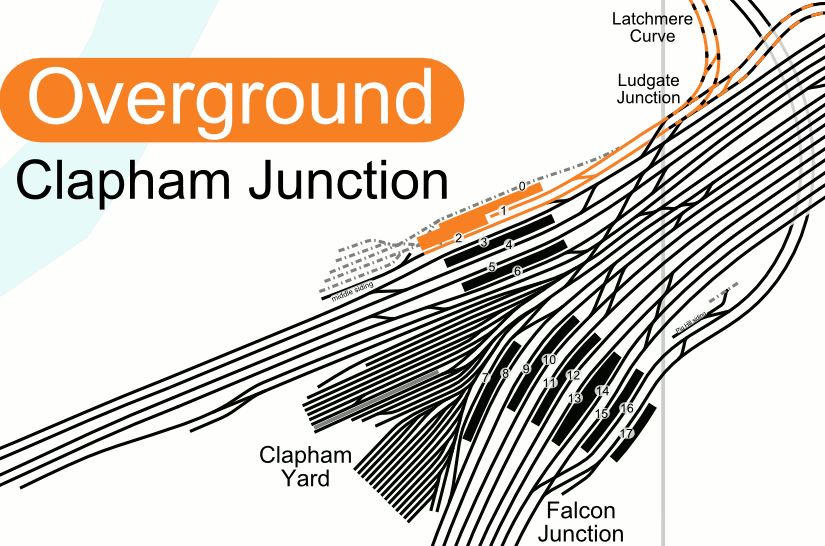
Simple it isn’t!
Conclusions
It surprised me how many of these stations will need substantial building work to cure the overcrowding.
Note.
- Every Victoria Line station between Oxford Circus and Finsbury Park is on the list.
- Four Northern Line stations between Stockwell to Clapham South is on the list.
- I think this shows how the designers of the Northern and Victoria Lines didn’t expect the traffic the lines now handle.
But overall, I think it shows how when you design a station, you don’t cut corners.
I also think to blame all these problems on the uncertainty about Crossrail 2, is probably a bit strong.
Consider.
- Liverpool Street will probably have enough capacity when Crossrail opens, especially as the station will incorporate Moorgate and be substantially step-free.
- The new London Bridge effectively adds high-frequency rail lines to Blackfriars, Cannon Street, Charing Cross and St. Pancras and when Thameslink and Southeastern are fully developed, the station will cope.
- Victoria shouldn’t be judged until the current upgrade is complete.
- Waterloo shouldn’t be judged until the current upgrade is complete.
- Finsbury Park shouldn’t be judged until the current upgrade is complete.
- Stratford will probably have enough capacity when Crossrail opens, especially as the station is substantially step-free.
- Oxford Circus should see improvement when Crossrail opens, especially as there’ll be new step-free entrances to Tottenham Court Road and Bond Street, that will be closer to Oxford Circus, than the current stations.
- Highbury & Islington should see marginal improvement, when the Northern City Line is updated.
However, nothing short of substantial construction will sort Euston, Clapham Common, Clapham North, Holborn, Leicester Square and Clapham Junction.
Simon Jenkins Questions Southern HS2 Terminal
Simon Jenkins in the Standard has a piece today entitled It’s Not Too Late To Make HS2 Somehow Work For London, by proposing even at this late stage the Southern terminal of HS2 be moved from Euston station to Old Oak Common station.
He makes these points against choosing Euston.
- HS2 has never had many friends among politicians, railway buffs or think-tanks.
- Serious questions must be asked about HS2’s most costly and controversial feature, the line’s route into Euston from its last stop at Old Oak Common in west London.
- Euston is London’s worst station, with the worst connections.
- The new Euston will need a costly new tunnel under Primrose Hill, incidentally wiping out hundreds of houses.
- It will claim seven of Virgin’s platforms at Euston, thus reducing station capacity.
- For some time, smart money in HS2 circles has been on the line stopping at Old Oak Common, at least “temporarily”
- Successive plans for a new station have been submitted to Camden council and then withdrawn.
- Either way, choosing Euston will mean a decade of chaos.
Against these points he says this in favour of Old Oak Common station.
Meanwhile, a terminus at Old Oak Common is plausible. The old Great Western Railway depot and marshalling yard has become London’s largest regeneration area since Canary Wharf. Its acres of tracks include lines to Paddington, Euston and Heathrow, as well as stations on Crossrail and the Central and Bakerloo lines. The site is near the North Circular and the M40, and is within spitting distance of the M1 and M4. Passengers on HS2 heading for the City would find it more convenient to join Crossrail at Old Oak Common, rather than trundle their bags down crammed access tunnels at Euston.
He makes strong arguments and personally, I would not be against what he says, as getting to Old Oak Common station will be easy for me on the North London Line.
But once Crossrail 2 is built, then Euston will be just two stops away from an enlarged Dalston station at the end of my road.
Conclusion
I can’t lose on house prices!
Crossrail Expands Before It Opens
This is certainly something you don’t hear often about a new rail line.
This article in Global Rail News is entitled TfL To Order More Elizabeth Line Trains.
Four new Class 345 trains are being ordered, which will mean that in the Off Peak the following will happen.
- Trains between Whitechapel and Paddington will increase from 16 trains per hour (tph) to 20.
- Trains between Paddington and Shenfield will increase by two tph
- Trains between Paddington and Abbey Wood will increase by two tph
- Trains between Paddington and Reading will double from two tph to four.
- Trains between Paddington and Maidenhead will increase from four tph to six
- From December 2019, six tph will call at Heathrow Terminal 5.
So have Transport for London miscalculated the capacity of the line?
I suspect not!
It’s just that they wanted to be sure that the trains and the signalling can handle the frequency of twenty tph, before ordering the trains.
That has probably been ascertained by now thorough thorough testing.
This article on the BBC, is entitled Crossrail Stations In West London Delayed Until 2019.
I wonder, if this is within the float of these station builds, so that the whole project is not delayed.
Have Crossrail only announced the actual completion date, when it is certain it can be met?
If it is, these two apparently disconnected stories show Project Management at its best, where a project is delivered on the date agreed before as much as a humble spade had entered the ground.
- If it is late the client and the general public complain.
- It it is early, the construction team have probably spent too much money.
So hopefully, everybody’s happy!
I would love to see Crossrail’s schedule of announcements until December 2019.
Like the ordering of more trains mentioned in the first article, I suspect some will be pleasant surprises.
The first article also has this paragraph.
The increased service frequency will be achieved, in part, by replacing five Great Western Railway services with Elizabeth line trains.
So could we see Greater Anglia and Southeastern losing paths and becoming better integrated with Crossrail?
In Abbey Wood Station in my series of Kent On The Cusp Of Change posts, I said that it looks like the track layout allows trains to run on to Dartford, Gravesend or even Rochester, as other trains on a modern signalled North Kent Line.
At Shenfield station, provision has been made in the track layout for trains to continue from Platform 4 to Southend Victoria station and Greater Anglia trains already do it.at a frequency of three tph.
I don’t think it will happen, as the journey is too long for a train without toilets.
But if Platforms 4 and 5 at Shenfield were bi-directional, this would allow Crossrail trains to venture down the Southend Branch.
Kent On The Cusp Of Change – Abbey Wood Station
The Kent On The Cusp Of Change article in the July 2017 Edition of Modern Railways talks about Kent and Crossrail.
This is said.
In December 2018, the Elizabeth Line is due to reach its south-eastern terminus at Abbey Wood, where there will be interchange with the North Kent line.
A wide range of new journey opportunities will open up, which over time will influence many choices over work and home locations. A train every five minutes from Abbey Wood to Canary Wharf and central London is expected to have a dramatic effect in North Kent.
The article goes on to say that a working group called Crossrail Gravesend is pushing to extend the Elizabeth Line to Ebbsfleet International station for High Speed One.
In this post, I will talk about issues at Abbey Wood station.
The Modern Railways article says that Abbey Wood station is a cross-platform interchange, as do other articles.
Track Layout At Abbey Wood Station
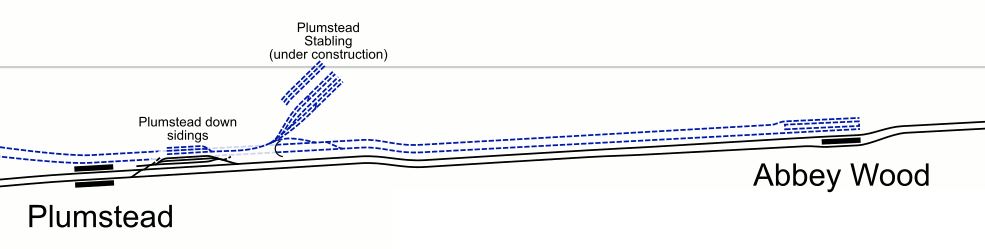
This map from carto.metro.free.fr shows the layout of lines at Abbey Wood station.
Compare this with this track layout, that I posted in Abbey Wood Station – 29th August 2016.
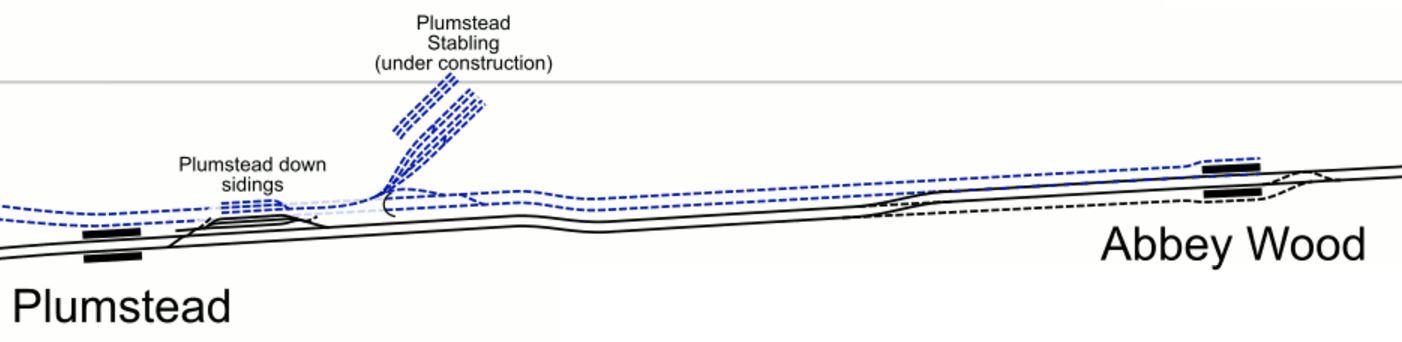
Note the following.
- The older layout shows cross-platform interchange.
- The current one has two pairs of platforms, with Platforms 3 and 4 for Crossrail and Platforms 1 and 2 for other services.
- The current layout probably connects better to the existing lines to Dartford.
These pictures were taken on the 28th June 2017 and show pictures generally taken from the West of the station.


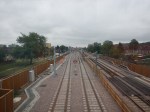


They show a similar layout, of two Northern platforms (3 & 4) for Crossrail and two Southern platforms (1 & 2) for all other services.
Note.
- The two cross-overs to the West of Abbey Wood station to get the Crossrail trains to and from the right platforms.
- The station building and the two footbridges over the lines.
- The solid wooden fence between the two pairs of lines.
- The robust nature of the overhead wiring.
I suspect, that if they had wanted to have Eastbound and Westbound lines each share an island platform, it would have required a flyover, which would have been a large expense.
These pictures were taken on the 10th July 2017 to the East of the station.
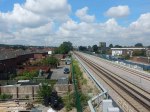
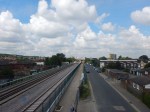

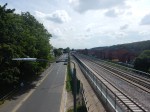
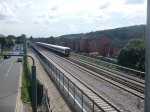
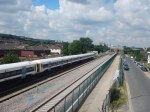


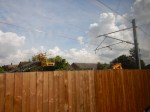

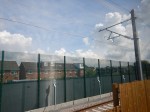


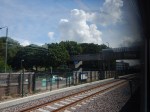

Note that the first seven pictures were taken from a public footbridge that crosses the tracks about five hundred metres to the East of Abbey Wood station and the last few pictures were taken from a train leaving Abbey Wood station for Dartford station.
This recent Google Map shoews from Abbey Wood station, to where the reversing siding ends close to where Aliske Road turns North
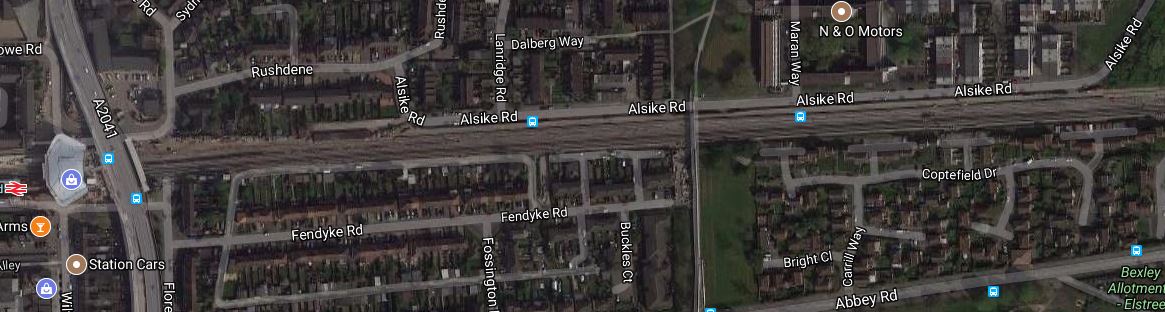
The pictures and the map show the following.
- The two third-rail electrified tracks of the North Kent Line run between Platforms 1 and 2 at Abbey Wood station to Belvedere station.
- The North Kent tracks are fully in use, by services between London and Kent.
- The two Crossrail Platforms 3 and 4 at Abbey Wood station are electrified with overhead wires.
- The two tracks in Platforms 3 and 4 would appear to join together into a single line mainly without electrification, that connects to the North Kent Line about a kilometre to the East of Abbey Wood station.
- There is only a short length of electrification to the East of the station.
It is not what I expected, as it means that there is no cross-platform interchange between services going to North Kent and Crossrail, as various sources including the The Kent On The Cusp Of Change article have said.
Passengers changing between the North Kent Lines and Crossrail will have to go over through the station or use the bridge.
So how will the station handle the various train movements?
Comparison Between Abbey Wood and Shenfield Stations
Abbey Wood will after rebuilding be a station with two North Kent and two Crossrail platforms
Shenfield station has now been converted into a station with six platforms, three of which can be used as Crossrail platforms.
In the Peak, services to the two stations are as follows.
- Shenfield – 10 trains per hour (tph)
- Abbey Wood – 12 tph
In addition 4 tph on the Shenfield Branch turn-back at Gidea Park station.
In the Off Peak, services to the two stations are as follows.
- Shenfield – 8 tph
- Abbey Wood – 8 tph
So it would appear that Abbey Wood is the harder station to operate with more services in the Peak and one less platform.
Train Stabling At Abbey Wood Station
Train stabling needs to be provided on a busy branch line, as it makes it easier to adjust the number of trains running to the demand throughout the day.
At Shenfield, the stabling sidings are beyond the station, which must be easier operationally, than the position of the sidings at Abbey Wood, where they are back down the line at the Plumstead tunnel portal.
If you look at the second set of pictures taken to the East of the station, spaqce would appear to be very limited. So is this why stabling is not ast of Abbey Wood station.
Turning Back Crossrail Trains At Abbey Wood
At Shenfield, train operators have been turning back Class 315 trains at a rate of six tph since 1980, so with the addition of a new platform and modern trains and signalling, the handling of ten tph should be achievable.
But at Abbey Wood in the Peak, there is a need to turn trains round at a rate of twelve tph or a train every five minutes.
The operation could involve each of Platform 3 and 4 handling six tph, using the cross-overs to the West of the station to get the train between each platform and the right Crossrail track, but handling six tph on two platforms feeding a 12 tph double track railway is a tough ask.
From what I have seen, I think that Crossrail will turnback their trains like this.
- All Crossrail trains from London arrive in Platform 4.
- All Crossrail trains to London depart from Platform 3.
- All trains arriving in Platform 4 use the unelectrified single track line as a reversing siding to get to Platform 3
- As the pictures show, the single track line is probably long enough to store a failed train, for later recovery.
But the Class 345 trains have a system called Auto-Reverse.
When the train is ready to leave Platform 4,the driver initiates an Auto-Reverse and the train moves automatically into the reversing siding, whilst the driver starts to walk back through the train to the other cab.
- By the time, the train is in the reversing siding, the driver is ready to drive the train into Platform 3.
- The process will have to be done within five minutes.
- The process could also involve the basic cleaning and removal of rubbish, with cleaners getting on at Platform 4 and getting off at Plstform 3.
Crossrail is not your bog-standard railway.
Trains Leaving Service At Abbey Wood
Suppose a train was leaving service at Abbey Wood.
Normally, it would probably perform the Auto-Reverse and go to the stabling sidings at the Plumstead tunnel portal.
It might even go the wrong way directly out of Platform 4, if the signalling was bi-directiomal.
Remember too, that Class 345 trains could be two independent half-trains, so if one half fails, the other could be designed to get the train to safety and out of the way.
Class 345 trains are not a bog-standard trains.
Running Crossrail Trains To And From Gravesend
From what I have seen, I’m convinced that the track layout at Abbey Wood station, means that Crossrail can be easily extended to and from Dartford, Gravesend, Rochester, Gillingham or Rainham.
Let’s assume the terminal for four tph is Gravesend.
Crossrail trains from London to Gravesend will do the following.
- Stop in Platform 4 at Abbey Wood station.
- Lower the pantograph
- Take the single uon-electrified line alongside the North Kent Line.
- Cross over to the Down North Kent Line.
- Use the third-rail electrification to travel to Gravesend.
Crossrail trains from Gravesend to London will do the following.
- Use the third-rail electrification to travel from Gravesend.
- Cross over to the single non-electrified line alongside the North Kent Line before Abbey Wood station.
- Stop in Platform 3 at Abbey Wood station.
- Raise the pantograph.
The Crossrail trains would be needed to be fitted with third-rail shoes.
Interchange BetweenThe Extended Crossrail And Other Services.
Suppose you are going from Ramsgate to Paddington, you would get a Highspeed service to Gravesend and then wait for a Crossrail train to call at the same platform.
To repeat myself, Crossrail is not a bog-standard railway.
Crossrail’s Trump Card
When the trains turnback at Abbey Wood or extend to and from Gravesend, the Class 345 trains will have to use the non-electrified single track line shown in the pictures.
It may be electrified in the next year! But why bother?
The distances that need to be handled without power are not much more than a kilometre at slow speed.
The Class 345 trains could be fitted with batteries to bridge the gaps in the electrification.
These batteries will also do the following.
- Handle regenerative braking.
- Provide emergency power, in the event of complete tunnel power failure.
Conclusion
To repeat myself again, Crossrail is not a bog-standard railway.
See Also
These are related posts.
- Ashford Spurs
- Crossrail
- Elimination Of Slow Trains
- Fawkham Junction Link
- Highspeed Routes
- High Speed To Hastings
- Historic Routes
- Longfield Station
- Maidstone
- Reading To Tonbridge
- Thameslink
- Thanet Parkway Station
- Track Improvements
- Ultimate Class 395 Train
- Victoria As A Highspeed Terminal
To know more read Kent On The Cusp Of Change in the July 2017 Edition of Modern Railways.
 The Anonymous Widower