Are The New Class 345 Trains Too Big For The Depot?
I took this picture from a passing train, of the prototype Class 345 train at Ilford today.
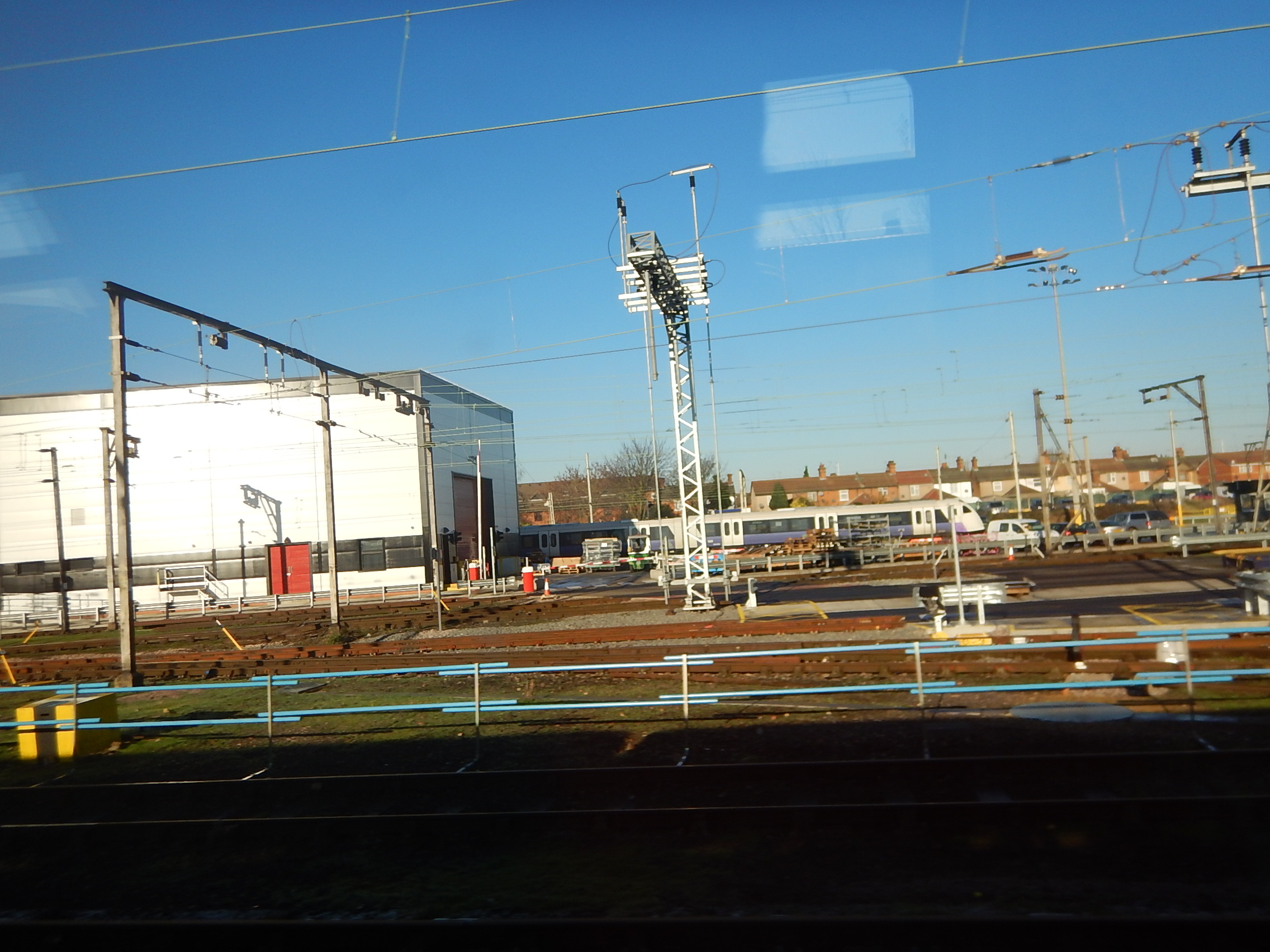
The Prototype Class 345 Train At Ilford
I have a feeling it was only sticking out, as the train is too long to get inside the existing depot!
Why Isn’t The Mall Traffic Free?
This article on the BBC is entitledPlans to block vehicles from the Mall brought forward after Berlin lorry attack.
I can’t understand, why the Mall isn’t traffic free from say nine in the morning until perhaps four or five in the afternoon.
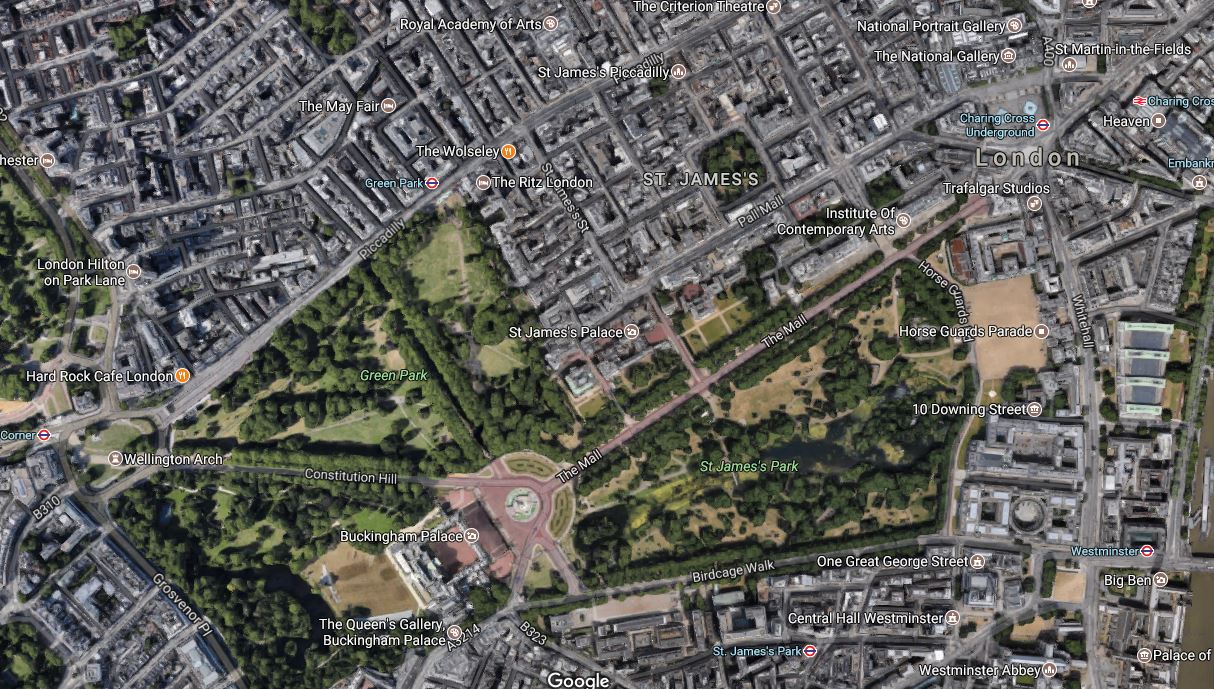
This would create a large walking area from Trafalgar Square to Victoria, with the shops of Oxford, Bond and Regent Streets and Crossrail to the North-West and the Thames not far away in the East.
This Google Map shows the area around Buckingham Palace.
It would improve London for everyone, except prossibly taxi and Uber drivers.
But just as with the pedestrianisation of Oxford Street, there would be protests.
Thoughts On The Train Strikes
These strikes have all the qualities of an irresistible force meeting an immovable object.
The latest headline on an article on the BBC is Southern rail strike enters second day as Acas talks start.
I doubt the talks will be very productive.
Here are my thoughts about various issues.
London
I have been running around in driver-only-operated (DOO) trains for quite a few decades now. Especially, as I have always travelled frequently on the London Underground.
Wikipedia has a comprehensive section on One Man Operation in London.
This is said about the Underground.
All trains on the London Underground are single-manned.Conversion to one-man operation began in 1984 and was completed in 2000.
In some ways though the Underground, is not full DOO, in that on nearly all stations, there are staff on the station, who assist the driver to safely dispatch the trains.
Assistance From Staff
The staff on the platform are also there to assist passengers, who need help. This page on the Transport for London web site describes the role of staff.
This is said under Assistance To And From Trains.
On the Tube, TfL Rail and Overground, station staff will also accompany you to the train and help you on board and, if needed, can arrange for you to be met at your destination. Anyone can use this service, but it is particularly used by blind and visually impaired passengers and people using boarding ramps onto trains.
If you would like to use this service, ask a member of staff when you arrive at the station.
That is very much turn-up-and-go for everybody!
So what happens on Southern?
This page on the Southern web site gives full details of what they offer.
This is said.
When should I ask for help?
If you want to book ‘help’ try to call us at least one day before you travel.
That is not acceptable.
So there’s one job for the redundant guards on Southern – They could help on the platform, as they do on the London Underground and Overground.
The Gospel Oak To Barking Line
London hasn’t been without trouble though, as this from Wikipedia shows.
TFL now operates 100% of its overground network as driver-only trains. The latest conversion was announced in July 2013 on the Gospel Oak to Barking Line. The National Union of Rail, Maritime and Transport Workers (RMT) challenged the move, claiming passenger safety would be compromised. Transport for London replied that at the time the East London Line, already one-man operated, has one door-related incident for every 7 million passengers, while the section of the network which currently uses conductors has one door-related incident for every 4 million passengers.[10] On 16 August 2013, the RMT called a 48-hour strike over the August Bank holiday weekend. According to the RMT, the proposal set forth by Transport for London would imply Driver Only Operations on the whole of the London Overground network and make 130 guards redundant London Overground Rail Operations stated in response that they had given “the RMT assurances on employing conductors in alternative customer service roles and offering a generous voluntary redundancy package to those who want it.” According to RMT, the proposals to implement driver only operations are in response to the 12.5% reduction in Transport for London’s funding announced in Chancellor of the Exchequer George Osborne’s Comprehensive Spending Review
I certainly don’t remember that strike. So it must have been really significant!
Overground And Underground
You should always remember that when the Overground started, every train had a second man, but gradually they have been moved to the platforms.
The Overground works a different system to the Underground on doors in that the driver enables the doors for opening and they are actually opened by the passengers individually. On the Underground, the driver just opens and closes all doors.
Crossrail
It will be interesting to see, what system the new Class 345 trains for Crossrail use.
It’s an Overground train in the outer reaches and an Underground train in the centre.
The Class 345 trains also appear to be very hi-tech with various innovative features.
Automatic Train Operation
The Victoria Line in London has always run with automatic train operation (ATO). The Wikipedia entry has two entries about London.
On the London Underground, the Central, Northern, Jubilee, and Victoria lines run with ATO.
ATO was introduced on the London Underground’s Northern line in 2013 and will be introduced on the Circle, District, Hammersmith & City, and Metropolitan lines by 2022. Although ATO will be used on Crossrail and Thameslink, it has not yet been implemented on UK mainline railways
Lines like the Victoria Line, Crossrail and Thameslink, will not be completely automatic, but the driver will be an intelligent monitor to what the train is doing. It could be compared to auto-land on an aircraft, where the plane is actually controlled, by the autopilot and the pilots monitor.
As a Control Engineer, I believe we’ll be seeing large increases in the use of ATO in the UK in the next few years. Many intensively used lines could probably handle more trains, with a controlling ATO system.
Will the Unions object to ATO?
They haven’t seemed to yet, as ATO generally seems to see an increase in the number of trains, which means more staff.
More Automation On Trains
This is happening, but then this is only following the lead of more automation in planes and road vehicles.
Crossrail trains will set a new standard in automation.
This is a snippet from the an article in the Derby Telegraph
Unlike today’s commuter trains, Aventra can shut down fully at night and can be “woken up” by remote control before the driver arrives for the first shift.
I described this to a driver for Northern and a big smile came over his face.
Perhaps more contentious is the autoreverse system fitted to Crossrail trains, that I wrote about and explained fully in Crossrail Trains Will Have Auto-Reverse.
The system will work at a Crossrail terminal like Paddington or Abbey Wood.
- The driver selects auto-reverse in the terminal platform.
- The train then drives itself into the reversing siding.
- The driver starts to walk back through the train towards the other cab.
- When the train reaches the end of the reversing siding, it reverses back into the return platform.
- By the time the driver has walked the length of the train and installed himself in the cab, the train will have arrived in the platform and will be ready to depart.
I suspect that there will be a high-level of safety systems, with the driver probably carrying a dead man’s handle, that connects to the train by radio.
It will be interesting to see how the Unions react to such a system.
- One of the reasons for the auto-reverse is that it is needed to get 30 trains per hour, through the tunnel.
- Drivers will avoid a 200 metre walk.
- No passengers will be on the train, when the driver is out of the cab.
But it will mean more staff being employed, to drive and service the extra trains and handle the extra passengers.
Conclusion
I am drawn to the conclusion, that lots of automation and driver aids are coming to the railways.
DOO is the first of many issues, where there will be a fight.
If the Unions don’t like it, they will reap the wrath of the passengers, train companies and most politicians.
Crossrail Has Power To Maidenhead
This article on Rail Technology Magazine is entitled Crossrail minister rides train as electrification and testing milestones passed.
This is said.
Meanwhile, Crossrail confirmed that electricity is now running on 12 miles of railway between Maidenhead and Heathrow junction (pictured). Over 80% of the wiring programme has now been completed, with 800 workers installing over 1,400 piled foundations and 834 overhead line structures.
So that means, that Crossrail is now live all the way from the main line station at Paddington to Maidenhead.
Will we be seeing GWR’s Class 387 trains to Maidenhead from Paddington in the near future?
Has Sadiq Khan Got His Sums Right?
This article on the Rail Technology web site, which is entitled Underground set to undergo biggest capacity expansion ever, is a good summary of Sadiq Khan’s plans for Transport for London.
It’s All About Cash Flow
I am unsure about the plans, as it seems to me that a there is a lot of money to find in two years less to fund the building of the Bakerloo Line Extension.
So there is the double whammy of the fare freeze and accelerated construction!
Crossrail And Thameslink
I also think that Crossrail will contribute some of this money and because it is properly designed, it will stimulate growth in areas like Canary Wharf, Farringdon, Old Oak Common, Paddington, Romford and West Drayton, to name a few places.
The same however, can’t be said for Thameslink.
- It doesn’t serve many areas ripe for development.
- As it is not a TfL route like Crossrail, it won’t generate anything like the same fare revenue.
- Thameslink could turn out to be too much of a long-distance commuter line.
- Govia Thameslink Railway’s first loyalty is not to London.
On the whole, I don’t think it will benefit London as much as Crossrail will.
The Underground
Until I learn otherwise, I do think that the engineers of the Underground, may have thrown the Mayor a few lifelines.
- It would appear that the Victoria and Jubilee Lines can go to 36 trains per hour (tph).
- By raising the voltage and installing automatic train control on the sub-surface lines, there can be a 33 % increase in capacity.
- New Piccadilly Line trains will be ordered in 2017.
One and two, should happen easily and if the design is right, three could be a big game-changer.
But the problem, is that although these will generate cash flow in the long term, only 36 tph on the Victoria Line will happen in the near future.
I also feel, that although the capacity of the Victoria Line can easily be increased, will the stations be able to cope. Highbury and Islington, Oxford Circus and Victoria are not mentioned in the article.
All of these trains and passengers will also generate lots of heat and although Crossrail is designed to handle the watts, the deep-level Underground trains and stations were not.
This might mean a route change by passengers from older lines to Crossrail, which could have various effects.
The Non-Devolution Of Rail Lines To TfL
I have a feeling that the figures show that this is very much neutral to TfL’s finances, as some of the routes need a lot of money spent on stations and new trains. But under the new arrangement, TfL will probably have more say in service quality on the lines, than they do now.
Good Design Of The Bakerloo Line Extension
There must surely be scope to save more money in the design of the Bakerloo Line Extension. But I suspect that most of the easy savings have already been found.
However, I wouldn’t be surprised to see a radical design for the extension come out at a late stage. But this is less likely, as because the line is an extension, it must be compatible with the existing line.
The Petty Cash
I think that where the Mayor might make up the shortfall is in the smaller things, that people forget.
For example.
- Expansion of the Night Tube to all lines, the Drain and the Overground.
- Tactical and expanded contactless ticketing.
- Better train scheduling.
- Expansion of the Gospel Oak to Barking Line and the Barking Riverside Extension.
- Expansion of the East London and Lea Valley Lines.
- Extra stations and station entrances.
- Development of Old Oak Common.
But some things already proposed will be tricky.
- I don’t think that he’ll save the money he wants on staff.
- Politicians always overestimate what they’ll earn from property development.
- You can only build so much affordable housing.
- Developers might find building housing just outside London is more profitable.
- The Mayor could have Union trouble.
There are probably a lot more where these came from.
Conclusion
With Brexit and Trump, there is a possibility of a drop in passenger numbers and income, which could derail everything.
It will be a close run thing.
Where’s The Emergency Train Power For Crossrail?
Things that can go wrong in a deep rail line do happen and even in the Channel Tunnel, there have been incidents.
There have been two major fires in the Channel Tunnel in 1996 and 2008 and there have also been various train failures.
I am not being alarmist, but as each Class 345 train can carry 1,500 passengers and twenty-four trains per hour will be going through the line for much of the time, there will be an awful lot of people underground at times.
If you look at the specification of a Class 345 train, it has features surely will help recovery if a train breaks down.
I found this snippet on the Internet which gives the formation of the new Class 345 trains.
When operating as nine-car trains, the Class 345 trains will have two Driving Motor Standard Opens (DMSO), two Pantograph Motor Standard Opens (PMSO), four Motor Standard Opens (MSO) and one Trailer Standard Open (TSO). They will be formed as DMSO+PMSO+MSO+MSO+TSO+MSO+MSO+PMSO+DMSO.
This formation and the train design could have positive implications for safety.
- It looks to me that the train will be two half-trains. Can they be driven independently, as Class 373 trains in the Channel Tunnel can?
- Half-trains must get around some train failures. If say the pantograph fails on one half-train, the other half-train can take the train to a suitable place like the next station to evacuate the passengers.
- The trains will also be walk through, so let’s assume that a passenger’s laptop or mobile catches fire, passengers can be moved to another safe part of the train.
I suspect that all the experience of running electric trains in long tunnels for several decades all over the World, will have been used in validating the design of Class 345 trains.
My biggest worry as an electrical engineer and a Londoner, is a complete electrical failure in the capital.
They don’t happen often, but this article on the BBC is entitled Blackout hits London’s Soho on Black Friday.
It describes London’s power failure of last week.
Power failures do happen, so what happens if a computer virus or extreme weather blacks out London?
I have just read this article in Rail Engineer, which is entitled Crossrail – approaching the final stages.
This is said about the power supply in the tunnels.
The Crossrail route will be powered by a 25kV overhead line system using a Cariboni 110mm deep rigid overhead conductor bar throughout the tunnels. Although from a different manufacturer, this design concept is similar to the one being installed in the Severn Tunnel that doesn’t require weights and pulleys.
In the central section, 25kV traction power for the Crossrail trains will be provided by two new bulk supply points from National Grid 400kV, at Pudding Mill Lane in the east and Kensal Green to the west. Super grid transformers have been installed and fitted with fans and additional coolants.
A 22kV high-voltage network will be installed in the central section from Royal Oak Portal in the west to Limmo Peninsula in the east with an 11kV high-voltage non-traction spur to be installed from Limmo through to Plumstead. This network will supply mains power to each Crossrail station, shaft and portal within the central section.
Note.
- It is a very simple power layout, for the trains, with a continous overhead rail providing power.
- There is only two feed points for the overhead power to the trains, but these feed points seem to be of a robust design.
- Trains in the middle will be fed by power coming a long way in the conductor rail.
- Conductor rail must be a more robust power supply to the trains, than the typical overhead wires.
- All Crossrail stations and shafts will use Crossrail’s own dedicated power supply.
The article though doesn’t mention two things.
- How is an emergency power failure handled?
- How is the power from regenerative braking fed back into the power network?
I’ll deal with the power failure first.
It would appear that a Central London power failure such as last Friday should have little effect on an independently-powered Crossrail. I wouldn’t expect anything less.
But there are always unexpected reasons, why a train may be isolated without power. So how does a train get to the next station or evacuation shaft, with its valuable load of passengers?
With respect to the regenerative braking, the power is usually fed into the overhead wires and used by another train nearby.
But, I do wonder if Crossrail will be doing things differently, as I like to think of the line as the latest and most energy-efficient of train lines.
Both the braking and failure problems are made easier, if the train is fitted with an on-board energy storage system or batteries in everyday parlance.
A fully-loaded Crossrail train going at its maximum speed of 145 kph will have an energy of 105 KwH, so if it stored this energy on the train when it brakes and stops, it could use it when it accelerated away.
Using batteries for regenerative braking has other effects.
- It relegates the overhead rail to providing top up power as the train proceeds through the tunnel.
- The overhead rail and its power supply, only has to cater for energy going to and not coming from the train.
- The engineering on the train is simpler, as braking energy doesn’t have to be raised to 25 KVAC to feed back into the overhead rail, using perhaps a heavy transformer.
But most importantly, it means that the train has stored energy to proceed to the next station or safe place, if the overhead power should fail.
I have no evidence that this is actually the case, but Bombardier have said that the train will have a remote wake-up facility as I discussed in Do Bombardier Aventras Have Remote Wake-Up?, so that the driver will turn up and find a train ready for action. Try doing that without a substantial on-board power source, without leaving the train plugged in to electricity all night.
Bombardier are only stealing ideas, from some of the latest cars, if I’m right.
Conclusion
I wouldn’t be surprised if Crossrail’s Class 345 trains are fitted with on board energy storage. The storage would handle.
- Regenerative Braking
- Emergency get you to safety power.
- Remote wake-up of trains.
The design would also mean that the Crossrail and its new trains would be more energy efficient.
Heathrow Services Post Crossrail
To take some of the pictures for A Look At Stockley Junction, I took Heathrow Connect to the Airport..
My return ticket from Hayes and Harlington station, cost me £8.20 with a Senior Railcard, which must be one of the most expensive journeys per mile in the UK. Especially, as there are only two trains per hour (tph). Considering that I could have done the journey quicker yesterday, using a 140 bus, as the train was ten minutes late.
But it would be difficult to take the pictures I wanted from the bus.
Arriving at Heathrow, I thought that a hot chocolate would be in order, so I set off for Terminal 2.
Passenger friendly the journey is not, so as I wanted to get back, I returned to the station to catch the next train.
I did not see a single sign to Heathrow Connect, with this one being typical.
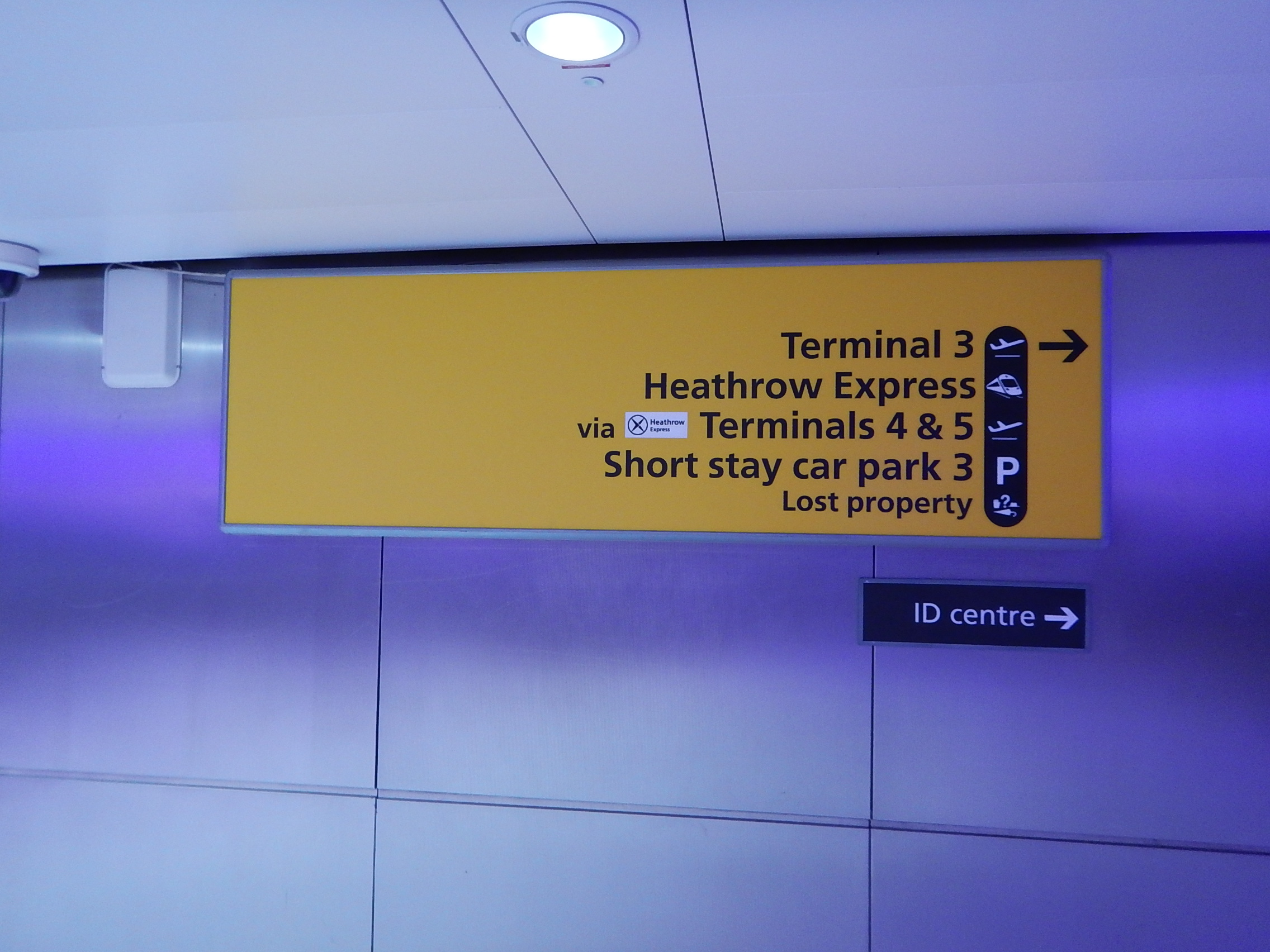
Where’s Heathrow Connect
I knew where to go, as I’d walked it.
Incidentally, it is easy enough to find the overpriced Heathrow Express, but how many passengers with a brain want to go to the disconnected Paddington?
Some like me might actually want to go to Hayes and Harlington or perhaps Maidenhead.
I didn’t ask, but I wonbder if the advice to go to Maidenhead, is to take Heathrow Express to Paddington and then get a train to Maidenhead. The Oracle (Nation Rail’s Journey Planner) recommends taking Heathrow Connect to Hayes and Harlington, but will all the staff.
Current Services To The Airport
There are four ways to get to Heathrow by public transport.
Heathrow Express – 4 tph to and from Paddington. – Overpriced
Heathrow Connect – 2 tph to and from a series of stations along the route to Paddington – Infrequent and overpriced.
Piccadilly Line – Slow, frequent, usually reliable and the most affordable.
Bus – For a lot of those living near the Airport, this is the preferred route.
This map from carto.metro.free.fr shows the layout of the rail and Underground lines.
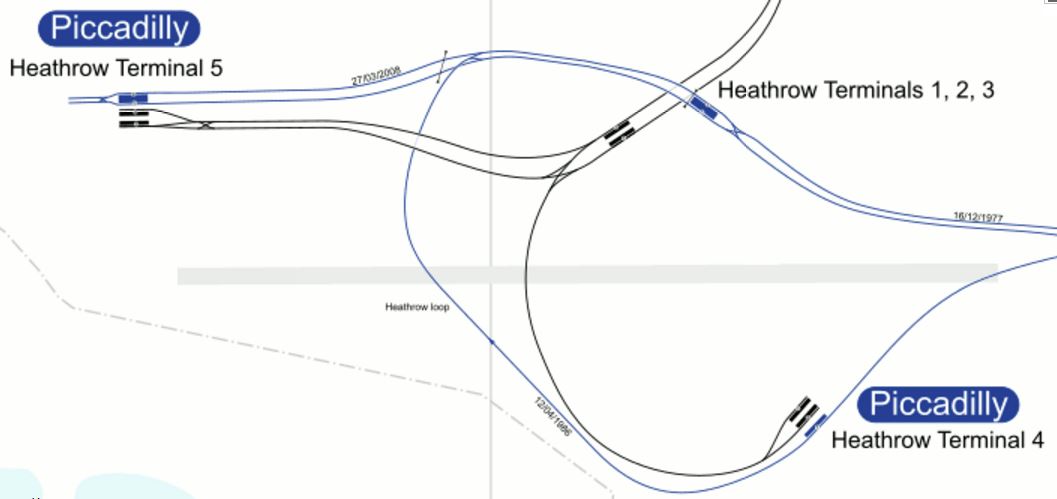
Rail And Underground Lines At Heathrow
Simple it isn’t!
But that is what you get if you dither over the next runway in the South-East for forty years.
Heathrow’s rail links are so very Topsy, unlike those at Birmingham, Edinburgh, Gatwick, London City, Luton, Manchester, Southend and Stansted.
Not all the others are perfect, but they’re getting better.
Crossrail
Crossrail will be the new wayto get to Heathrow and in some ways it is a replacement for Heathrow Connect. This is said under Future in the Wikipedia entry for Heathrow Connect.
From May 2018, Crossrail trains will replace all Heathrow Connect trains between London Paddington and Heathrow terminals 2, 3 and 4. Furthermore, as of December 2019 all services will run through the new tunnels at Paddington to central London destinations including Bond Street, Liverpool Street and Canary Wharf
So, it would appear that there will no substantial improvement until December 2019.
This is a detailed timetable, with particular reference to going between Heathrow and the City of London and Canary Wharf.
- May 2018 – Heathrow Connect will be taken over by Crossrail. We’ll certainly see better signage and service under Transport for London’s management.
- May 2018 – The Crossrail start schedule on Wikipedia, also shows that the shuttle between Heathrow Central (Terminals 1,2 and 3) and Terminal 4, will be transferred to Crossrail. Terminal 5 will be reached by using Heathrow Express from Heathrow Central.
- May 2018 – Heathrow Connect in the guise of Crossrail will be serving erminals 1,2, 3 and 4, but not Terminal 5. Will we be seeing new Class 345 trains and a higher frequency to Heathrow? I woulden’t be surprised if Heathrow Airport, try every trick to keep Crossrail out of the Airport, to protect the revenue on Heathrow Express.
- December 2018 – Crossrail services between Paddington and Abbey Wood will start, thus linking Paddington to the City of London and Canary Wharf. There will probably be a longish walk between the two parts of Crossrail at Pasddington, but the tunnel across London, will give Paddington the much need-connectivity, it’s needed since the Second World.
- May 2019 – Crossrail services between Paddington and Shenfield via Whitechapel will begin, thus meaning that many travellers East of Paddington, will use a single change there to get to and from Heathrow.
- December 2019 – The full Crossrail should open, meaning that there will be direct trains between Abbey Wood and Heathrow Terminal 4 calling at Canary Wharf, Liverpool St-Moorgate, Farringdon, Tottenham Court Road, Bond Street, Paddington, Heathrow Central and all the stations in between.
Trains into the Airport will be.
- 4 tph – Heathrow Express for Paddington, where many passengers will change to and from Crossrail.
- 4 tph – Crossrail to Abbey Wood.
One will be expensive and the other will be affordable and much more convenient, as it reaches the places passengers want to start or finish their journey.
It looks good, but there are a some questions to answer.
Is eight tph enough trains to and from the Airport?
If you compare Heathrow with Gatwick, Luton and Stansted, eight tph seems good.
However, I found this article in TravelWeekly, which is entitled Gatwick outlines plans for a train departure to London every three minutes.
It gives a very good summary of the train services that will run to Gatwick after Thameslink is completed.
- Four tph dedicated Gatwick Express trains to Victoria
- Six tph to Victoria – originating from East and West Coastway, Horsham/Littlehampton, and Three Bridges/Haywards Heath
- Four tph to Bedford via London Bridge – originating from Gatwick and Brighton
- Two tph to Cambridge via London Bridge – originating from Brighton
- Two tph to Peterborough via London Bridge – originating from Horsham
- Two tph to London Bridge – originating from Littlehampton/West Coastway, and Haywards Heath/Three Bridges.
That is a total of twenty trains to and from London and beyond and most of the South Coast from Southampton to Hastings.
How many better rail-connected airports are there anywhere in the world?
Luton and Stansted are also have aspirations to improve their rail links.
I think that passengers will press for increase in the frequency of services to the Airport and they’ll want more destinations.
After all Shenfield and Abbey Wood are planned to have 8 tph all day to and from Central London, with at least twice as many in the Peak.
How do passengers get to and from Iver, Langley, Maidenhead, Reading and all staions to the West of Hayes and Harlington?
A rail link into Terminal 5 from the West is planned, but something needs to be done before that is completed probably in the mid-2020s.
After December 2019, their will be four routes.
- Go to Paddington and use Heathrow Express – Expensive
- Go to Hayes and Harlington and take Crossrail into Heathrow Central – Requires two step-free changes of train.
- Take a coach from Reading.
- Go to Hayes and Harlington or West Drayton stations and use a local bus.
I can see something innovative being done at Hayes and Harlington station.
There is probably capacity between Heathrow Terminal 5 and Hayes and Harlington stations for a 4 tph shuttle in both directions, that would also solve the Terminal 5 connectivity problem.
Southall could even be an interesting alternative, as there is lots of space.
What Would Be My Solution?
I would use Hayes and Harlington station, as the interchange for Heathrow Airport.
In an ideal layout there would be three slow lines through Hayes and Harlington station, with two island platforms separating the lines. From the South, they would be.
- The Reading-bound (Up Slow) line.
- The Heathrow shuttle line, which would also be used by Crossrail trains going to and from Heathrow Terminal 4. This liine would be bi-directional.
- The London-bound (Down Slow) line.
Between the platforms would be two welcoming island platforms to give passengers a step-across interchange, between trains.
It would need a major rethink of the station.
But consider.
- Passengers from the West for Heathrow would just walk across the platform to get their train.
- Passengers for Heathrow Central could take any train.
- Passengers for Terminal 4 or Terminal 5 might need to wait a few minutes for an appropriate train.
- Crossrail passengers for Terminal 5, would change at Hayes and Harlington.
- Passengers from Heathrow for the West would just walk across the platform to get the train.
- No passenger would need to change platforms using the step-free bridge.
What is being provided at Hayes and Harlington station is very much a poor design.
Will the current Heathrow Connect service between Paddington and Heathrow Central and Terminal 4 be dropped?
I can’t see any point to it, after Crossrail has an all-stations service to the Airport from Paddington.
How do passengers get to and from Terminal 5?
I proposed the shuttle to do this, with passengers changing at either Hayes and Harlington or Heathrow Central stations, to a train going to either Terminal 4 or Terminal 5.
Will passengers be able to use contactless cards to the Airport?
I think if the decision was down to the Mayor, Transport for London or the people of London, Oyster and contactless bank cards would be a way of paying a fare to Heathrow, as it is to Gatwick.
Will passengers like me with Freedom Passes, be able to use Crossrail to Heathrow?
Boris said Yes and I suppose the current Mayor, Transport for London and card holders, will expect it to be possible, as it is on the Piccadilly Line.
Conclusion
The Heathrow spur of Crossrail has not been thought out too well!
A Look At Stockley Junction
Stockley Junction, is where trains leave and join the Great Western Main Line to go to and from Heathrow Airport.
This map from carto.metro.free.fr shows the lines at the junction and to the nearby Hayes and Harlington station.
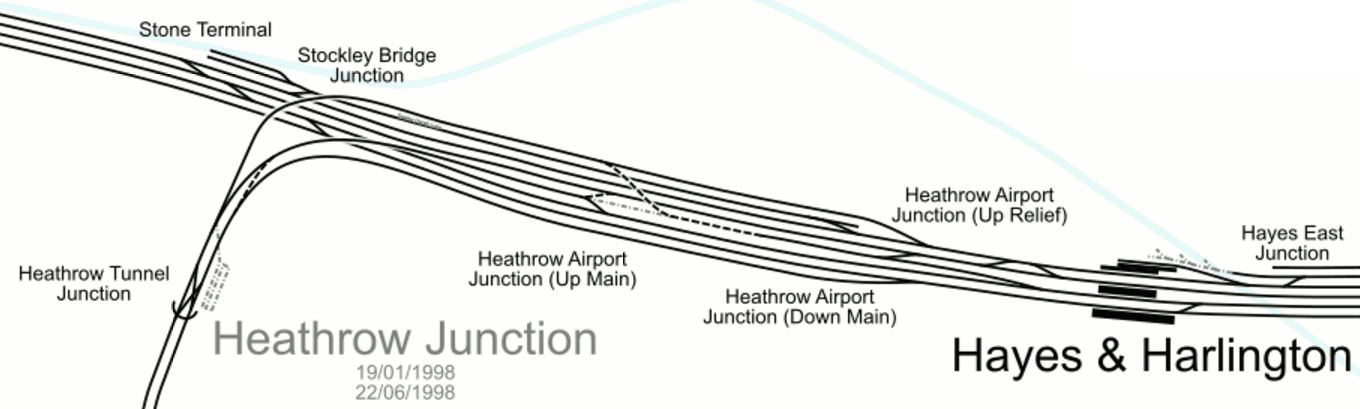
Stockley Junction And Hayes & Harlington Station
Note that in some places there are eight tracks across, with lots of crossings and points everywhere.
If you look at the lines through the station, starting from the South they are, with their platform numbers.
- Reading-bound Fast Line (Down Main) GWR – Heathrow Express
- London-bound Fast Line (Up Main) – GWR – Heathrow Express
- Reading-bound Slow Line (Down Relief) – Crossrail- GWR – Heathrow Connect
- London-bound Slow Line (Up Relief) – Crossrail – GWR – Heathrow Connect
- Bay Platform – Crossrail – GWR
Look at the map and note the following.
- The two Slow (Relief) lines go straight through the station and the junction.
- The two Fast (Main) lines go straight through the station and the junction.
- Trains on the Down Main like Heathrow Express to the Airport, take the Southernmost line and just turn left for the Airport.
- There are several new crossing and short lines, which in the map are shown dotted.
This set of pictures, were taken on a train going along the Down Slow line.
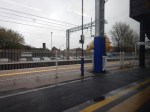
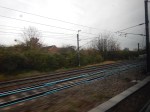
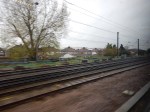

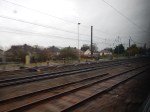



Note how as you get nearer to the junction, the number of tracks increases.
These pictures were taken from a Heathrow Connect train going through Stockley Junction towards the Airport.

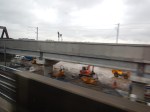
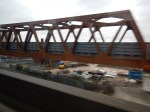
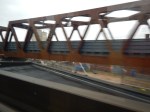

From the path the train took, I suspect that the track layout shown in the map has been largely created.
Note the line shown in these pictures, is the one used by trains running from the Airport to Paddington.
The final set of pictures, were taken as I returned from Heathrow on another Heathrow Connect train.














The train crossed over all the lines and descended into Hayes and Harlington station on the Northernmost line.
Crossrail Lined Up For A Skyscraper
This article from Building Design On Line, is entitled Shedkm’s Crossrail tower in for planning.
This is the first paragraph.
Shedkm-designed plans for a 29-storey residential tower block next to Abbey Wood Station in south-east London have been lodged for approval with the Royal Borough of Greenwich.
So Crossrail will go up and down, as well as East and West.
This scheme will comprise 208 homes and a ninety-bed hotel.
I think we’ll see more of schemes like this, especially to build much needed housing.
Do We Sometimes Misjudge The Consequence Of New Railways And Roads?
I ask this question after reading this article in the Hawick News, which is entitled Calls for extension of Borders Railway to Hawick building up fresh head of steam.
It was this phrase that worried me.
“Hawick businesses are feeling the impact of a one-way ticket that is seeing local shoppers travel from Tweedbank to all points north without any reciprocal arrangements.
It looks like building the Borders Railway has hurt businesses in Hawick. And what about other places in the area like Selkirk?
I think we’ve seen this before in other places.
Where I live near Dalston Junction station, has seen a massive uplift, since the creation of the East London Line. It was in some ways predictable, but I don’t think Transport for London expected the uplift that happened.
Our predictions, were never good in the past, but they don’t seem to be improving.
I wonder how far out predictions will be for Crossrail/Thameslink?
Consider.
- Crossrail and Thameslink working together will make a lot more journeys single change.
- Crossrail has good connections with the East London Line.
- Crossrail gives much improved access to the Bakerloo and Northern City Lines.
- Crossrail/Thameslink gives much improved access to Canary Wharf, the City of London, Gatwick Airport, Heathrow Airport, Luton Airport and Oxford Street in the centre of the cap[ital.
One consequence I see, is that those with Freedom Passes like me, will use the new free railways to advantage.
Roll on 2018 and 2019!
 The Anonymous Widower