Forest Gate Station – 4th July 2016
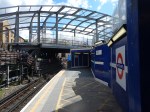
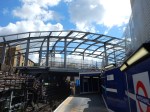
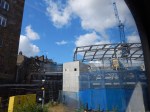
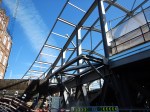
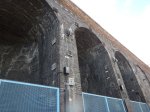
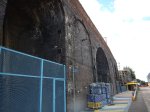
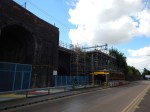
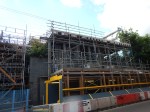
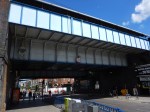
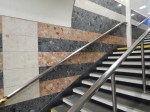
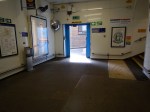
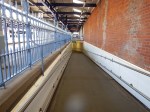
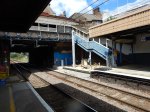
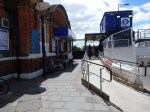
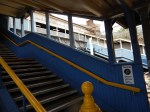
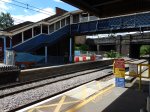
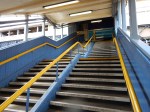
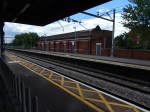
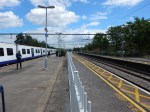
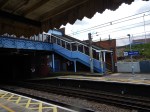
I took these pictures of the works at Forest Gate station.
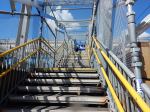

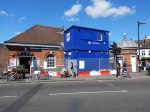
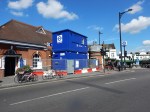


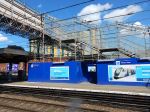
Note the little kiosk outside the station.
I think that when this station is finished, it will be one of the best on the Eastern branch of Crossrail.
Crossrail’s Loops And Branches Across London
Most people think of Crossrail, as an East-West railway under London serving the following places on its pair of branches in the East and the West.
- Shenfield and Abbey Wood in the East.
- Heathrow and Reading in the West.
But it is more than that, as the East-West Crossrail can be considered to be part of a larger system that includes a number of North-South routes.
- Thameslink from St. Pancras to East Croydon via Farringdon on Crossrail.
- East Londson Line from Highbury and Islington to Canada Water via Whitechapel on Crossrail.
- West London Line from Willesden Junction to Clapham Junction via Old Oak Common on Crossrail.
- Bank Branch of the Northern Line from Camden Town to Kennington via Tottenham Court Road on Crossrail.
- Charing Cross Branch of the Northern Line from Camden Town to Battersea via Moorgate on Crossrail.
- Bakerloo Line from Willesden Junction to Elephant and Castle via Paddington on Crossrail.
Cross-London journeys will get interesting, as there will often be a dozen ways to go between A and B, when they are in different parts of London.
Kids will race each other across the City.
Crossrail will also grab a strong hold of other cross-London routes.
Central Line
Crossrail has interchanges with the Central Line at the following stations.
- Stratford
- Liverpool Street
- Tottenham Court Road
- Bond Street
- Ealing Broadway
The Central Line will add a loop to Crossrail from Stratford to Ealing Broadway.
People who live say near Queensway will use the Central Line to access the outer reaches of Crossrail., at Ealing Broadway and Stratford.
In Step-Free Interchanges In East London, I pointed out the excellent interchange between Crossrail and the Central Line at Stratford, which sadly is Crossrail’s only top quality interchange to other lines.
The interchanges with the Central Line in Central London would sappear to be very unadventurous. Only when the line is opened, will we know how well they work and the quality of the design.
Perhaps the only way to have got better interchanges would have been for one track of Crossrail to be each side of the Central Line, through Central London.
This map from carto.metro.free.fr shows the section of Crossrail from Marble Arch to Tottenham Court Road.
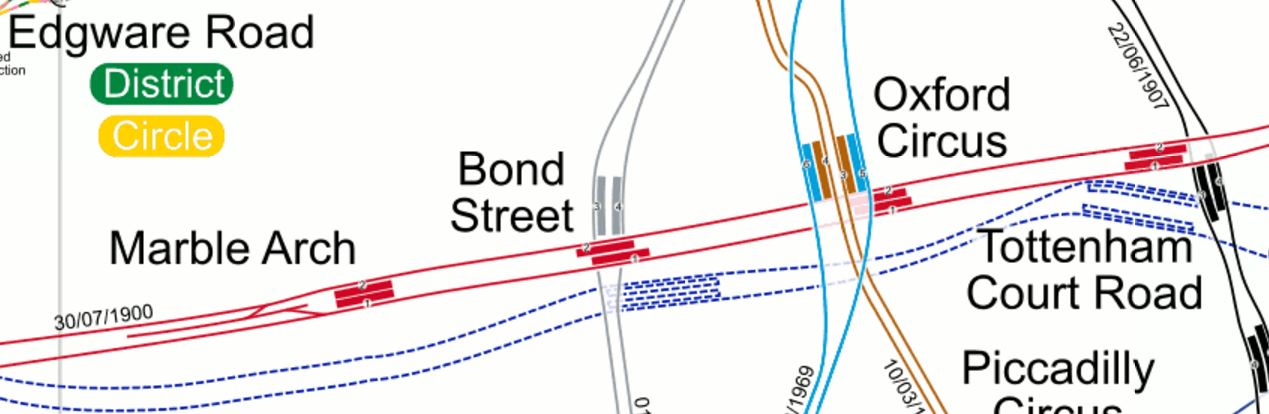
Crossrail Through Central London
From this map it looks like it could be possible, but I know from this section in Wikipedia, that it was difficult squeezing the tunnels past the Northern Line at Tottenham Court Road, so perhaps the route that was chosen, was the best one from a construction and cost point of view. It could even have been the only one possible.
Metropolitan Line
Crossrail has interchanges with the Metropolitan Line at the following stations.
- Whitechapel
- Liverpool Street
- Moorgate
- Barbican
- Farringdon
- Paddington
The Metropolitan Line will add a loop to Crossrail from Whitechapel to Paddington. Although, due to the distance between the two lines at Paddington, this probably means the Metropolitan Line will serve as a North-Western branch of Crossrail, that serves Kings Cross, St. Pancras and Euston.
This map from carto.metro.free.fr shows the section of Crossrail from Whitechapel to Farringdon.
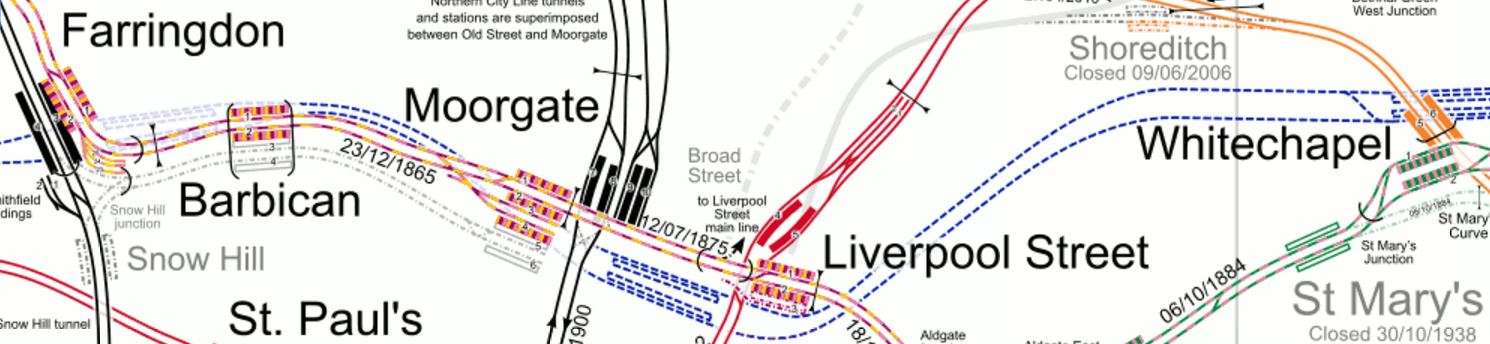
Crossrail Through The City
Note how two Crossrail stations; Liverpool Street-Moorgate and Barbican-Farringdon effectively each serve two Metropolitan stations.
Effectively, it gives a large choice of routes between North West London and East London and Essex.
Crossrail interchanges with the District Line at the following stations.
- Whitechapel
- Paddington
- Ealing Broadway
The District Line will add a loop to Crossrail from Whitechapel to Ealing Broadway, with a partial interchange at Paddington.
This map from carto.metro.free.fr shows the lines around Paddington.
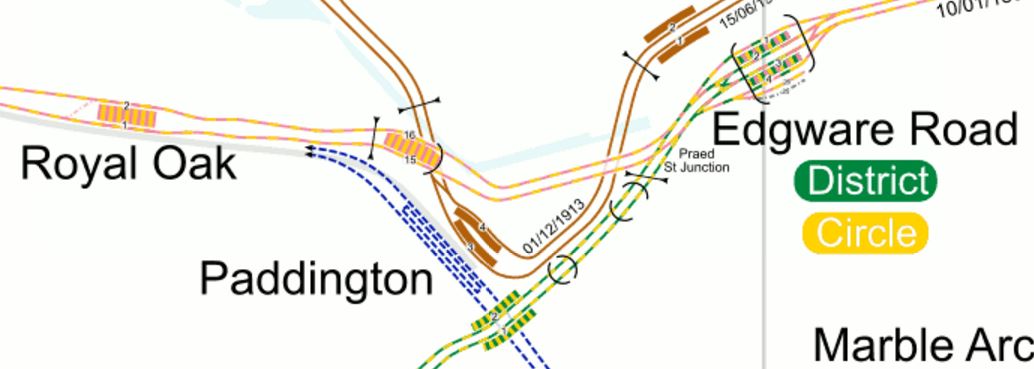
Crossrail Through Paddington
Crossrail would appear to have a good right-angled connection with the District Line, between Edgware Road and Wimbledon.
So it could be argued that after Crossrail opens, the Edgware Road to Wimbledon service of the District Line is another North-South branch of Crossrail, just like with Thameslink and the East London Line.
North London Line
Crossrail interchanges with the following stations on the North London Line.
- Stratford
- Old Oak Common
The North London Line will add a loop to Crossrail from Stratford to Old Oak Common.
Jubilee Line
Crossrail interchanges with the following stations on the Jubilee Line.
- Stratford
- Bond Street
The Jubilee Line will add a loop to Crossrail from Stratford to Bond Street.
The Stations On The Loops
The effect of all these loops, mean that these stations will be on a line that connects to both ends of Crossrail.
- Acton Town
- Aldgate East
- Baker Street
- Bank
- Baron’s Court
- Bermondsey
- Bethnal Green
- Blackfriars
- Brondesbury
- Brondesbury Park
- Caledonian Road and Barnesbury
- Camden Road
- Canada Water
- Canning Town
- Cannon Street
- Canonbury
- Chancery Lane
- Chiswick Park
- Dalston Kinsland
- Ealing Common
- Earl’s Court
- East Acton
- Edgware Road
- Embankment
- Euston Square
- Finchley Road And Frognal
- Gospel Oak
- Gloucester Road
- Great Portland Street
- Hackney Central
- Hackney Wick
- Hammersmith
- Hampstead Heath
- Highbury and Islington
- Holborn
- Hommerton
- Kensal Rise
- Kentish Town West
- Kings Cross St. Pancras
- Lancaster Gate
- London Bridge
- Mansion House
- Marble Arch
- Mile End
- Monument
- North Greenwich
- Notting Hill Gate
- Oxford Circus
- Queensway
- Ravenscourt Park
- St. James’s Park
- St. Paul’s
- Shepherd’s Bush
- Sloane Square
- South Kensington
- Southwark
- Stamford Brook
- Temple
- Tower Hill
- Turnham Green
- Victoria
- Waterloo
- Westminster
- West Acton
- West Ham
- West Hampstead
- West Kensington
- White City
- Willesden Junction
The list may be impressive, even without stations on the North-South lines, but it has consequences.
- Ealing Broadway could see a lot of interchange traffic between Crossrail and the Central and |District Lines. Is it up to the task?
- Stratford and Whitechapel will see a lot of interchange traffic between Crossrail and other lines. These two stations have been designed for it.
- The Victoria Line is difficult to access. However, it is only a short walk from the Hanover Square entrance to Bond Street Crossrail station.
- The Piccadilly Line is difficult to access.
I suspect that as at Oxford Circus, there will be small schemes in several places to create connectivity.
Kings Cross St. Pancras is a big problem as it is a mass of long tunnels, but Crossrail and Thameslink will give passengers the chance to avoid it.
- If you’re on Crossrail and want to go North on the Victoria or Piccadilly Lines, I suspect that it would be easier to take Thameslink to Finsbury Park, where you can dive into the Underground.
- If you’re on Crossrail and want to go South on the Victoria Line, the quickest way might be change to the Bakerloo at Paddington and then walk across the platform to the Victoria Line at Oxford Circus.
But whatever route you take in a few years time, won’t be the obvious one today.
Extra Connectivity
There are various projects either under construction, planned or proposed, that would increase Crossrail’s reach.
- The Hall Farm Curve linking Walthamstow and Chingford to Stratford.
- The rebuilding of Bank, Camden Town, Highbury and Islington and other stations.
- The Northern Line Extension to Battersea.
- The Bakerloo Line Extension.
- The Greenford Branch is being improved.
- The re-signalling of London Underground’s sub-surface lines.
- The four-tracking of the West Anglia Main Line in preparation for Crossrail 2.
- The adding of a Central Line station at Shoreditch High Street.
- Extensions to the Docklands Light Railway.
- Old Oak Common will become more and more important with connections to the West Coast Main Line, HS2 and the Chiltern Main Line.
- Increases in frequency on the Victoria Line, Jubilee Line, Sub-Surface Lines, the Northern City Line and the Overground.
I do think though we could see a few surprises.
- There have been proposals to extend the Waterloo and City Line for years. Modern tunnelling and innovative train concepts might allow a shuttle between Waterloo and Crossrail at Liverpool Street.
- As the City of London wants to cut traffic in the Square Mile, what will they do?
- Will Oxford Street finally become traffic free?
- Will Manor House and Harringay Green Lanes be reorganised?
- Crossrail has seen some interesting concepts developed for building lift and escalator tunnels, which will be used again and again.
- Crossrail will be extended to somewhere not mentioned before.
I have a feeling that Crossrail 2 won’t be so urgent.
Step-Free Interchanges In East London
This map from carto.metro.free,fr shows the lines around where I live, which can be best described as a post code of N1.
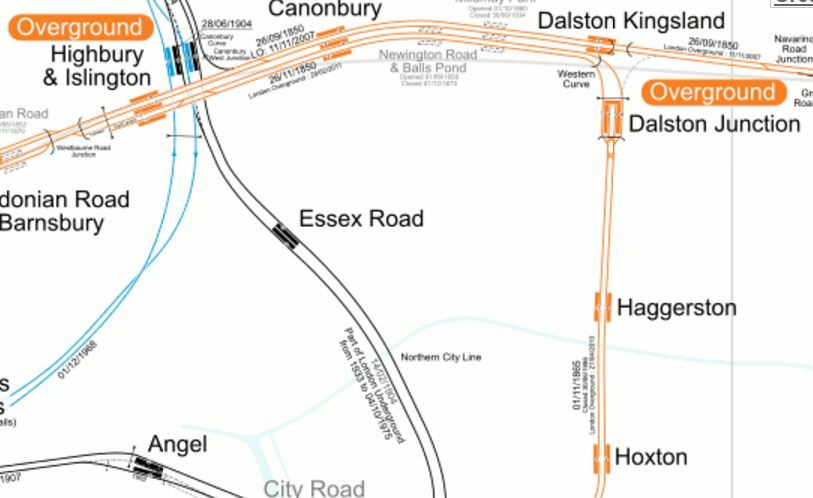
Lines Around N1
I live halfway on the diagonal line between Dalston Kingsland and Essex Road stations. Years ago, there used to be a station at Mildmay Park, between Dalston Kingsland and Csnonbury, which if it still existed would be very useful for me, as it would be about a hundred and fifty metres away.
So my journeys often start from one of the half dozen bus routes, that have stops within fifty metres or so of where I live.
- I’ll take a 38, 30, 56 or 277 to Dalston Kingsland or Dalston Junction stations for the North London Line and East London Line respectively.
- I’ll take a 141 to Manor House station for the Piccadilly Line.
- I’ll take a 38 or 56 bus to Essex Road station for the Northern City Line
- I’ll take a 38 or 56 bus to Angel station for the Northern Line.
- I’ll take a 21 or 141 bus to Moorgate for the Metropolitan and Circle Lines
- I’ll take a 21 or 141 bus to London Bridge for main line trains.
- I’ll take a 21 or 141 bus to Bank for the Central and Waterloo and City Lines
- I’ll take a 56 bus to St. Paul’s for the Central Line
- I’ll take 30 bus to Kings Cross, St. Pancras and Euston for main line trains.
Who said the three most important things when buying a house, are location, location and location?
Strangely, I rarely go directly to Highbury and Islington station, as the station is one of the worst in London for passenger convenience, with long and crowded tunnels and no step-free access to the deep tunnels.
If I need to go North on the Victoria Line, I will sometimes go to Essex Road and then take the Northern City Line for one stop to Highbury and Islington station, where there is a step-free level interchange to the Victoria Line.
There are several of these interchanges in East London, making train and tube travel easier.
Northern City And Victoria Lines At Highbury And Islington Station
This map from carto.metro.free.fr, shows the layout of lines at the station.
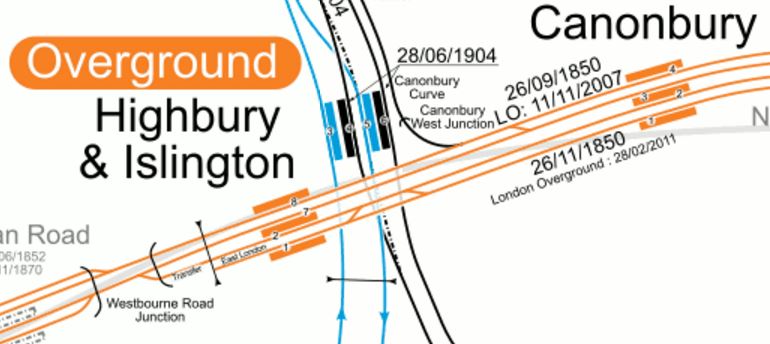
Note how the two Northbound lines and the two Southbound lines of the Victoria and Northern City Lines are paired, so that passengers can just walk through one of several short tunnels that connect the two platforms.
This connection will get more important in the future, as improvements will bring more passengers through the interchange.
- Highbuty and Islington station will be rebuilt, with access to the deep level platforms much improved.
- If traffic said it was needed, the Southbound and Northbound deep-level platforms, which are not far apart might even be connected together and to a second entrance on the other side of Holloway Road.
- The Northern City Line is getting new Class 717 trains, which will give an increase in capacity and I believe that the frequency on the Northern City Line will improve to 6, 8 or even 10 trains per hour (tph), thus making my ducking and diving easier.
- The Northern City Line will connect to Crossrail and for the first time N1 to lots of places, will be one change at Moorgate from the Northern City Line to Crossrail.
- The Victoria Line will increase in frequency to possibly 40 tph and benefit from station improvements at stations like Tottenham Hale, Blackhorse Road and Walthamstow Central.
It should also be noted how the Crossrail connection at Moorgate will help me.
When going to football at Ipswich, I may walk to Essex Road and then get a train to Moorgate, where I will take Crossrail to perhaps Shenfield for a fast train to Ipswich.
But who knows what I’ll do, as there will be several different routes, all of which will have their advantages?
East London Line To North London Line At Highbury And Islington Station
This is only from the East London Line trains arriving from West Croydon in Platform 2 at Highbury and Islington station to Westbound trains on the North London Line in Platform 7.
Although not as powerful as the double interchange at Highbury and Islington station between the Victoria and Northern City Lines, it is typical of well-thought out connections all over the Overground.
Piccadilly And Victoria Lines At Finsbury Park Station
This is a cross-platform interchange, that is heavily used as effectively it gives a simple choice of route through Central London for passengers from the Northern ends of the Piccadilly and Northern Lines. It’s a pity that the interchange between the two lines at Kings Cross St Pancras and Green Park aren’t as simple.
Metropolitan/District And Central Lines At Mile End Station
This picture gives a flavour of the interchange at Mile End station.
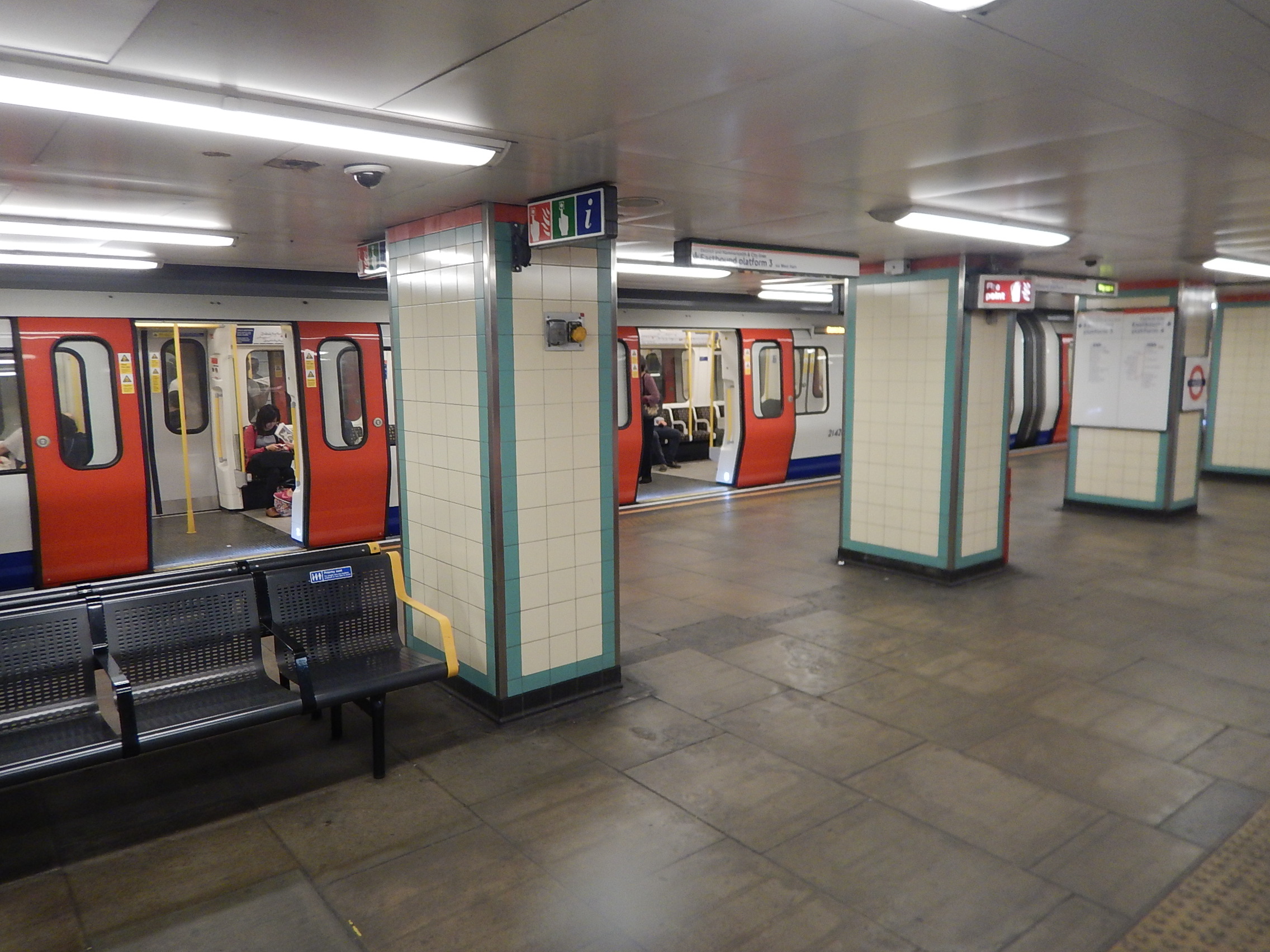
Cross-Platform Interchange At Mile End Station
It is a cross-platform interchange, that I use more and more, to go to the East on the Central Line. I usually arrive on a Metropolitan/District Line train from Whitechapel station, which is just a few stops down the East London Line.
Central Line And Shenfield Metro/Crossrail At Stratford Station
This interchange at Stratford station is going to be an integral part of Crossrail, as it will firmly connect the new line to the Central Line, with advantages to both.
This picture shows the interchange on the Eastbound platform.
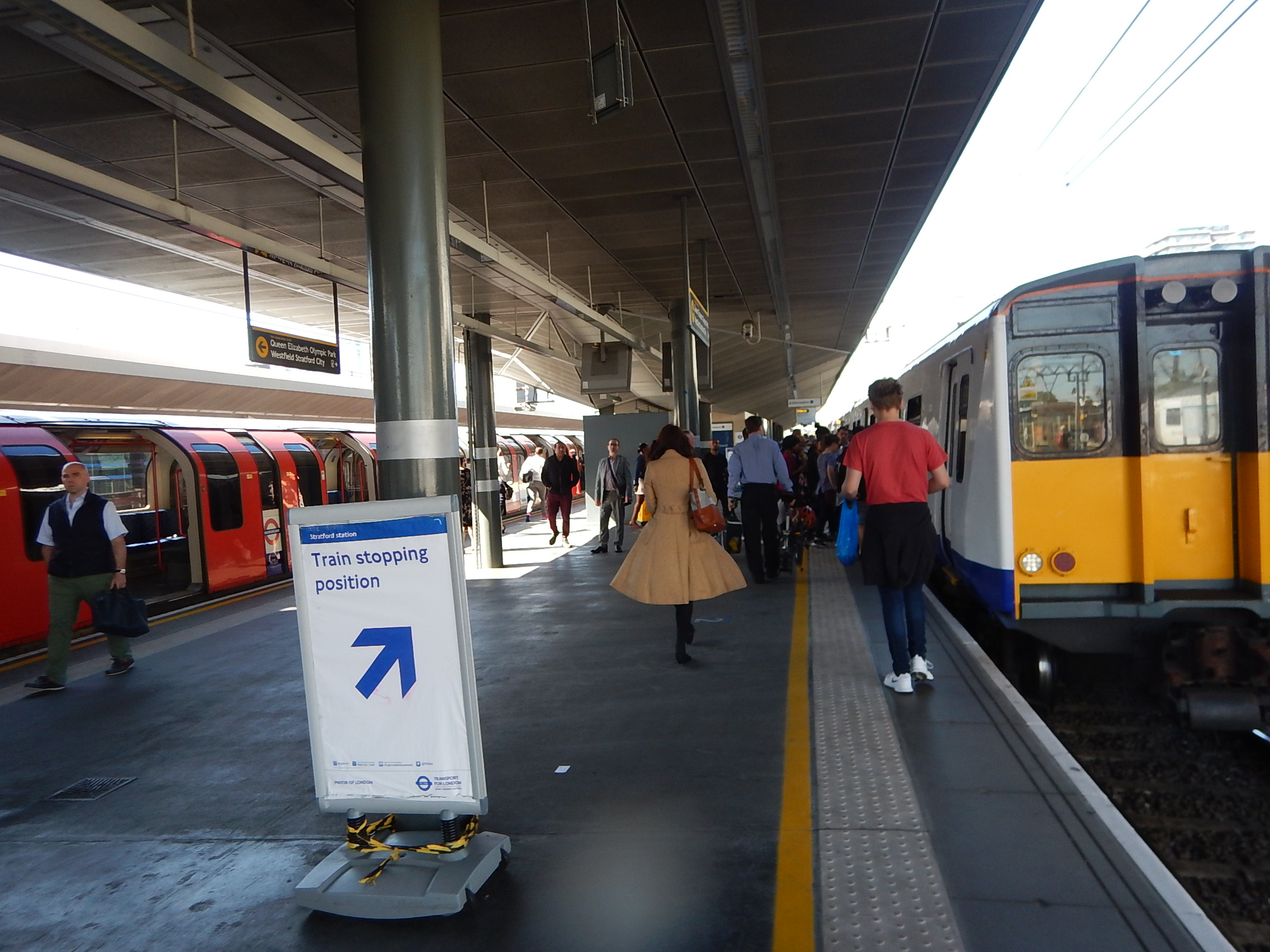
Central Line To Shenfield Metro/Crossrail Interchange
This interchange is certainly well-used and Crossrail will only increase that use.
Why Is This Not Done More Often?
These interchanges seem to work well!
But what always puzzles me, is why this layout is not used more often. And I don’t just mean in London. In all my travels, I can’t remember getting off a train in Europe and just walking across the platform to get a metro or a tram.
I suspect it could be because to get this type of interchange, you need to build some expensive railway infrastructure.
All of the examples I have given concern where a new line is being added to an existing network.
I am surprised that Crossrail doesn’t use a similar interchange anywhere else on its route.
Look at the Crossrail stations I documented in How Are Crossrail’s Eastern Stations Progressing?
In all stations, the Crossrail and fast lines are in pairs, whereas to get Cross-platform interchange between fast and stopping services, probably needs a different layout. That is not the fault of Crossrail, but the way the Great Eastern Main Line was built decades ago.
At the London end of the East Coast Main Line, the two slow lines are on either side of the two fast lines. At Stevenage, they have put two island platforms between the slow and fast lines, so that passengers have a cross-platform interchange between trains.

Stevenage Station
The Google Map clearly shows the layout.
The Frame Of The New Roof At Whitechapel Station Takes Shape
I’ve been through Whitechapel station several times in the last few days and I’ve taken these pictures of the structure of the new roof.


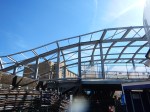
This image from the Whitechapel station page on the Crossrail web site, shows what I take to be a visualisation of the inside.

The ticket hall seems big enough for the performance of a large troupe of appropriate dancers
How Are Crossrail’s Eastern Stations Progressing?
I took a train to Shenfield and back again, taking pictures on the way.

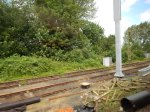
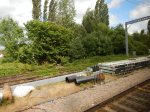
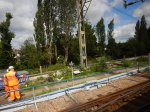






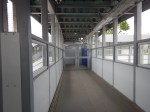
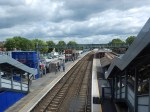
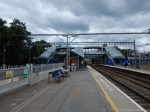

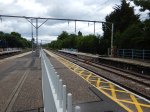




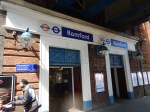

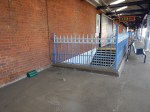
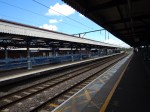
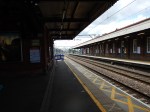
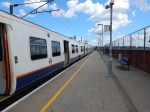
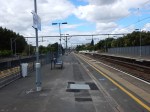
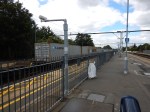
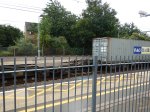
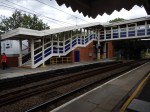



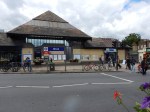
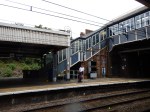


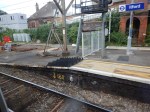



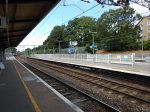


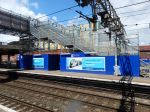
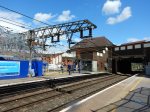
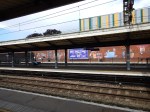
Before discussing the stations, it is worth reading this extract, from the Wikipedia entry for the Great Eastern Main Line.
The GER was grouped in 1923 into the London and North Eastern Railway (LNER). In 1931/32 the LNER quadrupled the tracks to Shenfield which became the terminus for inner-suburban operation.
In the 1930s a flyover was constructed just west of Ilford to switch the main and electric lines over, to enable main line trains to utilise Liverpool Street’s longer west side platforms without having to cross east side suburban traffic in the station throat. The new arrangement also facilitated cross-platform interchange with the Central line at Stratford, with services commencing in 1946. Either side of the Ilford flyover there are single-track connections between each pair of lines, with the westbound track extending to Manor Park and just beyond. The eastbound track extends as far as Ilford station. It was also envisaged that a flyover would be built at the country-end of the carriage sidings at Gidea Park to allow trains bound for the Southend line to change from the main line to the electric line, instead of at the London-end of Shenfield as they do now.
Plans were drawn up in the 1930s to electrify the suburban lines from Liverpool Street to Shenfield at 1500 V DC and work was started on implementing this. However, the outbreak of the Second World War brought the project to a temporary halt and it was not until 1949 that the scheme was completed with electrification being extended to Chelmsford in 1956.
So it could be said that the quadrupling of the tracks to Shenfield, was the legacy of Sir Nigel Gresley and his team, that has enabled Crossrail to be easily extended to the East.
I suspect that Crossrail’s engineers, regret that the flyover at Gidea Park, as proposed in the LNER plans, was never built. It would have helped one of Crossrail’s problems and that is how you fit two Southend trains per hour, that call at Stratford, Romford, Gidea Park, Harold Wood, Brentwood, Shenfield and then all stations to Southend Victoria into Crossrail’s eight trains per hour schedule. I wouldn’t be surprised if Southend Victoria becomes an extra terminal for Crossrail, that receives four trains per hour.
On the other hand, the foresight of Gresley’s team would appear to have led to one of the most powerful features of Crossrail in the East, which will be the cross-platform interchange between the new line and the Central Line.
This 1930s rebuild also explains, why the stations have .a solid feel of the first half of the twentieth century, which means that some of the stations although needing a lot of work, are solid underneath and all seem to be capable of upgrading, rather than needing the substantial rebuilding of some of the stations in the West.
Summing up the stations, you would say the following.
Shenfield
Shenfield station is already fully step-free.
- The station building probably just needs sprucing up.
- The platforms all seem to be long enough, as Platforms 1, 2 and 3 take twelve-car Class 360 trains and Class 321 trains.
- Platforms 4 and 5 aren’t much shorter, but may need to be lengthened, especially as trains will go through the station to new Eastern sidings.
- The space for the new Platform 6 has been created, but work is continuing on the platform and track.
- Work on the track is also continuing to update the electrification to a modern standard and the two western sidings that Crossrail trains will use.
Given that a proportion of passengers will probably want to interchange between Crossrail, services up and down the Great Eastern Main Line and to and from Southend Victoria, I do wonder, if there will be a reorganisation of stopping patterns for the longer distance services between Shenfield and London.
The works at Shenfield station, would appear to be taking a well-built mainly 1930s station and turning it into a terminus for Crossrail able to handle up to twelve trains per hour and an interchange with services to Colchester, Ipswich, Norwich, Southend and all points to the North and East of East Anglia.
Brentwood
Brentwood station has a lot of work completed or underway.
- The station office seems to have been refurbished.
- There are only lifts to the central Platforms 2 and 3.
- Platform extensions to all four platforms are underway.
- The bridge seems to be being refurbished rather than replaced.
I can find no references to lifts for Platform 1 and 4.
The works at Brentwood station would appear to be much simpler than Shenfield, but from the look of the new entrance and the visualisation in the Brentwood station web page on the Crossrail web site, they will create a very capable two platform station for Crossrail.
Harold Wood
Harold Wood station has a lot of work completed or underway.
- A new bridge has been installed, but not completed.
- Lifts are to be installed.
- Platform extensions to all four platforms are underway.
- The platform buildings seem to have been refurbished.
I would also assume that the station office will be refurbished.
The works at Harold Wood station, show that it will be good station, with a good interchange between Crossrail and services on the fast lines.
But why is there such a good interchange between the two sets of lines? Is it just because Brentford is not a full interchange?
Or is it so that the services to and from Southend Victoria can still call??
Gidea Park
Gidea Park station is very much a work in progress.
- A new bridge is being built with lifts under the largest plastic umbrella in London.
- Platform extensions to all four platforms are underway.
- The platform buildings seem to have been refurbished.
The works at Gidea Park station will create another good station, that has an excellent step-free interchange between Crossrail and the fast lines.
I must ask the same questions as I did for Harold Wood.
Romford
Romford station doesn’t appear to be seeing much work yet.
According to the Romford station page on the Crossrail web site, this is being done.
- A substantially improved ticket hall with revised entrances
- Three new lifts for step-free access to platforms
- Platform extensions to accommodate the new 200 metre long Crossrail trains.
This is obviously in addition to revised and improved signage, help points and seating.
Romford station from the pictures looks to be a solid station with nice period features, with some excellent marble and quality ironwork.
Chadwell Heath
Chadwell Heath station is very much on the way to be ready.
- A new footbridge has been built and commissioned.
- Platform extension work is underway.
- A turnback siding has been built east of the station.
I didn’t check out the actual station building, but this web page from Crossrail has a visualisation.
Goodmayes
Goodmayes station is in the process of being updated.
- The current footbridge is being updated.
- Three lifts will be added to provide step-free access to all platforms.
- The station building is being rebuilt.
- Platform extension work is underway.
The works at Goodmayes station will create a good suburban station, by building on the existing station office and footbridge.
Seven Kings
Seven Kings station is going through refurbishment.
- Lifts will be added
- The station building looks like it will be substantially rebuilt.
- The area outside the station will be improved.
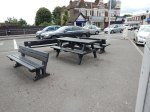
From the pictures, it does appear that the station is one of the few with a picnic table outside.
Ilford
Ilford station is scheduled to be completely rebuilt according to the Ilford station page on the Crossrail web site.
- A new spacious, modern and bright station building on Cranbrook Road
- A larger ticket hall with simplified ticket facilities and larger gate-line
- A full refurbishment, by Transport for London, of the York Mews entrance
- New lifts for platforms 1, 2/3, and 4
- Platform extensions to accommodate the new 200 metre long Elizabeth line trains.
Only the platform extension seems to be starting.
At least the visualisation on the Crossrail web site seems promising, with a large pedestrianised area in front of the station.
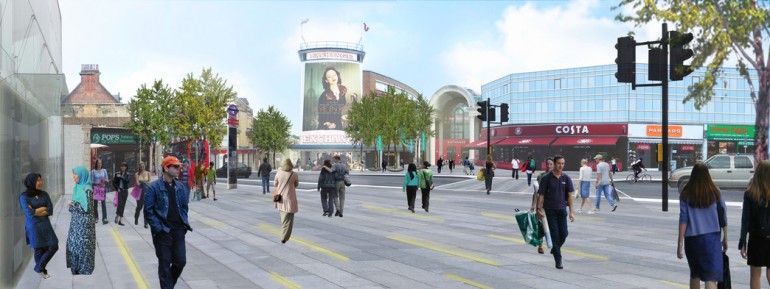
Arriving At Ilford Station
This picture was taken from the right and shows the current traffic in the area.
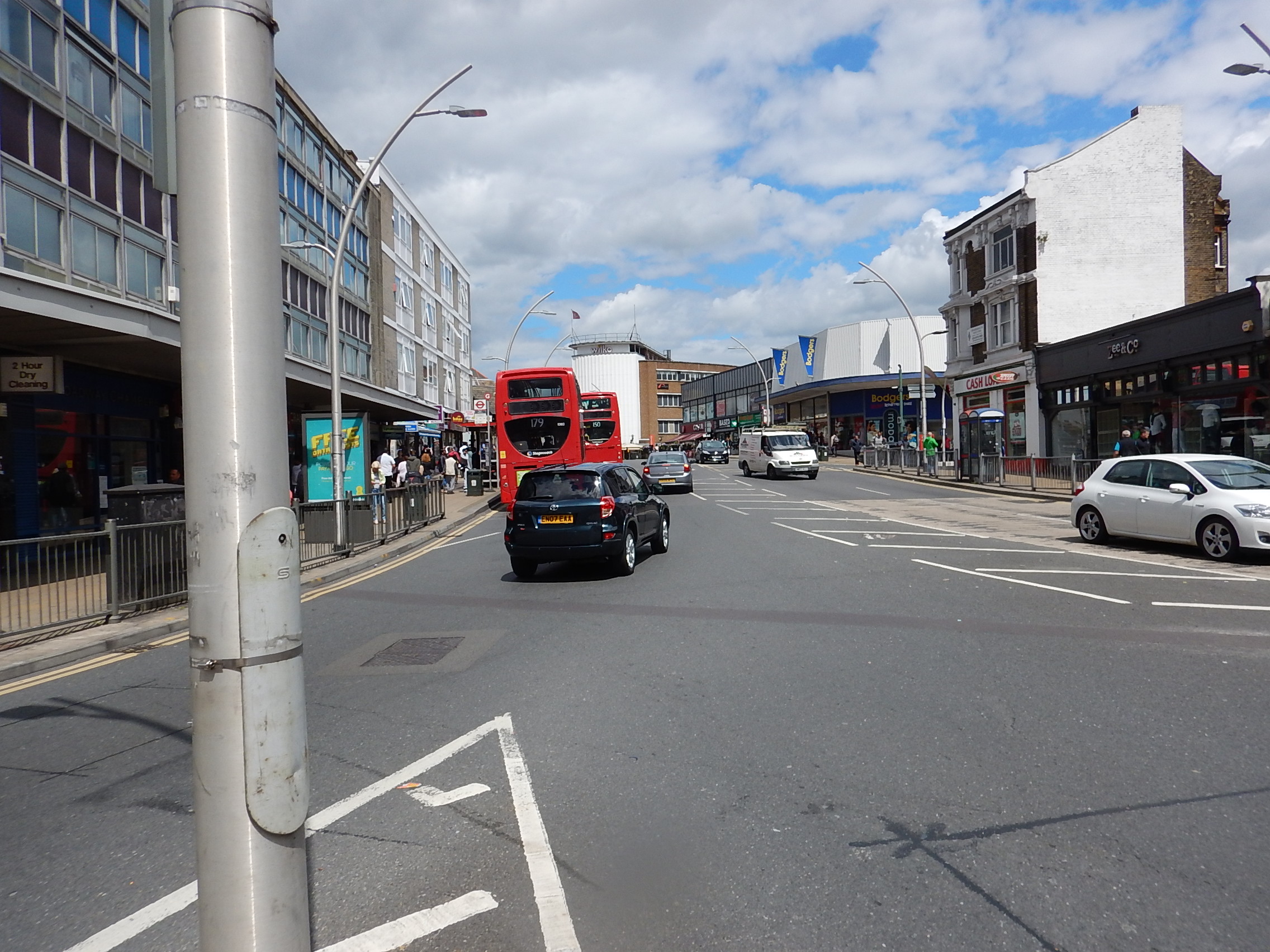
In Front Of Ilford Station Now
As with Romford, the station is right in the middle of the shopping area.
Manor Park
Manor Park station is undergoing refurbishment. This is said about the station in Wikipedia.
Manor Park will be fully served by Crossrail from 2019 but part of the route is scheduled to open in 2017 and new Class 345 trains will enter service. Platforms 1 and 2 are only 168 metres (184 yd) and 185 metres (202 yd) long respectively and cannot physically be extended to accommodate the new trains, which will be over 200 metres (220 yd) in length, so selective door operation will be utilised. The freight loop around platform 1 is due to be removed and replaced by a new loop line further down-line, west of Chadwell Heath.
Due to the narrow platforms and the layout of the station, fitting lifts for disabled access would be difficult, requiring the walkways to be rebuilt and closing parts of the station for several months. The station will receive new ticket machines and gates, an accessible toilet and new retail space.
As the Manor Park web page on the Crossrail web site, says new lifts will be installed, I suspect this station will face several months of closures.
Given its location by the Southern end of Epping Forest, I do wonder, if it could be a Crossrail station with a walking and picnic area close by. This Google Map shows the station and the green space to the North.
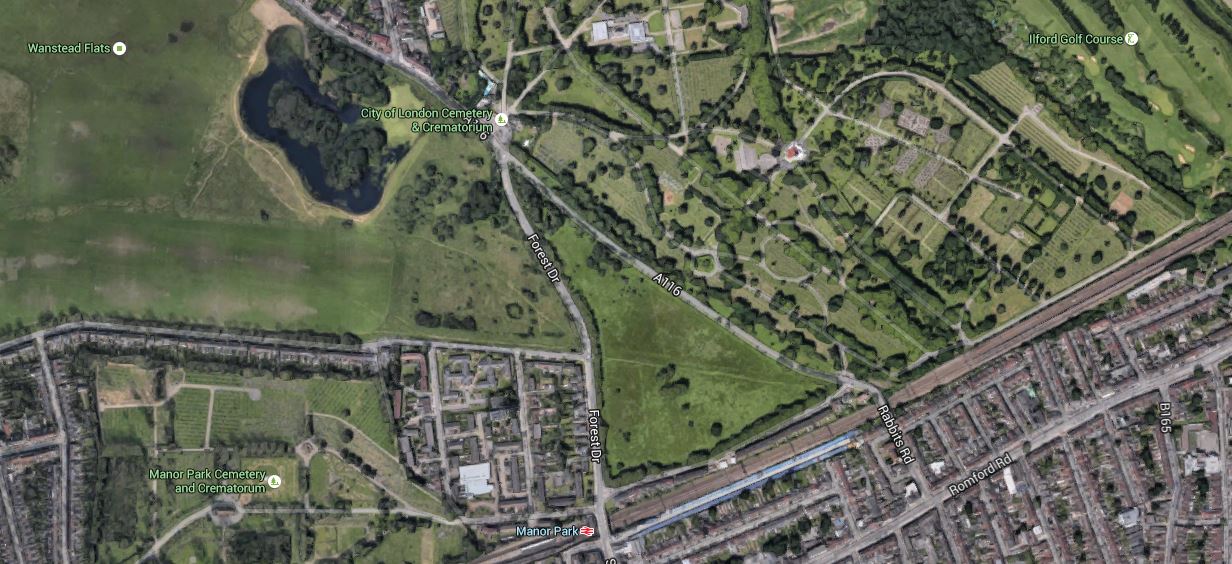
North Of Manor Park Station
As the area is mainly controlled by the City of London and there are also two large cemeteries, I suspect that any development will be totally appropriate. I suspect too that there are a lot of walks through the area to stations on the Central and Gospel Oak to Barking Lines.
Crossrail In The Home Straight
Crossrail’s opening dates are only just over a couple of years in the future and this article in Rail Engineer, which is entitle Crossrail – The Deadline Is looming, describes what is happening on the Eastern branch to Shenfield.
The article is a must-read and details how the project is organised, to make sure it is delivered on time and on budget. The last paragraph sums up the project.
In engineering terms, this project couldn’t be described as ‘cutting edge’ but, in railway engineering terms, it would be hard to find a more complex environment to work in with potential challenges at every step. Costain has reached almost two million man-hours on the project, and the team is confident that all of the deadlines will be met and train testing will be underway after November 2016 as planned.
East London and East Anglia have fed on scraps for decades and I think that meeting the target of November 2016, so trains can be tested, is highly likely.
Will Shoreditch High Street Be Connected To The Central Line?
Every Londoner has their own personal pet hates about the Underground.
One of mine is the lack of an interchange between the East London Line and the Central line at Shoreditch High Street station. The Central line passes under the East London Line and some web sites say that provision was left in the new station for the connection.
This map from carto.metro.free.fr shows the lines around Shoreditch High Street station.
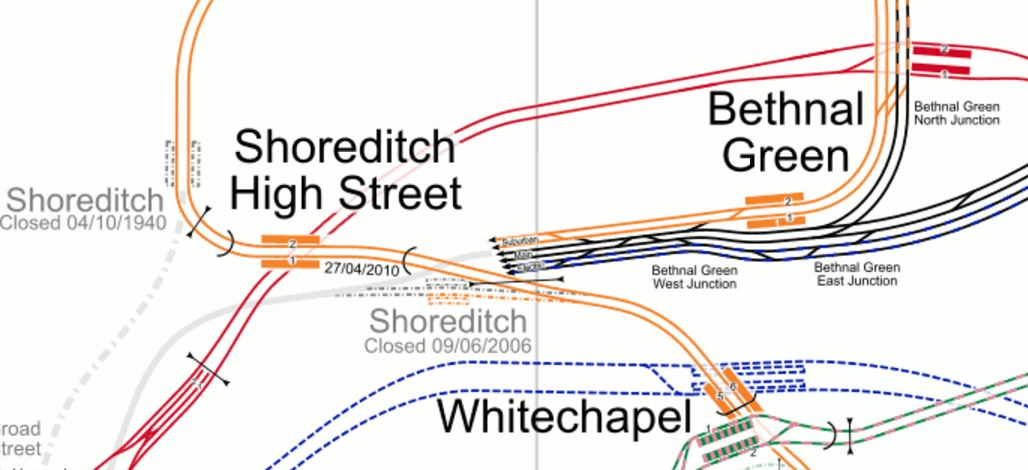
Shoreditch High Street Station
Note how the Central Line platforms at Liverpool Street are in the South West corner of the map.
Some sites also say that the reason for not building the connection, is that the Central line is too crowded and a decision will not be taken until after Crosrail opens. This is the comment on an article about the connection in London Connections.
Don’t expect an interchange with the Central Line until Crossrail 1 is fully operational. The Central Line in its present, heavily overcrowded, state could not possible cope with even more stations.
Perhaps in about 10 years…
It does sound sensible.
Getting West on the Central Line can be difficult from where I live.
I can take a bus to either Bank or St. Paul’s stations, but coming back is a problem, as the bus stops aren’t well placed.
After Crossrail opens, I might take the same bus to Moorgate for the new line or I could get to Crossrail using the East London Line connection at Whitechapel.
It shows how Crossrail is going to add masses of possible new routes to everybody’s travel in London.
Crossrail links with the Central line at Stratford with a cross-platform interchange and more conventionally at Liverpool Street, Tottenham Court Road, Bond Street and Ealing Broadway.
As the East London Line links to Crossrail at Whitechapel, will passengers going from say Anerley to Epping, be happy with a double change at Whitechapel and Stratford? Especially, as the second one would be just a walk across the platform.
I think they will.
But obviously Transport for London will have all the traffic statistics and would know when creating the Interchange at Shoreditch High Street will be worthwhile.
But looking at the map of the lines at Shoreditch High Street station, leads me to wonder if it would be possible to put in an escalator connection to the Eastern end of the Central Line platforms at Liverpool Street station. This map from carto.metro.free.fr shows the Central Line through both stations in detail.

Liverpool Street And Shoreditch High Street Stations
As all of the office blocks on both sides of Bishopsgate, were planned and designed before Crossrail and the London Overground, I do wonder that if they were being designed now, they would build a travelator connection between Shoreditch High Street and Liverpool Street stations, which incorporated another set of escalators to the Central Line.
Phince Philip On Crossrail
Matthew Parris , who admits he is no royalist, has an article in today’s Times entitled The Debt We Owe To A Thoroughly Modern Philip, in which he praises Prince Philip’s attitude to engineering, science and technology amongst other things.
He finishes the article like this..
Earlier this year, at 94, Prince Philip descended into the main tunnel of London’s Crossrail project to see more. They told him it would open in 2018.
“Too late foe me,” he said. Then he thought again. “Or perhaps not.”
I hope not.
I would agree with Matthew.
Abbey Wood Station – 9th June 2016
I took these pictures at Abbey Wood station.




If you look at the various pictures I have taken over the past months of this station, the station is progressing and the builders seem to be managing to always have a working station amongst all the construction work.
Certain factors have helped in this important aim.
- The previous station was unloved by everyone and had absolutely no architectural merit.
- There are no heritage issues.
- Good design of a temporary step-free pedestrian bridge, that appears to be morphing into a permanent one, has aided passengers.
- There always seems to be cheery staff on hand for lost and puzzled passengers.
- Traffic is heavy in the area, but not unmanageably so.
But I think most importantly, the Crossrail portal is some distance away from the station, keeping the two projects effectively separate.
Compared to some station rebuilds, I’ve encountered in the past, so far it has been a textbook example of good project management.
Rochester Station
Rochester station is one of the stations, that could be important to a proposed South London Outer Orbital .
The proposal says that two trains per hour (tph) could go to the Medway Towns. As Rochester has a new station with a bay platform 3, which is capable of taking twelve-car trains, it must be a possible terminus.
These are pictures I took of the station, as I passed through.

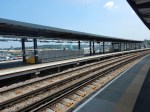
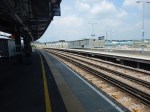



The Huguenot Museum above the Tourist Office opposite the station is worth a visit. There is a proper cafe downstairs, where you can eat in the garden.
It does need a light-controlled crossing to aid people in crossing the road.
Crossrail has a safeguarded route to Gravesend. Wikipedia says this.
The route to Gravesend has been safeguarded by the Department for Transport, although it was made clear that as at February 2008 there was no plan to extend Crossrail beyond the then-current scheme. The following stations are on the protected route extension to Gravesend: Belvedere, Erith, Slade Green, Dartford, Stone Crossing, Greenhithe for Bluewater, Swanscombe, Northfleet, and Gravesend.
There two major major problems with this.
- The Crossrail proposal doesn’t call at Ebbsfleet International station.
- Gravesend station is very cramped and it would need major rebuilding to accommodate Crossrail.
As I showed in Crossrail Extension To Gravesend, connecting services on the North Kent Line to Ebbsfleet International station wouldn’t be the most difficult of jobs and could involve a some new track or a rebuilt Northfleet station and perhaps a travelator connection.
This Google Map shows the lines in the Ebbsfleet International area.
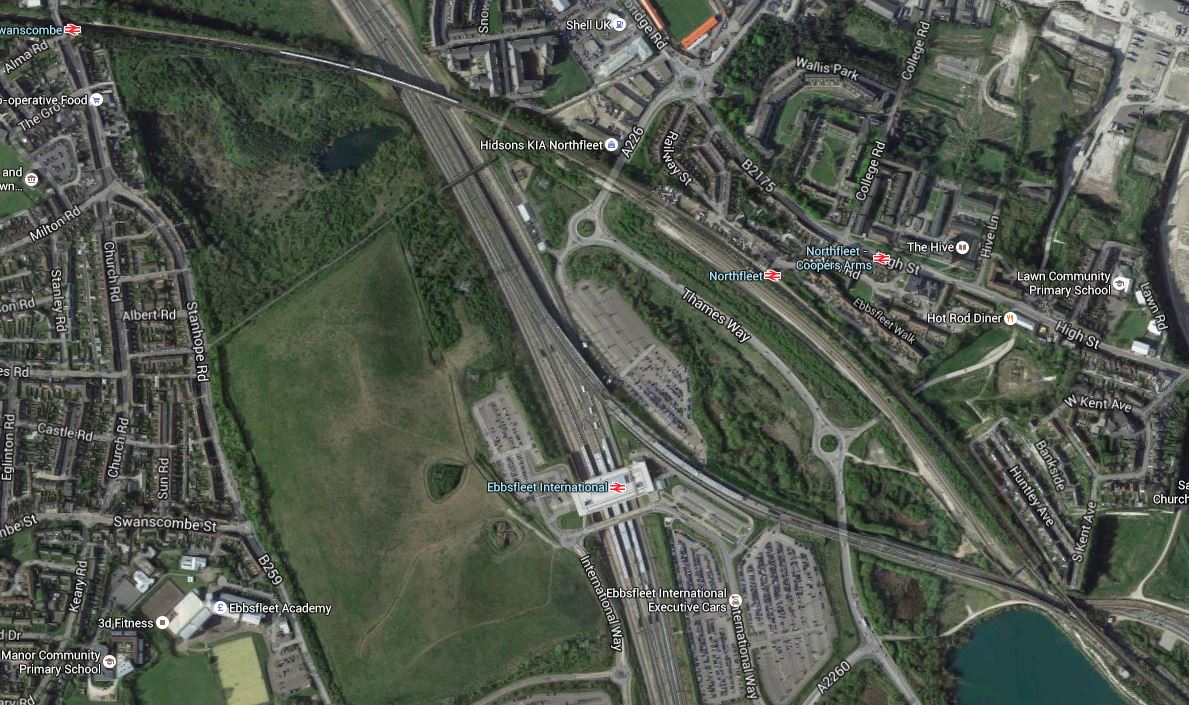
Lines Around Ebbsfleet
The North Kent Line starts in the top left at Swanscombe station, crosses over the lines into Ebbsfleet International. It then goes through Northfleet station, before going off in a South-Easterly direction to Gravesend.
These pictures were taken from a train going towards London on the North Kent Line.
I’m certain, that an acceptable and affordable solution can be made to connect Crossrail to Continental services.
If Crossrail were to terminate in Platform 3 at Rochester station, it would only need the intermediate stations to be capable of taking twelve-car Class 345 trains. These have already been designed for running on third-rail lines.
When it comes to linking to the South London Orbital, which will probably mean that there are 4 tph between Rochester and Swanley stations, it would probably mean that Crossrail would need to run with a similar frequency to Abbey Wood.
At present Rochester has services to and from Charing Cross, which go via Abbey Wood and Woolwich Arsenal. The question has to be asked if as Crossrail serves the same stations and then goes across Central London, if this service should be configured differently. As the service goes between Gillingham and Charing Cross stopping at all stations, it might even be possible to cut out the service completely, if Crossrail stopped at all stations to Abbey Wood and fast services stopped at all stations in the Medway Towns, as they seem to do now!
But then the commuters would object and try to keep the existing unnecessary service. Gillingham for example would have.
- 2 tph to St. Pancras
- 3 tph to Victoria
- 2 tph to Swanley and Woking
Crossrail could even be extended to Gillingham.
There are an awful lot of ways to organise the train services.
By the way, can anybody tell me what is the point of Charing Cross station?
 The Anonymous Widower