Great Western Railway’s Battery Train Sets New Distance Record
The title of this post, is the same as that of this press release from Great Western Railway.
This is the sub-heading.
Great Western Railway’s innovative FastCharge battery trial has achieved another significant step – just days after laying claim to a battery train UK distance record without recharging.
These two paragraphs add more detail.
The train demonstrated its capability on Wednesday by travelling a UK record of 86 miles (138km) on battery power alone and without recharging.
Today the Class 230 battery train completed a 70-mile move from Long Marston to Reading Train Care Depot – using just 45 per cent of its battery capacity. GWR’s team of specialist engineers on board the train claim it could have travelled more than 120 miles on a single charge.
There is also this impressive video.
Note.
- In the video, the train is cruising at 36 mph.
- The top speed of the D78 Stock was 45 mph.
- The train looks in excellent condition.
This is a total game-changer for battery-electric trains in the UK.
The train makers, who have demonstrated battery-electric trains; Alstom/Bombardier, CAF, Hitachi, Siemens and Stadler will have to up their distances on battery power to at least 86 miles and possibly 120 miles, as who would want their new product to be outdistanced by second-hand forty-year-old upcycled London Underground trains?
I have some further thoughts.
The Trains Performance In The Real World
Dr. Simon Green, who is GWR’s Engineering Director, said this.
It’s also worth noting that in reaching the 86 miles on Wednesday, the train was operating in a real-world environment, at speeds of up to 60mph, stopping and starting over a hilly route, with elevation changes of up to 200m.
The train exceeded the 84 miles (135km) recorded by a Stadler Class 777 under test conditions in 2022 – believed to have been the greatest distance travelled by a battery train designed for the UK.
Note that the train was running at up to 60 mph.
Timings For The Mid-Cornwall Metro
This map shows the Mid-Cornwall Metro.

I have been looking at the Mid-Cornwall Metro and this service will share the Cornish Main Line with faster services between Par and Truro.
- Expresses and the Mid-Cornwall Metro will both stop at Par, St. Austell and Truro.
- Par and Truro is a distance of 19 miles.
- Expresses between Penzance and Plymouth take around 22-23 minutes to go between Par and Truro.
- This is an average speed of around 50-52 mph.
It looks to me, that there is scope for the Mid-Cornwall Metro and the express trains to run at similar speeds between Par and Truro.
- If the Mid-Cornwall Metro used Class 230 trains running on batteries, these trains should be fast enough to keep out of the way of the expresses.
- Par station has an island platform, where the Mid-Cornwall Metro uses one side (Platform 3) and expresses use the other (Platform 2).
Perhaps, if the timetable was something like this, it would give the best services to passengers.
- All expresses would use Platform 2, if they were stopping at Par station. The current track layout allows this.
- For Westbound passengers the Mid-Cornwall Metro would stop in Platform 3 and the express would stop in Platform 2, so that passengers going to beyond Truro on the Cornish Main Line could to the express on the other platform.
- Between Par and Truro, the Mid-Cornwall Metro would run a couple of minutes behind the express.
- Passengers for the Falmouth Branch could swap trains at Par on wait for the Metro at St. Austell or Truro.
- For Eastbound passengers, between Par and Truro, the Mid-Cornwall Metro would run a couple of minutes behind the express.
- At Par, the Mid-Cornwall Metro would stop in Platform 3 and the express would stop in Platform 2.
- The express would wait at Par for the Mid-Cornwall Metro.
- Passengers for Plymouth and London Paddington would change trains at Par for the express on the other platform.
- Passengers for the Newquay Branch on the express would swap trains at Par or wait for the Metro at St. Austell or Truro.
I suspect there are other patterns, but something like this will combine express services with the Mid-Cornwall Metro.
Simon’s Vision
Simon Green also says this about his vision of how the trains and the related FastCharge technology could be used.
GWR’s FastCharge technology has been designed to solve the problem of delivering reliable, battery-only trains capable of fulfilling timetable services on branch lines, eliminating the use of diesel traction and helping to meet the Government and wider rail industry’s target to reach net-zero carbon emissions by 2050.
The use of batteries for extended operation has typically been constrained by their range and meant widespread implementation has, until now, not been possible. It also negates the need for overhead electric lines which are expensive, time consuming to install and impact the landscape.
He’s judging the system as a whole, which is the only way to do it.
Where Could Class 230 Trains Be Used On The Great Western Railway?
These are a few ideas.
- Slough and Windsor & Eton Central – 2.8 miles – 3 cars – FastCharge at Slough
- Maidenhead and Marlow – 7.1 miles – 2 or possibly 3 cars – FastCharge at Maidenhead
- Twyford and Henley-on-Thames – 4.6 miles – 3 cars – FastCharge at Twyford
- Reading and Basingstoke – 15.4 miles – 3 cars – FastCharge at Basingstoke
- Weston-super-Mare and Severn Beach – 32.5 miles – 3 cars – FastCharge at Severn Beach
- Bristol Temple Meads to Avonmouth 8.9 miles – 2 cars – FastCharge at Avonmouth
Bourne End station, where there is a reverse may restrict the length of the service to Marlow.
GWR Trialling Transformative Ultra-Rapid Charging Train Battery
The title of this post is the same as that of this article on Rail Technology Magazine.
This is the sub-heading.
Great Western Railway (GWR) has begun trialling a potentially groundbreaking battery innovation called FastCharge. If the trial is successful, it is hoped that the technology could transform branch line services and accelerate the decarbonisation of the network.
This is the first paragraph.
This innovative system, which has been developed over three years, eliminates the need for diesel trains on branch lines by powering battery-operated units with ultra-rapid charging. The system boasts an impressive 2,000kW charging capacity, eight times more powerful than a Tesla Supercharger, allowing trains to fully recharge in just 3.5 minutes at West Ealing station, the trial’s first real-world location.
I took these pictures of the trial installation at West Ealing station, this morning.


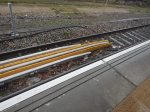

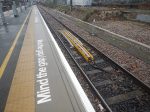
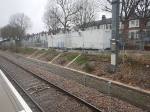
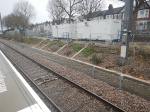
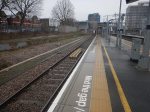
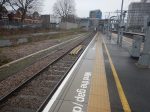
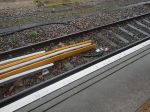
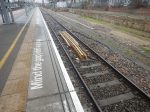
Note.
- Platform 5 is used by the trains to and from Greenford station.
- Two sets of charging rails have been installed between the rails, in Platform 5.
- The rails in the charging rails could be aluminium. This would not be surprising, as it is a good electrical conductor.
- The two shorter outside charging rails could be connected together.
- The yellow parts of the charging rails are plastic, so are probably for warning purposes.
- Two white containers have been installed alongside the track.
In Great Western Railway Updates EHRT On Its Upcoming Operational Trial Of Fast Charge Tech, I described the components of the Fast Charge system in this paragraph.
The Fast Charge system consists of three key components: retractable charging shoe gear, which is mounted to the underframe of the train; short (4m) charging rails mounted between the underframe of the train; and the Fast Charge Battery Bank (FCBB) installed beside the track, acting as an energy buffer between the train and the grid.
The charging rails are clearly visible in my images and the Fast Charge Battery Bank is probably in the white containers.
These are my thoughts.
The Engineering Is Of A High Quality
Or it certainly appears so from the platform and in the pictures, that I took.
How Much Energy Will Be Taken On Board at Each Charge At West Ealing?
According to the Rail Technology Magazine article, the Fast Charge Battery Bank will have to supply 2,000 KW for 3.5 minutes to fully-charge the train at West Ealing station.
This is 7,000 KW-minutes or 117 KWh.
In D-Train Order For Marston Vale Confirmed, this is said about the batteries on a Class 230 train.
- The train has four battery rafts, each with a capacity of 106 kWh
- Range is up to fifty miles with a ten minute charge at each end of the journey.
- Range will increase as battery technology improves.
I wonder if the Class 230 train, that will run between West Ealing and Greenford, will only have one 106 kWh battery.
- This will be less weight and therefor better acceleration.
- 117 kWh in the Fast Charge Battery Bank will be sufficient to fully-charge the single battery.
- The route is only five miles for a round trip.
I can see costs dropping.
What Batteries Will Be Used In The Fast Charge Battery Bank?
I think there are four main possibilities.
- New lithium-ion batteries
- Refurbished second-hand electric vehicle batteries
- New lead-acid batteries.
- It might be possible to use supercapacitors
Note.
- Lead-acid batteries can lose charge in cold weather.
- Supercapacitors don’t care about the weather.
- The weight of lead-acid batteries would not be a problem in a stationary application.
If there is only one battery on the train, I can see the supercapacitors handling it.
What Voltage Is Used In The Charging Rails?
Consider.
- The Vivarail Class 230 trains are built from redundant London Underground D78 Stock trains.
- The D78 Stock trains were built to run on London Underground lines, when that had voltages of 0 and 630 VDC.
- So I wouldn’t be surprised if the trains were designed around this voltage.
- If the charging rails worked at 630 VDC, then to have a 2,000kW charger, this would mean a charging current of 3175 Amps.
This would explain the fat cables connecting the charging rails to the Fast Charge Battery Bank.
An alternative voltage to use could be 3,000 VDC, as some trains are built to this voltage and therefor the electronics and transformers must be available. This would reduce the charging current to 667 Amps, which might be able to use smaller cables.
It may come down to what is convenient for the output voltage of the batteries.
Why Are There Two Sets Of Charging Rails?
They are both shown in this image.
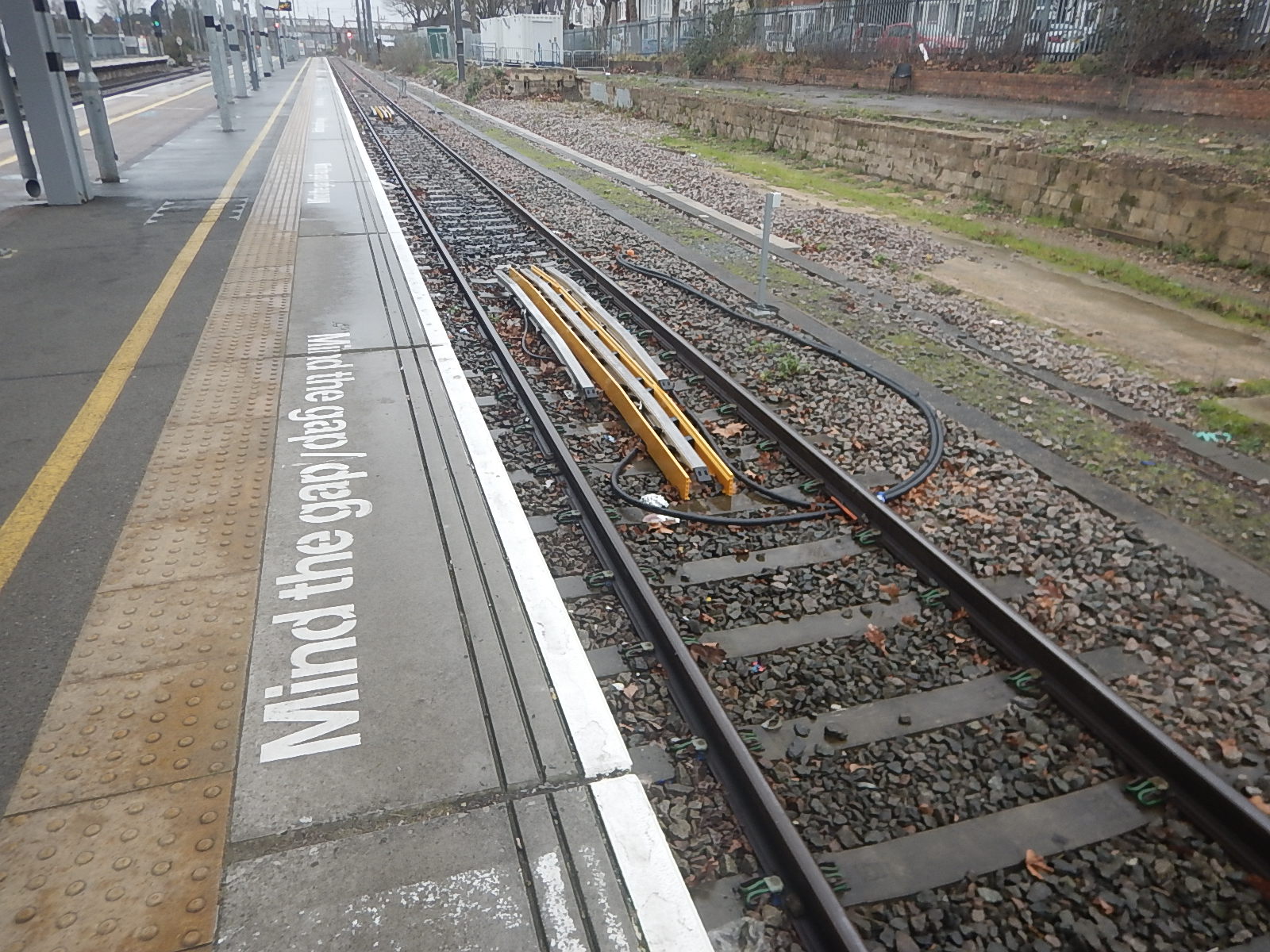
Note.
- The two sets of charging rails are about forty metres apart.
- The Fast Charge Battery Banks are another twenty metres further on.
It’s not the layout you’d expect for running a single two-car train running every half hour.
But could it be that two separate sets of charging rails can operate a more frequent service with this layout of charging rails?
Eversholt Rail And Vivarail To Develop Class 321 BEMU
The title of this post, is the same as that of this press release from Eversholt Rail.
These three paragraphs introduce the project.
Eversholt Rail and Vivarail have signed an agreement aimed at developing battery power – and range extension – to the Class 321 ‘Renatus’ fleet.
The 30 unit ‘Renatus’ fleet is a product of £65m investment in AC traction, air conditioning and upgraded interior. Completed in 2019, it provides a high-quality passenger experience, proven reliability in intensive operations and is widely compatible on the UK network. This fleet is currently operating on the Greater Anglia network until the introduction of their new trains is completed.
Eversholt Rail and Vivarail are committed to supporting the UK Government’s ambition to decarbonise its rail sector by 2050, and the Scottish Government’s objective of doing so by 2035. This proven and reliable fleet is an excellent fit in terms of characteristics, fleet size and availability for conversion to a Battery Electric Multiple Unit (BEMU). Vivarail, as the designers and manufacturers of the UK’s only battery and hybrid trains currently in passenger service are well positioned to progress this development.
This paragraph talks about the design objectives.
We will be working together to develop a design to integrate battery technology to provide between 20 to 30 miles of self-propulsion. Enabling the fleet to operate on non-electrified or partly electrified routes would offer the opportunity to increase the range of modern, low-carbon options to accommodate passenger demand; to enable fleet cascades; to improve the passenger experience; and to bring air quality and decarbonisation benefits to local areas.
I have a few thoughts on what I have read so far.
Vivarail’s Technology
In Battery Class 230 Train Demonstration At Bo’ness And Kinneil Railway, I talked about a ride in the battery version of Vivarail’s Class 230 train.
The train impressed me, as it did others that day.
I know that the train is late on being introduced on the Borderlands Line in Wales, but then all bi-mode or tri-mode trains seem to be having software problems.
In D-Train Order For Marston Vale Confirmed, I talked about the technicalities of Vivarail’s battery train.
Battery Prototype
The article also gives more details of the battery prototype.
- The train has four battery rafts, each with a capacity of 106 kWh
- Range is up to fifty miles with a ten minute charge at each end of the journey.
- Range will increase as battery technology improves.
- The train is charged using a patented automatic charging point.
- The batteries will have a seven-year lifespan, backed by a full warranty.
- Battery rafts would appear to be interchangeable with the diesel generators.
- Hydrogen power will be used within the next few years.
The specification seems comprehensive and it would appear there is a high degree of innovative automation and well-thought-out electrical engineering.
Train Energy Consumption
The train has the following characteristics.
- Two cars
- 424 kWh of battery capacity.
- 50 mile range
This gives a consumption 4.24 kWh/per car/per mile.
In an article in the October 2017 Edition of Modern Railways, which is entitled Celling England By The Pound, Ian Walmsley says this in relation to trains running on the Uckfield Branch, which is probably not much more taxing than the Marston Vale Line.
A modern EMU needs between 3 and 5 kWh per vehicle mile for this sort of service.
I am surprised that the Class 230 train lies in the 3-5 kWh range, but then I’m not sure of the weights of the two trains.
I estimate two-car units to weigh as follows.
- Class 230 train plus batteries – Around 50 tonnes.
- Electrostar – Around 90 tonnes
- Aventra – Around 80 tonnes
I shall get some better figures, when I actually see the trains, as the weight is on the side.
Note.
I should say, that I have met some of Vivarail’s designers and I have been impressed.
They were also very complimentary about the D78 Stock, where it appears no expense was spared by Transport for London to keep them up to scratch.
I will apply Ian Walmsley’s rule in the extract to the Class 321 train.
- Four cars
- Thirty miles
- As the Class 321 Renatus has a modern traction system, I’ll assume it is efficient and uses 3 kWh per vehicle mile for a gentle short branch line.
- These figures would need a 360 kWh battery.
If the consumption was 5 kWh per vehicle mile, it would be a 600 kWh battery.
Under Train Space
There is plenty of space under a Class 321 train, as these pictures show.
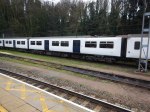
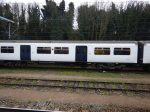
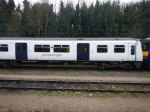
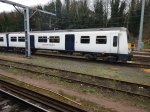
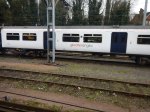
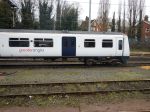
My design would see a battery under each car, if that were possible to even out the weight.
The Renatus Interior
These pictures show the Renatus train and interior.
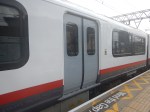
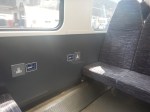

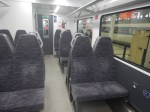
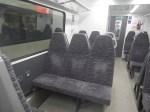

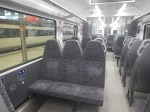
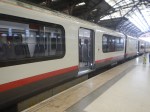
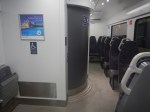
Not bad for a train approaching its mid-thirties.
Will The Train Have Third-Rail Shoe Gear?
I have read the technical documents for Porterbrook’s Class 769 train, which this is based on the Class 319 train.
In the Wikipedia entry for the Class 319 train, this is said,
Class 321 passenger units and Class 325 postal units were developed from the Class 319 design, using similar traction equipment and the same steel body design, with revised cab designs. The 325 units used a Networker style cab design.
It looks like except for cosmetic differences in the drivers cab, the Class 319, Class 321 and Class 325 trains are identical under the skin.
Does this mean that like the Class 319 train, Class 321 trains can be fitted with third-rail shoes?
It should be noted, that if the trains can be fitted with third-rail shoes, then Vivarail’s Fast Charge system can be used to charge the train.
Could Other Trains Be Converted?
It certainly looks like in addition to the Class 321 trains, both the Class 319 and Class 325 trains can be converted to battery-electric power.
These three trains are all members of British Rail’s Mark 3 family, which were designed before computers were used in structural design to be able to withstand the force of a twenty-four tonne cement truck falling on them from a bridge. On the 5th of November 2010, this nightmare scenario happened in the Oxshott Rail Accident and no-one was killed.
So to avoid the scrapyard, trains based on the Mark 3 coach, like the Class 320, Class 322, Class 455 and Class 456 trains will be happy to sign up to the Eversholt Rail and Vivarail conversion process.
- The Class 320 trains are three-cars, so would offer another type of train.
- The Class 322 trains are four-cars, were built for the Stanstead Express.
- The Class 455 trains are four-cars with third-rail gear, so would offer another type of train.
- The Class 456 trains are two-cars with third-rail gear, so would offer another type of train.
In SWR Says Farewell To ‘456’s, I talk about converting the two-car Class 456 trains after Mark Hopwood, who is now a big cheese at Great Western Railway, suggested the conversion to create a useful two-car battery-electric train.
If you doubt, the quality of the bodies and interiors of these trains from another era, I suggest you go to Liverpool Street station and take a ride in one of Greater Anglia’s Class 321 Renatus trains.
As there are six classes that could be converted, various different types of train can be converted to suit an operator’s needs.
Main Line Speed
Most of these trains are 100 mph trains, with drivers telling me, that they have superb brakes to handle stopping from that speed.
However, Class 455 and Class 456 trains are only 75 mph trains, with some of the Class 320 trains being only 90 mph trains.
Accidents And Incidents
As far as I can tell, none of these trains has had a serious accident, that has resulted in the death of a passenger.
Even the Oxshott Rail Accident only resulted in two serious and five minor injuries, with one of the serious injuries being the driver of the cement truck.
It is a remarkable safety record.
Possible Routes
I will do these on a company-by-company basis, as all companies needs are different.
c2c
c2c is an all-electric company.
I doubt there is a possibility of the company needing any battery-electric trains.
Chiltern Railways
Chiltern Railways is an all-diesel company.
They effectively have three different types of motive power and the solutions for each will be different.
- Six Class 68 locomotives haul Chiltern’s flagship main line services. As there are thirty-four of these modern locomotives in operation in the UK, I would suspect their manufacturer; Stadler will come up with a zero-carbon solution for application to these locomotives. I suspect they will become hydrogen-powered.
- Workhorses are 28 Class 168 trains totalling eighty-five carriages. One has been converted to hybrid operation by Rolls-Royce mtu and I suspect that Rolls-Royce mtu have a plan to make all these trains zero-carbon by 2030.
- There are also 39 Class 165 trains, which are diesel Networkers, dating from the 1990s.
I suspect that as the Networkers are the oldest in the fleet, these might be replaced with new rolling stock or some cascaded Turbostars.
I also wonder, whether Chiltern’s owner; Deutsche Bahn is watching the development of the Rolls-Royce mtu solution as it could be very applicable in Germany.
Govia Thameslink Railway
Govia Thameslink Railway is an all-electric railway except for two services, where diesel multiple units are used.
- Eastbourne and Ashford International – 25.4 miles one-way – Charge at Eastbourne and Ashford International using existing electrification or a charger.
- London Bridge and Uckfield – 25 miles one way – Charge at Hurst Green and Uckfield using existing electrification or a charger.
Note.
- The trains would need a third-rail capability.
- The company also has a fleet of nineteen forty-year-old Class 313 trains, which are used on Coastway services.
- The Class 321 BEMUs could take over all Coastway services between Ashford International and Portsmouth, which would probably make things easier for the operator, with respect to staff training.
The addition of a fleet of Class 321 BEMUs or similar would surely be a sensible move to improve Govia Thameslink Railway services.
Great Western Railway
This article on Railway Gazette is entitled GWR Seeks Input To Decarbonisation Plan.
This is the first four paragraphs.
Great Western Railway is to undertake a market engagement exercise to support its development of a decarbonisation plan including a move away from diesel traction.
The operator is seeking industry input to inform the creation of a Future Fleet & Depot Proposal, setting out ‘affordable’ options for decarbonisation whilst improving and aligning services to future customer needs.
This could include automated rapid battery charging and innovative approaches to energy supply.
The Future Fleet & Depot Proposal will be submitted to the Department for Transport. If accepted by DfT, GWR would then begin procurement of rolling stock and supporting infrastructure. It envisages that this could get underway in September 2024.
It looks a good plan.
In Converting Class 456 Trains Into Two-Car Battery Electric Trains, I opened the post with this quote from Mark Hopwood who at the time was the interim Managing Director of South Western Railway and in Special Train Offers A Strong Case For Reopening Fawley Line, I quote him as saying the following about the trains for the Fawley Branch Line.
However, SWR’s Mark Hopwood favours a much bolder plan. “We’d have to take a decision, once we knew the line was going ahead. But my personal belief is that we should be looking for a modern environmentally-friendly train that can use third-rail electricity between Southampton and Totton and maybe operate on batteries down the branch line.”
Pressed on whether that would mean Vivarail-converted former-London Underground stock, Hopwood ads. “It could be. Or it could be a conversion of our own Class 456, which will be replaced by new rolling stock very shortly. But I don’t think this is the time to use old diesels.
Mark Hopwood is so right about using old diesels and he has moved on to be Managing Director of Great Western Railway.
Could Mr. Hopwood be a driving force behind the decarbonisation of the Great Western Railway?
These trains will be possibilities for battery-electric trains.
- Newbury and Bedwyn – Four cars – 13.3 miles one way – Charge at Newbury using existing electrification
- West Ealing and Greenford – Two cars – 2.5 miles one-way – Charge at West Ealing
- Slough and Windsor & Eton Central – Four cars – 2.8 miles one-way – Charge at Slough using existing electrification
- Maidenhead and Marlow – Two cars – 7.1 miles one way – Charge at Maidenhead using existing electrification – Four car trains could run between Bourne End and Paddington
- Twyford and Henley-on-Thames – Four cars – 4.6 miles one-way – Charge at Twyford using extended existing electrification – Trains could run to Paddington
- Reading and Gatwick Airport – Four cars – 17.4 and 12.1 mile sections without electrification – Charge on existing third-rail electrification
- Reading and Redhill – Four cars – 17.4 and 12.1 mile sections without electrification – Charge on existing third-rail electrification
- Reading and Basingstoke – Four cars – 13.6 miles one-way – Charge at Reading using existing electrification
- Didcot Parkway and Oxford – Four cars – 10.3 miles one-way – Charge at Didcot Parkway using existing electrification
- Didcot Parkway and Banbury – Four cars – 33 miles one-way – Charge at Didcot Parkway using existing electrification – Charger or electrification needed at Banbury
- Cardiff Central and Portsmouth Harbour – Probably needs electrification in the Bristol area.
- Cardiff Central and Taunton – Probably needs electrification in the Bristol area.
- Weston-super-Mare and Severn Beach – Two/Four cars – 45 miles one-way – Charge at Bristol Temple Meads, Weston-super-Mare and Severn Beach
- Bristol Temple Meads and Avonmouth – Two/Four cars – 16.6 miles one-way – Charge at Bristol Temple Meads and Avonmouth
- Bristol Temple Meads and Filton Abbey Wood – Four cars – 4.4 miles one-way – Charge at Bristol Temple Meads
- Great Malvern and Westbury – Probably needs electrification in the Bristol area.
- Gloucester and Weymouth – Probably needs electrification in the Bristol area.
- Swindon and Westbury – Two/Four cars 32.5 miles one-way – Charge at Swindon and Westbury
- Exmouth and Paignton – Four cars – 39.5 miles one-way – Charge at Exeter St. Davids, Exmouth and Paignton
- Exeter Central and Barnstaple – Two/Four cars – 39.6 miles one-way – Charge at Exeter St. Davids and Barnstaple
- Exeter Central and Okehampton – Two/Four cars – 25.6 miles one-way – Charge at Exeter St. Davids and Okehampton
- Plymouth and Gunnislake – Two cars – 14.6 miles one-way – Charge at Plymouth and Gunnislake
- Liskeard to Looe – Two cars – 8.3 miles one-way – Charge at Liskeard
- Par and Newquay – Two cars – 20.8 miles one-way – Charge at Par and Newquay
- Truro and Falmouth Docks – 11.8 miles one-way – Charge at Truro
- St Erth and St Ives – 4.2 miles one-way – Charge at St. Erth
Note.
- Many of the charging stations could be standard systems that are available from companies like Furrer+Frey and Vivarail.
- Or alternatively, a short length of 25 KVAC overhead electrification could be erected.
- I suspect major stations like Bristol Temple Meads, Exeter St. Davids and Plymouth will be electrified.
- There probably needs to be more electrification in the Bristol area.
- Mark Hopwood’s nose, that said two-car trains will be needed, is probably right.
- Some of the trains would need a third-rail capability.
I suspect that with appropriate charging or electrification nearly all of Great Western Railways services can be run using battery-electric trains.
It does appear that Eversholt Rail Group and Vivarail have got the specification of the trains very close to the ideal, with respect to Great Western Railway’s needs.
Southeastern
Southeastern is a fully-decarbonised train operating company, with respect to passenger services.
But it wants to reopen the Hoo Branch, which will need some self-powered trains. I wrote about this in Effort To Contain Costs For Hoo Reopening.
The Class 321 BEMU would surely be a possibility to extend London and Gravesend services, by a distance of about a dozen miles to a new station at Hoo.
These trains would need a third-rail capability.
My First Ride On A Class 484 Train
These pictures tell the story of my first ride in a Class 484 train.
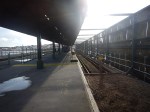

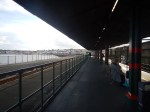
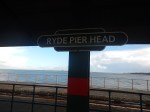
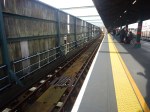
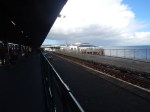

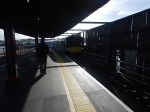
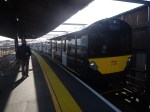
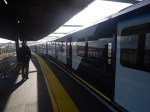
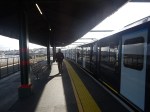
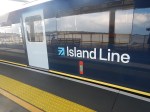
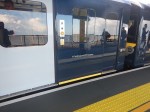
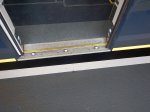
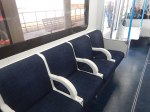

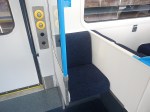
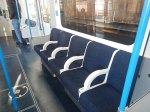

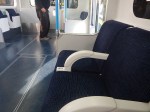

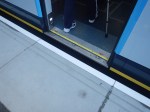
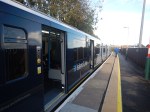
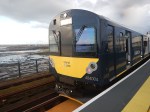
Note.
- Ryde Pier Head station could do with a refurbishment.
- The train was formed of a pair of two-car units.
- The interior shows its origins in London Underground D78 Stock.
- There is a fully-functioning information display.
- At some stations, there is step-free access between train and platform.
These are a few of my other thoughts.
Ride
This was like a D78 Stock train on a good day after a major service.
Operating Speed
I timed the train running along happily at 40 mph on my phone.
Build Quality
More 2020 than 1978.
Timekeeping
The single train was running an hourly service.
As time went on it was getting further behind schedule.
Could this have been due to the power supply not being able to power two trains at the same time, in the same place on the line?
I have just looked at the Real Time Trains figures for yesterday and they are documenting power supply and signalling problems.
It also looks like some trains lost time between Ryde St. Johns Road and Brading. Perhaps this section is short on power.
Customer Reaction
It appeared to be positive.
Vivarail To Unveil 80mph Super-Class 230 At COP26
The title of this post, is the same as that as of this article on Rail Magazine.
This is the first paragraph.
Vivarail intends to show off a new design of battery-powered zero-emission Class 230 unit at next month’s COP26 climate change conference in Glasgow.
Features of the train include.
- 80 mph operating speed, as opposed to 60 mph of the mph of the current Class 230 train and 45 mph of the original London Underground D78 Stock.
- Two driver cars and a trailer car in between.
- Ten minutes to fully charge the batteries.
- The two driver cars have three battery packs.
I doubt the designers of the train at Metro-Cammell, envisaged this future development.
Retired London Underground Train Travels Forty Miles Solely On Battery Power
This article on Railnews is a summary of today’s news and has a subtitle of Battery Train Sets British Record.
This is the first sentence.
A battery train from Vivarail has achieved a British first by travelling 64km on battery power alone, and the feat has been repeated many times during tests.
The train was a Vivarail Class 230 train, that is based on retired London Underground D78 Stock.
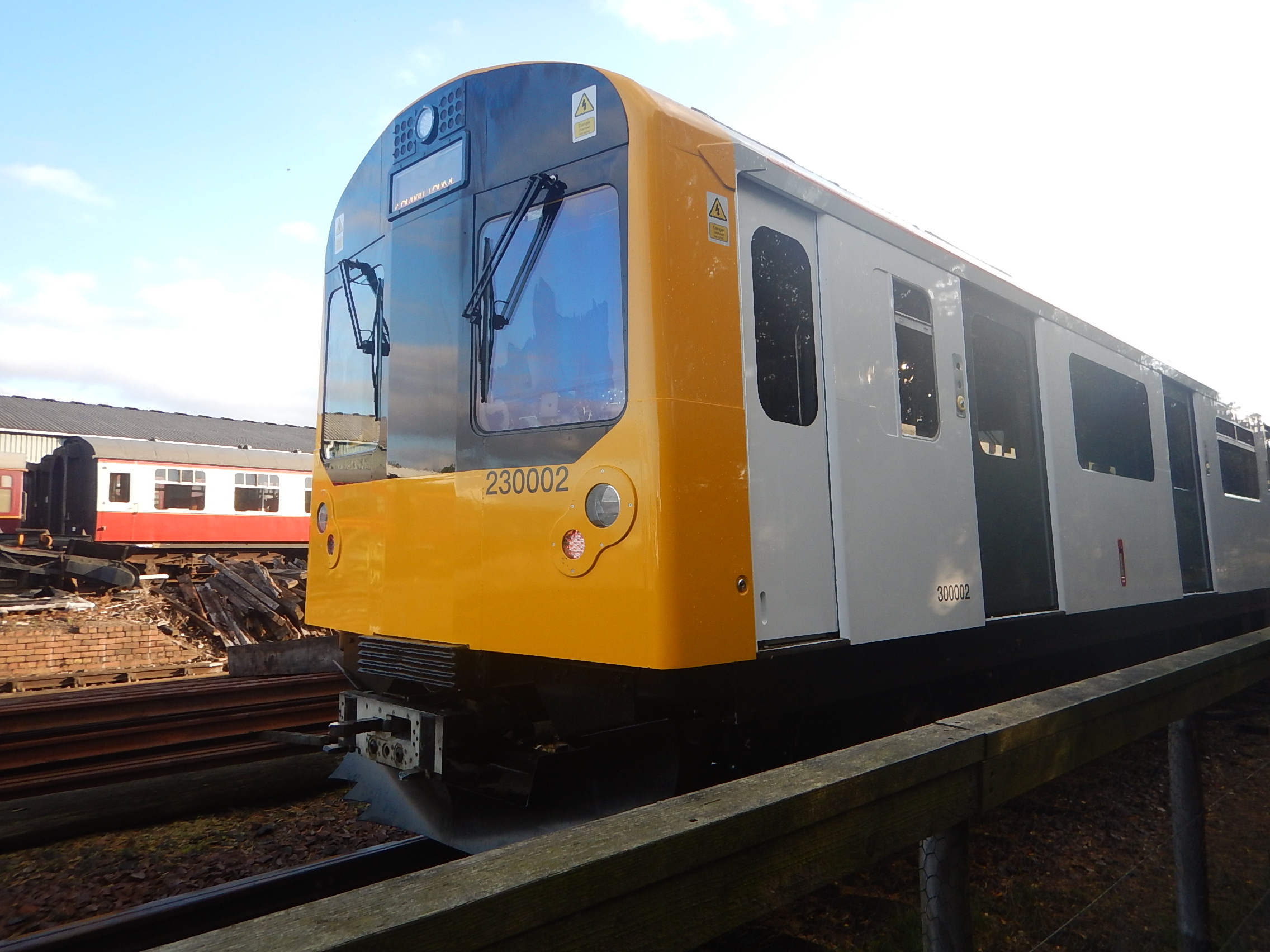
The picture shows the prototype battery train, when I rode it in 2018 at the Bo’ness And Kinneil Railway.
The article also says this.
Vivarail CEO Adrian Shooter is predicting that production versions of the battery trains will be able to run for almost 100km between charges, which will take just 10 minutes.
Battery trains appear to be going places.
Battery Class 230 Train Demonstration At Bo’ness And Kinneil Railway
I went to Vivarail‘s demonstration of battery version of the Class 230 train, which was given at the Bo’ness and Kinneil Railway.

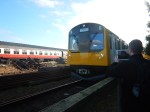
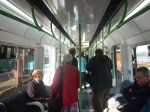

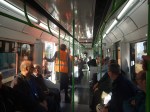


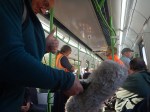
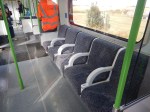
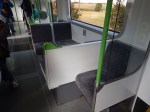
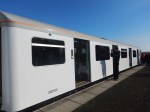

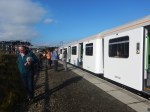
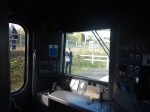

For some pictures of the original D78 Stock see Raw Material For A New Train.
So what did I think of the train?
Build Quality
From what I saw, the build quality was certainly better than that of a Pacer, which these trains could replace on some routes.
Doors
The single-leaf doors are unusual, as most London Underground stock, only has these at the ends of the cars.
But they worked successfully for nearly forty years of heavy service on the District Line, so they are probably up to the lesser rigours of service outside the Capital.
London Underground Legacy
I talked with one of the Vivarail engineers and he said, that the trains had been retired with a lot of new parts and he pointed out the quality f the floors, some of which go back decades.
It certainly seemed, that the trains could be described as having One Careful Owner.
Noise Levels
Noise levels were low, but then they were in the Class 379 BEMU, that I rode in January 2015.
Intriguingly, both trains have the same batteries, but that has nothing to do with it.
Ride
The quality of the ride was good and very much up to the standard of the S Stock that replaced the D78 Stock on the District Line.
Seats
As the pictures show, the seats of the Class 230 train are based on those of those in the D78 Stock.
The seats in the new train weren’t hard and seemed to my memory to be about the same standard as those in the older train.
So perhaps they were!
Vivarail are offering the train with different interiors, so I suspect those that pay, will get what they want.
Toilets
This train was not fitted with a toilet, but Vivarail will be fitting them to some trains.
USB Ports
There is a USB port between the seats and I was able to charge my phone, as one picture shows.
Conclusion
I think it is true to say, that this battery Class 230 train was a good start.
With more new components like seats, tables and toilets they could be impressive.
 The Anonymous Widower