Slow Progress On Electrification To Oxford
A few piles have started to appear on the line between Didcot and Oxford.

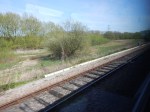
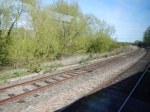

But a guy on the station, said Oxford won’t be electrified soon.
Main Line Electrification Between Reading And Didcot
I took these pictures of the electrification on the main lines between Reading and Didcot.
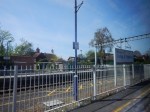
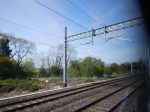


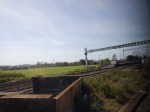

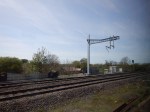
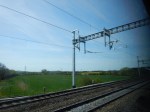
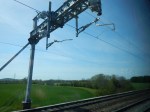
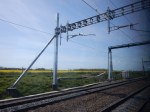


All the masts seem to be erected, but there is stil quite a lot of wires to add.
Discontinuous Electrification Using IPEMUs
In Basingstoke To Exeter By Electric Train, I started to work through, how short lengths of third-rail electrification could be used to power an electric train with an IPEMU-capability.
Third-Rail Electrification
This picture shows typical third-rail electrification at Kidbrooke station in South East London.
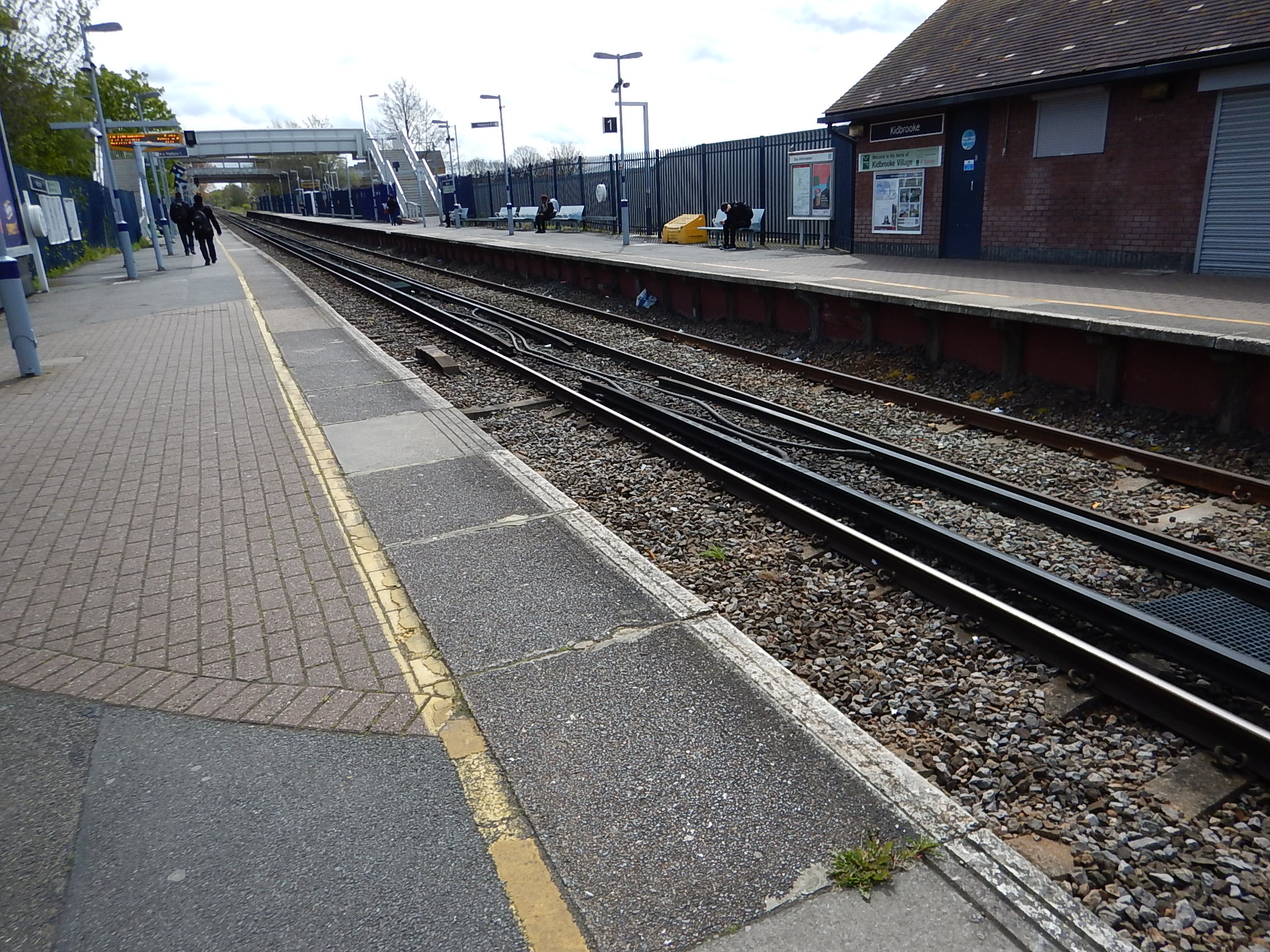
Note the following about the station and the electrification.
- The two tracks are between two platforms connected by a footbridge, which is a typical layout for hundreds of stations. Some stations might use a subway for connection.
- The two 750 VDC conductor rails are placed together in the middle of the track, well away from the passengers.
- There is a gap in the third rail, which I assume is for staff or emergency services personnel to cross the track in an emergency.
It is a simple and very safe layout.
With many years of installing third-rail systems in stations, Network Rail has the expertise to create safe systems in stations with island or just a single platform.
A Typical Electrical Multiple Unit
The Class 377 train is a typical modern electrical multiple unit common on third-rail routes.
- There are a total of 239 trainsets in service with lengths of three, four and five cars.
- The trains can work in combinations of two and three trainsets.
- The trains are a member of Bombardier’s Electrostar family.
- The slightly older Class 375 trains can be converted into Class 377 trains.
- The first trains entered service in 2003, so they still have many years of life.
- Some of the trains are dual-voltage and all could be equipped to use 25 kVAC overhead line equipment.
- They have a top speed of 90 mph.
- Bombardier have stated that these trains can be given an IPEMU-capability.
In addition everything said about the Class 377, can also be said about the later Class 379 and Class 387 trains, although these trains are faster.
The traction current supply to the trains has a very comprehensive design, that ensures trains get the electricity they need. Wikipedia says this.
All units can receive power via third-rail pick-up which provides 750 V DC. There are eight pick-up shoes per unit (twice the number of previous generation 4-car Electric multiple units), and this enables them to ride smoothly over most third-rail gaps. The units in the 377/2, 377/5 and 377/7 sub-classes are dual-voltage, and are fitted with a pantograph to pick up 25 kV AC from overhead lines. On these units the shoe mechanism is air-operated so that when powered down, or working on AC overhead lines, they are raised out of the way.
You don’t hear many reports of trains being gapped these days, when they are unable to pick-up electricity at somewhere like a level crossing.
So there could be a large number of electrical multiple units available with an IPEMU capability, which could be ostensibly 25 kVAC units, but could also pick up electricity from a 750 VDC third-rail.
A Charging Station At Oxted
I feel that Network Rail has the expertise to fit short lengths of third-rail electrification into stations, so that IPEMUs could pick up power, when they are stopped in the station.
These pictures show the recent installation of third-rail in the bay Platform 3 at Oxted station.
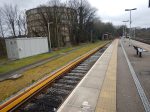
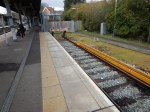
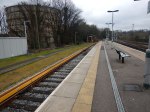

Note how the conductor rail is enclosed in a yellow shield.
Could this installation at Oxted, have been done, so that IPEMUs can run a shuttle to Uckfield?
Staff at the station didn’t know, but said the platform is used to terminate or park the occasional train from East Grinstea
d
IPEMUs To Lowestoft
Imagine such an installation at a station like Lowestoft, which has been suggested as a destination for trains with an IPEMU-capability.
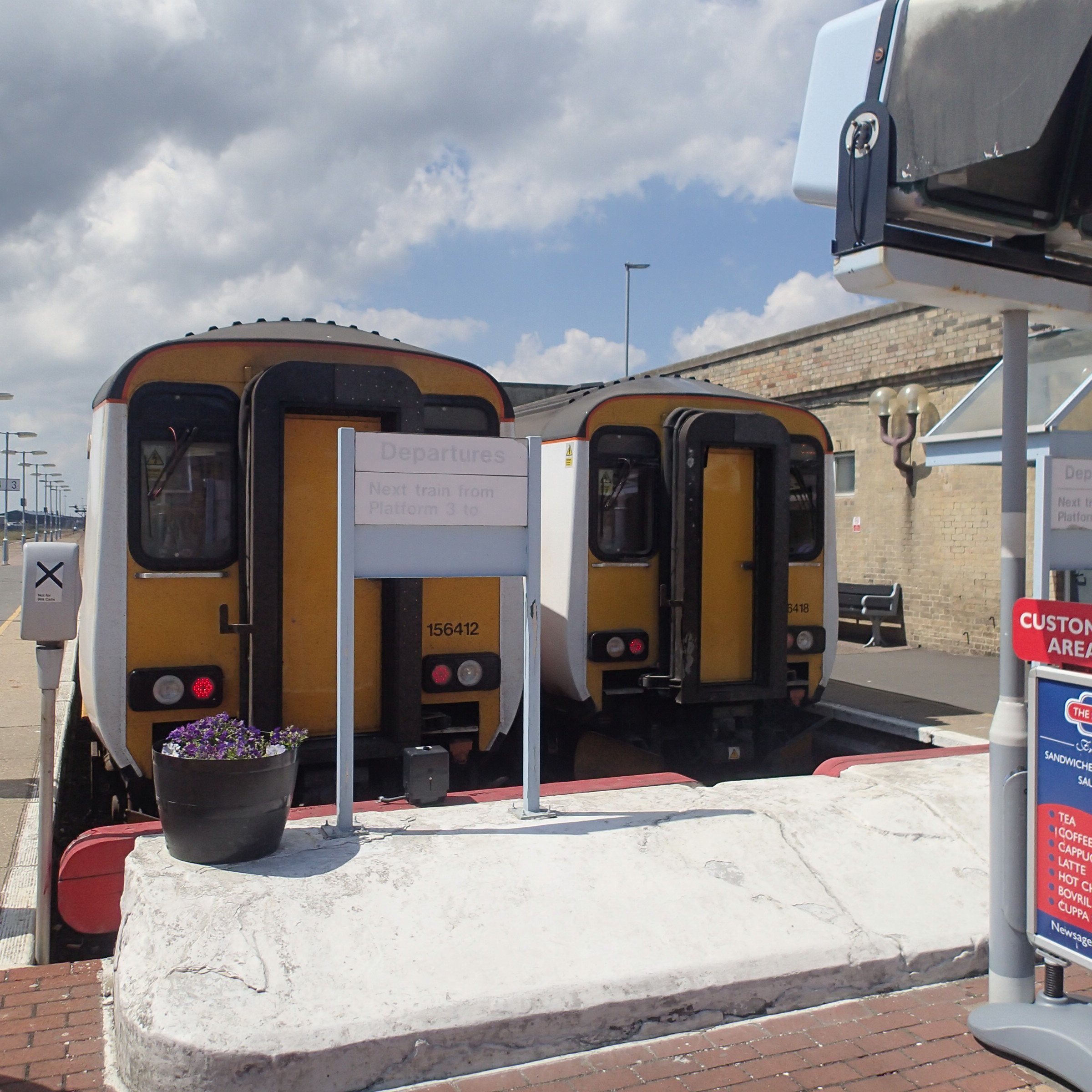
The picture shows two Class 156 trains at Lowestoft station.
Surely, two lengths of 750 VDC third-rail can be fitted between the tracks.
- The electrified lines would be no closer to passengers, than the third-rail installation at Oxted.
- The power supply would only be needed to supply electricity to charge the batteries.
- When no train was in the platform, the electricity supply to that platform would be switched off.
- The waiting time in the station would need to be sufficient to make sure the battery had enough charge to get to the overhead wires at Ipswich or Norwich.
- There would be little or no modification to the structure of the station.
- There would be no electrification needed between Lowestoft and both Ipswich and Norwich.
The biggest problem would be installing the power supply, but it would only be a transformer and rectiofier to provide 750 VDC. It would not have to cope with all the problems of regenerative braking, as the IPEMU capability of the train would take care of that.
It would appear that by using trains with an IPEMU-capability and well-proven simple technology at Lowestoft, the town can be provided with direct electric train services to Ipswich, Norwich and London.
At present the only trains with sufficient speed to not be a restriction on the Great Eastern Main Line, that can be given an IPEMU-capability are Class 379 and Class 387 trains. But Bombardier told Modern Railways, that a 125 mph Aventra is possible.
It would appear that the infrastructure modifications could be very affordable too!
The major cost would be the extra trains, but hopefully an increase in passenger numbers because of the better service would create the cash flow to lease them!
Perhaps the biggest advantage of using IPEMU trains to Lowestoft, is that electrification of the tracks through a beautiful part of East Anglia will not need to be performed.
It should also be said, that what works for Lowestoft, would also work for services to Sheringham and Great Yarmouth.
The technique would also work for branch lines from an electrified main line, where the out and back distance was more than the range of an IPEMU running on batteries. Examples would include.
- York to Scarborough
- Doncaster to Hull
- Edinburgh to Tweedbank
- Peterborough to Lincoln
- Manchester to Sheffield
But there are many more lines, where a charging station would bring much-needed electric trains to all over the UK.
Longer Lines
Some longer lines, where both ends are electrified and the distance is less than sixty miles, like Norwich to Cambridge and Carlisle to Newcastle, could be served by an IPEMU with sufficient range, that was charged at both ends of the line.
So that leaves longer lines over sixty miles, with no electrification at either end or just one electrified end.
Many, but not all, are through beautiful countryside and would the heritage lobby accept miles of overhead line gantries, marching through the hills and valleys.
I believe that on some longer lines, by using short lengths of third-rail electrification in selected stations, services could be run by electric trains with an IPEMU-capability.
Imagine an electric train an IPEMU-capability, approaching a station on a typical fast line with perhaps a 90 mph speed limit, like say the West of England Main Line, which is not electrified past Basingstoke.
- As the IPEMU applies its brakes, all of the energy generated by the regenerative braking would be stored in the train’s on-board energy storage, ready to be used to accelerate the train back up to line speed after the station.
- When the train makes contact with the third rail in the station, if the battery is not full, it can start to charge the battery from the rail.
- Once the battery is full, the charging would stop.
- On starting away from the station, the train could use power from the third rail, until it lost contact, after which it would use the energy stored on the train.
I think it should be possible that the train would leave the station with a full battery.
I would suspect that Bombardier and Network Rail are doing all sorts of calculations to find the best strategy, so that IPEMUs can be used to avoid the problems and costs of electrification.
Lines that could be electrified in this way would be ones, where trains stop at several stations along the route. Electricity supply at the stations, is no problem these days, as it could be connected to the mains or to some form of local generation.
It could be a very green concept!
Lines that could be electrified in this way would include.
- Cumbrian Coast Line
- Far North Line
- North Wales Coast Line
- Settle To Carlisle
- West of England Main Line
Selected stations would be fitted with charging and the trains would stop accordingly.
I’ve included the Far North Line because I believe it is possible to electrify the line in this way provided you could get a good enough electricity supply to the required number of stations. Obviously, you may decide not to do it, as you may have enough quality diesel trains.
Conclusion
If you could run electric trains on the Far North Line using charging at stations, you could run electric trains on any line in the UK.
The Engineers Have Been Busy
When I went to Bath about a month ago, I wrote Electrification At Didcot Parkway – 29th March 2016.
Today, as I went through the area on my way to Bristol, most of the masts appeared to have been erected, with about half the wires over the slow lines and even some going up over the fast lines.
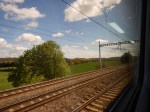
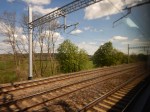
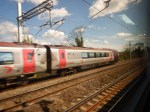
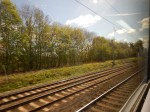
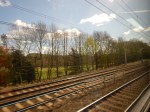
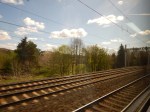
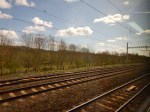
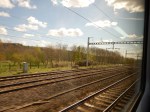
Past Didcot, there are now rows of piles on both sides of the railway, with some almost as far West as Chippenham.
There is still a lot to do, but I think it has been a good month for the engineers.
Hayes Shuttles To Start
This is the headline on an article in the May 2016 Edition of Modern Railways about the May 15th timetable changes. This is said.
Great Western Railway had planned a launch of electric services using Class 387/1 EMUs transferred from Govia Thameslink Railway with the start of the new timetable on 15 May. The operator was to use the ‘387s’ on a series of peak hour shuttles between Paddington and Hayes and Harlington, but delays to the introduction of Class 700s on Thameslink services mean the cascade of ‘387s ‘ has also been delayed.
I have searched the Oracle (National Rail’s Journey Planner) and can find just one extra train from Paddington, which is a new service at 07:15 going to Hayes and Harlington.
The Oracle also shows that the first two services of the day on the Greenford Branch only go as far as West Ealing after May the 15th.
How many people from the Greenford branch will be complaining about the loss of their early morning trains to Paddington?
The Modern Railways article also suggests, that as Bombardier have been making good progress on the building of the eight extra Class 387 trains, that these might be delivered in the summer, to enable GWR to run more services. As some of the Porterbrook trains have been promised to c2c before the end of the year, that means that GWR’s extra trains will be delivered before December 2016, as they are first in the queue.
The article says that a full service can’t be run until infrastructure works at the East of Hayes and Harlington station is completed.
I think we’ll see a gradual improvement of electric services between Paddington and Hates and Harlington over the rest of this year.
These questions will certainly be answered.
- When will the bay platform at West Ealing station for Greenford Branch Line trains be opened?
- Will the bay platform at West Ealing station be electrified?
- Will the eight extra Class 387 trains have an IPEMU-capability, as had been rumoured in Modern Railways?
- How much acrimony is being heaped on Siemens about the non-delivery of the Class 700 trains?
- Are the bosses of Great Western Railway and Govia Thameslink Railway still talking?
- Will Porterbrook add to their order of twenty extra Class 387 trains?
It does seem to me, that the big winners out of this mess, could well be Bombardier and Porterbrook.
I also feel that there will be some surprises between now and the end of the year.
I will keep most of my predictions to myself!
However, it would appear that if there was a plan to create an IPEMU variant of the Class 387 trains, the non-delivery of the Class 700 trains, has effectively made this plan difficult and late.
A Trip To Corby
I’d never been to Corby station before, but had planned it for some time.
I went this morning to both have a look at one of Network Rail’s new stations and see the work going on in the area.
These are pictures I took.
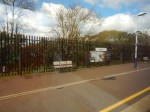









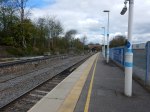
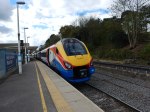

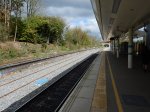


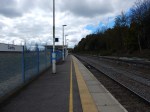
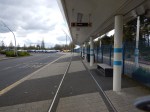


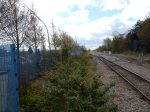

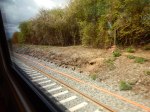

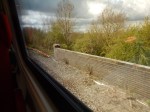


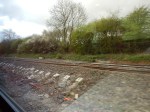

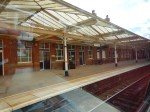


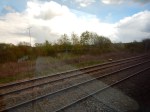

Note.
- I don’t think I saw one tricky bridge to electrify North of Bedford.
- A lot of the second track to Corby is in place.
- It would appear that the works at Corby will create a double track railway through the station to Oakham.
- I was told at Corby station, that there is to be a closure of the station later in the year, to finish the works.
- I saw no sign of any electrification North of Kettering.
- Piles with batty yellow covers, for electrification had started from Bedford.
But one thing that surprised me, was how the line constantly moved changed from four tracks to three and back again and that it was surrounded by lots of space.
Electrifying from Bedford to Kettering wouldn’t be the most difficult of jobs.
Only the stations would be tricky.
But I do have this feeling from what I saw at Horwich Parkway station and wrote about in Are The Electrification Gantries Going In The Middle At Horwich Parkway Station?, that Network rail have some better and non-traditional ways of dealing with the electrification of stations in their tool-box these days.
I also think, that they could phase the work in places, as the lines are often in separate pairs.
The Kettering To Oakham Line
I took this picture, where the Kettering to Oakham Line branches away from the Midland Main Line, a few kilometres north of Kettering station at Glendon Junction.

The Kettering To Oakham Line Leaves The Midland Main Line
I was surprised to see that the junction is only single-track.
Glendon Junction To Corby
This Google Map shows the layout of the lines to the South-East of Rushden.
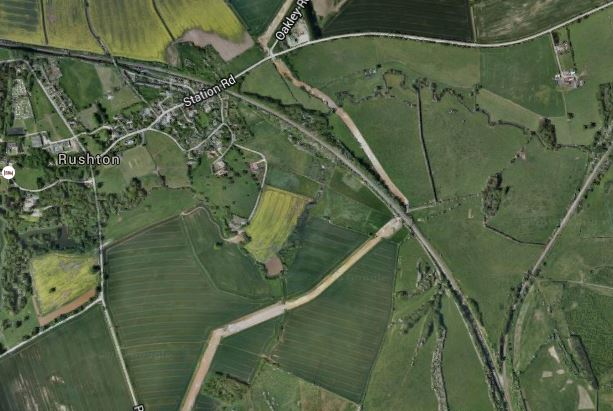
Rushton And Glendon Junction
Note that there is no chord allowing trains from the North to go towards Corby.
The Station Road, which crosses the Midland Main Line was probably the site of Glendon and Rushden station, which closed in 1960.
The junction is towards the South-East corner of the map, with the Midland Main Line going towards the North-West and the Kettering to Oakham Line to the North-East.
This second Google map, shows the actual junction.
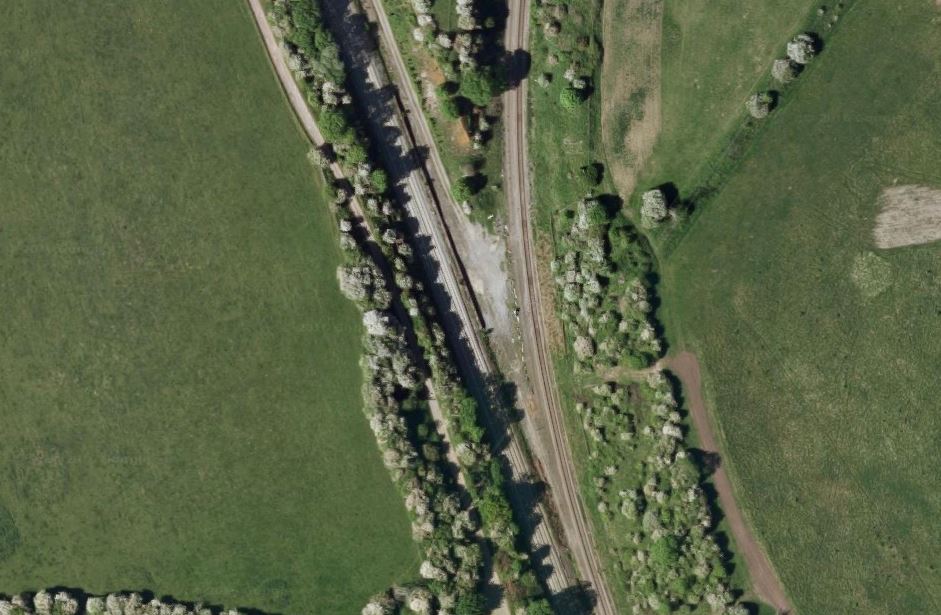
The Junction
It clearly shows the single-track nature of the junction. The line is single-track all the way to Corby station.
This Google Map shows Corby station.
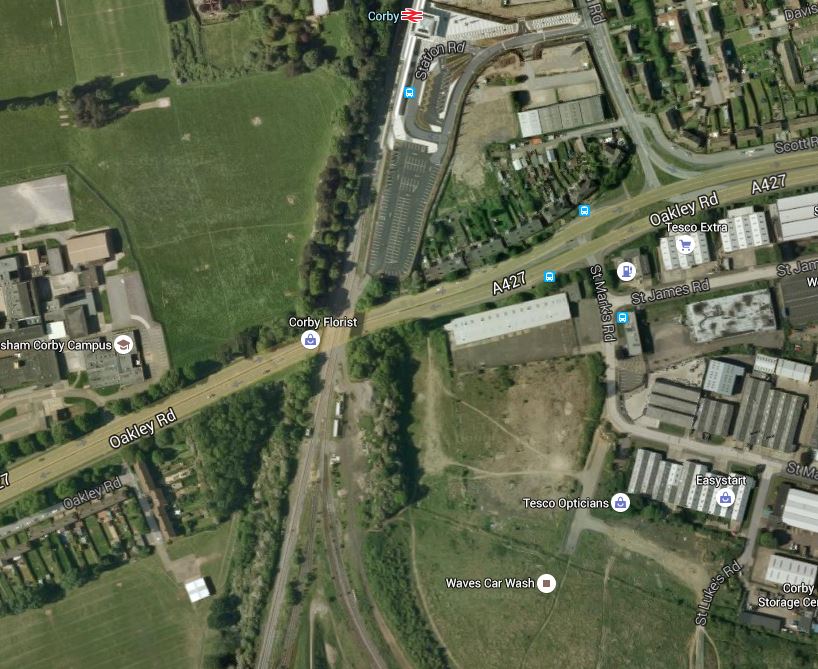
Corby Station
The Kettering to Oakham Line goes virtually North-South through the station.
Note that there appears to be an old railway going away to the South-East.
Future Services Between London and Corby
Wikipedia says this will happen in the future.
It is planned that a half-hourly London St Pancras to Corby service will operate from December 2017 using new Class 387 trains, once the Midland Main Line has been electrified beyond Bedford as part of the Electric Spine project. Network Rail has also announced that it plans re-double the currently singled Glendon Junction to Corby section as part of this scheme.
I don’t think it will happen like that, as I can’t see Bedford to Corby being electrified in time. There’s also the problem of the arguments about who gets the Class 387 trains, that I wrote about in Are The TOCs Arguing Over The Class 387 Trains?
However, this article on the Network Rail web site, which is entitled Work to upgrade railway between Corby and Kettering enters next phase, It talks about the installation of a second track between Glendon Junction and Corby to pave the way for additional passenger and freight services from the end of 2017.
I would assume that improving from Kettering to Corby, will not only allow more trains, but also improve speeds and reduce energy consumption.
Could this mean that Class 387 trains with an IPEMU capability could be used on the St. Pancras to Corby route, as they’d only have to go from Bedford to Corby and back to Bedford on a full load of electricity in their on-board storage device?
I estimate the distance is probably about 25-30 miles both ways, so it might just be possible.
As I wrote in The High Speed Train With An IPEMU Capability, it could be easier for an IPEMU running efficiently at high speed on entry to bridge a gap in the electrification.
Remember that 159 miles of the Midland Main Line is cleared for 125 mph running, so a Class 387 IPEMU could be running at its full speed of 110 mph at or through Kettering station. If it was to stop at Kettering station, as much as possible of the train’s kinetic energy could be used to top-up the on-board energy storage, so that the train had as much on-board energy for a short run to Corby and back on a fast efficient line with no stops.
Is this Network Rail’s Plan B to get electric trains to run a half-hourly service to Corby?
But as electrification proceeded North from Bedford, this would make running Class 387 IPEMUs easier, as every mile of electrified line, would take two off the total needed to be run using on-board energy storage.
So could we be seeing creeping electrification along the Midland Main Line, as every mile erected would gradually bring more destinations within range of St. Pancras?
I certainly think, that as spare Class 387 trains will be available from later this year and an IPEMU capability could be added fairly easily as it was to the Class 379 train demonstrator for IPEMU technology, that we could be seeing electric trains running to Corby before the date of 2019, which is quoted as the date, when Corby will be electrified.
Aventras For East Midlands Trains
I have assumed that the only electric train, that will be available for East Midlands Trains would be Class 387 train. These could be given an IPEMU capability and they would probably be able to reach Corby, when track improvements and additional electrification allowed.
But Bombadier’s Aventra is coming.
A 125 mph Aventra was reported as possible by Ian Walmsley in the April 2015 Edition of Modern Railways.
In his article about the Aventra, Ian Walmsley said this about an order for Aventras.
But the interesting one to me is East Midlands Trains electrics. As a 125 mph unit it could cope well with Corby commuters and the ‘Master Cutler’ crowd – It’s all about the interior.
So the same train could do all express routes and also act as the local stopping train.
But as Bombardier have stated that all Aventras will be wired so they can be fitted with on-board energy storage, we have a train, that can thunder up and down the Midland Main Line with its sections of 125 mph running and then take to the branch lines like Corby and Nottingham using the energy storage.
I don’t know where 125 mph running is possible, but as IPEMUs have regenerative braking as standard and charge the batteries when they stop, ready for a quick getaway, there must be an advantage in having a battery high speed train, as energy in a moving body is proportional to the square of the speed. I investigated this more in A High Speed Train With An IPEMU-Capability, where I came to the conclusion that faster IPEMUs may give more advantages than slower ones.
Class 800 Trains For East Midlands Trains
Until Ian Walmsley’s statement about the 125 mph Aventra, I’d always thought that Class 800 trains, in either bi-mode or electric variants were a shoe-in for the Midland Main Line.
They are the right size, with the right performance, but they do have three problems.
- Corby needs an increased service now.
- Unless some of GWR’s order is diverted to the East Midlands, the trains could not be delivered for some years.
- Political lobbying would press for trains to be used in the East Midlands to be built there.
But they are a possibility.
As an electrical engineer though, I like the concept of Bombardier’s IPEMU, as I think that designed into a new train, it could offer savings in electrification and electricity costs.
Take Leicester station, shown in this Google Map.

Leicester Station
It needs to be upgraded for electrification and because of its prominent position on the Midland Main Line, closing the station to install the overhead wires would be difficult to say the least.
Supposing the overhead wires were not installed in Leicester station, how would a bi-mode Class 800 handle the station? It would put the pantograph down as it was slowing for the station and use its diesel power in the station. On leaving, it would wait until the wires started again and then raise the pantograph.
An IPEMU would use a similar procedure, but would use its on-board energy storage to bridge the electrification gap. But it has one great advantage in that all of the energy dissipated in the braking for the station would be used to top-up the on-board energy storage, which is used to restart the train.
So if the IPEMU route is chosen I see the following advantages.
- Stations like Leicester, Derby and Nottingham don’t need to be electrified with all the problems that entails.
- The route through the World Heritage Site of the Derwent Valley can be left without electrification.
- The electrification doesn’t need to be capable of handling regenerative braking, as the trains look after that method of valuable energy saving.
- East Midlands Trains get an electric train only fleet.
The only problem is running electric freight trains.
Onward From Corby
East Midlands Trains do run services past Corby, with some services going to Oakham and on to Derby.
This is a diagram of the line between Corby and Oakham.
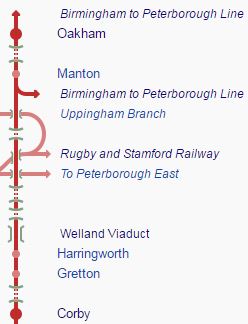
Corby To Oakham
The line is double-tracked, looks to be picturesque and includes five tunnels and the Welland Viaduct shown in this Google Map.
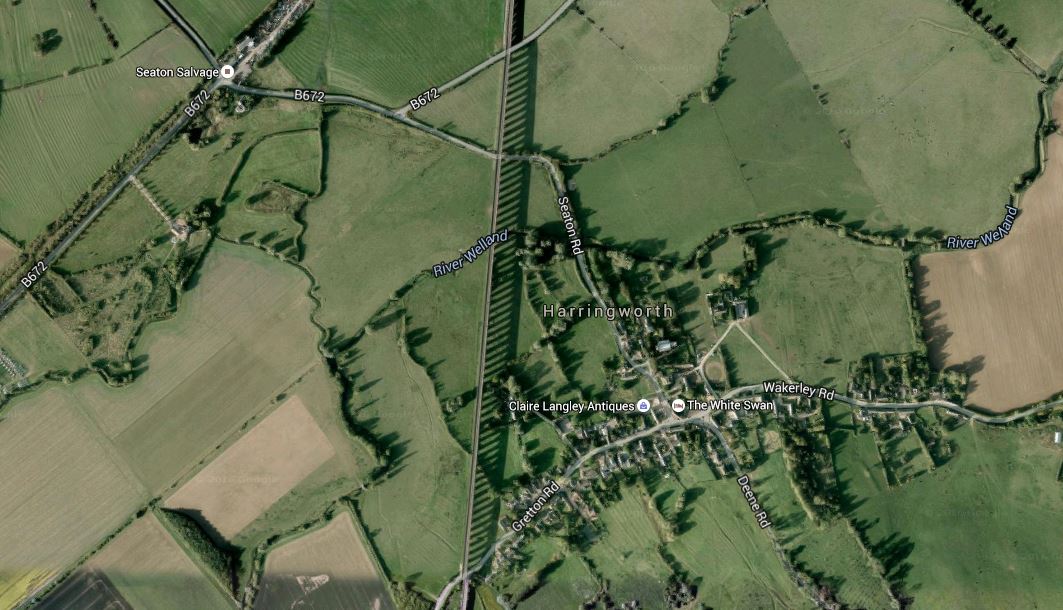
Welland Viaduct
Note the shadows of the eighty-two arches. It was built in 1878 and you can understand why it is Grade II Listed building.
I suspect Network Rail have filed electrification of this line under something like Avoid if Possible.
Under Services in the Wikipedia entry for Oakham station, this is said.
A single daily return service to London St Pancras commenced on 27 April 2009 running via Corby and is notable for being the first regular passenger service to cross the spectacular and historic Welland Viaduct since 1966. The company introduced a further return service from Derby via East Midlands Parkway (for East Midlands Airport) from May 2010. Further services may be introduced in the future. The initial London service had been due to start on 14 December 2008 but because of a delay in reaching agreement with the Department for Transport and the rolling stock operating company (ROSCO) for the four additional trains needed for the service EMT started the service around four months later.
Running electric trains with an IPEMU capability to Corby would probably mean that EMT would look at the possibility of extending the trains to Oakham.
I have a feeling that the Welland Viaduct could cause problems, because of its Listed status, so using IPEMUs to provide the passenger service to Oakham, would neatly sidestep any heritage problems associated with overhead wiring.
Once Derby and Corby are both electrified, the route would be fully open to electric multiple units with an IPEMU capability as there is only a gap of about thirty miles in the wiring.
Oakham Station
There is also the problem of Oakham station, which is best summed up by this Google Map.
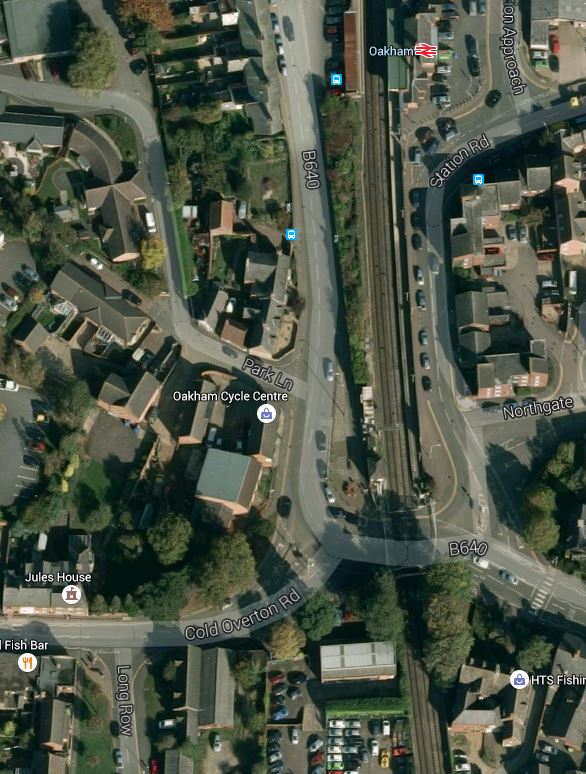
Oakham Station And Level Crossing
It is in the centre of the town and hemmed in by a major road. South of the station is a notorious level crossing, that needs to be replaced or avoided.
Network Rail engineers must have sleepless nights about this problem, especially as large numbers of long freight trains hauled by noisy Class 66 locomotives use the line through the station and the crossing to get between Felixstowe and Nuneaton.
Even the opening of the East West Rail Link, which will see some freight trains use the line between Cambridge and Bedford, will only offer a solution, where the freight trains are diverted through Cambridge and its increasingly busy station. What would the City and the University have to say about that?
So it would seem that another simple route for freight trains must be found.
Conclusion
The route between Kettering and Oakham is important and will be developed.
If East Midlands Trains or its successor go for either the rumoured 125 mph Aventra IPEMU or Class 800 bi-mode trains, they could improve the passenger service between London, Luton Airport, Kettering, Corby, Oakham, Melton Mowbray, Leicester, Loughborough, East Midlands Parkway and Derby, by opening up a second route.
In the meantime, it looks like Network Rail’s Plan B of a faster dopuble-track line to Corby could deliver better services using an IPEMU-variant of the Class 387 train.
Piles, Masts And Rubbish
I took these pictures whilst travelling between Upper Holloway and Gospel Oak stations on the Gospel Oak To Barking Line.
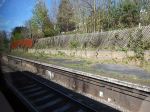
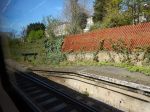
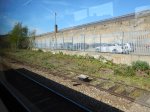

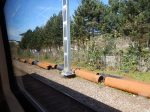
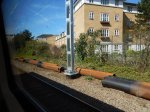
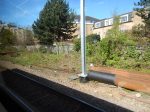
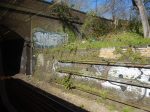
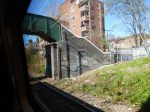
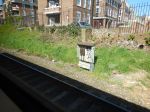

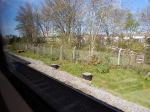
There’s quite a bit to do.
- But it does appear thata good proportion of the piles are in the ground to the West of Blackhorse Road station, with masts already erected in some.
- The platforms, like those at Upper Holloway, need extending back to their original length.
- The large number of piles dumped by the track, to the West of Upper Holloway station is probably because they will be needed to electrify the route to Carlton Road Junction.
- There is quite a bit of rubbish to clear up.
This map from carto.metro.free.fr shows the lines in the area.
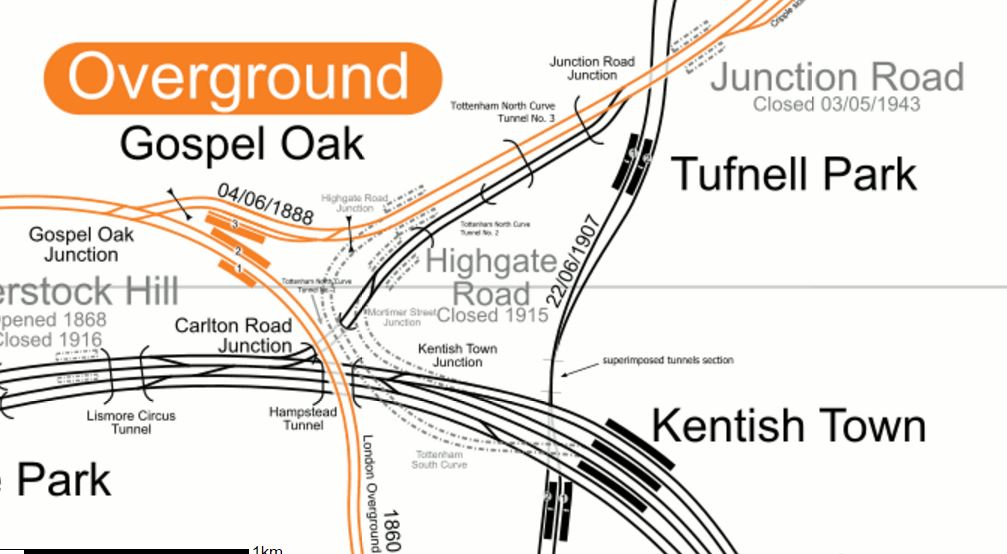
Lines Around Gospel Oak And Kentish Town Stations
Trains will certainly be able travel to and from the East on the Gospel Oak to Barking Line to and from the North on the Midland Main Line, but will any of the other chords in the junction be reinstated?
|And will Junction Road station be rebuilt and connected to Tufnell Park tube station?
Electrification Of The Midland Main Line Along The Derwent Valley
As I went to Sheffield yesterday, I took these pictures as the train ran along the Derwent Valley on the Midland Main Line between Derby and Chesterfield.

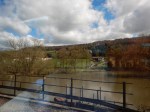
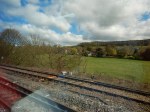
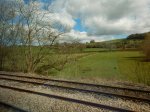
The river from Matlock in the North to Derby in the South, is the centre of the Derwent Valley Mills World Heritage Site.
And Network Rail want to electrify this line, so that fast electric trains can run between Sheffield and London via Derby!
This map shows the Midland Main Line from Trent Junction, South of Derby and Nottingham to Chesterfield.
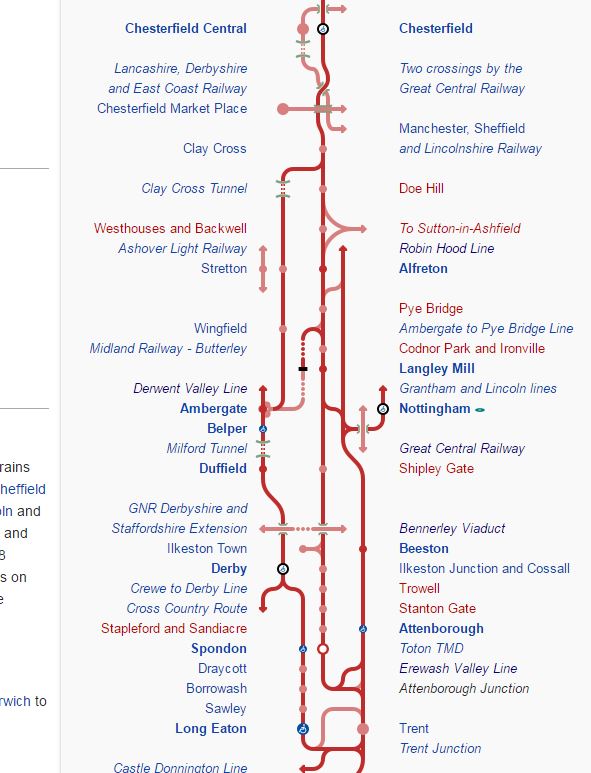
Note the following about the route of the Midland Main Line.
- My train ran via Derby, Belper and Ambergate stations, up the route on the West of the map.
- Trains via Nottingham would go up the East, before joining the Erewash Valley Line directly up the middle to Chesterfield.
- A new Ilkeston station is being built, between Nottingham and Attenborough stations.
- There is pressure to expand the Robin Hood Line by reopening the Ambergate To Pye Bridge Line between the two stations.
- HS2 is supposed to join up with the Nottingham Express Transit in the Toton area.
- How many of the closed stations in the area will be reopened?
It’s certainly all happening around the Midland Main Line between Derby and Nottingham.
This is said in Wikipedia about the future of the Erewash Valley Line.
Network Rail as part of a £250 million investment in the regions railways has proposed improvements to the junctions at each end, resignalling throughout, and a new East Midlands Control Centre.
As well as renewing the signalling, three junctions at Trowell, Ironville and Codnor Park will be redesigned and rebuilt. Since the existing Midland Main Line from Derby through the Derwent Valley has a number of tunnels and cuttings which are listed buildings and it is a World Heritage Area, it seems that the Erewash line is ripe for expansion.
It would seem fairly logical to perhaps make the Erewash Valley Line an electrified one, with a maximum speed, as high as practically possible and just run self powered trains through the Derwent Valley.
There would be two real possibilities for running the services for the London Sheffield services, including those via Nottingham, up the electrified Erewash Valley Line.
- Class 801 electric trains
- Bombardier’s 125 mph Aventra which was reported as possible by Ian Walmsley in the April 2015 Edition of Modern Railways.
Obviously, other manufacturers would offer suitable trains.
For the London to Sheffield route via Derby, the following trains could handle the twenty miles between Derby and Clay Cross, that could be without electrification.
- Class 800 electro-diesel trains
- Bombardier’s 125 mph Aventra which can probably be modified with an IPEMU-capability.
- Voyagers modified as electro-diesel trains, as was proposed in Project Thor, could probably handle the gap.
- A Class 88 locomotive and a rake of coaches with a driving van trailer.
If all else couldn’t handle it, InterCity 125s certainly could.
Surely though, it would help the train operator to have one fleet, so I think we’ll either see mixes of Class 800/801s or Aventras with and without an IPEMU-capability.
The Class 800/801s could certainly do it, but in his article about the Aventra, Ian Walmsley said this about an order for Aventras.
But the interesting one to me is East Midlands Trains electrics. As a 125 mph unit it could cope well with Corby commuters and the ‘Master Cutler’ crowd – It’s all about the interior.
So the same train could do all express routes and also act as the local stopping train.
The maze of lines shown in the map, would be an absolute dream for such a train!
I also think it would be pushing it to run the Hitachi trains through Derby and the Voyagers and the Class 88 solutions aren’t that elegant and would be very much stop-gap solutions. Loved as the InterCity 125s are, after a lifetime of very hard service, they are probably ready for retirement.
As the gap is only about twenty miles, I suspect that Network Rail’s and Bombardier’s engineers have got the engineering envelopes on the table in a local hostelry in Belper to solve the problem of getting 125 mph Aventra IPEMUs to jump the gap, so that services between London and Sheffield, can stop at Derby.
Why are they in Belper? Look at this Google Map of the railway through the town!
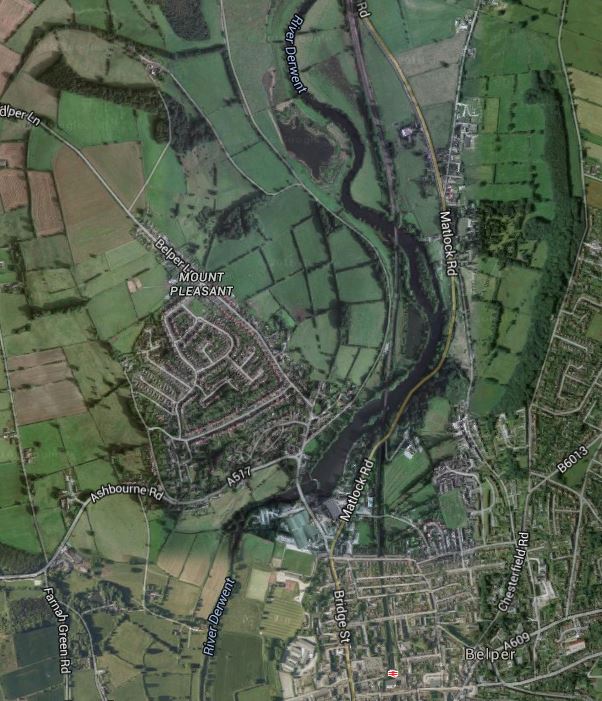
Midland Main Line Through Belper
Note the following.
- There must be half a dozen stone bridges north of Belper station, similar to ones shown in the gallery of this post.
- The River Derwent seems to be crossed by the railway, periodically for fun.
- Get that line right, probably without electrification and their uncluttered design will live for centuries.
- Get it wrong and they’ll be lynched by the local Heritage Taliban!
- If Aventra IPEMUs can’t be made to jump the gap, there’s always the reliable Derby-built InterCity 125.
Just as Great Western Railway use iconic photos of Intercity 125s running through Dawlish in their advertising, I think that East Midlands Trains will use video of 125 mph Aventra IPEMUs speeding with little noise and disturbance, through the towns, villages and countryside of the Derwent Valley.
If this could be made to happen, at an affordable cost, everybody concerned will see positive commercial effects.
Masts Are Sprouting On The Goblin
I took these pictures of the new electrification masts going up on the Gospel Oak to Barking Line (GOBlin)
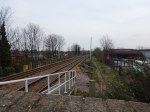
The piles seem to be very strong, but the masts are a touch more dainty, than those on the Great Western Main Line.

