Insurers Seek Rule Change To Invest In Green Power
The title of this post is the same as that of an article in today’s copy of The Times.
This is the first paragraph.
The mouthpiece for the insurance industry has called on the regulator to overhaul rules to make it easier to invest in green energy projects, such as wind farms and solar power.
Green energy projects are bad investments for the first few years, as they just burn money during construction. After that, the wind or solar farm, just produces electricity, which gives an adequate return fpr perhaps around thirty years.
As the rules stand, the returns in the construction phase are a dodgy investment.
The Prudential Regulation Authority, who make the rules, was setup in 2013, with probably a bunch of dinosaurs drawing up the rules, based on the past not the future.
These figures show the total energy generated by wind power for the last few years.
- 2008 – 5.4 GHh
- 2009 – 6.3 GWh
- 2010 – 7.9 GWh
- 2011 – 12.7 GWh
- 2012 – 20.7 GWh
- 2013 – 24.5 GWh
- 2014 – 28.1 GWh
- 2015 – 40.4 GWh
- 2016 – 37.4 GWh
- 2017 – 49.6 GWh
Note
- Between 2013 and 2017 electricity generated by wind power has doubled.
- In 2017, seventeen percent of our electricity was generated by wind.
These figures show the total energy generated by solar power for the last few years.
- 2008 – 0.17 GHh
- 2009 – 0.20 GWh
- 2010 – .0.33 GWh
- 2011 – 2.6 GWh
- 2012 – 1.3 GWh
- 2013 – 2.0 GWh
- 2014 – 4.1 GWh
- 2015 – 7.6 GWh
- 2016 – 10.3 GWh
- 2017 – 11.5 GWh
Note
- Between 2013 and 2017 electricity generated by solar power has increased fivefold.
- In 2017, 3.4 percent of our electricity was generated by the sun.
This paragraph from Wind Power In The UK on Wikipedia, shows the major growth in offshore wind power.
The total offshore wind power capacity installed in the United Kingdom as of February 2019 is 8,183 MW, the largest in the world. The United Kingdom became the world leader of offshore wind power generation in October 2008 when it overtook Denmark. It also has the largest offshore wind farm in the world, the 175-turbine London Array wind farm, located off the Kent coast.
I don’t think the Prudential Regulation Authority saw that one coming.
Conclusion
The rules should be changed
Nearly Half Of Institutional Investors To increase Interest In Renewables & Energy Storage
The title of this post is the same as that of this article on Windpower Engineering and Development.
To build a successful and ultimately profitable wind farm, you need the following.
- A good location and excellent engineering.
- A need for your electricity.
- Access to affordable finance.
The first is down to your surveyors, analysts and engineers and the second can probably be taken as read.
If as the article suggests, institutional investors are seeing renewables as a safe investment, it would appear that finance will be more readily available.
So provided the wind blows, I can see lots more wind farms and other renewable power sources being created.
International Institutional Investors
I will add one note of caution.
Some of our infrastructure in the UK, is owned by institutional investors from countries like Australia, Canada, Norway and other countries often rich in natural resources. I am not sure, but I seem to remember that some trains, were financed by money provided by Pension Funds of Canadian teachers.
So, we must be careful how we manage the country, as if the UK is seen to be a risky investment, then the institutional investors will use their money in other countries.
Mitsubishi Takes 20% Stake In Ovo Energy
The title of this post is the same as that of this article on Newscabal.
A few points from the article.
- The stake values Ovo at around a billion pounds.
- £216million will be injected to help fund international expansion.
- Ovo is now the seventh largest energy supplier in the UK.
- Ovo will be investing more in software to reduce domestic energy bills.
- Mitsuibishi are already involved in wind power in the UK and own Artemis Intelligent Power, who are devekloping their hydraulic technology for wind turbines.
The article is very much one that should be read.
SA Zinc Mine To Be Converted To Compressed Air Energy Storage Facility
The title of this post, is the same as that of this article on Energy News Biulletin.
This is the first paragraph.
The Australian Renewable Energy Agency has announced a $6 million spend for company Hydrostar Australia to progress the nation’s first energy storage project using compressed air, with another $3 million provided by the South Australian government’s renewable energy fund.
There are other articles about energy storage in Australia, but then I suppose the country, can create lots of solar energy during the day and storing some of it is important.Using compressed air to store energy underground, seems increasing to be mentioned in the media.
Energy Price Cap Rise Will Cost Homeowners Extra £100 A Year
The title of this post is the same as that of an article in yesterday’s copy of The Times.
This is the first two paragraphs.
Ministers were forced to defend one of the biggest energy bill increases in a decade yesterday after the regulator raised caps on prices for 15 million households by more than £100 a year.
Ofgem blamed higher wholesale gas and electricity costs as it authorised suppliers to raise prices for 11 million households on standard tariffs by 10 per cent or £117 a year from April and for four million households with pre-payment meters by £106 a year.
The well-trumpeted energy price cap doesn’t seem such a good idea now!
As a time-expired Control Engineer, I’m against putting hard limits on anything, as it distorts the equilibrium of the system.
It is much better to do the following.
- Let prices find their own level.
- Make certain that those who should swap, get the best advice possible.
The regulator should always ensure that the price is right for both consumers and energy companies.
Drax Becomes First Wood-Burning Power Plant To Capture Carbon
The title of this post is the same as that of this article on the Financial Times.
This news has been treated in a more sensationalist way by other news media and sites, but the FT gives it very straight.
Drax power station is running an experiment, that removes a tonne of carbon dioxide a day.
But that is only the start of the process and most of it is released to the atmosphere.
They are currently, looking for profitable and environmentally-friendly ways of disposal, including selling it to beer manufacturers.
Didn’t we have a carbon-dioxide shortage a few months ago?
How UK Carbon Emissions Tumbled
The title of this post is the same as that of this article on I News.
This is the first paragraph.
Amid the doom and gloom, there is thankfully one piece of good news today. The amount of carbon dioxide the UK pumps into the atmosphere through its power generators, car exhausts, wood burners and industry has dived by 38 per cent since 1990. A statistic that’s even more impressive when you consider the population has grown by nearly 10 million during that period.
So how has this happened?
- The reduction in the number of coal-fired power stations.
- We are using less energy, because of more efficient electrical equipment and devices.
- There is less heavy engineering.
Let’s hope this downward trend continues.
Spark Energy Supply Switch To Ovo Energy Going ‘Smoothly’
The title of this post is the same as that of this article on the BBC.
If the article is true, which as it is on the BBC, I feel there is a high chance that it is, I think that this means, that OFGEM has now got a backstop for those customers, who choose an energy company that fails.
It probably means that there is less risk in changing to an energy company, that you don’t know, but was recommended by a trusted friend or a reputable consumer affairs program or magazine.
As to OVO, I have used them for several years now, as have several of my friends.
Germany Agrees To End Reliance On Coal Stations By 2038
The title of this post, is the same as this article on the Guardian.
This is the first two paragraphs.
Germany has agreed to end its reliance on polluting coal power stations by 2038, in a long-awaited decision that will have major ramifications for Europe’s attempts to meet its Paris climate change targets.
The country is the last major bastion of coal-burning in north-western Europe and the dirtiest of fossil fuels still provides nearly 40% of Germany’s power, compared with 5% in the UK, which plans to phase the fuel out entirely by 2025.
Travel across Germany on a train and you see the high chimneys of coal-fired power stations everywhere.
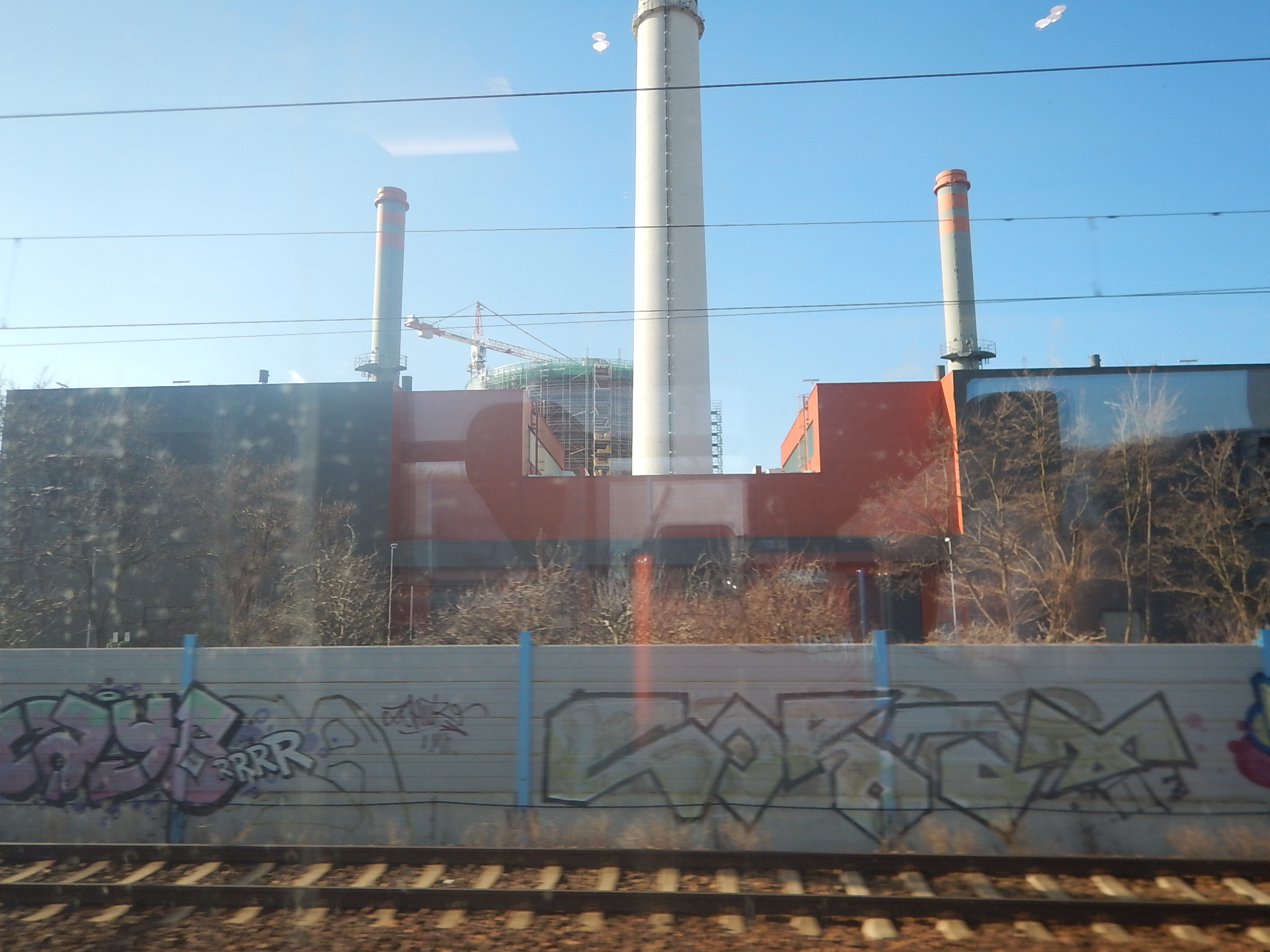
When we can get rid of coal by 2025 and France by 2022, you do wonder why Germany is taking so long.
The Guardian article provides a partial answer in that both the power company; RWE and the trade unions are very much for the continued use of coal.
The Germans are phasing out nuclear power, in response to the Green Party. Surely, unregulated coal-burning is far worse than well-regulated nuclear power?
But then the prevailing winds mean that most of the carbon-dioxide and pollution goes to Poland, who are big coal-burners themselves.
I wonder what would have happened to coal-fired power stations in the UK, if Margaret Thatcher hadn’t taken on the miners and started the run down of the use of coal!
The can would probably have been kicked down the road and we’d probably have coal power stations at German levels.
Economy Energy Customers Moved To Ovo Days After Ninth Bankruptcy In A Year
The title of this post is the same as that of this article on City AM.
These are two paragraphs from the article.
Ovo has already established itself as a so-called supplier of last resort, willing to take on customers of companies which are unable to keep trading.
In November it started serving almost 300,000 customers who were left without an energy supplier when Spark Energy went bankrupt.
Ovo is certainly growing its customer base from bankrupt suppliers and I hope it has got its sums correct and doesn’t overstretch itself.
It must be getting very practised at handling customers worried about their energy supply and costs.
In addition, it is showing itself to be an innovative supplier and is venturing into new markets.
 The Anonymous Widower