Could This Be The Key To Hydrogen Power?
Jerry Woodall has form as a scientist and inventor as he developed the first commercially-viable red LEDs that we see in car brake lights and traffic signals.
Last night I was searching for something else and came across this video on YouTube. This is the description to go with the video.
The actual process: gallium and aluminum combining, add water. stir – bubbles of hydrogen with only white aluminum oxide. as demonstrated by John Woodall – Jerry M. Woodall, National Medal of Technology Laureate, Distinguished Professor of School of Electrical and Computer Engineering, Purdue University, West Lafayette.
To put it simply, you add water to aluminium doped with gallium and the aluminium combines with the oxygen in the water and the hydrogen is released. The hydrogen can then be used to power a small engine.
There’s more description here on phys.org.
It’s early days yet, but could this simple process be the key to hydrogen power?
I always remember in the Electrical Engineering Department at Liverpool University in the 1960s, we were shown one of the first lasers. In some ways then, it was just a scientific curiosity and people were speculating about how they could be used. Now everybody has at least one, if they have a CD player. Many people reading this will be navigating the Internet using a laser mouse, as in fact I am with a Logitech M525.
It may not use Jerry Woodall’s invention, but at some time in the future, you’ll just put water in the fuel tank of your car and just drive away, emitting nothing more than water vapour.
There are many problems to solve, but the internal combustion engine will be here hundreds of years from now.
Think Quarts Into Pint Pots
London Underground’s Victoria line, may have been a technological triumph for 1968, when it opened as an automatic train line, where the driver doesn’t really drive the train. Although, he or she is the person in charge. Incidentally, when the line opened in 1968 a lot of the electronic control systems used valves rather than transistors. I can remember reading about the line in a copy of Simulation magazine when I worked at ICI around 1970. It was truly cutting-edge world-beating technology in its time.
But you can’t say much for some of the stations, which were built on the cheap and are very much sub-standard compared to the extensions to the Piccadilly Line built in the 1930s.
But now the trains are running at a maximum rate of 34 trains an hour for much of the day, as is reported in this article on Global Rail News. Here’s the first three paragraphs.
London Underground’s Victoria line is now operating 34 trains an hour – ‘the most frequent train service in the UK’.
Peak-time services have been incrementally increasing since the Victoria line upgrade was completed in 2012 from 28 trains an hour to 30, 33 and finally 34.
Passengers now only have to wait two minutes between trains and there are also more trains running the full length of the line from Brixton up to Walthamstow Central.
So in two years capacity has increased by over twenty per cent, mainly by good design and engineering.
I wonder what the engineers, who built the line in 1968, would think of their baby now!
You have to also wonder if by applying the principles used on the Victoria line. could be applied to other lines in the Underground. Upgrades on lines like the Piccadilly have been delayed, but I do think, we’ll see some more squeezed out of the current system.
There are of course things that are being done and as a regular Underground user you tend to feel that the system may be more crowded, but you seem to get fewer delays. Perhaps reliability of trains, power systems and escalators is getting better.
It will also be interesting to see what happens next Monday, when buses go cashless. It might be anywhere between a disaster and a triumph.
At the disaster end of the scale, it will load more passengers onto the Underground.
But if it is a triumph and speeds up the buses, as I think it could, will passengers who can, swap from the cramped and dark Underground to a lighter and more spaceous bus, if it only takes a couple of minutes longer. Living in Hackney with no Underground, I change my route according to which bus arives first. Since the 38 has been run by New Routemasters, it has been effectively cashless, with passengers using the closest and most convenient door and only the few who need to pay using the busier front door by the driver. Certainly, if I want to get to the Angel quickly, I’ll choose a 38, as against a 56, which goes the same way, but is often overtaken, by a succession of New Routemasters.
If cashless buses work well, this will surely hasten the removal of ticket offices on the Underground, with contactless bank cards, supplementing Oyster and Freedom Passes. What differences, will this make to the ridership on the Underground?
The only thing that is certain, is that more quarts will continue to be poured into pint pots all over London’s transport system.
Two Other Low Profile Rail Projects
Over the next few years there are a lot of projects being implemented on the UK Rail Network, as I listed here.
But two other projects that few have heard of, will have a significant effect on UK rail services.
Travel in or out of Kings Cross and you don’t realise the work what is going on underneath the lines going into the station.
The two Canal Tunnels are being fitted out, which will allow trains on the Thameslink route to go up the East Coast Main Line to Peterborough and Cambridge. These will probably be the most significant new tunnels to be fitted out and opened in the period between the Channel Tunnel and Crossrail. According to the provisional timetable for Thameslink, eight of the 24 trains each hour in each direction will go to and from the ECML. Of these eight trains, four will go to Cambridge. So many difficult cross-London journeys will become much simpler and will become either direct or will involve just a single change.
But think again!
Twenty-four trains an hour is a train every two and a half minutes between St. Pancras and Blackfriars. And to make matters more difficult, the trains will have to change electrical systems from overhead to third rail or vice-versa halfway through each journey.
How do they do that?
New signalling will be installed and the new Class 700 trains will take advantage of this to maintain the schedule. They will be fitted with ERTMS to aid in this task.
And this leads me to the other hidden project that is going to completely change the UK’s railways.
The project is ERTMS or European Rail Traffic Management System. Network Rails plan is here.
In simple words it means that all conventional signals will be removed from the tracks on the railway and the train drivers will have everything on a screen in the cab. This sounds very similar to the way airline pilots have worked for years.
This is Network Rail’s view of the benefits.
Installing ERTMS across the country as signalling becomes life-expired will save an estimated 40 per cent over conventional systems. Each train will run at an appropriate safe speed, allowing more trains onto the tracks. ERTMS will improve train performance and reduce energy consumption.
As an example of what it will mean, most high speed lines in the UK, will be limited to 140 mph instead of 125. This could mean thirty minutes off the journey time from London to Scotland.
A Timetable Of Major Projects On The UK Rail Network
This is for my own use at present and it will be updated as more information becomes available.
2014
2015
2016
Cambridge Science Park Station
Great Western electrification to Oxford and Newbury.
Introduction of Class 700 trains onto Thameslink.
Oxford to Marylebone
Preston to Blackpool electrification
2017
Great Western electrification to Cardiff
Introduction of Class 800 and 801 trains
Midland Main Line electrification to Corby
Modernisation and electrification of Great Western Main Line
2018
First trains start running on Crossrail.
2019
East-West Link – Oxford to Bedford
Midland Main Line electrification to Derby and Nottingham
2020
Midland Main Line electrification to Sheffield
Note that some projects have been left out, as they are not ones that particularly interest me. An example would be small stations that I am unlikely to use that are outside London. Some projects like HS2 and the Northern Line Extension To Battersea have been deliberately left out until the project timetables are firmed up.
Not All Important Projects Are Visible
I have recently come down the East Coast Main Line from Edinburgh to London. Starting at 05:40 in the morning there are up to 23 trains on that route during a typical day.
That is a lot of trains, carriages and seats and it only needs something small to go wrong for all the services to be delayed and even cancelled.
One of the biggest problems is that the line is crossed by other important routes, where say a freight train has to cross from east to west. So a slight problem can have a tremendous knock-on effect.
Last year, one of these crossings was eased by the opening of the Hitchin flyover, where Cambridge trains join and leave the main line.
Now another of these crossings has been eliminated with the opening of the North Doncaster Chord, which now takes heavy coal trains over the main line. A level crossing was also eliminated.
This is a quote from the linked article in Modern Railways.
The movement of coal to generate electricity is vital in keeping the UK’s lights switched on. Over 35 per cent of UK-consumed electricity is generated by coal moved by rail
I didn’t think that coal was still used to generate that amount of electricity.
Both the Hitchin and North Doncaster projects cost a few tens of million pounds and will help the East Coast Main Line to be more punctual.
But I have not seen either of them in mainstream media.
We need to find a way to tell the frustrated passenger on the train, that things will be getting better and that the engineers are doing their utmost.
One of the good things about the troubles in Dawlish, was all the high profile media attention that the project received.
It’s Only A Toilet For A Train
Some of the designs that impress me are ones where something is properly redesigned for the twenty-first or even the twenty-second century, often re-using the current outdated infrastructure.
That is why I like some of the architecture in the UK like the British Museum, the Tate Modern and Kings Cross Station have been extended in a modern style.
The UK Rail Industry has several stations on my list of good improvements, but it is also good at updating rolling stock. The stopgap High Speed Trains are still thundering to the extremes of the UK and who would predict, when the last one is retired from active service? If I live to a hundred, I suspect that some of these trains will outlive me! After all they would become a marketing man’s dream on a long tourist route like down to Cornwall, up to the North of Scotland or perhaps across Australia or Argentina, offering unprecedented comfort in a vintage train. We’ve also got the example of the HST’s humble cousins, the Class 455, which scrubbed up so well, some passengers thought they were new trains.
The UK Rail Industry has an expensive road block coming up in 2020, with the Persons of Reduced Mobility (PRM) legislation coming into force. Many older trains like the Class 156 would have to be scrapped and replaced if they couldn’t be updated to meet the new regulations.
But never underestimate the power of good design and engineering and one of the biggest problems of the refurbishment of the Class 156 described here, namely a fully-accessible toilet has been solved.
The new toilet has been designed and built by PCC.eu and they call it a Comfort Zone. I first saw it described in this month’s Modern Railways.
As I travel occasionally on some of the Greater Anglia trains, that have now been updated, I shall be interested to see how it works in practice.
As the floorspace needed is smaller than the traditional PRM toilet and providing decent on-train facilities is not just a UK problem, it looks to me that this is a classic where-there’s-muck-there’s-money design.
It also shows that one of the best ways to make money is to design or invent something.
The Other Side Of The New Bus For London
My Internet trawl picked up this story from the BBC in Northern Ireland, which talks about the jobs being created by Wrightbus in Ballymena. This is second paragraph.
The company is making a total investment of £14m – more than £10m of which will be for research and development projects.
So will the rest of the world be seeing their own New Buses?
All of this shows the value of good design and engineering.
Incidentally, now that the route 38 is now mainly New Buses for London, everybody seems to be very pleased and talks about it on the buses.
So good design and more space puts a smile on peoples’ faces too!
Most of our trains, even the older refurbished ones, are some of the best in the world for passenger comfort, so why shouldn’t we have similar standards on buses everywhere?
What The Heck Is This?
I like properly engineered or crafted products.
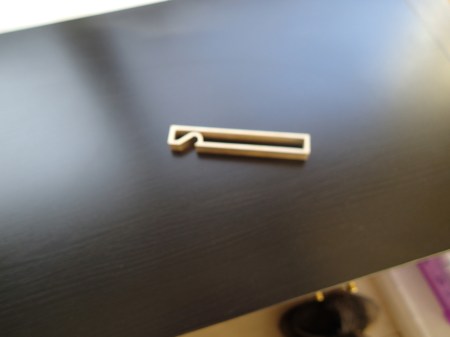
What The Heck Is This?
As a clue, it is cast in solid brass!
Can anybody tell me, what to use it for?
Jack Kinzler
Read his obituary in the Washington Post. This is the introductory paragraph.
As chief of the all-purpose machine and tool shop at the National Aeronautics and Space Administration’s Johnson Space Center in Houston, Mr. Kinzler specialized in down-to-earth solutions for beyond-the-stratosphere problems.
They don’t make them like him any more!

