A Thought On Low Vaccination Rates In London
Could London’s bad performance be down to difficult parking provision at vaccination centres?
There was no parking, where I went to the Francis Crick institute for my vaccination.
But I went by bus and train using my Freedom Pass. So it cost me nothing!
According to my contacts at Transport for London, there are still a lot of elderly and eligible Londoners, who don’t have Freedom Passes.
I’d love to see a graphic showing Freedom Passes against vaccination in the over 65’s in London!
There are probably other related questions to answer.
- How many no-shows at vaccination centres are down to parking problems?
- How many of the non-vaccinated couldn’t find a centre close by, that they could drive to?
- How many of the non-vaccinated object to spending money to get to the vaccination centre?
And many more! I hope a university is doing the research!
Job Done – I’ve Now Had My First Covid-19 Vaccination
I arrived a few minutes early at the Francis Crick Institute, for my appointment to be vaccinated.
I had booked to be vaccinated there, as I wanted to have a look inside one of London’s new modern buildings.

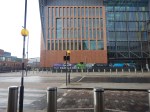



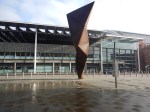
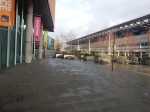
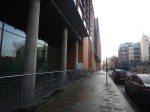
Note.
- The multi-triangular steel sculpture in front of the building is by Conrad Shawcross, who is the son of the journalist, writer, and broadcaster; Sir William Shawcross and the historian, critic and writer; Dame Marina Warner.
- I am a great fan of large sculptures like these being displayed in full view in suitable public spaces, rather than hidden away in store-rooms or in the farthest toom of a gallery. I wrote about this in Is There Space On The Overground For Large Art?.
I was had been told to enter from the North side of the building.
As the pictures show there were no signs, but someone spotted me and gave me directions.
I was directed to stand in a particular place and then told to enter the building, by walking down a set of stairs to the basement.
- I think my temperature could have been automatically checked before entry, as it certainly wasn’t anywhere else, that I noticed.
- There was a stair-lift at the entrance, for those not able to manage the stairs.
- Not that I saw anybody walking with more than the aid of a stick!
Once in the basement, I was asked to sit on one of about ten socially-distanced chairs.
Registration
There were a group of about six young ladies and perhaps a couple of young men, who then registered all those who had come for vaccination.
This was done mainly using your NHS number, so make sure you bring it.
Interview
Once registered, I was moved to another set of socially-distanced chairs, each of which was outside a cubicle.
I was then called in to the cubicle and given an interview by a young doctor.
She asked general questions and some about the drugs I take, so make sure you know what drugs you’re taking.
But otherwise the questions were ones everybody should know about themselves.
Vaccination
Once interviewed, I was moved to another set of socially-distanced chairs, each of which was outside a cubicle.
After about five minutes, I was called into the cubicle to be vaccinated, by a young lady.
I was only asked one question and that was whether I was right-handed or left-handed.
I am complicated, as because my left arm was badly broken by the school bully and I am right-handed, I prefer to have injections in my dominant right arm.
I also told her, that my unusual skin, means I don’t bleed from injections and she wouldn’t need a plaster.
She then said, that very few need a plaster with this vaccine.
The injection was quick and one of the few where the vaccinator didn’t say something like “Sharp scratch!”
I held a small cotton wool pad over the spot for perhaps thirty seconds, but despite being on Warfarin, my skin did its usual good job of stopping any bleeding.
I declined the sticker saying I’d been vaccinated and before I left, I was told I’d had the AstraZeneca vaccine.
Timings
From the time I arrived until the time I left was about half-an-hour.
Professionalism
It was all very professional and well-organised.
I’ve worked in factories and it was arranged very much how some factories are arranged, where the product being built is moved from one work-station to another until they reach Despatch.
It was also very relaxed and unhurried with lots of extra young people directing the patients around the various seats and cubicles.
Throughput
I have done my share of time-and-motion studies in the past and I suspect that, as time progresses, that the number of patients handled by this facility could be increased.
On the other hand, it may be kept a bit below capacity to make sure the relaxed atmosphere is preserved.
A Thought On The Staff
I must admit, I didn’t see all of the staff, but of the ones I saw, only one wasn’t white and she was Chinese and called Ying. Incidentally, she registered me, when I arrived.
A Thought On The Patients
All of the patients were white and with the exception of one other and myself, they were all female. As the patients were mainly over sixty and had probably made a choice to be vaccinated at the Francis Crick Institute on their computer, I find the ethnic distribution of the patients curious.
A Thought On The AstraZeneca Vaccine
I have a regular B12 injection and a flu vaccination every year, so I’m used to injections. The practice nurse is very quick, but the lady, who vaccinated me today was exceptionally quick.
- She also had a couple of syringes ready-filled waiting for me and following patients.
- She was able to vaccinate me, without my taking off my short-sleeved shirt and thermal vest.
- I also hardly felt a thing.
- I didn’t need a plaster.
As a friend, who also had the AstraZeneca vaccine, also said he didn’t feel a thing, I wonder, if AstraZeneca have designed this vaccine and its delivery system, so that patients can be quickly vaccinated.
Imagine market day, in a very populous country like Brazil, India or Nigeria! Has this vaccine been designed to handle mass vaccinations in an environment like that?
It should be remembered that this is AstraZeneca’s first vaccine.
I have a feeling, that this vaccine could have been designed to a new set of rules, so that teams can vaccinate large numbers of people quickly.
Well! That Was Painless!
I checked the post before I went to bed and there was an NHS envelop on the mat.
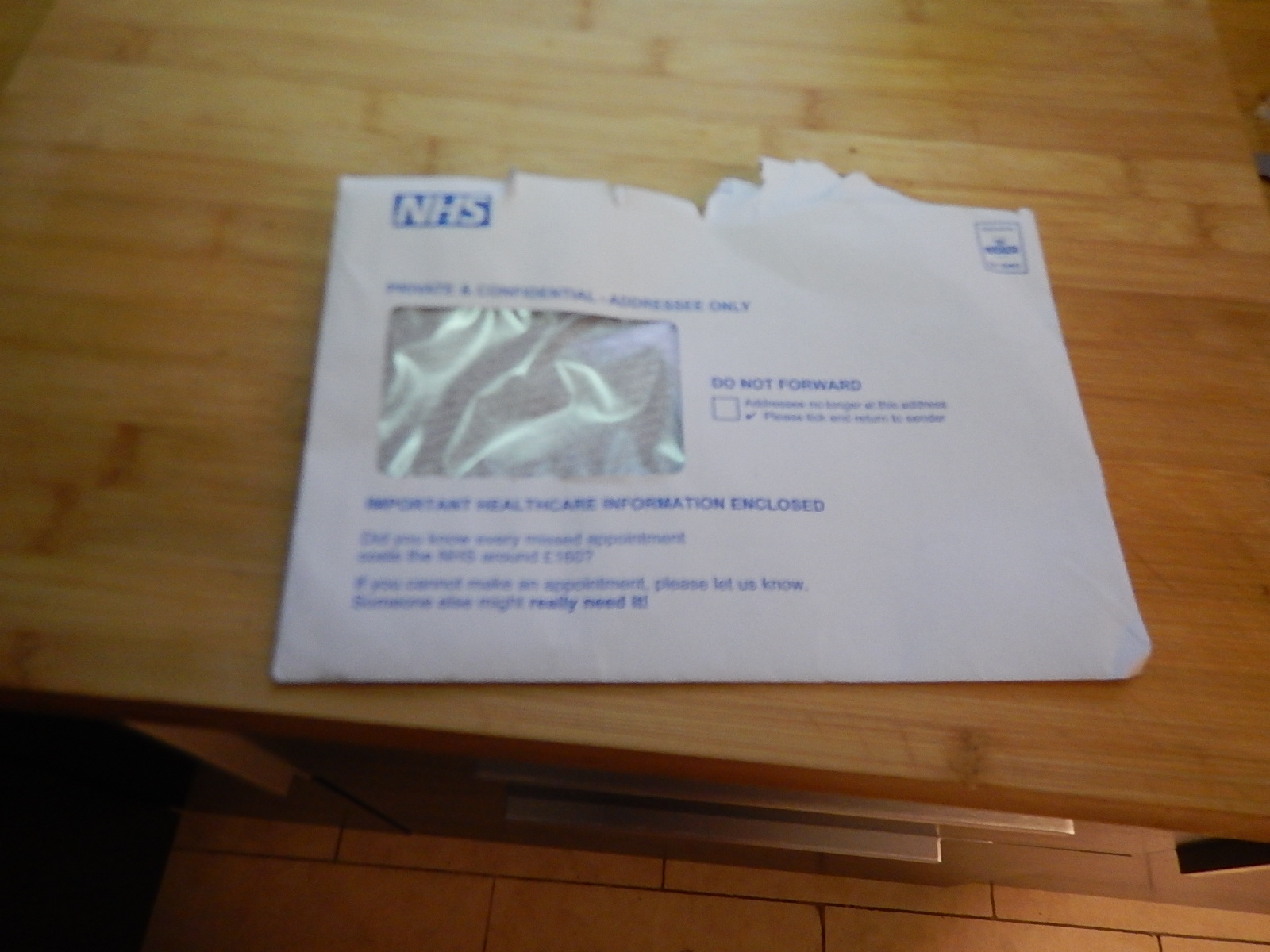
It was my call to be jabbed!
I have just booked and I’ll have my first dose tomorrow, at the Francis Crick Institute.
I booked using my computer and it was a well designed system, that worked without a hitch.
The Scientists Who Made A ‘Home-Brew’ Coronavirus Test
The title of this post, is the same as that of this article on the BBC.
Only by reading all the article, will you get any handle on what scientists at the Crick Institute have been up to.
At least, they are on our side!
An Interview With Sir Paul Nurse
The Times Saturday Interview is with Sir Paul Nurse and is entitled ‘Boris knows he’s out of his depth. Suddenly experts are useful again’.
It is a must-read and you may be able to read it on-line by registering with The Times, as that gives you a number of free articles.
It is people like Sir Paul, who will finally defeat COVID-19!
The Crick Institute In The Evening Light
I took these pictures of the Crick Institute in the evening light tonight.



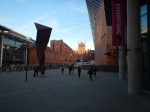
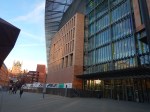
The colour of the stone comes through and matches that of the nearby St. Pancras station.
Getting Between Kings Cross/St. Pancras and Euston
London’s three major stations that serve the North and of course the Continent; Kings Cross, St. Pancras and Euston, are all close together on the Euston Road.
The first has been superbly rebuilt, the second is approaching the end of a major redevelopment and they now share probably the best Underground station in London. But Euston is rather isolated from the other two, with several ways to get between them.
- You can take a rather unpleasant walk along the busy Euston Road.
- You can use the Metropolitan or Circle lines, but this means a walk to or from Euston Square at the Euston end.
- You can dive into the Underground and take the Victoria or Northern lines, but it is not step free at the Euston end, and not recommended with a heavy case. Both deep stations are also easy places to get lost or confused.
- Going from Euston to Kings Cross or St. Pancras is quite easy by bus 30, 73, 205 or 476, which you catch in front of Euston station, but the reverse journey means you have to cross Euston Road twice.
- There are of course taxis. But not everyone can afford them.
As I had time to spare at Kings Cross, before I caught my train to Hartlepool, I decided to investigate and found a map which showed there was a fairly simple direct walking route that avoided the pollution and traffic of the Euston Road.
I started by walking through St. Pancras station and exited by the cab rank onto Midland Road, with the intention of going down Brill Place.
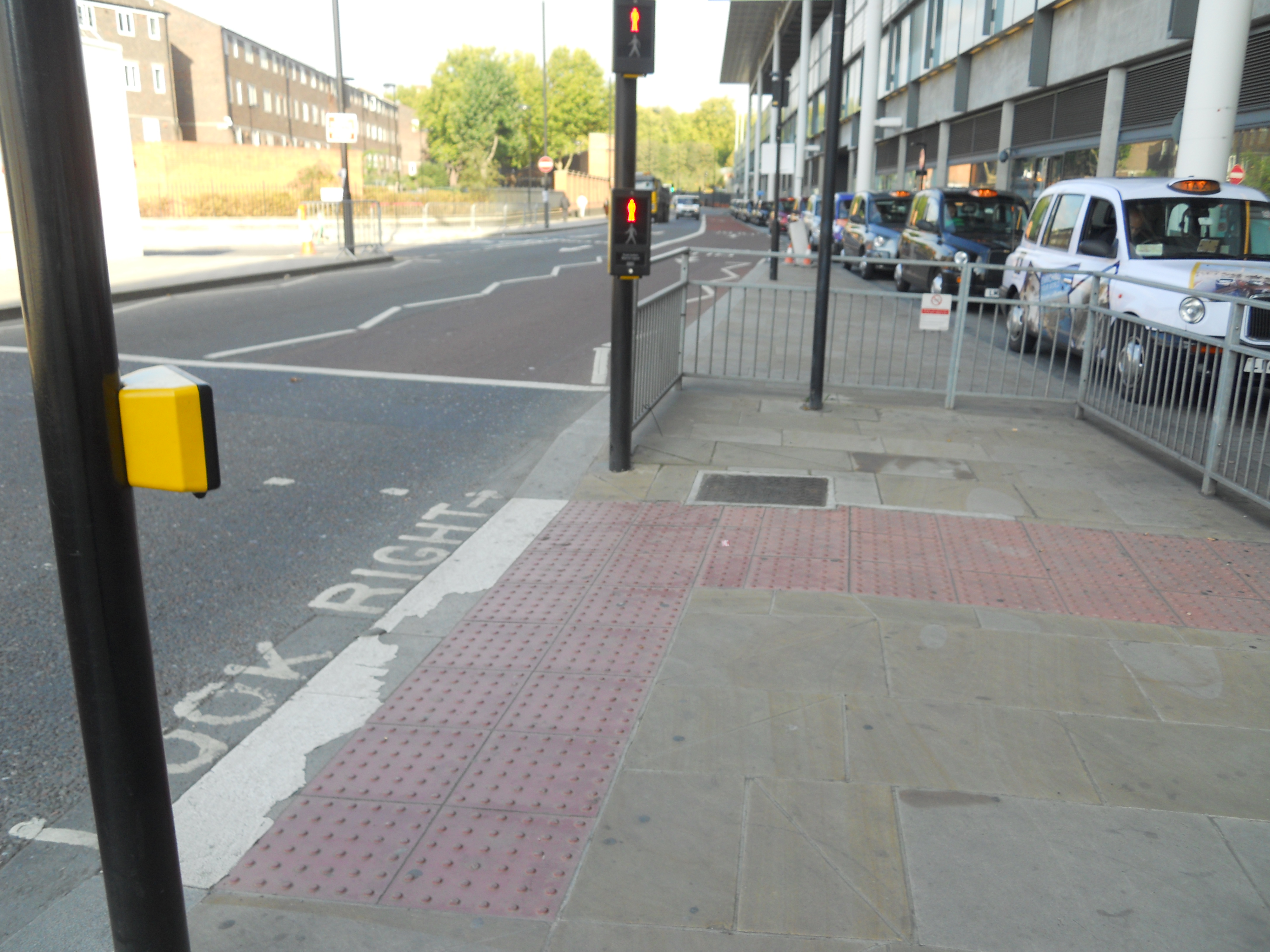
Crossing Midland Road
There is a light controlled crossing, but it is rather blocked by badly placed railings and the cab rank. Brill Place, which is the start of the road to Euston is on the left.
Brill Place is flanked on one side by the new Francis Crick Institute and on the right, there is a small pleasant park, which could provide an oasis from the crowds in the stations.
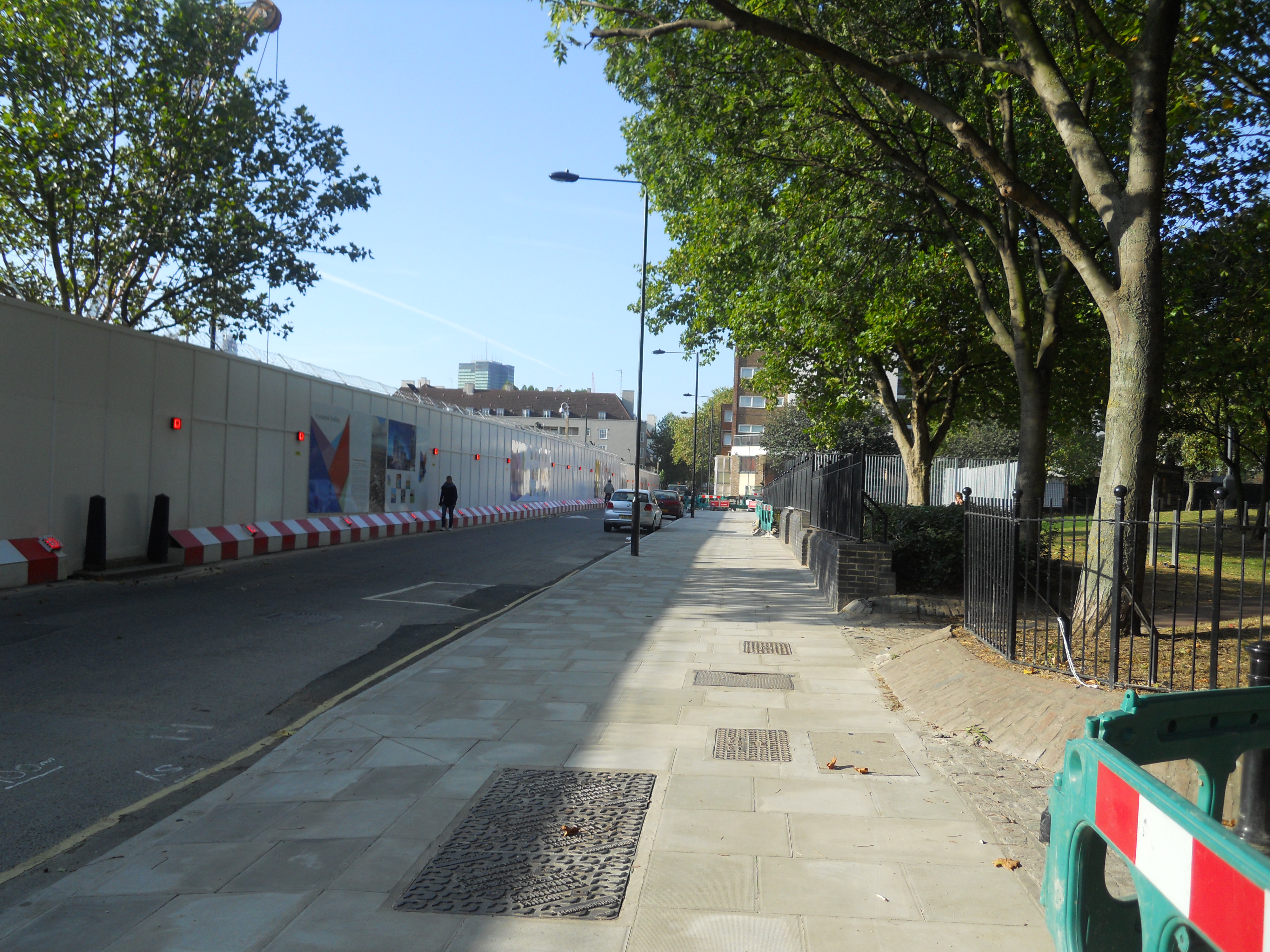
Brill Place
Brill Place itself, is not a grotty dusty road lined by parked cars, but a wide tree-lined avenue that leads on to Phoenix Road.
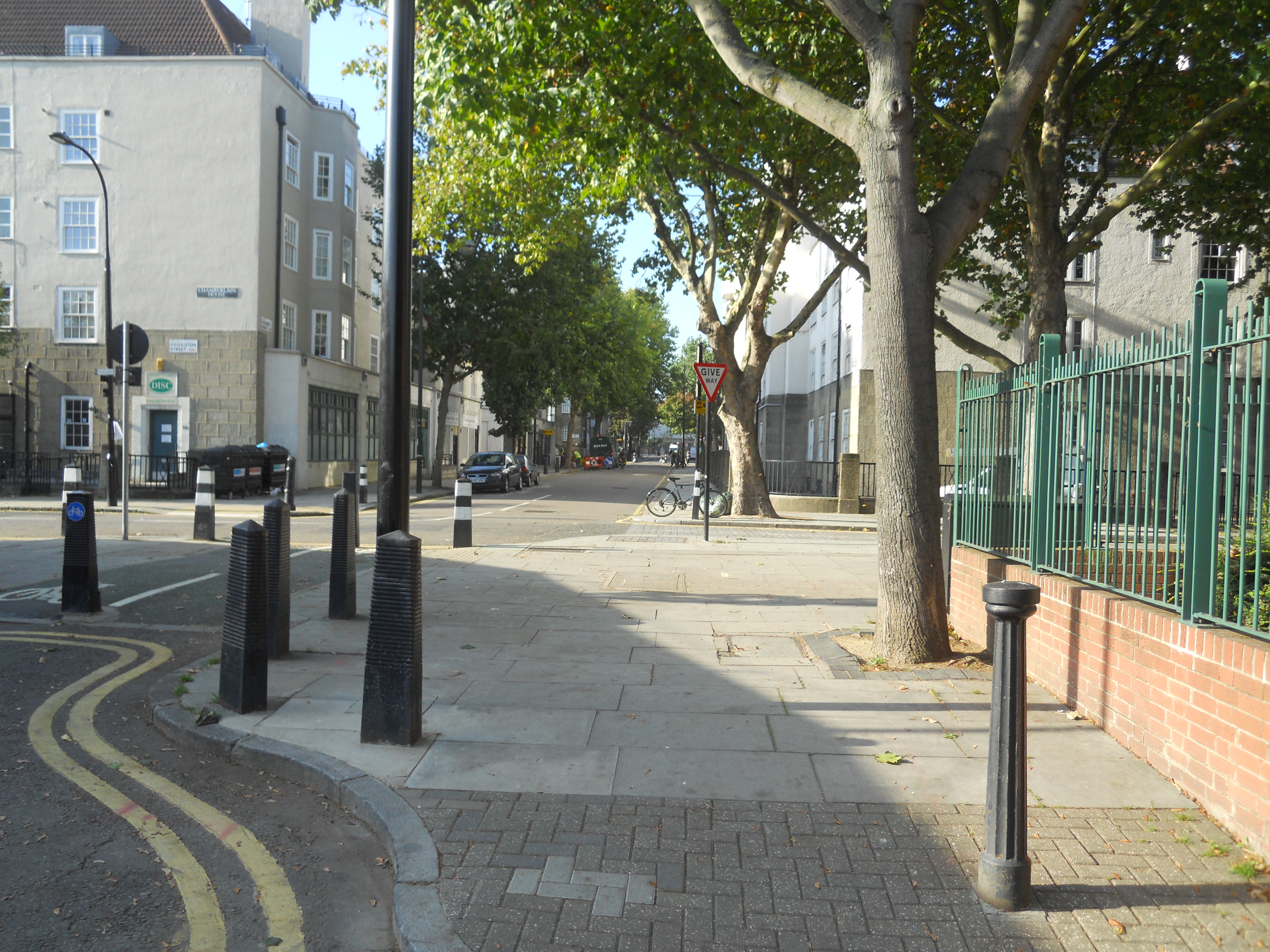
Towards Pheonix Road
At the end of Phoenix Road, you just cross Eversholt Street on one of the two pedestrian crossings and you walk down the road to Euston station.
The advantages of the route are as follows.
- The route is virtually flat.
- It would be easy trailing quite a large case.
- There are only two major roads to cross and both have light-controlled pedestrian crossings.
- There is the park, which would as I said before, be a better place to eat a packed meal than the station.
- You do pass a few shops and a reasonable-looking pub.
But there are disadvantages.
- The route is not signposted.
- The barriers at the St. Pancras end are wrongly placed.
- The side entrance to Euston station could be better.
So how would I make it better, so that in effect we had one super station for the north.
- I’d start with sign-posting. The posts are there at the St. Pancras end already.
- Perhaps, it should be marked on the ground, as a Kings Cross/St. Pancras to Euston walking route.
- You might even provide some eco-friendly transport along the route, like an electric shuttle bus or bicycle rickshaws.
- A couple of suitably placed Boris bike stations would help too.
- Shops and cafes should be developed along the road. There are some already.
To me though, this is one of those things that will happen. But probably first in a very unofficial way, as how many of those that work in the Francis Crick Institute will commute into Euston and walk there? It won’t be a small number.
It took me about fifteen minutes to do the walk and I just got a 205 bus back to Kings Cross for my train from the front of Euston station.
 The Anonymous Widower