By Class 700 Train To Brighton And Back
Today, I went to Brighton for lunch and a walk on the promenade to get some October sun.
I hadn’t intended to go to Brighton, but just to take the short route across London from St. Pancras to East Croydon, to see if any Class 700 trains were working the route.
However a Brighton-bound Class 700 turned up and just before East Croydon station, the conductor turned up and he offered to sell me an extension ticket to Brighton for £9.95.
So why not? As the day was sunny, I accepted his offer and as he didn’t have the right change of 5p for a tenner, he gave me 10p. in change.
Perhaps, Govia Thameslink Railway’s conductors are doing a PR job to enhance their reputation.
These pictures detail the journey.
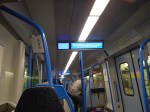
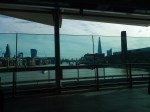
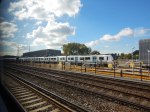
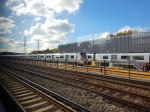
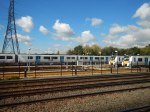
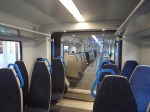
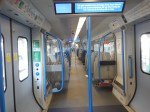
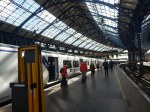

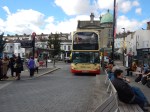
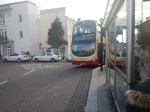
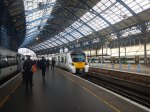
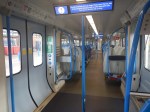
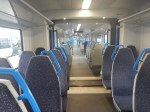
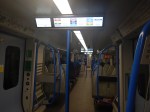
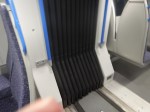
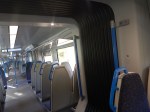
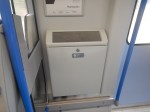
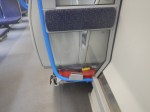

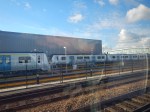
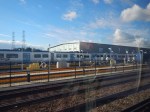
Because the journeys were deep in the Off Peak, the trains weren’t that busy.
I would describe the trains as adequate for the core route from East Croydon to West Hampstead and Finsbury Park, but they do have limitations for long-distance commuters.
- There are no tables or even anywhere to put a drink.
- There is no wi-fi.
- There are no power sockets to charge a laptop or phone.
The new Class 345 trains for Crossrail, don’t have tables either, but they do have wi-fi. But these are short-distance trains and unlike the Class 700 trains, which are taking over from Class 387 trains with tables, most of previous stock that worked from Reading to Shenfield didn’t have tables, wi-fi or power sockets.
Govia Thameslink Railway must be really pleased to get a set of trains, without some of the features their passengers demand.
To be fair it’s not their fault, as these trains were designed to fit a Passenger Focus report which can be found on the Internet, that was written in the dying days of the last Labour Government.
Read the document and draw your own conclusions.
However, all is nor lost!
This article on Rail Engineer is entitled Class 707 Breaks Cover and it describes the Class 707 train, which is a sister train to the Class 700. This is said about the two trains and wi-fi and toilets.
Thameslink (or the Department for Transport which ordered the trains) decided not to include Wi-Fi in the Class 700s, a questionable decision that has now apparently been reversed. Fortunately, Siemens had included the technology framework in the design so, hopefully, the upgrade will not require too much effort. Suffice it to say that South West Trains has included Wi-Fi in its specification for Class 707s.
Reversing the story, Thameslink Class 700s are all fitted with toilets. However, South West Trains has decided not to include toilets in its Class 707 specification given that the longest journey time is less than one hour and their inclusion would reduce the overall capacity of the trains.
So it appears that Siemens may have future-proofed the trains. To this end, when they certify the Class 707 train, they’ll certify the train for overhead electrification as well.
Looking at the way the seats are cantilevered from the side of the train, I suspect that Siemens might also have a table design in their box of delights.
I think you might have a very different usage of the trains throughout the day.
Obviously, in the Peak, the trains will be very full, but during the Off Peak, where there are obviously less passengers, perhaps a couple of tables per car, might prove to be a nice marketing feature to encourage travel.
We shall see what happens, but I can certainly see some improvement carried out to these trains in the next few years.
GTR’s 2018 Timetable Consultation
These are the various documents detailed on this page of their web site.
- Timetable Consultation Document
- Great Northern Metro
- Great Northern Mainline
- Central London to Bedford
- Southern Metro, Wimbledon Loop and West London Line
- Brighton Mainline, Arun Valley, West and East Coastway
- Redhill and Oxted
- Kent Thameslink
By the way, don’t try and fill in the survey, it’s a total waste of time.
The Future Of Commuting
I take the title from this article in this Guardian, which is entitled Cattle-class: are Thameslink’s new ‘tube-style’ trains the future of commuting?
This is the sub-title to the article.
As the UK south-east’s rail nightmare continues, a new class of commuter trains has been quietly revealed – long, metro-style carriages without tables, built to accommodate as many standing passengers as possible. Is this the new normal?
The New Class 700 Trains
I have travelled on the new Class 700 trains and I wrote about my journey in A First Ride In A Class 700 Train.
These are things I thought some people might not like.
- The lack of audible messages. – I liked the quiet, but I’m not blind.
- The lack of tables in Standard Class compared with say the Class 387 trains, that currently work the line.
- The lack of wi-fi.
- The length of the train at 242.6m., if they get in the wrong carriage.
- The high step up into the train.
The last one is possibly to be compatible with other trains and is being addressed at East Croydon station, by raising the platforms. I didn’t go to Gatwick, but imagine large numbers of heavy cases being loaded and unloaded.
I think that the problem is that some bright spark in the Department of Transport or the Treasury, decided that the trains should be a one size fits all and that they had to cope with a lot of stations, where the platforms wouldn’t be seriously modified.
Thank goodness this idiot didn’t order the same trains for Crossrail.
The Routes Compared
It is interesting to compare the route and trains of Thameslink with Crossrail
The trains are similar in length, with about a third of the passengers getting seats at full capacity of 1500 for Crossrail’s Class 345 trains and 1800 for Thameslink’s Class 700 trains.
But I think there will be a big difference in passenger loading between the two lines.
These are times from four selected end points to Farringdon, where the two lines cross.
- Bedford (Thameslink) – 60 minutes
- Brighton (Thameslink) – 86 minutes
- Reading (Crossrail) – 58 minutes
- Shenfield (Crossrail) – 43 minutes
So it looks like the average commute on Thameslink could be longer, so possibly their trains should reflect that, with wi-fi, lots of tables etc.
But whereas Brighton and Bedford will get a few trains every hour to Central London, Shenfield will get ten.
Shenfield and Reading will also have long distance services coming in from further out and going direct to the capital.
Unfortunately, trains can’t start further South than Brighton.
Another big difference, is that Crossrail serves a lot of the places, commuters and visitors to the capital want to go. For example.
- Bond Street for the shops and the Underground
- Canary Wharf with a cross-platform change, if not direct.
- Heathrow for the planes
- Liverpool Street for long distance trains and the Underground.
- Moorgate for a walk to the City.
- Old Oak Common for long distance trains and the Overground.
- Paddington for long distance trains.
- Stratford for the Queen Elizabeth Olympic Park, shopping and the Underground.
- Whitechapel for the Overground.
Thameslink’s list is shorter and less impressive.
- Blackfriars for a walk to the City.
- City Thameslink for a walk to the City.
- Gatwick for the planes.
- Kings Cross St. Pancras for Eurostar and long distance trains.
- London Bridge for a walk to the City and the Underground.
I might be wrong, but this leads me to think that Crossrail will act like a high-capacity Underground Line across Central London,and will for example, be used by visitors wanting to have a walk in the City and then go to do some shopping in Oxford Street. Thameslink doesn’t have similar casual uses across Central London.
Another difference, is that Crossrail’s Shenfield and Reading branches are very much all-stations branches, whereas Thameslink’s have a lot of semi-fast trains.
This thinking leads to an important difference.
Crossrail’s train design and capacity depends heavily on the needs from Stratford to Old Oak Common, wheras Thameslink’s trains are more about the needs of long-distance commuters.
But then, Crossrail has been designed as a system of trains and routes to satisfy the capital’s needs, whereas Thameslink has been created by stitching together a series of Victorian lines, that all have different needs.
A Redesign For Thameslink
I think a few years after Crossrail and Thameslink open, Thameslink services will have a big redesign.
So what will happen?
It will be driven by the statistics of where passengers need to go.
But I can see the following happening.
Upgrading Of The Class 700 Trains
The more I read about the two sets of trains, the more I feel that passengers will moan about the Class 700 trains on Thameslink, when they experience the Class 345 trains on Crossrail.
Points of annoyance could include.
- The lack of wi-fi and charging sockets.
- Nowhere to put a coffee.
- The number of tables.
- The layout of the seats.
- Bicycles
But then these trains weren’t specified by the operator, unlike those on Crossrail, where Transport for London had a big input.
Creation Of More Cross-Platform And Same-Platform Interchanges
The only quality interchange between Thameslink and other services is London Bridge. But that has been designed recently.
East Croydon has been the victim of make-do-and mend for decades.
Gatwick Airport could be so much better.
St. Pancras is truly terrible and was designed so that passengers are kept fit, by walking long distances underground to reach other services.
West Hampstead Thameslink could be another Stratford, but it falls short.
I think we’ll see improvements to some of these stations to create better same-platform or cross-platform interchange between Thameslink and longer distance services.
As an example Alexandra Palace and Finsbury Park seem to have been improved so that Thameslink has a good interchange with local services out of Kings Cross and Moorgate.
On Thameslink East Croydon, Gatwick and West Hampstead Thameslink must be updated to improve connectivity between Thameslink and longer distance services.
Separation Of Short And Longer Distance Trains South Of The River
On Crossrail, passengers going further East can change at Liverpool Street or Stratford in the centre or Shenfield in the East and those going further West can change at Paddington in the centre or Reading in the West.
Four of the five interchange stations; Liverpool Street, Paddington, Reading, Shenfield and Stratford, are large stations with excellent facilities and lots of trains and I can see that Shenfield will be improved by some pragmatic use of the current platforms and the nearby High Street.
North of the River on Thameslink, the interchange between short and longer distance distance trains isn’t perfect, but Finsbury Park, Kentish Town, Welwyn Garden City and West Hampstead are better and have more spare capacity than East Croydon.
The only decent interchange South of the River is the recently-updated London Bridge. But it is too close to the centre of London.
South of the River, Thameslink needs a station like Reading or Shenfield, where passengers have a cross-platform or same-platform change to and from a proper long-distance commuter train to a comfortable high-density shuttle across London, as an alternative to getting one train all the way.
The Brighton Belle Will Return
The Brighton Belle was the way to commute between London and Brighton until it ceased running in the 1970s.
I may have ridden it once as a child of about seven with my father, but we may have made our trip to Brighton on an ordinary train.
Having travelled to Brighton many times, the route could probably sustain a higher quality service than it currently gets.
Currently, there are three services on the route.
- Thameslink, that when complete will go via Gatwick, East Croydon and London Bridge to all points North of the River.
- Southern to Victoria, that will go via Gatwick Airport, East Croydon and Clapham Junction.
- Gatwick Express to Gatwick and Victoria.
All are operated by the same franchise, Govia Thameslink Railway.
In my view, this is part of the commuting problem to the South Coast and especially Brighton.
There are no paths for a high-class operator on the route between either Victoria or London Bridge and Gatwick, but I think that better use could be made of the current services to increase capacity and the quality of the trains.
So I believe that as it was after the initial privatisation, Gatwick Express should become a separate franchise.
In its simnplest reincarnation, it would offer a high-class operator between Vicrtoria, Gatwick and Brighton, perhaps calling at Three Bridges and/or Horsham, just as did the original Brighton Belle called at Horsham.
But I’ve believed for some time that with the electrification of the Great Western Railway, that a service between Reading and Gatwick, should come under the control of Gatwick Express.
Consider.
- A network of upmarket Gatwick Express services could be developed centred on Gatwick.
- A Class 387 train, running from Reading to Gatwick would do the journey faster than using Crossrail/Thameslink, without all the problems of even a simple change.
- A Gatwick to Ebbsfleet or Ashford service would be possible.
- Gatwick could have Gatwick Express services to Luton Airport using Thameslink via London Bridge and St. Pancras.
- The current services to Victoria and Brighton would continue.
- It would have dedicated platforms at Brighton, Gatwick, Victoria and possibly Reading.
Properly structured it could be a mix of high-class Airport and commuter services.
- It must have nothing to do with Govia Thameslink Railway.
- The Class 387 trains are probably good enough for the franchise.
- Something like a Chiltern-style Class system might be best.
- Surely, modern technology should be able to create a decent buffet car.
- Ticketing would be as now and must include contactless bank card and Oyster.
- If it wants to extend services to Eastbourne, Portsmouth and Southampton, it should be taken seriously.
I’m certain, a bright marketing man would come up with an iconic name for the service.
The only problem would be that Govia Thameslink Railway would object like mad, but in some ways they’ve brought it on themselves.
Only Twelve-Car Trains Through The Central Tunnel
It is essential that to maximise capacity of the line, that in the most restricted section through the central tunnel, that all trains through the tunnel are twelve-car trains.
So this would mean that Sutton Loop Line services would have to terminate at Blackfriars station, as was originally intended until MPs intervened.
In the Wikpedia entry for The Sutton Loop Line, this is said.
Recent proposals were to increase the frequency of the Thameslink service but terminate at Blackfriars. This would allow the trains through the core section to be replaced with longer trains which could not use the loop, but this has not proceeded due to objections from loop passengers about the withdrawal of their through service.
It might be difficult to bring in now, due to the layout of Blackfriars station. This means that passengers going South will need to Cross under the lines to get to the bay platforms on the other side of the station.
It should be noted, that under the latest plans, passengers coming South on Thameslink and wanting to go to Sevenoaks, will have to negotiate this down and up at Blackfriars. It will be easier, if they are on the Midland branch, as they could get any of the four Sutton Loop Line trains and change at Elephant and Castle. But those passengers on the East Coast branch have only the 2 tph Maidstone East service that goes through Elephant and Castle.
Sufficient Trains On Each Section Of Thameslink
If you look at the current proposed timetable in All Change On Thameslink, you can summarise each section as follows.
- Bedford to St. Pancras – 16 trains per hour (tph)
- Bedford to Luton – 8 tph
- Luton to St. Albans – 10 tph
- St. Albans to Kentish Town – 14 tph
- Kentish Town to St. Pancras – 16 tph
- Peterborough/Cambridge to St. Pancras – 6 tph
- Peterborough to Hitchin – 2 tph
- Cambridge to Hitchin – 4 tph
- Hitchin to St. Pancras – 6 tph
- St. Pancras to Blackfriars – 22 tph
- Blackfriars To Elephant and Castle – 8 tph
- Elephant and Castle to Sutton Loop – 4 tph
- Elephant and Castle to Swanley- 4 tph
- Swanley to Maidstone East- 2 tph
- Swanley to Sevenoaks – 2 tph
- Blackfriars to London Bridge 16 tph
- London Bridge to Orpington – 2 tph
- London Bridge to Rainham via Greenwich and Dartford – 2 tph
- London Bridge to East Croydon- 12 tph
- East Croydon to Gatwick – 10 tph
- Gatwick to Brighton – 4 tph
- Gatwick to Horsham – 2 tph
- Gatwick to Littlehampton – 2 tph
My numbers are probably not totally correct, but it does show there are reasonable frequencies everywhere.
Note.
- Rainham to Luton via Dartford, Greenwich and London Bridge looks a service for an area of South East London that needs development.
- Rainham to Luton calls at Abbey Wood for Crossrail, so it also is a valuable extension to Crossrail services at Abbey Wood.
- Swanley seems to be developing into an interchange for services to Kent, with four tph to Blackfriars and two tph to each of Maidstone East and Sevenoaks.
- Gatwick gets a frequency of 10 tph to London on Thameslink.
- There are 8 tph between Gatwick and Luton airports.
These frequencies have changed from those given in Wikipedia
The Effect Of The Northern City Line
The original service plan for Thameslink to the North of London, showed the following.
- 4 tph to Bedford
- 2 tph to Peterborough
- 4 tph to Cambridge
In total sixteen sixteen services were planned go up the Midland Main Line and eight up the East Coast Main Line and the Cambridge Branch.
But as I showed in All Change on Thameslink, it is now planned to be.
- 8 tph to Bedford
- 2 tph to Peterborough
- 4 tph to Cambridge
The service to Finsbury Park and Welwyn Gsrden City has also disappeared, so although the total number of services on the Midland Main Line remains the same, the number of services on the East Coast Main Line has dropped to six.
Could this be because the Northern City and the Hertford Loop Lines are going to be given an increased role in providing services, when the new Class 717 trains arrive in a couple of years?
It certainly looks as if Govia Thameslink Railway could be organising their services out of Kings Cross and Moorgate to augment the Thameslink services.
It looks like the following is happening.
- Short distance services up to about Hitchin and Letchworth Garden City are being served by trains from Kings Cross and Moorgate.
- The increase in the number and quality of the Class 717 trains is being used to provide an improved local service.
- Trains from Thameslink and Great Northern will provide the bulk of the long distance commuter services to Cambridge and Peterborough.
- GTR have also said that their Class 387 trains, will be working between Kings Cross, Cambridge, Peterborough and Kings Lynn.
I don’t think anybody will be complaining.
Embracing The East London Line
If you were going from say Gatwick Airport to Hatfield, when Thameslink is fully open in a few years time, you would probably get one of the direct trains, which will run at a frequency of 4 tph.
But rail enthusiasts and masochists might travel by this route.
- Gatwick Airport to East Croydon on Thameslink or Southern.
- East Croydon to Norwood Junction on Southern
- Norwood Junction to Highbury and Islington on the East London Line
- Highbury and Islington to Finsbury Park on the Northern City Line
- Finsbury Park to Hatfield on Great Northern or Thameslink.
I know it’s rather convoluted, but it does show how the East London Line is an important cross-London route, with strong links to railways controlled by Govia Thameslink Railway.
It is well-connected at the North, but connections at the South to Southern and Thameslink at the important station of East Croydon are woeful.
Thameslink must embrace the East London Line fully, just as it is embracing the Northern City Line.
Swanley Station
Swanley station could prove to be an important station for Thameslink.
Currently services call at the station are as follows.
- 4tph to London Victoria via Bromley South
- 2tph to West Hampstead Thameslink via Catford
- 2tph to Sevenoaks via Bat & Ball
- 1tph to Ashford International via Maidstone East
- 1tph to Canterbury West via Maidstone East
- 1tph to Dover Priory via Chatham
But if the current plans for Thameslink are fulfilled there will be the following Thamesline services through Swanley.
- 2 tph – Maidstone East to Cambridge
- 2 tph – Sevenoaks to Blackfriars
Adding these to the current services gives.
- 4tph to London Victoria via Bromley South
- 4tph to Blackfriars via Catford
- 2tph to Cambridge via Catford and Blackfriars
- 2tph to Sevenoaks via Bat & Ball
- 4 tph to Maidstone East
Effectively, Swanley will get a turn-up-and-go 4 tph service to Blackfriars, Maidstone East and Victoria.
This map from carto.metro.free.fr shows the layout of lines at Swanley station.
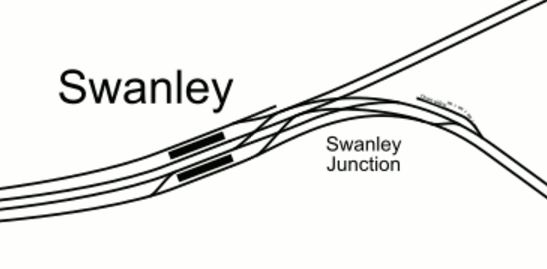
Swanley Station
Note.
- Swanley station has two island platforms.
- The line going North-East is the Chatham Main Line.
- The line going South-East is the Maidstone Line, leading to Maidstone East and Sevenoaks stations.
- At present, the platform arrangement is not one island platform for each direction.
This station could be dramatically improved to be a cross-platform interchange with London-bound and coast-bound services each with their own island platform. If of course, this were to be possible for other operational reasons.
The only passengers who would be inconvenienced, would be those who were travelling between stations on different lines to the East.
- The East London Line having cross-platform interchange vwith Thamesllink.
- Sortout the dreadful St. Pancras with good interchange between Thameslink and other lines.
- Gatwick acts as a collector station, where passengers from all over the South change trains to a high-capacity Gatwick to Luton/Bedford shuttle.
Thameslink will be radically different to how it is planned to be today.
Have The RMT Seen The Writing On The Wall?
This morning the RMT are on strike on Southern, in the longest strike seen on UK railways for decades.
This report has recently appeared on the Rail Magazine web site, and is entitled Network Rail tests ETCS on Class 700 on ‘Core’ Thameslink route.
The report goes on to say how this successful test will allow Automatic Train Operation (ATO) from 2018.
In other words, the Thameslink trains and eventually, there will only be Class 700 trains operating through the central core, will be driven by computer, with the driver monitoring what is happening.
In a leader, The Times today described the rail unions as Luddites.
Surely, any hint of computers driving trains will invoke the resistance of the unions.
But as with Driver Only Operation DOO), ATO is the way that passengers, train operators and progressive governments will want to go. And if it is unsafe, just look at the Victoria Line which now runs thirty trains per hour using both DOO and ATO. And it has been using this method of operation for fifty years.
So have the unions looked at this and decided that with a big push they can get the whole lot thrown out.
The Times called them Luddites. The Times was right.
As an aside, when did you last see a woman driving a train on the National Rail Network?
Now ASLEF Joins In!
I take the headline from this article on Rail News, which is entitled Southern dispute: now ASLEF joins in.
This Southern dispute and the related one in Scotland, appear that they may continue until 2017 at least.
I used to travel up to London in the 1990s with a driver-supervisor on the Central Line. We would discuss various technical subjects and the questions of efficient operation of trains and driver only operation came up.
Nothing he said, ever gave me any hint that driver only operation was anything but totally safe, if you have good communication with those on the platform. In fact, he did give the impression, that when problems did occur, it was because communication between driver and platform staff failed. I can remember him saying that with trainees, he always impressed on them, the dangers of not checking properly before starting when platforms are long and curved, as at Bank.
My view as someone, who has seen a lot of industrial automation at work in factories and industrial plants, is that the safest way to drive a train, is let the computer do the driving and the train driver should monitor what is happening.
Effectively, that is what has happened on the Victoria Line since 1967.
It’s about time that the UK’s trains joined the twentieth century, instead of clinging to the nineteenth.
All Change On Thameslink
Wikipedia gives a Provisional Timetable for Thameslink.
- 4 trains per hour (tph) – Sutton to St. Albans (2 tph via Wimbledon, 2tph via Mitcham)
- 2tph – Brighton to Bedford
- 2 tph – Gatwick Airport to Bedford
- 2 tph – Brighton to Cambridge
- 2 tph – Horsham to Peterborough
- 2 tph – Tattenham Corner to Cambridge
- 2 tph – Sevenoaks to Kentish Town
- 2 tph – Caterham to Finsbury Park (stopping via Sydenham or semi-fast)
- 2 tph – Maidstone East to Luton
- 2 tph – East Grinstead to West Hampstead
- 2 tph – Littlehampton to West Hampstead
Some services are extended in the Peak to and from Bedford, Luton, Three Bridges and Welwyn Garden City.
According to Modern Railways for August 2016, the new proposal is.
- 4 trains per hour (tph) – Sutton to St. Albans (2 tph via Wimbledon, 2tph via Mitcham)
- 2tph – Brighton to Bedford
- 2 tph – Three Bridges/Gatwick Airport to Bedford
- 2 tph – Brighton to Cambridge North
- 2 tph – Horsham to Peterborough
- 2 tph – Maidstone East to Cambridge
- 2 tph – Sevenoaks to Blackfriars
- 2 tph -Orpington to Kentish Town/West Hampstead
- 2 tph – Rainham to Luton (via Dartford and Greenwich)
- 2 tph – East Grinstead to Bedford
- 2 tph – Littlehampton to Bedford
No information on Peak extensions is given.
I can make the following observations.
More Off Peak Trains Through The Core
According to Modern Railways for August 2016, there will be another 2 tph in the Off Peak, through the core from St. Pancras to London Bridge.
The core section of Thameslink, which effectively goes from West Hampstead/Kentish Town and Finsbury Park in the North to London Bridge and Elephant and Castle in the South.
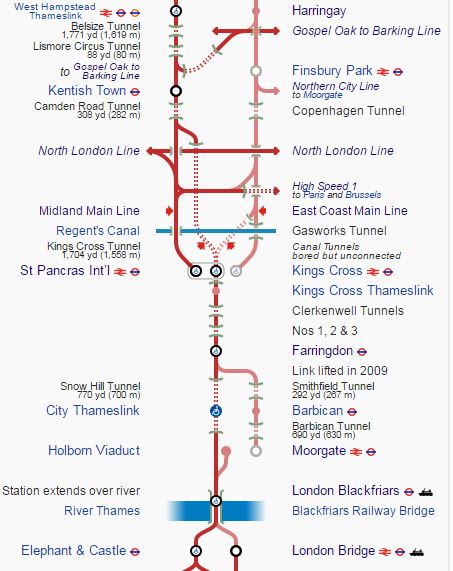
Thameslink Core
This section is getting to look more like a high-capacity Underground Line. The frequency is in the mid-twenty trains per hour, which is better than some Underground lines.
There is also a lot of connections.
- West Hampstead – Jubilee Line and North London Lines and possibly Chiltern and Metropolitan Lines.
- Kentish Town – Northern Line
- Finsbury Park – Great Northern, Piccadillyand Victoria Lines.
- St. Pancras – Circle, Metropolitan, Northern,Piccadilly and Victoria Lines, and Main Line services out of Kings Croiss and St. Pancras.
- Blackfriars – Circle and District Lines
- London Bridge – Northern and Jubilee Lines and Main Line services.
- Elephant and Castle – Northern and Bakerloo Lines
With this level of connections, it should surely be on the Underground Map.
Changing In The Core
Passengers will have to get more used to changing trains in the core section between St. Pancras and Blackfriars.
Passengers will get off one train at a station they like, wait for hopefully a few minutes, before getting a train to their preferred destination.
I think Thameslink could make this a lot easier, by providing kiosks and coffee shops on the platforms of the station, they would like people to change.
New Routes
Thameslink will open up new routes.
Until I was fifteen, I lived near Oakwood station and getting to and from Gatwick from there is not easy. But after Thameslink opens, the Piccadilly Line takes me to Finsbury Park for Thameslink, where I suspect I’ll be able to get a train to Gatwick.
All the fuss is about Crossrail, but the effect of a full Thameslink could be almost as great.
London Bridge Station
According to a platform layout diagram in Wikipedia of London Bridge station, Thameslink will use the following platforms.
- Platform 4 to go South.
- Platform 5 to go North.
Is the design of the island platform 4/5 in the new station, wide enough to have kiosks and/or coffee shops?
It’s certainly an island platform, that will enable passengers to change direction.
Sutton Loop Services
Sutton currently has 2 tph to St. Albans and 2 tph to Luton, so the new proposal might be seen as a cutback, as it doesn’t go all the way to Luton.
Will users of the Sutton Loop Line find this acceptable? According to the Political Developments section in the Wikipedia entry for the Thameslink Programme, this is said.
Network Rail had planned to terminate Sutton Loop Thameslink trains at Blackfriars station, rather than have them continue through central London as at present. This upset many residents in South London and their local politicians, who saw it as a reduction in services rather than an improvement. In response to pressure, government has ordered Network Rail to reverse the decision.
There are powerful interests!
Cambridge
Are some Cambridge services going to Cambridge North station, to give better connections between Thameslink and services to and from Kings Lynn, Norwich, Peterborough and the Midlands?
Cambridge North station is given in Wikipedia as a three platform station.
Is that enough? Especially, if trains arriving at Cambridge North station from the North were to be turned back.
Thameslink will also highlight a real problem at Cambridge.
After Thameslink opens, for many passengers, going to say Ipswich or Norwich via Cambridge could be a better option, than going via Liverpool Street.
At present trains from Cambridge to Ipswich, Norwich and Peterborough do not have enough capacity or frequency. At least a four-car train running every thirty minutes is needed now and, Thameslink will bring more passengers to the routes.
Hopefully, the new East Anglia Franchise will improve these important services across the region.
Midland Main Line
It would seem that services on the Midland Main Line branch of Thameslink, stop a few stations further in with perhaps fewer services going to Luton.
Given that the Midland Main Line is to be electrified and fast trains will be running from St. Pancras to Derby, Nottingham and Sheffield, the interface between the two lines needs to be well thought out.
Consider.
- The interchange between Thameslink and Midland Main Line services at St. Pancras is not the best.
- Will Bedford be upgraded to be a better interchange?
- Trains on the electrified Midland Main Line will probably be 200 kph trains, as opposed to the 160 kph of the Class 700 train‘s on Thameslink.
- The trains run on separate pairs of lines, with the slow lines to the East and the fast lines to the West.
In my view, there is a need for a cross platform interchange between Thameslink and long distance services, but on a brief look, this might be difficult, at anywhere other than Bedford station.
As Bedford will also become the Eastern terminus of the East West Rail Link, and there is space in the area of the station, could we see Bedford developed into an important and efficient interchange?
St. Pancras Station
A lot of this could have been much easier, if St. Pancras station had been designed as a working station, rather than to show off! It may have a fur coat, but it’s certainly got no knickers.
A simple illustration of the bad design of St. Pancras, is to imagine you’re coming from say Flitwick on Thameslink and want to go to anywhere on the Northern, Piccadilly and Victoria Lines.
- The Piccadilly and Victoria Lines are a long walk from Thameslink and the Midland Main Line platforms at St. Pancras.
- The Northern Line is better as sensible passengers will use Kentish Town or London Bridge to change.
At least there is a good interchange to the Circle, District and Metropolitan Lines at Farringdon and Blackfriars.
In some ways the easiest way to get from the Thameslink platforms at St. Pancras to the Victoria and Piccadilly Lines, especially if you’re going South, is to get off at Farringdon station and use the cross-platform interchange between the Southbound Thameslink and the Westbound Circle/Metropolitan, which I showed in A Space Too Good To Leave Empty, and then take one stop back to Kings Cross before walking up the stairs to take the escalators to the Northern, Piccadilly and Victoria Lines.
East Coast Main Line
Thameslink’s links to the East Coast Main Line hopefully will be much better, as there are stations, where interchange to local and long-distance services could be excellent.
- Finsbury Park (At least 6 tph) will hopefully give good interchange to Great Northern, Piccadilly and Victoria Lines and local services.
- Welwyn Garden City (At least 4 tph) will interchange with local services
- Stevenage (At least 4 tph) will interchange with local services and some long distance trains.
- Peterborough (2 tph) will interchange with local services and lots of long distance trains.
As the slow lines are on the outside of the fast lines on the East Coast Main Line, I suspect that there are several good opportunities to create cross- or same platform interchanges between local services, Thameslink and long distance services to the North and Scotland.
Northern City And Hertford Loop Lines
One set of services that will benefit from Thameslink are those on the Northern City Line out of Moorgate and the associated Hertford Loop Line.
- The service will be connected to Thameslink services at Finsbury Park, Welwyn Garden City, Stevenage and other stations.
- The lines recently went to seven-day-a-week operation.
- The lines are getting new Class 717 trains.
- The Hertford Loop Line is a double-track line with a 120 kph speed limit and stations for six-car trains.
- The current Southern terminus at Moorgate, is not the easiest to access.
In the future, don’t discount improvements to the Hertford Loop Line, to get more trains through the area.
Consider.
- The Hertford Loop Line is the only diversion past the bottleneck of the Digswell Viaduct.
- Both ends of the line are grade-separated.
- The fastest trains between Finsbury Park and Stevenage on the main line take 18 minutes with no stops and 31 minutes with five stops.
- A typical stopping train on the Hertford Loop Line takes around 41-50 minutes.
- The line can handle long trains and frequently does, when there are problems on the main line.
- Thameslink Class 700 trains could certainly run on the line, but couldn’t stop unless platforms were extended.
- After the Great Northern Class 717 trains are delivered, under normal operation only the most modern trains with the latest signalling will use the line.
- Stevenage station already has cross platform interchange between main line, Thameslink, local and Hertford Loop services.
I think we shouldn’t discount the possibility of some Thameslink services going via an uprated Hertford Loop Line to release paths on the congested part of the East Coast Main Line.
Suppose the Hertford Loop Line was updated to include.
- 160 kph speed limit.
- Perhaps longer platforms at Hertford North station.
- Cross-platform or same platform interchange at Finsbury Park and Stevenage and perhaps Alexandra Palace.
- Perhaps a new parkway station South of Stevenage which could accept 12-car Thameslink trains.
I suspect Network Rail are updating their book of cunning plans to get more capacity through and around the Digswell Viaduct.
More Routes To Kent
The headline of the article in the August 2016 article in Modern Railways is Thameslink To Medway In Revised Timetable.
So why is Thameslink increasing its presence in Kent?
I could be cynical and say it is to take traffic from their rival company; Southeastern, but I think it is all about managing resources.
Consider.
- The core section of Thameslink can handle 24 tph in both directions.
- North of the Thames, the increased capacity has been used to create a second route out of London to Welwyn Garden City, Cambridge and Peterborough.
- East Croydon is a bottleneck and can’t take any more trains.
- The Bermondsey Dive-Under and the new London Bridge station will create more capacity and better routes to South East London and Kent.
- Thameslink has always served Kent.
- Many Kent services go right across London to Victoria, whenb perhaps it would be easier if they served London Bridge or went through Thameslink.
So by switching some of the available services through London to Kent, this could be to relieve pressure at Victoria and East Croydon. So perhaps in the long term, this will allow more services from Victoria to Brighton via East Croydon and Gatwick Airport
But obviously, these changes wouldn’t be done if the passengers didn’t need to use the route.
I have to admit, that I hear regular complaints about the quality of the train service in South East London.
The 2 tph between Orpington and West Hampstead certainly looks like a measure to address South East London’s bad connectivity. I know one solicitor who’ll use it to get from home to her office.
The 2 tph between Rainham and Luton is the interesting service, as it goes via the Medway towns, Dartford and Greenwich.
- It gives the Medway towns an additional route and more capacity to London.
- It connects to Greenhithe for Bluewater.
- It connects to Crossrail at Abbey Wood.
- Could this route release capacity in Victoria?
One thing that surprises me, is that it duplicates the proposed Crossrail extension to Gravesend. Perhaps it is just a better idea.
The other Kent service which is the 2 tph between Cambridge and Maidstone East, which is extended to Ashford in the peaks, seems to be a replacement for an existing service, but it could be taking the pressure off Victoria services.
Obviously Thameslink have the detailed passenger figures and can plan accordingly.
But surely, if the East Coastway service is extended to Ashford, perhaps by the use of IPEMU-capable Class 377 trains, then does this create another high-class commuter route to the far South-East?
Connecting To East Croydon And Gatwick From East London
For those of us in East London, who live along the East London Line, this is one of the most important sections of Thameslink.
At present, we can get to and from Gatwick Airport and East Croydon stations, by changing at somewhere like New Cross Gate or Norwood Junction stations.
It had been hoped that the improved Thameslink would have laid down a simple rule for getting from the East London Line to Gatwick, but when I asked Thameslink about this, they referred me to Transport for London, who unsurprisingly referred me back to Thameslink. I wrote about it in detail in Searching For What Is Going To Happen On The East London Line After The Thameslink Programme Opens.
Obviously, when Crossrail opens, it will help, as it runs from Whitechapel to Farringdon, but it would still be ideal to be able to get to Gatwick with one change, without making several and going halfway round London.
London Bridge To Caterham And Tattenham Corner via Purley
These destinations were originally to be incorporated into Thameslink, but it now appears, that they will become a shared service from London Bridge that divides at Purley station.
The current service is 2 tph from London Bridge to both Caterham and Tattenham Corner. As each train stops at all stations between New Cross Gate and East Croydon stations, this could appear to be the service that the East London Line needs.
The current London Overground services on the East London Line through New Cross Gate are 4 tph to West Croydon and 4 tph to Crystal Palace. As I said in Increased Frequencies On The East London Line, from 2018 Crystal Palace will receive 6 tph from Dalston Junction station.
So this means that from 2018, every six minutes a London Overground train will travel in both directions between New Cross Gate and Sydenham stations,. The services would run on the slow lines well out of the way of Thameslink on the fast lines.
There would probably be paths on the fast line to run the London Bridge to Purley services, but because Thameslink is such a high-frequency service, I suspect that they would run on the slow lines.
This would of course create a local Metro service to feed passengers to London Bridge and especially East Croydon to access longer distance services.
Let’s hope that there is sufficient capacity on the slow lines between New Cross Gate and East Croydon to incorporate a London Bridge to Purley service of sufficient frequency, so that plebs like me in Dalston wanting to go to East Croydon, can just get the first train to Sydenham and wait for a few minutes for the arrival of an East Croydon train.
In a perfect world, there would be ten trains per hour from London Bridge to East Croydon to match the Overground service. This would mean that the two services would alternate.
But I doubt this will happen, as other trains use the slow lines, like the service from Victoria to Sutton via Crystal Palace and West Croydon.
However, if we have at least a 4 tph service between London Bridge and Purley via East Croydon, that would mean that a reasonable service with one same platform interchange would exist between the East London Line and East Croydon, with all its connections to the South. Thameslink would be providing at least the following services from East Croydon.
- 4 tph to Brighton
- 4 tph to Three Bridges
- 2 tph to Horsham
All 10 tph would serve Gatwick Airport.
I wonder if the London Bridge to Purley services would share the same platform or island platform at East Croydon with Thameslink services.
If they did, then going to and from Gatwick Airport and Brighton from anywhere on the East London Line, would involve a maximum of two same platform changes.
London Bridge To Uckfield
For several months, I’ve thought that London Bridge to Uckfield will be run by an IPEMU or a train with onboard energy storage. I wrote about this in The Uckfield Branch Is Almost Ready For Longer Trains.
At present this service uses the fast lines between London Bridge and East Croydon and is run by Class 171 trains. An ideal train would be a modified Class 377 train, running in anb 8-, 10- or 12-car formation.
Between London Bridge and South Croydon, it would run using the third rail electrification and could keep up to a Thameslink speed. Only South of Oxted would it use the energy from the onboard storage to power the train.
Will Thameslink really want this interloper on their train superhighway between London Bridge and East Croydon?
Probably not!
But surely, the service could share the slow lines with the London Bridge to Purley services and the London Overground.
The Extended East London Line
Summarising the services that use the East London Line and the slow lines of the Brighton Main Line North of New Cross Gate we get from 2018.
- 4 tph Dalston Junction to West Croydon (London Overground) – Uses route from New Cross Gate to Norwood Junction
- 6 tph Highbury and Islington to Crystal Palace (London Overground) – Uses route from New Cross Gate to Sydenham.
- ? tph London Bridge to Purley (Southern) – Uses route from New Cross Gate to East Croydon
- ? tph London Bridge to Uckfield (Southern) – Uses route from New Cross Gate to East Croydon
- 4 tph Crystal Palace to West Croydon (Southern) – Uses route through Norwood Junction.
If say we had 4 tph to Purley and and 2 tph to Uckfield, then that would mean.
- 16 tph between New Cross Gate and Sydenham
- 14 tph through Norwood Junction
- 8 tph through East Croydon
- 8 tph to West Croydon
I suspect, that people who know about train scheduling could squeeze up to about the same twenty trains per hour along the line, that London Overground will be running through the Thames Tunnel.
If something like this train pattern were to be implemented, it would effectively create an extended East London Line from Highbury and Islington and Dalston Junction in the North to Gatwick Airport, Brighton and Uckfield in the South via East Croydon. All passengers would probably do is change trains, but not platforms once or twice.
The Brighton Main Line 2
There are a lot of commuters and others, who press for a second main line to Brighton, It even has its own web site, which would seem to like to see.
- Another route to London created using the Uckfield Branch and a reinstated Wealden Line.
- Better access to the Canary Wharf area of London.
Having looked at what Thameslink are doing, I think I can say the following.
- The new 12-car Class 700 trains will bring extra seats.
- Brighton will get 4 tph Thameslink train service through London.
- Thameslink services will interchange with East London Line services in a more efficient manner to give better access to Canary Wharf, Shoreditch, Whitechapel and East London in general.
- If the Thameslink services do create capacity at Victoria and East Croydon, then we’ll see more services from Brighton to Victoria.
- 10- or 12-car services will run from Uckfield into London Bridge, at 2-4 tph.
Hopefully, it will put off the day, when serious money needs to be spent to build a second line from Brighton to London.
Conclusion
I obviously don’t know, if this logic is right!
But if the following is done.
- Move services from Surrey to Kent.
- Provide a new Metro route from London Bridge to Caterham and Tattenham Corner via Purley.
- Optimise service end-points.
- Look seriously at the Hertford Loop Line
- Have a good think about how to serve Cambridge.
The following will happen.
- Victoria will have some spare capacity.
- Pressure on East Croydon will be eased.
- A frequent service can be created between London Bridge and Uckfield.
- The East London Line gets connected to Gatwick and Brighton.
- South East London gets much needed connectivity.
But the biggest effect will be the ability to create more services between Victoria and Brighton via East Croydon and Gatwick Airport.
It all illustrates some of the possibilities created by the new Thameslink proposals.
And all without any new infrastructure, other than what is currently being constructed.
What A Way To Run A Company!
This article in Rail Magazine is entitled Driver Shortages And Train Issues Prompt GTR Remedial Plan.
Don’t I just know it!
Today, I arrived at Balham station by the reliable Northern Line to get a train to Streatham Hill station to take some pictures.
The first train was cancelleed and then there was a succession of trains going direct to Streatham Common station.
Eventually, after about half-an-hour a train did turn up and I took the train the one stop and took the pictures I wanted.
I then took a 159 bus to Streatham station, where i took more pictures.
The first train, that came went to Streatham Common station, where I took a couple of photos.
I was intending to get to Sutton, but that train appeared to be delayed. So when another train turned up that said it was going to West Croydon,I thought that would be a safe place, as I could get the Overground home.
But despite what it said on the front, it was an East Croydon train, so after a couple of stops, I got out at Selhurst station to see if it could be a terminal for The Streatham Virtual Tube.
It might be!
But then a Sutton train arrived and I thought that perhaps this might take me to West Croydon or Sutton, where I could get a train home.
We sat there like prats for perhaps ten minutes before the driver said he was waiting for a replacement. When the replacement didn’t come he took the train out of service.
An Epsom train then followed and I thought that this might get me home.
We sat there like prats for perhaps ten minutes before the driver said he was waiting for a replacement. When the replacement didn’t come he took the train out of service.
I did have a chat with a group of drivers, who were trying to get to work and they said, that it was all GTR’s fault as they were trying to cut costs.
The next train was for Caterham, so I got it to East Croydon, hoping to get a London Bruidge train.
One left as I arrived, but after fifteen minutes I was on a train to London Bridge.
Surprisingly, we got there without trouble.
I bought some food in M&S and then got a 141 bus home.
It’s not as if this sort of shambles is the only problem GTR has.
- There’s the non-working Class 700 trains!
- There’s the keeping of the Class 387 trains instead of passing them to GWR.
- There’s the dispute with the drivers.
- There’s the dispute with the conductors.
- There’s the dispute with the rest of the massed orchestras of the BBC, Birmingham, Liverpool, Manchester and Scotland. And not forgetting the Bethnal Green Big Band!
I blame the management!
An Irresistible Force Attempts To Shift An Immoveable Object
This article in The Guardian is entitled Govia Thameslink takes Aslef union to court over longer trains dispute and the title gives a good précis of the story.
Could this be why new Cl;ass 700 trains have not entered service on time, as I reported in Where Are The Class 700 Train?
After all, some of them will be twelve-cars too!
Are The TOCs Arguing Over The Class 387 Trains?
The April 2015 Edition of Modern Railways has an article entitled Operators Vying For Class 387s.
Before discussing the article, I’ll describe the trains involved.
Class 387 Trains
At present there are twenty-nine new four-car Class 387 trains running Thameslink services for Govia Thameslink Railway (GTR).
- These are dual-voltage 175 kph (110 mph) versions of Electrostars.
- They can run on probably most of the electrified routes in the UK.
- They are about to be replaced by brand-new Siemens Class 700 trains, as these are delivered.
- They are closely related to the Class 379 trains, which were used for the IPEMU prototype in early 2015.
As they become available, they are supposed to go to the Great Western Railway (GWR).
But GWR only have the working electrification from Paddington to Hayes and Harlington station on which to run the trains. As I showed in Hayes and Harlington Station – 28th February 2016, work is progressing at the station and an extended bay platform is being created.
The finish of platform works at the station, will mean a service can be started between Paddington and Hayes and Harlington.
- It will replace the main-line portion of the service between Paddington and Greenford, which is soon to be discontinued.
- It can be used by GWR for driver training.
- Class 387 trains working in GWR livery will be good publicity.
But I can’t see this service needing more than a couple of Class 387 trains.
This picture shows the colour scheme of a Class 387 train, currently working on Thameslink.

The colour of those doors looks suspiciously like GWR green to me! So perhaps the transfer of operator would not require anything more than downloading new software for the passenger information screens and changing the adverts and notices.
In addition to the current twenty-nine trains on Thameslink, Bombardier have three further orders for Class 387 trains.
- Twenty-seven four-car Class 387/2 trains are being delivered for Gatwick Express.
- Eight four-car trains for GWR.
- Twenty four-car trains have been ordered by Porterbrook.
Bombardier are reported to be on the verge of finishing the Gatwick Express order and starting manufacture of more Class 387/1 trains.
Class 442 Trains
The Class 442 trains, which are being replaced on Gatwick Express by Class 387/2 trains are not the most loved trains in the UK’s train fleet.
It is very likely that despite being the fastest third-rail trains in the world, that they will go to the scrapyard as they are replaced.
The only reason some might be retained on Gatwick Express, is so that some Class 387/2 trains could work Thameslink to release a few of the Class 387 trains for other operators.
Class 700 Trains
The Class 700 trains, being built in Germany by Siemens, are replacing the last Class 319 trains and the new Class 387 trains on Thameslink.
So introduction of these trains is important to release Class 387 trains for other operators.
But these trains are only due to be introduced on the 16th April 2016 and there are inevitable questions.
- What is the introduction into service schedule?
- As with all new trains or car, bus or truck for that matter, will there be any teething problems?
- Will they replace the Class 319 or 387 trains first?
- Will the passengers like them?
The last question is the most important and expect lots of moaning about the lack of free wi-fi!
Class 360 Trains
The Class 360 trains, used on Heathrow Connect, have a peripheral role in the argument, as c2c were trying to sublease two of these trains to sort out their capacity problems.
But the well-documented problems of Heathrow Express, have probably meant that these trains are no longer available.
Summarising The Article
The first paragraph of the Modern Railways article entitled Operators Vying For Class 387s, says that several operators are vying for the Class 387/1 trains currently working on Thameslink.
To summarise.
- c2c, who are big Electrostar operators, are still looking for trains after failing to procure Class 360 trains.
- GWR is anxious to get 387s to start driver training.
- GTR wants to retain them, as there is problems with the new Class 700 trains.
- GWR have apparently suggested that GTR retain the Class 442 trains and use the new Class 387/2 Gatwick Expresses on Thameslink.
- GWR wants to start services to Maindenhead earlier than thought.
It looks like there’s a serious argument going on.
The final paragraph offers a solution.
It could be that the quest to find additional short term capacity at c2c may be solved by early delivery of the next batch of 387s, construction of which is to begin shortly at Bombardier’s Derby factory.
Perhaps, building some of Porterbrook’s trains before those destined for GWR, where they have nowhere to run, could happen!
Bombardier are probably being a bit bullish, as after all one of the reasons for the problems would appear to be the new Class 700 trains from Siemens.
Adding An IPEMU Capabilty To Class 387 Trains
Could it also be, that until this argument is settled, we will not be seeing any Class 387 trains converted into IPEMUs?
I believe that a proportion of trains with on-board energy storage could help some of our electrification problems.
Bombardier have stated that all their new Aventra trains will be wired to accept on-board energy storage if the operator desires it be added. This article in Global Rail News gives full details.
In the meantime, the only train that is available that can be given an IPEMU capability is the Class 387 train.
Electric Services To Maidenhead And Reading
The article says this about electrification to Maidenhead.
Whilst the completion date for wiring to Maidenhead is shown in the re-plan of Network Rail’s Enhancements Programme by Sir Peter Hendy as being June 2017, Modern Railways understands that work is ahead of the new schedule and this section may be completed by the end of 2016.
As electrification to Reading is Crossrail’s problem, this might help too, as different structures are being used.
In Rumours Of Battery Trains, I discussed an article in the September 2015 Edition of Modern Railways entitled Class 387s Could Be Battery Powered, which said that GWR’s eight additional Class 387 trains could be battery powered. This was said in Modern Railways.
Delivery as IPEMUs would allow EMUs to make use of as much wiring as is available (and batteries beyond) while electrification pushes ahead under the delayed scheme, and in the longer term would allow units to run on sections not yet authorised for electrification, such as Newbury to Bedwyn. The use of IPEMUs might also hasten the cascade of Class 16x units to the west of the franchise.
But thinking about electrification to Maidenhead in a practical manner, would a train operator want Maidenhead as the terminus of a new electric service.
Remember that the Class 387 trains are required to increase capacity and bring a whole new level of electric traction and modern comfort to services from Paddington to Bedwyn, Newbury, Oxford, Reading and other places in the Thames Valley, so having to change from your old diesel train to a new electric one at Maidenhead is something that will bring out the worst out of passengers.
If you look at train times between Maidenhead and Paddington, some services take up to thirty-six minutes, but the fastest scheduled journey I can find is probably by an InterCity 125 in nineteen. So you can understand, why GWR would like 110 mph Class 387 trains on the route. They could probably do the journey in a few minutes over twenty.
With Chiltern starting an Oxford to Marylebone in December 2016, GWR are probably preparing to lose a lot of their Oxford business. I know which service I’d choose.
But the Class 387 IPEMU would offer a viable alternative.
- Hayes and Harlington station is fully electrified to Paddington and is just under eleven miles from Paddington.
- Reading station is not electrified and is thirty-six miles from Paddington.
- A Class 387 IPEMU has a range of upwards of fifty miles on batteries.
The Class 387 IPEMU would seem to have been designed to handle Paddington to Reading. But I suspect that electric services will not be offered until the wires reach Maidenhead.
So when will GWR be offering an electric local service between Paddington and Reading?
- Trains would use overhead power to the end of the wires and batteries beyond.
- Enough Class 387 trains will have to be converted to IPEMUs
- Enough platforms at Paddington would have be able to accept electric trains.
Could this be why GWR appear to be so keen to take deliveries of Class 387 trains?
From Reading diesel shuttles would work the lines to Bedwyn and Oxford.
So how does this fit in with Modern Railways assertion, that electrification to Maidenhead will be complete before the end of the year?
If GWR take the IPEMU route to provide services between Paddington and Reading, it just means that the train will be less reliant on the batteries, as Maidenhead to Reading is only twelve miles.
To go to anywhere past Reading is probably difficult, as suitable places like Bedwyn, Didcot and Newbury are more than twenty-five miles from Maidenhead, which probably means the range is too much for an IPEMU, as it has to go both ways on battery power.
On the other hand, every extra mile of usable electrification would extend the reach from Paddington.
But there are three places, where Class 387 IPEMUs could operate without major additional electrification; the three branch lines.
- Henley is 11.5 miles from Maidenhead.
- Marlow is 5 miles from Maidenhead.
- Windsor is 2.5 miles from Slough.
There would probably need to be some short lengths of electrification where the branches join the main line, signalling upgrades and platform lengthening. But not electrifying the branches and using IPEMUs would probably be welcomed by Network Rail, as it would sidestep any legal challenges to the electrification on aesthetic and heritage grounds.
In the peaks there are direct services between Bourne End station on the Marlow Branch and London, which seem to take fifty-four minutes. I suspect that a Class 387 IPEMU could do the journey about twenty minutes faster, with electrification between Paddington and Maindenhead.
Onward To Oxford
Electrification to Maidenhead would not give advantages in providing electric services from Reading to Bedwyn, Newbury and Oxford. It’s just too far for a train powered by batteries.
Commercial common sense, would indicate that with Chiltern scheduled to serve Oxford station in December 2016, if there was one destination, where new electric trains must go, it is Oxford.
And by the end of 2016!
It sounds like an impossible dream!
Roger Ford in an article in the April 2016 Edition of Modern Railways, which is entitled GWEP Target Dates And Costs, says this about testing the Class 800 trains.
GWEP’s 16-mile ‘test track’is between Reading and Didcot; It was originally due to have been energised in September last year.
Energisation for test running is now scheduled for September this year.
He also indicated, and I can confirm it, that substantial amounts of the overhead structures have been installed. So I think we can assume that by September, the test track will probably be working.
As an aside here, I wonder if the test track will electrify and use one of the west-facing bay platforms at Reading station.
If we assume that the test track provides a fully-functioning electrified route between Reading and Didcot, it could surely be used by Class 387 IPEMUs to get to Didcot.
- They would use overhead electrification from Paddington to Maidenhead or the end of the wires.
- They would go to Reading on battery power.
- Reading to Didcot would be using the overhead wires put up for the test track.
- Batteries would be charged on both electrified sections.
Oxford is less than twenty miles from Didcot, so reaching Oxford with an electric service is possible before December 2016.
Onward To Bedwyn
Bedwyn is forty-two miles from Maidenhead and thirty from Reading, so it would appear to be another impossible dream, even if there was electrification all the way to Maidenhead from Paddington.
I do think that unless the Great Western Main Line is electrified to Maidenhead, that getting Class 387 IPEMUs to Bedwyn is impossible.
But there are three possibilities to get to Bedwyn from Paddington, if Maidenhead is electrified.
- A bigger battery to give a longer range.
- As the train stops at Reading, it could stop in an electrified platform and charge the battery.
- Electrifying the junction and a short length of the Reading to Taunton Line, perhaps as far as Reading West station.
I’m sure Bombardier, Network Rail and GWR are working on a solution.
It should also be noted that there are two west facing bay platforms used for services to Basingstoke, Bedwyn and Newbury. These could be electrified and Bedwyn could be served by a shuttle.
Onward To Basingstoke
Another possibility would be to use the Class 387 IPEMUs to provide a service along the Reading to Basingstoke Line, which is currently run using diesel multiple units.
It could be charged at Reading by electrifying the two west-facing bay platforms or even at Basingstoke using third-rail electrification in the bay platform.
Conclusion
I believe that all the Thames Valley services out of Paddington could be run by a fleet of Class 387 trains, some or all of which would be IPEMUs, It would be necessary to do the following.
- Electrify between Airport Junction and Maidenhead.
- Allow the use of the test track between Reading and Didcot by Class 387 services travelling past Didcot.
- Electrify selected platforms at Reading station.
The new trains would provide an increase in capacity, faster services and possibly extra routes.
I also believe that it would be possible to serve Oxford using Class 387 IPEMUs by the end of the year. This might persuade passengers not to desert to Chiltern.
Does this all explain GWR’s reluctance to lose the Class 387 trains, that have been earmarked for transfer from Thameslink?
But with other train companies looking jealously at the GWR’s Class 387 trains, it’s no wonder there’s an argument.
Musical Trains In Sussex
This article from Rail Magazine is entitled Class 387/2s enter traffic with GTR.
It says that as Govia Thameslink Railway (GTR) already has Thameslink drivers qualified to drive the trains and the training for drivers on Gatwick Express hasn’t been completed yet, then two of the new Class 387/2 trains for Gatwick Express have started to be used on Thameslink services to replace the ugly Class 319 trains.
The Class 700 trains, start to be delivered this spring on Thameslink and will obviously replace the remaining 319s first. But as numbers increase, what is going to happen to the displaced new Class 387/1 trains, currently running the route with the 319s?
Surely to park them in sidings, until the much-delayed Great Western Electrification is completed will be a scandal.
It is also complicated by the fact that after Bombardier finish the Class 387/2s for Gatwick Express, they are going to build another twenty-eight four-car trains to add to the collection in the sidings.
Unless of course, someone decides that they will be better off earning revenue.
It’s all gone rather quiet on the IPEMU front, except for a presentation in Derby by Network Rail to the IMechE, but surely if the technology works, wouldn’t it be better to fit batteries to some of these trains and use them on services, where IPEMUs are an alternative to full electrification.
GTR could even use a few of the IPEMU variant of the Class 387 train on their Southern franchise to replace their diesel Class 171 trains on the Oxted Line and the Marshlink Line.
Surely, if there was ever a low-risk strategy to try out these innovative IPEMU trains in revenue earning service, it is on these two lines.
- GTR has a lot of experience with running and training drivers for Class 387 trains.
- Both the Oxted and Marshlink lines need an increase in capacity.
- I suspect, that modifications need to be done to allow four-car trains to run on the Oxted Line to Uckfield.
- Four-car trains already run on the Marshlink Line.
- GTR would end up with an all-electric passenger train fleet.
But surely the main reason, is that some modern diesel trains in good condition, would become available for cascade to places, where they are really needed.
I’ve just found this article on the Southern Railway web site, which is entitled Uckfield line platform extensions. It describes how all platforms on the line are being lengthened for twelve-car trains. This is said on timescales.
Permanent works started in September 2015 at some sites and they will start in the New Year for others. The stations will be completed on a staggered basis between February and July 2016.
The article also says that until February 19th, there will be a replacement bus service from Crowborough to Uckfield via Buxted. So it is reasonable to assume that from the end of this month, that at least the last three stations on the line will be able to take longer trains. This surely says that if selective door opening is used on a few stations, then by the May 2016 timetable change, longer trains can be used on the Uckfield branch.
Progress on the platform lengthening seems tro be going well, as I wrote in A Trip To Uckfield.
But where are they going to get serviceable four-car trains, let alone twelve-car ones to run on the Uckfield branch?
Perhaps they are going to use two Class 37 locomotives and a few clapped-out coaches.
My devious mind thinks that running the two Gatwick Express trains on Thameslink, frees up two four-car Class 387 trains, which could go to a convenient depot to be fitted with their batteries and IPEMU capability.
After all, when Bombardier created the Class 379 demonstrator for the technology, they didn’t take the train out of service for more than a few months.
There is also this paragraph in Network Rail’s Route Specification for the South East published in April 2015, in a sub-section called Electification Strategy under Route Specification Sussex. This said.
For routes for which it is unlikely that a case can be made for conventional electrification, there could be an opportunity for alternative solutions to be considered in place of diesel traction, for example battery train operation through an Independently Powered Electric Multiple Unit (IPEMU).
Could Network Rail have decided that now is the time to facilitate IPEMU introduction on the two lines in Sussex, that are not electrified?
Replacing two Class 387/1 trains with two Class 387/2 trains, releases the trains for modification.
At the end of the month, when the Class 387/2 trains are needed to start services on Gatwick Express, the modified Class 387/1 trains can be returned to service and run without using their IPEMU capability.
When the Class 700 trains are approved for Thameslink, the Class 387/1 with the IPEMU capability can go where they are needed.
As Network Rail are spending money on platform lengthening on the Uckfield Branch, I think we’ll be seeing some of the first IPEMUs serving it in the near future.
Politics says they’ll turn up before the First of May!
 The Anonymous Widower
