An Interloper At West Ealing Station
These pictures show a Chiltern Railway‘s Class 165 train in West Ealing station.

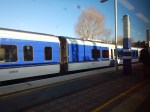
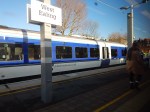
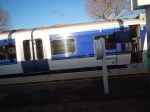
Has the train just been borrowed by Great Western Railway or is there another reason?
It looks like as I passed, that I saw a Parliamentary Train, which uses the Greenford Branch to travel to High Wycombe
Will The Class 230 Trains Be Coming Home?
Long term readers of this blog, will notice, that I keep returning to the short Greenford Branch Line in West London.
- It is four kilometres long
- It runs between West Ealing and Greenford stations.
- Greenford station is step-free and West Ealing station should be by December 2019.
- There are three intermediate stations.
- It is mainly double track, with a short length of single track at both ends.
- Two trains per hour (tph) is provided by a single Great Western Railway (GWR) Class 165 diesel train.
It will be a valuable feeder route for passengers to and from Crossrail, which is rumoured to be opening to Reading in December 2019.
An opening of the Western branches of Crossrail between Paddington and Reading would bring the following services to West Ealing station.
- Two tph between Paddington and Reading
- Two tph between Paddington and Maidenhead
- Four tph between Paddington and Heathrow Terminal 4
- Two tph between Paddington and Heathrow Terminal 5
Two tph shuttling between West Ealing and Greenford is a bad match to the future ten tph on Crossrail.
Four tph Run Between West Ealing And Greenford Stations
This would obviously be ideal, but is it possible?
This Google Map shows West Ealing Junction, where the Greenford Branch joins the Crossrail tracks alongside the Great Western Main Line.
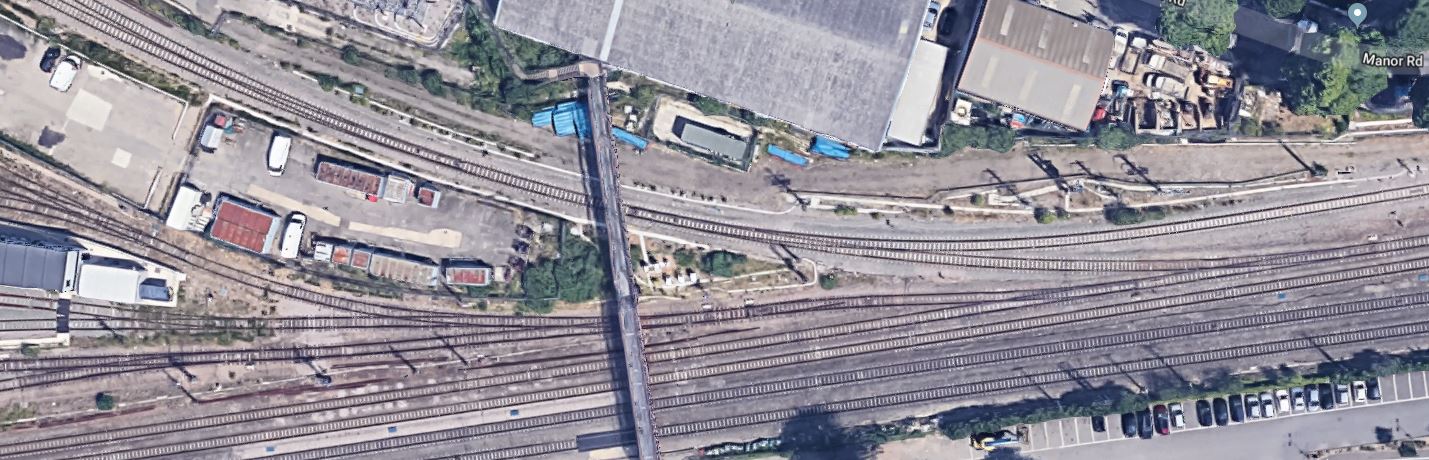
Note how the two tracks of the Greenford Branch Line start in the North-west corner of the map.
- They join into a single-track, which passes under the footbridge.
- The tracks then split a few metres to the East of the bridge.
- The Northern track goes into the bay Platform 5 at West Ealing station, which must be over eighty metres long.
- The Southern track joins the Crossrail line towards Paddington.
The track layout allows the ocassional refuse trains to pass along the Greenford Branch Line, but would also allow four tph to be run into the bay Platform 5.
This picture shows the current state of the under-construction step-free bridge at West Ealing station.
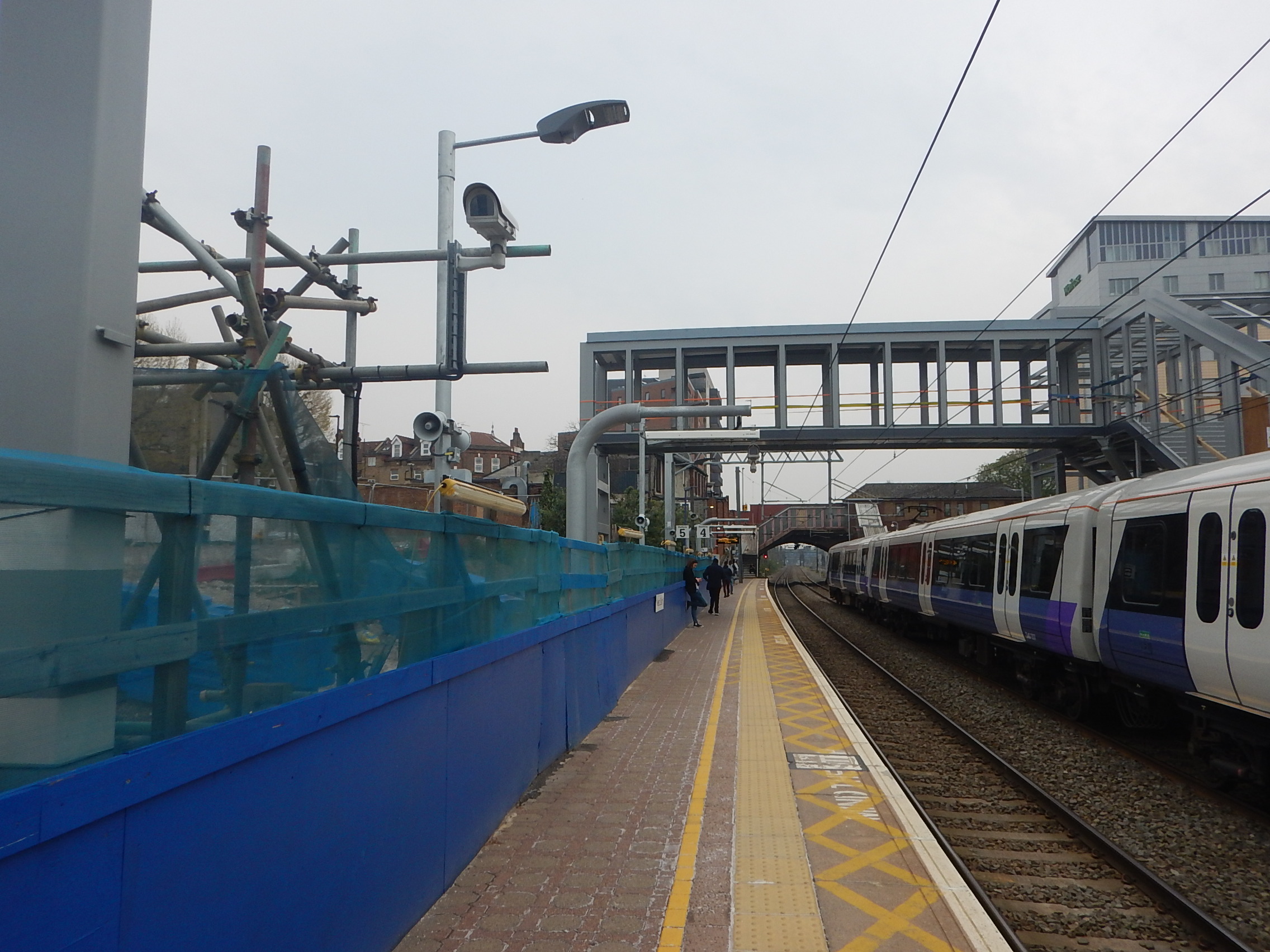
Once this bridge is complete, probably later this year, West Ealing station will be ready for four tph to Greenford.
The simplest safe operation would be for an incoming train to West Ealing station, to wait at Drayton Green station, until it was passed by the outgoing train. Once the points and the signals were set, the incoming train, would move into West Ealing station.
This Google Map shows the lines at the Greenford end of the Greenford Branch Line.
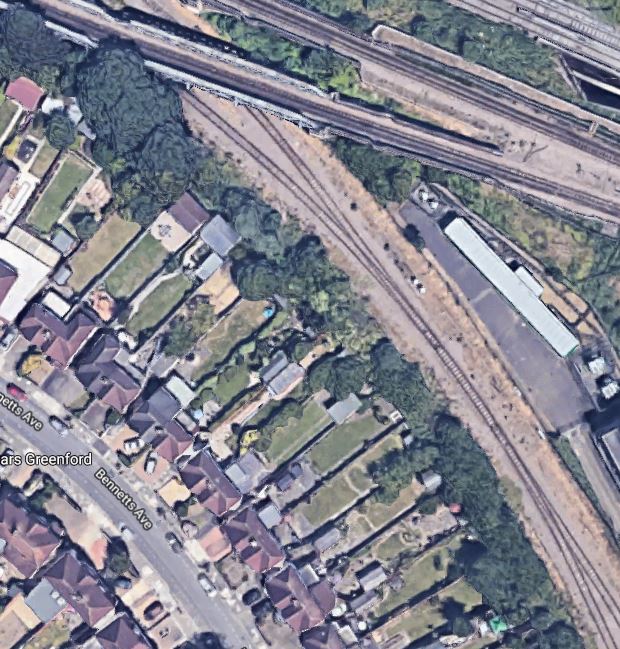
Note how the two tracks of the Greenford Branch Line start in the South-East corner of the map.
- They join into a single track.
- After a few metres, the tracks split into two.
- The Western track dives under the Westbound Central Line and goes into the bay Platform at Greenford station.
- The Northern track goes under both Central Line tracks and joins the Acton-Northolt Line.
It would appear that the track layout is designed so that four tph can work into Greenford station.
The Problem Of The Trains
The current Class 165 train works the line well.
- A two-car train has enough capacity
- At 45 metres long the train fits the short platform at Greenford station.
- I estimate that in a month, the train does about 5,400 miles.
But as the only GWR diesel train, surrounded by large numbers of electric trains, the Class 156 train probably has to trundle some miles to be serviced.
In an ideal world, the train would have the following properties.
- Less than fifty metres long.
- Self-powered.
- Ability to be serviced locally.
- To run a four tph service, two trains and a spare would probably be needed
To look after the trains and hold the spare train, a convenient facility will be needed.
This Google Map shows the wider area around West Ealing station and West Ealing Junction.
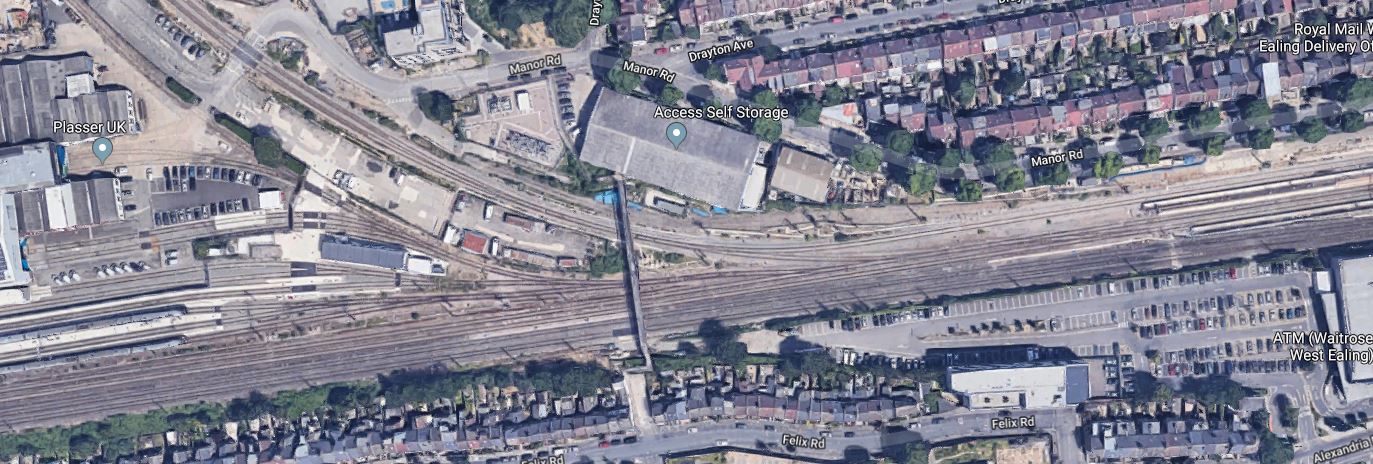
Note the sidings between the Great Western Main Line, the Greenford Branch and the Plasser UK factory.
These sidings are where GWR stable some of their Class 387 trains.
But if the rumours are correct, that Crossrail is going to take over London to Reading services in December 2019, GWR will probably have less use for this facility.
It would surely, be an ideal mini-depot for the Greenford Branch Line fleet.
- It is a secure site.
- A refuelling facility could be provided, if necessary.
- If a passenger service were to be started on the Brentford Branch Line, that is only a few miles away.
There may be a small amount of trackwork needed for efficient operation.
Did A Small Revolution Start In Bedford Yesterday?
In A First Ride In A Revenue-Earning Class 230 Train, I wrote about my ride in the first Class 230 train to enter public service.
This was the conclusion to my post.
It is a well-designed train, that impressed me.
It should find a niche in the train market.
The fact that the train is in service, will in itself provoke interest from train operating companies and Councils and other groups promoting new or reopened train services.
I wouldn’t be surprised to see more orders this year.
So will a small fleet of Class 230 trains be coming back to London, where they spent the first nearly forty years of their working lives?
- The Class 230 train is the right size.
- The Class 230 train is a quality train, with an interior, that can be tailored to the route.
- Servicing can be organised locally.
- Diesel or battery power is available.
A fleet of four trains would provide the following services.
- Four tph on the Greenford Branch Line.
- One or two tph on the Brentford Branch Line.
One train would be spare.
What Is The Likelihood Of A Passenger Service On The Brentford Branch Line?
Like the Greenford Branch Line, the Brentford Branch Line could be a valuable feeder line for Crossrail.
- Hounslow Council have been pushing for a passenger service between Southall and a station at the Golden Mile (The Great West Road)
- South of the Golden Mile, the original route can be seen on Google Map and there might be possibilities to extend it to the original terminus.
- It would be in walking distance of a lot of development at Brentford Lock West.
- Unfortunately, a new viaductwould need to be built over the Great West Road.
If the branch gets passenger trains, I estimate that one train could run a two tph service between Southall and Brentford Golden Mile.
New developments around Brentford could be what eventually makes adding passenger trains to this freight line worthwhile.
What About The Costs?
Transport for London is probably very happy with the current service on the Greenford Branch Line, as it is not their responsibility.
If Crossrail opens to Reading in December 2019, I suspect GWR will look at this leftover from privatisation as a increasing nuisance.
The Wikipedia entry for the Class 230 train has a section on Cost Comparison.
- Using the figures for a Class 150 train, GWR are spending about 14,300 pounds a month, plus staff and fuel to provide the current service.
- Three Class 230 trains providing a four tph service would cost an operator about 25,300 pounds a month, plus staff and fuel.
How much extra revenue for Transport for London, would a four tph service on the Greenford Branch Line generate, if Crossrail were to open to Reading?
An extra train for the Brentford Branch ine would probably add another 9,000 a month, plus staff and fuel.
I have no evidence, but after my ride yesterday, I feel that Class 230 trains could transform the economics of rail services in West Ealing and Brentford.
Conclusion
Bring a small fleet of Class 230 trains home!
And while you’re about it, reopen the Brentford Branch Line to passenger trains with an hourly service.
West Ealing Station – 16th April 2019
These pictures were taken at West Ealing station.
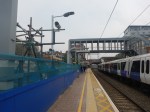


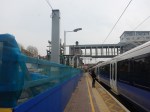
At last there appears to be some progress, with the footbridge now under construction.
The station certainly looks to be advanced enough, to fit in with Crossrail opening within a year, as I wrote about in Crossrail Service To Reading On Track For December Opening.
According to the Wikipedia entry for Crossrail, West EWaling station will have the following trains, when Crossrail opens.
- Two trains per hour (tph) between Reading and Abbey Wood
- Two tph between Maidenhead and Abbey Wood
- Four tph between Heathrow Terminal 4 and Abbey Wood.
- Two tph between Heathrow Terminal 5 and Abbey Wood.
What if you want to go to Shenfield?
If the Western section of Crossrail opens in December, would West Ealing station get the following service?
- Two tph between Reading and Paddington
- Two tph between Maidenhead and Paddington
- Four tph between Heathrow Terminal 4 and Paddington
- Two tph between Heathrow Terminal 5 and Paddington
That would surely be an excellent service!
If the frequency on the Greenford Branch could be doubled to four tph, there would also be an excellent interchange to the branch line.
Crossrail To Reading In December 2019
As current rumours are that Crossrail will open in December to Reading, it looks like the station will be usable.
It is planned that West Ealing station will have a Crossrail train every six minutes.
An Automated Shuttle Train On The Greenford Branch Line
The Greenford Branch Line has the following features.
- It is 2.5 miles long.
- It is double-track.
- It is not electrified.
- There is a single platform station at both ends with three intermediate stations.
- The service frequency is two trains per hour (tph).
- Trains take 11-12 minutes to go between the two terminals.
- Freight trains also use the line.
To run the ideal four tph, trains would need to do a round trip between West Ealing and Greenford in fifteen minutes.
If we assume that the two end stops take two minutes and the six intermediate ones take thirty seconds, then that leaves just eight minutes to cover the five miles of the round trip.
This is an average speed of 37.5 mph.
I don’t have the calculation experience or knowledge of train performance to prove it, but I think that an appropriate train would be able to run an automated shuttle, with a frequency of four tph.
The train (or tram-train) would have the following features.
- It would be battery-powered.
- It would be highly automated.
- It would have an operating speed of perhaps sixty mph.
- It would have fast acceleration and deceleration.
The following infrastructure works would also be needed.
- The track would be improved to allow higher speeds.
- The points would be automated.
- Level access between platform and train would be provided.
- A fast charging system would be added to the bay platforms at Greenford and/or West Ealing stations.
If four tph could be achieved on the Greenford Branch with just one automated shuttle and no electrification, this would be exactly what the operator, the passengers and the Government ordered.
Batteries In Class 378 Trains Revisited
Two and a half years ago, I wrote Will London Overground Fit On-board Energy Storage To Class 378 Trains?.
This post effectively updates that post, with what we now know.
As far as I know, batteries have not been fitted to the Class 378 trains, but there have been other developments involving Bombardier since.
Aventras
The linked post was based on statements by Marc Phillips of Bombardier in this article in Rail Technology Magazine entitled Bombardier enters key analysis phase of IPEMU. He also said about Aventras.
Bombardier is also looking at battery options on new builds, including its Aventra platform.
I have stated several times including in Rail Magazine, that the Class 345 trains for Crossrail must have batteries and no-one has told me that I’m wrong.
Battery Train Applications
The Rail Technology article also says this.
Bombardier has started assessing potential customers for battery-powered trains, looking first at branch line applications. Batteries could be a solution allowing non-continuous electrified infrastructure, and emergency rescue and last-mile opportunities.
The article was written three and a half years ago and I suspect Bombardier have been busy researching the technology and its applications.
The High-Speed Bi-Mode Aventra With Batteries
This train was first reported to be in development in this article in Rail Magazine, which was entitled Bombardier Bi-Mode Aventra Could Feature Battery Power.
The article stated the following.
- Battery power could be used for Last-Mile applications.
- The bi-mode would have a maximum speed of 125 mph under both electric and diesel power.
- Bombardier’s spokesman said that the ambience will be better, than other bi-modes.
I very much believe that the key to the performance of this train is using batteries to handle regenerative braking in both electric and diesel modes.
In Mathematics Of A Bi-Mode Aventra With Batteries, I looked at how the train might operate.
Bombardier with better data and the latest mathematical modelling techniques have obviously extensively modelled the proposed trains and prospective routes.
No sane company listed on a Stock Exchange would launch such a product, if it didn’t know that the mathematics of the dynamics and the numbers for the accountants didn’t add up.
Voyagers With Batteries
In Have Bombardier Got A Cunning Plan For Voyagers?, I discuss a snippet found in the July 2018 Edition of Modern Railways, in an article entitled Bi-Mode Aventra Details Revealed.
In a report of an interview with Bombardier’s Des McKeon, this is said.
He also confirmed Bombardier is examining the option of fitting batteries to Voyager DEMUs for use in stations.
Batteries appear to be being proposed to make the trains more environmentally-friemdly and less-noisy.
Talent 3 With Batteries
Bombardier have launched a version of their Talent 3 train with batteries. This is the launch video.
Some of Bombardier’s points from the video.
- Emission-free
- The current range is forty kilometres
- The range will be extended to a hundred kilometres by 2020.
- Charging for forty kilometres takes between seven and ten minutes from overhead electrification.
This looks to be a serious train with orders from German train operators.
It would appear that Bombardier are very serious about the application of batteries to both new and existing trains.
Class 378 Trains And Batteries
What could batteries do for the Class 378 trains?
It looks like over the next few years, the Class 378 trains will be increasingly used on the East London Line, as they have the required evacuation capability for the Thames Tunnel.
Various documents indicate that to maximise capacity on the line, the following may happen.
- Some or all services may go to six trains per hour (tph)
- Trains may be lengthened to six-cars from five-cars.
Extra destinations might be added, but although this could be easy in South London, it would probably require a lot of station or platform development in the North.
Trains Required For The East London Line
If you look at the timing of the East London Line, you get the following journey times for the four routes.
- Highbury & Islington to West Croydon – 52-57 minutes
- Dalston Junction to New Cross – 24 minutes
- Highbury & Islington to Crystal Palace – 46 minutes
- Dalston Junction to Clapham Junction – 47-48 minutes
It could almost have been choreographed by Busby Berkeley.
This means that to run four tph on the routes needs the following number of trains.
- Highbury & Islington to West Croydon – 8 trains
- Dalston Junction to New Cross – 4 trains
- Highbury & Islington to Crystal Palace – 8 trains
- Dalston Junction to Clapham Junction – 8 trains
Which gives a total of 28 trains.
To make all these services six tph, would require the following number of trains.
- Highbury & Islington to West Croydon – 12 trains
- Dalston Junction to New Cross – 6 trains
- Highbury & Islington to Crystal Palace – 12 trains
- Dalston Junction to Clapham Junction – 12 trains
Which gives a total of 42 trains.
At present only the Crystal Palace and Clapham Junction routes have dates for the extra trains and if only these routes were increased in frequency, there would be a need for 36 trains.
Six-Car Trains
The trains might also go to six cars to increase capacity on the East London Line.
As I indicated in Will The East London Line Ever Get Six Car Trains?, cars could be used from the five-car trains not needed for the East London Line.
You would just end up with a number of three- and four-car Class 378 trains, that could be used on other routes with less passengers.
My conclusion in Will The East London Line Ever Get Six Car Trains? was this.
It will be interesting to see how London Overground, increase capacity in the coming years.
There are fifty-seven Class 378 trains in total, which have the following formation.
DMOS-MOS(B)-PTOS-MOS-DMOS
They can be lengthened and shortened, by adding or removing MOS cars.
As an extra MOS car was added to convert all trains from four-cars to five-cars a few years ago, I suspect it is not the most difficult of processes.
It should also be noted that the original three-car trains for the North London Line had the following formation.
DMOS-PTOS-DMOS
If all East London Line routes go to six tph, the required number of trains would be forty-two.
This would leave a surplus of fifteen trains to act as donors for lengthening.
To make all trains six-cars would require a further forty-two MOS cars.
Reducing the trains not needed for the East London Line to three-cars, would yield thirty MOS cars.
This could give the following fleet.
- Thirty six-car trains.
- Twelve five-car trains
- Fifteen three-car trains
To lengthen all trains needed for six-cars would require another twelve MOS cars to be obtained.
Some services could be run with five-car trains, but I don’t think that be a good idea.
I am inevitably led to the conclusion, that if the the Class 378 trains need to be extended to six-cars, then Bombardier will have to produce some more cars.
Adding Batteries To A Six-Car Class 378 Trains
Batteries would be added to Class 378 trains for all the usual reasons.
- Handling energy from regenerative braking.
- Health and safety in depots and sidings.
- Short movements on lines without electrification
- Emergency train recovery
But there might also be another important use.
The Thames Tunnel is under five hundred metres long.
As the only trains running through the tunnel are Class 378 trains, it might be possible and advantageous to run services on battery power through the tunnel.
I will estimate the kinetic energy of a six-car Class 378 train, as the batteries must be able to handle the energy of a full train, stopping from maximum speed.
- The empty train will weigh around 192 tonnes
- The maximum speed of the train is 75 mph.
- The train will hold 1050 passengers, who I will assume each weigh 90 Kg with baggage, bikes and buggies.
- This gives a fully loaded train weight of 286.5 tonnes.
Using the Omni Kinetic Energy calculator gives an kinetic energy of 45 kWh.
If four 100 kWh batteries can be fitted under a two-car Class 230 train, then surely a reasonable amount o capacity can be fitted under a six-car Class 378 train.
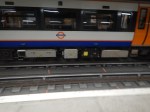
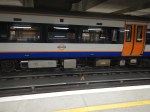
These pictures show the under-floor space on a dual-voltage Class 378/2 train.
As a six-car train will have five motored cars, why not put one 50 kWh battery in each motored car, to give a capacity of 250 kWh.
In an article in the October 2017 Edition of Modern Railways, which is entitled Celling England By The Pound, Ian Walmsley says this in relation to trains running on the Uckfield Branch, which is not very challenging.
A modern EMU needs between 3 and 5 kWh per vehicle mile for this sort of service.
So how far would a six-car Class 378 train go with a fully-charged 250 kWh battery?
- 5 kWh per vehicle mile – 8 miles
- 4 kWh per vehicle mile – 10 miles
- 3 kWh per vehicle mile – 14 miles
- 2 kWh per vehicle mile – 20 miles
This is only a crude estimate, but it shows that fitting batteries to a Class 378 train with batteries could give a useful range.
Adding Batteries To A Three-Car Class 378 Trains
The same calculation can be performed for a three-car train created by removing the two MOS cars.
- The empty train will weigh around 96 tonnes
- The maximum speed of the train is 75 mph.
- The train will hold 525 passengers, who I will assume each weigh 90 Kg with baggage, bikes and buggies.
- This gives a fully loaded train weight of 143.3 tonnes.
Using the Omni Kinetic Energy calculator gives an kinetic energy of 22.4 kWh.
Unsurprisingly, the kinetic energy of the three-car train is around half that of a six-car train.
As a three-car train will have two motored cars, why not put one 50 kWh battery in each motored car, to give a capacity of 100 kWh.
Using the Ian Walmsley formula gives the following ranges.
- 5 kWh per vehicle mile – 7 miles
- 4 kWh per vehicle mile – 8 miles
- 3 kWh per vehicle mile – 11 miles
- 2 kWh per vehicle mile – 17 miles
When you consider that the length of the Greenford Branch Line is 2.5 miles, these ranges are very useful.
Routes For Three-Car Class 378 Trains With Batteries
I would suspect that these trains will have the following specification.
- Dual-voltage with ability to use either 25 KVAC overhead or 750 VDC third-rail electrification.
- A maximum speed of 75 mph
- Three cars
- Passenger capacity of 525 passengers.
- Range of between seven and fifteen miles
So for what routes would the train be suitable?
Brentford Branch Line
There have been various ideas for reopening the freight-only Brentford Branch Line to passenger traffic.
The simplest proposal would be to run a two tph shurttle train Southwards from Southall station.
As the branch is only four miles long, I believe that a three-car Class 378 train, which ran on battery-power and charged at Southall station could work the branch.
Greenford Branch Line
I’ve already mentioned the 2.5 mile long Greenford Branch Line.
The following work would need to be done before the trains could be used.
- Electrification of the bay platform at West Ealing with 25 KVAC overhead wires.
- Electrification of the bay platform at Greenford with 750 VDC third-rail.
- Minor lengthening of the bay platform at Greenford to allow sixty metre long trains.
- An extra crossover at the West Ealing end of the branch.
With these modifications it might be possible to run four tph on the branch.
Romford To Upminster Line
Currently, the Romford-Upminster Line uses a single train to shuttle the three miles at a frequency of two tph.
If the passing loop were to be reinstated, I believe that two trains could run a four tph service.
Using battery-power on the line and charging on the existing electrification at either end of the line might be a more affordable option.
It should be noted that increasing the current two x four-car tph to four x three-car tph, would be a doubling of frequency and a fifty percent increase in capacity.
West London Orbital Railway
The West London Orbital Railway is outlined like this in Wikipedia.
The West London Orbital is a proposed extension to the London Overground that makes use of a combination of existing freight and passenger lines including the Dudding Hill Line, North London Line, and the Hounslow Loop. The route runs for approximately 11 miles from West Hampstead and Hendon at the northern end to Hounslow at the Western end via Brent Cross West, Neasden, Harlesden, Old Oak Common, Acton and Brentford.
This is one of those plans, which ticks a lot of boxes.
- The tracks are already in existence.
- There is a proven need.
- Passenger numbers would support at least four tph.
- The route connects to Crossrail and HS2.
- Changing at Old Oak Common to and from Crossrail gives a quicker route to Heathrow for many in West London.
- There is electrification at both ends of the route, with only four miles without any electrification.
- At only eleven miles, it could be run by electric trains under battery power.
- The cost is quoted at around £250 million.
- Studies show it has a benefit cost ratio of 2.2:1.
As the route is now being promoted by the Mayor of London, I have a feeling this route will be created in time for the opening of HS2 in 2025.
If you want to know more about the proposals, this document on the Brent Council web site, which is entitled West London Orbital Rail, was written by consultants WSP to analyse the proposals and give a cost.
This is paragraph 5.4.38
At this stage we are assuming that the railway will be operated by diesel traction, or possibly battery or hybrid traction. While the Kew – Acton and Dudding Hill Line sections are not electrified, all the rest of the line is and battery technology may have developed sufficiently by the time of opening to be a viable option. Therefore, potential subsequent phases of the
enhancement plans could electrify the non-electrified sections.
The consultants go on to say, that stabling for diesel trains is more difficult to find in London than for electric..
The route would be suitable for Class 378 trains with batteries, but the consultants say that four-car trains will be needed.
So four-car Class 378 trains with a battery capability will be needed.
Alternatively, new four-car Class 710 trains, which I’m certain are built around a battery capability could be used instead.
A rough estimate says that for the full service of two four tph routes will need a total of eight four-car trains.
This is a much-needed route with definite possibilities.
Should A Battery MOS Car Be Designed?
If the Class 378 trains are lengthened to six cars, it looks like there will be a need for at least twelve new MOS cars.
I wonder, if it would be better to design a new BMOS car with batteries, that could either be created from an existing MOS car or newly-built.
The car would have the following specification
- It would be able to replace any current MOS car.
- It would contain the appropriate size of battery.
The advantages of a compatible new BMOS car are.
It would not require any modifications to the PTOS or DMOS cars, although the train software would need to be updated.
It would make it possible to easily create trains with a battery option with a length of four and five cars.
Could The PTOS Car Be Updated With Batteries?
This could be a logical way to go, if a battery of sufficient size can be fitted in the limited space available with all the other electrical gubbins under the floor of a PTOS car.
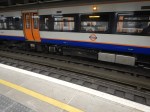
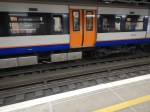
These pictures show a Class 378/2 PTOS car.
Modifying only the PTOS cars would give the following advantages.
- Only the PTOS car would need to be modified.
- PTOS cars for Class 378/1 trains would be 750 VDC only.
- PTOS cars for Class 378/2 trains, would be dual-voltage.
- Only PTOS cars for Class 378/2 trains would have a pantograph.
I will propose that the PTOS car is fiited a 100 kWh battery.
This would be sufficient for the six-car East London Line services, as all it would do was handle the regenerative braking energy, which has a maximum value of just 45 kWh. Battery range of the train would be between three and five miles, which would be enough to recover the train if power failed.
For three-car trains, the 100 kWh ranges would be as I calculated earlier.
- 5 kWh per vehicle mile – 7 miles
- 4 kWh per vehicle mile – 8 miles
- 3 kWh per vehicle mile – 11 miles
- 2 kWh per vehicle mile – 17 miles
Which is a very useful range.
If some four-car trains, were built by adding a new MOS car, the ranges on 100 kWh batteries would be.
- 5 kWh per vehicle mile – 5 miles
- 4 kWh per vehicle mile – 6 miles
- 3 kWh per vehicle mile – 8 miles
- 2 kWh per vehicle mile – 12.5 miles
As the Dudding Hill Line is only four miles long with electrification at both ends, these four-car Class 378 trains would be able to work the routes of the West London Orbital Railway.
Conclusion
Fitting batteries to Class 378 trains opens up a lot of possibilities.
One scenario could be.
- Forty-two six-car trains for the East and |South London Lines.
- One three-car train for the Brentford Branch Line
- Two three-car trains for the Greenford Branch Line.
- Two three-car trains for the Romford to Upminster Line.
- Eight four-car trains for the West London Orbital Railway.
There would be two spare three-car trains and another twenty MOS cars would be required.
.
Did Adrian Shooter Let The Cat Out Of The Bag?
This article with a video in the Scotsman is entitled Video: Battery Trains On Track To Cut Emissions and gives a lot of information about the Class 230 train. This is a paragraph.
The train is restricted to a 25mph speed on this week’s test trips, but Vivarail Chief Executive Adrian Shooter says it can sustain speeds of “60 mph for 40 miles” when new batteries become available next year.
Moreover, the batteries need just four minutes to recharge.
So what does this mean for the various routes?
Borderlands Line
Transport for Wales have ordered Class 230 trains for the Borderlands Line.
The line runs between Bidston and Wrexham Central stations is around twenty-seven miles and takes an hour. There is a generous turnround time at both ends in the current schedule.
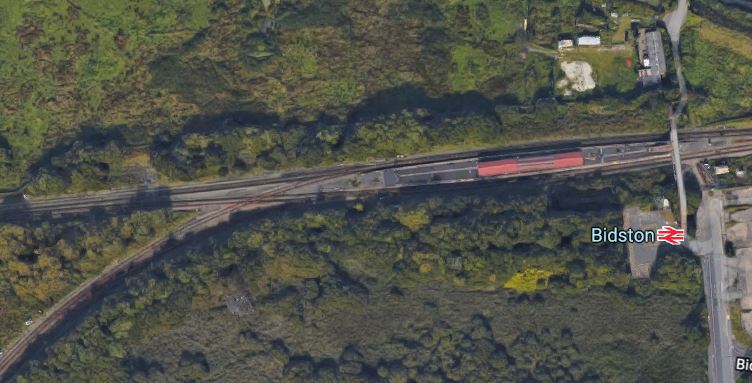
This Google Map shows the layout of the two-platform station at Bidston.
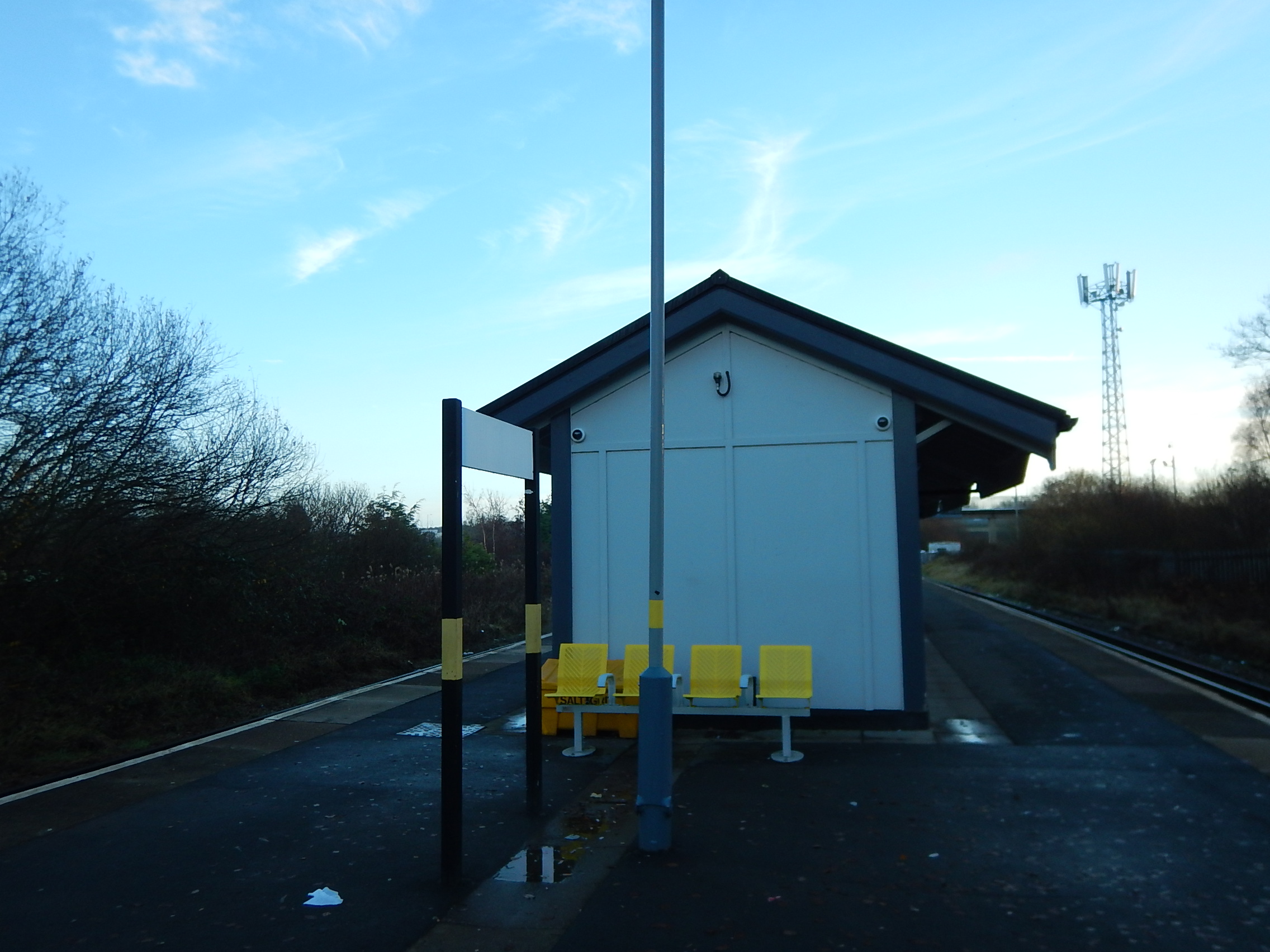
This picture shows the red-roofed shed in the middle of the island platform, with the tracks on either side.
Would it be sensible to add a dedicated bay platform at Bidston for charging the battery trains?
The train will certainly be able to start with a full battery after a long charge at Wrexham Central and then do the following.
- Run to Bidston on battery power.
- Turnround at Bidston, where four minutes could be used to charge the batteries.
- Run back to Wrexham Central on battery power.
- Regenerative braking would be used at the thirteen intermediate stations.
If necessary during the long runs the diesel engines could be used to provide more power or top up the batteries.
Chester To Crewe Line
Transport for Wales have ordered Class 230 trains for the Chester to Crewe Line.
It runs between Chester and Crewe stations, is around twenty miles long and services take about twenty minutes.
As there are no stations between Chester and Crewe and the maximum speed of the Class 230 train is sixty mph, it looks like the train will be almost at maximum speed along this route.
So will the four diesel engines be working hard?
When these trains were built in the 1980s, I doubt that anybody thought they’d be running services on a section of the North Wales Coast Line.
Conwy Valley Line
Transport for Wales have ordered Class 230 trains for the Conwy Valley Line.
It runs between Llandudno and Blaenau Ffestiniog stations, is around thirty miles long and services take eighty minutes to ascend and seventy to come down.
The train will certainly be able to start with a full battery after a long charge at Llandudno and then do the following.
- Ascend to Blaenau Ffestiniog on battery power, with help from the diesel engines.
- Turnround at Blaenau Ffestiniog, where four minutes could be used to charge the batteries.
- Descend to Llandudno on battery power, with help from gravity.
- The descent would be controlled by regenerative braking.
- Regenerative braking would be used at the eleven intermediate stations.
If necessary during the long ascent the diesel engines could be used to provide more power or top up the batteries.
Greenford Branch
What do you do with a problem like the Greenford Branch?
In Could Class 165 HyDrive Trains Be The Solution To The Greenford Branch?, I looked at the possibility of using the proposed Class 165 HyDrive trains to provide a four trains per hour (tph) service on the Greenford Branch.
This was my conclusion.
Four tph is possible on the Greenford Branch, but it will need an extra crossover just outside West Ealing station.
Class 165 HyDrive trains with their extra performance would make the four tph timetable more reliable.
The lower noise and emissions of the trains would also please the local residents.
I also feel that a well-designed battery-powered two-car train, with perhaps a charging station at either end could also provide the improved service.
That well-designed battery-train has arrived in the shape of the Class 230 train.
Island Line
It appears likely, that Class 230 trains will be ordered for the Island Line.
It runs between Ryde Pier Head and Shanklin stations, is under nine miles long and a typical round trip is as follows.
- Shanklin to Ryde Pier Head – 24 minutes
- Turnround at Ryde Pier Head – 20 minutes
- Ryde Pier Head to Shanklin – 24 minutes
- Turnround at Shanklin – 5 minutes
The Island Line has an operating speed of just 45 mph.
Adding all that up, I would estimate that a train doing a round trip would do under twenty miles at a maximum speed of 45 mph.
Adrian Shooter said that the trains will be able to store 2,400 miles² /hour, whereas the Island Line would use only 900 miles² /hour in a round trip. They may be weird units, you won’t find in any text book, but I want to prove if something is possible or not.
It looks like it most definitely is possible for a battery-powered Class 230 train to perform a round trip on one charge of of the batteries.
Suppose though, the line was reinstated to Ventnor station, as a line without electrification. A quick estimate gives the round-trip as thirty miles, which would need 1350 miles² /hour.
There could even be a second charging station at Ventnor.
Could we see a future Island Line like this?
- No electrification.
- Extension to a new Ventnor station.
- A passing loop at Brading station.
- Battery trains.
- Relaid track for very gentle curves and high efficiency.
- Charging stations at Ryde Pier Head and Ventnor stations.
I suspect with some faster running, where it is possible and perhaps one diesel power pack per train, three-car Class 230 trains could run a two tph service.
This type of service would not be unique for long, as other places would quickly copy.
Marston Vale Line
West Midlands Trains have ordered Class 230 trains for the Marston Vale Line.
It runs between Bedford and Bletchley stations, is around twenty-four miles long and services appear to take about forty-five minutes, with a turn-round time of well over four minutes.
So it would seem that each leg of a return journey would be less than forty miles and there would be sufficient time for a full four-minute charge at either end.
The regenerative braking would be useful in handling the eleven stops.
Conclusion
It isn’t one cat!
It’s a whole destruction, glorying or nuisance of felines!
An Illustration Of Why The Greenford Branch Needs Four Trains Per Hour
I wanted to ride the Greenford Branch to photograph a Class 165 train in the livery of Great Western Railway.
So I took one of TfL Rail’s Class 345 trains to West Ealing station.
By the time, that I’d climbed over the bridge and walked to Platform 5 to catch the Class 165 train to Greenford, the train had just left.
So I then spent a miserably cold thirty minutes in a fierce wind on a station without a shelter, whilst I waited for the next train.


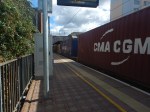
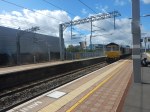

In that time, when I took these pictures, two passenger trains in each direction stopped in the station.
Crossrail
When Crossrail finally opens, West Ealing station is going to get ten trains per hour (tph) in both directions, which will terminate in the West at Heathrow Terminal 4, Heathrow Terminal 5, Maidenhead and Reading.
Passengers interchanging with the Greenford Branch will enjoy the thirty minute wait.
Airport Workers
I have been told several times by train staff and airport workers that getting to Heathrow Airport somtimes needs a car, as the buses are hard to find.
Nothing has been said about Crossrail running through the night, but as Thameslink runs to Gatwick, I wouls suspect this will happen.
And if Crossrail runs through the night, surely the humble Greenford Branch should do the same.
Conclusion
Plans should be developed to get the Greenford Branch running at four tph, throughout the day and perhaps two tph, when Crossrail is running through the night.
Could Class 165 HyDrive Trains Be The Solution To The Greenford Branch?
I ask this question, as I think the Greenford Branch should be developed and run at a frequency of four trains per hour (tph).
I give my reasons in An Illustration Of Why The Greenford Branch Needs Four Trains Per Hour.
The Class 165 HyDrive Train
I described the proposed Class 165 HyDrive trains in Class 165 Trains To Go Hybrid.
These are given as the advantages of these and other hybrid trains.
- Improved acceleration.
- Smooth and powerful regenerative braking.
- Less gaseous and noise emissions.
A two-car Class 165 train can already run on the branch, so I’m pretty sure, that to run on the route,, a Class 165 HyDrive train would require no new major infrastructure, like lengthened platforms or electrification.
The Track Layout Of The Greenford Branch
The Greenford Branch is double-track.
This map from carto.metro.free.fr shows the track layout at Greenford station.
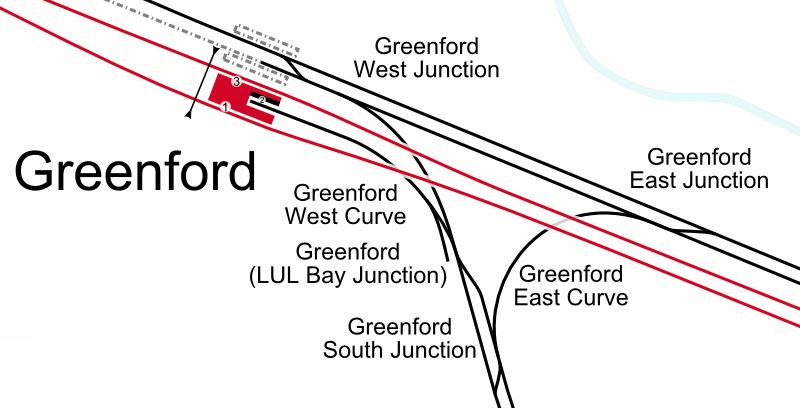
Note that both tracks of the branch, are connected to the following.
- The bay platform in Greenford station, where the service on the branch terninates.
- Both tracks of the Acton-Northolt Line going West using Greenford West Junction.
- Both tracks of the Acton-Northolt Line going East using Greenford East Junction.
It is a well-designed junction, where all required movements seem possible.
This map from carto.metro.free.fr shows the track layout at West Ealing station.
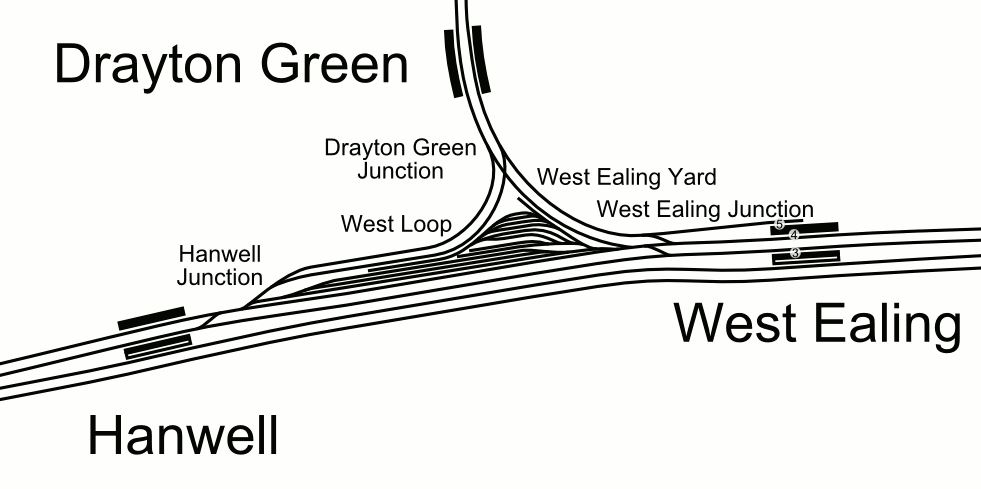
Unlike at Greenford station, it appears that, there is no connection from the bay platform at West Ealing station to the left track towards Greenford station.
This might make it difficult to run the more frequent service of four tph, that this line needs.
So there might be a need for an extra crossover or minor track updates.
The Current Passenger Service On The Greenford Branch
The current service is two tph, which is based on a single train, shuttling backwards and forwards.
- West Ealing to Greenford – 12 minutes
- Turnround at Greenford – 3 minutes
- Greenford to West Ealing – 11 minutes
- Turnround at West Ealing – 4 minutes
Obviously, the train can only do two round trips in an hour.
Service Improvements With The Class 165 HyDrive Train
The proposed Class 165 HyDrive train will not offer and dramatic improvements, but its superior acceleration and braking, could speed up the three intermediate stops by a minute or two.
But I doubt that this would be enough time savings to enable one train to achieve the much-needed four tph.
Four Tph On The Greenford Branch
This could be achieved by two trains.
Train 1 would run as follows.
WE Dep – XX:00
GF Arr – XX:12
GF Dep – XX:15
WE Arr – XX:26
WE Dep – XX:30
GF Arr – XX:42
GF Dep – XX:45
WE Arr – XX:56
Train 2 would run as follows.
WE Dep – XX:15
GF Arr – XX:27
GF Dep – XX:30
WE Arr – XX:41
WE Dep – XX:45
GF Arr – XX:57
GF Dep – XX:00
WE Arr – XX:11
Note how Train 2 is fifteen minutes behind Train 1.
With the track improvements at West Ealing station, two Class 165 trains could run this timetable, if they were well driven and nothing went wrong.
But I believe that if the more agile Class 165 HyDrive trains were to be used, they could use their performance to regain the timetable.
Their extra performance might also allow the creation of some extra paths for freight trains and empty stock movements.
Conclusion
Four tph is possible on the Greenford Branch, but it will need an extra crossover just outside West Ealing station.
Class 165 HyDrive trains with their extra performance would make the four tph timetable more reliable.
The lower noise and emissions of the trains would also please the local residents.
I also feel that a well-designed battery-powered two-car train, with perhaps a charging station at either end could also provide the improved service.
What Is Happening (Or Not!) At West Ealing Station?
I took these pictures at West Ealing station a few days ago.
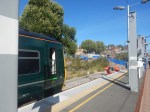
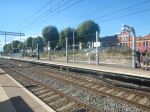

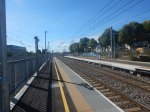
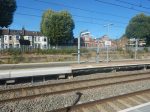


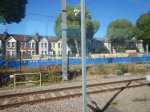
There appears to be no work going on to finish the station for Crossrail.
There has also been no announcement about what is happening to the Greenford Branch.
Surely, if the bay platform were to be electrified, it would be the ideal place to charge a battery shuttle train to Greenford station.
West Ealing Station – 21st June 2018
The progress to create new station buildings at West Ealing station seems to be painfully slow, as these pictures show.
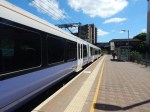
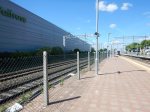


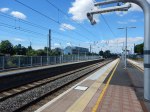
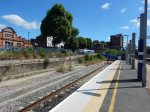
It looks like there are now no platforms on the fast lines and the actual platforms for Crossrail and the Greenford Branch Line appear to be complete except for finishing off.
There appeared to be no if any work going on to built the new station building and the fully-accessible bridge.
But there did appear to be some electrification gantries and wires over the Western end of the bay platform.
Were Network Rail making sure that if it were decided to electrify the Greenford Branch Line, it would not be a difficult job?
If on the other hand, it was decided to use battery trains on the Greenford Branch, I suspect that sufficient electrification could be installed to charge the batteries.
 The Anonymous Widower