Fashion Companies Pledge To Invest In Bangladesh First Offshore Wind Project
The title of this post, is the same as that of this article on offshoreWIND.biz.
This is the sub-heading.
Fashion companies, BESTSELLER and H&M Group have pledged to invest in the first utility-scale offshore wind project off the coast of Bangladesh, which is being developed by Copenhagen Infrastructure Partners (CIP) together with local partner Summit Power.
These four paragraphs give a lot more detail.
The announcement was made Tuesday at the ongoing COP28 in Dubai.
The 500 MW offshore wind project, which is in early-stage development, could significantly increase the availability of renewable energy in one of the fashion industry’s most important manufacturing countries, said the non-profit organisation Global Fashion Agenda (GFA).
More than 70 per cent of the fashion industry’s GHG emissions come from upstream activities and current operations predominantly rely on non-renewable energy sources, such as petroleum, gas, oil, and coal, said GFA.
To ensure and accelerate decarbonisation, GFA is advocating collective investments by fashion brands in new renewable energy generation.
This would appear to be one of those circular stories, where a lot of parties benefit.
- There will be less greenhouse gas emissions from manufacturing in Bangladesh.
- Jobs will be created in the renewable energy industry in Bangladesh.
- The fashion industry gets product with a smaller carbon footprint.
- The fashion industry gets a safe investment for its spare cash, that improves their product.
It might also create an industry in Bangladesh, that makes steel structures for the world’s offshore wind industry.
But consider.
- As of June 2022, Bangladesh had 25.7 GW of electricity generation.
- Much of Bangladesh’s electricity is generated by gas.
- Bangladesh is aiming for a 7 % growth rate so will need a lot more electricity.
500 MW is literally a drop in the ocean.
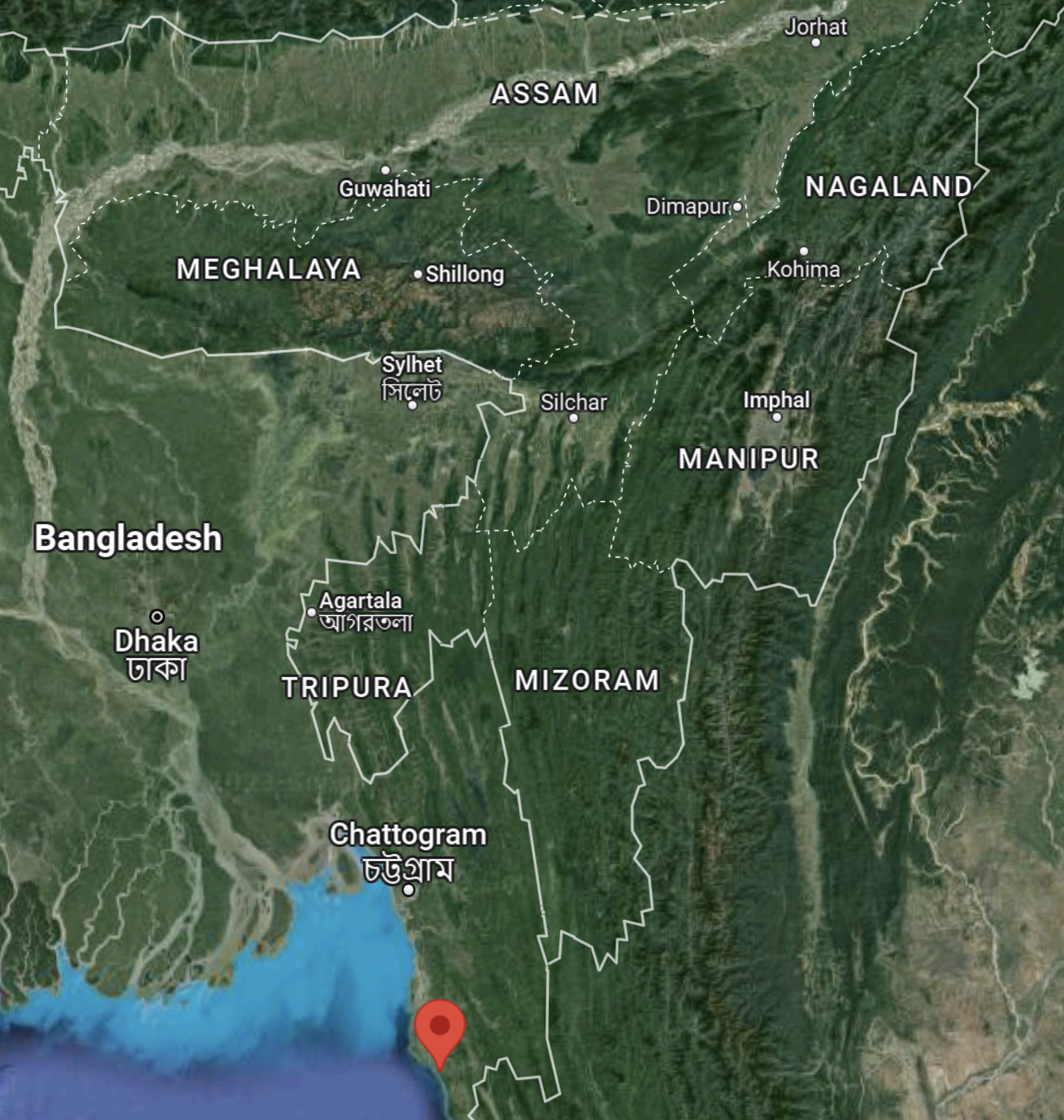
This Goggle Map shows most of Bangladesh and the location of the wind farm, by Cox’s Bazar, which is marked by a red arrow.
I shall be interesting to see how this and other similar projects develop.
Biggest Untapped UK Oil Field, Rosebank, Approved By Regulators
The title of this post, is the same as that of this article on the BBC.
This is the BBC’s summary so far.
- The UK’s largest untapped oil field has been approved by regulators
- Rosebank, 80 miles west of Shetland, is estimated to contain 500 million barrels of oil
- The UK government welcomes the decision, saying it will raise billions of pounds and “make us more secure against tyrants like Putin”
- But Scotland’s First Minister Humza Yousaf says he’s “disappointed”, while the Green Party calls the decision “morally obscene”
- Regulators said net zero considerations had been taken into account
This is my summary.
I have been reading Equinor’s web site on Rosebank.
Production will use what is known as a Floating Production Storage and Offloading Vessel or FPSO, which means, when they’ve finished, it can just sail away.
The FPSO will also be electrification-ready, so that all operations on the vessel will probably be powered by green electricity from a nearby wind farm, instead of by a gas turbine engine on the vessel, which burns gas.
This means that the offshore operations will be as carbon-free as is reasonably possible. But importantly, we will pipe the maximum amount of gas from the field for either our own use or selling to the gas-thirsty Germans.
We will need the gas for some time to back up wind and solar with gas-fired power stations.
But what about the emissions from the power stations?
Capturing carbon dioxide from a power station is getting easier, but more importantly, researchers are finding more and more innovative ways of using the carbon dioxide.
H & M and Zara are even selling clothes made from captured carbon dioxide.
Ways are also being developed using plasma electrolysis to strip the carbon out of natural gas to leave useful hydrogen.
Natural gas will be our friend for many decades yet, if we can turn it into a zero-carbon fuel, which I believe we can!
H&M Move Partners With Lanzatech To Launch Capsule Collection Using Captured Carbon Emissions
The title of this post, is the same as that of this press release from H & M.
This is the sub-heading.
This is the stuff of science fiction: LanzaTech diverts carbon emissions heading for the atmosphere, traps them, and turns them into thread. In a leap towards innovating sportswear, H&M Move partners with the breakthrough material science company for a drop arriving at hm.com/move on April 6.
And this is an H & M image of some of the clothes on a young lady.
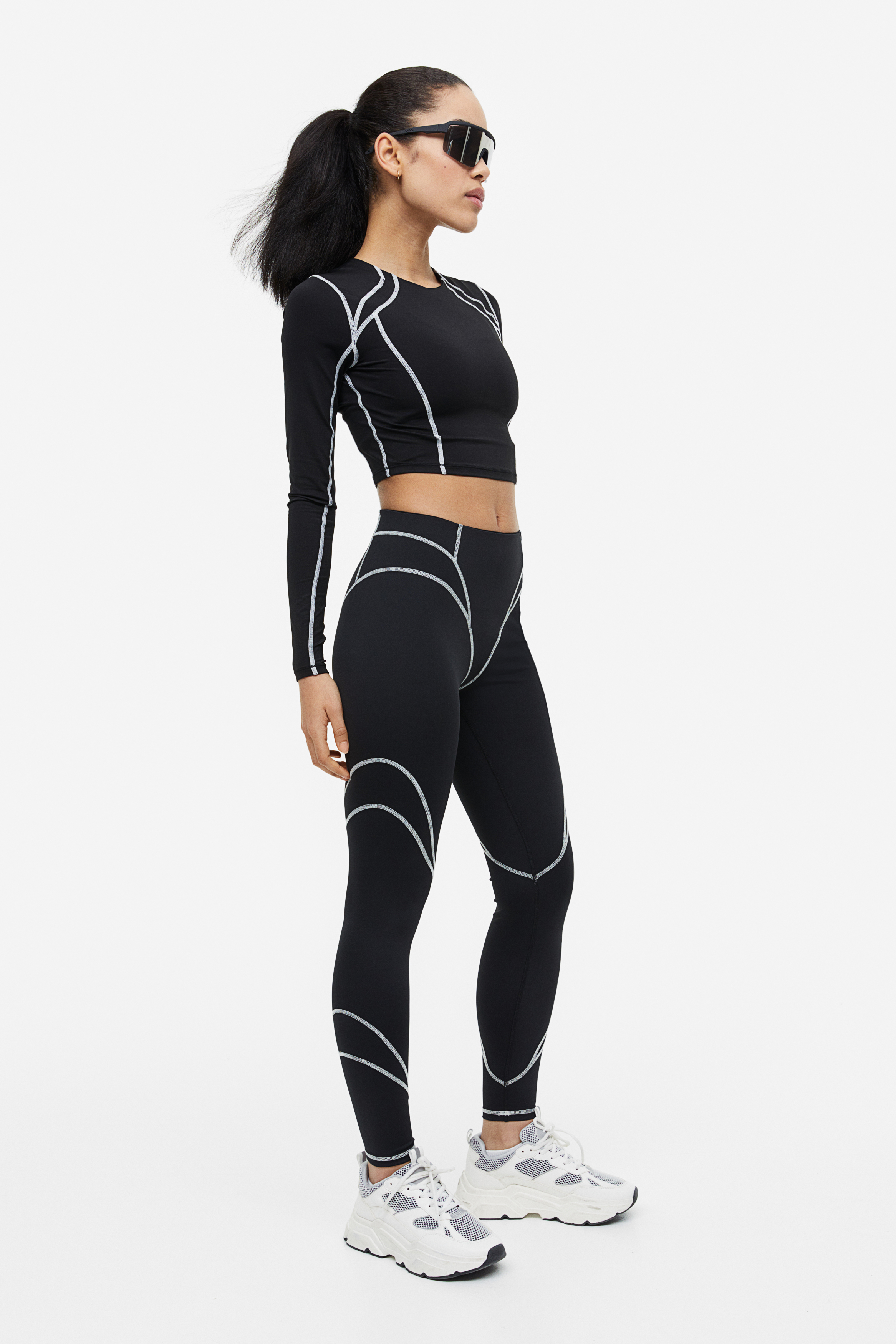
Not bad considering that the polyester thread was made using carbon emissions from a steelworks.
Lanzatech’s Process
This paragraph from the H & M press release outlines the process.
Using three simple steps, LanzaTech captures carbon emissions from steel mills, traps them in bioreactors and converts them into the same building blocks that conventional polyester is made of. This revolutionary solution helps reduce pollution and limits the use of virgin fossil resources needed to make new products.
So does this mean that lots of products made from polyester can use the polyester made by Lanzatech?
As I worked for ICI Plastics Division, who had a polyester plant, that was used to make Melinex film, I suspect the answer is yes from the knowledge I picked up at the time.
Out of curiosity, I typed “polyester underwear men’s” into Google and there’s quite a lot of it about. Including some from Marks and Spencer that I own. Marks and Spencer also do a similar product for the ladies. Both products have a high proportion of polyester and could best be described as everyday.
I must find mine comfortable, as I have been buying them for some years now!
So it looks like it might be possible to replace a proportion of the fossil fuel-based polyester with one made from captured carbon dioxide.
And this can this be used in the same way as the fossil fuel-based polyester.
The Wikipedia entry for polyester is full of useful information and is very much a must-read.
This table gives world PET (polyethylene terephthalate) production for 2008 in millions tonnes/year
- Textile – 39
- Resin, bottle – 16
- Film – 1.5
- Special – 2.5
Note.
- Bottle includes, the bottles used for soft drinks, washing up liquid etc.
- Film is high quality and was used as recording tape, but now it’s mainly for packaging.
- Special includes engineering plastics.
Wikipedia has this section on recycling, where this is said.
Recycling of polymers has become very important as the production and use of plastic is continuously rising. Global plastic waste may almost triple by 2060 if this continues. Plastics can be recycled by various means like mechanical recycling, chemical recycling, etc. Among the recyclable polymers, polyester PET is one of the most recycled plastic. The ester bond present in polyesters is susceptible to hydrolysis (acidic or basic conditions), methanolysis and glycolysis which makes this class of polymers suitable for chemical recycling. Enzymatic/biological recycling of PET can be carried out using different enzymes like PETase, cutinase, esterase, lipase, etc. PETase has been also reported for enzymatic degradation of other synthetic polyesters (PBT, PHT, Akestra™, etc) which contains similar aromatic ester bond as that of PET.
Note that PET is one of the most recycled plastics.
So it looks like the LanzaTech process can not only use carbon dioxide, it can also create a product that can be recycled.
 The Anonymous Widower