Andy Burnham Set For Clash With MPs Over North Sea Oil And Gas
The title of this post, is the same as that of this article in The Times.
This is the sub-heading.
The prime minister must decide whether to approve the Rosebank oilfield and Jackdaw gasfield but will face opposition from backbenchers if he goes ahead
These are the first three paragraphs.
Andy Burnham faces a potential showdown with Labour MPs after suggesting faster extraction of North Sea oil and gas could help pay for the transition to clean energy.
The prime minister is preparing to decide whether to approve the Rosebank oilfield and Jackdaw gasfield after consultations on both projects closed.
Industry sources have told The Times they believe Burnham will approve Jackdaw but may resist calls to go ahead with Rosebank because of opposition from MPs.
These are my thoughts.
My Boiler, Gas And Jackdaw
Consider.
- This year my boiler died. So I spent several thousand pounds, but I did get a new gas boiler with a 12-year guarantee.
- I am now 79, so can this government, or any for that matter, give me a guarantee, that I will live to 91 to get value from my boiler?
- I know enough about heating, as I have installed a couple of systems for myself, to know that my current house is not suitable for a heat pump.
- But it may be suitable for some type of electric data centre boiler like heata, which was invented by British Gas Research. But, I’m not hopeful yet!
- Meanwhile, Centrica have done a large hand-full of deals to keep the country in enough gas to power us through the winter.
- Some of these are MiQ-certified, which is a bit like Organic for methane, except that emissions are kept to a minimum.
- I covered MiQ-certification in What Is MiQ-Certification?.
So provided we don’t get an extreme-left scientifically-incorrect government, led by someone like the lady with pink hair in Hackney, I should be able to keep myself warm in winter.
But would I vote for any party, that was going to cut off my gas supply?
But Centrica have been clever.
- They have plenty of gas storage at Rough.
- Their press releases show they are buying gas according to MiQ.
- Grain LNG Terminal, which they bought last year has an export facility, so any spare gas they have can be exported to a country to replace coal or Russian gas.
- MiQ-certified gas probably fetches a higher price.
- Centrica would be an obvious purchaser for any North Sea gas.
This gives some dates of the players and Jackdaw
- BG Group and Centrica were demerged from British Gas plc in 1997.
- BG Group discovered Jackdaw in 2005.
- BG Group were taken over by Shell in 2015.
If I was the owner of Jackdaw, I would make sure that my gas had the highest MiQ possible.
If I was energy minister, I’d enforce it.
Will Jackdaw Be A Tie-Back To Shearwater?
I’ve read that it might be, so I asked Google AI and received this answer.
Yes, Jackdaw is designed and developed as a 30-kilometer (approx. 18.5 miles) subsea tie-back to the existing Shearwater platform in the central North Sea.
Project Connection Details
Infrastructure: A multi-phase subsea pipeline links the unstaffed Jackdaw wellhead platform directly to the Shearwater hub.
Processing: Hydrocarbons extracted from Jackdaw will be processed and routed through Shearwater before final export onshore to the St Fergus terminal.
Distance: The subsea pipeline spans roughly 30 kilometers (18.5 miles) northwest from the Jackdaw field to the Shearwater installation.
I also found this detailed article on the Chemical Engineer which is entitled Shell To Invest In Shearwater Gas Infrastructure Hub.
Shell certainly seem to be doing comprehensive planning to bring the gas from Jackdaw to the mainland.
- Currently, gas from the Shearwater hub is sent to Bacton in Norfolk.
- After, Jackdaw is connected to Shearwater, the gas will be sent to St. Fergus, which is North of Aberdeen.
- Google AI says that The Shearwater hub is located approximately 140 miles (225 kilometers) east of Aberdeen in the Central North Sea.
It’s probably all in a day’s work for engineers in the North Sea, but it doesn’t sound to be the easiest project to me.
Will The Jackdaw Gas Field Be Used For CO2 Storage?
I felt this could be a possibility, so I asked Google AI, the question and received this answer.
No, the Jackdaw gas field will not be used for CO2 storage.It is an active natural gas extraction project in the North Sea, though CO2 separated from its extracted gas may eventually be routed to external storage.
Field Status and CO2 Handling
Extraction only: The underground reservoirs at Jackdaw contain natural gas and high-pressure/high-temperature hydrocarbons rather than being purposed for carbon storage.
Onshore processing: Gas from the field comes ashore at St Fergus, where carbon dioxide mixed into the raw gas stream is removed during processing.
Broader CCS links: While Jackdaw itself is a producing asset, its operations tie into Shell’s broader involvement with the regional Acorn Carbon Capture and Storage project, which aims to pipe and sequester CO2 elsewhere.
That was a definite no, that Jackdaw will not be used for Carbon Capture and Storage, but the carbon dioxide in the gas may be stored in the Acorn Carbon Capture and Storage project.
Will Centrica Be Applying Just-in-Time-Delivery To Gas Cargoes?
One of the jobs, I was involved in was scheduling container ships for OCL, in the 1970s.
- I’m fairly certain, that ships were speeded up and slowed down, so that ports weren’t overloaded.
- It was all done with my PERT7 project management software, which ran on Time Sharing at Great Portland Street.
I can envisage a clever programmer at Centrica writing a large simulation of all their natural gas deals and calling off gas cargoes, when required.
- Gas tankers would be constantly sailing between the gas fields in the Americas and LNG Terminals like Grain, where the cargo was needed.
- It would be nice to have a local supply of natural gas to fill in the gaps between cargoes, but delaying and speeding up of deliveries would have the same effect.
- I also suspect cargoes could be diverted to Germany, Poland or the highest bidder, when there is a glut of gas.
It could be a classic example of advanced control engineering, but very similar to what OCL were doing fifty years ago.
By applying just-in-time-delivery to gas cargoes, Centrica would reduce the need for storage in the UK.
At least gas doesn’t have a sell-by date!
How Much Liquid Natural Gas Storage Is There At The Grain LNG Terminal?
Google AI gave me this answer to the question in the title of this section.
The Grain LNG terminal on the Isle of Grain in Kent has a total liquid natural gas (LNG) storage capacity of 1.2 million cubic metres (1,200,000 m³) following recent site expansions.
Terminal Storage Overview
Total Capacity: 1.2 million m³ of cryogenic tank space (increased from the original 1.0 million m³ capacity).
Tank Configuration: Consists of massive full-containment cryogenic storage tanks (such as the 190,000 m³ tanks added in phases).
System Throughput: The facility can process up to 15 million tonnes per annum (mtpa), meeting a significant share of the UK’s total gas demand.
It should be remembered that storing gas as liquid reduces the space needed.
What Is The Capacity Of A Typical LNG Carrier?
Google AI gave me this answer to the question in the title of this section.
A typical modern liquefied natural gas (LNG) carrier has a cargo capacity of approximately 174,000 cubic meters (m³).
This size has become the conventional standard for new builds, balancing port compatibility with transport scale, though global fleet capacities range widely from small-scale vessels to massive ultra-large ships.
Vessel Size Categories
Small-scale carriers: Hold roughly 1,000 m³ to 40,000 m³, used for regional distribution and bunkering.
Medium-scale carriers: Range from 40,000 m³ to 80,000 m³.
Conventional large carriers: Standard modern designs cluster around 140,000 m³ to 180,000 m³, with 174,000 m³ dominating recent ship orders.
Maxi-size carriers (Q-Flex and Q-Max): Specialized ultra-large vessels reach capacities between 210,000 m³ and 266,000 m³, primarily built to service long-distance routes out of Qatar.
Grain LNG Terminal can hold about four cargoes from the largest LNG Carriers.
My extensive experience of writing scheduling algorithms, which go back to one I wrote at ICI Mond in 1968, feels that by scheduling the arrival of the ships, there may well be enough storage at Grain LNG Terminal to keep the UK in gas.
I wonder, if for some time, Centrica have known, that they don’t need Rough for natural gas storage, which is why they have ambitions to turn it into hydrogen storage.
What Is MiQ-Certification?
This is one for AI
I asked Google AI and received this answer.
MiQ certification is an independent, third-party framework that grades natural gas and oil based on how well operators manage and reduce their methane emissions.Developed by RMI and SYSTEMIQ, the MiQ standard assigns facilities a transparent grade from A through F to help create a market for certified low-emissions gas.
Key Evaluation Pillars
Methane Intensity: Measures the quantity of methane lost relative to the total amount of gas produced.
Company Practices: Evaluates internal corporate policies and operational management procedures.
Monitoring Technology: Checks the deployment and effectiveness of advanced detection and measurement tools.
How the System Works
Independent Auditing: Certified, accredited third-party auditors perform rigorous on-the-ground asset evaluations.
Grading and Issuance: Facilities receive a grade (A-F) determined by their lowest score across the core pillars.
MiQ has a web site.
Centrica And MiQ
In February 2026, I wrote Centrica Energy And Seneca Resources Company Sign First-of-Its-Kind Long-Term MiQ Methane Emissions Certificates Agreement, which was based on a Centrica press release with the same title.
This is the sub-heading of the press release.
Centrica Energy and Seneca Resources Company are proud to announce a groundbreaking agreement, marking the first long-term deal of its kind to support independently verified methane emissions from an MiQ-certified US natural gas producer, helping to underpin reductions over time. This ten-year agreement underscores the commitment of Centrica and Seneca to support global efforts to reduce methane emissions.
It looks to me, that Centrica have put down a marker for the sort of gas deals they would like.
Could MiQ Certification For Methane Be A Bit Like Organic Certification For Food?
Google AI gave this answer to my question.
MiQ certification for methane and organic certification for food share a similar core concept: both are independent, third-party verification systems that audit production standards to provide transparency, market differentiation, and trust for buyers.
How They Are Alike
Independent Auditing: Both systems rely on certified, independent third parties to inspect operations and verify claims rather than trusting self-reporting by producers.
Graded Labels: Organic food uses labels like “100% Organic” or “Made with Organic Ingredients” to show quality levels, while MiQ uses a letter grading scale (from A to F) based on methane intensity, quantification accuracy, and company practices.
Market Incentives: Both create economic value for cleaner practices, allowing producers to market their goods at a premium or meet growing demand from eco-conscious buyers and regulators.
How They Are Different
Core Focus: Organic certification measures a broad set of agricultural practices (avoiding synthetic pesticides, GMOs, or artificial fertilizers), whereas MiQ strictly measures methane emissions intensity and management in oil and gas operations.
Measurement Approach: Organic food rules are largely binary compliance standards (you use or do not use forbidden substances), while MiQ uses continuous or periodic performance metrics to score the precise volume of leaked or vented gas.
Regulatory Role: Organic standards are heavily codified by government bodies (like the USDA or EU rules), whereas MiQ operates as an independent, non-profit standard backed by market adoption rather than direct government mandates.
I think it is a classic case of great minds thinking alike or did MiQ just apply, what they saw was working with Organic food and apply it to methane?
Are Centrica Entering The Bunkering Market For Low-Carbon-Fuelled Ships?
I asked Google AI, the question in the title of this post and received this answer.
Yes, Centrica is actively entering the low-carbon shipping fuel market, specifically by strengthening its ability to supply bio-LNG (liquefied natural gas) for the shipping industry.
Key developments in 2026 indicate a strategic push into this sector:
Bio-LNG Expansion: Centrica Energy has strengthened its bio-LNG bunker fuel offering through ISCC certification.
Strategic Partnerships: Centrica is supporting Gasrec in the UK to supply bio-LNG and bio-CNG to fleets, and is investing in large-scale carbon storage at Morecambe Bay, which can serve shipping.
Decarbonisation Focus: This move aligns with Centrica’s target to become a net-zero business by 2040 and to support customer emission reductions.
This could be a nice little business.
Oman Set For Next Frontier In Energy Storage
The title of this post is the same as that of this article on the Times of Oman.
This first paragraph introduces the story.
Oman’s solar story is already being written. Manah, Ibri II, and the next wave of solar IPPs moving through procurement have placed the Sultanate firmly among the region’s renewable leaders. The next chapter, the one every solar-rich nation is racing to author, is about the long-duration energy storage technology that powers the grid after sunset. Lithium-ion batteries handle the first few hours effectively. What comes after is the harder problem, and it is increasingly being solved by a technology called Liquid Air Energy Storage, or LAES: a technology that aligns naturally with Oman’s industrial base.
The article then describes how the technology to handle LAES technology aligns with all their expertise in handling liquified natural gas.
This paragraph outlines Oman’s expertise in cryogenic engineering.
Oman’s natural advantage in this race deserves far more attention than it has received. Cryogenic engineering, the discipline of holding substances at extraordinarily low temperatures without losing them, is the most demanding part of any LAES plant. It is also the foundation of the LNG export business that has run out of Qalhat for a quarter of a century. The workforce that liquefies natural gas at minus 162 degrees Celsius is the same workforce that can liquefy air. The insulation expertise, the compressor specifications, and the maintenance discipline are all already here, refined over decades and built locally. Few nations possess this depth of capability as a domestic resource. Oman does.
If Oman have called this one right, then any nation with plentiful renewable resources, of solar, hydro, offshore wind or geothermal, should be looking at Liquid Air Energy Storage.
This is not the first time, that Liquid Air Energy Storage has been paired with LNG.
Highview Power are the UK pioneers of Liquid Air Energy Storage and on the Projects page of their web site, there is this section on Japan.
Our investment partner Sumitomo Heavy Industries (SHI), together with Hiroshima Gas, is developing a grid‑scale LAES demonstration plant in Hatsukaichi, Hiroshima. The 5 MW, four‑hour facility will use waste cold from an adjacent LNG terminal to enhance efficiency and sustainability, showcasing the flexibility of Highview’s modular LAES technology. The plant is scheduled to be operational in 2025.
In Is Sumitomo Heavy Industries Highview Power Energy Storage System On Line At Hiroshima?, I describe how the Hiroshima plant held a completion ceremony on the 9th December, 2025.
Liquid Air Energy Storage and LNG may seem unlikely bedfellows, but when engineers share a few beers, joint projects seem to emerge.
Delta And Centrica Launch Scalable Off-Grid Fuel Cell Power Solution
The title of this post, is the same as that of this news item from Centrica.
The news item is accompanied by this picture.
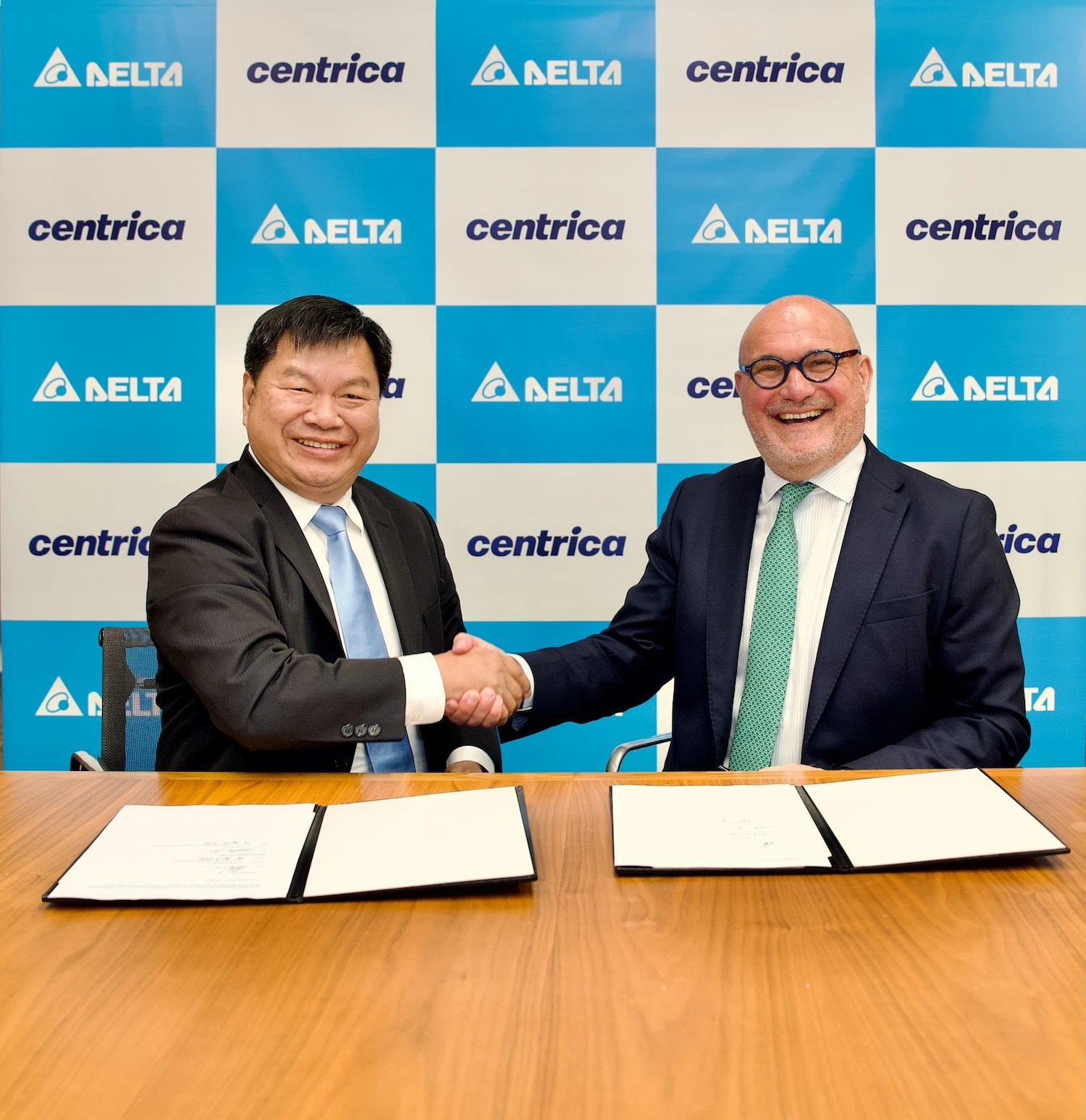
So who is the happy oriental-looking guy sitting with the equally-happy Robert Booker, who is Chief Strategy and Transformation Officer at Centrica?
He is Charles Tsai, General Manager of Hydrogen Energy BD at Delta Electronics Inc.
Google AI produces this answer to “Who Are Delta Electronics Inc.”
Delta Electronics, Inc. is a Taiwan-based global leader in power and thermal management solutions, founded in 1971. Renowned as the world’s top provider of switching power supplies and DC brushless fans, they focus on energy-efficient, IoT-based smart solutions for industrial automation, EV charging, data centers, and renewable energy.
Core Business Areas
Power Electronics: A global leader in switching power supplies, thermal management, and components for cloud computing and electric vehicles (EVs).
Automation: Offers industrial and building automation systems to enhance manufacturing efficiency.
Infrastructure: Provides data center infrastructure, EV charging solutions, and telecom power systems.
Key Facts and Highlights
Market Position: Often cited as the world’s largest provider of computer power supplies, with significant market share in server power units.
Sustainability Focus: Dedicated to “innovative, clean and efficient energy solutions” with a strong ESG (Environmental, Social, and Governance) focus.
Global Presence: Operates manufacturing plants and R&D centers worldwide, including Taiwan, China, Thailand, Mexico, India, and Europe.
Financials: Publicly listed on the Taiwan Stock Exchange (code: 2308).
Delta Electronics serves industries looking for energy-efficient, AI-ready, and sustainable technology solutions.
Delta Electronics has had an R & D facility in East Kilbride in Scotland for nearly ten years.
This is the sub-heading of Centrica’s news item.
Centrica and Delta Electronics, Inc. today announced an infrastructure partnership to serve the data centre market and energy intensive industries in the UK and Europe, launching with Solid Oxide Fuel Cells (SOFCs) for off-grid energy generation.
These two paragraphs add more detail to the partnership.
This partnership creates a pathway for offering customers competitively priced, on-site power generation, significantly reducing exposure to wholesale electricity market volatility and grid capacity constraints. The partners plan to establish a demonstration site in the UK within the next 12 months, with a medium-term goal of delivering MW-scale, rapidly deployable ‘gas-to-power’ solutions within the next three to five years.
Delta’s SOFCs, licensed by British solid oxide technology leader Ceres, provide stable, low-carbon energy fuelled by natural gas and reach 60% electrical efficiency – significantly higher than the open-cycle gas turbines typically used for on-site and back up generation (35%-42%). These cells are designed to meet the growing power demands of data-intensive digital infrastructure in the UK and Europe which underpin economic growth, digital sovereignty and the energy transition.
This partnership appears to be a partnership of three world-leading companies doing what they do best, to efficiently satisfy the enormous power need for data centres and energy intensive industries.
- Centrica will make sure, that there is enough natural gas. They have a strong reputation for trading gas and source it from all over the world.
- Ceres will provide the Solid Oxide Fuel Cells (SOFCs), that will efficiently convert this natural gas into electricity. Ceres’s SOFCs are fifty percent more efficient than open-cycle gas turbines, which is a large improvement.
- Delta Elctronics then work their high power electronic wizardry to supply the electricity.
Nothing is said about what happens to all the carbon dioxide. It will certainly be captured and will probably be of food grade, but this could be the next piece of the jigsaw that Centrica are putting together.
Ocasio-Cortez, Markey Ask Trump Admin To Explain Paying TotalEnergies USD 1 Billion ‘In Taxpayer Money’ To Drop Offshore Wind Projects
The title of this post, is the same as that of this article on offshoreWIND.biz.
This is the sub-heading.
US lawmakers Alexandria Ocasio-Cortez and Ed Markey have sent a letter to Secretary of the Interior Doug Burgum on the plan by the Trump administration to pay nearly USD 1 billion to TotalEnergies to cancel offshore wind projects off the US East Coast, calling on the administration to stop the payment and explain the legal basis and funding source for the proposed transfer.
These four paragraphs add detail to the story.
As reported recently, the US government’s agreement with TotalEnergies concerns the company’s exit from offshore wind development in the country by relinquishing leases for projects off New York/New Jersey and North Carolina, for which the administration intends to pay approximately USD 928 million.
The agreement also stipulates that TotalEnergies would redirect that money to oil & gas projects in the US. The company, in a press release issued after signing the agreement with the government, indicated that it would invest proceeds from the payment into a liquefied natural gas export facility in Texas and other oil and gas activities in the US that will support both domestic supply and the demand in Europe.
As reported recently, the US government’s agreement with TotalEnergies concerns the company’s exit from offshore wind development in the country by relinquishing leases for projects off New York/New Jersey and North Carolina, for which the administration intends to pay approximately USD 928 million.
The agreement also stipulates that TotalEnergies would redirect that money to oil & gas projects in the US. The company, in a press release issued after signing the agreement with the government, indicated that it would invest proceeds from the payment into a liquefied natural gas export facility in Texas and other oil and gas activities in the US that will support both domestic supply and the demand in Europe.
Trump may have got what he wanted and stopped development of wind farms, but at what cost to US taxpayers?
Out of curiosity, I asked Google AI, “Which LNG Terminal In Texas Have TotalEnergies Agreed To Develop”, And Received This Answer.
TotalEnergies has agreed to develop and invest in the Rio Grande LNG (RGLNG) project located in South Texas.
Key details regarding TotalEnergies’ involvement include:
Partnership: In June 2023, TotalEnergies signed a framework agreement with NextDecade Corporation to participate in the development of the Rio Grande LNG project.
Ownership and Phase 1: TotalEnergies holds a 16.67% stake in the first phase of the project, which includes three liquefaction trains with an annual capacity of 17.5 million tons per annum (Mtpa).
Offtake Agreement: TotalEnergies has agreed to purchase 5.4 million tons per annum (Mtpa) of LNG from Phase 1 for 20 years.
Expansion (Train 4): As of September 2025, TotalEnergies has reached a Final Investment Decision (FID) for a 10% stake in the joint venture developing Train 4 of the Rio Grande LNG facility.
NextDecade Stake: TotalEnergies also acquired a 17.5% stake in NextDecade Corporation, the developer of the project.
The Rio Grande LNG project is located in Brownsville, Texas, and is expected to contribute to TotalEnergies’ goal of expanding its U.S. LNG export capacity to 15 million tons annually by 2030.
I shall be watching this project. Especially, as several new techniques have come forward in the last few months.
Centrica Partners With Ceres Power On Solid Oxide Fuel Cells
The title of this post, is the same as this article on gasworld.
This is the sub-heading.
UK multinational energy and services company Centrica is partnering with clean tech firm Ceres Power to accelerate solid oxide fuel cells [SOFCs] production to meet forecasted ‘multi-gigawatt’ demand from industrial customers across Europe.
These three paragraphs indicate the market opportunity, that Centrica feel, that the partnership will fill.
With electricity grid connection delays impacting new industrial, commercial and digital projects, the UK and Europe are experiencing a widening gap between demand and available capacity.
Centrica aims to offer customers high‑efficiency, low‑carbon, grid independent on‑site power that can be deployed much faster than gas turbines or nuclear.
Group Chief Executive Chris O’Shea said by collaborating with Ceres’ technology it sees an opportunity to support data centres, AI and industry with cleaner power at scale. Ceres claims SOFCs can be manufactured and delivered on site to get power online “in months not years”.
It certainly sounds feasible to drop in an appropriate-sized stack of fuel cells and connect them up to the gas main.
These two paragraphs, indicate how Ceres will support Centrica.
Initially, Ceres will support Centrica in expanding a new differentiated service-led model for clean power, providing access to British technology through its expanding network of global manufacturing partners.
Ceres will assist Centrica with opportunities across project origination, installation and commissioning, remote monitoring, predictive maintenance and end of life recycling.
I have a few questions for Google AI.
Do Ceres Fuel Cells Emit Carbon Dioxide?
Google AI replied this.
Yes, Ceres Power has developed Solid Oxide Fuel Cell (SOFC) technology, known as the SteelCell®, that works on natural gas. This technology is specifically designed to be fuel-flexible, capable of converting grid natural gas into electricity at high efficiency.
Key Details About Ceres Fuel Cells and Natural Gas:
Technology Capability: The Ceres SteelCell runs on natural gas, as well as future-focused fuels like hydrogen and biogas.
Application: These fuel cells are used for distributed power generation in homes, businesses, and industrial settings (such as AI data centres).
Efficiency: When running on natural gas, the SOFC systems can achieve an electrical efficiency of around 62%, with total efficiency exceeding 90% when combined with heat recovery.
Emission Reductions: Compared to conventional combustion engines, the technology offers a 30% reduction in carbon emissions.
Current Strategy: As of early 2026, Ceres is focusing on natural gas-fueled SOFCs for stationary power markets, particularly in collaboration with partners like Centrica to address power shortages in the UK and Europe.
While the systems can be used for hydrogen in the long term, they are currently fully functional with natural gas, making them a “bridge” technology for decarbonisation.
A 30% reduction is surely worthwhile!
In What Size Are Ceres Power Holdings Fuel Cells Manufactured?
Google AI replied this.
Ceres Power Holdings’ solid oxide fuel cell (SOFC) technology is manufactured in modular, scalable sizes, with individual stacks ranging from 10-50 kW and commonly deployed in 1-5 MW power modules. These stacks are produced at manufacturing facilities with capacities like 50MW (e.g., with partner Doosan), with plans for up to 100MW annual capacity.
Key manufacturing and size details include:
Cell Component: 30–150W.
Stack: 10–50 kW.
Stack Array/Module: 100–500 kW, up to 1-5 MW modules.
Manufacturing Capacity: 50MW production facility in South Korea (Doosan), with plans for 100MW+ annual capacity in future plants.
Applications: Primarily stationary, distributed power systems for AI data centres, industrial decarbonisation, and commercial buildings.
Ceres licenses its technology to partners like Bosch and Doosan, with cell technology based on low-cost printed steel substrate
How Much Power Does A Top Of The Range MRi Scanner Use?
I am asking this question, as it is surely something you might power with a Ceres fuel cell powered by natural gas.
Google AI replied this.
A top-of-the-range MRI scanner (such as a 3-Tesla or 7-Tesla system) is highly energy-intensive, consuming substantial power 24/7 to maintain its superconducting magnet. During active scanning, power usage often ranges from 25 kW up to 80 kW or more.
Here is a breakdown of the power consumption for high-end MRI scanners:
Power Consumption Breakdown
Idle/Stand-by Mode (24/7): The machine constantly consumes roughly 6 to 7 kW for background cooling (liquid helium refrigeration).
Standard Scanning: Productive scanning sessions typically demand around 25 kW.
High-Demand Scanning: Demanding examinations (e.g., head examinations with EPI sequences or special angles) can cause power usage to surge to 70 kW to 80 kW.
System Total: A 3T MRI, including cooling systems (chillers) and peripheral electronics, might require a 3-phase, 480V, 200A supply—roughly equivalent to the capacity of six modern houses.
Conclusion
This seems to be a deal with a large number of possibilities.
Speaking from my past experience of banks and financing, where the bill is ultimately paid by a reputable individual or company like Shell or BP, I believe that Centrica will have no difficulty in financing lots of these systemsusing instiutions like Lloyds or Deutsche Bank.
Centrica Energy And Whitecap Enter Long-Term Natural Gas Supply Agreement
The title of this post, is the same as that of this news item from Centrica.
This is the sub-heading.
Centrica Energy is pleased to announce signing of a long-term natural gas purchase agreement with Whitecap Resources Inc., a leading Canadian producer dedicated to the responsible development of oil and gas resources across the Western Canadian Sedimentary Basin.
These first three paragraphs add more detail to the story.
Starting in April 2028, Whitecap will deliver 50,000 MMBtu of natural gas per day to Centrica Energy for a period of ten years – equivalent to roughly five LNG cargoes each year. The supply will be priced against the Title Transfer Facility (TTF), the benchmark for European gas markets.
This agreement advances Centrica’s strategy of managing market price exposure across its LNG portfolio by linking feed gas costs to European price signals. For Whitecap, the agreement provides access to international LNG-linked pricing, supporting the company’s natural gas price diversification strategy.
“Entering into this innovative agreement with Whitecap underlines our focus on building a balanced LNG portfolio through strategic partnerships across the globe allowing us to deliver reliable energy solutions to global markets” said Chris O’Shea, Group Chief Executive at Centrica.
I have some thoughts.
This Is The Seventh Deal Of This Type By Centrica In A Few Months
Note.
- All are marked with a tag of Natural Gas Trading.
- None of the deals appear to be in the Middle East.
- All appear to be fairly long term deals, with three stretching until 2037.
Hopefully, with luck we’ll have enough gas for the next few years.
Grain LNG Terminal Is Very Flexible
Consider.
- It is Europe’s largest LNG Terminal
- It can import, export and store gas.
- It has plenty of space for expansion, which could include new technologies.
- Centrica have said bunkering facilities will be added, which will be able to handle the latest low-carbon fuels.
I can certainly see, why Centrica acquired the terminal.
Centrica Energy And Seneca Resources Company Sign First-of-Its-Kind Long-Term MiQ Methane Emissions Certificates Agreement
The title of this post, is the same as that of this press release from Centrica.
This is the sub-heading.
Centrica Energy and Seneca Resources Company are proud to announce a groundbreaking agreement, marking the first long-term deal of its kind to support independently verified methane emissions from an MiQ-certified US natural gas producer, helping to underpin reductions over time. This ten-year agreement underscores the commitment of Centrica and Seneca to support global efforts to reduce methane emissions.
This first paragraph added more detail.
Centrica Energy sources and delivers gas and LNG globally, including LNG shipped from the US to international markets. Under the terms of the agreement, Centrica will procure 250,000 MMBtu per day of MiQ-certified gas certificates over the next ten years, a strategic move that positions Centrica at the forefront of methane reduction initiatives, aligns with emerging regulatory requirements, and reinforces leadership in sustainable energy practices.
MiQ is new to me, so here is what the press release says about MiQ.
MiQ is a global leader in methane emissions certification and data. Our mission is to accelerate the transition to lower emissions gas by providing a credible and transparent certification system that drives regulatory compliance, incentivizes continuous improvement, and ensures methane accountability in the oil and gas sector throughout the entire supply chain.
It appears to me that MiQ-certified low-emissions gas is almost like an equivalent of FairTrade coffee.
If the UK buys its gas as MiQ-certified low-emissions gas, it could claim, that it has cut its gas emissions.
Google AI On Low-Emission Natural Gas
I asked its view and received this answer.
Low-emission natural gas refers to methane-based energy with significantly reduced greenhouse gas, methane leakage, and particulate emissions, often achieved through enhanced extraction, certification, or blending with cleaner gases. It offers up to 40% less (CO2) than coal and 20-30% less than oil, serving as a critical transition fuel to support renewable energy.
low-emission natural gas would seem to be a sensible way to go.

