Thousands Pay More Tax In ‘Chaotic’ Yousaf Budget
The title of this post, is the same as that of this article in The Times.
It has this sub-heading.
Efforts to plug £1.5bn funding hole put Scotland at a disadvantage, say business leaders
I have a feeling that the rise in income tax will have unintended consequences.
The UK’s Current Hydrogen Plans
Last week, the UK Government announced grants for eleven big hydrogen projects, around the UK, with two in Scotland. The new Scottish electrolysers will be playing a large part in decarbonising the Scotch whisky industry and HGVs.
I wrote Major Boost For Hydrogen As UK Unlocks New Investment And Jobs to describe the investments scope and benefits.
The Government estimated that these grants will create 700 jobs, across the UK.
How many quality high-paid jobs will this funding create in Scotland? As two of the eleven projects are based in Scotland, it could be around 127 quality jobs.
More UK Hydrogen Plans Are On The Way
The Government also indicated that this was only the first stage of bringing hydrogen production to the UK, so I will expect more high-paid quality jobs will be created.
Projected UK Offshore Wind Power
This Wikipedia entry is a list of all installed, under-construction and proposed offshore wind farms in the UK.
Aggregating the new unbuilt wind farms says the following capacity will very likely be installed in the UK in the next few years.
- Scotland – 32, 750 MW.
- England – 25,558 MW
- Wales – 700 MW
As more proposals have been called for, particularly in the Celtic Sea, I don’t think it would be unreasonable to add perhaps another 10,000 MW.
Wind farms are also proposed for around the island of Ireland and in the waters of the Channel Islands.
Upgrading Of The National Grid
These three posts could well be forerunners of other posts, I will write in the next few months.
- National Grid Fast-Tracks Overhead Line Upgrade Project To Help Accelerate Connection Dates Of 175 Clean Energy Projects
- National Grid To Accelerate Up To 20GW Of Grid Connections Across Its Transmission And Distribution Networks
- National Grid’s London Power Tunnels Breakthrough Completes £1 Billion Project’s Tunnelling Activity
National Grid is increasing its capacity at a fast pace and will need a large number of quality engineers.
Crossrail And Electrical Engineers/Electricians
I suspect we’ll find, that when a report on the late delivery of Crossrail is published, an electrician shortage will get some of the blame.
I have friends, who are electricians. Because of the shortage of trained electricians, they were offered fortunes to work on Crossrail.
Do We Have Enough Engineers?
For all the reasons I have outlined, our path to net-zero will need a lot of trained electrical engineers and electricians and just as Crossrail showed, when there is a shortage of labour in a particular area, remuneration rises.
Electrical engineers and electricians in the British Isles will be able to pick and choose the jobs they take, just as they did with Crossrail and the other major projects being built at the same time.
Effects On Scotland
If you were an engineer, who had skills and could work on these projects, would you prefer to work on a project, where the tax rate was lower?
Scotland’s tax rise will harm their decarbonisation ambitions.
Surely, the Greens should have vetoed a tax increase, which will inevitably slow their progress to net-zero?
Or are Greens a tad short of the grey matter?
Conclusion
I believe the Scottish government has shot itself in the foot.
SSE Unveils Redevelopment Plans For Sloy Hydro-Electric Power Station
The title of this post, is the same as that of this news item from SSE Renewables.
These are the two bullet points of the news item.
- Scotland First Minister Humza Yousaf welcomes plans to convert conventional hydro plant to new, flexible pumped hydro storage facility
- If approved for delivery Sloy could provide firm, flexible renewable energy for up to 160 hours non-stop, enough to power 90,000 homes for one week
This is the introductory paragraph.
SSE Renewables, as part of SSE plc, has unveiled plans to convert its 152.5MW Sloy Power Station, Britain’s largest conventional hydro power plant, into a new pumped hydro storage facility to bolster energy security and help provide the large-scale and flexible renewable energy back-up needed in a future UK net zero power system.
And this describes the output and storage capacity.
Subject to final design, the converted Sloy scheme would be capable of delivering up to 25GWh of long-duration electricity storage capacity. At the flick of a switch, the converted Sloy scheme could provide firm, flexible renewable energy for up to 160 hours non-stop, enough to power around 90,000 homes for up to one week.
The Loch Sloy Scheme
In A Lower-Cost Pumped Hydro Storage System, I described the Loch Sloy scheme, as it currently exists.
Whilst writing some of the posts recently about pumped storage I came across the Loch Sloy Hydro-Electric Scheme.
This is the introductory sentence in Wikipedia.
The Sloy/Awe Hydro-Electric Scheme is a hydro-electric facility situated between Loch Sloy and Inveruglas on the west bank of Loch Lomond in Scotland.
This page on the Greenage web site gives comprehensive details of the power station and is well worth a read.
This Google Map shows the Lochs Sloy and Lomond.
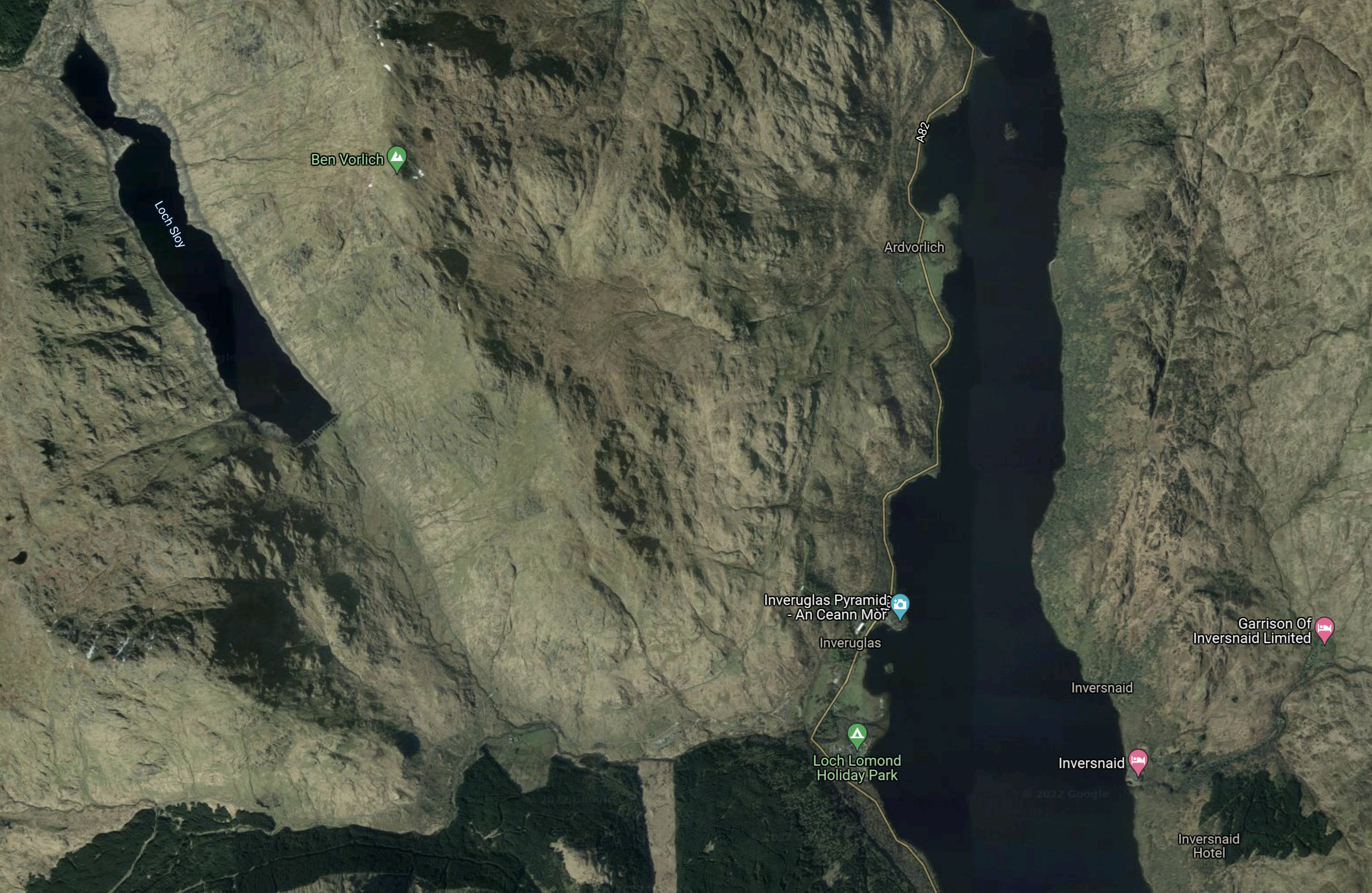
Note.
- Loch Sloy is in the North-West corner of the map.
- The page on Greenage says that Loch Sloy can store 14 GWh of electricity
- Loch Lomond is the body of water towards the Eastern side of the map.
- Inverglas is on the West bank of Loch Lomond to the North of the Loch Lomond Holiday Park, which is indicated by the green arrow with a tent.
This second Google Map shows the power station and Inverglas.
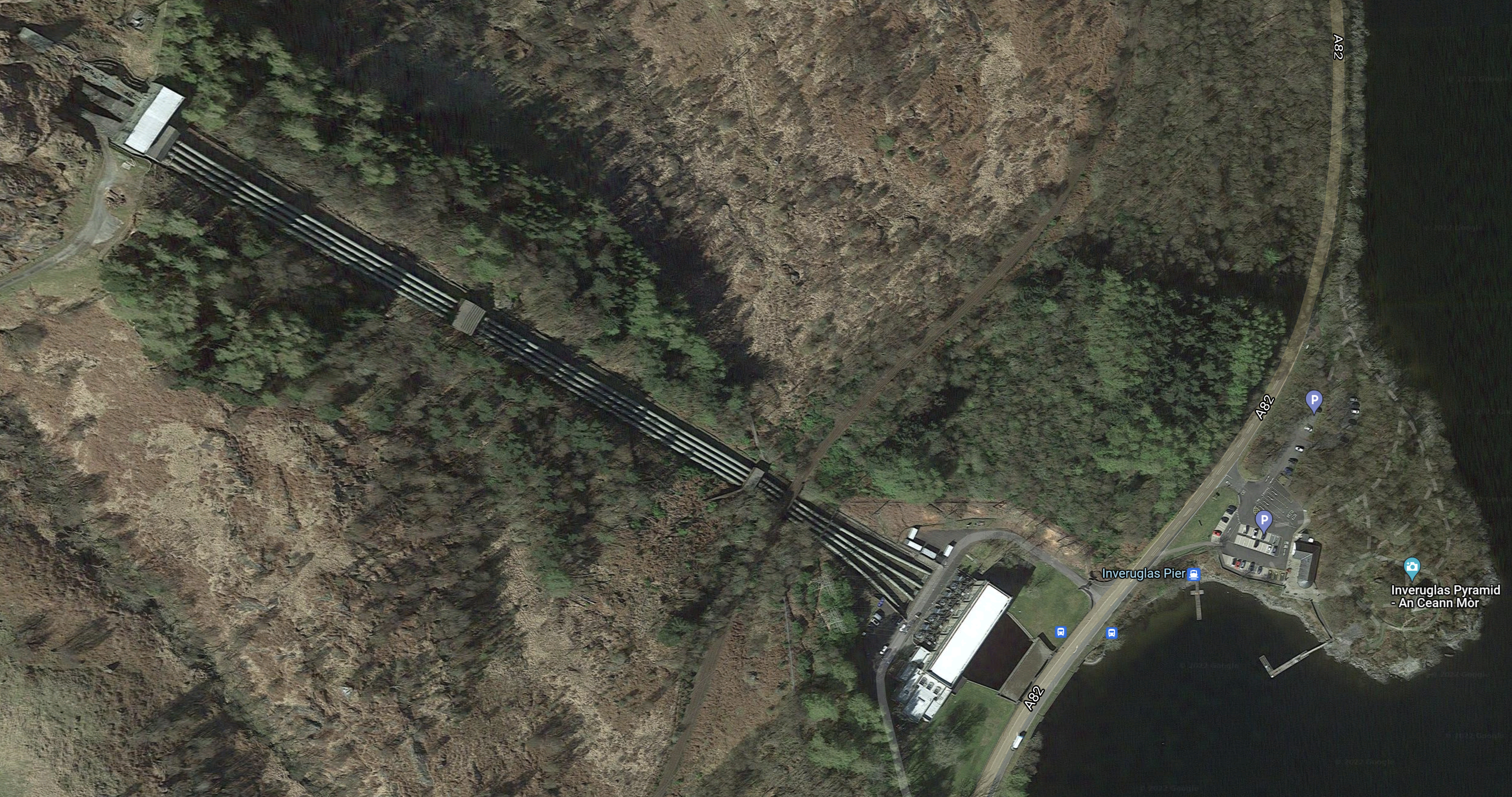
Note.
- It is a classic layout for a hydro-electric power station.
- In the North West corner of the map is the valve house, which is connected to Loch Sloy by a three kilometre tunnel.
- The valve house controls the water flows to the power station by Loch Lomond.
- There are four two-metre pipes running down the hill, one for each of the four turbines.
- According to the page on Greenage, the power station has three 40 MW turbines and one 32 MW turbine, which gives a total output of 152 MW.
- The water discharges into Loch Lomond after doing its work in the power station.
Loch Sloy is the largest conventional hydroelectric power plant in the UK.
The 2010 Plan To Add Pumped Storage To The Loch Sloy Hydro-Electric Scheme
This page on Hydro Review, which is dated the 10th of November 2010, is entitled SSE Gets Government Consent For Sloy Pumped-Storage Hydropower Project.
These are the first paragraph.
SSE Generation Ltd., the wholly owned generation business of Scottish and Southern Energy, has received consent from the Scottish Government to develop a 60-MW pumped-storage hydro project at its existing Sloy hydropower station at Loch Lomond, SSE reported.
Note.
- Two 30 MW pumps will be added to the power station to pump water up the hill from Loch Lomond to Loch Sloy.
- According to the page on Greenage, if the two pumps worked together for six hours, they would transfer 432,000 m3 of water. Note that a cubic metre of water weighs a tonne.
- Water would be transferred, when there was a surplus of energy being generated over the demand.
It would appear to be a simple scheme, as it is just adding two pumps to pump the water up the hill.
- As pumps rather than pump/turbines as at Foyers are used, there is no corresponding increase in generating capacity.
- Water also appears to be pumped up to the valve house in the existing pipes.
- Loch Sloy and Loch Lomond would not need major works to enable the scheme..
The page on Greenage gives the cost at just £40 million.
Originally, the project was supposed to have started in 2012, but as there are environmental problems with the fish, the work has not started.
These problems are detailed on the page on Greenage.
It looks like this scheme would have had an output of 152.5 MW and a storage capacity of 14 GWh.
Expanding Loch Sloy
Yesterday’s press release says this about the proposed capacity of the proposed Loch Sloy pumped storage scheme.
Subject to final design, the converted Sloy scheme would be capable of delivering up to 25GWh of long-duration electricity storage capacity.
This Google Map shows Loch Sloy.
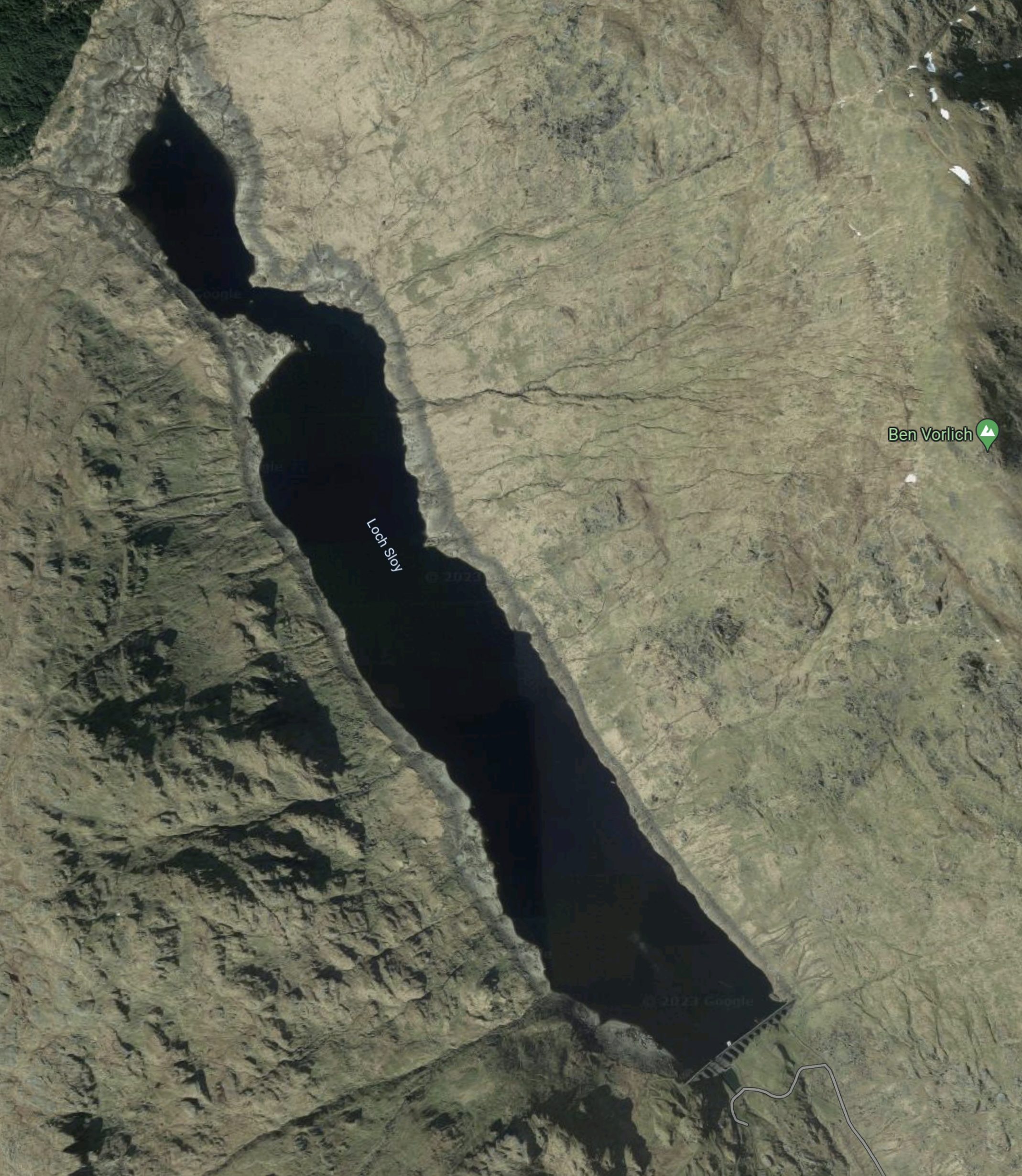
This second Google Map shows the dam at the Southern end.
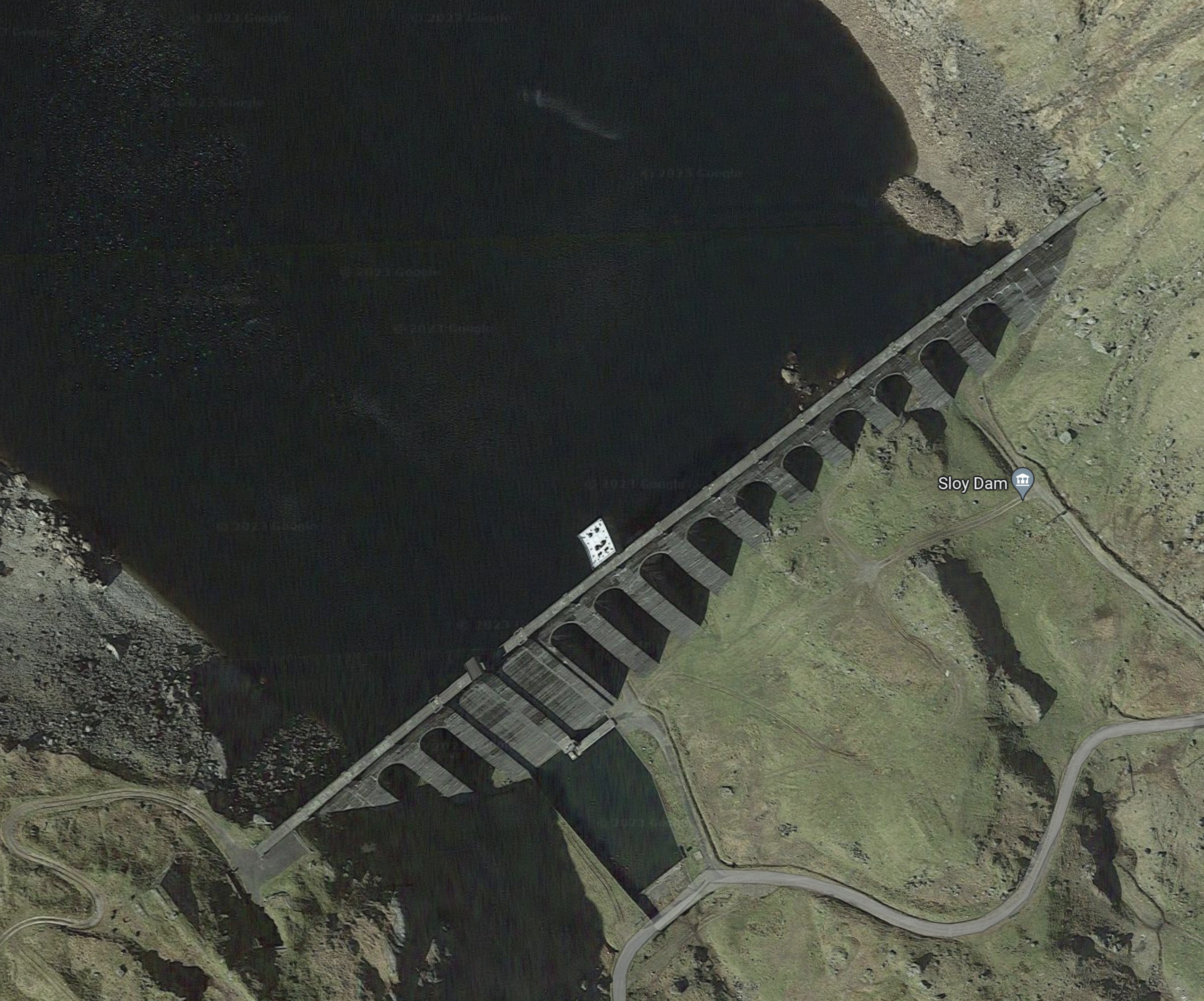
Note.
- Earlier, I said that Loch Sloy can store 14 GWh of electricity.
- To be able to store 25 GWh would need a 78 % increase in capacity.
This could be possible to be obtained by enlarging the dam and perhaps reprofiling the banks of the loch.
Expanding Loch Slow Power Station
This Google Map shows the Loch Sloy dam and the power station.
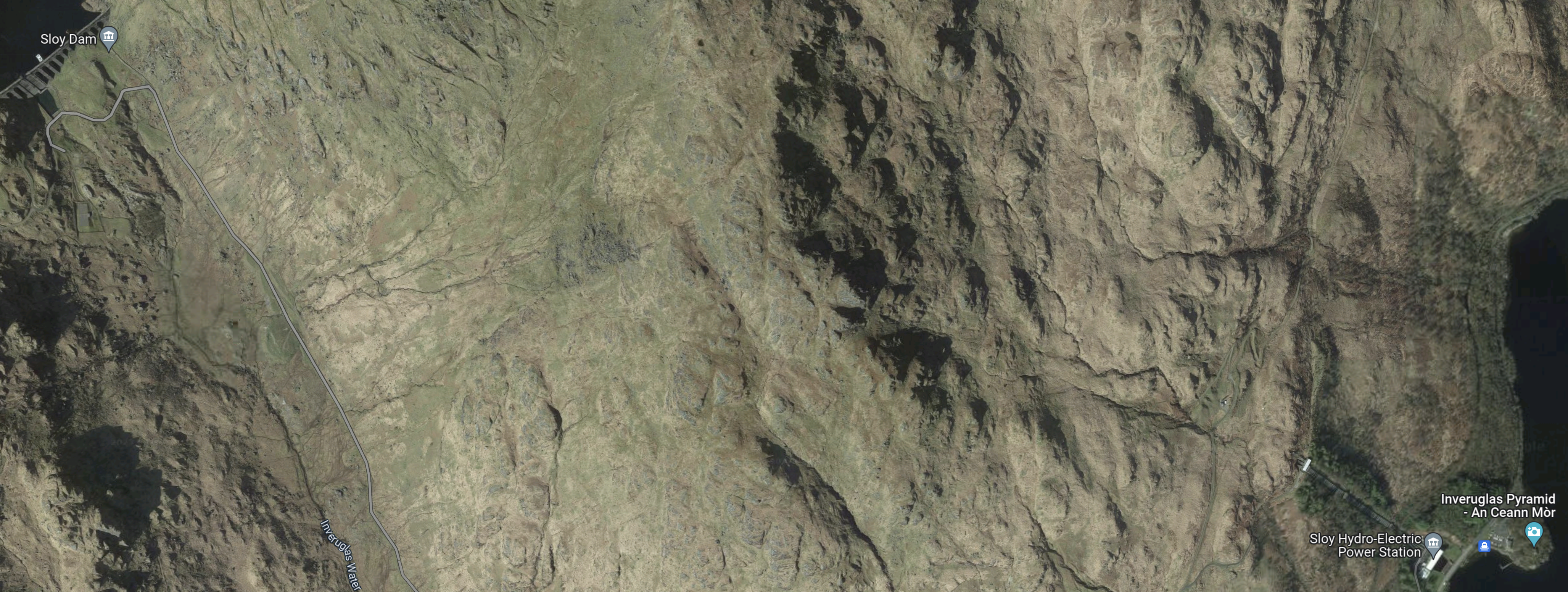
Note.
The dam is in the North-West corner of the map.
The power station is in the South-East corner of the map.
This repeat of the second Google Map shows the power station in more detail.
There appears to be plenty of space for more turbines, pumps and other electrical gubbins.
Building The Scheme
There may be enlarged buildings and extra pipes up the mountain, but hopefully the major problem of digging more tunnels through the rock may be avoided.
For these reasons, it could be a relatively easy construction project costing tens of millions.
The 14 GWh scheme from 2010 was costed at £40 million, so this 25 GWh scheme would probably cost no more than double or £80 million.
Conclusion
This is a sensible and affordable scheme, that provides a lot of energy storage
 The Anonymous Widower