Electrification Of The Midland Main Line Along The Derwent Valley
As I went to Sheffield yesterday, I took these pictures as the train ran along the Derwent Valley on the Midland Main Line between Derby and Chesterfield.

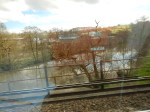
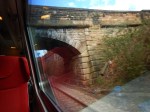
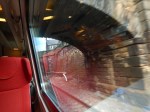
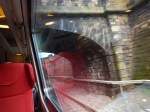
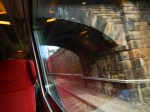
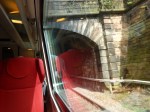
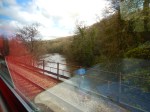
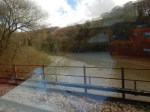
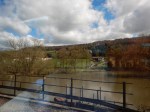
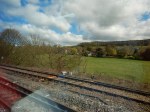
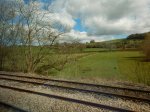
The river from Matlock in the North to Derby in the South, is the centre of the Derwent Valley Mills World Heritage Site.
And Network Rail want to electrify this line, so that fast electric trains can run between Sheffield and London via Derby!
This map shows the Midland Main Line from Trent Junction, South of Derby and Nottingham to Chesterfield.
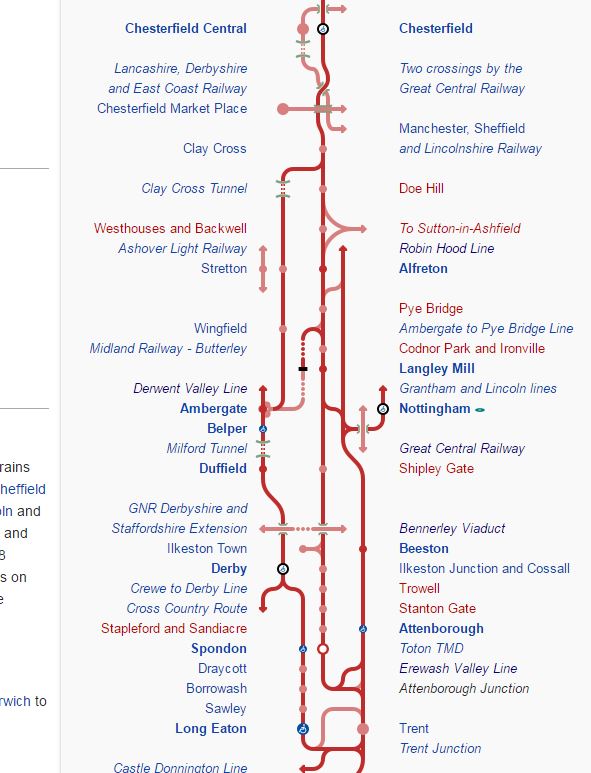
Note the following about the route of the Midland Main Line.
- My train ran via Derby, Belper and Ambergate stations, up the route on the West of the map.
- Trains via Nottingham would go up the East, before joining the Erewash Valley Line directly up the middle to Chesterfield.
- A new Ilkeston station is being built, between Nottingham and Attenborough stations.
- There is pressure to expand the Robin Hood Line by reopening the Ambergate To Pye Bridge Line between the two stations.
- HS2 is supposed to join up with the Nottingham Express Transit in the Toton area.
- How many of the closed stations in the area will be reopened?
It’s certainly all happening around the Midland Main Line between Derby and Nottingham.
This is said in Wikipedia about the future of the Erewash Valley Line.
Network Rail as part of a £250 million investment in the regions railways has proposed improvements to the junctions at each end, resignalling throughout, and a new East Midlands Control Centre.
As well as renewing the signalling, three junctions at Trowell, Ironville and Codnor Park will be redesigned and rebuilt. Since the existing Midland Main Line from Derby through the Derwent Valley has a number of tunnels and cuttings which are listed buildings and it is a World Heritage Area, it seems that the Erewash line is ripe for expansion.
It would seem fairly logical to perhaps make the Erewash Valley Line an electrified one, with a maximum speed, as high as practically possible and just run self powered trains through the Derwent Valley.
There would be two real possibilities for running the services for the London Sheffield services, including those via Nottingham, up the electrified Erewash Valley Line.
- Class 801 electric trains
- Bombardier’s 125 mph Aventra which was reported as possible by Ian Walmsley in the April 2015 Edition of Modern Railways.
Obviously, other manufacturers would offer suitable trains.
For the London to Sheffield route via Derby, the following trains could handle the twenty miles between Derby and Clay Cross, that could be without electrification.
- Class 800 electro-diesel trains
- Bombardier’s 125 mph Aventra which can probably be modified with an IPEMU-capability.
- Voyagers modified as electro-diesel trains, as was proposed in Project Thor, could probably handle the gap.
- A Class 88 locomotive and a rake of coaches with a driving van trailer.
If all else couldn’t handle it, InterCity 125s certainly could.
Surely though, it would help the train operator to have one fleet, so I think we’ll either see mixes of Class 800/801s or Aventras with and without an IPEMU-capability.
The Class 800/801s could certainly do it, but in his article about the Aventra, Ian Walmsley said this about an order for Aventras.
But the interesting one to me is East Midlands Trains electrics. As a 125 mph unit it could cope well with Corby commuters and the ‘Master Cutler’ crowd – It’s all about the interior.
So the same train could do all express routes and also act as the local stopping train.
The maze of lines shown in the map, would be an absolute dream for such a train!
I also think it would be pushing it to run the Hitachi trains through Derby and the Voyagers and the Class 88 solutions aren’t that elegant and would be very much stop-gap solutions. Loved as the InterCity 125s are, after a lifetime of very hard service, they are probably ready for retirement.
As the gap is only about twenty miles, I suspect that Network Rail’s and Bombardier’s engineers have got the engineering envelopes on the table in a local hostelry in Belper to solve the problem of getting 125 mph Aventra IPEMUs to jump the gap, so that services between London and Sheffield, can stop at Derby.
Why are they in Belper? Look at this Google Map of the railway through the town!
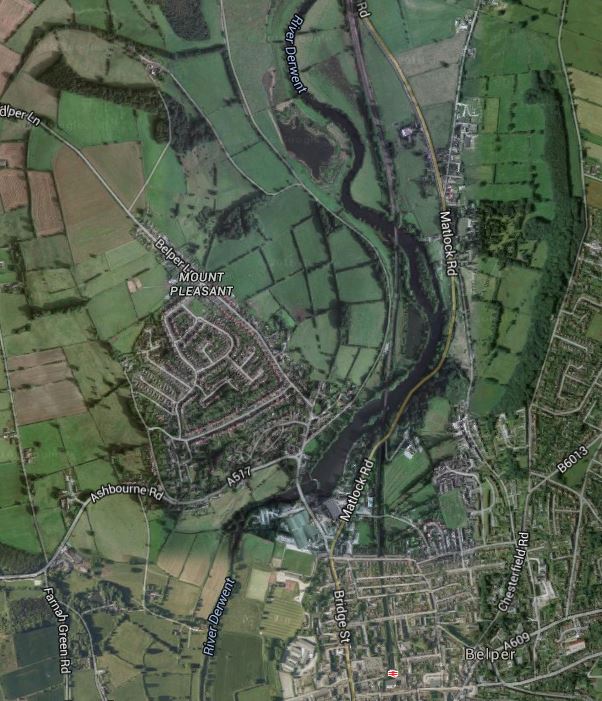
Midland Main Line Through Belper
Note the following.
- There must be half a dozen stone bridges north of Belper station, similar to ones shown in the gallery of this post.
- The River Derwent seems to be crossed by the railway, periodically for fun.
- Get that line right, probably without electrification and their uncluttered design will live for centuries.
- Get it wrong and they’ll be lynched by the local Heritage Taliban!
- If Aventra IPEMUs can’t be made to jump the gap, there’s always the reliable Derby-built InterCity 125.
Just as Great Western Railway use iconic photos of Intercity 125s running through Dawlish in their advertising, I think that East Midlands Trains will use video of 125 mph Aventra IPEMUs speeding with little noise and disturbance, through the towns, villages and countryside of the Derwent Valley.
If this could be made to happen, at an affordable cost, everybody concerned will see positive commercial effects.
Electrifying The Great Western Through Sydney Gardens In Bath Spa
The Great Western Railway runs i through Sydney Gardens in Bath. This picture shows an InterCity 125 running through the gardens.
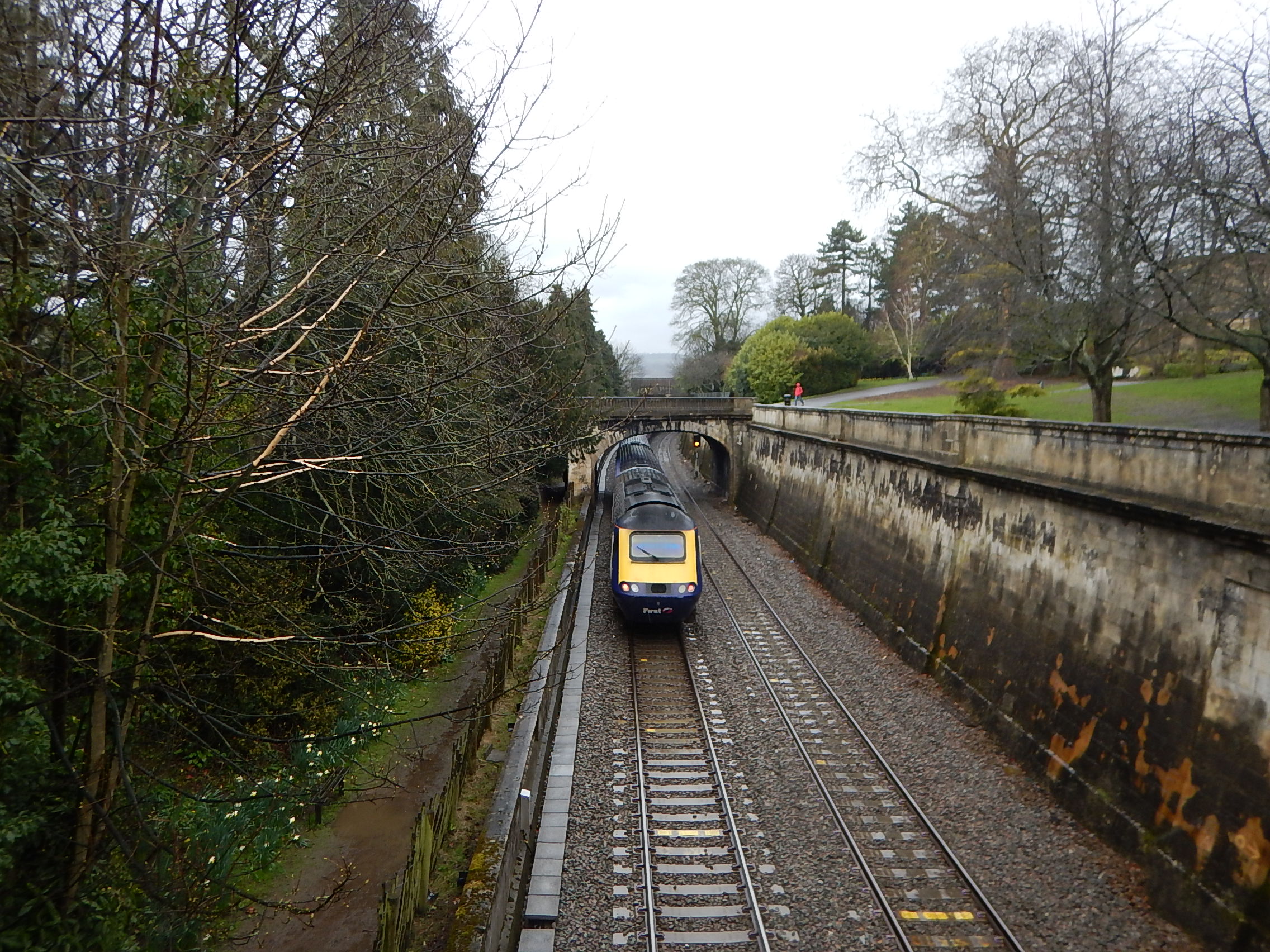
An InterCity 125 Passes Through Sydney Gardens
Note.
- There is plenty of width, as the line was built for broad gauge trains.
- Height might a bit tight, when you add in the pantograph.
- I would think that the structure under the track is pretty sound, as it’s had masses of pounding for years from Castles, Kings, Warships and InterCity 125s.
- I suspect that the bridges over the line have been fully surveyed and like most of Brunel’s structures are well designed.
So I suspect that the track could be arranged, so that it positioned the train in the right place, to allow a Class 800 train to pass through with absolute safety.
The tracks could be moved closer or further apart to match the geometry of the bridges.
The tracks could be lowered if required.
If necessary, as is often done in tunnels, a solid concrete slab track could be laid. But this can create more noise.
I wouldn’t be surprised to see an innovative rail system used in Sydney Gardens to make sure the trains run accurately, reduce noise and improve the look of the railway.
But then after Dawlish and some of the challenging situations, Network Rail has faced with tracks in the last few years, I suspect they’ll come up with a very acceptable solution.
The problem is the electrification.
Engineers will renew switches and crossings at Bathampton Junction, and will lower the track at Sydney Gardens, as well as at Hampton Mill and Meadow Farm bridges.
They will install specially designed electrification equipment in Sydney Gardens, which is classed as a World Heritage Site. Work on Box Tunnel will continue over the entire six-week period.
So as I thought height is tight.
This was a comment from the article.
When these plans were presented in the Guildhall last year, the Network Rail representative emphasised that the brackets hadn’t been finalised. The poor guy had the patient of a saint as he dealt with audience members insisting that trains be fitted with batteries to enable them to do without overhead lines in Bath as well as suggesting that they could coast through the city un-powered.
I don’t think it was a good meeting for Network Rail.
As an engineer, I agree with the comment about battery trains, but the Class 800 trains are not to my knowledge able to accept batteries at the present time. Although, judging by the way the industry is going, I suspect that within a few years, all electric trains will have provision for batteries, if the operator wants them.
In some ways, I feel that Brunel might be providing the solution.
To erect overhead wires for railway electrification, you need to support the wires every fifty metres or so.
This Google Map shows the gardens.
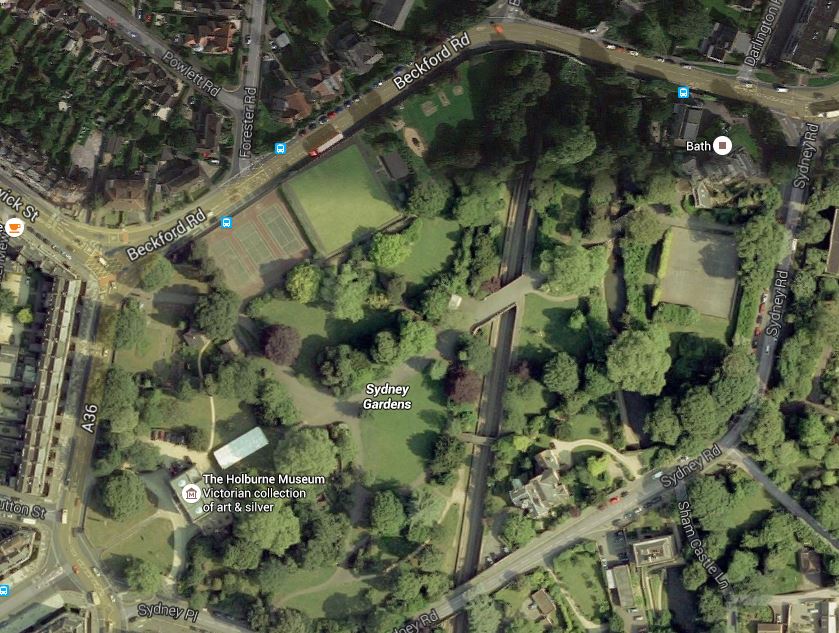
Sydney Gardens, Bath
Note there is a solid road bridge over the railway at both ends of the gardens, with Beckford Road in the North and Sydney Road in the South.
I estimate that the distance between the two road bridges is two to three hundred metres.
In the middle is the footbridge from where I took the picture of the InterCity 125 and another wider bridge.
As the trains will not be going flat out at 200 kmh through here, as they’ll probably be stopping at Bath Spa station, I suspect that the four bridges could be used as support for the overhead electrification.
This Network Rail visualisation shows the footbridge with a Class 800 train going underneath.
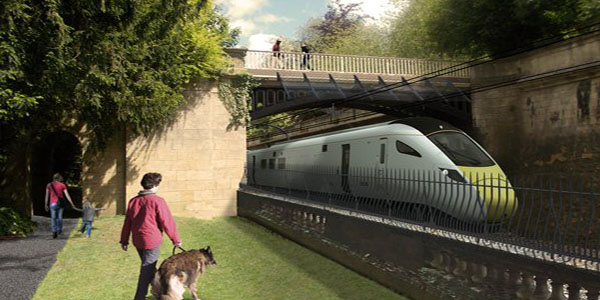
Sydney Gardens Bridge And A Class 800 Train
It looks to me, that the wires are attached under Brunel’s bridges and that by clever design tNetwork Rail can get an solution acceptable to all.
One of the problems, is of course making sure, that pedestrians on the bridge are safe, with 25KVAC overhead electrification underneath.
By lowering the track, they are increasing the safety distance and also making it less likely that naughty dogs can get on the track.
I have a feeling that this problem, will be one that will haunt Network Rail.
This picture was taken from the Sydney Road bridge and shows the area of the visualisation.
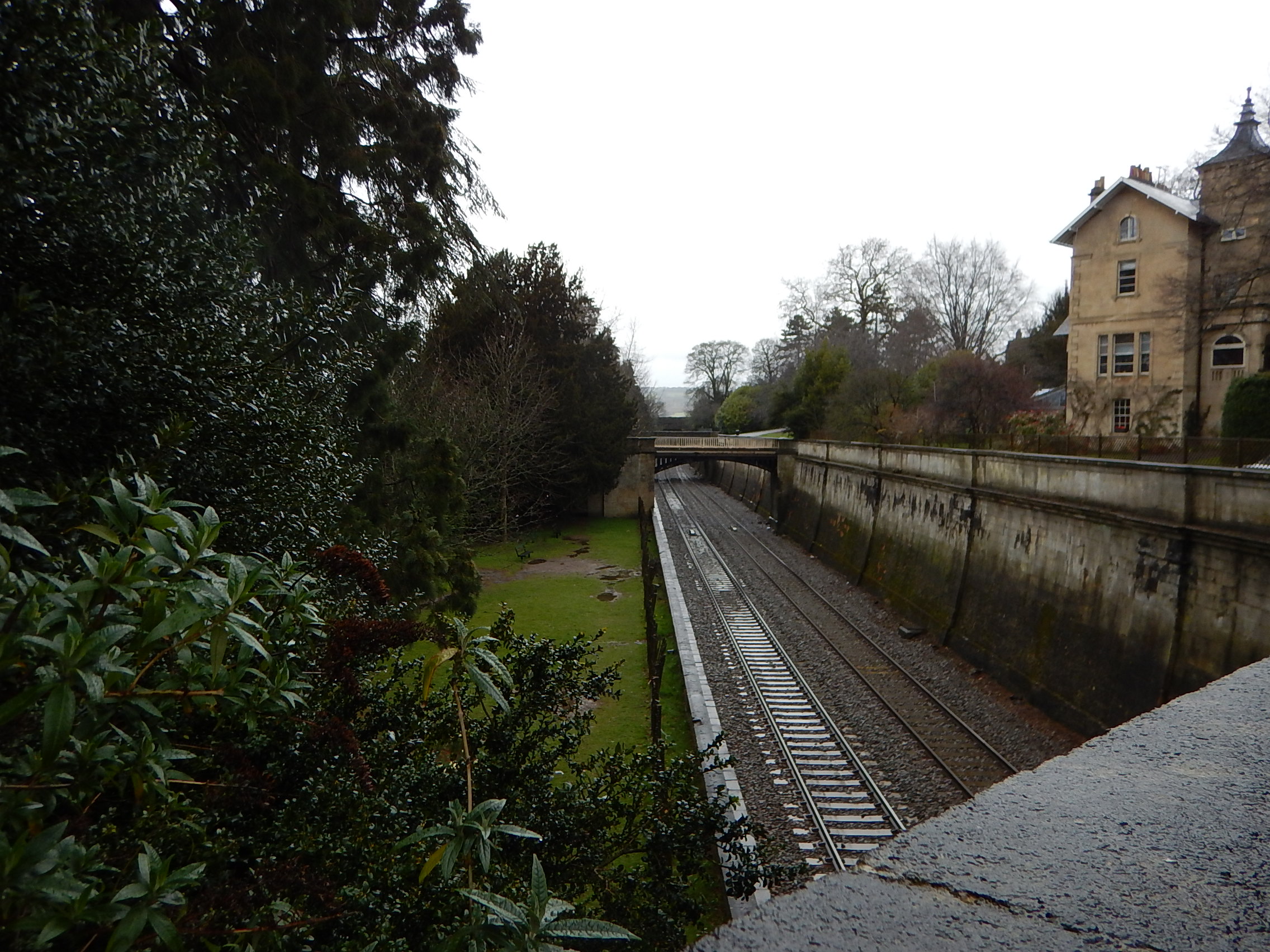
The Footbridge In Sydney Gardens, Bath
As the train appears to be on the left track, the visualisation actually shows the back of a train.
This is a gallery of pictures that I took in Sydney Gardens.


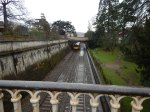

It would be a shame to ruin the gardens, by some less than adequate design.
Adonis Promises Milk And Honey In The Future, But The North Needs Unblocking Now!
I don’t have much time for Lord Adonis, as I always think that unelected politicians who change sides are a bit like the Vicar of Bray.
And lets face it, he was part of Tony Blair’s gang of idiots, who felt that licking Dubya’s arse and making war in Afghanistan and Iraq was more important than creating proper transport links across the north.
But they were only following the lead set by Harold Wilson, when he cancelled the Picc-Vic Tunnel. Wikipedia says this about how the need for the tunnel has been and is being fulfilled.
In 1992, the Metrolink system opened and linked both stations via tram, negating the requirement for a direct rail connection to an extent. In 2011, the Ordsall Chord was announced; it is an overground railway scheme designed to directly link Manchester Piccadilly and Manchester Victoria in a comparable fashion to Picc-Vic.
Wouldn’t it have been better to dig the tunnel in the first place?
I heard Lord Haskins and Chris Hyomes from Railfuture on Wake Up To Money this morning and they were aggressive in demanding that something happen sooner rather than later.
After my last trip to Huddersfield and writing Welcome To Huddersfield, I can say, that the Class 185 trains are a sick joke inflicted on the North by Tony Blair as Prime Minister and Gordon Brown as Chancellor. The trains are both too short and to few in number.
And then we have Lord Adonis saying on BBC Breakfast, that the line needs to be electrified as soon as possible.
So how long will the misery of the TransPennine routes continue before the line is electrified? 2022 is mentioned!
In my view there are four solutions for acceptable trains across the Pennines.
- Introduce the first bi-mode Class 800 trains on the route.
- Introduce the first bi-mode Class 800 trains on the East Coast to release InterCity 125s for the route.
- Introduce some locomotive-hauled stock.
- Create Class 387 trains with an IPEMU capability, so they could use energy storage to bridge the electrification gaps.
One of these must be implemented before the end of this year.
The first two options are impossible, as the Class 800 trains won’t be ready for passenger service until 2017.
I also think that Option 3 would be unacceptable to passengers, but is probably impossible, as there are no modern diesel locomotives available and probably very few coaches in good condition.
So we’re left with the Class 387 IPEMUs.
- They are modern four car electric trains, with everything passengers expect. Only wi-fi is missing.
- The IPEMU technology was successfully demonstrated in early 2015 using a Class 379 train.
- I rode the demonstrator and was impressed for what that is worth!
- Bombardier have won awards for the technology.
- There are well upwards of twenty four-car trains available or being built, that could be modified.
- There are rumours that IPEMUs could be used on the Great Western.
- They can work in eight or twelve car trains, where platforms allow.
- They can travel for over fifty miles on battery power, after charging on electrified track. So Leeds to Manchester is no problem!
- Liverpool to Newcastle and Edinburgh via Leeds could be served by 110 mph electric trains.
Would a Northern Powerhouse built on battery trains be acceptable to politicians?
In my view, it will have to be, as Derby-built Bombardier Class 387 trains with an IPEMU capability are all we’ve got.
I shall be listening to George Osborne tomorrow!
Electrification Delays On The Great Western Railway Must Be Serious
This article in Rail Magazine is entitled GWR and DfT discuss ‘revised plan’ after electrification delays and it talks about what is to be done to get a decent passenger service running on the Great Western Railway, despite all of the delays to the electrification program.
If you want to know more of the problem this article on the BBC web site from July 2015 is an excellent summary.
- The under-performance of the High Output Plant System, a factory train made up of 23 vehicles, has, according to rail observers, made a big contribution to Network Rail falling at least a year behind schedule.
- The whole electrification project for the Great Western line was really based on the High Output train because of the amount of work it could do so much more quickly,
- Engineering insiders told the BBC that a newly designed wiring system did not match the specification of the holes the Hops train was designed to dig and that a new design of pile-tubes hammered into the ground to house the thousands of electrification masts – went in too deep after ground surveys were missed.
- Even where the Hops train has managed to dig holes, it has damaged existing signalling cables.
- Network Rail is short on experienced engineers and experienced operators – people who know how to run a railway.
- It was decided by the Department for Transport that the new trains will be 26m long per vehicle and our railways are built for 23m long,
I don’t think I’ve ever seen such a badly-designed and executed project in my long years on the dark fringes of project management.
So now it is sucking engineers and resources out of every other electrification project in the UK!
For instance, on my local electrification of the Gospel Oak to Barking Line, nothing much seems to have happened for the last few weeks.
I had to have a quiet chuckle, when I read this last paragraph in the Rail Magazine article.
GWR has tested short-formation High Speed Trains, and these could potentially be used on longer-distance services currently operated by multiple units, such as Cardiff-Portsmouth and Exeter-Penzance. They could also be used on some of the longer branch lines in the South West, such as Par-Newquay and Exeter-Barnstaple, although neither GWR nor the DfT would confirm this. A potential additional order for bi-mode AT300 hybrid trains could also be under consideration.
Terry Miller’s wonderful stop-gap design of the 1970s; the High Speed Train, is coming to the rescue again.
But then very serious problems, need the most serious of solutions!
I’m not running Network Rail and I’m not the Transport Minister, but in my view, it is now time to think extremely radically.
- Electrify as far as possible from London and run Class 387 trains or dependable-but-ugly Class 319 trains where you can.
- Run services to Bedwyn, Newbury, Oxford and the various branches East of Didcot using IPEMU variants of Class 387 trains.
- Replace as many HSTs on the East Coast Main Line as possible with new Class 800/801 trains and deploy Miller’s Masterpieces to the Great Western.
- Build new Class 800 electro diesel trains, instead of Class 801 electric trains and use them on the routes of TransPennine and Hull Trains.
We have been lucky with our train purchases and development.
- Class 800 and Class 801 are identical except for the diesel engines.
- Class 700 trains are being delivered to release Thameslink’s Class 387 and Class 319 trains.
- There are fifty or so Class 387 trains, that could be converted into IPEMUs, which would have a sixty mile range on batteries.
- Bombardier could probably build a few more Class 387 trains, alongside the Aventras.
I think that many places will get different and probably better and bigger trains, but not everyone will get the expected new electric trains.
The Return Of Red Star Parcels
In the 1970s, I used to use Red Star Parcels regularly. As there was no Internet, if I wanted to send a software update of Artemis to London, I’d go into Ipswich, pay a fee to register the parcel with Red Star and they’d put it on the next train to Liverpool Street. I’d phone the train time through and someone in London would pop over to Liverpool Street station and collect it.
C and other lawyers in her Chambers, also used the service to get briefs between London, Colchester, Ipswich and Norwich.
The service worked very well and there is nothing to match it today, except for paying for a courier with a high-speed bike or car.
Perhaps, the best story about Red Star was one that appeared in the Sunday Times.
Parents had bought one of the first Andrews Maclaren baby buggies for their child, but the frame had broken at the back, a day before they were going on holiday. A call to the firm in Derby, told them to Red Star the buggy to Derby station, which they duly did. A few hours later, they were phoned by the company to say that the buggy would arrive in London on the 19:00 train.
The story was true, but you wonder how much was spin on the part of Andrews Maclaren and British Rail.
Network Rail are trying to make their assets sweat. I did see a report a couple of years ago, where Colas Rail and TNT were experimenting with bringing freight trains into Euston for deliveries to shops like Sainsburys and Ryman using electric and low carbon delivery trucks.
A company called InterCity RailFreight is now starting a service using high-speed passenger trains. This is said on their web-site.
We have proven that using passenger trains works – for everything from ultra-time-critical tissue samples delivered to testing laboratories, to fresh seafood carried from fishing boats into the kitchens of top London restaurants.
Not only is our service fast, frequent and reliable – it is cheaper and greener
It sounds very much like the reincarnation of Red Star Parcels.
They are helped by some of the rolling stock that work the services. The InterCity 125s have a generous amount of space in the power car for luggage and some of the driving van trailers used to Norwich can take a copious amount of goods, but what attracted me to the service was this article in Rail Magazine, which is entitled Plans submitted to modify Mk 3s as freight vehicles.
Mark 3 coaches don’t seem to know, when the time is right, to make a dignified exit to the scrapyard.
They would certainly make very good high-speed freight cars for high value goods. We might even see some complete InterCity 125s converted to freight to bring sea food from the far South West or England and the far North of Scotland to places, where they will be consumed.
Could we also see Royal Mail using them as long distance mail and parcel carriers?
New Trains From Old
In my view, when they write the history of railways in perhaps two or three hundred years time, when they talk about long-dead diesel trains, one iconic train will still hold the speed record for a diesel train and that will be praised as the ultimate diesel train.
The train is the InterCity 125 or High Speed Train, whose one blot on its copybook is the marketing association with the odious Jimmy Saville in the 1970s.
I have a soft spot for these trains, as I’ve had so many good journeys in them to the North East, Scotland, Wales and the West Country, including one memorable trip from Edinburgh to Inverness in the cab and another whilst enjoying the best gluten-free meal on a train anywhere.
I suspect that removing the InterCity 125 from front-line service, will be almost impossible, as both passengers and train companies have a strong affection for the train. Even now, Abellio ScotRail has plans for High Speed Trains in its new franchise. Wikipedia says this.
It will also introduce 27 refurbished (Likely British Rail Class 43 leased from Angel trains)H igh Speed Trains by December 2018 on longer distance services between Edinburgh, Glasgow, Aberdeen and Inverness.
They are also committed to providing ‘Great Scottish Scenic Railway’ trains on the West Highland, Far North, Kyle, Borders Railway and Glasgow South Western lines, so could this need some more High Speed Trains? Perhaps the trains would be shortened, but with the seating returned to the 1970s original layout of four seats round a table at each window in the Mark 3 coaches.
Imagine services on the scenic Inverness to Kyle of Lochalsh Line being run by say two or three, five-car-plus-buffet High Speed Trains, that replaced the totally inadequate service I rode some years ago. Those big windows would come into their own and I think the only problem they would have would be the same as that of the London Overground, where demand keeps exceeding supply. Even the power cars, with their big luggage space would come into their own for bicycles and large cases. Terry Miller and all of the team that designed this iconic train must be laughing like drains wherever they are, at the success of their stop-gap creation.
Usually old trains, cars and buses have a maintenance problem, but it is generally believed that as the High Speed Trains are so well known by the engineers, they can be kept in front line services until 2035. I think that will be pessimistic, especially if instead of thundering up and down the East Coast Main Line with eight coaches at 125 mph, they are running at lower speeds in shortened form on less demanding lines at slower speed.
I doubt for instance, that we’ll ever see them eliminated from Devon and Cornwall, as just as in Scotland, they could become part of the experience for visitors.
But could we see them on other routes like Liverpool and Manchester to East Anglia and on scenic routes in Wales?
Remember that there are nearly a hundred of the trains, which means there could be enough for all worthwhile ideas.
The Mark 3 Coach
The Class 43 power cars of the High Speed Train get all of the attention, but in some ways the real stars of the train are the 1960s-designed Mark 3 coaches in the middle.
Today most of the Mark 3 coaches on the UK rail network have been fitted with high-density seating, but on Chiltern Railways Main Line service between London and Birmingham, the coaches have been refurbished with four seats to a table by the window and automatic sliding doors.
Will remaining High Speed Trains get a similar treatment?
If they did because of their ultra-smooth air-suspended ride, they would become an unrivalled passenger experience, that met all modern safety and accessibility standards.
The Mark 3 coach is no lightweight aluminium vehicle, but is built out of steel. There were worries about the structural integrity, so a prestigious university was asked to do a full finite-element analysis of a Mark 3 coach. The findings showed that despite being designed in the 1960s without any computer help, that the structure would last a few more decades with the correct maintenance.
A Class 455 train, which is based on Mark 3 coaches, was involved in a unique incident, that tested the structural integrity of the Mark 3 coach to the limit. In the Oxshott incident, a fully-loaded cement mixer lorry weighing 24 tonnes fell onto a Class 455. There was injuries but no-one was killed.
I wouldn’t like to be in a modern aluminium train, when someone drops a similar weight on top of it.
Chiltern, Greater Anglia And Charter Operators
These days rakes of Mark 3 coaches are only used in three places on the UK rail network.
1. Chiltern Railways use them on their Main Line Service between London and Birmingham.
2. Greater Anglia use them on the Great Eastern Main Line between London, Ipswich and Norwich.
3. Some charter operators use them to provide services.
It is likely that within ten or twenty years, both Chiltern and Greater Anglia will convert to electrical multiple units to create faster services.
The Chiltern Line will need electrification and Greater Anglia will need to replace their Class 90 locomotives anyway.
But no plans have been made and no orders have been placed.
I think it is likely that in a few years, the only use for Mark 3 coaches will be in High Speed Trains and by charter operators.
Multiple Units Based On Mark 3 Coaches
Many of the successful classes of both diesel and electric multiple units are based on the Mark 3 coach design, as was the Class 319 that I rodeyesterday.
These will now be looked at in detail.
Class 150 Diesel Multiple Unit
The Class 150 train, is the only one of the Mark 3 coach-based diesel multiple units, that was produced in large numbers.
Their quality is a bit variable and I’ve ridden some immaculate ones like this one on the St. Ives branch and some terrible ones elsewhere.
The one yesterday in Liverpool, that I rode after a refurbished Class 319, could have benefited from the same sort of upgrading that the electric train had received.
I suspect that many of the hundred and thirty or so in this class could do with a good maintenance, a repaint, new seat covers and an uprated information display. They’d certainly be a lot better than Pacers.
Class 317 Electric Multiple Unit
There are seventy-two Class 317 trains working various lines around East London and some are in pretty good condition like this one I encountered between Romford and Upminster.
There is a plan to upgrade these trains described here in Wikipedia. The upgrade could cover a range of options from new efficient traction equipment and regenerative braking to new interiors.
Some may be available for cascade to other operators, as both London Overground and Thameslink could be buying replacement trains in the next few years.
Class 318 Electric Multiple Unit
The Class 318 trains are Glasgow’s version of London’s Class 317 trains.
These trains are undergoing an upgrade, which is described here in Wikipedia.
Class 319 Electric Multiple Unit
There are eighty-six Class 319 trains, that were originally built for Thameslink.
Twenty of these are being refurbished for use on the North West electrified lines and I rode one yesterday. The train had scrubbed up well!
Others may be moved to the Great Western Main Line to work electrified services to Oxford and Newbury.
Class 320 Electric Multiple Unit
There are twenty-two Class 320 trains, which are a Scottish version of the Class 321 trains.
All have had an upgrade, which is described here in Wikipedia.
Class 321 Electric Multiple Unit
There are a hundred and seventeen Class 321 trains, which are fairly numerous on the lines out of Liverpool Street.
Greater Anglia are developing a demonstrator, which is described like this in Wikipedia.
Abellio Greater Anglia in conjunction with Eversholt Rail Group has refitted a 321/4 as a demonstrator to show what Abellio planned to do with their Class 321 fleet. The unit number is 321448, which features a new paint job, completely re-fitted interior including two examples of sitting arrangements including 2+2 and 2+3 and a new First Class area. The demonstrator also features air conditioning, previously unseen on Class 321 trains, fixed panel windows to replace opening windows and an overhauled traction system. The ultimate plan is to introduce other Class 321 trains in a similar configuration rather than replace them, to save money on purchasing brand new trains.
This demonstrator illustrates that refurbished old trains could be a better and more cost-effective solution than new trains.
They would certainly be welcomed by me, as the current interiors are rather tired. Especially, when compared to the Class 319 yesterday.
Class 322 Electric Multiple Unit
The five Class 322 trains are another variant of the Class 321 trains, which were built for the Stansted Express and are now running in the Leeds area.
No plans for an upgrade are mentioned in Wikipedia.
Class 442 Electric Multiple Unit
There are twenty-four Class 442 trains, that currently work the Gatwick Express, although they are being replaced on this task.
They are probably a bit surplus to requirements and will need to be converted to overhead electrics to find any further use.
But at least as they are Mark 3 coach-derived, there is a lot of solutions available from other members of the family.
Class 455 Electric Multiple Unit
There are a hundred and thirty-seven Class 455 trains, which generally work the suburban lines into Waterloo.
They have all been given a high quality upgrade, which is detailed here.
Conclusion
We’ll be seeing Mark 3-derived trains on the UK rail network for some years and because there are so many techniques and tricks available to the train companies, builders and remanufacturers, they will all be of a high quality.
More Trouble With AnsaldoBreda Trains
In an article eighteen months ago entitled; A Train Builder With Form, I talked about the poor performance of Denmark’s IC4 Trains.
It would seem that according to this article in Global RailNews, that the situation might be improving, although it is still not sorted.
The only relief for the UK, is that none of the trains on order are from AnsaldoBreda.
Incidentally, as the performance of the IC4 trains are pretty similar to InterCity125s, if Denmark still needs some high speed diesel units in a few years, perhaps we could lease them a few nearly fifty-year-old InterCity125s to get them through until the date, that the lines are electrified.
On the other hand, we could use them on longer cross-country trips all over the UK network.
On The 10:45 From Paddington
I went to Cardiff taking the 10:45 out of Paddington. I chose this train as it features First Great Western’s Pullman Dining.


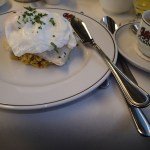
I had a simple brunch consisting of the most exquisite kedgeree, washed down with juice and a lot of genuine English tea. By the latter, I really do mean tea grown in Cornwall.
This is certainly the way to go to South Wales. First Great Western say this about booking on most trains except the ones that leave around 18:00.
Pullman Dining services are open to all ticket holders although, on busy services, priority is given to First Class ticket holders. Please contact the Pullman Service Leader when you board to request a table in the restaurant. Pullman Dining services do not operate on weekends or public holidays.
When did booking a meal in a high class restaurant be so easy?
The train I was on, also called at Reading at 11:10, gets to Cardiff at 12:46 and then goes on to Swansea, reaching there at 13.44, so it is very convenient for a lot of journeys.
The only problem was that the actual train I was on, didn’t have the wi-fi fully installed. I read that this should be running and free in the New Year.
I do hope that this concept succeeds, as travellers like me, who aren’t strapped for cash, will certainly use this type of service as a treat.
My First Class ticket, which I bought on-line the day before, cost me £31.55 and I paid £18.00 for the lunch, with its excellent food and service.
As I have been known to take the occasional day out in Bristol, I do wish a similar service was offered to there. And what about services to Torquay and Cheltenham?
Obviously, First Great Western know the economics and they certainly have a whole fleet of InterCity125s, with which they can run the service.
So will we still see these magnificent trains reborn as high-class leisure trains serving the West Country for upwards of twenty years in the future? I suspect we will, as these trains seem to have more survival genes, than a whole pack of London mongrels.
Did Terry Miller and his team in Derby realise what they were creating?
What Will A Reopened March And Wisbech Railway Mean?
It was mentioned in the blog on Rail News, that a study will look at the reopening of the route from March through Wisbech.
The main reason is that it will allow freight trains between Felixstowe and the North to totally bypass the East Coast Main Line by using the upgraded GNGE.
But will it create better opportunities for passenger services around East Anglia and the Fens?
Getting between Ipswich, Norwich and Cambridge and the North of England and Scotland is not easy, as it means a slow train across East Anglia to Peterborough or a long detour via London.
As an example, going from Ipswich to Manchester takes over four hours and routing is via London. I know a lot of keen Ipswich fans use that route to get to away matches, as the cross country routes are totally inadequate and very crowded.
In a few years time, the TransPennine routes will be electrified, so to get to Liverpool and Manchester from Ipswich, it might be quicker to travel via Doncaster, perhaps changing at Peterborough.
Opening up the route from March to the GNGE would allow direct passenger trains from Ipswich and Norwich to go via Ely and Lincoln to Doncaster.
Lincoln is getting better connections to Nottingham according to the blog in Rail News, so these direct trains might give East Anglia better connections to the East Midlands as well.
But of course, all of this thinking is pie-in-the-sky, as where is the money for shiny new trains?
On the other hand, there might be a glut of hand-me-down InterCity 125s from the Great Western and East Coast Main Lines, as they get replaced by Class 800/801 trains.
So will we see these trains working cross country routes and giving much needed extra capacity out of East Anglia and the Fens?
It’ll be a bit like your mini-cab company saying we couldn’t send the new Nissan, so we sent this immaculate 1970s Jaguar instead. Although the lines wouldn’t be high speed ones, they wouldn’t be slow and mountainous ones, like those through the North of Scotland, where these trains show how good they are.
Repening the line through Wisbech could be unlocking a real box of delights for the East.
 The Anonymous Widower