Will Class 230 Trains Run On The Island Line?
In the October 2018 Edition of Modern Railways, there is an article which is entitled Vivaral Delivers First Class 230.
In addition to discussing the deployment on the Marston Vale Line, the article has various sub-sections describing future plans for the Class 230 trains.
One such sub-section is entitled Isle of White Next?.
This is the first paragraph.
Introduction of Class 230s on the Island Line between Ryde and Shanklin is South Western Railway operator FirstGroup’s preferred solution for the line.
Other points from the sub-section include.
- South Western Railway is required to produce a proposal for the Island Line as part of the franchise.
- The current Class 483 trains are the oldest on the UK network.
- A decision is expected before the end of the year.
Vivarail are also reported to have found a way to fit their larger trains in the Ryde Tunnel.
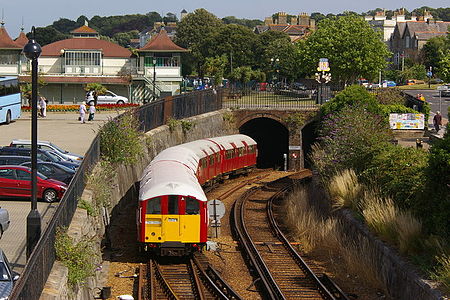
The picture from Wikipedia, shows a Class 483 train approaching Ryde Tunnel.
The height and width of the two trains in London Underground service are as follows.
- Class 483 – Width 2.60 metres – Height 2.88 metres
- Class 230 – Width 2.85 metres – Height 3.62 metres
According to the article 45 mm. of packing will be removed.
But it still could be a very tight fit.
Will The Class 230 Trains Feature Battery Operation?
A year ago in Diesel And Battery Trains Could Be The Solution For Island Line, I reported on a report in the Island Echo.
I discussed battery operation extensively and there are several benefits.
- Energy saving through regenerative braking.
- Health and safety
- Lower maintenance cost.
- Emergency train recovery.
- The addition of a passing loop at Brading station to improve the timetable.
The line could also be extended to Ventnor station as a single-track without electrification.
Conclusion
It looks to me, that Class 230 trains offer more than just a newer train with wi-fi and power sockets.
One thing puzzles me!
If Vivarail can modify London Underground D78 Stock to work on the Island Line, why wasn’t this option considered before?
Diesel And Battery Trains Could Be The Solution For Island Line
The title of this post is the same ass this article on the Island Echo.
The article discusses what is going to happen to the Island Line. I wrote about this line in A Trip On The Island Line.
This is said.
South Western Railway have revealed that the Island’s 80-year-old trains could be replaced with a diesel, battery or flywheel powered locomotive, a tram or even a guided bus lane.
The train operator, which took over the running of Island Line earlier this year, has stated in a consultation document published this week that the Class 483 former London Underground trains are no longer viable, with parts availability becoming an issue and limited capability of electricity. supply.
They are obviously looking for some new trains.
The Current Trains On The Island Line
The current trains on the Island Line are Class 483 trains, which started life as London Underground 1938 Stock.
The trains are 2597 mm. wide and 2883 mm. high.
Looking at the height and widths of London Underground’s 1972 Stock and 1973 Stock, these current trains are about thirty mm. wider and a few mm. higher.
So it might be possible to take some o0f these trains and remanufacture them for the Island Line.
But there are problems.
- These trains are over forty years old.
- London Underground won’t be replacing these trains for several years yet.
- London Underground probably needs all the of the trains in these classes that it’s got.
So the Island Line needs some new trains from another source.
The Trains On The Glasgow Subway
The Glasgow Subway trains were constructed in the late 1970s, by Metro-Cammell, who built the 1972 and 1973 Stock for London Underground.
The Glasgow Subway has an unusual gauge of four foot, as opposed to standard gauge of four foot eight and a half inches. So the Glasgow hauge is 220 mm. narrower than standard.
The Glasgow Subway trains also seem to be 300 mm. narrower and 240 mm. shorter than the 1972 Stock.
I wouldn’t be surprised to be told, that the Glasgow Subway trains were designed by making them slightly smaller than the 1972 and 1973 Stock that had just been built.
New Glasgow Subway trains are being designed and built by Stadler. These will obviously be designed to fit the current platforms and tunnel, as they will have to work with the current trains.
New Trains For The Island Line
Modern computer-aided-design systems can probably scale up Stadler’s Glasgow Subway design to a train that would fit the Island Line.
Standard gauge bogies would have to be fitted.
But it surely is a route to get a basic train, that could be then fitted with appropriate motive power.
How Many Trains Would Be Needed For The Island Line?
Currently, trains on the Island Line run in pairs of two-car trains. This means that to maintain the the current two trains per hour service needs four two-car trains. According to Wikipedia, there are five operational Class 483 trains, with one in store.
If the new trains were similar to the new Glasgow Subway trains, which are four cars, two trains could provide the current service.
After upgrading the Brading loop, four trains would allow a four trains per hour service.
Would a spare train be needed?
Why Would A Big Company Like Stadler Want To Supply A Small Order For The Island Line?
This question has to be asked and I’ll use an extract from this article on Rail Engineer, which is entitled Subway Revival – Glasgow to introduce UTO.
Although there had been concerns that suppliers may not be interested in an order for a small number of four-foot gauge Subway trains, this proved not to be the case. Charlie commented that the Swiss company Stadler was “quite excited at the idea” as it has a bespoke manufacturing operation and its production lines can easily be changed to produce small orders, such as 34 cars for the Berlin Underground and 10 Croydon trams.
Sixteen or twenty cars for the Island Line doesn’t seem so small!
It certainly seems, that if you are a train or tram operator and you want a vehicle that is a little bit out-of-the-ordinary, then Stadler are interested!
What Would The Stadler Trains Be Like For Passengers?
Another extract from the Rail Engineer article, describes the new trains for the Glasgow Subway.
Stadler is to supply 17 four-car articulated trains with wide walk-through connections and a standard floor height, made possible by using smaller diameter wheels. Each train will be 39.25 metres long, compared with 37.74 metres for the current three-car units. The trains have 58 km/hr maximum speed and will have capacity for 310 passengers compared with the current 270. They will also accommodate wheelchairs.
I would suspect that the Island Line trains would be slightly wider and taller, which would give welcome space.
Battery Trains For The Island Line
The Island Echo article mentions battery trains.
So would they be a good idea on the Island Line?
Regenerative Braking
I would be pretty sure that the current Class 483 trains are not fitted with regenerative braking, which saves energy and cuts the electricity bill for running the trains.
I also suspect that the electrical power supply, is not capable of handling the return currents generated by regenerative braking.
However, the new trains for the Glasgow Subway, which I believe could be the basis for an Island Line train, do have regenerative braking.
Putting batteries on the train is a simple way of handling the electricity generated by braking. It is just stored in the battery and then used again, when the train accelerates away.
Health And Safety
Bombardier have stated that batteries on trains can be used to move trains in depots, so the amount of electrification in depots can be reduced.
As batteries can move the train short distances, there may be other safety critical places, where removing the electrification could be recommended.
Track Maintenance Savings
Reducing the amount and complication of electrified track, must save on maintenance.
Emergency Power
Despite the best of intentions, power failures do happen and having a capability to get the train to the next station using batteries must be a good thing.
Running On Batteries
The Island Line is less than ten miles long and the possibility must exist of being able to charge the batteries at each end of the line and run between Ryde Pier Head and Shanklin on batteries.
There would be a balance to be struck between battery size and the length of electrification at each end. Perhaps electrification could be kept on the following sections.
- Ryde Pier Head to Smallbrook Junction
- Sandown to Shanklin
A lot would depend on the state and design of the line’s power network.
Route And Track Extensions
Short extensions or new track layouts could be built without electrification to save building costs.
Conclusion
On balance, battery trains would seem t0 be a useful feature for the new trains on the Island Line.
Improvements To The Island Line
The Wikipedia entry for the Island Line has a section called Future. Various improvements are put forward.
It seems there has been a lot of talk and very little action.
My thoughts follow.
Brading Loop
Wikipedia says this about a loop at Brading station.
A suggestion in early 2009 was to reinstate the loop at Brading, thus allowing a ‘Clock Face’ timetable to encourage greater use. The outcome of this is still awaited.
This Google Map shows the station.
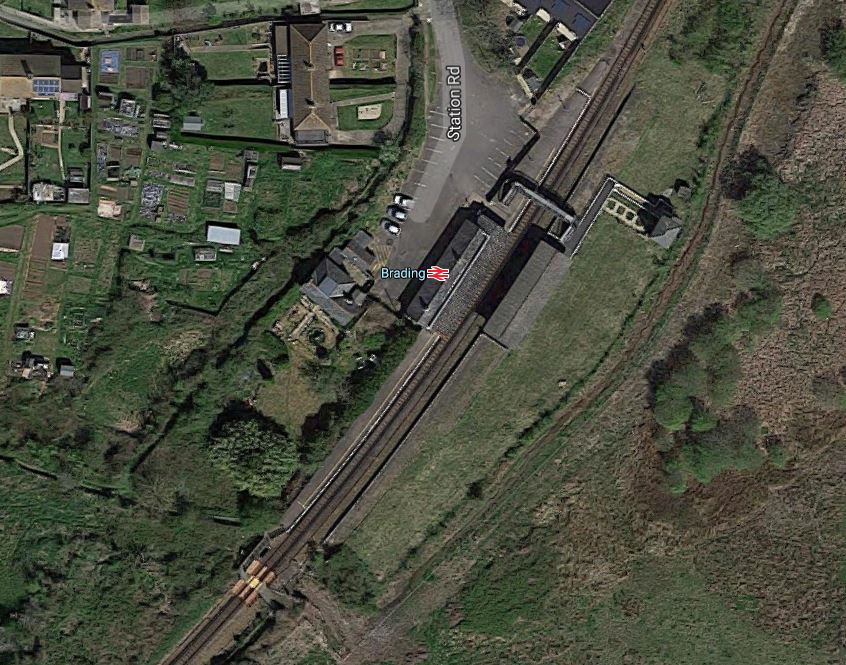
Note the loop is clearly visible to the East of the station.
Trains with a battery capability will give advantages.
- Flexibility of design.
- Simplified track layouts.
- No electrification of new track.
The much-needed loop could become affordable!
Extension to Ventnor
There have been proposals to reopen the line south of Shanklin, to the original terminus at Ventnor.
You can still trace the line on Google Map and if the need is there, trains with a battery capability would surely aid its reopening.
The line could be single track and without electrification.
Conclusion
New trains with a battery capability will give the Island Line a new lease of life.
I also believe that Stadler have the capability to build a suitable battery train, based on their design for the new trains for the Glasgow Subway.
First, MTR Take Charge On South Western
The title of this post is the same as this article on RailNews.
Some points from the article.
- The Class 707 trains are going because they are more expensive to lease.
- 400 extra trains on Sundays.
- Comprehensive refresh of all trains
- All suburban trains will have toilets.
- Southampton Central and Wimbledon stations to be updated.
- Flexible tickets for part-time workers.
- A new tariff for sixteen to eighteen year olds in full-time education.
Perhaps the most interesting point, was that they have decided to look at the future of the Island Line with the local Council.
A few thoughts on their plans.
Class 707 Trains
In An Exciting New Aventra, I commented on this article in Rail Engineer, with the same title.
I said this in my post.
The Most Affordable Train
The article describes how the train was designed to give the best whole life cost.
This sentence sums up the philosophy.
It’s actually about a 50/50 split between the whole life cost and the first capital cost. That makes it a bit more difficult because we’ve got be competitive on the first practical cost, but additionally we have to offer a really high availability, strong reliability, combined with much better energy consumption and less track damage.
As someone, who used to own a finance company, that leased trucks and other expensive equipment, the product described is the sort of product that leasing companies love.
That looks like a good reason to lease an Aventra.
More Trains On Sundays
All train companies seem to offer this.
All Suburban Trains Will Have Toilets
A lot of train companies seem to care about toilets, so is there a correlation between decent toilets and increased revenue?
Flexible Tickets For Part Time Workers
Do travellers get this in London? If so, extending it over the whole area must be logical!
16-18 Year Old Tickets
London does this!
Island Line
This is one of these routes, where someone will come up with an idea, that’s so Monty Python, it will work superbly!
Will We Get Trams On The Isle Of Wight?
The Island Line on the Isle of Wight, is an oddity in that it is part-tourist attraction, part-commuter link and part-important railway, run using old London Underground tube trains. I wrote about my only ride on the line in A Trip On The Island Line.
According to this report on Rail Magazine, which is entitled Garnett report advises trams for the Isle of Wight, it would be better if the line was redeveloped using trams or light rail, and probably run under much greater local control.
I agree, but I can already hear moans from people who want to keep the line as it is. But it must be a maintenance and operational nightmare! All credit should probably go to South West Trains and their partners, who keep this museum piece running.
I also feel that there could be some innovative form of light rail, run on this difficult line, using a mix of all the new technologies now coming in to the mainstream.
- Ability to run on a well-laid standard gauge track, without electrification.
- Battery/flywheel and electric operation with charging at end and interchanges to give a range of five to ten miles between charging stations.
- Spacious, step-free and enough vehicles, with the capacity of probably a three-car tram.
- Street running capability.
- Totally automatic or semi-automatic one-man operation.
- Tramway-style infrastructure and rules, so stops would be safe and simple.
- Several trips an hour frequency
- Contactless bank card ticketing.
In some ways the nearest form of transport at present is a Parry People Mover. But these are just not big or automated enough. However a modern tram run with more automation and on batteries could be a solution.
I think there is an opportunity on the Isle of Wight to create the prototype of an advanced form of self-contained, environmentally-friendly transport system.
The Island Line is unique in the UK at the moment, but I can think of several places, where this form of automatic light rail people mover might be a solution.
- Chessington South to Chessington World of Adventures
- Greenhithe to Bluewater
- Ipswich to Felixstowe – It could even extend to the seafront along pedestrianised streets.
- Romford to Upminster – Surely, running a four-car Class 710 train is an expensive solution!
- St. Erth to St. Ives
There must be many places in the UK and around the world, where a simple standard drop-in automatic light rail system can be applied.
Many could even be built by local commercial interests or authorities.
Shanklin
I got off the Island Line train at the end, which was Shanklin.
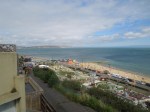
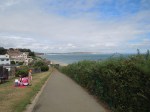


As you can see I walked to the beach and then went back up the hill to the station.
I was glad to see a map, although the town had lots of finger posts and my original navigation system had no difficulty finding my way around.
A Trip On The Island Line
The Island Line on the Isle of Wight, is a unique train line, as these pictures show.
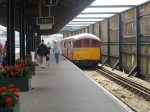


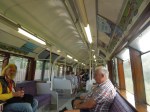
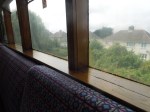
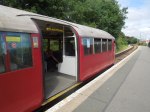
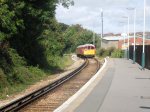

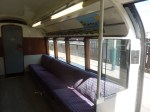
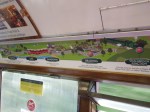
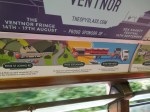
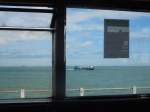
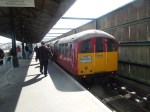
It was just like going back to my childhood and be transported in one of the old 1938 Stock, London Underground trains, that I can just about remember on the Piccadilly line in the 1950s and 1960s.
The Class 483, as they are now called, still have all the same noises and a lot of the wooden features, although the seats and a few other internal features had been updated.
I do wonder whether old London Underground trains, which generally have been immaculately maintained could be used on some of the far flung parts of the network to re-instate old lines.
One of the reasons, they ended up on the Isle of Wight, was that this line has gauge clearance problems and London’s redundant tube trains fit the space available. And of course, third-rail electric trains are easier to install than those with overhead wires.
There is a lot of talk about using new trams or tram-trains on some branch lines, but surely some retired tube trains, would be a lot more affordable and a tourist attraction as well. Over the next few years, there is going to be a lot of these trains, that will be replaced in London.
They deserve better than being scrapped!
 The Anonymous Widower